


Plot Summary
Prologue
A young boy runs across a yard chasing his shadow, catching it as though it were solid. He sits beneath a maple tree, jabs his finger with a penknife, and squeezes out a bead of blood. His shadow drinks eagerly. He has heard that a shadow fed daily will become your best friend in the world.
He whispers to it, naming himself Remy2 and the shadow Red.2 He imagines them as blood brothers, their cuts smeared together so neither can tell where one ends and the other begins. He has never had a best friend before, but he knows this is what they do.
The prologue establishes the central tragedy of the novel: a lonely child creates a companion from his own darkness, binding them through blood. The act is presented as innocent, even tender, yet contains the seeds of horror. Remy treats his shadow as a separate being with its own desires, violating the fundamental rule that quickened shadows must be controlled, not befriended. This early nurturing is what gives Red the capacity to eventually become something more than a mere reflection. Psychologically, it speaks to how childhood isolation creates coping mechanisms that become both salvation and damnation. The blood bond is a pact made in desperation, and the novel will trace its terrible consequences over decades.
Corpse with a Shredded Shadow
Walking home from Rapture Bar & Lounge, Charlie Hall1 spots a heap of stained clothing and white bone in an alley. It is Paul Ecco,15 the tweedy man she served bourbon to hours earlier. His ribcage has been cracked open, his shadow shredded like torn laundry fluttering in the breeze.
A man with hands made entirely of shadow7 approaches, his eyes like dark bullet holes. Sirens send him retreating. Charlie1 flees home to her boyfriend Vince2 and sister Posey,4 shaken and newly curious about what Ecco15 was trying to sell before he died: pages from a book called the Liber Noctem.
The shredded shadow is the book's first visceral image of what happens when the shadow world turns violent. Charlie's compulsion to investigate rather than simply flee speaks to her character: self-destructive curiosity overrides self-preservation. The Hierophant's appearance establishes that the stakes are supernatural and deadly. Charlie's attempt at a normal life, working a legitimate job after years of thievery, is already crumbling as her old instincts awaken. She is someone who cannot look away from a puzzle, even when solving it might kill her.
Shadow Down Her Throat
A bearded puppeteer named Hermes16 confronts Charlie1 after hours at Rapture, seeking the Liber Noctem on behalf of Lionel Salt.3 When Charlie1 claims ignorance, his shadow pours down her throat, choking her into unconsciousness. She wakes on the floor to see Vince,2 her quiet boyfriend, with an arm locked around Hermes's16 neck.
He speaks calmly about how the man has overfed his shadow, then snaps his neck with a wet crack. Vince,2 who has no shadow himself, knows far more about shadow magic than he ever admitted. He disposes of the body while Charlie1 grapples with shock.
This is the point of no return for Charlie. Violence has invaded her carefully constructed ordinary world, and the man she trusted has revealed himself as a killer. Vince's competence with murder suggests a history he has hidden. The fact that he kills to protect her creates an emotional debt that complicates her eventual discoveries about his identity. The scene also introduces the visceral horror of shadow-as-weapon, making the magic system feel dangerous and embodied rather than abstract or wondrous.
Stars and Quasars
After disposing of Hermes's16 body, Vince2 sits alone on the back steps staring at the night sky. He asks whether stars have shadows. When Charlie1 joins him, he confesses that he does not feel guilt. He is still furious. He describes watching her sleep and feeling an emotion so intense it made him dizzy and sick.
He wishes Hermes16 were alive so he could kill him again. The confession reveals a different Vince:2 raw, vulnerable, unrestrained. Their sex afterward is desperate and bruising against the house siding. Charlie1 watches her shadow arch and move at impossible angles, independent of her body.
Vince's confession reveals he has been performing restraint throughout their relationship, hiding the depth of his feelings and his capacity for violence. Charlie, rather than being frightened, is aroused by this authenticity. This speaks to her psychology: she has always sensed the mask and longed for what lies beneath. The quickening of her shadow after nearly dying echoes the trauma theory of shadow magic: extreme experiences catalyze the change. Her shadow is becoming separate, conscious, hungry. Something inside her has fundamentally shifted.
The Dead Man's License
While Vince2 cleans gutters, Charlie1 searches their bedroom. In a duffel bag she finds a driver's license for Edmund Vincent Carver2 with an address in Springfield. Online, she discovers the truth: Edmund Carver2 is Lionel Salt's3 grandson, supposedly dead in a murder-suicide that also killed a young woman named Rose Allaband.
Photos show him at NYU, at charity galas, fencing with a collegiate team. His arm around a blond woman identified as Adeline Salt,5 his aunt. When Charlie1 confronts Vince,2 he admits the lies but refuses to explain. He packs and leaves.
The discovery restructures everything Charlie believed about their relationship. Vince was never a simple man escaping a difficult past; he was the heir to a monstrous fortune, presumed dead. Charlie's feelings of betrayal are compounded by the Hall family curse, the inherited pattern of choosing men with holes in their hearts or heads or pockets. Yet her investigative skills, honed through years of theft, have served her: she found the truth hidden in her own closet. The question becomes whether she can handle what she uncovered.
Kidnapped at Blue Ruin
Hungover in a bar parking lot, Charlie1 is approached by Lionel Salt.3 He knows she was the last person to see Hermes16 alive and has connected her to his grandson.2 At gunpoint, he forces her into his Rolls-Royce and takes her to a country club.
Over lunch, he explains that Edmund2 stole the Liber Noctem, which supposedly contains a ritual allowing a Blight to take permanent human form. He claims his grandson's shadow Red2 is the true killer, a monster that must be stopped before completing the ritual. He threatens to murder Posey4 if Charlie1 fails by Saturday.
Salt's ultimatum externalizes the threat that has been building. He is a classic abuser operating on a grand scale: isolate, threaten loved ones, impose impossible demands. The country club setting underscores how wealth insulates him from consequences. His version of events casts Vince as both victim and villain, a manipulation designed to make Charlie complicit. The deadline creates narrative pressure, and the threat to Posey raises the stakes from personal survival to familial protection.
Beet Juice and Ketamine
Years ago, a con artist named Rand8 blackmailed young Charlie1 into helping him fleece Lionel Salt3 by faking demonic possession. At Salt's3 mansion, they were both drugged. Charlie1 vomited up the beet juice she planned to use as stage blood, then feigned unconsciousness on the library rug while Salt's3 guests discussed whether she was dying.
A boy's voice2 behind her guided her through the dark house, warning her not to look at him. She stole a book from Salt's3 hidden library and fled through the woods until a birdwatcher found her. Rand8 was murdered that night, his body staged as a suicide, a dead girl in his trunk.
This flashback reveals the deep roots of Charlie's hatred for Salt and her survivor's guilt over Rand. The mysterious boy who saved her (Red, though she did not know it then) creates an emotional through-line: she owes her life to the very being she now fears. Salt's willingness to drug and kill children establishes him as irredeemable. The experience also shows how early Charlie's criminal skills developed and how trauma became intertwined with her identity as a thief.
Knight's Stolen Notebook
Charlie1 breaks into Adam Lokken's12 room at the MGM Springfield. She finds not the Liber Noctem but Knight Singh's14 personal notebook hidden in the lining of his coat. When Adam12 returns unexpectedly, she hides in the bathtub and texts his girlfriend Doreen11 to lure him away to the casino bar.
She escapes the hotel and trades information for Doreen's11 pawned ring at Murray's pawnshop. The notebook contains Knight's14 observations on shadow magic, including notes about Salt's3 experiments, but several pages appear to have been removed. Something crucial is missing.
Charlie's return to burglary is both a regression and a homecoming. She is skilled, efficient, and alive in a way she was not while pouring drinks. The moral compromises are real: she steals from a man she was hired to help, manipulates his girlfriend, and trades in information. But the skills she is ashamed of are the ones that might save her. The incomplete notebook introduces a mystery: someone has removed pages, and what they contain may be the key to understanding Salt's true plans.
Raven's Hungry Shadows
Charlie1 visits Raven,9 an alterationist who feeds stray shadows blood from a metal dog bowl outside her shop. Raven9 explains that the Hierophant7 is a punishment role: a shadow thief named Stephen Vorman7 had an ancient Blight stitched to him as retribution.
The Blight whispers in his mind, slowly consuming his energy and sanity while forcing him to hunt other Blights. Raven9 also reveals that Knight Singh14 examined the Liber Noctem before Salt3 bought it and believed it contained nothing of value, certainly no ritual for making Blights permanently human.
Raven's revelations reframe the entire conflict. The Hierophant is not a willing servant but a prison for an ancient entity. Salt's claims about the Liber Noctem may be lies designed to manipulate a desperate, dying man. The image of stray shadows lapping blood from a bowl reinforces the book's theme that magic requires sacrifice and that the boundary between human and shadow is permeable and dangerous. Charlie begins to suspect that Salt has been deceiving everyone, including the Blight he claims to control.
RED on the Walls
Charlie1 returns home to find her television flickering and a body on the couch. It is Adam,12 his chest cracked open, his shadow tattered. On every wall, written in blood: RED.2 RED.2 RED.2 The Hierophant,7 or rather the Blight Cleophes controlling him, has killed again while searching for the Liber Noctem.
Police question Charlie1 for hours. Doreen11 attacks her at the station, clawing her face and spitting that Charlie1 is the devil who corrupts everything she touches. Charlie1 realizes the killer mistook Adam12 for Vince,2 or was sending a deliberate message.
The murder scene is intimate horror: Charlie's home, her couch, her ex-boyfriend's rival. The signature RED suggests the Blight is communicating, claiming territory, or both. Charlie's reaction is dissociative, practical: the couch will need to be thrown out, the rug too. This emotional distancing is a survival mechanism born of years of trauma. Doreen's accusation that Charlie is the devil articulates Charlie's deepest fear about herself: that she is a contagion who destroys everyone she touches.
The Chimney Decoy
Remembering that Vince2 cleaned the gutters the day before he left, Charlie1 climbs onto the roof and finds a steel box magnetically attached to the chimney's metal lining. She pries it open, heart pounding. Inside is not the Liber Noctem but a single sheet of paper: 'To the Charlatan, If you found this, things have gone all the way wrong.
The key is abandon all hope. V.' She tracks Vince2 to the East Star Motel, where she finds his hideout, photos of the Hierophant7 taped to walls, and evidence he was molding fake onyx restraints for some planned confrontation.
The decoy box is a classic con within a con, demonstrating that Vince anticipated someone would search for the book. His note is both warning and clue. The phrase "abandon all hope" will later unlock Salt's safe, suggesting Vince knew far more about his grandfather's secrets than he revealed. The motel hideout with its research materials shows Vince was not running from danger but methodically planning a confrontation. He was preparing for war, not flight.
Knight's Hidden Evidence
Hidden beneath the endpaper of Knight Singh's14 notebook, Charlie1 discovers pages written in Salt's3 own hand. The journal documents his experiments: cutting shadows from living people, attempting to quicken shadows through trauma, and his obsession with Red.2
The entries reveal that Salt3 stabbed his grandson Remy2 during a ketamine experiment, trying to see if Red2 could fully possess a human body. Remy2 died, but pushed his last breath into Red,2 giving the shadow permanent form. The journal is a confession of murder, a roadmap of atrocities.
The hidden journal pages are the smoking gun, transforming Salt from a threatening antagonist into a documented monster. His own handwriting condemns him. The detail that Remy's last act was to give Red his breath, his life, reframes their relationship. Red was not a parasite that destroyed his host; he was a beloved companion, chosen by Remy to survive. This revelation sets up the emotional stakes for the final confrontation and provides Charlie with the leverage she needs.
Cracking the Impossible Safe
Disguised as catering staff, Charlie1 infiltrates Salt's3 party celebrating his elevation to the Cabal. She navigates to the library and finds the hidden room she remembers from childhood. Using 'abandon all hope' as the digital code (from Dante's Inferno, the book that triggers the secret door), she cracks the dual mechanical and digital lock on Salt's3 safe.
Inside is the Liber Noctem, its metal pages gleaming. The book was never stolen. Salt3 has been lying to everyone, especially the Blight he controls. Charlie1 swaps the Liber Noctem with Knight's14 incriminating journal.
The safe-cracking scene is Charlie's professional triumph, using all her skills at once. That the Liber Noctem was never stolen exposes Salt's entire scheme as a manipulation. He needed the Blight to believe the book could give it true life, while keeping it forever out of reach. Charlie's decision to plant the journal in the safe is the con artist's masterstroke: let Salt's own security protect the evidence against him. The reversal is elegant and devastating.
The Dungeon Truth
Behind the safe, Charlie1 discovers a hidden corridor with cells and a surveillance room. Vince2 is imprisoned there, bound with onyx restraints. When they speak, she realizes the truth: he is not Edmund Carver.2 He is Red,2 the shadow.
When Salt3 stabbed Remy,2 the dying boy pulled Red2 close and breathed his last breath into him. Red2 awoke naked, alone, and terrified, eventually learning to pass as human. He chose the name Vincent2 because it was one thing he could take for himself. He met Charlie1 at that bar months later, not as Remy's2 shadow but as himself.
The revelation restructures the entire narrative. Every moment with Vince must be reinterpreted: his shadowlessness (shadows do not cast shadows), his emotional restraint (he was learning to be human), his devotion to Charlie (she was the first person he chose as himself). The tragedy is that he could never tell her the truth because he believed she would reject a monster. His identity crisis echoes philosophical questions about what constitutes personhood: memory, choice, love, or origin.
Cleophes the Ancient
At the party, the Hierophant7 demands the Liber Noctem from Charlie.1 When she reveals it contains no ritual for becoming human, Salt3 shoots Stephen,7 the host body. The ancient Blight Cleophes, finally unbound, consumes Stephen7 entirely, shrinking him to a withered husk.
It grows monstrous, filling the great room with darkness, vowing to devour everyone present. The Cabal members fight back with onyx weapons. Vince,2 freed from his cell, joins the battle, deliberately absorbing blows as he maneuvers Cleophes toward the massive stone fireplace.
Cleophes represents the ultimate failure of the shadow system: an ancient, insane entity kept bound through cruelty, finally unleashed. Its rage is justified even as its violence is catastrophic. Salt's shooting of Stephen to silence him mirrors his earlier willingness to kill anyone who threatened his control. Vince's sacrificial fighting style reveals his core programming: he was made to absorb Remy's pain and fear, and he will absorb any amount of damage to protect others.
Cutting Salt's Shadow Free
During the chaos, Salt3 attacks Charlie1 with a fireplace poker while his stolen shadow grabs at her. She realizes she is immune because she cut her shadow free earlier and sewed it to Posey.4 Charlie1 uses her onyx knife to slice Salt's3 shadow away from his body.
The shadow, once a captive gloamist's, immediately turns on him. Later, Salt3 is found stabbed thirty-three times with a letter opener. Adeline's5 hands were flecked with blood. Vince2 rolls Cleophes into the fireplace, nearly immolating himself. Charlie1 catches him, her onyx ring forcing him solid.
Charlie's decision to give up her shadow, the magic Posey desperately wanted, is her most selfless act. It also proves tactical genius: the shadowless cannot be controlled. Salt's death by his own stolen shadow and his daughter's hand is poetic justice. The family he abused destroys him. Adeline's murder of her father, after years of complicity, suggests both revenge and a desire to be free. She and Charlie are dark mirrors: both women shaped by Salt's cruelty.
Confessions of a Thief
The Cabal plans to tether Vince2 to Adeline5 as the new Hierophant,7 binding him to hunt Blights indefinitely. Charlie1 objects and publicly confesses to years of thefts against gloamists, proving she deserves punishment more than Adeline5 does. She volunteers to be bound to Vince2 instead. The Cabal agrees.
In Bellamy's tower, Vince2 is stitched to Charlie's1 shadowless feet. But when he reforms from shadow, his smoke-filled eyes hold no recognition. He does not remember her. He does not remember being Vince2 at all. Charlie1 sits in the van afterward, feeding him blood, promising to steal back his heart.
The ending is a gut-punch inversion of the fairy-tale rescue. Charlie sacrificed her freedom and confessed her deepest secrets to save Vince, and she succeeded, but the process stripped him of the very memories that made their relationship real. He is once again a blank slate, a shadow learning to be human. Charlie's refusal to despair, her immediate pivot to a new heist, defines her character. She is not a hero who saves the day and rides into the sunset. She is a thief who, when the treasure is stolen, simply plans her next job. The love is real even if the memories are gone.
Analysis
Book of Night is a novel about identity as performance, asking what makes a person real when everything about them is constructed. Charlie Hall1 has spent her life becoming other people: a possessed medium, a ghost girl at a window, a thief of magical secrets, a reformed bartender. She is so accustomed to wearing masks that she fears there is nothing authentic underneath. Her arc is not about finding her true self but about accepting that the mask and the face are the same thing. She is the Charlatan, and that is not a false identity but the most honest one she has.
Vince's2 character literalizes this theme. He is a shadow who learned to pass as human, building a self from the discarded emotions of a dead boy. His love for Charlie1 is real, but his entire existence is a kind of performance. The tragedy of the ending, where he loses his memories, asks a brutal question: if the experiences that shaped you are erased, are you still you? Charlie's1 refusal to accept this as an ending, her immediate pivot to steal back his heart, suggests that identity is not just memory but also choice and persistence.
The novel also functions as a critique of wealth and power. Lionel Salt3 embodies the ultimate corruption of the one percent: he buys magical knowledge, steals shadows from the vulnerable, and murders with impunity because his money insulates him from consequences. The Cabal, for all its pretensions to governance, ultimately serves the interests of the powerful. Justice arrives not through institutions but through the desperate actions of a thief and a shadow.
The shadow magic system externalizes psychological realities. People feed their shadows with blood and unwanted emotions. Blights are made from the worst parts of humans, set loose. To be shadowless is to have a door shut inside you, immune to control but also cut off from something essential. The novel suggests that we all have darkness within us, and the question is not how to eliminate it but how to live with it without being consumed. Love, in this world, is not a cure for darkness but an acknowledgment of it: seeing someone fully and choosing them anyway.
Review Summary
Book of Night receives mixed reviews. Some praise its unique shadow magic system and intriguing plot twists, while others criticize its slow pacing, underdeveloped worldbuilding, and flat characters. Many readers find Charlie Hall a compelling protagonist, though opinions on the romance vary. The ending is divisive, leaving some excited for a potential sequel and others frustrated. Overall, fans of Holly Black's YA work may be disappointed by this adult debut, which feels different in tone and execution. Despite its flaws, some readers still find the book engaging and enjoyable.
People Also Read
Characters
Charlie Hall
Reformed thief, reluctant heroA former thief trying to live a legitimate life as a bartender at Rapture Bar & Lounge in western Massachusetts. She grew up poor, was manipulated into crime by a con artist named Rand8, and survived a traumatic encounter with billionaire Lionel Salt3 as a teenager that left her with ketamine in her bloodstream and nightmares for years. Impulsive, self-destructive, and fiercely protective of her younger sister Posey4, she is drawn to danger with a gravitational pull she cannot resist. She has clever hands, a talent for lying, and describes herself as having a shriveled cherry pit for a heart. Her shadow begins quickening after she is nearly killed by a gloamist, forcing her to confront the magical world she has spent years avoiding. Despite her cynicism, she is capable of deep loyalty and desperate, reckless love.
Vince / Edmund Carver
Shadowless boyfriend, hidden identityCharlie's1 boyfriend, a tall, broad-shouldered man with pale gray eyes and dark gold hair. He casts no shadow at all, having lost his under circumstances he refuses to discuss. He works cleaning up crime scenes and biohazard sites with a quiet, unflinching competence. Around others he is reserved, almost gentle, but when Charlie1 is threatened he reveals a hidden intensity and lethal capacity for violence. His real name is Edmund Carver, and he is the grandson of billionaire Lionel Salt3, though he has been living under a false identity after being declared dead. He keeps a worn photograph of a blond woman in his wallet and speaks fluent French despite claiming otherwise. There is something missing in him that others sense but cannot name.
Lionel Salt
Billionaire, shadow magic collectorA billionaire industrialist obsessed with shadow magic and immortality. He purchased the Liber Noctem at auction and has spent decades experimenting on gloamists and their shadows, documenting his atrocities in a private journal. He wears a stolen quickened shadow stitched to his own feet. Cruel, controlling, and utterly amoral, he treats people as tools to be used and discarded. He manipulated his own grandson2 from childhood, using the boy's2 shadow to eliminate business rivals and enemies. Now elevated to the Cabal, the governing body of local gloamists, he presents a public face of philanthropy while privately continuing his monstrous experiments. He believes wealth places him above all rules.
Posey Hall
Charlie's shadow-obsessed sisterCharlie's1 younger sister, who reads tarot cards online for paying clients while secretly yearning to become a gloamist. She has tried dangerous methods to quicken her shadow: near-drowning, tongue-splitting, and internet tutorials that promise trauma-induced magic. She resents that Charlie1 seems to get everything she wants, including the quickened shadow she has desperately sought. Despite their tensions, she and Charlie1 share a fierce, complicated bond forged through shared childhood adversity and the Hall family legacy of terrible relationship choices.
Adeline Salt
Salt's daughter, Edmund's auntLionel Salt's3 daughter and Edmund Carver's2 aunt, though close to him in age. Raised in obscene wealth and her father's3 cruelty, she became Edmund's2 closest companion, appearing with him at galas and parties. She carries a stolen shadow stitched to her own feet. When her father's3 schemes begin to unravel, she must navigate between self-preservation, loyalty to the man she claims to love, and the terrifying possibility of freedom. Her hands are not as clean as her polished appearance suggests.
Balthazar
Shadow parlor operator, fenceThe charismatic operator of an illegal shadow parlor in the basement of Rapture. A former alterationist who burned out his own shadow, he now acts as a fence and middleman, connecting thieves like Charlie1 with gloamist clients who need magical objects stolen. Charming, untrustworthy, and pragmatic, he has a soft spot for Charlie1 despite her refusal to work for him again. He knows more about the local criminal underworld than he reveals, and his loyalties shift with the prevailing wind.
The Hierophant / Stephen Vorman
Blighthunter, possessed manA gaunt figure with hands made entirely of shadow, tasked by the Cabal with hunting rogue Blights. He was once a shadow thief named Stephen Vorman, caught and punished by having an ancient, malevolent Blight named Cleophes stitched to his body. The creature whispers in his mind, slowly consuming his energy and sanity. He moves through the story like a living warning: this is what happens when the shadow world claims you. His desperation for the Liber Noctem is driven by the ancient entity controlling him.
Rand
Con artist, Charlie's mentorA con artist who discovered young Charlie1 faking spirit visitations and blackmailed her into working for him. He taught her pickpocketing, burglary, cold reading, and the art of the long con. Vain and manipulative but occasionally paternal, he recognized Charlie's1 talent for deception and shaped it into a career. He took her to Lionel Salt's3 mansion for a job that ended in his murder. His body was staged with a dead girl in the trunk, framed as a suicide. His death haunts Charlie1 years later.
Raven
Alterationist, shadow feederAn alterationist who was once a student of Knight Singh14. She feeds stray shadows blood from a metal dog bowl outside her shop in Amherst, stitching fragments of her own shadow into clients who seek emotional alterations. Practical, cynical, and knowledgeable about the darker corners of gloamist politics, she helps Charlie1 understand the nature of Blights and the truth about the Hierophant7. She wants Knight Singh's14 stolen notebook returned and has no patience for the games of the powerful.
Odette
Rapture's owner, former dominatrixThe elderly, semiretired dominatrix who owns Rapture Bar & Lounge. Her face is tattooed and pierced, her wisdom hard-won. She has connections throughout the Valley's wealthy and magical circles, including Lionel Salt3. She gave Charlie1 a job when no one else would and offers sharp observations about the inescapability of the past.
Doreen Kowalski
Adam's girlfriend, grieving accuserA woman from Charlie's1 high school who hires Charlie1 to find her missing boyfriend Adam12. When Adam12 is murdered, she attacks Charlie1 at the police station, clawing her face and calling her the devil who corrupts everything she touches.
Adam Lokken
Thief, Doreen's boyfriendDoreen's11 boyfriend, a blackjack dealer turned thief who works for Balthazar6. He steals Knight Singh's14 notebook to pay off gambling debts and hides it in his hotel room. His murder, with RED2 painted on the walls, escalates the conflict and draws police attention.
Malhar Iyer
Graduate researcherA graduate student at UMass Amherst researching the ethnography of quickened shadows. He confirms that Charlie's1 shadow has begun the quickening process after testing it with specialized lights, documenting a rare transitional stage.
Knight Singh
Murdered Cabal memberA carapace gloamist and Cabal member murdered in his home, his room trashed and folio stolen. He had collected evidence against Lionel Salt3, documented in his personal notebook, which becomes a crucial piece of leverage.
Paul Ecco
Rare book dealer, first victimA rare book dealer who acquired a page of the Liber Noctem. He tries to sell it through Balthazar's6 shadow parlor but is brutally murdered hours later, his shadow shredded, his ribcage cracked open in an alley.
Hermes Fortune
Salt's puppeteer enforcerA bearded puppeteer gloamist working for Lionel Salt3. He attacks Charlie1 at Rapture, sending his shadow down her throat to choke information from her. His death at Vince's2 hands is the first killing Charlie1 witnesses.
Liam Clovin
Edmund's NYU friend, doctorA medical resident who befriended Edmund Carver2 at NYU. He helped Edmund2 by storing his belongings and selling books after his supposed death. Charlie1 confronts him at the hospital to extract information about Vince's2 past.
Plot Devices
Liber Noctem (Book of Night)
Central MacGuffin everyone huntsA rare volume with nickel-alloy pages, each letter individually stamped, created in 1831 in Scotland by an anonymous author. Rumored to have been written by or with a Blight. Supposedly contains a ritual allowing a Blight to gain permanent human form and substance by capturing the breath of life. Bought at Sotheby's auction by Lionel Salt3, who then claimed it was stolen by his grandson Edmund2. In truth, the book never left Salt's3 hidden safe. The ritual it supposedly contains does not exist: the book was a lure Salt3 used to manipulate an ancient Blight into serving him, promising a transformation he could never deliver.
Shadow Magic System
Quickened shadows, four disciplinesShadows can be 'quickened' through trauma and fed with blood, becoming semi-autonomous entities that grant their hosts various powers depending on discipline. Alterationists reshape shadows cosmetically or emotionally. Carapaces use their own shadows as armor or wings. Puppeteers send shadows to manipulate objects and people from a distance. Masks study shadow mysteries and secrets. All quickened shadows require energy from their host and can become Blights if the host dies. Feeding a shadow someone else's blood risks giving it independent power. The shadowless, like Vince2, cannot be puppeted and have a door shut inside them.
Onyx
Anti-shadow mineral, forces solidityThe mineral onyx weakens quickened shadows and forces them to become temporarily solid, making them vulnerable to physical attack. It is used in knives, restraints, handcuffs, protective barriers, and containment boxes. Onyx-lined thresholds prevent shadows from passing through. It is the only reliable defense against shadow magic for non-gloamists. Charlie1 acquires an onyx knife from Murray's pawnshop early in the story and later uses a triple onyx ring to grab Vince2 and prevent him from immolating himself in the fireplace during the final battle.
Blights
Disembodied shadows, hungry remnantsWhen a gloamist dies, their quickened shadow sometimes survives as a Blight, a shadow without a body or humanity. Most are mindless and animalistic, barely conscious, scrabbling for blood and energy. A few ancient ones retain intelligence and malevolent purpose. The Hierophant7 is tasked with hunting them. Blights are created when a gloamist pushes their fear, pain, and darkest emotions into their shadow at the moment of death. The most powerful Blights, like Cleophes of York, are centuries old and can possess human hosts. Blights can also be formed deliberately by cutting a living shadow free and feeding it energy until it becomes independent.
FAQ
Synopsis & Basic Details
What is Book of Night about?
- Shadows and Secrets: Book of Night follows Charlie Hall, a former thief trying to live a normal life, who gets pulled back into the dangerous world of shadow magic when she becomes entangled with a mysterious book and a man with a hidden past.
- A World of Gloamists: The story explores a world where some people, known as gloamists, can manipulate shadows, using them for various purposes, from cosmetic alterations to more sinister acts.
- Personal and Magical Conflicts: Charlie must navigate her complicated relationships, her criminal past, and the dangerous world of shadow magic, all while trying to protect herself and those she cares about.
Why should I read Book of Night?
- Intricate Worldbuilding: Holly Black creates a unique and compelling world where magic is both alluring and dangerous, with a complex system of rules and consequences.
- Compelling Characters: The characters are flawed and morally ambiguous, making their choices and motivations all the more intriguing and relatable.
- Fast-Paced Plot: The story is full of twists and turns, keeping readers engaged and guessing until the very end, with a blend of mystery, action, and emotional depth.
What is the background of Book of Night?
- Urban Fantasy Setting: The story is set in a contemporary world, primarily in Western Massachusetts, where the mundane and the magical coexist, creating a sense of unease and wonder.
- Social Commentary: The book touches on themes of class, power, and addiction, exploring how magic can exacerbate existing inequalities and create new forms of exploitation.
- Magical Disciplines: The world of shadow magic is divided into different disciplines, each with its own unique abilities and practices, adding depth and complexity to the magical system.
What are the most memorable quotes in Book of Night?
- "You can't quit. You're too good. This is the only thing you're good at.": This quote highlights Charlie's internal conflict and the pull of her past, suggesting that her criminal skills are both a gift and a curse.
- "The past is the only thing that matters.": This quote, spoken by Odette, emphasizes the weight of history and how it shapes the present, a recurring theme in the book.
- "I never wanted to be honest. I just wanted what I told you to be the truth.": This quote from Vince reveals the depth of his deception and his desire to create a reality that suits his needs, even if it's built on lies.
What writing style, narrative choices, and literary techniques does Holly Black use?
- First-Person Perspective: The story is told from Charlie's point of view, allowing readers to experience her thoughts, feelings, and biases, creating a sense of intimacy and immediacy.
- Sharp, Witty Prose: Black's writing is characterized by its sharp, witty dialogue and vivid descriptions, which bring the characters and the world to life.
- Foreshadowing and Symbolism: The book is full of subtle foreshadowing and recurring symbols, which add layers of meaning and enhance the reader's understanding of the themes and characters.
Hidden Details & Subtle Connections
What are some minor details that add significant meaning?
- Onyx's Dual Nature: The recurring presence of onyx, used both to weaken shadows and to make them solid, highlights the duality of magic and its potential for both protection and harm.
- The Red Color Motif: The color red, associated with both blood and passion, appears frequently, foreshadowing violence and intense emotions, and connecting characters like Charlie and Red.
- Recurring References to Fairy Tales: The allusions to fairy tales, such as "The Witch and the Unlucky Brother," add a layer of thematic depth, exploring ideas of luck, fate, and the nature of good and evil.
What are some subtle foreshadowing and callbacks?
- The Description of Blights: Early descriptions of Blights as "what was left over when the gloamist died and the shadow didn't" foreshadow Vince's true nature and his struggle with his identity.
- The Mention of the Cosmometria Gnomonica: The reference to the book that caused the deaths of thirty gloamists foreshadows the danger of seeking forbidden knowledge and the potential for misuse of power.
- The Recurring Image of Drowning: The motif of drowning, used to describe Charlie's feelings of being overwhelmed and also to describe the sensation of being possessed by a shadow, foreshadows the loss of control and the struggle for autonomy.
What are some unexpected character connections?
- Odette and Lionel Salt: The revelation that Odette and Lionel Salt have a history, and that she knows his daughter, adds a layer of complexity to the world and suggests that even seemingly unrelated characters are connected by the web of shadow magic.
- Vince and the Hierophant: The connection between Vince and the Hierophant, both being Blights, creates a parallel between them, highlighting the different paths they have taken and the different ways they have been shaped by their experiences.
- Charlie and Rand: The parallels between Charlie and Rand, both being con artists who use deception to get what they want, highlight the cyclical nature of their lives and the difficulty of escaping their past.
Who are the most significant supporting characters?
- Odette: As the owner of Rapture, Odette provides a space for the magical and the mundane to intersect, and her knowledge of the shadow world makes her a valuable, if enigmatic, ally to Charlie.
- Posey: Charlie's sister, Posey, serves as a foil to Charlie, representing the desire for magic and the dangers of obsession, while also providing a source of support and connection.
- Balthazar: As a go-between in the shadow world, Balthazar provides Charlie with access to jobs and information, while also serving as a reminder of the dangers of her past.
Psychological, Emotional, & Relational Analysis
What are some unspoken motivations of the characters?
- Vince's Desire for Belonging: Despite his claims of wanting to be free from his past, Vince's actions suggest a deep-seated desire for connection and acceptance, which he seeks through his relationship with Charlie.
- Salt's Fear of Mortality: Salt's obsession with the Liber Noctem and his desire to control shadows stem from a deep-seated fear of death and a longing for immortality, which drives his ruthless actions.
- Charlie's Need for Control: Charlie's tendency to take on dangerous jobs and her desire to be in charge of her own life stem from a need to control her environment and her own destiny, a reaction to her past experiences of powerlessness.
What psychological complexities do the characters exhibit?
- Charlie's Self-Destructive Tendencies: Charlie's attraction to dangerous situations and her tendency to sabotage her own happiness reveal a deep-seated self-loathing and a belief that she is not worthy of a normal life.
- Vince's Internal Conflict: Vince's struggle with his identity as a Blight and his desire to be seen as human create a complex internal conflict, as he grapples with his past and his present.
- Salt's Narcissism and Obsession: Salt's narcissism and obsession with power and control reveal a deep-seated insecurity and a need to dominate those around him, driving his ruthless actions.
What are the major emotional turning points?
- Charlie's Discovery of Vince's Identity: The revelation that Vince is Edmund Carver and a Blight is a major emotional turning point for Charlie, forcing her to confront the reality of their relationship and the lies he has told her.
- Charlie's Confrontation with Salt: The confrontation with Salt in his mansion forces Charlie to confront her past and the trauma she experienced as a child, leading to a moment of self-discovery and a renewed sense of purpose.
- Vince's Confession of His Feelings: Vince's confession of his anger and his feelings for Charlie is a major emotional turning point, revealing the depth of his internal conflict and his struggle with his identity.
How do relationship dynamics evolve?
- Charlie and Vince's Relationship: Their relationship evolves from a casual encounter to a deep connection, complicated by secrets, lies, and the revelation of Vince's true nature, forcing them to confront their feelings and the reality of their situation.
- Charlie and Posey's Sisterhood: The bond between Charlie and Posey is tested by their differing desires and beliefs, but ultimately strengthened by their shared experiences and their need for each other's support.
- Charlie and Balthazar's Complicated Dynamic: Their relationship is a mix of professional collaboration and personal connection, as they navigate the dangerous world of shadow magic and their shared past.
Interpretation & Debate
Which parts of the story remain ambiguous or open-ended?
- The True Nature of Blights: The nature of Blights and their consciousness remains ambiguous, leaving readers to wonder about their origins and their motivations, and whether they are truly separate from the gloamists who created them.
- The Extent of Salt's Influence: The full extent of Salt's influence and the reach of his power remain unclear, leaving readers to wonder about the true scope of his crimes and the potential for future conflicts.
- The Future of Charlie and Vince: The ending leaves the future of Charlie and Vince uncertain, with questions about their relationship and their individual paths, leaving readers to imagine what might come next.
What are some debatable, controversial scenes or moments in Book of Night?
- Charlie's Relationship with Vince: The relationship between Charlie and Vince is controversial, given his deception and his true nature as a Blight, raising questions about the nature of love and the possibility of redemption.
- Charlie's Use of Violence: Charlie's willingness to use violence and her enjoyment of her own power are controversial, raising questions about the morality of her actions and the nature of justice.
- The Portrayal of Gloamists: The portrayal of gloamists as both powerful and flawed, with their own desires and motivations, raises questions about the nature of magic and its potential for both good and evil.
Book of Night Ending Explained: How It Ends & What It Means
- Vince's Sacrifice: Vince's decision to confront the Hierophant and his willingness to sacrifice himself to protect Charlie highlight the complexity of his character and his struggle with his identity.
- Charlie's Choice: Charlie's decision to embrace her own power and her willingness to confront Salt, even at great personal risk, demonstrate her growth and her acceptance of her own nature.
- An Uncertain Future: The ending leaves the future of Charlie and Vince uncertain, with questions about their relationship and their individual paths, suggesting that the journey is far from over and that the world of shadow magic is full of both danger and possibility.
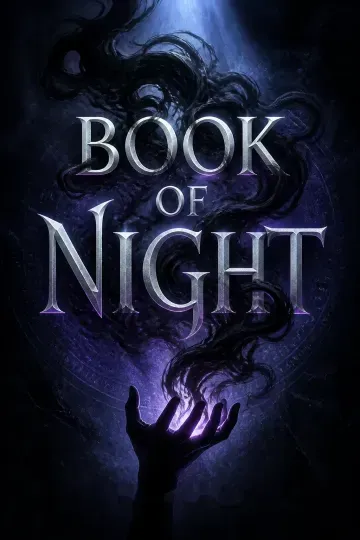
The Charlatan Duology Series Series
About the Author
Other books by Holly Black

Download PDF
Download EPUB
.epub digital book format is ideal for reading ebooks on phones, tablets, and e-readers.








































