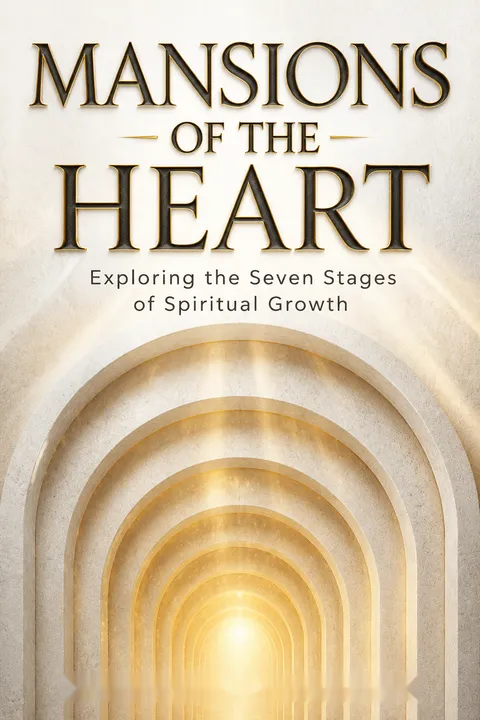

Key Takeaways
1. Spiritual Growth is a Journey of Love, Not Just Rules or Performance
God’s purpose is to transform us into the very image of Christ.
Beyond superficiality. Many Christians feel stuck or frustrated in their faith, often because traditional discipleship models emphasize external actions like holiness, service, or intellectual understanding as primary goals. While these are valuable, they can become "dead-end roads" if pursued as ends in themselves, leading to exhaustion, pride, or a sense of failure. The true, foundational goal of spiritual formation is a deep, loving relationship with God.
Love as the core. God's ultimate desire for us is a restored relationship of love through Jesus Christ. This "first-order calling" to simply be with God, to receive and return His love, is paramount. Holiness, effective service, and personal wholeness are not prerequisites for this love, but rather natural by-products that flow from a heart deeply rooted in God's affection.
Transformative intimacy. When love for God becomes the central focus, our motivations shift from obligation or self-gain to genuine adoration. This intimacy transforms our inner being, enabling us to love others more authentically and to serve God not out of duty, but as a joyful response to His overwhelming love.
2. The Interior Castle: A Roadmap for Lifelong Spiritual Transformation
In My Father’s house are many dwelling places; if it were not so, I would have told you; for I go to prepare a place for you.
A divine blueprint. Just as we mature physically and emotionally, God has designed a progressive path for our spiritual growth. Teresa of Avila's "Interior Castle" metaphor, with its seven concentric "mansions" leading to God at the center, provides a timeless roadmap for this journey of deepening intimacy with the Trinity. This model is:
- Biblically faithful
- Historically validated
- Descriptive of our experience
- Developmentally sensitive
- Universally applicable
Navigating the soul. Each mansion represents a distinct phase of spiritual growth, characterized by changes in our heart's desire, activities, prayer patterns, Jesus' initiatives, the enemy's schemes, and keys for growth. While the journey generally moves inward, it's not strictly linear; we may visit different mansions, explore rooms within them, and even revisit earlier stages with new understanding.
God's proactive love. The journey is not about us finding God, but about God actively drawing us closer. Jesus prepares each "dwelling place" for us, taking the initiative to invite us into deeper intimacy. Understanding this roadmap helps us interpret our experiences, cooperate with God's work, and persevere through challenging seasons, knowing His loving purpose.
3. From Self-Reliance to Divine Initiative: The Four Waters of Grace
The fourth and final way is the best of all: as by a gentle but abundant rainfall the Lord himself waters the garden and the soul does not work at all.
Effort and grace. Teresa of Avila uses the analogy of "Four Waters" to illustrate the changing dynamic between our human effort and God's divine grace in spiritual growth. Initially, our spiritual life requires significant effort, like drawing water from a well with a bucket (First Water). As we progress, God's grace becomes more prominent, lessening our strenuous exertion.
Decreasing human control. The journey moves from active effort to passive receptivity.
- First Water (Mansions 1-3): Much human effort, like carrying buckets. We work hard at prayer, avoiding sin, and serving.
- Second Water (Mansion 4): Less exertion, like a water wheel. God's grace is more evident, but we still "crank" the wheel.
- Third Water (Mansion 5): Far less effort, like irrigation from a stream. We cooperate with God's flow.
- Fourth Water (Mansions 6-7): No human work, like abundant rainfall. God's initiative completely waters the soul.
Yielding to God. This progression is counter-intuitive; we often assume spiritual maturity demands more work. However, Teresa reveals that true growth involves learning to yield to God's direction and power. When our efforts become fruitless, it's often a sign that God is calling us to a new level of surrender, where His grace can work more freely.
4. The Early Mansions: Awakening, Struggle, and Disciplined Following
The whole aim for any person who is beginning prayer . . . should be that he work and prepare himself with determination and every possible effort to bring his will into conformity with God’s will.
New beginnings (Mansion 1). This stage marks initial conversion, where we first receive God's love and forgiveness. Our focus is often on getting God's help for worldly issues, and our prayer is primarily discursive (talking to God). We begin to shed obvious sins, but worldly values still heavily influence us.
- Heart's Desire: God as a means to personal happiness/security.
- Key Activities: Basic sin avoidance, initial good works, largely world-driven lifestyle.
- Enemy's Schemes: Reinforcing worldly lies, tempting with minor rebellion.
Between a rock and a hard place (Mansion 2). We become aware of the conflict between God's way and the world's. This is a battleground where we earnestly desire to follow Christ but are still pulled by false pleasures. Spiritual warfare intensifies, often leading to discouragement and feelings of failure.
- Heart's Desire: Schizophrenic pull between world and God.
- Key Activities: Intentional Christian living, but struggle with consistency.
- Enemy's Schemes: Deception about true happiness, increased temptations, shame, distractions in prayer.
Following Jesus (Mansion 3). A disciplined life emerges, characterized by consistent church involvement, ministry, and prayer. We embrace a biblical worldview and strive to please God. However, this stage can lead to pride, busyness, and a "holy dissatisfaction" if we equate hard work for God with intimacy with God.
- Heart's Desire: Stable faith, desire to please God, but often driven by performance.
- Key Activities: Active ministry, good stewardship, spiritual gifts, but can be overcommitted.
- Enemy's Schemes: Pride, distractions, focus on performance over relationship.
5. Falling in Love with Jesus: The Shift to Infused Prayer and Intimacy
Once taste God, and nothing but God will ever do again.
A new passion. The fourth mansion marks a significant transition where we begin to "fall in love" with Jesus. God reveals His presence through profound "touches" of His love, shifting our attention from the gifts to the Giver. This kindles a deep, divinely bestowed passion for knowing, loving, and seeking God for His own sake.
Infused prayer. Our prayer life dramatically changes. We move from primarily discursive prayer (telling God things) to "infused prayer," where God sets the agenda. This includes:
- Prayer of Quiet: Resting in God's presence without words or thoughts.
- Contemplation: Attentiveness and focus on God alone, beholding Him.
- Abiding Prayer: A natural, ongoing communion of life with Christ.
Lifestyle changes. This new longing for intimacy compels us to make lifestyle adjustments, prioritizing quality time with God. We become more discerning about ministry, choosing to serve where we feel specifically called by Christ's love, rather than out of obligation. God also begins to heal deeper emotional wounds, preparing our hearts for greater intimacy.
6. The Dark Nights: God's Painful Purification for Deeper Union
Until a soul is placed by God in the passive purgation of the dark night, which we shall soon explain, it cannot purify itself completely from these imperfections nor from the others.
Divine boot camp. The "Dark Nights of the Soul," as described by John of the Cross, are periods of intense spiritual purification, not signs of backsliding. God orchestrates these experiences to strip away our subtle attachments and self-reliance, preparing us for deeper union with Him. They are painful but necessary for profound growth.
Dark Night of the Senses. This first night typically follows a season of satisfying spiritual experiences. Suddenly, all sensory consolations cease:
- Symptoms: Dryness in prayer, no spiritual delight, feeling abandoned, increased awareness of sinfulness.
- Purpose: To detach us from reliance on spiritual feelings and external comforts, teaching us to seek God in faith alone.
- Outcome: Deepens humility, increases hunger for God, and purifies our "spiritual senses."
Dark Night of the Spirit. A more profound and agonizing purification, where God seems to withdraw even further, leaving the soul in deep darkness and anguish.
- Symptoms: Feeling of divine rejection, total spiritual dryness, memory in emptiness, affections in supreme affliction.
- Purpose: To purge the very roots of sin, self-will, and spiritual pride, forcing total reliance on blind faith.
- Outcome: Purifies the soul for complete union, developing unwavering trust and love for God alone, regardless of feelings.
7. Betrothal and Passion: The Sixth Mansion's Intense Love and Suffering
Now it is fully determined to take no other spouse.
Deepening commitment. The sixth mansion is a phase of intense "betrothal" to God, marked by profound experiences of His transforming love and a burning desire to live for Him alone. Our love for God is ablaze, and we count as loss anything that hinders deeper intimacy.
Paradoxical experiences. This mansion is characterized by both ecstatic spiritual experiences and the profound pain of the Dark Nights.
- Joys: "Wounds of love" (powerful, fleeting touches of God's love), ecstasy, rapture, locutions (hearing God's voice), transport (sense of being elsewhere).
- Pains: Intense longing for God's presence, deep awareness of our own sinfulness, suffering for Christ's sake, and the purifying darkness of the Dark Nights.
Responsive living. Our will becomes increasingly absorbed in God's, leading to a life of utter responsiveness and obedience. Ministry flows from a deep love for God and neighbor, rather than obligation. We learn to embrace suffering as a way to share Christ's passion and express our devotion.
8. Transforming Union: Living in the Trinity's Love (The Seventh Mansion)
One can say no more—insofar as can be understood—than that soul, I mean the spirit, is made one with God.
Spiritual marriage. The seventh mansion represents the ultimate degree of intimacy with God in this life: spiritual union with the Trinity. The Dark Nights have completed their work, purging everything that stood between us and God's holy fire. We experience a complete integration of mind, body, and spirit in the life of Christ.
Trinitarian revelation. God grants a unique, intellectual vision of the Trinity, transforming our understanding into experiential knowledge. Jesus reveals Himself in His humanity, drawing us into a "spiritual marriage" where our spirit is made one with God. This union is a living, abiding reality, not a fleeting experience.
Relative perfection. We achieve "relative perfection" in this life, characterized by:
- Forgetfulness of self: No longer concerned with personal significance, but fully focused on God.
- Desire to suffer: Longing to share Christ's sufferings as an expression of love.
- Unfelt peace and joy: An inner stability and security that transcends external circumstances.
- Integrated life: Worship and work, adoration and service, being and doing become one.
9. Your Unique Path: God's Personalized Journey of Healing and Growth
God loves and relates to the real person, not to our illusions or projections.
Individuality matters. God created each of us uniquely, with distinct histories, temperaments, and personalities. While the general roadmap of spiritual formation is universal, God guides and transforms us in ways perfectly tailored to who we are. Our wounds, whether physical, emotional, or spiritual, are also unique and become part of our journey.
Healing and redemption. God often surfaces past wounds and developmental issues as we progress through the mansions. These are not hindrances but opportunities for deeper healing, allowing us to shed false images and embrace our true selves in Christ. Our brokenness, once healed, can become a source of profound compassion and ministry to others.
Self-knowledge is key. To cooperate fully with God, we must intentionally pursue self-knowledge, understanding our:
- Genetic wiring and personality: How we naturally relate to the world.
- Wounds and coping mechanisms: How sin and life experiences have shaped us.
- New identity in Christ: Our deepest truth as beloved sons and daughters of God.
This discovery process, aided by spiritual friendships, community, coaching, and solitude, frees us to love God and others authentically.
10. The Church's Vital Role: Fostering a Spiritually Forming Community
The full spiritual development and formation of followers of Jesus is not an option for our local churches.
Essential community. Spiritual formation is not a solitary journey; it is deeply intertwined with our life in the Body of Christ. Authentic Christian community provides the necessary support, encouragement, and accountability for growth, especially as we navigate the challenging later mansions.
Beyond basic discipleship. Many churches excel at guiding new believers into the "third mansion" of disciplined service, but often lack resources for deeper intimacy. A truly spiritually forming church must:
- Embrace a clear vision: For lifelong spiritual transformation, not just membership or evangelism.
- Cultivate spiritual leadership: Leaders must model intentional spiritual growth.
- Foster authentic relationships: Through small groups and spiritual friendships.
- Offer whole-journey education: Teaching about all seven mansions and appropriate practices.
- Provide resources: For prayer, spiritual warfare, reading, counseling, and retreats.
A light on a hill. When a congregation intentionally supports the spiritual formation of its members, it becomes a "city set on a hill," radiating the light of Christ. This transforms individuals into mature disciples who love God fully and share that love with a desperate world, fulfilling both the Great Commandment and the Great Commission.
People Also Read





Download PDF
Download EPUB
.epub digital book format is ideal for reading ebooks on phones, tablets, and e-readers.








































