
Plot Summary
Orderly Morning, Broken Pattern
Vera rises expecting her precise routines to anchor her, but her girlfriend Annie is gone from their bed, triggering unease. This subtle vacancy cracks Vera's carefully controlled morning rhythm. As Vera prepares, we glimpse the minuscule rituals—making the bed, perfect ponytail, cleaning Annie's muddy tracks—that give her comfort, as well as the first undercurrents of anxiety and the compulsive order that frames her life. Annie's warmth and playfulness clash gently with Vera's rigidity, establishing a sweet intimacy but subtle fear of disruption. These opening moments reveal how Vera clings to structure, not just for efficiency, but as a shield against the chaos threatening her world—and the peace she fears may already be slipping from her grasp.
Penny's Return, Strange Odds
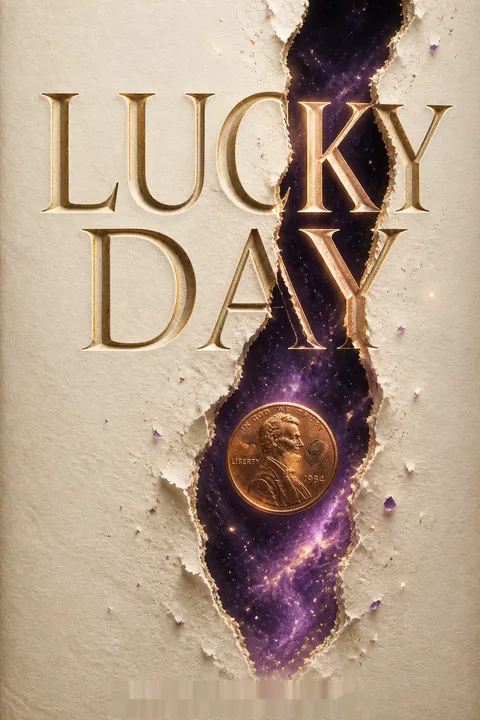
During their brisk Chicago walk, Annie finds a penny minted in Vera's birth year, bearing the faint scar of a lost childhood sticker. The two debate probability, Annie hoping for wonder while Vera calculates statistical absurdity. Vera sees the odds—finding HER penny, after decades and countless lost coins—as nearly unquantifiable. While Annie urges her to embrace the serendipity, Vera resists, tossing the "lucky" penny away, refusing to invest in magic. This rare moment—absurd, improbable, and possibly magical—is met, as always, with suspicion and dread by Vera, who reads coincidence as harbinger, not blessing. Here, the story's themes of fate, likelihood, and human resistance to hope begin to shimmer under the surface.
The Book, The Mother
Vera's book about corporate fraud publishes soon, and she gathers friends for brunch. But her mother's presence reignites decades of tension—expectation, disappointment, perfection required. The subtext of Vera's queer relationship with Annie bubbles beneath the surface, never open. Annie tries to support, pushing Vera to celebrate, but her mother still controls the mood, even with softer edges. When Vera admits her engagement to Annie, Maria recoils in denial and casual erasure, invalidating Vera's bisexuality. The longed-for acceptance unravels into pain, culminating in a fight that spills into the street, old wounds ripped open, love still dismissed as a phase. Vera runs after her mother, heartsick.
Lucky Day's Catastrophe
The day tips into the impossible: fish rain from the sky, freak catastrophes and deaths strike the city. In the chaos, Vera's mother is killed by a freak accident, Vera helpless to stop it. As she flees in shock, Chicago disintegrates—parade balloons hang corpses, vehicles careen, a monkey murders a friend with a typewriter, and probability itself collapses into surreal violence and randomness. Vera searches desperately for Annie and her friends, but finds only terror. Chaos mounts, the world stops making sense, and Vera's sense of agency, pattern, and even existence evaporates. She flees, running without stopping, dissolving into a new, meaningless world.
The World Shredded Apart
Vera survives the "Low-Probability Event," but the world has split apart—physically and psychologically. Four years pass. Vera, numbed and hollowed, is reclusive in the remnants of her mother's house. Society has become obsessed with luck—national lotteries, cults, self-help schemes—while survivors are adrift, compensation programs inept and predatory. Vera lets isolation devour her, not out of drama but inertia: life, and the urge to care, becomes a nearly insurmountable burden. Even a stray cat's mewling barely prompts her to action, and when the animal dies, the meaninglessness of it all nearly claims her. The architecture of random tragedy is everywhere, and nothing seems to matter anymore.
Four Years of Nothing
Vera moves through her days in a fog, haunted by voicemails and memories—her mother's last messages, Annie's desperate calls she never returned. Her trauma calcifies into a stubborn patch of catatonia; she cannot let herself care about anyone or anything—even her own pain. She drifts, errands and ramen purchases punctuated only by reminders of how automated survival strips life of meaning. Yet, feeding the stray cat, she senses faint renewal—a flicker of affection, regret, a tear for what's lost. But as soon as she cares, the universe snatches the cat away, confirming her nihilism and driving her closer to oblivion, and the edge of self-annihilation.
The Stray, And Memory's Cost
Vera feeds the stray—"Kat"—even as she resolves not to let herself hope. She tentatively reconnects with the world, testing her old phone, listening to messages from her dead mother and from Annie—pleas and panic left unheard. Each memory is both solace and agony, proof of connection and the inevitability of loss. Yet, this very heartbreak teases out flickers of desire to keep going—to risk feeling, no matter how often she's burned. When Kat dies, Vera is devastated, but this time she doesn't surrender fully to the abyss. The will to continue, despite cataclysmic meaninglessness, is revealed as its own malleable, stubborn act of hope.
The Agent at the Door
Unexpectedly, a government agent—Jonah Layne—barges into Vera's trashed sanctuary. He's investigating the "Low-Probability Event," the catastrophic day when luck bent reality. He needs Vera for her expertise on probability—and her published work indicting a particular casino, The Great Britannica, whose "better-than-fair" odds seem to warp fate. Vera's disgust with power and systems meets Layne's uneasy optimism; he represents a strange buoyancy, a dogged refusal to succumb to meaninglessness. He recruits her: together, they'll take on the casino, chase down what's behind the cracks in probability, deal with the supernatural trauma bleeding through the world. Vera, at last, is pulled into action—a reluctant, wounded consultant on the strangest case in history.
Britannica's Impossible Odds
At the Great Britannica, Vera and Layne confront a reality where statistics lie: games favor the player, yet the house always wins. Vera's analyses failed to expose any scam—every method checks out—and yet, the casino's odds break the universe's laws over and over. As they prod at the surface, they're stonewalled by charismatic CEO Denver White, part cowgirl, part corporate killer. Surveillance, intimidation, and Vegas spectacle swirl. Vera is drawn into a world where probability is bent by forces unknown, and all efforts to find the "cheat" are fruitless. The real answer lies deeper—beneath math, behind luck, at the core of what fate even means.
Plot Holes Revealed
The government's real concern is not just cheating, but tears in reality—"plot holes"—from which impossibilities leak. Vera witnesses the aftermath: victims with their heads split by black voids, unlucky numbers that kill, and "Minor Low-Probability Events" still erupting and being covered up. Layne explains: fate itself is warped, leaking cosmic randomness. In Vegas, beneath the casino, they discover the heart of the anomaly: a parasitic entity—shaped by perception—attached to rotating "luck department heads," plucking the strings of fate, feeding on probability itself. This "nothing" is smuggled out of the void, refusing to let destiny heal, keeping chaos and tragedy flowing.
Deal With the Devil
Vera wants to destroy the source, but finds it indestructible—a literal manifestation of nothing, an anti-being that cannot be destroyed, only returned to where it came from. Layne's privileges—extralegal power, rule-breaking for a "greater good"—reveal their own darkness. In a moral cauldron of institutional cover-ups and personal betrayals, Vera faces the reality of "doing harm to do good." They cut a deal with Denver White, promising her immunity for testimony—and access to the luck-bending entity. The price of hope, and of saving the world, is accepting corruption, backroom deals, and necessary evils. Vera's anger burns, but the only path forward is through compromise.
Hunt for the Source
Vera applies her skill: mapping property records, tracking improbable coincidences, hunting for the initial incursion point where fate broke. She works the math—finding the patterns, sifting statistics from the debris. As they comb empty desert, reality keeps bending: confetti rain, hostile creatures, increasingly surreal events. They suspect a central, hidden plot hole—a literal void where probability fails completely—caused by years of luck-manipulation accumulating debt with the universe. Tracking numbers, accidents, and impossible odds, Vera and Layne close in on the nexus, as the world's entropy climbs to untenable levels.
Destined in the Desert
In the confetti-choked desert, they're attacked by cosmic predators and glimpse horror—aliens, tendrils, mutilations, even trusted allies melting into monsters. Vera and Layne cross the ruined company site, witness the carnage of fate's backlash, and reach the central, ever-widening plot hole. With a protective suit and the luck-parasite in tow, Vera volunteers to enter. Here, her expertise meets the unknown: she steps into the absolute void to return the entity and heal the wound, risking total annihilation—of herself, or the universe, or both.
Entering the Void
In the heart of oblivion, Vera meets not monsters but her own dead mother, and the voice of cosmic emptiness. The void offers release—relief from chaos, all meaning, all pain. Vera is shown a montage of cruelty, every reason not to exist. She is tempted, but recognizes the trick: nothingness cannot grant mercy, it only erases the value of connection, love, and even loss. The choice is hers—let entropy consume everything, or accept existence, chaos and all, and do what only a conscious being can: choose something over nothing, meaning over oblivion.
The Choice: Something or Nothing
Faced with the caged nothingness, Vera refuses to bring it back, refuses to end existence for ease's sake. She rejects the comfort of disengagement, and the fraudulent safety of nothing. She declares: chaos won, yes, but the only fight left is between existence and the void. Nothingness is seductive but sterile; even pain is proof that something matters. By turning her back on oblivion, she affirms her right—and her responsibility—to choose meaning, even if it can never be permanent or perfect. It is not certainty, but the act of choosing, that saves her.
A Friend's Final Turn
Emerging from the void, Vera is greeted as a hero by Layne—but their partnership collapses. Now, too dangerous, she must be eliminated. Vera's past tragedies echo: no choice is without cost. Yet this time, when Layne pulls his gun, she gambles on her own lesson, taking the wheel—literally and figuratively—and survives, while Layne dies in a crash. Having rejected both nihilism and easy authority, Vera risks existence and openness, accepting loss as the price of meaning.
Strange Attractors, Unlikely Hope
Vera leaks all the records: the world confronts the full horror and farce of luck worship, plot holes, unethical government, exploitation, and the small and large betrayals that define humanity. There is no clean resolution—culture reorients, but corruption persists. Vera, battered and alone, chooses to live with uncertainty, returns home, and begins, painfully and awkwardly, to reach out: cleaning, breaking down her gun, even texting Annie one last time. She lets herself hope for response—despite all probability.
A Gist: To Exist Anyway
In her wild, weed-choked garden, Vera mourns, then notices a patch of flowers growing from her dead cat's grave: proof that even in decay, something beautiful and unexpected can bloom. Life and meaning are not gifts of the universe, but rebellions against its emptiness. Vera's existence is infinitely unlikely, endlessly precarious—and for that reason, quietly miraculous. She chooses, gently but stubbornly, to hope.
Analysis
Chuck Tingle's Lucky Day is a genre-defying, emotionally acute narrative about trauma, luck, and the battle to create meaning in a fundamentally indifferent—or even antagonistic—universe. Through the lens of surreal, apocalyptic comedy-horror, it reframes the classic question of "why do bad things happen to good people?" around the literal bending of probability: if all patterns break, who are we when caring becomes an act of courage, not certainty? The book moves from tightly managed routines, through existential cataclysm, to a battered advocacy for existence: it insists that pain and apathy are both rational responses, but that neither is the end of the story. Through Vera's journey—her loss, collapse, reluctant quest, confrontation with real cosmic emptiness, and final choice to exist anyway—the book argues that meaning is not extracted from the world but forged in opposition to it. Small acts—feeding a stray, texting an ex, dismantling a gun—become proof of victory in the daily fight against oblivion. Tingle's madcap plot devices, from killer monkeys to luck-eating centipedes, literalize mental illness and grief while inviting laughter and horror alike. The greatest lesson: nothing matters, which is why every act of care, risk, or kindness has infinite value. In a world with no guarantees, Lucky Day offers the possibility that to exist—fragile, hopeful, foolish—is the most subversive, magical act there is.
Review Summary
Lucky Day receives generally positive reviews, averaging 3.82/5. Readers praise Chuck Tingle's wildly imaginative premise — a bisexual statistics professor investigating a catastrophic "Low Probability Event" — and his signature blend of absurdist gore, dark humor, and queer themes. Many highlight compelling Final Destination-style horror sequences and an emotionally resonant protagonist grappling with nihilism and depression. Common criticisms include uneven pacing, underdeveloped secondary characters, and a detective plotline that feels thin. The audiobook narration by Mara Wilson receives consistent praise.
People Also Read

Characters
Vera Norrie
Vera is a young, black-haired statistics professor whose obsession with order helps her fend off anxiety—and, later, monumental trauma. Her deep psychological pattern is shaped by a demanding mother and a need for control: routines, exactness, and detachment are her tools. When the Low-Probability Event destroys her life and her world, she becomes an avatar for trauma's aftermath—numbed, dissociated, but never fully extinguished. Vera's relationships are fraught: she is loving but withholding with Annie, desperate for approval yet wary of intimacy, and deeply skeptical of both hope and systemic solutions. Her quest is not just about fixing broken reality, but reconciling herself to the truth that caring—and suffering—are not flaws, but marks of being fully alive. Her psychological journey moves from control through despair to a hard-won, modest re-embrace of meaning.
Jonah Layne
Layne is an agent of the LPEC—a government body with near-absolute power in an entropic world. Urbane, handsome, energetic, he uses charm and authority to get what he wants, but is genuinely motivated by the desire to help, even if it means breaking rules or people. Haunted by personal loss (the horrifying death of his brother), Layne's relentless positivity is both coping mechanism and mask. He partners with Vera for her expertise, sees her as both asset and potential loose end. Layne's arc is shaped by ends-justify-means pragmatism, and, ultimately, betrayal: loyalty only lasts as long as you're useful. Yet he's not a villain—he's a product of a world where survival trumps sentiment, and the cost of "saving the world" is too often paid in those unable to "be managed."
Denver White
Denver projects a calculated affect—half cowgirl, half corporate wunderkind—presenting affability while ruthlessly defending her interests and her company, Everett Vacation and Entertainment. She is the architect of making the casino "luck engine" pay, never fully evil and, frighteningly, never really apologetic. Her relationship to Vera and Layne is pragmatic; she only helps when cornered. Beneath her bravado lurks fear—of irrelevance, of being made a scapegoat by even bigger powers. Yet her willingness to deal shows survival instinct, more than moral growth.
Annie (Vera's ex-fiancée)
Annie is the counterweight to Vera's paralysis—sunny, playful, and intuitively trusting. Her love is steadfast but not naive, and she pushes Vera to risk openness. Her ultimate role is as catalyst and touchstone: her absence (and Vera's abandonment) is the wound that defines Vera's journey, and Annie's presence in memory and the void is the axis upon which Vera decides that hope is possible, even when not probable. Annie's loving persistence, even when ignored, is the most powerful non-magical force in the story.
Maria Norrie (Vera's mother)
Maria looms as both living force and ghostly presence—a model of discipline, perfection, and sometimes casual invalidation. The mother/daughter dynamic—pride, shame, disappointment, and, rarely, affirmation—lays the framework for Vera's compulsions and her ache for meaning. Maria's inability to accept Vera's sexuality triggers several of Vera's greatest wounds. Ultimately, even as a voice within the void, "Mom" is the internalized judge, the unanswerable question of whether Vera's life can matter.
The Luck Parasite ("Centipede")
The "centipede" is an existential parasite, a creature (shape determined by the beholder) brought from a plot hole—the void—feeding on probability and warping fate, preventing reality from healing. It is both literal (in its effects on luck) and metaphorical: the nihilism, the seduction of numbness and not-caring, personified. It offers escape, but only through obliteration. The centipede's cycle (host, hunger, effect, exhaustion) mirrors the pattern of trauma, depression, and the easy comfort of giving up.
The Cat ("Kat")
Kat, the emaciated stray, becomes Vera's first connection after trauma. Feeding Kat is low-risk care, a test of whether openness is possible. Kat's death devastates Vera, reinforcing the cost of caring, but also becomes a key metaphor: even loss leaves something—flowers bloom where death fell. The cat's silent, instinctual presence coaxes Vera toward risk and, eventually, small renewal.
Minor "Plot Holes"/Wormholes
These inexplicable cosmic rifts—head-sized black voids—are the visible signs of reality's injury, from which disasters and miracles spill, sometimes randomly, sometimes in fateful pairs. They instantiate the story's core conflict: the fight between entropy and meaning. They are both narrative device and symbol—reminding us that even the best stories have gaps, irrationalities, and desperate improvisation.
LPEC / The Government Apparatus
The government and its agencies represent the world's—and humanity's—response to trauma by overshooting into paranoia, control, and ethical drift. Their methods (unaccountable power, secret experiments, messy concealment) are at once understandable and monstrous—necessary evil becomes normalized evil. For Vera, they're both the enemy and only option. The cost of "victory," progress, and safety is always paid by the most vulnerable.
The Void / Maria-as-Nothing
When Vera confronts this "nothing," it wears her mother's face—seductive, judgmental, persuasive—that offers the ultimate relief from pain: nonexistence, or universal annihilation. It becomes the opposite of story, of caring—a permanent closing of all plot holes. The void's most insidious trick is to argue that suffering will stop if meaning is abandoned, but Vera finally recognizes that only connection—even if painful—makes the struggle worthwhile.
Plot Devices
The Probability Engine / Luck Parasite
The casino's "impossible odds" are not a con but a metaphysical breaking of the rules; a creature pulled from "nothing" is made to adjust probabilities, enriching the house but building up a backlash. This engine literalizes human attempts to cheat fate, and the story's core insight: good or bad luck, systematized, always leaves a debt. The parasite is depression, addiction, and the human desire to control the uncontrollable, in symbolic form.
Catastrophe and Surreal Chaos as Trauma Manifest
The impossibility of fish falling from the sky, monkeys murdering, confetti rain, and plot holes killing by statistical fluke: all physical expressions of the psychological rupture after trauma. They also literalize the novel's argument about narrative: sometimes stories break down, randomness intercedes, and no amount of analysis can fix it. These events are both shocking spectacle and potent metaphor.
Narrative Structure: From Routine to Rupture to Recovery
The novel's progression—from meticulous order, through shattering chaos, to apathy, and finally to a fragile, defiant hope—mirrors Vera's emotional arc. Each chapter reframes "order" as both comfort and fantasy, "chaos" as threat and opportunity, until meaning is forcibly reasserted by choice, not design. The plot structure tracks Vera's own arc from resistance to surrender and, finally, deliberate reengagement.
Foreshadowing and Echoing Through Coincidence
Small events—a stickered penny, voicemails, numbers on the radio—repeat and compound, suggesting either cosmic conspiracy or just the brain's ache for connection. These devices reinforce the story's principle: meaning is what we're desperate to find, even when meaning isn't guaranteed by the universe. Each echo is both a wound (the cost of caring repeating) and an invitation.
Symbolism: The Gun, The Cat, The Garden
The gun on the table is expected, telegraphed as suicide device—and then dismantled, repurposed, not used for its "expected" meaning. The cat's grave grows new flowers, a literal proof that loss leaves a mark, and that beauty, even in chaos, needs no permission. The garden is chance, not design.
Download PDF
Download EPUB
.epub digital book format is ideal for reading ebooks on phones, tablets, and e-readers.








































