
Plot Summary
Frost and Survival
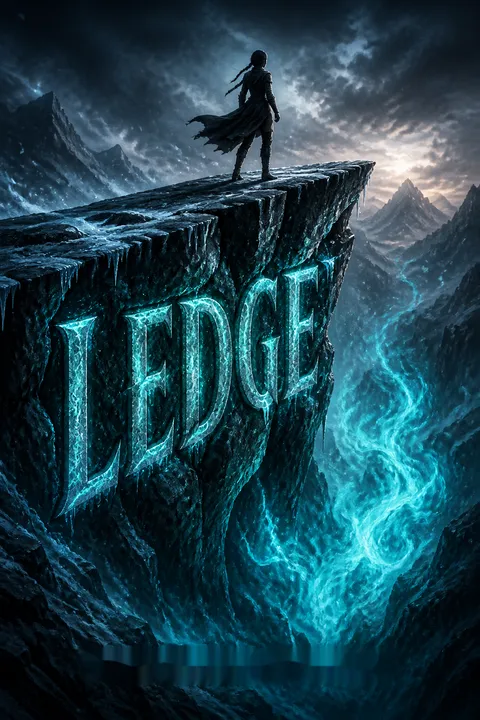
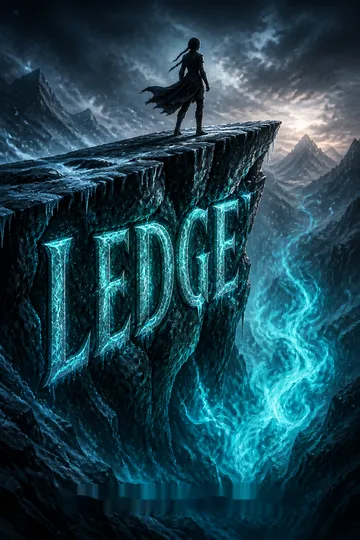
Dawsyn Sabar's world is a frozen ledge high above a bottomless chasm, where survival is a daily battle against the cold and hunger. She chops wood, fights for scraps, and clings to the mantra that the cold is not alive, even as it gnaws at her spirit. The Ledge is a prison for her people, kept there by the monstrous, winged Glacians who rule from across the Chasm. Dawsyn's family is gone, leaving her alone to defend her meager resources and memories. Her only solace is the rhythm of work and the fleeting warmth of human contact, but even that is tinged with desperation. The cold is relentless, and Dawsyn's determination to endure is both her shield and her burden.
The Drop's Cruelty
When the Glacians drop supplies, the villagers scramble in a brutal melee for whatever they can seize. Dawsyn is forced to fight, claw, and sometimes harm her neighbors just to claim a piece of flint or a scrap of cloth. The Drop is a microcosm of the Ledge's cruelty—only the strong and ruthless survive. Dawsyn's hands are calloused and bloodied, her heart hardened by necessity. The cold, hunger, and violence have stripped away any illusions of community or safety. Even moments of intimacy, like those with her friend Hector, are transactional, a brief respite from loneliness rather than true connection. The Ledge rewards only the relentless, and Dawsyn is determined to be among them.
Den of Girls
Dawsyn's family history is one of loss and resilience. Her grandmother, mother, and sister formed a "den of girls," surviving through wit and ferocity. But tragedy is relentless: her father falls into the Chasm, her grandmother succumbs to illness, and her sister is taken by the Glacians during a Selection. Each loss carves away at Dawsyn, leaving her more alone but also more unyielding. Her mother, Briar, eventually succumbs to grief, leaving Dawsyn the last of her line. The den's legacy is one of survival at any cost, a lesson Dawsyn carries as both a weapon and a wound. She is solitary, but her strength is forged from the memory of those she loved.
Chasm's Edge
At the edge of the Chasm, Dawsyn contemplates the abyss that has claimed so many. The Glacian kingdom looms on the far side, a constant reminder of her people's captivity. Stories of the past—of the Glacians' conquest and the villagers' forced exile—haunt her. The Chasm is both a barrier and a lure, promising a quick end to suffering. Dawsyn resists the pull, clinging to the rituals and memories that keep her alive. But the weight of solitude and the certainty of eventual selection gnaw at her resolve. Each visit to the edge is a confrontation with despair, and each return is an act of defiance.
Selection Day
Selection Day is a ritual of terror. The Glacians swoop down, choosing villagers at random to be carried away—never to return. Dawsyn stands alone as the head of her household, her luck holding for years but always under threat. The process is brutal and arbitrary, a reminder of the villagers' powerlessness. When Dawsyn is finally chosen, the talons pierce her flesh, and she is lifted away from everything she has known. The pain is both physical and existential—a severing from her past and a plunge into the unknown. The Selection is not just a culling; it is the mechanism by which the Glacians maintain control and instill fear.
Taken by Glacia
Dawsyn and other selected villagers are delivered to Glacia, chained and stripped of dignity. She is shocked to find former neighbors alive, now broken and enslaved. The Glacians are revealed as both monstrous and methodical, using humans for purposes beyond simple consumption. The captives are processed, humiliated, and thrown into a dungeon where wounds fester and hope dwindles. Poison from a Glacian bite kills one of the prisoners swiftly, a reminder of the ever-present threat. Dawsyn's resilience is tested as she faces not just physical suffering but the psychological torment of seeing her people reduced to tools and playthings.
Prisoners and Poison
In the dungeon, Dawsyn forms fragile bonds with her fellow captives, sharing pain and fleeting comfort. The arrival of former friends as enslaved caretakers is a bitter blow, underscoring the totality of the Glacians' domination. The prisoners are paraded before the Glacian court, forced to choose between a soulless immortality in the Pool of Iskra or a doomed attempt to escape. The pool is a horror—those who enter emerge as empty shells, their essence consumed. Dawsyn's refusal to submit marks her as different, and she chooses the impossible: to run, to fight, to defy the fate imposed on her.
The Pool of Iskra
The Pool of Iskra is the heart of Glacian power—a magical well that grants immortality by devouring human souls. Dawsyn witnesses its horror firsthand, watching friends and enemies alike reduced to husks. The King offers a cruel alternative: a head start on the slopes, to be hunted for sport. Dawsyn seizes this chance, her defiance igniting a spark of rebellion. She is pursued by Glacian hunters, but an unexpected ally emerges: Ryon, a hybrid Glacian-human who has his own reasons for wanting to escape. Together, they form a tenuous alliance, bound by necessity and a shared hatred of their oppressors.
The Hunt Begins
Dawsyn's escape is a desperate race down the mountain, pursued by relentless hunters. The landscape is as deadly as her pursuers, and every step is a battle against exhaustion and injury. Ryon's intervention saves her life, but trust is slow to grow between them. Their partnership is forged in violence and necessity, each testing the other's limits and motives. As they descend, they share stories and scars, their bond deepening even as danger mounts. The hunt is not just a physical ordeal but a crucible that reveals their strengths, fears, and the possibility of something more than survival.
Alliance with a Hybrid
Ryon reveals his hybrid nature and his own history of suffering under Glacian rule. He is an outcast, neither fully human nor Glacian, and his ambitions are revolutionary: to overthrow the King and free both the mixed-bloods and the humans. Dawsyn and Ryon's alliance grows into mutual respect and attraction, complicated by trauma and mistrust. They navigate the perils of the mountain together, learning to rely on each other's skills and resolve. Their relationship is a fragile hope in a world defined by cruelty, and their shared purpose gives them the strength to keep moving forward.
Blizzards and Betrayal
As they reach the valley, Dawsyn and Ryon confront not only external threats but the secrets that divide them. Ryon's past, his connection to the Glacian court, and his hidden motives come to light. Dawsyn grapples with her own legacy, the truth about her family, and the possibility that she is more than a survivor—she is a symbol. Betrayals, both personal and political, threaten to unravel their alliance. Yet, in the face of blizzards and enemies, they find moments of intimacy and understanding, forging a bond that is as much about healing as it is about rebellion.
Descent to the Valley
Reaching the valley is a revelation for Dawsyn. The world below the Ledge is vibrant, alive, and filled with possibilities she never imagined. Yet, the scars of exile and oppression linger. Dawsyn is both awed and alienated by Terrsaw, the human kingdom that once abandoned her people. She meets allies and adversaries, each with their own agendas and histories. The contrast between the suffering on the Ledge and the relative comfort of the valley is stark, fueling Dawsyn's anger and resolve. The journey is not just a physical descent but a confrontation with the past and the future she must claim.
Terrsaw's Forgotten
In Terrsaw, Dawsyn is both a curiosity and a threat. She encounters survivors, would-be friends, and those who remember the old days. The pain of exile is mirrored in the guilt and denial of those who remained. Dawsyn's presence forces Terrsaw to confront its complicity in the suffering of the Ledge. She finds moments of comfort and camaraderie, but trust is hard-won. The past cannot be undone, but Dawsyn's determination to seek justice and freedom for her people is unwavering. The valley is a place of both healing and reckoning.
The Mecca's Truth
Dawsyn learns the truth about Terrsaw's bargain with the Glacians: the village at the mountain's base was sacrificed to save the rest. Her own grandmother was the crown princess, betrayed by her friend, Queen Alvira. The revelation is shattering, fueling Dawsyn's rage and sense of betrayal. She confronts the Queens, demanding accountability and justice. The cost of survival is laid bare—sacrifice, guilt, and the burden of leadership. Dawsyn must decide whether to seek vengeance or to forge a new path, one that honors the dead and frees the living.
Revelations and Rage
The truth ignites a storm within Dawsyn. She confronts Ryon about his secrets and the role he played in her journey. The Queens' duplicity and Ryon's hidden bargains threaten to destroy everything they have built together. In a moment of fury, Dawsyn nearly kills the Queens, only to be stopped by Ryon. Their relationship is tested to its limits, but the need for action is greater than personal grievances. Dawsyn channels her rage into purpose, preparing to return to the mountain and finish what she started.
The Queen's Bargain
Dawsyn and Ryon negotiate a fragile alliance with Terrsaw, seeking support for their plan to free the Ledge and overthrow the Glacian King. The Queens are wary, demanding proof and leverage. Ryon's own bargains come to light—he promised to kill Dawsyn in exchange for Terrsaw's help. The revelation is a devastating blow, but Dawsyn refuses to be a pawn. She claims her agency, demanding that the past be reckoned with and the future be fought for. The bargain is not just political but personal—a test of trust, loyalty, and love.
Return to the Mountain
Armed with new allies and hard-won knowledge, Dawsyn and Ryon return to the mountain. They rally the mixed-bloods, the Izgoi, and prepare for an uprising against the Glacian court. The plan is risky, relying on stealth, magic, and the element of surprise. Dawsyn's newfound power—drawn from the Pool of Iskra—becomes both a weapon and a burden. The final battle is brutal, a clash of wills and destinies. Dawsyn and Ryon fight side by side, their love and rage fueling their defiance. The cost is high, but the possibility of freedom is within reach.
The Uprising
The Glacian King is overthrown, the court shattered, and the Pool of Iskra sealed. Dawsyn and Ryon survive, but not without scars—physical, emotional, and spiritual. The Ledge is freed, but the future is uncertain. Old wounds remain, and new challenges await. Dawsyn must decide what kind of leader she will be, what kind of world she will help build. Ryon, too, must reckon with his past and his place in a world that has never fully accepted him. Together, they face the dawn of a new era—one born of pain, sacrifice, and the unbreakable will to survive.
Analysis
Stacey McEwan's Ledge is a harrowing, immersive exploration of survival, trauma, and the quest for freedom in a world defined by cruelty and exile. At its core, the novel interrogates the costs of endurance—what must be sacrificed, who must be betrayed, and how hope can persist in the face of relentless oppression. Dawsyn's journey from isolated survivor to reluctant leader is both deeply personal and emblematic of collective struggle. The narrative's use of physical barriers—the Chasm, the Ledge, the Pool of Iskra—serves as a powerful metaphor for psychological and social divides, while the hybrid identity of Ryon challenges binaries of enemy and ally, human and monster. The story's emotional arc is one of loss, rage, and the slow, painful forging of trust and community. In a modern context, Ledge resonates as a meditation on the legacy of trauma, the dangers of complicity, and the necessity of rebellion. Its lessons are clear: survival is not enough; justice and liberation require both memory and action. The novel's ending, with its hard-won victory and lingering wounds, refuses easy closure, insisting that the work of healing and freedom is ongoing—a challenge as relevant to our world as to Dawsyn's.
Review Summary
People Also Read
Characters
Dawsyn Sabar
Dawsyn is the last of her family, forged in the crucible of the Ledge's relentless cold and cruelty. Her psyche is marked by loss—of parents, sister, and community—but also by an indomitable will to survive. She is fiercely independent, slow to trust, and quick to fight. Her relationships are transactional, shaped by necessity rather than sentiment, yet she is haunted by the memory of her "den of girls." Dawsyn's journey is one from isolation to reluctant leadership, as she discovers her legacy as the descendant of Terrsaw's lost royalty. Her arc is defined by the tension between vengeance and justice, survival and sacrifice, and the possibility of love in a world that has given her little reason to hope.
Ryon Mesrich
Ryon is a hybrid—half Glacian, half human—rejected by both worlds. His childhood in the Colony is marked by abuse, deprivation, and the constant threat of violence. He is cunning, resourceful, and driven by a desire to overthrow the Glacian King and free his people. Ryon's relationship with Dawsyn is complex, blending mutual respect, attraction, and betrayal. He is haunted by the truth of his parentage and the role he played in Dawsyn's journey. Ryon's arc is one of self-acceptance, as he learns to trust, to love, and to lead. His revolutionary ambitions are tempered by personal loss and the realization that true freedom requires more than the fall of a tyrant.
Queen Alvira
Queen Alvira is a study in moral ambiguity. She sacrificed the village at the mountain's base to save the rest of Terrsaw, a decision that haunts her but one she defends as necessary. Her relationship with Dawsyn is fraught—she is both a betrayer and a potential ally. Alvira is shrewd, calculating, and deeply aware of the burdens of leadership. Her arc is one of reckoning, as she is forced to confront the consequences of her choices and the possibility of redemption. She embodies the cost of survival and the complexity of power.
Briar Sabar
Briar is Dawsyn's mother, a figure of strength and resilience who ultimately succumbs to grief after the loss of her daughter and mother. Her legacy is one of fierce protection and hard-won wisdom, but also of vulnerability and the limits of endurance. Briar's death leaves Dawsyn alone, but her teachings and example shape Dawsyn's approach to survival and leadership. She is a symbol of the costs of exile and the fragility of hope.
Hector
Hector is Dawsyn's childhood friend and occasional lover, a fellow survivor of the Ledge's brutality. His struggles mirror Dawsyn's—loss, deprivation, and the constant threat of selection. Hector is a reminder of what is lost in the fight for survival: innocence, connection, and the possibility of a different life. His relationship with Dawsyn is marked by mutual need rather than romance, a testament to the ways trauma shapes intimacy.
Baltisse
Baltisse is a powerful mage who aids Dawsyn and Ryon, her motives and loyalties often ambiguous. She is ancient, wise, and deeply connected to the history of Terrsaw and the Sabar line. Baltisse's interventions are crucial—healing wounds, offering guidance, and providing the tools needed for rebellion. She represents the enduring power of magic and the importance of legacy. Her relationship with Dawsyn is one of mutual respect and recognition, a bond between women shaped by suffering and strength.
Adrik
Adrik is a leader among the mixed-bloods, a figure of authority and experience. He is gruff, pragmatic, and deeply committed to the cause of liberation. Adrik's relationship with Ryon is paternal, marked by both support and challenge. He is skeptical of Dawsyn at first but comes to respect her resolve and leadership. Adrik embodies the collective will of the oppressed and the importance of solidarity in the face of tyranny.
Queen Cressida
Cressida is Queen Alvira's wife and co-ruler, more openly hostile to Dawsyn and Ryon. She is protective of Terrsaw's stability and wary of change. Cressida's skepticism and resistance to alliance reflect the broader anxieties of Terrsaw's elite. Her arc is one of gradual recognition of the need for reconciliation and the dangers of clinging to the past.
Esra
Esra is a flamboyant, gender-nonconforming ally who provides both levity and support. He is a trader, a survivor, and a bridge between worlds. Esra's friendship with Ryon and Dawsyn is genuine, marked by humor, loyalty, and a refusal to be defined by others' expectations. He represents the possibility of joy and connection even in the darkest times.
Gerrot
Gerrot is a former neighbor of Dawsyn's, now a slave in Glacia. His suffering and silence are emblematic of the cost of captivity. Gerrot's brief moments of connection with Dawsyn are poignant reminders of what has been lost and what might be reclaimed. He is a symbol of endurance and the need for liberation.
Plot Devices
The Chasm and the Ledge
The Chasm is both a literal and metaphorical divide, separating the oppressed from the world below. It represents the impossibility of escape, the weight of exile, and the ever-present threat of oblivion. The Ledge is a microcosm of survival under tyranny, its harshness shaping every aspect of life. These settings are used to heighten tension, symbolize isolation, and underscore the stakes of rebellion.
The Pool of Iskra
The Pool of Iskra is the source of Glacian power, granting immortality by consuming human souls. It is both a plot device and a symbol—the mechanism by which the Glacians maintain control and the horror that unites the oppressed. The pool's magic is seductive, promising peace but delivering oblivion. Its eventual subversion by Dawsyn and Ryon is a turning point, representing the reclamation of agency and the possibility of transformation.
Selection and Sacrifice
The Selection is a recurring event that structures life on the Ledge, a reminder of the villagers' powerlessness and the arbitrariness of fate. It is a device for exploring themes of sacrifice, community, and the limits of endurance. The choices characters make—who to protect, who to betray, what to endure—are shaped by the ever-present threat of selection.
Hybrid Identity and Rebellion
Ryon's hybrid nature is both a source of suffering and a key to revolution. His ability to move between worlds, to understand both oppressor and oppressed, makes him uniquely suited to lead. The rebellion is structured around alliances between outcasts—humans, hybrids, mages—each bringing their own strengths and wounds. The narrative uses hybrid identity to explore themes of belonging, transformation, and the power of the marginalized.
Foreshadowing and Cyclical Structure
The story is rich with foreshadowing—rituals, mantras, and memories that hint at future events. The cyclical nature of suffering and survival is mirrored in the structure of the narrative, with each generation inheriting the wounds and hopes of the last. The return to the mountain, the confrontation with the Queens, and the final uprising are all prefigured by earlier events, creating a sense of inevitability and resonance.
The Glacian Trilogy Series
About the Author
Other books by Stacey McEwan

Download PDF
Download EPUB
.epub digital book format is ideal for reading ebooks on phones, tablets, and e-readers.








































