
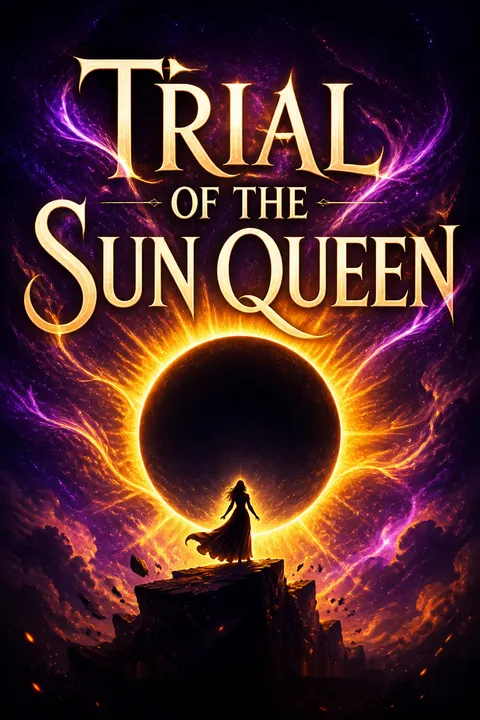


Plot Summary
Soap, Blood, and the Hollow
Twelve years inside Nostraza — the most notorious prison in Ouranos — have hardened Lor1 into a survivor who trades her body to wardens for soap and shields her siblings Tristan8 and Willow,9 whose family connection they keep secret.
When her nemesis Jude steals a hard-won bar of soap, Lor1 snaps, attacking her in the mess hall and breaking her wrist. Warden Kelava16 sentences her to two weeks in the Hollow — a punishment pit dug into the monster-infested forest surrounding the prison.
Inside, Lor1 nearly drowns in rising rainwater, goes days without food, and barely escapes a shadowy creature that lunges from the dark. On the brink of death, she hears distant sounds of a prison riot. Then hands — gentle but firm — lift her from the pit, and she loses consciousness.
Gold Sheets, Golden Cage
She opens her eyes to blue sky, silk sheets, and a mortal servant named Mag13 pressing buttered pancakes into her hands. Lor1 is in Aphelion, a southern kingdom of sunshine and golden splendor — the polar opposite of The Aurora's perpetual dark.
Mag13 bathes her, covers her scars with makeup, and pours her into a golden gown, chattering about something called the Tribute Ceremony. A winged Fae soldier named Gabriel3 arrives to escort her, identifying himself as the captain of the king's guard and her assigned warder.
He refuses every question, threatens force if she resists, and marches her through gilded hallways toward a throne room where her fate will be announced. The brand of Nostraza still burns on her shoulder, hidden under golden fabric.
Never Once Survived
Ten women stand before the Sun King Atlas2 — nine flawless Fae beauties and Lor,1 gaunt and scarred, planted at the end of the line. A herald announces the Sun Queen Trials: a centuries-old competition to choose the king's bonded queen.
One mortal from The Umbra — Aphelion's slum — competes alongside the Fae as proof anyone can change their fate. Afterward, Gabriel3 drags Lor1 aside and drops the truth: Atlas2 himself arranged her extraction from Nostraza. She must pretend she's from The Umbra, not a northern prison.
If she fails the Trials, she returns to her cell. And in eight thousand years, no Final Tribute has ever survived. But if she wins, she'd ascend to Imperial Fae with magic, a crown, and the power to free Tristan8 and Willow.9 That promise anchors her to the gamble.
The Prince and the Missing File
In The Aurora, Prince Nadir4 witnessed his father King Rion5 crush the warden's windpipe for losing prisoner 3452. Ordered to search the forest, Nadir4 instead visits Nostraza and discovers the prisoner file has been deliberately removed.
The replacement warden reveals the missing inmate was a girl. At the Hollow, Nadir4 finds no trace of any beast attack — only the faint scent of a foreign High Fae. Someone from a rival court flew the girl out.
Nadir4 kills the new warden to prevent word reaching his father, then enlists his sister Amya10 and his captain Mael11 to investigate every court in Ouranos. Rion5 refuses to explain why a single prisoner matters, which only deepens Nadir's4 conviction that uncovering her identity could be the weapon he needs against his despised father.
The Pact Behind the Throne
Over a private dinner overlooking the sea, Atlas2 peels back layers of truth. The Final Tribute has secretly always come from The Aurora, not The Umbra — part of an ancient pact between the two rival kingdoms. Each realm places one of their own in the other's ascension trials as a symbolic check on power.
If Lor1 wins, the Sun Mirror will judge her worthy, transform her into Imperial Fae, and grant both rulers the full magnitude of their combined magic. Atlas2 speaks of wanting love, not just alliance, and traces Lor's1 scar with a tenderness no one has shown her.
When she begs him to free Tristan8 and Willow9 now, he says only a queen could negotiate that. On the balcony, he presses a gentle kiss to the corner of her mouth — and demonstrates his illusion magic by conjuring an ocean floor around them, shimmering with telltale points of light.
Drowning for the Crown
The first trial hangs ten Tributes from ropes over open sea, firing trivia about Aphelion. Wrong answers lower the rope; five errors drop you into water teeming with fanged half-Fae creatures. After two desperate days of studying with friendly Tributes Halo7 and Marici,12 Lor1 clings to her rope as others fall.
Solana vanishes beneath the surface and never returns. When Lor1 answers her final question a heartbeat too late, her rope releases. She strangles one creature with the rope and punches another's windpipe, then dives back to rescue Marici,12 who's been seized underwater.
Something unseen halts a pursuing creature. Lor1 drags Marici12 to shore and collapses. Atlas2 reveals the real test was determination: reaching the beach alive meant passing. Three Tributes are eliminated; Solana is dead.
The Beach Where Kings Kneel
On a private beach beneath a white tent, Atlas2 invites Lor1 for dinner. Their conversation turns pointed — Lor1 challenges him about The Umbra's poverty while he dines in gold, and he listens, promising reform. Then the evening shifts.
Atlas2 drops between her thighs and brings her to climax with his mouth and hands. When she reaches for him, he gently refuses, saying there will be time after the Trials. They swim in the moonlit ocean and kiss under the stars.
Lor's1 resolve to win hardens into amber — not only for Tristan8 and Willow9 or revenge against the Aurora King,5 but because she believes she deserves happiness. Atlas2 sends golden roses the next morning. Still, the question coils beneath Lor's1 ribs: has he given this same performance to the other Tributes?
Blood on the Gauntlet
The second trial fills a public stadium with a towering wooden gauntlet of swinging pendulums, spinning blades, narrow beams, and climbing walls — all suspended over a pit housing a thogrul whose roar shakes the earth. Hesperia falls into the pit and is devoured. Lor1 takes a deep slash to the thigh from the spinning swords.
On the high balance beam, Apricia6 screams her name — a deliberate distraction that nearly sends her plummeting into the monster's jaws. On the climbing wall, Halo7 inexplicably tries to let herself fall, but Lor1 catches her wrist and hauls her up. After a final zip-line descent, Lor1 crashes across the finish line with a single second remaining, face-first in the dirt, as the crowd erupts. Four Tributes survive.
Cracks in the Golden Mask
Three revelations fracture Lor's1 certainty. Halo7 confesses she tried to throw the gauntlet because she's secretly in love with fellow Tribute Marici12 — a relationship that constitutes treason since all Tributes belong to the king. She begs Lor1 to help them if she wins.
Through a bathroom door, Lor1 overhears Atlas2 and Gabriel3 arguing: Gabriel3 demands to know why Atlas2 is obsessed with her and urges him to get rid of her, while Atlas2 threatens consequences if a single hair on her head is harmed.
Then Mag13 accidentally reveals the previous Sun Queen Trials occurred just two years ago, not five centuries — and every Tribute died. Rumors blame the king. Lor1 tallies the evidence of Atlas's2 subtle cheating on her behalf and begins to wonder whether his tenderness is devotion or strategy wearing a lover's mask.
One Dance with the Enemy
At the masquerade ball, Gabriel3 — who Lor1 discovers in a darkened room with another man instead of briefing her — assigns an impossible mark: Prince Nadir4 of The Aurora, whose ring she must convince him to surrender. She engineers a collision and asks him to dance.
Their hands touch and something electric arcs between them — wider and deeper than anything she's felt with Atlas.2 But the ring is a worthless trinket, not a treasured heirloom; Gabriel3 fabricated the assignment.
When Atlas2 spots them together, he erupts — banishing Nadir4 from Aphelion on pain of death, stripping Gabriel3 of his captaincy, and canceling the trial. All four Tributes advance. In the chaos, as Gabriel3 grabs Lor,1 her dress shifts and Nadir4 glimpses the Nostraza brand on her shoulder. The missing prisoner has a face.
Mine, Says the Sun King
Atlas2 pulls Lor1 into his chambers, where fury gives way to frantic kissing that nearly reaches consummation before Lor1 suggests they wait. Atlas2 agrees but murmurs that she's his — together, they'll be unstoppable.
His words carry possessiveness more than devotion, a claim being staked rather than a feeling confessed. She falls asleep in his arms, confused by the warmth of his body against the chill of his declarations. Across Ouranos, Nadir4 tells Amya10 and Mael11 what he saw at the ball: the Nostraza brand on the girl Atlas2 is guarding.
He resolves to extract her before the final trial, convinced Atlas's2 plans hinge on bonding her through the Sun Mirror. The race to possess Lor1 now has a third contender who doesn't want her crown — he wants her secrets.
Frozen Ledge, Burning Maze
The four remaining Tributes wake on a frozen mountain ledge with no food, water, or explanation. Days of shivering pass before Lor1 spots familiar shimmer points in the air — the telltale flaws of Atlas's illusion magic, demonstrated during their first dinner.
She announces the mountains aren't real and, before anyone can stop her, sprints off the cliff's edge. She crashes through the illusion and lands in a warm hedge maze where the real trial begins. Each Tribute must protect illusions of their loved ones navigating the labyrinth.
Lor1 chases phantom versions of Tristan8 and Willow9 through twisting corridors, fights a massive beast to protect Tesni's sister, and is slashed across the stomach. When Willow's9 illusion vanishes through a mysterious door, Lor1 batters it open and tumbles into the throne room.
The Mirror Speaks
Only Lor1 and Apricia6 survive the final trial. When Lor1 faces the Sun Mirror, its surface ripples and replays buried memories: a cottage in the woods, her parents murdered by the Aurora King's5 soldiers, three children dragged to Nostraza.
Then the Mirror speaks — addressing her as royalty, declaring her union with Atlas2 forbidden, warning that Ouranos would not survive it. It commands her to find the lost Heart Crown and return. Lor1 lies to Atlas,2 claiming the Mirror chose Apricia.6 His golden façade disintegrates. He snarls that he stole her from the Aurora King5 and she belongs to him — she isn't going anywhere.
When Apricia6 stands before the Mirror and ascends to Imperial Fae as Sun Queen, Atlas2 is forced to accept. He orders Lor1 thrown into the palace dungeons. Gabriel3 escorts her down and, in a rare moment of honesty, admits she would have made it with or without him.
Epilogue
Days later, Lor1 is roused from sleep by the sound of collapsing guards. Two Fae materialize at her cell — a broad-shouldered male and a slim female with aurora-colored magic crackling at her wrists. They spring the lock, bind and bag Lor,1 and spirit her from the Sun Palace before anyone raises an alarm. When the hood comes off in a moonlit stone room, Prince Nadir4 stands before her.
He greets her by her prison number — 3452 — and welcomes her back to The Aurora. Lor1 clutches the locket containing her mother's crimson jewel — a shard of something ancient, something lost — and understands her path leads not to Aphelion's golden throne but somewhere far older. She is a prisoner again. But for the first time, she knows exactly who she is.
Analysis
The novel examines how systems of power reproduce themselves even when they change costumes. Lor1 moves from Nostraza's grey stone to Aphelion's golden marble, but the fundamental dynamics remain identical: women's bodies serve as currency, obedience equals survival, and those at the top decide who lives. Atlas's2 court appears civilized — music, champagne, silk — yet its Sun Queen Trials are gladiatorial spectacles that claim lives with the same indifference as Nostraza's punishments. The text's central irony is that Lor,1 trained by abuse to read power dynamics, initially fails to recognize them when they arrive dressed in cinnamon-scented skin and aquamarine eyes.
The dual POV structure does essential work: Nadir's4 investigation reveals what Lor1 cannot see — that she's a prize being fought over by kings, not a person being loved by one. His parallel journey from political calculation toward instinctive connection at the masquerade offers a counter-model to Atlas's2 performative warmth. Gabriel3 occupies the moral middle ground, a soldier whose coded acts of rebellion suggest that even within coercive systems, agency persists in the margins.
The red jewel and the Heart Crown represent inherited versus imposed identity. Lor1 has been told she's nothing — prisoner, rat, expendable — by every authority figure in her life. The Mirror's recognition doesn't transform her; it validates what was already there. The novel argues that survival itself is a form of sovereignty: Lor1 earned her crown in the Hollow long before any Artefact confirmed it.
Most provocatively, the book interrogates the romance genre's own power fantasies. Atlas2 embodies every trope — the beautiful king, the private dinners, the breathless declarations — and the narrative initially invites readers to swoon before peeling back the performance to reveal coercion underneath. Madame Odell's15 demand that Lor1 prove her purity while Fae orgies rage through the palace corridors underscores the hypocrisy structuring gendered expectations of worthiness. The lesson is not that fairy tales are lies, but that they require examining whose story is being told and who profits from the telling.
Review Summary
Trial of the Sun Queen received mixed reviews, with ratings ranging from 1 to 5 stars. Many readers enjoyed the fast-paced plot, romantic elements, and fantasy world-building. Critics compared it to popular series like ACOTAR and The Hunger Games. Some praised the strong female lead and intriguing trials, while others found the characters underdeveloped and the romance lacking. Common criticisms included predictable plot twists, juvenile writing, and problematic themes. Despite divided opinions, the book generated significant buzz on social media platforms.
People Also Read


Characters
Lor
The Final TributeA mortal woman forged by twelve years in Nostraza, where she learned to weaponize her body, tears, and rage because softness meant death. Her psychology is radical survival crossed with fierce attachment—she tries to carve people from her heart to preempt loss, yet loves her siblings Tristan8 and Willow9 with an intensity bordering on self-destruction. Her moral compass bends but never breaks; she dives back into monster-infested water to save a rival. Her relationship with power is instrumental—she craves it for liberation, not domination. Throughout the Trials, she navigates a tension between the identity imposed on her (prisoner, Umbra rat, sacrificial Tribute) and a hidden identity she doesn't fully understand, making her both more vulnerable and more significant than anyone in Ouranos realizes.
Atlas
The Sun King of AphelionAn Imperial Fae whose magic creates illusions indistinguishable from reality—a power that doubles as a metaphor for his character. Atlas presents as the ideal romantic hero: impossibly beautiful, tender, progressive, and protective. He speaks of wanting love, listens when challenged about poverty, and makes Lor1 feel uniquely seen. His previous Sun Queen Trials carry whispered rumors that give even his own staff pause. Atlas represents the seductive danger of charm weaponized—the lover who makes you feel chosen while the terms of that choosing remain exclusively his. Whether his feelings for Lor1 are genuine, strategic, or some volatile combination is the central tension of their relationship. What he truly wants from her extends beyond romance or political alliance.
Gabriel
Atlas's captain, Lor's warderCaptain of Atlas's2 guard and Lor's1 warder during the Trials. Gabriel is abrasive, dismissive, and physically intimidating—he insults Lor's1 appearance and prospects relentlessly while training her with a rigor that repeatedly saves her life on the gauntlet's balance beam. His psychology is that of a man caged between duty and conscience, bound to Atlas2 by ties he describes as inescapable yet disturbed by his king's intentions. He flirts shamelessly with palace staff of all genders and treats vulnerability like a contagious disease. Yet beneath the cruelty lies a moral compass that occasionally overrides his orders—small, coded acts of rebellion that suggest his loyalty is more complicated than simple servitude. His grudging respect for Lor's1 survival instincts grows despite every attempt to suppress it.
Nadir
The Aurora PrinceHeir to The Aurora's throne of perpetual night. Nadir carries centuries of grief from his father Rion's5 cruelty—pain he refuses to discuss even with his sister Amya10. Where Rion5 is cold marble, Nadir is emotional and volatile, which becomes both his vulnerability and his strength. He possesses calculated ruthlessness—capable of killing to cover his tracks—yet is driven by a genuine desire to unseat a tyrannical father. His obsession with a mysterious missing prisoner begins as political strategy but evolves into something instinctive he can't fully explain, particularly after a single charged dance at a masquerade ball. His relationships with Amya10 and Mael11 reveal warmth beneath his brooding exterior. He moves through the story as a parallel protagonist whose investigative thread converges with Lor's1 at the critical moment.
Rion
The Aurora KingAn eight-hundred-year-old Imperial Fae who imprisoned three children in Nostraza and crushed his warden's throat with one hand. Cold, calculating, and indifferent to his own children, Rion treats prisoners, council members, and his son4 as instruments of control. His interest in prisoner 3452 reveals cracks in his marble composure—moments of relief and fear suggesting Lor's1 existence threatens something fundamental about his power. He orders his son to eliminate the missing girl, while projecting an air of supreme unconcern.
Apricia
Lor's fiercest rival TributeThe most skilled and ambitious Tribute, from a powerful Aphelion family. Apricia's relentless aggression toward Lor1—from verbal cruelty to deliberate sabotage during the gauntlet—masks deep insecurity about her own worthiness. She flips her hair as compulsively as she collects enemies, yet her survival through every trial demonstrates genuine courage beneath the venom. She represents the Fae aristocracy's entitlement: beauty as currency, lineage as destiny, and the absolute conviction that the crown belongs to those who were born to expect it.
Halo
Tribute with a hidden loveA warm, kind Tribute who becomes Lor's1 first genuine friend among the competitors. Halo's gentleness conceals a devastating secret: she's in love with fellow Tribute Marici12, a relationship that constitutes treason under the Trials' rules. Her desire to throw the gauntlet competition nearly kills them both. She represents the human cost of institutions that treat women as property and prizes, and her quiet desperation adds a layer of moral complexity to Lor's1 quest for the crown.
Tristan
Lor's imprisoned brotherLor's1 older brother, imprisoned in Nostraza since age seventeen. Charming and protective, he's known as the Prince of Nostraza for his ability to win over guards. He carries the family's memories and history, serving as keeper of a past Lor1 was too young to fully remember. His freedom—along with Willow's9—is the engine driving Lor1 through every trial.
Willow
Lor's imprisoned sisterLor's1 older sister, gentle and soft-hearted despite Nostraza's brutality. Willow represents what Lor1 fights to protect—the vulnerable tenderness she can't afford to show herself. Imprisoned for allegedly stealing a royal Artefact, she shares with Lor1 a silent understanding about the costs of survival. Her absence haunts every golden room in Aphelion.
Amya
Nadir's rebel sisterNadir's4 younger sister and fellow conspirator against their father Rion5. A fearless operative with aurora-colored magic, she chose to side with Nadir4 over their father—a betrayal that wounds Rion5 more than anything else in his long life. She pushes Nadir4 to confront his emotional damage while serving as his most reliable intelligence asset across the courts of Ouranos.
Mael
Nadir's captain and confidantNadir's4 captain, best friend, and moral counterweight. Charming, irreverent, and openly drawn to men and women alike, Mael provides dry humor and grounding perspective to Nadir's4 obsessive quest. He discovers a single living red rose growing in the dead realm of Heart—a clue whose significance neither fully grasps—while keeping Nadir's4 darker impulses in check.
Marici
Tribute and Halo's loverA pale, icy-blonde Tribute who befriends Lor1 despite social pressure and helps her study for the first trial. Secretly in love with Halo7, she is eliminated after Lor1 saves her life in the water, entering the uncertain limbo of a fallen Tribute.
Mag
Lor's palace servantLor's1 mortal servant in the Sun Palace. Motherly and fussy, she tends to Lor's1 recovery with genuine care while accidentally revealing crucial information about the previous Trials that cracks Lor's1 faith in Atlas2.
Callias
Flamboyant palace stylistAphelion's most coveted stylist, armed with magic hair-growth pills and cutting wit. He becomes an unexpected confidant for Lor1, offering gossip, genuine affection, and the kind of honesty the court usually reserves for whispers.
Madame Odell
Cruel Trial MistressThe Trial Mistress who supervises the Tributes between challenges. She openly despises Lor1, publicly humiliates her about her sexual history, and embodies the aristocratic contempt that treats the Final Tribute as disposable entertainment.
Kelava
Nostraza's abusive wardenNostraza's warden who sexually exploited Lor1 and sentenced her to the Hollow over stolen soap. His failure to keep prisoner 3452 under surveillance costs him his life at Rion's5 hands.
Plot Devices
The Sun Mirror
Chooses the Sun QueenThe Artefact that determines which Tribute ascends to Imperial Fae and rules Aphelion. It perceives truth, destiny, and worthiness, considering both a Tribute's character and the king's preferences. For nearly eight thousand years, it has selected Fae Tributes while mortal Final Tributes died before reaching it. When Lor1 finally stands before the Mirror, it defies Atlas's2 expectations entirely—recognizing her identity, declaring the union forbidden, and redirecting her toward the lost Heart Crown instead of Aphelion's throne. The Mirror functions as both judge and oracle, the single entity in the story immune to Atlas's2 manipulation and illusions. Its judgment sets up the central conflict for the broader series.
The Red Jewel and Golden Locket
Hidden family heirloomA small crimson stone Lor's1 mother pressed into her hand moments before dying, hidden in the hem of her prison tunic for twelve years. One side is smooth as though sliced by magic; the others are faceted and catch light. Upon arriving in Aphelion, Lor1 transfers it to a golden locket she wears constantly, clutching it whenever she thinks of Tristan8 and Willow9. The jewel functions as Lor's1 anchor to her pre-Nostraza identity—the only physical remnant of her family and the life that was taken. As the story progresses, its crimson color and mysterious smoothed facet hint at connections that extend far beyond one family's tragedy, linking to the lost realm of Heart and its missing Crown.
The Nostraza Brand
Marks prisoners, reveals identityThree sinuous lines atop a circle—the Aurora King's5 sigil—burned into every prisoner's skin. Lor1 carries it on her shoulder, normally hidden by clothing. The brand functions as a ticking time bomb: if anyone in Aphelion recognizes it, Lor's1 cover as an Umbra native collapses. This is precisely what happens at the masquerade ball, when the brand is glimpsed by Prince Nadir4, who immediately connects it to his search for prisoner 3452. The brand bridges Lor's1 two worlds—evidence tying the Sun King's2 stolen Tribute to the Aurora Prince's4 missing prisoner—and becomes the catalyst for the story's final act.
Atlas's Illusion Magic
Creates false realitiesAtlas's2 power over light manifests as illusions indistinguishable from reality, except for tiny shimmering points visible upon close inspection. He demonstrates this during their first dinner by conjuring an ocean floor around them—a seemingly romantic gesture that becomes critical survival knowledge. During the fourth trial, when the Tributes wake on a frozen mountain ledge, Lor1 recognizes the same telltale sparkles and deduces the entire landscape is fabricated, giving her the courage to leap off a cliff through the false image. The magic also serves as the story's central metaphor: Atlas2 himself is an illusion—beautiful, convincing, and ultimately a construction hiding something far less benevolent underneath.
The Hollow
Punishment pit, extraction pointA rectangular hole dug into the forest floor outside Nostraza, located in the monster-infested Void. Prisoners sentenced here face starvation, exposure, and predatory creatures with no food, water, or shelter provided. Lor's1 two-week sentence becomes the mechanism of her extraction—Gabriel3 uses a staged riot to pull guards away, then flies her out while she's barely conscious. The Hollow also establishes Lor's1 extraordinary resilience: she is one of the few prisoners to survive multiple stays, a hardness that carries her through every challenge in Aphelion where pampered Fae Tributes crumble.
FAQ
Synopsis & Basic Details
What is Trial of the Sun Queen about?
- Imprisoned and Chosen: Lor, a prisoner in the brutal Nostraza, is unexpectedly chosen as the Final Tribute for the Sun Queen Trials in Aphelion, a competition to become the Sun King's queen.
- Navigating a New World: She is thrust into a world of luxury and political intrigue, where she must compete against other powerful Fae while grappling with her past and the secrets of her selection.
- Quest for Freedom and Power: Lor's journey is driven by her desire for freedom, revenge against the Aurora King, and the need to protect her siblings, all while navigating the dangerous path of the Trials.
Why should I read Trial of the Sun Queen?
- Unique Protagonist: Lor is a compelling character, a resilient and resourceful woman with a dark past, making her a refreshing change from typical fantasy heroines.
- Intriguing World: The story offers a rich and complex world with political intrigue, magical elements, and a unique blend of Fae and mortal societies.
- Emotional Depth: The book explores themes of family, loyalty, and the struggle for identity, creating an emotionally resonant experience for readers.
What is the background of Trial of the Sun Queen?
- Political Tensions: The story is set against a backdrop of political tension between the kingdoms of Aphelion and The Aurora, with a long history of conflict and rivalry.
- Magical Elements: The world is infused with magic, with High Fae possessing unique abilities and the Aurora King creating monstrous hybrids.
- Social Hierarchy: A clear social hierarchy exists, with Fae at the top and mortals often relegated to lower classes, as seen in the stark contrast between the Sun Palace and Nostraza prison.
What are the most memorable quotes in Trial of the Sun Queen?
- "Everything is on temporary loan, including our bodies and definitely our souls.": This quote highlights the oppressive nature of Nostraza and the prisoners' lack of autonomy.
- "One day, I'll get out of here and pay back the Aurora King for everything he's taken. For everything he's done.": This quote encapsulates Lor's driving motivation for revenge and her determination to escape her circumstances.
- "In this bleak existence, this bit of pleasure is a feeble light shimmering through the narrow cracks of darkness.": This quote reflects the harsh realities of life in Nostraza and the fleeting moments of joy that Lor clings to.
What writing style, narrative choices, and literary techniques does Nisha J. Tuli use?
- First-Person Perspective: The story is told from Lor's first-person perspective, allowing readers to deeply connect with her thoughts, emotions, and experiences.
- Vivid Imagery: Tuli uses vivid imagery and sensory details to create a rich and immersive world, from the harshness of Nostraza to the opulence of the Sun Palace.
- Foreshadowing and Symbolism: The author employs subtle foreshadowing and symbolism, hinting at future events and adding layers of meaning to the narrative.
Hidden Details & Subtle Connections
What are some minor details that add significant meaning?
- The Soap: The bar of soap Lor fights for in the beginning symbolizes the rare luxuries and the lengths prisoners must go to for even the smallest comforts in Nostraza.
- The Locket: Lor's locket, containing a red jewel, is a tangible link to her past and her family, representing her heritage and her driving force.
- The Scars: Lor's scars, especially the brand on her shoulder, are a constant reminder of her past and the injustices she has suffered, fueling her desire for revenge.
What are some subtle foreshadowing and callbacks?
- The Hollow: Lor's repeated punishments in the Hollow foreshadow her resilience and ability to survive extreme conditions, preparing her for the trials ahead.
- The Aurora King's Sigil: The brand on Lor's shoulder, the Aurora King's sigil, foreshadows her connection to him and the conflict that will eventually arise.
- The Sun Mirror: The Sun Mirror's mention as the ultimate judge foreshadows the twist in the ending, where it rejects Lor as the Sun Queen.
What are some unexpected character connections?
- Lor and Nadir: The connection between Lor and Nadir, the Aurora Prince, is unexpected, hinting at a deeper connection beyond their initial encounter.
- Lor and Gabriel: The complex relationship between Lor and Gabriel, her warder, evolves from animosity to a reluctant respect, suggesting a deeper bond than initially apparent.
- Lor and Atlas: The seemingly genuine connection between Lor and Atlas is revealed to be a manipulation, highlighting the deceptive nature of power and politics.
Who are the most significant supporting characters?
- Gabriel: As Lor's warder, Gabriel plays a crucial role in her training and survival, his conflicting loyalties adding complexity to his character.
- Halo and Marici: These Tributes offer Lor friendship and support, highlighting the importance of alliances and camaraderie in the face of adversity.
- Mag: As Lor's caretaker, Mag provides a glimpse into the lives of those who serve the Fae, offering a mix of kindness and bewilderment at Lor's existence.
Psychological, Emotional, & Relational Analysis
What are some unspoken motivations of the characters?
- Atlas's Ambition: Atlas's desire for power and control drives his actions, leading him to manipulate Lor and the other Tributes for his own gain.
- Gabriel's Loyalty: Gabriel's unwavering loyalty to Atlas is a complex mix of duty and a desire to protect his kingdom, often conflicting with his growing respect for Lor.
- Lor's Need for Connection: Despite her tough exterior, Lor craves connection and belonging, which is evident in her relationships with her siblings and her tentative friendships with Halo and Marici.
What psychological complexities do the characters exhibit?
- Lor's Trauma: Lor's past trauma in Nostraza manifests in her anger, her need for control, and her difficulty trusting others, making her a complex and flawed protagonist.
- Atlas's Manipulation: Atlas's charm and charisma mask a manipulative nature, revealing a deep-seated need for power and control.
- Gabriel's Internal Conflict: Gabriel's internal conflict between his duty to Atlas and his growing respect for Lor highlights the psychological toll of his position.
What are the major emotional turning points?
- Lor's Time in the Hollow: Lor's near-death experience in the Hollow forces her to confront her own mortality and strengthens her resolve to survive.
- The Dinner with Atlas: Lor's dinner with Atlas sparks a mix of hope and confusion, as she grapples with her growing feelings for him and the uncertainty of his motives.
- The Revelation of the Mirror: The Sun Mirror's rejection of Lor as the Sun Queen is a major emotional turning point, forcing her to confront her true identity and the path she must now follow.
How do relationship dynamics evolve?
- Lor and Atlas: Their relationship evolves from a mix of curiosity and manipulation to a complex dynamic of attraction and betrayal, highlighting the dangers of power and control.
- Lor and Gabriel: Their relationship evolves from animosity to a reluctant respect, with Gabriel's internal conflict adding layers of complexity to their interactions.
- Lor, Halo, and Marici: Their friendship evolves from a tentative alliance to a bond of loyalty and support, highlighting the importance of human connection in the face of adversity.
Interpretation & Debate
Which parts of the story remain ambiguous or open-ended?
- The Sun Mirror's True Nature: The Sun Mirror's true nature and its reasons for rejecting Lor remain ambiguous, leaving readers to question its motives and the nature of destiny.
- Atlas's True Intentions: Atlas's true intentions towards Lor and his reasons for choosing her as the Final Tribute remain unclear, leaving readers to speculate about his motivations.
- The Aurora King's Plan: The Aurora King's plan for Lor and his reasons for sending her to Aphelion remain ambiguous, leaving readers to wonder about his ultimate goals.
What are some debatable, controversial scenes or moments in Trial of the Sun Queen?
- Lor's Relationship with Atlas: The power dynamics and manipulation in Lor's relationship with Atlas are debatable, raising questions about consent and agency.
- The Treatment of Tributes: The brutal nature of the Sun Queen Trials and the casual disregard for the Tributes' lives are controversial, highlighting the ethical implications of power and tradition.
- Gabriel's Actions: Gabriel's conflicting loyalties and his treatment of Lor are debatable, raising questions about his true motives and his role in the story.
Trial of the Sun Queen Ending Explained: How It Ends & What It Means
- Rejection by the Mirror: Lor's rejection by The Sun Mirror signifies that her destiny lies outside of Aphelion and the Sun Queen role, setting her on a new path.
- Escape and New Alliance: Lor's escape from the Sun Palace and her alliance with Nadir, the Aurora Prince, suggest a shift in power dynamics and a new direction for her journey.
- Uncertain Future: The ending leaves Lor's future uncertain, as she grapples with her true identity and the challenges that lie ahead, setting the stage for future books in the series.
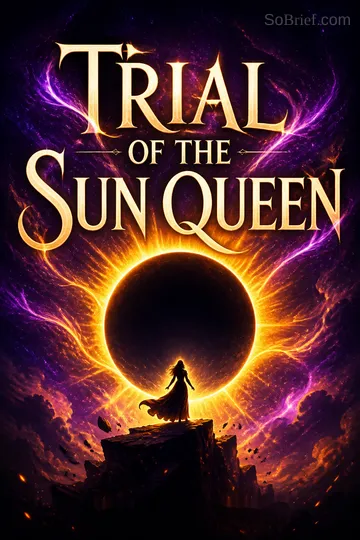
Artefacts of Ouranos Series
About the Author
Other books by Nisha J. Tuli





Download PDF
Download EPUB
.epub digital book format is ideal for reading ebooks on phones, tablets, and e-readers.








































