
Plot Summary
1. Blood On His Hands
Harry Hole, legendary Oslo investigator, wakes from a blackout drenched in unknown blood, unable to recall the events of the previous night. His marriage to Rakel has crumbled, and the relentless ache of loss is intertwined with fresh, inexplicable violence. Oslo in early spring is cold and uncertain, much like Harry's state, as he tries to align scattered memories with the blood on his seeping knuckles and the bruises on his troubled soul. The reader feels deep unease as Harry's haunted psyche and shattered domestic life set the tone for an obsessive, self-destructive new pursuit for truth and, perhaps, some redemption.
2. The Knife Collector's Promise
Svein Finne, vicious rapist and self-proclaimed 'Fiancé,' emerges from prison with sharpened intentions and a dark philosophy about knife, blood, and creation. Finne's obsession with knives as both symbols of life and death shades his worldview and foreshadows savagery. He stalks and manipulates, fixating on women as conquests or sacrifices, deluded that his violence serves generational justice. His old bullet wound is a badge of past encounters with Harry. The narrative pulses with menace as Finne's plans thrum in the background, the promise of new atrocities looming.
3. Shadows Over Holmenkollen
Tragedy shatters Harry as Rakel, the love that anchored his better self, is found brutally murdered in the house they once shared. The method is chilling, the evidence sparse, and Harry—disqualified by grief, addiction, and proximity—finds himself both investigator and chief suspect. His stepson Oleg reels from the loss, deepening Harry's torment. The Oslo police push Harry aside, but the breadth of his wounds, the intensity of his longing, and the impossibility of letting go infuse this section with raw emotion as Harry faces the ultimate dismantling of his family and identity.
4. The Locked Room Illusion
The murder's circumstances suggest the killer slipped away like a ghost, leaving the door locked from within and the crime scene cleansed of clues. Harry, wracked by guilt and gaps in memory, investigates as an outsider, haunted by the fact that his own behavior—drunk, volatile, angry—makes him look like the likeliest killer. Every piece of absence—the missing wildlife camera footage, the wiped knives—interlocks to form a puzzle that seems unsolvable and attacks Harry's sense of self and reality.
5. A Father's Vengeance
Harry theorizes that Svein Finne has returned for retribution: Harry once destroyed Finne's life by putting him behind bars, and Harry later shot Finne's biological son, the serial murderer Valentine Gjertsen. Driven by the rituals of blood feud, Harry obsesses over Finne as the architect of Rakel's death, even as colleagues dismiss these connections as paranoid. The symbolic and literal inheritance of violence between fathers and sons, detectives and criminals, becomes a dark undercurrent threatening to overwhelm rational investigation.
6. Ghosts in the Blood
Harry confronts old specters: the cases he solved, the victims he couldn't save, the children and wives left bereft. Parallel tragedies emerge—a father's misguided confession to protect his child; the way love, pain, and humiliation metastasize into murder. Conversations with psychological profiler Aune probe whether anyone, under the right existential assault, is capable of killing. The analysis moves from forensic to deeply personal, as Harry wonders if his compulsion to protect, even after loss, blinds him to his own possible guilt.
7. Crime Scene Echoes
Searching the ordinary for the extraordinary, Harry identifies small inconsistencies—a daughter's unused sneakers, silenced alarms, a song out of place on the car radio. What feels like hallucination becomes possible revelation as invisible truths flicker at the edge of consciousness. Relationships in the police shift: suspicion, camaraderie, and rivalry churn. Harry's powers of pattern recognition—the reason he caught so many killers—are hampered by grief, drink, and the gnawing knowledge that patterns can be deceiving.
8. Suspect, Victim, Investigator
Evidence mounts against Harry: blood, opportunity, rage, and lost time. The "locked room" becomes a metaphor for Harry's psychological state and the structures closing around him. Katrine, his trusted friend now head of Crime Squad, must weigh loyalty against duty. Other suspects—Finne, Roar Bohr, the destroyed Peter Ringdal—are scrutinized and dismissed one by one, but Harry's efforts only bring the circle tighter. He feels at once hunter, hunted, and haunted, his past consuming his present.
9. Declarations of Guilt
Svein Finne "confesses" to Rakel's murder, using it as leverage for a legal deal to avoid rape charges. The Oslo police—hungry for closure—seize on this, but the evidence fails to match. The confession is too pat, the motive too convenient, and as Finne's case falls apart, Harry's isolation and damnation become almost certain. Layers of truth and deception, legal maneuver and criminal calculus, converge to show that confession can itself be an act of violence.
10. Memory in Fragments
Increasingly, Harry's missing hours the night Rakel died become the prime evidence against him. He endures hypnosis in desperation, hoping to recover memory and prove his innocence; instead he is assailed by more doubt, as broken memories of blood, screaming, and locked doors attack his sleep. The tragedy of suppressed trauma and the unreliability of consciousness manifest both in Harry's struggles and in the investigation itself. The narrative tightens into a vise of lost and manufactured recollections.
11. Betrayal in the Blood
As the case seems to close on Harry, deeper treacheries surface: Bjørn, his oldest friend, has been married to Katrine and raised a child that, genetic testing hints, is not his own but Harry's. The killer's motive is suddenly intimate and devastating—the "locked room" is not only forensic but emotional, and the price of sins, real and imagined, becomes unbearable for those left behind.
12. The Scarred Avenger
Roar Bohr, former soldier, redeems his family's legacy by executing Svein Finne, the rapist who destroyed lives and perpetuated suffering. The symbolic old bear is slain; blood revenge finally enacted. But each act of violence leaves survivors lonelier—revenge does not bring closure, only the ghost of further violence, and more emotional debris for the innocent.
13. The Descent of Harry Hole
Harry, convinced by planted evidence, memory gaps, and his own darkness that he killed Rakel, flees to the mountains to die. His suicide attempt, nearly successful, is foiled by brute circumstance and a last-minute epiphany—someone has engineered not just a murder but Harry's ruin. Through suffering, he finds a sliver of will to solve the puzzle, not only for his own sanity, but for the memory of the woman he loved and the stepson he cannot abandon.
14. Plans for Redemption
With begrudging help from fellow misfits—a corrupt lawyer, a forensics technician, a sniper—Harry sets a trap for the real killer and a recidivist monster. They manipulate alibis, seize on forensic anomalies, and deploy the knife-collector's own methods as a weapon of justice. The plan's moral ambiguity reflects Harry's battered soul and Oslo's gray morality: redemption is never pure; every solution costs something.
15. The Last Good Man
The harrowing confrontation between Harry and Bjørn lays bare the ache of betrayal—both men damaged, both fathers, both longing for love and belonging. Bjørn's confession of murder, driven by a mixture of humiliation, rage, and loss, cuts deeper precisely because of the love that once bound these men. Suicide, once an escape, becomes a tragic bid for peace. The web of guilt expands through families, generations, and the fabric of the police itself.
16. The Sower and the Seed
The "sower" metaphor threads through the murders—the violent men who "plant" pain, rape, and children. The hunt for Finne's legacy—genetic, psychological, existential—shows how cycles of abuse and revenge propagate. But the novel gently raises the possibility of breaking these cycles, through understanding, love, or at least mercy. In graveyards and confessionals, seeds of forgiveness and hope take root, even as not all questions can be answered.
17. Confessions, Falsifications, and Farewells
In the aftermath, justice is partial and painful. Svein Finne is dead, the murder solved, but Harry must choose between flight and return, between self-destruction and hope. The survivors—Katrine, Oleg, the stoic Oslo police—try to restart their lives. Harry's future remains uncertain, but the tone softens: love, kindness, and an uncertain, but possible, peace linger as options in a world scarred by loss. In the end, the choice to go on, despite the darkness, is the closest thing to redemption this story will allow.
Analysis
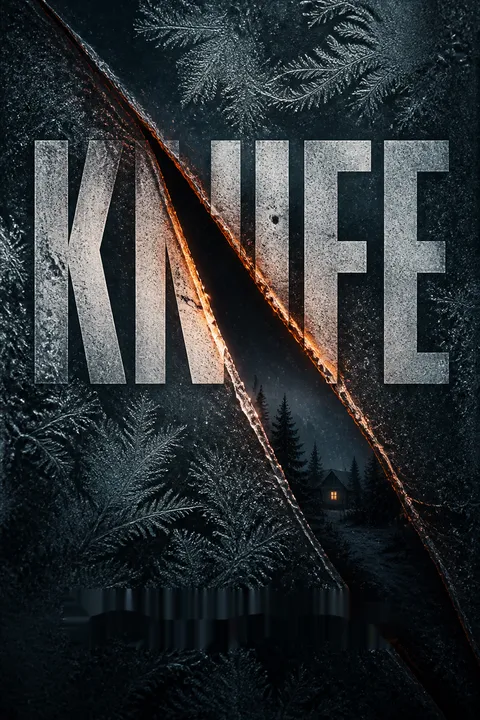
Knife is Jo Nesbø's most intimate, labyrinthine, and self-reflective Harry Hole novel—a story about violence, loss, the dangers of love, and the impossibility of disentangling justice from pain. Beneath its taut, noir plot, the novel meditates on the consequences of trauma: how it reverberates from one act of evil across generations, relationships, and society itself. Harry's journey is not just a whodunit but a meditation on the fragility of memory, the cost of guilt, and the agony of being both hunter and hunted, victim and suspect. Every tool of the detective is also a tool for self-destruction, and every revelation—about blood, paternity, betrayal—exposes new wounds.
Crucially, even the monstrous, like Svein Finne or Roar Bohr, are rendered with a tragic non-simplicity: their violence is both a product of choice and circumstance, their sins both personal and historical. The novel's locked-room trick, and its unmasking, is a metaphor for the way pain is perpetuated by secrecy, and justice must fight its way through not just physical evidence, but love, shame, weakness, and the dire need for forgiveness.
Knife's final note is more ambiguous than redemptive. It insists that the past cannot be forgotten, that seeds of violence, love, and fear will always grow, sometimes in unexpected directions. But it offers a sliver of hope: that empathy, acceptance, and simply choosing not to inflict further pain—whether by murder, revenge, or self-destruction—may yet transform what the knife has made into something that, if not whole, is at least survivable. In today's world, rife with division, blame, and cycles of violence, Knife's final lesson is deeply modern: that the hardest, bravest thing is not to fight monsters, but to struggle on, wounded, in spite of them.
Review Summary
Knife receives generally positive reviews, averaging 4.27/5 stars. Fans praise Nesbø's masterful plotting, dark atmosphere, and unexpected twists, with many highlighting a shocking murder that deeply affects Harry Hole. The book is lauded for rich character development and razor-sharp prose. Critics note the novel is occasionally overlong, with unnecessary details and excessive red herrings. Some readers take issue with Harry's implausible appeal to women and his seemingly indestructible nature. Despite mixed feelings about certain plot choices, most agree it's a compelling, emotionally heavy addition to the series.
People Also Read

Characters
Harry Hole
A brilliant, deeply damaged Oslo detective, Harry's life has been defined by his hunt for monstrous criminals and his constant battle with addiction. His devotion to his wife Rakel and stepson Oleg is the only anchor that keeps him functional, but when Rakel is murdered, that anchor is destroyed, sending him into both a psychological and physical spiral. Harry's genius for pattern recognition and his stubborn conscience make him both formidable and tragic; he's fixated on justice even when it implicates himself. His interactions with friends and suspects, trust and betrayal, and his complex web of guilt and love reveal a man at war with his own darkness, fighting to find meaning and truth in a world that repeatedly takes everything from him.
Svein Finne
Known as "the Fiancé," Finne is both physically marked (gunshot wound through his hand) and psychologically monstrous, seeing himself as a primal sower of life and violence. He views his brutal acts as acts of natural right, binding his victims in twisted promises and calling on ancient familial, almost religious, vengeance. Finne's relationship to knives, to rape, and to fatherhood is warped by self-aggrandizing philosophy. His hatred for Harry is both personal and symbolic, a clash of predator and hunter. Yet even his threats and confessions are laced with deception—his end comes not through justice but through targeted, personal revenge.
Rakel Fauke
Rakel is Harry's ex-wife and the emotional core of his world. Her tragic death catalyzes the novel, propelling Harry's descent and search for meaning. A survivor of prior traumas and the parent to Oleg, Rakel embodies both kindness and boundaries—her love saves Harry countless times, but her limits also shape his isolation and guilt. Through flashbacks and memory, Rakel remains a luminous, absent presence: her openness, her laughter, and her capacity for forgiveness both inspire and punish Harry's soul.
Bjørn Holm
Long-time forensics officer and Harry's closest friend, Bjørn presents as the loveable, stolid hipster: devoted to his wife Katrine and their baby, passionate about music and process. But beneath his genial exterior is a man haunted by inadequacy and humiliation—his inability to father a child, his knowledge of betrayal, and an envy of Harry's iconic stature. Bjørn's gradual breakdown mirrors Harry's, but its eruption is quieter, hidden. He becomes both murderer and martyr, sacrificing himself and setting the course for a tragic reckoning.
Katrine Bratt
Harry's old ally and now chief of Oslo Crime Squad, Katrine is fiercely bright, direct, and unafraid to challenge either her superiors or herself. Juggling the pressures of family, leadership, and loyalty, she embodies the tension between professionalism and friendship. Her bond with Harry is deeply personal, even as secrets and betrayals corrode mutual trust. Katrine's struggle to contain her grief, her protectiveness towards her son Gert, and her eventual capacity for forgiveness are among the novel's most moving arcs.
Oleg Fauke
A young police trainee in the north, Oleg's journey reflects the possibility of grace after trauma. He inherits both Harry's wounded seriousness and Rakel's warmth, struggling to understand his family's tragedy and to reforge his bond with his adoptive father. Oleg's forgiveness—his refusal to seek the "full truth" about his mother's death—suggests maturity, healing, and the desire to break the cycle of violence.
Roar Bohr
Bohr, a former elite soldier and Rakel's colleague, suffers from PTSD and obsesses over the power and shame of killing. Haunted by childhood trauma—the rape and suicide of his sister Bianca—and the atrocities seen in Afghanistan, Bohr channels vengeance into "watching over" vulnerable women and ultimately becomes the sniper who delivers justice to Finne. His story illuminates how violence and trauma radiate outward, shaping fates long after the guns go silent.
Peter Ringdal
Once a dreamer of grand transportation schemes, Ringdal is now reduced to running Harry's old bar, ruminating on lost potential, shame, and love gone wrong. His odd, suspicious behavior makes him a suspect, but his true crime is a formative accident—killing a girl on the road and fashioning a life after amid guilt. He becomes a mirror for Harry: both are men whose tragedies arise not from malice but from weakness and bad luck, tragically misunderstood.
Alexandra Sturdza
As Harry's post-separation lover and a key source for forensic clues, Alexandra represents the ambiguity of comfort and betrayal in a world of scientific certainty. Hers is a practical love, a search for warmth in cold times. She operates at the boundary between private pain and public process, often highlighting the limits of what science can prove when everything else is awash in lies.
Sung-min Larsen
Rising star at Kripos, Oslo's national police, Sung-min represents the new, driven face of police work. Cautious but creative, he unravels the trickiest lines of the locked-room puzzle. His intellect and outsider's perspective challenge the old guard and will shape Oslo's crime-solving future, but he is no stranger to the allure and danger of ambition and the urge, as with all egos, to claim the last word on justice.
Plot Devices
Locked Room Murder / Faked Alibi
The core device is the classic "locked room" crime—a murder in a house apparently sealed from within, with no escape visible for the killer. Through manipulated electronics (adjusted heating to confuse time of death), drugging of the suspect, and careful exit through an overlooked window, the real perpetrator exploits Harry's vulnerability, orchestrating not just a perfect murder but a perfect frame-up. This creates immense narrative tension, playing both with and against police-procedural conventions.
False Confession & Legal Maneuver
The story weaponizes justice: Svein Finne's confession is not proof but a calculated ploy to avoid other charges and muddy the waters for the real culprit. This crafts friction between the rapid desire for closure among police and the reality that justice is seldom clean.
Forensic Sleight-of-Hand
From the wildlife camera's sabotaged footage to DNA cross-checks to manipulation of fingerprints and blood evidence, forensic and technological details are deployed both as narrative misdirections and as means for eventual truth. The device of "pattern recognition" (Harry's strength and curse) is repeatedly subverted: patterns are there, but their meaning is twisted.
Memory Loss / Amnesia as Red Herring
Harry's blackout, induced by drugs, allows the true killer to plant evidence and horror in Harry's mind. The theme becomes not just whether Harry can remember, but whether what we remember is ever trustworthy.
Narrative Mirroring and Psychological Analysis
Through Aune the psychologist, case studies, and the personal histories of Bohr, Bjørn, Finne, and Harry, the novel deeply explores how trauma is inherited and repeated, for both victims and victimizers. The analysis of "murderer types," revenge cycles, and survivor's guilt creates a narrative web wider than the individual crime.
Redemption and Self-Destruction as Twin Endpoints
The tension between suicide—the "easy" way out, and facing justice, family, or forgiveness is a through-line device. Harry's attempted suicide and Bjørn's eventual suicide both illuminate how seeking to end suffering finds both tragic and ambiguous resolution.
Parallel Investigations and Shifting Perspective
The procedural alternates between the perspectives, methods, and moral compasses of Harry, Katrine, Sung-min, and others. Foreshadowed information, dead ends, and wrong conclusions maintain suspense and invite reader participation—every clue may be a trap as well as a map.
Harry Hole Series

About the Author
Other books by Jo Nesbø
Download PDF
Download EPUB
.epub digital book format is ideal for reading ebooks on phones, tablets, and e-readers.








































