
Key Takeaways
1. The Shah's Isolated Delusion: His self-constructed reality and inability to accept criticism fueled his downfall.
In this world, all the Iranian people were enjoying the fruits of progress as never before, the annual growth rate was an astounding 22 percent, and Iran’s international standing and military prowess were propelling it into the first rank of nations at a speed never equaled in human history.
Echo Chamber Effect. Mohammad Reza Pahlavi, the Shah of Iran, cultivated a court of sycophants who only told him what he wanted to hear, leading to a profound disconnect from the realities of his nation. His ministers doctored economic statistics and avoided delivering bad news, reinforcing his belief in Iran's unparalleled progress. This isolation meant he was unaware of the deep-seated discontent among his people.
Dismissal of Warnings. Even his closest confidant, Asadollah Alam, and his wife, Queen Farah, found their warnings dismissed. Alam's candid letter in January 1977, detailing widespread public dissatisfaction and economic woes, was torn up by the Shah. Farah's observation of a "sudden icy wind" of discontent at a public ceremony was met with a dismissive grimace.
Fatal Flaw. The Shah's inability to accept criticism or acknowledge problems created a dangerous vacuum. He genuinely believed his people loved him and that any opposition was orchestrated by foreign powers or a small "unholy alliance" of communists and religious fanatics. This delusion prevented him from taking timely and effective action as the revolution gathered momentum.
2. America's Blind Spot: Despite Iran's strategic importance, the U.S. remained willfully ignorant of the brewing revolution.
Well into the mid-1970s, in the eyes of American officialdom Ayatollah Khomeini might as well not have existed at all.
Institutional Myopia. The American embassy in Tehran, despite its massive size, was largely insulated from Iranian society. Diplomats rarely spoke Farsi, relied on pro-government local staff, and avoided contact with dissidents to maintain good relations with the Shah. This created a "workaday bubble" where critical information was often overlooked or dismissed.
Nixon-Kissinger Pact. A 1972 agreement between President Nixon and the Shah granted Iran carte blanche to purchase any American weapons, effectively ending U.S. oversight and scrutiny of the Shah's domestic policies. This deal, driven by Cold War strategy and economic interests, led to a deliberate policy of "don't ask, don't tell" regarding Iran's internal stability.
- The U.S. prioritized Iran as a regional surrogate and arms client.
- Concerns about human rights or internal dissent were sidelined.
- CIA intelligence on Iran's domestic situation became "astonishingly thin."
Dismissal of Truth-Tellers. American officials who did perceive the growing unrest, like Peace Corps volunteer Michael Metrinko, had their reports watered down or ignored by superiors. Metrinko's detailed analyses of religious discontent and the Shah's declining support were actively suppressed, highlighting a systemic failure to acknowledge inconvenient truths.
3. Khomeini's Strategic Rise: From obscure exile, he masterfully leveraged religious fervor and modern communication to become a revolutionary icon.
He had, more than any man of his generation, a talent for sitting still.
Obscurity to Icon. Ayatollah Ruhollah Khomeini, initially an obscure cleric exiled for his opposition to the Shah, was largely unknown to mainstream Iranian society and Western intelligence. His relentless denunciations of the Shah's regime, however, resonated with a growing segment of the population, particularly the urban poor and conservative religious communities.
Modern Propaganda. Khomeini's chief acolyte, Ebrahim Yazdi, recognized the power of modern communication. He orchestrated the recording and mass distribution of Khomeini's sermons on tape cassettes, which were smuggled into Iran and listened to in underground prayer meetings. This allowed Khomeini to bypass state censorship and build a widespread network of followers.
Strategic Ambiguity. From his exile in France, Khomeini, aided by Yazdi, presented a carefully curated image to the Western media. He spoke of humanistic values, democratic elections, and respect for minorities, while his more incendiary pronouncements were either untranslated or dismissed as forgeries. This strategic ambiguity allowed him to appeal to diverse opposition factions and reassure Western powers, even as he secretly planned for a hardline Islamic republic.
4. The Oil Curse and Gold Rush: Iran's immense oil wealth paradoxically accelerated corruption, social unrest, and the Shah's isolation.
In the single year of 1974, with oil now set at $11.65 a barrel, those receipts would quintuple to $21.4 billion.
Unprecedented Wealth. The 1973-74 oil price quadrupling, largely orchestrated by the Shah, brought Iran unimaginable wealth. This "gold rush" fueled rapid industrialization, massive infrastructure projects, and extravagant displays of consumption, transforming Tehran into a bustling, yet chaotic, metropolis.
Economic Dislocation. The sudden influx of oil money, however, led to hyperinflation, severe housing shortages, and the collapse of the agricultural sector. This created a stark divide between the wealthy elite, who flaunted their riches, and the masses of impoverished rural migrants flocking to city slums, leading to widespread resentment and social unrest.
- Annual oil receipts increased a hundredfold in less than 20 years.
- Inflation soared, making basic necessities unaffordable for many.
- Infrastructure (transport, electricity) was overwhelmed, causing bottlenecks and blackouts.
Corruption and Xenophobia. The oil boom exacerbated endemic corruption, with millions vanishing into the pockets of officials and billions wasted on ill-conceived projects. The influx of tens of thousands of Western expatriates, particularly in the defense industry, further fueled Iranian xenophobia and resentment against perceived foreign domination and cultural erosion.
5. The Unholy Alliance Narrative: The Shah's conspiracy theories about "red and black colonialism" masked the true nature of the widespread opposition.
This belief is shared quite widely by otherwise well-informed Iranians, including journalists and businessmen as well as govt servants.
Shah's Convenient Narrative. The Shah consistently attributed opposition to a "red and black colonialism" – a secret alliance between atheistic communists and archconservative clerics, orchestrated by foreign powers. This narrative allowed him to dismiss genuine grievances and avoid self-reflection, portraying himself as the sole protector against external manipulation.
Widespread Acceptance. Surprisingly, this conspiracy theory was widely accepted across Iranian society, even by some who were critical of the Shah. Many believed that ordinary Iranians were too disorganized to mount an effective movement, thus requiring external, sophisticated orchestration. This belief inadvertently empowered the Shah's propaganda machine.
Self-Sabotage. By constantly lying to his people and promoting a narrative of external enemies, the Shah eroded public trust. When genuine, broad-based opposition emerged, his claims of foreign meddling were met with cynicism. This created a "boy who cried wolf" scenario, where the truth became indistinguishable from state propaganda, ultimately undermining his credibility.
6. The Escalating Cycle of Violence: Key events like the Tabriz riots and Cinema Rex fire galvanized the opposition and exposed the regime's fragility.
This heartrending tragedy is intended by the shah to be his masterpiece, to provide material to be exploited to the utmost by his extensive domestic and foreign propaganda apparatus.
The Etalaat Editorial. A state-sponsored smear campaign against Khomeini in January 1978, published in the Etalaat newspaper, inadvertently ignited the revolution. This attack, accusing Khomeini of being a British agent and homosexual, provoked deadly riots in Qom, marking the first significant civil unrest in over a decade.
Forty-Day Cycles. Shiite mourning traditions, particularly the observance of Arbaeen (the fortieth day after a death), provided a powerful mechanism for sustained protest. The deaths in Qom led to riots in Tabriz forty days later, which in turn sparked further protests, creating a continuous cycle of mourning and defiance that the regime struggled to contain.
- Qom riots (January 1978)
- Tabriz riots (February 1978)
- Mashhad violence (July 1978)
The Cinema Rex Fire. The horrific arson attack on the Cinema Rex in Abadan, killing hundreds, became a pivotal moment. Despite evidence pointing to religious extremists, the regime's inept response and the Shah's perceived callousness (attending a lavish party the next day) allowed Khomeini to successfully blame SAVAK. This tragedy became a symbol of the regime's corruption and brutality, further galvanizing public anger.
7. The Shah's Paralysis and Dithering: Faced with mounting crisis, his indecision and reliance on external validation proved fatal.
This country is lost because the king cannot make up his mind.
Inertia and Indecision. As the crisis deepened, the Shah's characteristic indecision became a fatal flaw. He vacillated between conciliation and repression, constantly seeking external validation from his American and British allies rather than taking decisive action. This paralysis was evident in his delayed response to the Cinema Rex fire and his reluctance to empower a new government.
Medical Secret. Unknown to almost all, the Shah was secretly battling chronic lymphocytic leukemia since 1974. This debilitating illness, kept hidden from even his wife for years, likely contributed to his physical decline, mental fatigue, and inability to lead effectively during the most critical period of his reign. His gaunt appearance and distracted demeanor were noted by foreign visitors.
Lost Will to Rule. The Shah's refusal to use overwhelming force against his own people, stating he would "not murder the youth of my nation in order to rule it," revealed a fundamental weakness compared to other regional despots. This moral constraint, combined with his physical and psychological deterioration, left him unable to command the loyalty or fear necessary to maintain power.
8. The U.S. Policy Schism: Conflicting advice and internal bureaucratic battles left American strategy in Iran muddled and ineffective.
Tell Brzezinski to go fuck himself!
Conflicting Directives. The Carter administration was deeply divided on Iran policy. National Security Advisor Zbigniew Brzezinski advocated a hardline approach, urging the Shah to crush the opposition, while Secretary of State Cyrus Vance and Ambassador William Sullivan increasingly favored a political solution and engagement with moderates. This internal discord led to mixed messages and undermined any coherent strategy.
Bureaucratic Infighting. The lack of a unified approach was exacerbated by intense bureaucratic infighting and a "blame game" mentality. Agencies withheld information from each other, and officials like Ambassador Sullivan and NSC officer Gary Sick found themselves at odds, often actively undermining each other's efforts. This meant critical intelligence and nuanced assessments were often lost or ignored.
Misreading the Situation. Despite the Shah's obvious decline, the U.S. continued to believe he would survive, largely due to his formidable military. They failed to grasp that the military's loyalty was to the Shah personally, not to the institution, and that its morale was rapidly eroding. This miscalculation led to a focus on military options (like General Huyser's mission) even as political solutions became increasingly urgent.
9. The Military's Collapse: The Shah's once-powerful army disintegrated rapidly due to demoralization and a lack of decisive leadership.
The Group had nothing.
A Hollow Force. The Shah's military, though the fifth largest in the world and equipped with advanced American weaponry, proved to be a hollow force. Its senior commanders, accustomed to the Shah's micromanagement and fearful of independent action, were paralyzed by his indecision. They lacked contingency plans for his departure or for a coup, revealing a profound institutional weakness.
Demoralization and Defections. The Shah's orders to avoid lethal force against protesters, combined with the opposition's tactic of fraternizing with soldiers and placing flowers in their gun muzzles, severely demoralized the conscript-heavy army. Desertions became rampant, and units increasingly refused to confront the growing mobs. The homafars (air force technicians), a critical but disaffected group, were among the first to openly rebel.
The Final Surrender. On February 11, 1979, with Tehran in open insurrection, the military's High Council, led by a hesitant General Abbas Gharabaghi, declared its neutrality. This decision, made without the Shah's direct order and after rejecting a coup, effectively signaled the end of the Pahlavi dynasty. The army, once the bedrock of the Shah's power, simply melted away.
10. Khomeini's Ruthless Consolidation: The revolution's triumph quickly revealed a hardline theocracy, betraying promises of moderation.
I hereby pronounce Bazargan as the ruler, and since I have appointed him, he must be obeyed.
The "Nothing" Response. Upon his triumphant return to Iran on February 1, 1979, Khomeini's terse "hichi" (nothing) when asked how he felt, was interpreted by the faithful as spiritual transcendence, but by others as disdain. His subsequent actions quickly revealed a ruthless pragmatism, not the benevolent, Gandhi-like figure some Western observers had hoped for.
Theocratic Power Grab. Khomeini swiftly dismantled the interim government of Mehdi Bazargan, consolidating power through a network of mullah-led komitehs and the newly formed Revolutionary Guards. He invoked the archaic concept of velayat-e-faqih (guardianship of the jurists), declaring himself the Supreme Leader, whose authority was divinely sanctioned and beyond question. This directly contradicted earlier promises of a democratic, parliamentary system.
Purges and Executions. The revolution's victory was immediately followed by a brutal purge of the old regime's loyalists. Revolutionary tribunals, led by figures like the "Hanging Judge" Sadegh Khalkhali, conducted summary trials with no evidence or appeals, resulting in thousands of executions. This swift and violent consolidation of power, often against the pleas of moderates like Ebrahim Yazdi, shattered any illusions of a tolerant, democratic Islamic republic.
11. The Hostage Crisis: A Self-Inflicted Wound: The embassy takeover, though unforeseen, became a strategic victory for Khomeini and a prolonged agony for the U.S.
You are opening Pandora’s box.
Shah's Illness and U.S. Entry. The Shah's deteriorating health, kept secret for years, forced President Carter to allow him into the U.S. for medical treatment in October 1979. This decision, made against the strong advice of U.S. diplomats in Tehran, was seen by Iranian militants as proof of American complicity in the Shah's alleged crimes and a prelude to a counter-coup.
The Embassy Seizure. On November 4, 1979, radical students, emboldened by Khomeini's anti-American rhetoric and a photograph of Iranian moderates meeting with Brzezinski, stormed the U.S. embassy in Tehran. Their initial goal was a temporary occupation to expose American "plots," but Khomeini's swift endorsement transformed it into a prolonged hostage crisis, effectively eliminating moderate voices in Iran and rallying the nation against a common enemy.
Carter's Dilemma. President Carter's decision to prioritize the hostages' lives over immediate military retaliation inadvertently handed Khomeini a powerful bargaining chip. The 444-day crisis paralyzed the Carter presidency, contributing to his electoral defeat and reinforcing an image of American weakness. The eventual release of the hostages, timed with Ronald Reagan's inauguration, underscored the cynical political manipulation by the new Iranian regime.
Review Summary
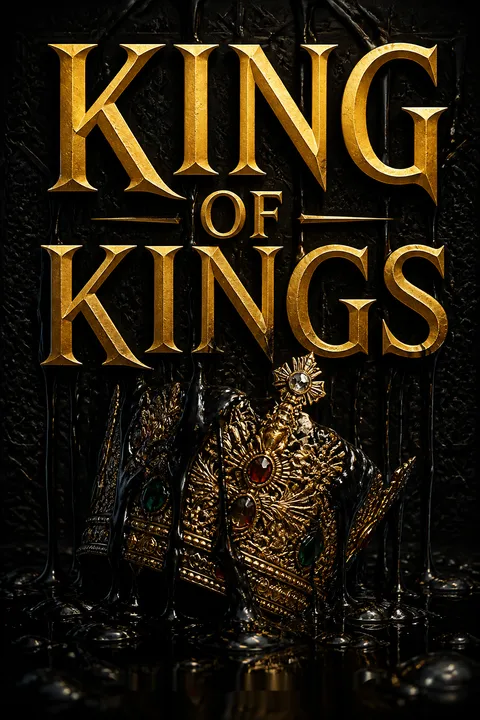
King of Kings by Scott Anderson receives mostly positive reviews (4.41/5) for its detailed account of the 1979 Iranian Revolution and America's foreign policy failures. Readers praise Anderson's narrative skill in making complex events understandable, though some criticize his reliance on limited sources and editorial tone. The book focuses primarily on American perspectives—the Shah, U.S. embassy staff, and Carter administration—rather than Iranian experiences. Several reviewers appreciate the extensive research and interview with Shahbanou Farah, while others note the book's sympathetic portrayal of the Shah and insufficient analysis of how Islamists seized control from moderates.
People Also Read



Download PDF
Download EPUB
.epub digital book format is ideal for reading ebooks on phones, tablets, and e-readers.








































