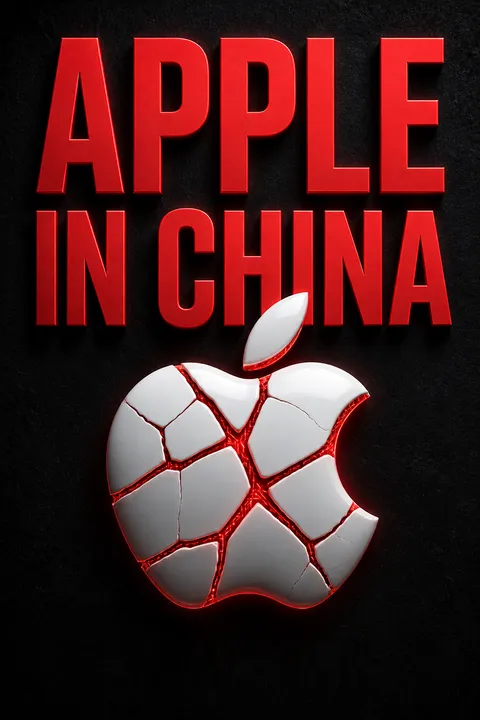

Key Takeaways
1. Apple's Near-Bankruptcy Forced a Radical Outsourcing Shift
"This company was in a death spiral."
Financial crisis. In 1996, Apple faced its biggest financial setback, losing $700 million and seeing cash reserves dwindle to a dangerous $500 million. The board, desperate, explored bankruptcy options and even sought a buyer for the company, highlighting the dire state of affairs. This period marked a stark contrast to Apple's earlier, vertically integrated manufacturing philosophy.
Strategic pivot. Under new leadership, Apple was forced to abandon its long-held belief in in-house manufacturing, a core tenet since its 1976 founding. The sale of its Fountain, Colorado, factory to SCI Systems, a contract manufacturer, symbolized this capitulation. This shift was driven by the PC industry's move towards nimble, cost-effective outsourcing, which Apple had resisted to its detriment.
Lessons from rivals. IBM, decades earlier, had pioneered outsourcing for its PC, relying on companies like SCI to build circuit boards efficiently. Apple's initial dismissal of this model by Steve Jobs proved costly, as rivals like Dell and Compaq leveraged commoditized parts and efficient contract manufacturing to dominate the market, leaving Apple with higher costs and a dwindling user base.
2. Asian Manufacturers Became Indispensable Partners for Apple
"It started a culture of relying on, mostly, Japanese manufacturers."
Early collaborations. Apple's initial forays into outsourcing began with specific products where it lacked manufacturing expertise. The LaserWriter, a critical product that saved the Macintosh, was manufactured by Canon in Japan. This success led to deeper ties with Japanese suppliers like Sony, which produced the PowerBook 100, demonstrating superior quality and efficiency compared to Apple's in-house efforts.
Taiwan's emergence. As Japan's manufacturing costs rose, Apple turned to Taiwan. The Newton, Apple's early PDA, was manufactured by Inventec, a Taiwanese company eager to learn and collaborate. Apple engineers provided extensive training, elevating the capabilities of Taiwanese suppliers, who proved more flexible and faster than their Japanese counterparts.
Foundation for growth. These early partnerships, though often challenging, were instrumental in building Apple's global supply chain. They taught Apple how to leverage external expertise and laid the groundwork for the massive expansion of manufacturing capabilities across Asia, particularly in Taiwan, which would become crucial for future product lines like the iPod and iPhone.
3. Tim Cook Revolutionized Apple's Supply Chain with Ruthless Efficiency
"Don’t… ever… be… afraid… to… be… unreasonable."
Operational genius. Tim Cook, hired in 1998, brought a relentless focus on efficiency and a deep understanding of just-in-time manufacturing from his IBM background. He quickly transformed Apple's chaotic operations, demanding granular detail and precision from his managers, often in marathon meetings that instilled a culture of meticulous planning.
Aggressive negotiation. Cook's philosophy of being "aggressive and unreasonable" in negotiations pushed suppliers to their limits. He taught his team to "ask for the moon," believing suppliers would only say no if something was truly impossible. This approach, combined with his ability to grasp every facet of a supplier's business, allowed Apple to secure incredibly favorable terms.
"IBM West." Cook's recruitment of former IBM colleagues, including key figures like Jeff Williams and Tony Blevins, solidified his operational style. This influx of talent, often jokingly referred to as "IBM West," brought a disciplined, data-driven approach to Apple's supply chain, optimizing everything from procurement to logistics and setting the stage for unprecedented scale.
4. Foxconn's Vision and Scale Transformed Global Electronics Manufacturing
"Terry Gou was relentlessly focused on doing whatever it took to make Apple succeed."
Humble beginnings. Terry Gou, founder of Hon Hai Precision (Foxconn), started in 1974 molding plastic knobs. He built his empire on vertical integration, aiming to manufacture as many components as possible in-house to cut costs and control the supply chain. His focus on being an Original Equipment Manufacturer (OEM) rather than an Original Design Manufacturer (ODM) differentiated Foxconn.
"China speed." Gou's political savvy and ambition were unmatched. He leveraged government incentives in China to build massive factory campuses like Longhua, attracting millions of migrant workers. Foxconn's ability to rapidly scale production, often turning empty fields into operational factories in months, became known as "China speed," astonishing Apple executives.
Strategic partnership. Foxconn's willingness to absorb upfront tooling costs and work for razor-thin margins, especially for Apple, was a strategic gamble. Gou understood that the long-term value lay in the relationship and the invaluable manufacturing knowledge gained from Apple's engineers. This commitment secured Foxconn as Apple's primary assembly partner, making it the world's largest electronics manufacturer.
5. The "Apple Squeeze" Unwittingly Empowered China's Tech Ambitions
"The model we had developed was: We’re going to use your factory. We’re going to use your people. But we’re going to go in there and use them as our arms and legs."
Unique outsourcing. Apple's approach to manufacturing was distinct: it deeply embedded its engineers into supplier factories, co-inventing new production processes and ensuring meticulous quality control. This wasn't traditional outsourcing; it was a zealous level of control combined with the flexibility of not owning the factories.
Investment in capabilities. Apple invested billions in machinery, placing it in supplier factories and tagging it for "Apple use only." This "long-lived assets" strategy allowed suppliers to operate at levels they couldn't otherwise afford, while giving Apple immense leverage. In return for low margins, suppliers received world-class training and the ability to scale to unprecedented volumes.
Chinafication. This "Apple Squeeze" inadvertently fueled China's rise as a manufacturing powerhouse. Apple's rigorous training and demand for innovation transferred critical "tacit knowledge" to Chinese suppliers, enabling them to develop sophisticated capabilities. While Apple gained unmatched efficiency and profits, it also created an ecosystem that would eventually empower Chinese competitors.
6. China's Unforeseen Market Boom Created Unforeseen Demand and Political Leverage
"When people see me with the iPhone, I’m not just a mailman."
Explosive demand. Apple initially underestimated the Chinese market, categorizing it as a "third priority." However, the iPhone quickly became a powerful status symbol for China's burgeoning middle class, leading to a massive gray market where "yellow cows" (scalpers) orchestrated elaborate schemes to acquire and resell iPhones at huge markups.
Operational chaos. The overwhelming demand, coupled with Apple's limited official presence (only four stores in 2010), led to chaotic scenes outside Apple Stores, with scalpers causing riots and exploiting loopholes. Apple's internal systems were overwhelmed, and its forecasting models, based on Western metrics, proved wildly inaccurate for the unique dynamics of the Chinese market.
Beijing's awakening. The Consumer Day attack in March 2013, just after Xi Jinping took power, exposed Apple's vulnerability. Beijing, observing Apple's immense profits and reliance on China, began to assert its leverage. The incident, though seemingly a misunderstanding, signaled a new era where Apple's business success would be scrutinized through a political lens.
7. Xi Jinping's Authoritarian Turn Forced Apple to Make Concessions
"Quite simply, you don’t get to do business in China today without doing exactly what the Chinese government wants you to do. Period. No one is immune. No one."
Shifting landscape. Xi Jinping's ascent marked a radical shift from previous Chinese leadership, emphasizing "in China, for China" and consolidating power. Beijing began using regulatory tools, like the labor dispatch law and CSR rankings, to pressure foreign companies to align with its political agenda, including technology transfer and local investment.
Apple's strategic response. Apple, realizing its deep entanglement, launched a charm offensive. This included a $275 billion investment pledge, the establishment of R&D hubs, and a $1 billion investment in Didi Chuxing. These moves, orchestrated by Apple's "Gang of Eight," aimed to demonstrate commitment and gain "bureaucratic protection" from Beijing.
Compromises and self-censorship. Despite these efforts, Apple was forced to make significant concessions. It banned thousands of apps, including VPNs and The New York Times, from its China App Store and agreed to store Chinese user data in state-controlled data centers. This demonstrated Apple's willingness to self-censor and comply with Beijing's demands, highlighting its diminished leverage.
8. The "Red Supply Chain" Emerged, Displacing Apple's Traditional Partners
"Apple, for its part, wasn’t necessarily aiming to have more Chinese companies in its supply chain, but the Apple Squeeze tilted the field in favor of local rivals."
Made in China 2025. Beijing's ambitious plan to achieve self-sufficiency in advanced electronics spurred Chinese companies to work closely with Apple. The "Apple Squeeze" model, which provided invaluable training and massive volumes, made Chinese suppliers eager to work for low margins, leveraging government subsidies and cheap capital.
Rise of national champions. Companies like Luxshare Precision, BYD Electronic, Goertek, and Wingtech rapidly ascended, displacing long-standing Taiwanese partners like Foxconn and Quanta. Luxshare, for instance, grew from a connector cable maker to an iPhone assembler, its market value soaring due to Apple orders and strong government backing.
Geopolitical shift. This "Chinafication" of Apple's supply chain meant that an increasing number of components and final assembly operations were controlled by Chinese firms. While Apple gained cost efficiencies, it deepened its reliance on a state-backed industrial ecosystem, creating a new layer of geopolitical risk and making its supply chain less "global" and more "China-centric."
9. Apple's Deep Dependence on China and Taiwan Created Staggering Vulnerabilities
"Today the main 'system on a chip' in every iPhone, iPad, MacBook, desktop Mac, AirPod, and Apple Watch is being made on one small island."
TSMC's critical role. Apple's decision to design its own "Apple Silicon" chips for all its products, exclusively manufactured by Taiwan Semiconductor Manufacturing Company (TSMC), created a single point of failure. TSMC, responsible for 80% of the world's most advanced chips, is located on an island threatened by Chinese invasion and prone to earthquakes.
Manufacturing concentration. The Zhengzhou Foxconn protests and COVID lockdowns in 2022 starkly exposed the risks of concentrating iPhone production in one country. These events disrupted supply, forced Apple to issue revenue warnings, and highlighted the fragility of its China-centric model, leading to calls for diversification.
Limited alternatives. Despite efforts to diversify iPhone assembly to India, progress is slow. India lacks China's mature ecosystem of sub-suppliers, skilled labor, and infrastructure. The "made in India" iPhones still rely heavily on components flown in from China, making the diversification more complex and less resilient than often portrayed.
10. Tim Cook's Legacy: Unparalleled Success, Shadowed by Geopolitical Risks
"Apple’s scramble to reduce dependence on China won’t beat the CCP’s power to erase most of its value with the stroke of a pen."
Financial triumph. Under Tim Cook, Apple achieved unprecedented financial success, becoming the world's most valuable company. His operational genius and strategic focus on China were key drivers of this growth, turning Apple into a profit-generating machine.
Unforeseen consequences. However, Cook's legacy is increasingly intertwined with China's authoritarian turn. Apple's deep entanglement, driven by economic logic, has led to compromises on free speech, privacy, and human rights. The company's "ultimate consent" through silence on Beijing's actions has drawn criticism and raised ethical questions.
Future uncertainties. The resurgence of Huawei, the potential for Chinese backlash against diversification, and the inherent risks of relying on TSMC in Taiwan pose existential threats. Apple's dependence on China for manufacturing and its market access means its future remains deeply vulnerable to Beijing's political will, a predicament that could ultimately tarnish Cook's otherwise stellar record.
People Also Read




FAQ
1. What is Apple in China: The Capture of the World's Greatest Company by Patrick McGee about?
- Comprehensive Apple-China history: The book explores how Apple became the world’s most valuable company by deeply intertwining its manufacturing, supply chain, and business operations with China.
- Geopolitical and business analysis: Patrick McGee examines Apple’s strategic decisions, manufacturing evolution, and the complex power dynamics with China’s authoritarian state.
- Insider perspectives: Drawing on interviews with over 200 Apple insiders and original documents, the book provides unprecedented insight into Apple’s operations, challenges, and compromises in China.
- Key themes: Topics include Apple’s supply chain transformation, political challenges, labor issues, and the rise of Chinese competitors.
2. Why should I read Apple in China by Patrick McGee?
- Nuanced perspective on Apple: The book goes beyond typical narratives of labor abuses, offering a fresh look at Apple’s strategic, political, and economic complexities in China.
- Insight into global supply chains: Readers gain a deep understanding of how Apple’s operational mastery and supply chain innovations contributed to its dominance.
- Relevance to current events: The book provides timely context for US-China tensions, trade wars, and the impact of COVID-19 on global business.
- Corporate ethics and geopolitics: It candidly addresses Apple’s ethical dilemmas, political compromises, and the risks of operating under authoritarian regimes.
3. What are the key takeaways from Apple in China by Patrick McGee?
- Apple’s deep dependence on China: Apple’s manufacturing, supply chain, and market success are heavily reliant on China, making it vulnerable to disruptions and political risks.
- Complex compromises and risks: The company has made significant concessions to Chinese authorities, including compliance with censorship and data laws, creating a “cognitive dissonance” between its values and operations.
- Rise of Chinese competitors: Chinese firms like Huawei and Luxshare, supported by government policies, are challenging Apple’s dominance and reshaping the global electronics industry.
- Slow diversification: Efforts to move production outside China face significant challenges, leaving Apple exposed to geopolitical and supply chain vulnerabilities.
4. How did Apple’s manufacturing and supply chain strategy evolve according to Patrick McGee?
- From in-house to outsourcing: Apple shifted from vertically integrated manufacturing to outsourcing in the mid-1990s, initially experimenting with Japan and Taiwan before moving to China.
- Embedding engineers in China: Apple sent top engineers to work directly in Chinese factories, co-developing manufacturing processes and ensuring quality control.
- Massive investment in machinery: The company invested billions in specialized equipment placed in suppliers’ plants, retaining ownership and control over production.
- China-centric powerhouse: By the 2010s, over 90% of Apple’s production occurred in China, with Foxconn emerging as the dominant partner.
5. What is the “Chinafication” of Apple’s supply chain described in Apple in China?
- Definition of Chinafication: The term refers to Apple’s transformation of its supply chain into a China-centric network, deeply embedding itself in the country’s manufacturing ecosystem.
- Technology transfer: Apple financed and trained Chinese manufacturers, sharing tacit knowledge and manufacturing expertise, which helped local suppliers become world-class.
- Creation of industrial clusters: Apple’s investments fostered innovation hubs in cities like Shenzhen and Zhengzhou, accelerating China’s move up the value chain.
- Strategic risks: This deep integration created dependencies and vulnerabilities, as Apple’s fortunes became tied to China’s political and economic environment.
6. How did Foxconn become Apple’s dominant manufacturing partner according to Patrick McGee?
- Early supplier relationship: Foxconn started as a component supplier and expanded into assembly by investing heavily and demonstrating manufacturing prowess.
- Strategic bets and scale: Terry Gou’s willingness to absorb losses and build massive campuses impressed Apple, enabling rapid scale-up and just-in-time manufacturing.
- Exclusive contracts and leverage: Foxconn won the exclusive iPhone assembly contract but faced squeezed profit margins due to Apple’s aggressive cost and quality demands.
- Symbiotic but tough relationship: Apple maintained tight control, moving machinery between suppliers to keep Foxconn compliant, while Foxconn’s hunger for Apple’s business drove its growth.
7. What is the “Red Supply Chain” and how does it impact Apple, as explained in Apple in China?
- Definition and significance: The “Red Supply Chain” refers to the rise of mainland Chinese companies in Apple’s supply chain, supported by government subsidies and policies.
- Shift in supplier base: Chinese firms like Luxshare, BYD, and Goertek have rapidly expanded, often acquiring Taiwanese suppliers and replacing them in Apple’s ecosystem.
- Political and operational risks: These suppliers align with China’s national goals, which may conflict with Apple’s priorities, especially regarding labor standards and intellectual property.
- Cost and innovation benefits: While offering cost advantages and political support, the Red Supply Chain also increases Apple’s dependence on China.
8. What political and regulatory challenges did Apple face in China under Xi Jinping, according to Patrick McGee?
- Increased scrutiny and nationalist pressure: China demanded foreign companies demonstrate commitment beyond sales, leading to media attacks, regulatory fines, and policy changes.
- Consumer Day incident: In 2013, state media criticized Apple’s customer service, forcing public apologies and policy amendments, exposing Apple’s vulnerability to government pressure.
- Complex government relations: Apple built a “Gang of Eight” team to manage relations with various agencies, balancing secrecy with the need to publicly demonstrate contributions.
- Censorship and data compliance: Apple made significant concessions, including compliance with censorship and data residency laws, complicating its privacy narrative.
9. How did Apple’s approach to intellectual property and competition in China evolve in Apple in China?
- Initial protectionism: Steve Jobs pursued aggressive patent litigation to protect Apple’s innovations from competitors like Samsung.
- Acceptance of mimicry: Apple realized its manufacturing innovations would be copied quickly in China and shifted focus to staying ahead with new designs.
- Enabling Chinese competitors: By training suppliers and sharing know-how, Apple inadvertently helped Chinese brands like Huawei and Xiaomi rise.
- Strategic adaptation: Apple focused on continuous innovation rather than fighting every infringement, understanding enforcement was difficult in China.
10. What is the “Apple Squeeze” and how does it explain Apple’s profitability in Patrick McGee’s analysis?
- Supplier pressure for low margins: Apple demands high quality and volume but pays suppliers very low profit margins, leveraging its scale and engineering support.
- Control over costs: Apple often procures raw materials directly and invests in machinery at suppliers’ factories, maintaining tight control over production.
- Industry dominance: This strategy allows Apple to produce luxury-quality devices at scale, capturing over 80% of smartphone industry profits with less than 20% market share.
- Key to financial success: The “Apple Squeeze” is central to understanding how Apple achieves its extraordinary profitability.
11. What challenges did Apple face regarding labor conditions and supplier responsibility in China, as described by Patrick McGee?
- Initial optimism and audits: Apple expanded its supplier responsibility team and increased factory audits to improve labor conditions and reduce overtime.
- Operational conflicts: The company’s demand for speed, quality, and low costs conflicted with labor standards, making compliance difficult for suppliers.
- Government crackdown on activism: Chinese authorities repressed labor advocates and NGOs, reducing transparency and making reforms harder to implement.
- Diminished transparency: Apple eventually sidelined its supplier responsibility leader and discontinued detailed working hours reports, reflecting the limits of its influence.
12. What are the major risks and future challenges for Apple in China highlighted in Apple in China by Patrick McGee?
- Geopolitical and supply chain vulnerabilities: Apple’s reliance on China and Taiwan’s TSMC exposes it to risks from political tensions, potential conflicts, and natural disasters.
- Ethical and political compromises: The company faces ongoing dilemmas balancing business interests with human rights, censorship, and labor issues, risking reputational damage.
- Slow diversification: Efforts to shift production to India and other countries are slow and complicated, leaving Apple exposed to China-centric risks.
- Rising competition: Chinese competitors and government-backed suppliers continue to grow, challenging Apple’s dominance and strategic position.
Download PDF
Download EPUB
.epub digital book format is ideal for reading ebooks on phones, tablets, and e-readers.








































