
Plot Summary
Haunted Foundations Laid Bare
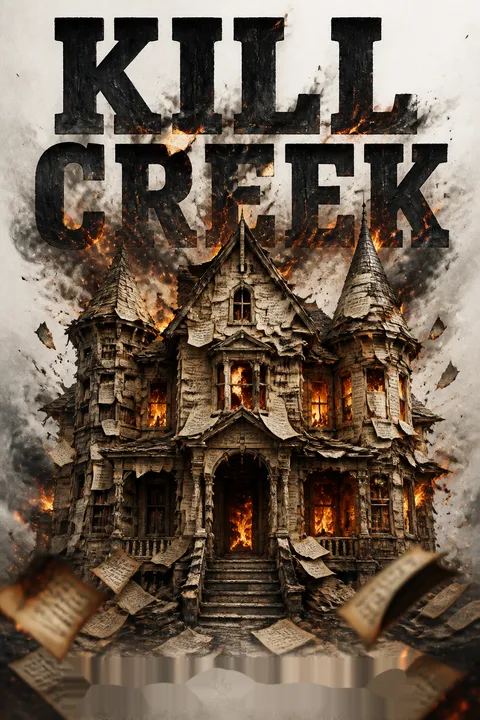
In the heart of Kansas, a house is built by Joshua Goodman, a man in love with Alma Reed, a freed Black woman. Their secret love ends in horror: Goodman is murdered, Alma is hanged from the fateful beech tree outside. The house, once filled with hope, becomes a vessel for whispered stories and chilling rumors. Over decades, it passes through many hands, never truly welcoming anyone. The Finch sisters, Rachel and Rebecca, become its last true residents, their own secrets and tragedies further entwining the house's legacy. The house's reputation as a place of evil grows, fed by local legend and the chilling deaths of its inhabitants. The stage is set for new stories—and new victims.
Four Writers, One Invitation
Four renowned horror authors—Sam McGarver, T.C. Moore, Daniel Slaughter, and the legendary Sebastian Cole—each at a crossroads in their careers, receive a mysterious invitation from Justin Wainwright, the charismatic founder of the horror website WrightWire. The offer: spend Halloween night in the infamous Kill Creek house for a live-streamed interview. Each writer, driven by personal demons, career anxieties, or the lure of publicity, accepts. They are joined by Wainwright and his partner, Kate, a documentarian. None realize the house is waiting, hungry for new stories and new pain.
Arrival at Kill Creek
The group arrives at the overgrown, imposing house. The air is thick with unease, the house's silence almost sentient. As they explore, the house's history is recounted: the deaths, the rumors, the Finch sisters' reclusive lives. Each room feels preserved, yet wrong—too cold, too clean, too expectant. The writers settle in, their banter masking growing anxiety. The house seems to watch, to listen, as if it remembers every secret ever whispered within its walls.
The House Breathes Secrets
As the day passes, the house's oppressive atmosphere begins to work on the writers. Each is haunted by personal trauma: Sam's childhood tragedy, Moore's abusive past, Daniel's religious guilt, Sebastian's fear of irrelevance and loss. The house amplifies their anxieties, feeding on their confessions and vulnerabilities. The group's dynamic frays as secrets are prodded, and the house's silence grows heavier, as if waiting for something to break.
Nightmares Behind Every Door
Night falls, and the house's true nature emerges. Each writer experiences visions and nightmares tailored to their deepest fears and regrets. Sam relives his mother's death and his own guilt. Moore is tormented by the specter of her abuser. Daniel hears the voice of his lost daughter. Even the skeptical Sebastian feels the house's pull. The boundaries between reality and hallucination blur. The house is not just haunted—it is a living thing, feeding on their pain.
The Interview Unravels
Wainwright's live interview begins, but quickly devolves into a psychological bloodletting. He pushes the writers to reveal their darkest secrets, their creative insecurities, and the traumas that drive their work. The house seems to revel in the confessions, growing stronger as old wounds are reopened. The interview ends in anger and confusion, the group's unity shattered. The house's influence is now undeniable, and escape feels impossible.
The House Awakens
After the interview, the house's supernatural power intensifies. Apparitions appear, voices whisper, and the writers are plagued by waking nightmares. The house isolates them, manipulating their senses and memories. Kate, the documentarian, is driven to madness and suicide by the visions she records. Wainwright, too, is haunted by guilt and terror. The house's hunger is insatiable, and it begins to claim its victims, one by one.
Writing Becomes Obsession
After leaving Kill Creek, the surviving writers find themselves compelled to write feverishly about the house. Their new novels are eerily similar, each stalling at the same point: a bricked-up room at the top of the house. The house's influence has followed them, infecting their creativity and their lives. Relationships crumble, sanity frays, and the line between fiction and reality blurs. The house demands to be remembered, to have its story told.
Madness Spreads
The writers' lives unravel. Sam is consumed by guilt and obsession, Moore by pain and rage, Daniel by grief and religious doubt. Each is haunted by visions of the house and their own personal ghosts. Wainwright and Kate are both destroyed by the house's lingering curse. The writers realize they are not just victims—they are now part of the house's legend, their suffering fueling its power. The only hope is to return and confront the source.
The Return to Kill Creek
The surviving writers, joined by Wainwright, return to Kill Creek, determined to break the house's hold. They plan to break through the bricked-up wall and face whatever lies within. The house, now stronger than ever, fights back with all its supernatural might. The group is beset by hallucinations, physical attacks, and the resurgence of their deepest traumas. The house's history is revealed to be a cycle of bargains and betrayals, each generation feeding its hunger.
Breaking Down the Wall
The group's attempt to break through the wall is met with supernatural resistance. The house turns Daniel into its instrument, driving him to murder Wainwright and attack his friends. Moore is gravely wounded. Sebastian sacrifices himself to buy time for Sam and Moore. The wall finally gives way, revealing not just a room, but the heart of the house's evil—a place of imprisonment, suffering, and the echo of every story ever told within its walls.
The House Fights Back
The house unleashes its full fury. Rampant supernatural phenomena, living vines, and the vengeful spirits of the Finch sisters attack the survivors. Sam and Moore, battered and broken, fight their way out as the house tries to claim them for its legend. Daniel, lost to madness, is killed. The house's power peaks, but Sam manages to set it ablaze, determined to end its reign of terror once and for all.
Sacrifice and Survival
As the house burns, Sam and Moore barely escape, wounded but alive. The bridge collapses behind them, cutting off the house from the world. The fire consumes the house, but the cost is immense: friends lost, bodies and minds scarred, and the knowledge that evil can never be fully destroyed. The survivors are left to reckon with what they have done—and what the house has made them become.
The Fire Cleanses
The house is reduced to ashes, its secrets seemingly buried. The authorities accept the survivors' story, blaming the violence on Daniel's madness. The world moves on, but Sam and Moore are forever changed. The house's legend, however, is not so easily extinguished. The survivors are haunted by dreams and doubts, unsure if the evil is truly gone or simply waiting to be reborn in another story.
Aftermath and Unfinished Stories
Months later, Sam and Moore struggle to rebuild their lives. The trauma lingers, and the urge to write about Kill Creek remains. Sebastian's final manuscript is lost, Wainwright's legacy is tainted, and Daniel is remembered only for his madness. The survivors are left with questions: Was the house truly destroyed? Or has its story simply found new tellers? The line between fiction and reality remains perilously thin.
The Legacy Endures
In the years that follow, the story of Kill Creek becomes legend, retold in books, interviews, and whispers. Sam and Moore, forever marked by their ordeal, are drawn back together for a commemorative interview. But something is wrong—Moore is not the same. The house's influence lingers, its evil perhaps passed on, waiting for the next chapter. The story is never truly over. The house, and the darkness it harbors, endures as long as it is remembered.
Analysis
A modern meditation on horror, trauma, and the stories we tellKill Creek is more than a haunted house novel—it is a meta-horror about the power of narrative, the persistence of trauma, and the seductive allure of evil. Scott Thomas uses the familiar tropes of the genre (the bricked-up room, the gathering of writers, the cursed house) to explore deeper questions: Why do we tell scary stories? What do we gain—and lose—by confronting our fears through fiction? The house at Kill Creek is both a literal and symbolic monster, feeding on pain, memory, and the need to be remembered. The novel suggests that evil is not just an external force, but something we create and sustain through our need for meaning, our refusal to let go of the past, and our compulsion to turn suffering into story. In the end, Kill Creek is a warning: some stories, once told, can never be forgotten—and some doors, once opened, can never be closed.
Review Summary
Kill Creek by Scott Thomas has polarized readers with an overall 3.75 rating. Fans praise it as an outstanding haunted house novel with vivid writing, memorable characters, and genuine scares, comparing it favorably to classics like Ghost Story. Many appreciated the innovative concept of four horror authors spending Halloween in a haunted house. However, critics cite significant issues including sexism, fat-phobia, poor characterization (especially of female characters), slow pacing, and derivative plotting. The atmospheric setting and character interactions receive consistent praise, though opinions diverge sharply on execution, with some finding it terrifying and others completely unscary.
People Also Read
Characters
Sam McGarver
Sam is a successful horror novelist whose career and marriage are crumbling under the weight of his unresolved childhood trauma. Scarred—literally and emotionally—by the violent death of his mother, Sam is driven by guilt and a desperate need to prove himself. His relationship with Erin, his estranged wife, is strained by his inability to move past his past. At Kill Creek, Sam's rationality is tested as the house exploits his deepest fears. He becomes both a victim and a reluctant leader, ultimately forced to confront his own capacity for violence and the cost of survival. Sam's arc is one of painful self-acceptance, as he learns that some stories—and some wounds—never truly heal.
T.C. Moore
Moore is a provocative, boundary-pushing horror writer known for her raw, transgressive fiction and her abrasive, confrontational persona. Beneath her tough exterior lies the pain of an abusive past, symbolized by her damaged eye. Moore's writing is both a weapon and a shield, a way to reclaim power from trauma. At Kill Creek, her bravado is stripped away as the house forces her to relive her worst memories. Her relationship with Sam is complex—marked by mutual respect, rivalry, and a fleeting intimacy. Moore's journey is one of vulnerability and survival, as she is forced to choose between pain and numbness, and ultimately faces the possibility that evil can be seductive as well as destructive.
Daniel Slaughter
Daniel is a bestselling writer of Christian-themed horror for young readers, a gentle giant whose faith is both his strength and his Achilles' heel. The loss of his daughter Claire shatters his worldview, leaving him vulnerable to the house's manipulations. Daniel's need for meaning and redemption is twisted into madness, and he becomes the house's instrument of violence. His arc is a tragic descent from hope to despair, as his faith is weaponized against him. Daniel embodies the danger of unresolved grief and the seductive power of belief—how the need for answers can lead to damnation.
Sebastian Cole
Sebastian is the elder statesman of horror, a literary icon whose best days are behind him. He is plagued by fears of irrelevance, dementia, and the loss of his partner, Richard. The house offers him a cruel gift: clarity and inspiration, at the cost of his soul. Sebastian's role is both mentor and cautionary tale—he is the "chosen" storyteller, the one the house wants to immortalize its legend. His ultimate sacrifice is an act of defiance, but also of resignation. Sebastian's arc explores the price of genius, the fear of being forgotten, and the temptation to trade truth for immortality.
Justin Wainwright
Wainwright is the young, charismatic founder of WrightWire, obsessed with horror and the power of stories. His desire to create a viral event leads him to manipulate the writers into the house, unwittingly unleashing its evil. Wainwright is both puppetmaster and victim, his bravado masking deep insecurities and a need for validation. The house exploits his guilt over Kate's fate and his own ambition, ultimately destroying him. Wainwright represents the dangers of spectacle, the commodification of trauma, and the unintended consequences of chasing fame.
Kate
Kate is Wainwright's partner and the documentarian of the Kill Creek event. Empathetic and creative, she is the first to be driven mad by the house's supernatural influence, haunted by visions that bleed into her work. Her suicide is the first true casualty of the house's renewed power, a warning of what is to come. Kate's arc is brief but poignant, highlighting the vulnerability of those who bear witness and the cost of seeing too much.
Rachel Finch
Rachel is one of the last true residents of Kill Creek, a woman defined by her bond with her twin, Rebecca. After Rebecca's death, Rachel becomes the house's caretaker, complicit in its evil in exchange for a twisted form of companionship. Her actions—sealing the upstairs room, luring Adudel—are driven by loneliness and the house's seductive promises. Rachel's fate is a cautionary tale about the price of bargains with darkness and the corrosive power of isolation.
Rebecca Finch
Rebecca, confined to a wheelchair after a mysterious accident, is the house's most tragic and terrifying ghost. Her suffering and resentment are weaponized by the house, turning her into a vengeful spirit who enforces its will. Rebecca's presence is felt in every creak and shadow, her story a warning about the dangers of envy, bitterness, and the desire for escape at any cost.
Alma Reed
Alma is the house's first true victim, her murder the original sin that stains Kill Creek. Though her presence is more symbolic than literal, the injustice of her death haunts the house and all who enter it. Alma represents the buried traumas of history, the pain that festers when unacknowledged, and the way evil is perpetuated through silence and forgetting.
Malcolm Adudel
Adudel is the parapsychologist whose book brings Kill Creek to national attention. His willingness to embellish the truth for fame and validation makes him both a victim and an accomplice to the house's evil. Adudel's story is a meditation on the power of narrative—how stories can create reality, and how belief can give birth to monsters.
Plot Devices
The House as Living Entity
Kill Creek is not just a haunted house—it is a sentient, predatory force that grows stronger with every story told about it. The house manipulates reality, preys on the traumas of its inhabitants, and demands to be remembered. Its power waxes and wanes with public attention, making the writers' presence both a threat and a gift. The house's influence extends beyond its walls, infecting the minds and lives of those who survive. It is both a metaphor for trauma and a literal engine of evil, sustained by the very act of storytelling.
Metafiction and the Power of Narrative
The novel is deeply self-referential, exploring the relationship between horror fiction, belief, and reality. The writers' compulsion to tell the house's story becomes a curse, blurring the line between fiction and truth. The house's evil is not just supernatural—it is narrative, thriving on attention, rumor, and the need for meaning. The book uses foreshadowing (the bricked-up room, the unfinished stories, the cyclical nature of the haunting) to suggest that evil is never truly defeated, only retold in new forms.
Psychological Horror and Unreliable Perception
The house's haunting is as much psychological as supernatural. Each character's personal trauma is weaponized against them, and the narrative frequently blurs the line between hallucination and reality. The use of shifting perspectives, dream sequences, and ambiguous supernatural events keeps both characters and readers off-balance. The house's true nature is never fully revealed, maintaining an atmosphere of dread and uncertainty.
Cyclical Structure and Legacy
The novel's structure is cyclical: the house's evil is awakened, claims new victims, and is seemingly destroyed—only to be reborn in new stories, new tellers, new forms. The bricked-up room, the unfinished manuscripts, and the final interview all serve as echoes of the past, suggesting that the story is never truly over. The book's ending is deliberately ambiguous, leaving open the possibility that the house's evil has found a new vessel.
Download PDF
Download EPUB
.epub digital book format is ideal for reading ebooks on phones, tablets, and e-readers.








































