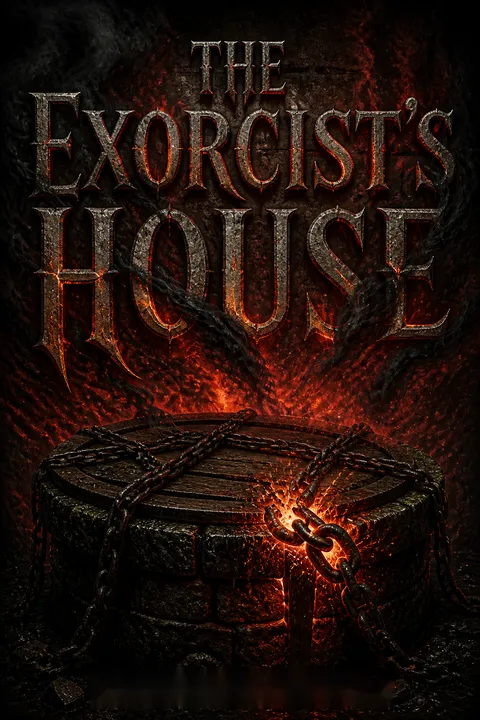

Plot Summary
Prologue: The Last Exorcist
In the dead of night, Merle Blatty, a weathered exorcist, sits outside his dilapidated West Virginia farmhouse, dreading the evil that has infested his home. Haunted by the loss of his wife and son, Merle steels himself for one final confrontation. He arms himself with holy water and a revolver, but the house is already a battleground of supernatural chaos—knives embedded in the ceiling, laughter echoing from empty rooms, and the oppressive heat of hellfire. The demon taunts him with the voices of his lost loved ones, luring him into a fatal embrace. As flames consume the house, Merle's last act is a desperate prayer, his faith tested to the end as the evil retreats to the basement, awaiting new victims.
The Hill Family's Move
Daniel Hill, a psychologist, and his pregnant wife Nora, along with their teenage daughter Alice, purchase Merle's old farmhouse, hoping to flip it for profit. The move is fraught with tension—Nora's hidden guilt over an affair, Alice's resentment at leaving her friends, and Daniel's ambition to provide for his growing family. The house, newly renovated, seems promising, but the scars of its past linger. The family's banter masks deeper anxieties, and the land's beauty is shadowed by the rumors of its haunted history. As they settle in, the Hills are unaware that the evil Merle fought is only dormant, not defeated.
Renovations and Rumors
Carmine and his crew, tasked with restoring the fire-damaged house, are unsettled by inexplicable phenomena—strange burn patterns, oppressive humidity, and a basement that exudes dread. Local legends about Merle's exorcisms circulate, fueling their unease. Carmine's brief encounter with glowing eyes in the basement leaves him shaken, and his subsequent decline into paranoia and hallucinations ends in tragedy. The house's dark legacy claims its first new victim, and the warning signs are ignored by those eager to move on.
The Basement Cross
When the Hills move in, they discover the basement door nailed shut in the shape of a cross. Daniel, curious and skeptical, removes the barrier, dismissing the symbolism as superstition. Yet, the act unleashes a wave of subtle disturbances—unexplained heat, foul odors, and a sense of being watched. The family's attempts to rationalize these events only deepen their vulnerability. The cross, meant as protection, becomes a harbinger of the evil's return, and the basement's secrets begin to seep into their lives.
Carmine's Descent
Haunted by his experience in the basement, Carmine spirals into madness. Nightmares, hallucinations, and a growing fear of the dark consume him. Despite confiding in his coworker Roy, Carmine cannot escape the grip of the entity. In a motel room far from the farmhouse, he is tormented by visions and ultimately takes his own life in a gruesome act, gouging out his eyes to escape what he has seen. His death is a grim warning to the Hills, delivered by Roy, but dismissed as the ravings of a troubled man.
Settling In, Unsettling Signs
As the Hills unpack and try to make the house a home, the supernatural presence grows bolder. Alice befriends Luke, a local boy with a mysterious past, while Nora's insomnia and guilt intensify. Daniel, ever the rationalist, is drawn to the basement's mysteries, discovering a hidden room and a sealed well. The family's individual struggles—Nora's secret, Alice's longing for acceptance, Daniel's need for control—mirror the house's fractured history. The stage is set for the evil below to exploit their weaknesses.
The Chain and the Secret Room
Daniel's exploration of the basement reveals a secret room containing a chained well, crosses, and relics of Merle's exorcist past. The oppressive heat and stench emanating from the well hint at its true nature—a gateway to something infernal. Daniel's rational mind is challenged by inexplicable phenomena, and his dreams become plagued by visions of Merle and the demon. The chain, once a tool of containment, now seems a fragile barrier against the growing threat.
Luke and the Summer
Alice's friendship with Luke blossoms into a tentative romance, offering her solace amid the house's unease. Luke, however, is haunted by his own trauma—the loss of his girlfriend Amelia to the same evil that now stalks the Hills. His connection to the house and its history becomes clear, and his warnings go unheeded. The innocence of summer is shattered as the supernatural encroaches, and the bonds between the characters are tested by forces beyond their understanding.
Nightmares and Confessions
The house's influence deepens, manifesting as nightmares, memory lapses, and hallucinations. Nora is lured into the basement by visions of her affair, nearly driven to self-destruction. Daniel is visited by Merle's ghost, who urges him to uncover the truth hidden in his journals and tapes. The family's grip on reality weakens as the demon manipulates their fears and regrets, sowing discord and despair. The line between dream and waking life blurs, and the true nature of the evil is revealed.
The Well Unsealed
The well's seal is broken, and the demon's power surges. Luke is possessed and destroyed, his body used as a vessel for violence and chaos. Alice, traumatized and injured, loses time and memory, her mind fractured by the entity's assault. The family is pushed to the brink, their love and faith the only defenses against possession. The demon's goal becomes clear—to escape its prison and spread its influence, using the family as pawns in its ancient game.
Possession and Loss
The demon's attacks escalate, targeting each family member's deepest vulnerabilities. Nora's maternal instincts are weaponized against her, Daniel's skepticism is shattered, and Alice is nearly lost to possession. The house becomes a battleground, with the basement as the epicenter of evil. Desperate, Daniel seeks help from Father Martin, a priest trained by Merle's mentor, hoping for a final confrontation that will save his family or doom them all.
The Tapes and the Truth
Merle's journals and tapes reveal the cyclical nature of the evil—a gateway to Hell opened by grief and desperation, closed only by faith and sacrifice. The exorcisms of the past mirror the present struggle, and the failures and losses of those who came before serve as both warning and guide. The family learns that belief, unity, and self-knowledge are their only weapons. The truth is both liberating and terrifying, as they realize the cost of victory may be more than they can bear.
The Demon's Return
With Father Martin's arrival, the family prepares for a climactic exorcism. The demon, now more cunning and powerful, uses deception, illusion, and the family's own secrets to undermine their resolve. The exorcism is a harrowing ordeal, blending ritual, faith, and raw emotion. Sacrifices are made, and not all emerge unscathed. The well, the chain, and the cross become symbols of both containment and hope, as the family confronts the darkness within and without.
Exorcism and Sacrifice
The exorcism reaches its peak as Father Martin is killed, his body possessed by the demon. Daniel, Nora, and Alice, aided by the spirits of Merle and Luke, unite to seal the well and banish the evil. The battle is both physical and spiritual, demanding courage, forgiveness, and self-sacrifice. The chain is reforged, the well is closed, and the house is finally cleansed. The cost is great, but the family survives, forever changed by their ordeal.
The Aftermath and Escape
The Hills flee the farmhouse, selling it at a loss and returning to Ohio. Each family member grapples with the trauma in their own way—Daniel finds renewed purpose in his work, Alice seeks normalcy and connection, and Nora is haunted by the possibility that the evil lingers. The birth of their new daughter, Maren, is both a blessing and a source of unease, as Nora fears the demon's touch may not be fully gone. The family's love endures, but the scars of their experience remain.
A New Beginning, Old Shadows
As the family settles into their new life, the specter of the past haunts them. A tragedy at Maren's daycare rekindles Nora's fears, and visions of future darkness suggest that the evil may not be vanquished, only dormant. The story ends with a sense of uneasy peace, the lesson that evil, once unleashed, can never be fully contained. The exorcist's house is gone, but its legacy endures in the hearts and minds of those who survived.
Analysis
A modern exorcism of trauma and faithThe Exorcist's House is a contemporary horror novel that reimagines the haunted house trope as a crucible for psychological and spiritual reckoning. At its core, the story is about the ways in which grief, guilt, and unresolved trauma can open gateways to darkness—both literal and metaphorical. The supernatural evil is a manifestation of the characters' inner demons, feeding on their secrets and regrets. The narrative structure, with its interwoven timelines, journals, and tapes, emphasizes the cyclical nature of suffering and the importance of confronting the past to break free from its grip. The novel's resolution is both hopeful and cautionary: faith, love, and self-knowledge are powerful weapons against evil, but the scars of trauma endure. The final image—of a new child, Maren, possibly touched by the lingering evil—suggests that the battle between light and darkness is never truly over. The lesson is clear: evil thrives in silence and denial, but can be contained through courage, confession, and the bonds of family.
Review Summary
The Exorcist's House receives mostly positive reviews (3.98/5 stars), with readers praising its terrifying atmosphere and demonic horror. Many found it genuinely scary, comparing it favorably to classic exorcism stories. Reviewers appreciated the compelling characters, especially the dog Buck, and the authentic details about exorcism. The pacing and suspenseful buildup earned widespread praise, with several noting the shocking ending. Some critics found it predictable, clichéd, or poorly written. Common praise focused on the creepy atmosphere, gore, and ability to induce genuine fear. Mixed opinions emerged about POV shifts and writing simplicity.
People Also Read
Characters
Daniel Hill
Daniel is a psychologist whose analytical mind is both his strength and his weakness. Driven by ambition and a desire to provide for his family, he is initially skeptical of the supernatural, seeking logical explanations for the horrors they encounter. His relationship with Nora is strained by her secret infidelity, and his bond with Alice is tested by the move and the house's influence. Daniel's journey is one of humility and acceptance—he must confront his own limitations, embrace faith, and rely on others to save his family. His arc is defined by the transition from control to vulnerability, and ultimately, to sacrificial love.
Nora Hill
Nora is a science teacher whose rational worldview is shattered by the events in the house. Haunted by guilt over her affair and the fear of losing her family, she is both fiercely protective and deeply insecure. Her insomnia and anxiety make her susceptible to the demon's manipulations, and her maternal instincts are weaponized against her. Nora's arc is one of confession, forgiveness, and resilience—she must confront her past, accept her flaws, and find strength in vulnerability. Her relationship with Daniel is tested and ultimately renewed through honesty and shared trauma.
Alice Hill
Alice is a fifteen-year-old caught between childhood and adulthood, resentful of the move and longing for connection. Her friendship and budding romance with Luke offer her solace, but also expose her to the house's evil. Alice's journey is one of self-discovery and empowerment—she is forced to confront her fears, endure possession, and fight for her own soul. Her arc mirrors the classic coming-of-age narrative, but with the added weight of supernatural horror. Alice emerges scarred but stronger, her innocence lost but her spirit unbroken.
Luke Simmons
Luke is a local boy with a mysterious past, marked by the loss of his girlfriend Amelia to the demon. His connection to the house and its history makes him both a warning and a guide for the Hills. Luke's arc is one of redemption—he seeks to atone for his inability to save Amelia by helping Alice and her family. His sacrifice and posthumous aid are crucial to the family's survival, and his presence lingers as a symbol of hope and the enduring power of love.
Merle Blatty
Merle is the former owner of the farmhouse, a self-taught exorcist whose life is defined by loss and duty. Haunted by the deaths of his wife and son, Merle dedicates himself to combating evil, but is ultimately consumed by it. His journals and tapes serve as both warning and guide for the Hills, and his spirit returns to aid in the final battle. Merle's arc is one of tragic heroism—he is both a victim and a warrior, his legacy a testament to the cost of confronting darkness.
The Demon
The demon is a shapeshifting entity that feeds on grief, guilt, and fear. Its power lies in deception, illusion, and the exploitation of its victims' weaknesses. It possesses and destroys, seeking to escape its prison and spread chaos. The demon's psychological warfare is as potent as its supernatural abilities, and its presence is felt in every crack of the house and every doubt in the characters' minds. It is both a literal and symbolic antagonist, representing the darkness within and without.
Father Martin
Father Martin is a priest trained by Merle's mentor, called upon by Daniel for the final confrontation. He is experienced, compassionate, and pragmatic, blending faith with psychological insight. His role is both guide and sacrificial lamb—he leads the exorcism, but is ultimately killed and possessed by the demon. Father Martin's arc is one of duty and sacrifice, his faith a beacon in the darkness, and his death a catalyst for the family's final stand.
Carmine
Carmine is the contractor who renovates the farmhouse, initially dismissive of the supernatural. His encounter with the basement's evil leads to paranoia, hallucinations, and suicide. Carmine's arc is a cautionary tale—the dangers of ignoring warning signs and the vulnerability of the rational mind to forces beyond comprehension.
Amelia
Amelia is Luke's girlfriend, possessed and destroyed by the demon. Her fate is a catalyst for Luke's actions and a symbol of the house's tragic history. Amelia's presence lingers as both a warning and a source of unresolved grief, her story echoing through the lives of those who follow.
Buck
Buck is Merle's old dog, who survives the fire and becomes the Hills' protector. Sensitive to the supernatural, Buck's instincts often alert the family to danger. His loyalty and courage are a counterpoint to the human characters' doubts, and his role in the final battle is both symbolic and practical—a reminder that sometimes, faith and love are found in the simplest forms.
Plot Devices
The Haunted House as Psychological Mirror
The farmhouse is more than a setting—it is a character in itself, a vessel for the evil that feeds on the inhabitants' fears, secrets, and regrets. The supernatural phenomena are tailored to each character's vulnerabilities, blurring the line between haunting and psychological breakdown. The house's history is cyclical, with each generation repeating the mistakes of the past, and the only escape is through self-knowledge and unity.
The Sealed Well and the Cross
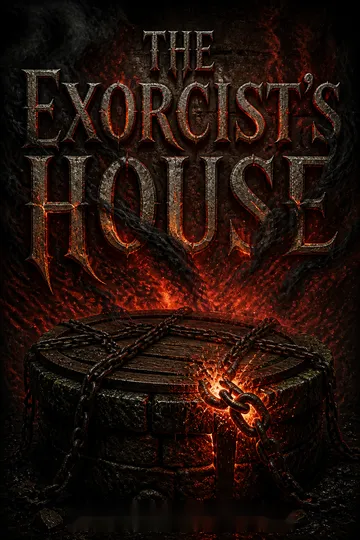
The well in the basement is the literal gateway to Hell, sealed by faith (the cross, holy water, chain) and unsealed by doubt and grief. The act of breaking or reforging these barriers is both a plot device and a metaphor for the characters' internal struggles. The cross, in particular, is a recurring symbol of protection, sacrifice, and the power of belief.
Journals and Tapes as Exposition
Merle's journals and tapes serve as a narrative device to deliver backstory, foreshadowing, and thematic resonance. They connect the past and present, allowing the characters (and readers) to piece together the nature of the evil and the means of combating it. The found footage element adds immediacy and authenticity to the horror, grounding the supernatural in personal testimony.
Possession and Memory Lapses
The demon's primary weapon is the manipulation of perception—causing memory lapses, hallucinations, and time loss. This device heightens the sense of disorientation and vulnerability, making the characters (and readers) question what is real. The blurring of dream and reality is both a source of terror and a commentary on the nature of trauma.
Sacrifice and Redemption
The narrative structure is built around cycles of sacrifice—Merle, Luke, Father Martin—all give their lives (or afterlives) to aid the living. The family's survival depends on confession, forgiveness, and mutual support. The exorcism is not just a ritual, but a crucible in which the characters are tested and transformed. The resolution is bittersweet, emphasizing that evil can be contained but never fully destroyed.
The Exorcist's House Series
About the Author

Download PDF
Download EPUB
.epub digital book format is ideal for reading ebooks on phones, tablets, and e-readers.








































