Key Takeaways
1. Combat Undermanagement: Be a Hands-On Boss
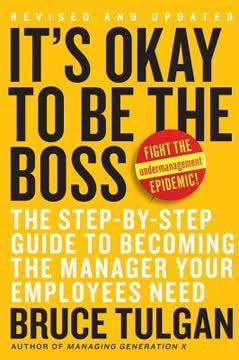
Undermanagement is not a household word like micromanagement, but it should be because its impact makes micromanagement look like a molehill.
The hidden epidemic. Many leaders, managers, and supervisors are failing to provide daily guidance, direction, feedback, and support, a phenomenon the author calls "undermanagement." This pervasive lack of active management is the root cause of most workplace problems, from poor customer service to major corporate failures, costing organizations a fortune and robbing employees of growth opportunities. It's a far greater issue than the often-feared "micromanagement."
False empowerment's trap. For too long, management thinking has veered towards hands-off approaches, promoting "false empowerment" where employees are supposedly best motivated by internal factors and left to manage themselves. This ignores the reality that most people perform better with clear guidance and support. Managers often avoid taking charge due to fear of conflict, lack of training, or a misguided belief that being "nice" means being hands-off.
No shortcuts to leadership. Strategies like management by objective, forced ranking, pay for performance, or hiring superstars often fail because they depend on managers taking a stronger hand, which is precisely what undermanagement prevents. There is no "end run" around the fundamental responsibility of leadership: giving orders, tracking performance, correcting failure, and rewarding success, every step of the way. This is the sacred responsibility of being the boss.
2. Manage Every Day: Consistency Over Crisis
The only alternative to management by special occasion is getting in the habit of managing every day.
Avoid crisis management. Most managers treat their management duties as an extra burden, only engaging when a crisis forces their hand—a pattern the author calls "management by special occasion." This reactive approach leads to constant firefighting, where problems escalate and consume disproportionate time and energy, leaving managers feeling perpetually behind on their "real work."
Proactive daily discipline. Effective management, like physical fitness, requires daily, consistent effort. Managers must dedicate a sacred hour each day to proactive management, focusing on setting employees up for success before problems arise. This involves:
- Staying in touch with priorities.
- Making uncomfortable new behaviors into habits.
- Accepting that the transition will be difficult but ultimately strengthening.
One-on-one is paramount. While team meetings have their place for sharing general information, they are no substitute for daily one-on-one conversations. These individual interactions provide a direct venue for reviewing work, setting expectations, providing feedback, and ensuring accountability, leaving no room for employees (or managers) to hide. Even with wide spans of control, managers must make choices to connect with each person frequently, even if briefly.
3. Talk Like a Performance Coach: Direct, Demanding, Supportive
The voice of performance coaching is steady and persistent, relentlessly methodical and hands-on, enthusiastic and pushy.
Beyond "Mr. Friend." Managers often build rapport through personal chatter, then struggle to shift to a serious "boss" persona when work issues arise, creating a "Jekyll and Hyde" dynamic. True rapport is built by consistently talking about the work itself, which is the foundation of the professional relationship. This makes conflict less likely and more manageable when it does occur.
Embrace the coach's voice. Effective managers adopt a unique communication style: authoritative yet sympathetic, demanding yet supportive, disciplined yet patient. This "performance coaching" voice is not about charisma, but about clear, straightforward, and effective communication. It's a constant banter of focus, improvement, and accountability, guiding employees to be purposeful about every detail and build skills daily.
Coach proactively, not reactively. Most managers only coach when a recurring problem emerges, by which point bad feelings and entrenched habits make intervention difficult. Instead, coaching should begin in advance, setting employees up for success by:
- Helping establish intermediate benchmarks and plans.
- Checking in frequently on progress.
- Addressing potential pitfalls before they become problems.
This proactive approach prevents 90% of performance issues and fosters continuous improvement.
4. Customize Your Approach: One Size Does Not Fit All
The only way to cope with the incredible diversity among your employees is to figure out what works with each person and then customize your management style accordingly.
Beyond generic management. Managers often apply a "one-size-fits-all" approach, using the same techniques for everyone, regardless of individual needs. This inevitably works well for some (who appear as high performers) and poorly for others (who appear as low performers), failing to maximize the potential of the entire team. Just as you wouldn't maintain a car and a toaster identically, you shouldn't manage diverse individuals uniformly.
The customizing lens. To effectively manage, you must understand and adapt to each employee's unique abilities, skills, personalities, and motivations. The "customizing lens" involves continually asking six key questions about each person:
- Who is this person at work (strengths, weaknesses, role, background)?
- Why do I need to manage this person (goals, needs, potential pitfalls)?
- What do I need to talk about (big picture vs. details, specific tasks)?
- How should I talk (tone, style, motivation, communication tools)?
- Where should I talk (office, neutral ground, remote)?
- When should I talk (frequency, time of day, duration)?
Continuous adjustment. This is not about catering to whims, but about optimizing performance. Even superstars need managing—they need challenges, development, and recognition that their great work is being tracked. By tuning into each individual and constantly adjusting your approach, you can help every employee grow, develop, and achieve their best, transforming your management landscape over time.
5. Make Accountability Real: Clear Expectations, Consequences
Accountability means having to answer for one’s actions.
The core of accountability. Accountability is not just a buzzword; it means employees must answer for their actions, knowing in advance that there will be consequences. For accountability to be effective, managers must:
- Spell out expectations vividly before actions are taken.
- Track employee performance diligently, every step of the way.
- Follow through with real consequences (rewards or detriments) based on performance.
This process must be ongoing, not just an annual review.
Overcoming complications. Managers face many obstacles to real accountability, such as employees blaming others, juggling multiple bosses, or a history of accepting mediocrity. Strong managers navigate these by:
- Focusing on tasks within the employee's control.
- Being the most engaged boss, ensuring their assignments are prioritized.
- Taking responsibility for past laxity and enforcing rules consistently.
- Establishing clear boundaries with friends and former peers.
- Using influence (interpersonal, logical, transactional) when direct authority is absent.
- Learning enough about specialized work to ask probing questions and verify outcomes.
You are the process keeper. Ultimately, the manager is the key to making accountability real. By consistently applying this process, managers build trust and confidence, ensuring employees understand what is expected, how their performance is measured, and that their actions will have fair and predictable consequences. This interpersonal accountability is powerful, as employees care about what their boss thinks of them.
6. Tell People What to Do and How to Do It: Give Clear Orders
If you expect an employee to do anything at all, you need to tell him exactly what to do.
Clarity precedes accountability. Without clear expectations, accountability is meaningless. Managers must ensure every employee understands exactly what to do and how to do it. The notion that employees "should know" or "need to make their own mistakes" is a fallacy that leads to wasted time, poor quality, and frustration. Real managers give clear, mandatory directions, much like placing a precise order with a vendor.
Aggressive facilitation. While management conversations should be interactive, the manager's role is to skillfully lead employees to the right conclusions as quickly as possible. This involves:
- Asking basic and probing questions ("Can you do this? How will you start?").
- Listening carefully to identify gaps in understanding.
- Guiding the employee's thought process to a gap-free approach.
The goal is not to let employees wander aimlessly but to ensure they grasp the precise requirements and best practices.
Focus, SOPs, and parameters. Managers must constantly communicate shifting priorities and expectations. The mantra "If you don't focus on it, it's not going to get done" highlights the need for relentless clarity. This includes:
- Developing an obsession with Standard Operating Procedures (SOPs) and checklists, turning best practices into required steps.
- Nagging persistently until SOPs become ingrained habits.
- Even for "creative" tasks, defining clear parameters (time limits, desired outcomes, non-negotiables) to create a safe space for innovation.
Micromanagement, if it exists, is less harmful than undermanagement; the risk of over-explaining is far outweighed by the benefits of clarity.
7. Track Performance Diligently: Knowledge is Your Power
If you are really tracking performance that closely, the employee can hardly fail.
The power of detailed knowledge. A manager who is "all over the details" of day-to-day performance commands respect and possesses immense power. This deep knowledge enables them to:
- Provide precise guidance and coaching.
- Anticipate and correct small errors.
- Set ambitious yet achievable goals.
- Fairly evaluate performance and link it to rewards.
- Prevent low performers from hiding and high performers from leaving.
Conversely, a manager out of the loop lacks credibility and struggles to manage effectively.
Beyond surface-level metrics. Effective tracking goes beyond easily noticed elements like hours worked or bottom-line reports. It requires monitoring concrete actions through various methods:
- Observing employees at work: Direct observation reveals more than surveys.
- Asking for an account: In one-on-one meetings, ask what specific actions were taken.
- Self-monitoring tools: Encourage project plans, checklists, and activity logs.
- Reviewing work in progress: Spot-check drafts, records, or partially completed tasks.
- Gathering intelligence: Ask customers, coworkers, and vendors for factual descriptions of interactions.
Document for clarity and fairness. Written documentation adds immense clarity and psychological commitment. It resolves conflicting recollections, justifies rewards or detriments, and provides a crucial paper trail for HR or legal disputes. The author advocates putting every employee on a "PIP" (Performance Improvement Plan) – not as punishment, but as a standard, ongoing process for setting expectations, monitoring, measuring, and documenting performance. This proactive, detailed tracking makes it nearly impossible for an employee to fail without immediate intervention.
8. Solve Small Problems Immediately: Prevent Crises
No problem is so small that it should be left alone; small problems too often fester and grow into bigger problems.
The cost of avoidance. Hands-off managers avoid giving negative feedback, letting small performance issues slide or addressing them lightly. This inevitably leads to problems recurring, festering, and growing into major crises that demand "dreaded confrontations." These reactive interventions are difficult, stressful, and often ineffective, leaving both manager and employee demoralized.
Proactive problem-solving. To avoid these escalations, managers must address every small problem immediately and consistently as part of their ongoing dialogue. This "nitpicking" is not about perfectionism but continuous improvement, sending a clear message that details matter and high performance is the only option. It helps employees become more detail-oriented and prevents bad habits from forming.
Concrete solutions, not vague criticisms. When diagnosing a problem, focus on specific, tangible solutions:
- Tardiness: "Start coming in on time" (with specific arrival times and morning routines).
- Quality issues: Provide checklists and review them in advance.
- Bad attitude: Describe specific behaviors (e.g., "slammed the door") and prescribe desired actions (e.g., "hold the handle gently").
- Lack of initiative: Provide explicit lists of "extra to-do items."
- Employee conflict: Keep employees focused on work, separate clashing individuals, and coach on positive interactions.
If problems persist, diagnose whether it's an issue of ability, skill, or will, and intervene accordingly, referring to HR for internal issues.
9. Reward Merit, Not Sameness: Do More for Some, Less for Others
Treating everybody the same, regardless of their behavior, is totally unfair.
The unfairness of sameness. Many managers default to treating all employees the same, especially regarding rewards and accommodations, often blaming "the system" or fearing accusations of unfairness. This "dull bludgeon of treating everybody the same" is profoundly unfair to high performers, who are often more valuable to the business than several mediocre ones. High performers recognize their worth and will seek opportunities elsewhere if their contributions aren't differentially rewarded.
Real fairness through leverage. True fairness means rewarding people based on what they deserve and earn through their performance. Managers must embrace their discretion to do more for high performers and less for low performers. This creates "real leverage," turning rewards into powerful bargaining chips. Instead of secret deals, managers should be transparent: "Sam doesn't work Thursdays because he earned it. What do you need to do to earn a custom deal?"
Generosity and flexibility. Managers should actively seek and utilize all discretionary resources as bargaining chips to drive performance:
- Compensation: Spot bonuses, input on raises, performance-contingent pay.
- Schedule: Flexibility, preferred shifts.
- Relationships: Choice of coworkers, exposure to decision-makers.
- Tasks: Desirable projects, special responsibilities.
- Learning: Extra training, development opportunities.
- Location: Workspace control, transfer opportunities.
Finding an employee's "needle in a haystack" – their unique needs or wants – provides immense motivational power.
10. Commit and Prepare: Transform Your Management Style
This Decision Is Too Important to Rush.
A profound commitment. Becoming a truly hands-on boss is a transformative decision, requiring a fundamental shift in your role, relationships, and daily experience at work. It's not a temporary fad but a permanent commitment to being strong, disciplined, and dedicated to setting employees up for success and helping them earn what they need. This decision is too important to rush.
Prepare diligently. Before going public, managers must prepare themselves:
- Dedicate daily time: Set aside one hour daily for two weeks to informally observe and gather information.
- Practice coaching: Begin talking about work in a direct, descriptive, and solution-oriented manner.
- Create a manager's landscape: Systematically assess each employee using the "Who, Why, What, How, Where, When" framework.
- Preliminary schedule: Plan initial one-on-one meetings, making them sacrosanct.
- Tracking system: Establish a practical, written method for monitoring, measuring, and documenting performance.
Go public and stay flexible. Announce your commitment to your boss and team, framing it as becoming a better manager who will provide more support and opportunities. Be prepared for push-back and doubt, but reiterate your commitment and flexibility. Start one-on-one meetings intensely, then gradually adjust your hands-on approach based on individual performance. Learn to manage managers by coaching them to be hands-on, and learn to manage your boss by consistently delivering high performance and proactively seeking guidance.
Last updated:
Review Summary
It's Okay to Be the Boss receives mixed reviews (3.88/5). Supporters praise its emphasis on hands-on management, regular one-on-one meetings, clear expectations, and accountability. Many recommend it for new managers seeking practical guidance. Critics argue Tulgan promotes micromanagement and total control, treating employees as incapable. Several reviewers note the approach feels outdated, overly rigid, and lacks subtlety for creative or tech industries. Common takeaways include dedicating one hour daily to management and creating detailed performance tracking systems. The book polarizes readers between those valuing structure and those preferring employee autonomy.
Similar Books






 Immersive