
Plot Summary
The Tower of Lies
In the heart of a remote forest, a tower called the Turret houses twenty-four boys, the Alphabet Boys, raised in total isolation from the outside world. Their lives are governed by strict routines, daily Inspections, and the ever-watchful presence of D.A.D., their surrogate father and the architect of their reality. The boys are told they were born from Living Trees in the Orchard, and their only purpose is to become geniuses, undistracted by the opposite sex. The tower is a closed system, a laboratory of the mind, where obedience and ignorance are the highest virtues. Yet, beneath the surface, the boys' curiosity and individuality simmer, threatening to crack the carefully constructed façade.
Inspections and Innocence
Each morning, the boys undergo Inspections—clinical, invasive, and ritualistic checks for invented diseases like Rotts and Placasores. These Inspections are more than health checks; they are psychological tools to enforce conformity and suppress questions. J, one of the brightest boys, begins to sense the hollowness behind the rituals. The Inspectors, led by D.A.D., wield authority with a mix of affection and menace, reinforcing the myth that the outside world is dangerous and that the boys' only safety lies within the Turret's walls. The Inspections become a symbol of the boys' innocence, but also of their growing unease and the cracks in their trust.
The Alphabet Boys' World
The boys' lives are a blend of camaraderie and loneliness. They eat, study, and play together, forming deep bonds but also feeling the ache of something missing. Their world is filled with books by Lawrence Luxley, games like Boats (a lie detector disguised as play), and the constant presence of D.A.D., who both nurtures and manipulates them. The loss of two brothers, A and Z, to the mysterious Corner haunts them, a warning of the consequences of disobedience. As they approach adolescence, their questions multiply, and the sense of being incomplete grows stronger, especially for J, who feels a strange pull toward the unknown.
The Blue Notebooks
D.A.D. introduces blue notebooks, urging each boy to record his thoughts, dreams, and fears. Ostensibly a gesture of trust, the notebooks are another layer of surveillance, a way to monitor the boys' inner lives. J is initially flattered, believing the idea is special for him, but soon realizes every boy has one. The notebooks become a battleground between honesty and self-censorship, as the boys struggle with what to reveal and what to hide. The act of writing, meant to foster growth, instead deepens their suspicion that even their minds are not their own.
Seeds of Doubt
J's sense of unease grows after he glimpses a figure in the Orchard at night. He begins to question the stories he's been told—about the Living Trees, about the diseases, about the Corner. Conversations with his closest friends, D, Q, and L, reveal that others share his doubts, though some, like L, cling to the safety of belief. The boys debate the meaning of change, the purpose of the Inspections, and the nature of truth. The seeds of rebellion are planted not by grand gestures, but by small, persistent questions and the realization that their world is built on fragile lies.
The Writer's Guilt
Warren Bratt, the man behind the beloved Lawrence Luxley books, is a prisoner of his own making. Hired to write sanitized, distraction-free stories for the boys, he is wracked with guilt over his complicity in their deception. In secret, he begins writing a forbidden book—Needs—a raw, honest account of reality, filled with the truths the boys are denied. The act of creation is both catharsis and rebellion, as Warren risks everything to give the boys a glimpse of the world beyond their prison. His struggle mirrors the boys' own: the fight to reclaim agency and meaning in a world designed to suppress both.
The Living Trees Mystery
The myth of the Living Trees, from which the boys are told they were plucked, is a cornerstone of their identity. Yet, none can remember seeing a new boy grow, and the story begins to unravel under scrutiny. J and his friends search the Orchard, seeking evidence, but find only more questions. The absence of answers becomes a presence in itself, a void that gnaws at their sense of self. The mystery of their origins becomes a metaphor for all the other truths withheld from them, fueling their desire to break free from the Parenthood's control.
The Floor Shift
D.A.D. announces a reshuffling of the boys' living arrangements, disrupting long-standing friendships and routines. The floor shift is intended to distract them from their burgeoning sexuality and curiosity, but instead heightens their anxiety and sense of instability. Old alliances are tested, new tensions arise, and the boys' sense of home is further eroded. The shift becomes a catalyst for deeper questioning, as the boys realize that even their most basic comforts are subject to the whims of those in power. The illusion of safety is shattered, replaced by a growing sense of vulnerability and restlessness.
Forbidden Knowledge
Warren's secret novel, Needs, is clandestinely delivered to the boys, accompanied by a note forbidding discussion until it is finished. The book is a revelation—filled with words and ideas the boys have never encountered, including the existence of women. Reading it is both thrilling and terrifying, as it exposes the depth of the lies they've been told. The boys are shaken to their core, some unable to finish, others unable to stop. The book becomes a virus, spreading forbidden knowledge and awakening desires and questions that cannot be contained. The stage is set for rebellion.
The Girl in the Pines
J's world is upended when a girl—K—appears at his window, freezing and desperate. She is from the Letter Girls' tower, a parallel experiment hidden in the same forest. Their meeting is electric, a collision of curiosity, fear, and longing. K reveals the truth: the boys and girls have been kept apart to prevent distraction, their lives orchestrated by D.A.D. and M.O.M. The two share their stories, their bodies, and their pain, forging a bond that transcends the boundaries imposed on them. Their union is both an act of love and an act of war against the system that made them prisoners.
The Letter Girls' Discovery
K's journey mirrors J's, as she and her sisters, the Letter Girls, uncover the existence of the boys' tower. Their world, too, is governed by Inspections, myths, and the iron will of M.O.M. The girls' discovery of the boys is both exhilarating and horrifying, confirming their suspicions that their reality is a construct. The two groups, once ignorant of each other, now share a common enemy: the Parenthood that has stolen their freedom, their history, and their futures. The girls' courage and ingenuity become the spark that ignites a revolution on both sides of the forest.
The Tunnel Between Worlds
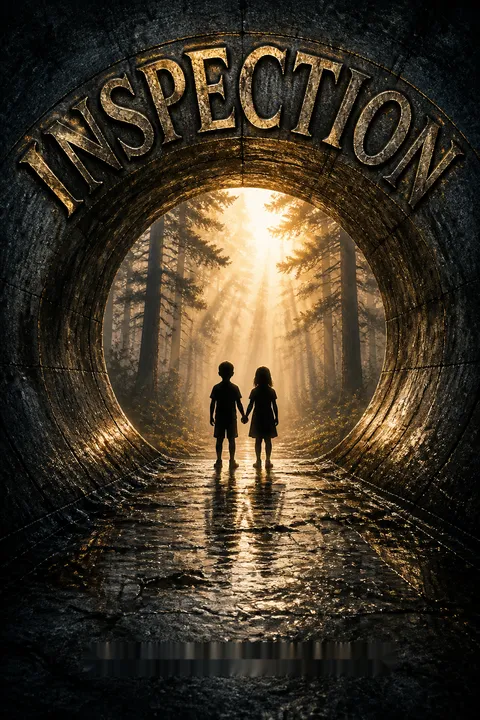
A hidden tunnel, the Glasgow Tunnel, connects the two towers—a physical manifestation of the link between the boys and girls. J and K plan to meet there, to unite their knowledge and their forces. The tunnel is both a hope and a trap, as the adults become aware of the breach and move to contain it. The meeting in the tunnel is fraught with danger, betrayal, and violence, but it also marks the point of no return. The children, armed with truth and each other, are ready to confront the architects of their oppression.
Revolt and Revelation
The boys and girls, led by J, K, and Q, rise up against their captors. The revolt is brutal and chaotic, fueled by years of repression and the sudden flood of forbidden knowledge. The children kill or imprison the adults, including D.A.D. and M.O.M., reclaiming the towers for themselves. The violence is both cathartic and traumatic, as the children grapple with the cost of their freedom. The revolution is not just against the adults, but against the lies that shaped their very selves. In the aftermath, they must confront the question of what kind of world they will build from the ashes.
The Fall of Parenthood
With the adults gone, the children are left to govern themselves. The towers, once symbols of order and safety, become reminders of their captivity and the crimes committed in the name of genius. The children mourn their lost innocence, bury their dead, and struggle to imagine a future beyond the only world they have ever known. The myth of the Living Trees, the rituals of Inspection, the terror of the Corner—all are revealed as tools of control, now powerless. The children face the daunting task of forging new identities and new relationships, free from the scripts written for them.
Spoiled Rotten
The phrase "spoiled rotten," once a threat, becomes a badge of honor for the children who have survived and rebelled. They are marked by trauma, loss, and the knowledge that they can never return to innocence. The world outside the towers is both a promise and a threat, filled with possibilities and dangers they can barely comprehend. The children must learn to trust themselves and each other, to navigate a reality that is no longer dictated by others. Their freedom is hard-won, and its cost is written in blood and memory.
Out Into the World
The children, led by J, K, and Warren, prepare to leave the towers and enter the world beyond the pines. They are armed with knowledge, with each other, and with the hope that they can build lives of their own choosing. The journey ahead is uncertain, but it is theirs to make. The story ends not with closure, but with the opening of a door—the promise of a future shaped by truth, courage, and the refusal to accept the limits imposed by others. The experiment is over; the real adventure begins.
Analysis
Inspection is a chilling meditation on the dangers of engineered innocence and the violence inherent in systems that seek to control knowledge and desire. Josh Malerman's novel interrogates the myth that genius can be cultivated through isolation and repression, exposing the psychological and ethical costs of such experiments. The story's dual structure—boys and girls raised in parallel ignorance—serves as a powerful allegory for all forms of social engineering, whether in the name of progress, purity, or protection. The children's revolt is both a literal and symbolic act of reclaiming agency, as they reject the scripts written for them and demand the right to shape their own lives. The novel's use of forbidden books, secret tunnels, and ritualized Inspections underscores the central theme: that truth, once glimpsed, cannot be contained, and that the hunger for connection and meaning is irrepressible. In a world increasingly obsessed with control—of bodies, minds, and narratives—Inspection is a timely warning about the costs of denying our shared humanity, and a testament to the resilience of those who dare to ask, "What else is out there?"
Review Summary
Inspection receives mixed reviews, averaging 3.48/5. Readers widely praise Malerman's originality and imaginative premise — 26 boys and 26 girls raised separately, unaware the other sex exists. Many note the slow pacing in the first half, but commend the explosive, action-packed finale. Common criticisms include underdeveloped characters, repetitive passages, and the experiment's failure to address homosexuality or realistic pubescent biology. Fans of Bird Box found this departure different but appreciated Malerman's refusal to repeat himself creatively.
People Also Read

Characters
J
J is the emotional and intellectual center of the Alphabet Boys. Raised to be obedient and brilliant, he is haunted by a sense of incompleteness and a growing suspicion that his world is built on lies. His relationships with his brothers, especially D and Q, are deep and formative, but he is also set apart by his willingness to question and to feel. J's journey is one of awakening—first to the cracks in the Parenthood's narrative, then to the existence of the Letter Girls, and finally to love and agency through his connection with K. His arc is a painful shedding of innocence, culminating in leadership and sacrifice as he helps lead the revolt and faces the cost of freedom.
K
K is the most gifted and independent of the Letter Girls, marked by her artistic talent and her refusal to accept easy answers. Her curiosity leads her to discover the boys' tower, and her courage drives her to make contact with J, risking everything for truth. K's psychoanalysis reveals a mind both creative and analytical, capable of seeing through the layers of deception that bind her world. Her relationship with J is transformative, awakening both to love and to the possibility of a life beyond the tower. K becomes a revolutionary, leading the girls in revolt and helping to forge a new path for all the children.
D.A.D. (Richard)
D.A.D. is the architect of the boys' world, a man driven by the belief that genius can only flourish in isolation from the opposite sex. He is both father and warden, blending affection with manipulation. His psychoanalysis reveals deep insecurity and a need for control, masked by the rhetoric of progress. As the boys begin to question and rebel, D.A.D.'s authority unravels, exposing the emptiness at the heart of his experiment. His downfall is both a personal tragedy and a symbol of the collapse of the system he built.
M.O.M. (Marilyn)
M.O.M. is the counterpart to D.A.D., ruling the Letter Girls' tower with a blend of maternal care and iron discipline. She is sophisticated and calculating, believing in the necessity of the experiment but also haunted by doubts. Her psychoanalysis reveals a woman torn between ambition and empathy, ultimately undone by the very intelligence she sought to cultivate in her girls. Her death at the hands of the children is both a reckoning and a release, marking the end of the old order.
Warren Bratt (Lawrence Luxley)
Warren is the reluctant propagandist of the Parenthood, writing sanitized stories under the pseudonym Lawrence Luxley. His guilt over his role in the boys' deception drives him to write Needs, a forbidden book that becomes the catalyst for revolution. Warren's psychoanalysis reveals a man trapped by his own compromises, seeking redemption through art and truth. His alliance with the children in the final revolt is both an act of atonement and a reclaiming of his own humanity.
Q
Q is the most intellectually gifted of the Alphabet Boys, excelling in logic and mathematics but also drawn to questions of meaning and faith. He is a natural skeptic, often challenging the assumptions of the Parenthood and his brothers. Q's psychoanalysis reveals a mind in search of coherence, struggling to reconcile the contradictions of his world. His role in the revolt is crucial, providing both strategy and moral clarity.
D
D is J's closest friend, a boy of strong feelings and fierce loyalty. He is slower to question than J or Q, but once awakened, his anger and sense of betrayal fuel the rebellion. D's psychoanalysis reveals the pain of lost innocence and the longing for connection. His journey is one of transformation from follower to fighter, embodying the cost and necessity of breaking free.
B (Letter Girl)
B is K's best friend among the Letter Girls, known for her humor and warmth. She is initially resistant to questioning the Parenthood, clinging to the comfort of routine and authority. B's psychoanalysis reveals the tension between fear and loyalty, as she is torn between supporting K and obeying M.O.M. Her eventual participation in the revolt is an act of bravery, marking her growth from follower to agent of change.
Inspectors Collins and Jeffrey
The Inspectors are the hands of the Parenthood, carrying out Inspections and enforcing discipline. Their psychoanalysis reveals men who are both complicit and trapped, enforcing rules they may not fully believe in. As the children revolt, the Inspectors' authority collapses, exposing their vulnerability and the limits of power based on fear.
Judith Nancy (Vivian Kleinplotz)
Judith Nancy is the writer for the Letter Girls, a once-idealistic author now broken by complicity and regret. Her psychoanalysis reveals the corrosive effects of living a lie, as she turns to alcohol and cynicism to cope. Her interactions with K and B are both a warning and a call to action, embodying the dangers of surrendering one's integrity.
Plot Devices
Dual Narrative Structure
Inspection employs a dual narrative, alternating between the boys' and girls' towers. This structure highlights the symmetry of their experiences—both groups are raised in ignorance, subjected to Inspections, and manipulated by parental figures. The parallel plots converge as J and K make contact, their union symbolizing the collapse of artificial boundaries. The device allows the reader to see the universality of the children's struggle, emphasizing that oppression wears many faces but always serves the same end: control.
The Book Within the Book
Warren Bratt's Needs functions as a book within the book, a meta-narrative that exposes the lies of the Parenthood and introduces the children to concepts and words they have never known. The act of reading becomes an act of rebellion, as the book spreads like a virus, infecting the children with doubt and desire. This device foregrounds the power of stories to shape reality, for good or ill, and the danger posed by uncontrolled knowledge.
Inspections, the Corner, and the Orchard as Metaphors
Recurring motifs—daily Inspections, the myth of the Living Trees, the terror of the Corner—serve as both plot devices and symbols. Inspections foreshadow the eventual exposure of truth, the Corner represents the ultimate punishment for curiosity, and the Orchard stands for the mystery of origins and the hunger for meaning. These devices create a sense of inevitability, as the children's questions lead inexorably to confrontation and change.
Psychological Realism
The novel delves deeply into the minds of its characters, using interior monologue and shifting perspectives to convey the confusion, fear, and longing that drive the plot. The unreliable narration—children trying to make sense of a world built on lies—heightens the tension and emotional impact, as the reader is drawn into their struggle to discern reality from fiction.
The Tunnel as Liminal Space
The Glasgow Tunnel is both a literal passage between the boys' and girls' towers and a metaphor for the crossing from ignorance to knowledge, from childhood to adulthood. It is the site of both hope and danger, where the children's worlds collide and the final confrontation with the adults is set in motion.
About the Author



Download PDF
Download EPUB
.epub digital book format is ideal for reading ebooks on phones, tablets, and e-readers.








































