
Plot Summary
Salt and Sorrow's Shadow
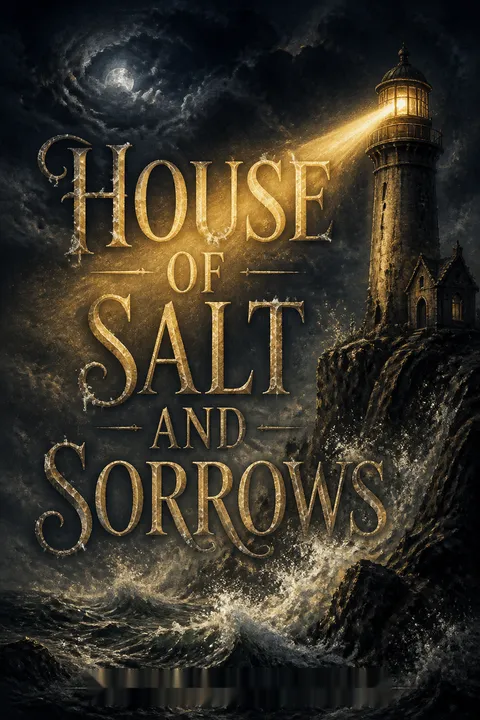
The Thaumas family, once blessed with twelve daughters, is now marked by tragedy. Annaleigh, the sixth-born, mourns her sisters—Ava, Octavia, Elizabeth, and now Eulalie—each lost to illness, accident, or mysterious circumstances. The island estate of Highmoor is shrouded in grief, its halls echoing with the rituals of salt-burial and the whispers of a curse. Annaleigh, numb with sorrow, questions the string of deaths, sensing something unnatural at work. The family's mourning is interrupted by the arrival of Morella, their young stepmother, whose presence brings both hope and unease. As the sea pounds the cliffs and the salt air thickens, Annaleigh wonders: is her family truly cursed, or is something more sinister stalking them from the shadows?
Twelve Sisters, Four Graves
The remaining Thaumas girls—Camille, Annaleigh, the triplets, the Graces, and Lenore—struggle to find solace in each other as death continues to claim their own. The rituals of mourning are suffocating, and the house is filled with black ribbons, shrouded mirrors, and the constant fear of who will be next. Annaleigh's relationship with her sisters is complex: Camille is sharp and restless, the triplets yearn for normalcy, and the youngest, Verity, is haunted by visions of their dead siblings. The family's unity is tested as suspicion and superstition grow, and Annaleigh's determination to protect her sisters hardens, even as she feels the weight of new responsibilities pressing down on her.
The Curse Whispers
As the islanders gossip about the Thaumas curse, Annaleigh's doubts deepen. Eulalie's death, a fall from the cliffs, feels wrong—was it an accident, suicide, or murder? The villagers keep their distance, fearing the family's misfortune is contagious. Morella's pregnancy is announced at Eulalie's wake, a jarring note of hope amid despair, but it only stirs more tension. Annaleigh's search for answers leads her to question the traditions and beliefs that bind her family, and she begins to suspect that the curse is not just a story, but a living force feeding on their sorrow.
A Ball for the Living
Morella, eager to banish the gloom, proposes a ball for the triplets' sixteenth birthday, hoping to prove the family is not cursed. The house is transformed with new dresses, fairy shoes, and the promise of dancing. Annaleigh is torn between honoring her lost sisters and embracing the chance for happiness. The preparations bring a flicker of excitement, but also unease—strange dreams, ghostly sightings, and the sense that something is watching. The ball becomes a symbol of defiance, a way to reclaim life from the grip of death, but beneath the surface, darkness gathers.
Dancing in Mourning
The ball is both dazzling and haunted. The sisters, radiant in their new gowns and magical slippers, dance through the night, but the shadow of the curse lingers. Annaleigh's encounters with the mysterious Cassius, a stranger with secrets of his own, spark hope and longing. Yet, as the sisters dance, Annaleigh is plagued by visions—her dead siblings appear in Verity's drawings, and the line between reality and nightmare blurs. The fairy shoes, meant to bring happiness, wear out with unnatural speed, and Annaleigh senses that the cost of joy may be higher than anyone realizes.
The Stranger on Selkirk
Annaleigh's search for the truth leads her to Selkirk, where she meets Cassius, a charming outsider with a hidden past. Their connection is immediate, but Cassius's knowledge of the Thaumas family is unsettling. As Annaleigh investigates Eulalie's last night, she uncovers hints of forbidden love, jealousy, and a locket engraved with ominous poetry. Cassius becomes both confidant and enigma, his presence a balm and a warning. Annaleigh's heart is drawn to him, but she cannot ignore the sense that he is entangled in the web of secrets threatening her family.
Secrets Beneath the Waves
Annaleigh's investigation deepens as she questions the fishermen who found Eulalie, discovers hidden keepsakes, and confronts the possibility of murder. The family's history is revealed in fragments—old rivalries, broken promises, and the legacy of the sea. Annaleigh's determination to protect her sisters grows, even as she is haunted by the ghosts of the past. The line between friend and foe blurs, and Annaleigh realizes that the answers she seeks may be more dangerous than the curse itself.
Fairy Shoes and False Hope
The fairy shoes, symbols of hope and renewal, become objects of dread as they wear out with unnatural speed. The sisters' nightly dances grow more feverish, and Annaleigh suspects that the shoes are not merely enchanted, but cursed. The balls they attend become increasingly surreal, filled with dazzling beauty and lurking menace. Annaleigh's dreams are invaded by the Weeping Woman, a figure of terror who whispers promises of death. The sisters' pursuit of happiness becomes a dance with doom, and Annaleigh fears that the magic meant to save them is leading them to destruction.
Ghosts in the Gallery
Verity's drawings become more disturbing, depicting the sisters' deaths in gruesome detail. Annaleigh begins to see ghosts—her dead siblings appear in the halls, their presence both comforting and horrifying. The house itself seems to turn against them, with strange noises, moving shadows, and the sense that something is always watching. Annaleigh's grip on reality weakens as she questions her own sanity. The curse feels more real than ever, and Annaleigh realizes that the true danger may not be from outside, but from within.
The Door of Dreams
The sisters discover a hidden door in Pontus's shrine, a magical passage that leads to fantastical balls in distant lands. The door becomes an escape from grief, a way to reclaim lost joy, but its magic is treacherous. The balls are both enchanting and nightmarish, filled with masked strangers, impossible beauty, and lurking threats. Annaleigh and Cassius use the door to search for answers, but each journey brings them closer to the heart of the curse. The door is a gateway to both hope and horror, and Annaleigh senses that every wish granted comes with a hidden cost.
Nightmares in Moonlit Halls
The balls grow more surreal and sinister, with Annaleigh and her sisters caught in a cycle of dancing, exhaustion, and madness. The Weeping Woman's presence intensifies, invading Annaleigh's dreams and waking life. The sisters begin to die—Rosalie and Ligeia are found frozen in the snow, their deaths as inexplicable as the others. Annaleigh's investigation leads her to suspect everyone, even herself, as the boundaries between reality and nightmare dissolve. The curse tightens its grip, and Annaleigh realizes that the true enemy may be a force beyond human understanding.
The Weeping Woman's Waltz
Annaleigh confronts the Weeping Woman, Kosamaras, an immortal Harbinger summoned by a dark bargain. Kosamaras has been beguiling the sisters, driving them to madness and death through dreams and illusions. The balls, the shoes, the visions—all are her doing, payment for a bargain struck with a Trickster god. Annaleigh's world unravels as she learns that even her memories, her love for Cassius, and her own actions may not be her own. The curse is not a story, but a living nightmare, and Annaleigh must fight to reclaim her mind and her family.
Madness and Murder
The true architect of the family's destruction is revealed: Morella, driven by jealousy and desperation, made a bargain with Viscardi, the Trickster, to win Ortun's love and bear a son. The price was the lives of the Thaumas daughters. Kosamaras, as Viscardi's agent, has orchestrated the deaths, the madness, and the unraveling of reality itself. Highmoor is consumed by fire, Morella is destroyed, and the family is left in ruins. Annaleigh, broken by grief and guilt, must find the strength to survive and protect what remains.
The Bargain Revealed
As the fire rages and the family scatters, Annaleigh confronts the consequences of Morella's bargain. The Trickster's price is exacted in blood and sorrow, and the survivors are left to pick up the pieces. Cassius, revealed as the son of a goddess, sacrifices himself to save Annaleigh and Verity. The curse is broken, but at a terrible cost. Annaleigh is left to mourn her lost love, her sisters, and the life that might have been. The salt remembers every sorrow, and Annaleigh must learn to live with the weight of memory.
Fire and Ashes
Highmoor burns, the family's legacy reduced to ruins. Annaleigh, Camille, and the surviving sisters escape into the snow, clinging to each other for comfort. The fire is both an ending and a beginning, a purging of the past and a chance to rebuild. The survivors gather in the garden, mourning their dead and vowing to endure. The salt and the sea remain, eternal witnesses to their suffering and resilience. Annaleigh, changed by loss and love, faces the future with both hope and sorrow.
Wishes on the Wind
In the aftermath, Annaleigh and her sisters find refuge on Hesperus, tending the lighthouse and caring for each other. The wounds of the past linger, but the promise of new beginnings glimmers on the horizon. Annaleigh releases a wish lantern into the night, longing for Cassius and the life they might have shared. The sea turtles return to the shore, a symbol of endurance and renewal. As the stars shine above, Annaleigh dares to hope that love and memory can outlast even the deepest sorrow.
The Salt Remembers
The story ends where it began: with the salt, the sea, and the memory of those lost. Annaleigh, forever changed, carries the weight of her family's history and the lessons of the curse. The salt remembers every joy and every sorrow, binding the living and the dead in an unbreakable chain. Annaleigh's love for Cassius endures, a wish carried on the wind, and the promise of the future is written in the stars. The house of salt and sorrows stands as a testament to the power of love, loss, and the courage to begin again.
Analysis
House of Salt and Sorrows is a gothic fairy tale that explores the corrosive power of grief, the dangers of unchecked desire, and the resilience of love and memory. At its heart, the novel is a meditation on loss—how it shapes families, distorts reality, and tempts us to seek impossible bargains to escape pain. The curse that haunts the Thaumas family is both supernatural and psychological, a manifestation of trauma and the human tendency to look for meaning in suffering. The story's use of unreliable reality, beguiling magic, and shifting perceptions reflects the disorienting nature of grief and the struggle to distinguish truth from illusion. Morella's bargain with the Trickster is a cautionary tale about the cost of shortcuts and the perils of seeking happiness at the expense of others. Annaleigh's journey—from numb survivor to determined protector, from victim of madness to agent of hope—embodies the novel's central lesson: that endurance, love, and the courage to remember are the true antidotes to sorrow. In a modern context, House of Salt and Sorrows resonates as a story about mental health, the importance of facing pain rather than fleeing it, and the possibility of healing even after unimaginable loss. The salt remembers every joy and every sorrow, but it is the act of remembering—and loving—that allows us to begin again.
Review Summary
People Also Read

Characters
Annaleigh Thaumas
Annaleigh is the sixth-born of the Thaumas sisters, thrust into the role of protector and investigator as her family is ravaged by tragedy. She is deeply empathetic, torn between honoring the dead and fighting for the living. Annaleigh's psychological journey is marked by grief, guilt, and a desperate need for answers. Her relationships with her sisters are complex—she is both nurturer and skeptic, often at odds with Camille but fiercely loyal to all. Annaleigh's romance with Cassius offers hope and healing, but is fraught with uncertainty and the fear of loss. Her development is a struggle to reclaim agency in a world where reality itself is under siege, and her ultimate triumph is not in defeating the curse, but in enduring, loving, and remembering.
Camille Thaumas
Camille, the eldest surviving sister, is both Annaleigh's closest ally and frequent adversary. She is driven by a desire for control and normalcy, chafing against the restrictions of mourning and the shadow of the curse. Camille's wit and ambition mask deep insecurities and a fear of being unloved or left behind. Her relationship with Annaleigh is a blend of rivalry and sisterly devotion, and her interactions with the other sisters reveal both tenderness and impatience. Camille's arc is one of reluctant leadership—forced to inherit Highmoor and care for her fractured family, she must learn to balance strength with compassion, and to accept the burdens of memory and responsibility.
Verity Thaumas
The youngest Thaumas sister, Verity is a child marked by trauma and supernatural sensitivity. She is haunted by visions of her dead siblings, which she expresses through disturbing drawings. Verity's innocence is both a shield and a vulnerability—she is easily beguiled by Kosamaras, and her experiences blur the line between reality and nightmare. Her relationship with Annaleigh is especially close, and her survival becomes a symbol of hope and resilience. Verity's psychological journey is one of reclaiming agency and voice, and her eventual rescue is a testament to the enduring power of love and memory.
Morella Thaumas
Morella, the sisters' young stepmother, is an outsider seeking acceptance and power. Her initial kindness masks deep insecurity and a willingness to do anything to secure her place—including making a bargain with a Trickster god. Morella's actions, driven by jealousy and longing, unleash the curse that destroys the family. Her psychological profile is marked by self-delusion, guilt, and a desperate need for love. Morella's arc is a cautionary tale about the dangers of unchecked desire and the cost of bargains made in desperation. Her ultimate fate is both a punishment and a release.
Cassius Corum
Cassius is an outsider with a hidden identity—the son of the moon goddess Versia. He is drawn to Annaleigh by both fate and affection, offering her comfort, insight, and hope. Cassius's presence is both grounding and unsettling; he knows more than he reveals, and his connection to the supernatural world is a source of both strength and vulnerability. His love for Annaleigh is genuine, but their relationship is tested by the illusions and dangers surrounding them. Cassius's ultimate sacrifice and return embody the themes of love, memory, and the possibility of redemption.
Kosamaras (The Weeping Woman)
Kosamaras is the Harbinger of Madness and Nightmares, an immortal summoned by Morella's bargain with Viscardi. She beguiles the sisters, driving them to madness and death through dreams, illusions, and psychological torment. Kosamaras is both a force of nature and a cunning antagonist, delighting in the suffering she causes. Her relationship to the family is that of predator to prey, but she is also bound by the rules of the bargain. Kosamaras embodies the destructive power of grief, guilt, and unacknowledged desire, and her presence forces the characters to confront the darkest parts of themselves.
Viscardi (The Trickster)
Viscardi is the Trickster god who strikes the fatal bargain with Morella, setting the curse in motion. He is a master of manipulation, granting wishes with hidden costs and delighting in the suffering that follows. Viscardi's psychological profile is that of a narcissist and sadist, reveling in the chaos he creates. His relationship to the family is that of tempter and destroyer, but he is also bound by the terms of his bargains. Viscardi represents the dangers of unchecked desire and the perils of seeking easy answers to complex problems.
The Triplets (Rosalie, Ligeia, Lenore)
The triplets are a unit, their identities intertwined and their fates linked. Rosalie and Ligeia's deaths are among the most devastating, and Lenore's survival is marked by guilt and trauma. The triplets' psychological profiles are shaped by their shared experiences of loss, fear, and longing for normalcy. Their relationship with Annaleigh and Camille is both loving and fraught, as they struggle to assert individuality in the face of overwhelming grief. Lenore's eventual healing is a symbol of the possibility of recovery and renewal.
Ortun Thaumas (Papa)
The patriarch of the Thaumas family, Ortun is a man broken by loss and desperate to protect what remains. His love for his daughters is genuine, but he is often blind to their suffering and the dangers surrounding them. Ortun's psychological journey is one of denial, guilt, and eventual acceptance. His relationship with Morella is both a source of hope and the catalyst for disaster. Ortun's arc is a meditation on the limits of parental power and the necessity of letting go.
Hanna
Hanna, the family's longtime nursemaid, is a source of comfort and stability amid chaos. She is deeply loyal to the sisters, especially Annaleigh, and serves as a surrogate mother in the wake of Cecilia's death. Hanna's psychological profile is marked by resilience, pragmatism, and quiet strength. Her relationship with Fisher and the other servants highlights the class dynamics of Highmoor, and her presence is a reminder of the enduring power of love and care in the face of tragedy.
Plot Devices
The Curse and the Beguiling
The central plot device is the supposed curse on the Thaumas family, which operates on both a literal and metaphorical level. The curse is a manifestation of grief, guilt, and the destructive power of unacknowledged desire. It is made real through the bargain Morella strikes with Viscardi, and enforced by Kosamaras's beguiling—her ability to manipulate dreams, memories, and perceptions. The curse blurs the line between reality and nightmare, making both characters and readers question what is true. This device allows for the exploration of trauma, madness, and the dangers of seeking easy answers to complex problems.
The Magical Door
The hidden door in Pontus's shrine serves as both a literal and symbolic gateway. It offers escape from grief and the promise of joy, but also leads the sisters deeper into danger. The door's magic is seductive, granting wishes and fulfilling desires, but always at a hidden cost. It is a classic plot device of temptation and consequence, echoing fairy tale motifs and reinforcing the theme that every wish granted comes with a price.
Foreshadowing and Unreliable Reality
The novel employs foreshadowing through Verity's drawings, Annaleigh's dreams, and the recurring presence of the Weeping Woman. The use of unreliable reality—where characters' perceptions are manipulated by Kosamaras—creates a sense of disorientation and suspense. Readers are kept off-balance, never sure what is real and what is illusion, mirroring the characters' psychological states. This device heightens the emotional impact of the story and underscores the themes of grief, madness, and the search for truth.
The Bargain with the Trickster
The plot is driven by Morella's bargain with Viscardi, a classic deal-with-the-devil scenario. The bargain is both a plot engine and a thematic device, exploring the dangers of unchecked desire, the perils of seeking shortcuts to happiness, and the inevitability of unintended consequences. The Trickster's bargains are always double-edged, granting wishes in ways that destroy the wisher and those around them. This device allows for the exploration of moral ambiguity, the limits of agency, and the necessity of accepting loss.
Narrative Structure and Emotional Arc
The novel's structure mirrors a descent into madness and grief, followed by a hard-won return to hope and endurance. The story moves from the suffocating rituals of mourning, through the seductive dangers of magic and illusion, to the shattering revelation of betrayal and the destruction of the family home. The emotional arc is one of loss, despair, and the gradual reclamation of agency and memory. The use of first-person narration, unreliable perceptions, and shifting realities immerses the reader in Annaleigh's psychological journey, making her triumphs and sorrows deeply felt.
Sisters of the Salt Series
About the Author
Other books by Erin A. Craig
Download PDF
Download EPUB
.epub digital book format is ideal for reading ebooks on phones, tablets, and e-readers.








































