
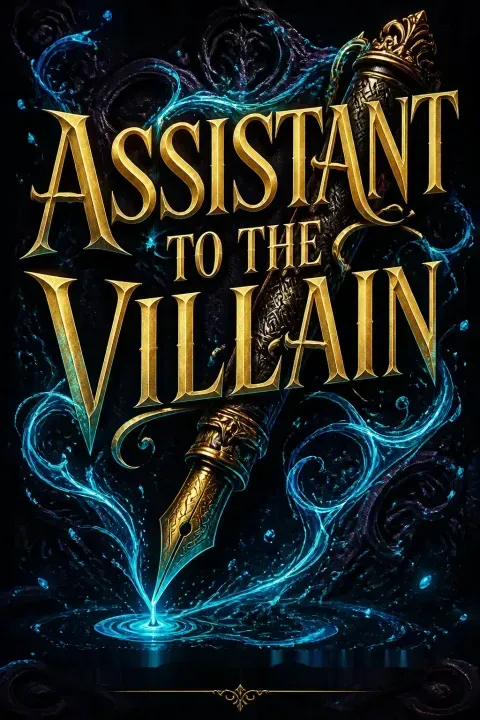


Plot Summary
Prologue
Evie Sage,1 twenty-three and unemployed, wanders into the forbidden Hickory Forest rather than face her family after giving away a maid position to a desperate mother. A stream turned crimson with blood leads her to a wounded man in a black cloak, pursued by the king's8 Valiant Guards. He pulls her down, covers her mouth, and together they evade the soldiers.
When she finally sees his face, she is stunned: he is young, perhaps late twenties, with high cheekbones and dark eyes — nothing like the grotesque wanted posters depicting a scarred, gray-bearded monster. She tells him outright that evil people should be ugly.
He reveals he was attacked while protecting a frog named Kingsley,9 who wears a tiny gold crown. At his magically hidden manor, Massacre Manor, he offers her a job with a generous salary. Desperate to support her ailing father3 and young sister,4 Evie1 accepts a gold employment bargain tattooed on her finger and becomes personal assistant to The Villain.2
The prologue establishes Evie's defining contradiction: her compulsive self-sacrifice (giving away her job) drives her toward morally compromised survival strategies. Her immediate comfort with The Villain—touching his face, calling him pretty, feeling no fear—signals a woman whose trauma has severed normal danger responses. She has spent years managing family crises, so a wanted fugitive feels like just another problem to solve. The crowned frog, Kingsley, signals the story's tonal blend of whimsy and darkness. The gold bargain ring, introduced without explanation, will become the story's central symbol: a bind that, ironically, protects rather than traps. The forest meeting establishes the core dynamic: she sees past his reputation; he recognizes her value when no one else has.
Severed Heads and Suspicions
Five months into her employment, Evie1 navigates the manor's horrors with practiced calm. Severed heads dangling from the ceiling signal her boss's2 foul mood because three weapons shipments have been intercepted in two months.
The Villain2 confides that someone inside the organization is feeding information to their enemies. Evie1 compiles an exhaustive suspect list on every employee, including herself. A rhythmic clicking sound draws her into his office, where Kingsley9 the frog holds up a sign reading 'Danger.'
She searches the desk and finds a small gold rectangular device with a ticking timepiece attached. Only three minutes remain before it detonates. The bomb was placed there deliberately, meant to destroy The Villain2 and everything he has built.
This section transforms workplace comedy into thriller. Evie's methodical approach—creating detailed suspect profiles, tracking the sound despite her instincts—reveals how five months of proximity to danger have sharpened her. The severed heads, once background décor, now read as evidence of an escalating war. Kingsley's warning sign reinforces his function as the manor's silent conscience, a one-word prophet. The bomb introduces an enemy who understands the office's rhythms well enough to plant a device in The Villain's private space during his absence, suggesting intimate knowledge of his schedule.
The Parapet Explosion
Evie1 races through the office clutching the bomb. Becky,5 her workplace nemesis, unexpectedly throws open the parapet doors. Evie1 sprints toward the edge but her heel catches in a loose stone, trapping her. The bomb slips from her grasp and lands nearby, still ticking. She thinks of Lyssa,4 her father,3 and never seeing her boss's2 rare smile again. The Villain2 appears, sprinting toward her.
He throws himself on top of her, wrapping them in his magic, just as the world explodes. The tower crumbles. Ash and debris coat them both, but they survive. He carries her to the healer Tatianna,7 his hands unsteady on her injuries. The destroyed parapet and missing tower section scar the manor's silhouette, a visible reminder of the traitor's reach.
This is the moment romantic tension crystallizes into life-or-death stakes. Trystan's desperate sprint and body-shielding sacrifice contradict his villainous persona completely. Evie's resignation to death, and her final thoughts centering on him alongside her family, reveals her emotional priorities have shifted. Becky's split-second decision to help complicates their antagonistic dynamic. The physical destruction of the manor mirrors the emotional devastation the traitor is causing: someone is dismantling Trystan's world piece by piece, and now they have targeted the one person he cannot bear to lose.
Malcolm's Drunken Confession
Trystan2 drives Evie1 home and, in an unguarded moment, gives his real name to her ten-year-old sister Lyssa.4 Later, he asks Evie1 to accompany him to the Redbloom Tavern. Her ex-lover Rick harasses her until Trystan2 grips his shoulder hard enough to make him flee. The tavern owner is Malcolm,11 Trystan's2 younger brother, who admits he sold the specialized clock to a hooded man with glowing blue ink staining his fingers.
Malcolm11 and Trystan2 have spent years trying to kill each other without success. The ink, Malcolm11 notes, came from someone the family knows well — a lead that points toward their sister Clare.10 The investigation now has a tangible trail: find who bought the blue ink, find the traitor.
This chapter expands Trystan's world beyond the manor. His siblings reveal a history the villainous persona has obscured. Malcolm's confession, extracted through near-strangulation, shows that family bonds persist even through attempted murder. The blue ink becomes the investigation's central metaphor: a substance that marks and identifies, that stains the skin and the conscience. Evie's protective instinct toward Trystan during his brother's taunts signals her loyalty has moved beyond employment. The revelation that Trystan has a real name—one he shares freely with a child—cracks his carefully constructed anonymity.
Clare's Cottage of Ink
Trystan,2 Evie,1 and Tatianna7 visit Clare,10 his sister, who makes magical ink in a forest cottage. Tatianna7 and Clare10 were once betrothed; their reunion crackles with bitterness and unfinished longing. Clare's10 ledger shows she sold blue ink to a man who signed as Lark Moray, a Valiant Guard. She also sold gold ink to Trystan2 — the same ink now circling Evie's1 finger.
When Evie1 presses about his history with the king,8 Trystan2 admits he once worked for Benedict,8 'before.' Clare10 calls her brother a monster, but her anger masks fear for his safety. The investigation now points directly at the king,8 but the specific agent who bought the ink and commissioned the bomb remains unidentified. Trystan2 storms out rather than explain his past.
The ink maker's cottage becomes a confessional space where family wounds surface. Clare and Tatianna's broken relationship mirrors Trystan's estrangement from his siblings: love curdled into resentment over unforgiven choices. The gold ink revelation is crucial: Trystan chose a protective ward for Evie when he could have bound her lethally, revealing care disguised as control. His refusal to share his backstory with Evie shows he still equates vulnerability with weakness. Clare's 'monster' accusation lands because she knows the man he was before, and her grief is for who he might have been.
The Quitting
Evie1 discovers a letter offering employment from King Benedict8 in Blade's6 quarters. Blade6 confesses he stole the dragon egg from the king8 and lied about his background. Evie1 keeps his secret but urges him to confess to Trystan.2 Before he can, Becky5 finds the letter in Evie's1 pocket and presents it to The Villain.2 Trystan,2 seeing only the king's8 seal, accuses Evie1 of betrayal.
When she cannot explain without betraying Blade,6 he tells her he never truly trusted her: the gold bargain only prevents harm, it does not guarantee faith. Shattered, Evie1 quits on the spot and flees the manor, tears blurring her vision. She wonders if breaking her employment vow will release poison into her bloodstream, as the green-inked bargains do to the guards.
This is the relationship's crucible. Trystan's past betrayal by King Benedict makes him reflexively assume the worst, while Evie's loyalty to Blade prevents her from defending herself. The irony is devastating: Trystan chose gold ink specifically to protect her, not to control her, yet his words about 'promised trust' cut deeper than any magical bond. Evie quitting is both self-respect and self-destruction: she reclaims agency while walking away from the first place she ever felt valued. The green-bargain death clause she fears doesn't apply to gold, but neither she nor the reader knows this yet.
An Apology, Badly Done
Blade6 confesses the truth about the stolen dragon and the letter to Trystan.2 The office descends into chaos without Evie:1 shipments go uncatalogued, the magical filing cabinet eats documents, and no one knows where the fire hoses are.
Evie1 returns voluntarily, apologizes for quitting impulsively, and asks for her job back. Trystan,2 in a halting, deeply uncomfortable speech, admits he was wrong. To prove his sincerity, he reveals something no one else knows: he uses a night-light because he fears the dark.
Evie1 is charmed by this vulnerability. They clasp hands and start fresh. Meanwhile, Blade6 discovers the dragon's chains bear an engraving: 'The Villain2 Will Fall' — a threat planted months before the bomb through a shipment stolen from King Benedict.8
Reconciliation through mutual vulnerability marks a relationship turning point. Both admit fault and share embarrassing truths (night-light, ladybug phobia). The power dynamic shifts toward equality. Trystan's confession about his childhood fear humanizes him without diminishing his menace. The dragon chain engraving reveals the traitor's scheme was embedded far earlier than suspected, deepening the mystery's timeline. The office's dysfunction without Evie demonstrates she has become structurally essential, not just emotionally significant. This is also where Evie learns the green-bargain death clause does not apply to her gold ring—the first hint her bond is different.
Otto Warsen's Broken Wrist
Trystan2 and Evie1 visit Otto Warsen,12 the blacksmith who forged the dragon's collar. Evie1 is visibly distraught: she once worked here and bears a magical scar from when Otto12 attacked her after she refused his advances. Otto,12 bribed with gold, reveals a masked Valiant Guard commissioned the collar as a warning to The Villain.2
When Otto12 brandishes the same dagger that scarred Evie,1 Trystan2 breaks the blacksmith's12 wrist with methodical fury. He discovers the blade is magically linked to Evie's1 wound — proximity causes her agonizing pain. Trystan2 promises the unconscious blacksmith12 will leave town forever, but first wants to know why Evie1 hid her assault. She deflects, unwilling to speak of it yet.
This section externalizes Evie's hidden trauma through the physical link between dagger and scar. Her silence about the assault mirrors how survivors often protect abusers to maintain family stability. Trystan's controlled, vengeful response—breaking bones but stopping short of murder at her implicit request—shows his violence can be restrained by her wishes. The revelation that the blacksmith was just another pawn in a larger scheme deepens the conspiracy. The dagger becomes a symbol of unresolved pain that will require confronting, not burying.
The Guvre's Storm
Trystan2 captures a male guvre — a serpent-bat creature whose venom melts flesh — because King Benedict8 holds the female. The captured guvre's magic summons a violent storm, trapping all employees at the manor overnight. When the female guvre arrives seeking her mate, she attacks, melting stone and shattering windows.
Evie1 distracts the creature with a loud whistle, burning her hands on venomous breath. Trystan2 knocks it unconscious with a battering ram. With both guvres caged in the cellar, the staff shares wine by candlelight. Even Becky5 loosens up, and Blade6 flirts with her relentlessly. The group's camaraderie deepens, but the traitor remains unidentified among them, invisible as the storm outside.
The guvres function as a dark mirror for Trystan and Evie: mated creatures whose separation causes destruction, whose reunion brings peace. The overnight lockdown forces intimacy among the office staff, transforming coworkers into a found family. Evie's willingness to risk herself for Trystan parallels his earlier rescue of her on the parapet. The wine-soaked gathering humanizes even Becky, suggesting that alliances can shift when defenses lower. The storm as consequence of captivity also foreshadows the costs of Trystan's own imprisonment by Benedict a decade earlier: caging what you fear creates destruction.
Becky's Desperate Mask
While riding home, Evie1 spots a masked figure in the woods and tackles them. It is Becky,5 wearing a mask with King Benedict's8 emblem. Becky5 confesses she planned to infiltrate the Gleaming Palace to find a rumored cure for her grandmother's Mystic Illness — the same disease Evie's father3 supposedly suffers from. She stole a map from the cartography closet using a third key she'd secretly obtained.
Trystan,2 who arrived during the confrontation, reveals he already knew about Becky's5 plan. In an unexpected moment of solidarity, Evie1 and Becky5 acknowledge their shared burden of caring for sick family members. They agree to a truce of mutual silence about their brief common ground, then immediately revert to bickering.
This scene recontextualizes Becky from petty antagonist to tragic parallel. Both women are driven by love for ill family members, making choices that compromise their safety and ethics. The mask—a symbol of the king's duplicity—becomes an object of desperate hope rather than villainy. Trystan's quiet knowledge of Becky's situation reinforces his complexity: he monitors everything yet allows his employees their private struggles. The truce between Evie and Becky suggests that empathy can bridge even entrenched hostility, though neither woman is comfortable admitting it.
The Dance at the Cliff
Evie1 finds an invitation on her bedroom desk promising a cure, directing her to Briar's Peak. She dresses in a shimmering gown and attends the magical celebration, where she meets Arthur Maverine,13 the core healer — and Trystan's2 estranged father. Arthur13 claims Evie1 sent him a letter requesting the invitation, which she did not.
Trystan2 arrives, furious, but instead of a confrontation, he asks Evie1 to dance. They sway together in the firelight, sharing their deepest wounds: her brother Gideon's death by their mother's uncontrolled magic, his childhood of feeling unimportant because Arthur13 was always away healing others. The music wraps around them until a male guvre crashes the party, melting guests with venomous breath.
The dance scene is the emotional center of the romance. Away from the office hierarchy, they are simply two wounded people holding each other. Arthur's presence forces Trystan to confront his abandonment issues, while Evie's family tragedy creates reciprocal vulnerability. The letter she didn't send reinforces that someone is manipulating events, drawing them together for unknown purposes. The guvre attack shatters the idyll, reminding them—and the reader—that their world does not permit sustained happiness. Every moment of peace is borrowed.
Kissing Her 'Husband'
With the guvre rampaging and Valiant Guards rounding up survivors, Evie1 finds Trystan2 unconscious. When he stirs among the guards, she flings herself at him, kissing him and loudly claiming he is her husband suffering fertility troubles. Trystan,2 groggy and believing he is dreaming, kisses her back with unrestrained passion, his hands in her hair, pulling her closer.
When he fully wakes, he realizes the kiss was real and shoves her protectively behind him. Later, rogue knights attack them. Trystan2 kills one brutally. Evie,1 spattered with blood, hugs him instead of recoiling. In that moment, Trystan2 realizes he is in love with her but vows silently never to tell her, convinced he is unworthy and his future holds only death.
The fake-marriage ruse allows both characters to act on feelings long suppressed. Trystan's passionate response—thinking it a dream—reveals the depth of his desire. Evie's lack of horror at his killing is significant: she accepts his darkness completely. His internal vow of silence is a tragic romantic beat: he believes love requires protection through distance. The gold bargain ring on her finger takes on new symbolic weight as an unintentional wedding band. Two people who have never been anyone's priority become, for one desperate moment, each other's.
Discovering the Blue Ink
Clare10 and Tatianna7 work together to break the magical link between Evie's1 scar and the dagger, subjecting her to waves of pain in repeated sessions. During breaks, Clare10 explains that blue ink has a specific property: any words written with one drop can be read by anyone possessing another drop from the same vial, like severed fingers still connected to the same hand.
Evie1 freezes. Her father3 gifted her a special inkpot for her notebook — the one where she records every office detail. She steals a slow-acting sedative from Tatianna's7 shelf. That night, she searches her father's3 office, finds his blue ink supply, and discovers letters from King Benedict.8 The truth is undeniable: her own father3 has been the traitor all along.
The dagger-binding sessions physically manifest emotional healing: to be free of the scar, Evie must endure and overcome the pain. The ink lesson is the novel's masterful setup-payoff: an earlier mention of the gifted inkpot now becomes the key to the entire mystery. Evie's decision to steal the sedative before confronting her father shows she has already moved from reactive victim to strategic actor. The dramatic irony peaks as the reader realizes both Evie and Trystan are simultaneously reaching the same devastating conclusion through different evidence trails.
A Father Unmasked
Evie1 confronts her father.3 Griffin Sage3 admits he has been a Valiant Guard working for King Benedict8 for years. His Mystic Illness was entirely fabricated — a cover story to explain his frequent absences for covert missions. He used the blue ink to read everything Evie1 wrote in her notebook, passing shipment routes and security details to the king.8
He planted the bomb in Trystan's2 office knowing it could kill his own daughter. Worse, he arranged for Otto Warsen12 to have 'access' to Evie,1 hoping she would marry the blacksmith and become one less burden. He blames her for ruining his plans, comparing her to her mother. Evie,1 who had already drugged his evening medicine, watches him collapse and tells him his story is finished.
This is the novel's emotional climax. Griffin's confession reframes three years of Evie's sacrifice as exploitation. His comparison of Evie to her mother reveals the misogyny at his core: women who do not submit to his control are 'ruined.' Evie's preemptive drugging demonstrates her transformation from reactive optimist to strategic survivor. She does not kill him but removes him from her world, a mercy that is also the harshest condemnation. The father who told her fairy tales about heroes named East Marigold was, all along, the villain of hers. The childhood she mourned was built on lies.
A Villain's Origin
Trystan2 arrives to find Evie1 has already subdued her father.3 After guards take Griffin3 to the dungeons, Evie1 drinks wine, shaking as she processes the enormity of the betrayal. Trystan2 then tells her his past: at nineteen, King Benedict8 took him as an apprentice, praised his dormant magic, then declared it too dangerous. Guards locked him in a dark cell for a month, beating him whenever they pleased.
His magic finally awakened during a brutal attack, allowing him to kill his captors and escape. He became The Villain2 because the king8 had already named him one. Evie1 asks for a hug. They hold each other, her fingers in his hair, his face pressed to her neck. They nearly kiss — but Kingsley9 crashes into a table, breaking the moment.
Trystan's backstory parallels Evie's: both were betrayed by fathers (Benedict as surrogate, Griffin as biological). His fear of the dark is trauma, not weakness. Evie's reaction—offering physical comfort rather than pity—is precisely what he needs. The almost-kiss maintains romantic tension while the interruption preserves narrative momentum. Both characters are now fully known to each other: he has seen her father's betrayal, she has heard his origin story. They are bound by shared trauma and mutual recognition, yet neither will name what grows between them.
Assistant to the Villain
While retrieving Evie's notebook from the cottage, Trystan2 collapses — King Benedict8 ambushes them with knights and magic-suppressing cuffs. The king8 chains Trystan2 and reveals he needs the mated guvres for a secret purpose; Trystan2 is bait to get them back. Otto Warsen12 is left to kill Evie.1 As he chokes her, calling her The Villain's2 whore, Evie1 grabs her magical dagger and slits his throat.
She watches him die, the scar's pain finally releasing. A mysterious knight kills another guard and rides away. Evie1 returns to the manor, bathes off the blood, and has Otto's12 head hung in the entryway. Then she begins planning: whatever it takes, she will rescue Trystan2 — or become a villain herself.
Evie's first kill completes her arc from sunshine optimist to morally pragmatic survivor. The dagger that once symbolized her victimhood becomes her tool of empowerment. Her retort correcting 'whore' to 'assistant' reclaims her identity at the moment of transformation. Hanging Otto's head mirrors Trystan's earlier displays, suggesting she is becoming her own kind of villain—or that villainy is simply refusing to be a victim. The mysterious knight who helped her remains unidentified, a dangling thread for the sequel. Her final vow inverts the damsel-rescue trope: she will be the one doing the saving now.
Analysis
This novel argues that villainy is a label applied by the powerful to those who resist them. King Benedict,8 the supposed hero, imprisoned a teenager in darkness, manipulated a father3 into betraying his daughter,1 and pursues mysterious goals requiring captive monsters. The Villain,2 meanwhile, runs a functional business with a moral code, protects the innocent, and is capable of deep, self-sacrificing love. The title 'Assistant to the Villain' is deliberately ironic: Evie1 assists a man labeled villain while the true villain8 wears a crown and is beloved by the kingdom. The romance between Evie1 and Trystan2 is built on mutual recognition of each other's trauma. Both were betrayed by fathers (biological and surrogate). Both learned to survive by becoming what others feared. Their bond is not about redemption — Trystan2 does not become good, Evie1 does not remain purely innocent — but about acceptance. She never asks him to stop being The Villain;2 she asks only to be trusted, and to be useful. The gold bargain ring, which Trystan2 chose as a protective ward when he could have bound her lethally, symbolizes his care from the very beginning, disguised as control. The story argues that found family can heal what blood family broke, and that becoming 'evil' is sometimes just learning to stop being a victim. Evie's1 final transformation — hanging a severed head, vowing to rescue her captured boss2 by any means necessary — is not a corruption but a completion. She has learned from The Villain2 that mercy is a choice, not an obligation, and that protecting what you love sometimes requires becoming what you feared.
Review Summary
Assistant to the Villain received mixed reviews, with an overall rating of 3.92 out of 5. Many readers enjoyed the humor, cozy fantasy elements, and grumpy-sunshine dynamic between the main characters. The book was praised for its entertaining plot twists and lighthearted tone. However, some critics found the writing style simplistic and the world-building underdeveloped. The romance was described as cute but slow-burning, with minimal physical interaction. Despite its flaws, many readers found it to be a fun, quick read and are eagerly anticipating the sequel.
People Also Read

Characters
Evie Sage
Optimist turned ruthless survivorA twenty-three-year-old woman who supports her supposedly ill father3 and ten-year-old sister Lyssa4. Her mother Nura disappeared after her starlight magic accidentally killed her brother Gideon. She copes through relentless cheerfulness, compulsive chatter to fill silences, and a fierce protectiveness toward those she loves. She is impulsive, physically clumsy, and says wildly inappropriate things at the worst moments, yet possesses a sharp strategic mind and growing ruthlessness. She takes secret pride in being underestimated. Her need to be useful and her terror of failing her family drive most of her choices. Over the course of the story, her sunny optimism hardens into something darker: a willingness to drug her father3 and kill to survive, all while maintaining her irreverent humor.
Trystan Maverine
The Villain with moral codeAlso known as The Villain. He is in his late twenties, dark-haired, with sharp cheekbones and one dimple that appears when he rarely smiles. He became The Villain after King Benedict8 imprisoned him in darkness for a month at age nineteen, awakening his deadly magic. He maintains a fearsome reputation through severed heads, torture chambers, and Scatter Days where interns flee for their lives, yet follows strict rules: never harm innocents, pay workers fairly, treat women with respect. He takes his cauldron brew with excessive sugar but hides this from everyone. He is terrible at expressing emotions, secretly afraid of the dark, and deeply protective of those he considers his. His siblings Clare10 and Malcolm11 are estranged; his father Arthur13 abandoned the family for his core-healer duties.
Griffin Sage
Evie's beloved, betraying fatherEvie's1 father, a former knight turned butcher, supposedly bedridden with the Mystic Illness for three years. He was once the village catch, a storyteller who filled Evie's1 childhood with fairy tales about heroes he invented. After his wife Nura's magic killed their son Gideon and she fled, he withdrew, leaving Evie1 to run the household and raise Lyssa4. His illness made him physically dependent on Evie's1 care and income. He maintains a jovial, loving façade while harboring secrets that will shatter his daughter's world. He gifted Evie1 her treasured notebook with the special ink that would become her undoing—and his.
Lyssa Sage
Perceptive little sisterEvie's1 ten-year-old sister, precocious and observant. She writes stories about 'Trystan2 and the Lost Princess' and sees through Evie's1 evasions more than Evie1 realizes. Her innocent curiosity about Evie's1 mysterious employer leads to Trystan2 revealing his real name. She is the one person Evie1 is most desperate to protect from the darkness of their family's reality.
Rebecka Erring
Hostile administrator with hidden depthsThe office administrator, called Becky by Evie1 to her annoyance. Meticulous, rule-obsessed, and openly antagonistic toward Evie1, she resents that Evie1 was given the assistant position she wanted. She wears oversized dresses, large spectacles, and an expression of perpetual disapproval. Beneath her severe exterior, she cares desperately for her grandmother who suffers from the Mystic Illness. Her rigid adherence to rules masks a capacity for reckless, desperate action when loved ones are threatened. She flinches from Blade's6 flirtations but blushes when he compliments her. Her arc moves from enemy to reluctant ally.
Blade Gushiken
Dragon trainer and cheerful liarThe manor's dragon trainer, a cheerful flirt with deliberately terrible fashion sense, wearing clashing bright colors. He stole a dragon egg from King Benedict's8 treasury after growing up in the Gleaming City as a political adviser's son. He lied on his résumé about his expertise with magical creatures, learning on the job through trial and error—mostly error, evidenced by his constant injuries from Fluffy. He flirts shamelessly with Becky5, seeming to enjoy her rejections. He is genuinely gifted with animals but terrible with paperwork and self-preservation. His loyalty to Evie1 is proven when he confesses his deception to Trystan2 to clear her name.
Tatianna
Healer who trades in secretsThe manor's healer, always dressed in pink as an identity marker she chose in childhood. She grew up with the Maverine siblings and was once betrothed to Clare10. Her healing magic manifested when she was nearly crushed by a carriage at nine, leading to overwhelming public attention. Trystan2 comforted her on her tenth birthday, baking a cake and telling her not to care about others' perceptions. She trades secrets for healing services and serves as Evie's1 closest confidante. She is still in love with Clare10 but refuses to admit it, and her pink aesthetic is both armor and self-expression.
King Benedict
Benevolent ruler, secret tyrantThe charismatic ruler of Rennedawn, outwardly progressive and beloved. He supports women's employment rights and advocates for expanding magical education across the kingdom. Beneath this benevolent image, he imprisoned young Trystan2 in darkness for a month, claiming his dormant magic was too dangerous to exist freely. He keeps a female guvre captive for his mysterious purposes and orchestrated a multi-year scheme using Griffin Sage3 to destroy The Villain2. His charm is his most effective weapon: he speaks with kindness while authorizing murder. He represents the novel's central argument that villainy often wears a crown.
Kingsley
Frog prince and silent sageA frog who wears a tiny gold crown and was once a human prince. He communicates via small wooden signs with one-word messages like 'Trouble,' 'Danger,' 'Bad,' and 'Idea.' He lives on Trystan's2 desk and provides silent, often sarcastic commentary on unfolding events. He was the creature Trystan2 was protecting the day he met Evie1. His presence signals that magic and transformation are real in this world, and he serves as the story's conscience.
Clare Maverine
Ink-making sister, bitter ex-loverTrystan's2 younger sister, a waifish woman who lives like a forest sprite in a charming cottage. She can imbue ink with magical properties and sells her creations to clients across the kingdom. She was once betrothed to Tatianna7, but their relationship ended over her inability to forgive Trystan2 for his choices. She calls her brother2 a monster with genuine venom, yet her anger masks fear and love. Her ink—the blue that identified the traitor and the gold that protects Evie1—drives much of the plot.
Malcolm Maverine
Tavern-owning brotherTrystan's2 younger brother, owner of the Redbloom Tavern. He and Trystan2 have spent years trying to kill each other without either ever succeeding, a pattern he attributes to neither truly wanting the other dead. He makes specialized timepieces, including ones that attach to explosives. He sold the bomb's clock to a hooded man with blue ink on his fingers while drunk. His relationship with Trystan2 is combative but fundamentally loyal.
Otto Warsen
Violent blacksmith, past abuserThe village blacksmith and Evie's1 former employer. He propositioned Evie1 and, when she refused, attacked her with a magical dagger, leaving a cursed scar on her shoulder. He collaborated with Griffin Sage3, who hoped to marry Evie1 off to him. He later forged the dragon collar with its threatening engraving for King Benedict's8 agent. His presence in the story represents Evie's1 unresolved trauma and the complicity of men who treat women as property.
Arthur Maverine
Absent father, legendary healerTrystan's2 estranged father and a rare core healer whose abilities to heal minds and souls made him famous. He was absent throughout Trystan's2 childhood, always traveling to help others, leaving Trystan2 feeling perpetually unimportant. He attempted reconciliation too late. His healing celebrations draw crowds seeking cures. His presence at Briar's Peak forces Trystan2 to confront unresolved childhood wounds. He was taken into custody by Valiant Guards after the guvre attack.
Plot Devices
Magical Ink
Communication and betrayal mechanismCreated by Clare Maverine10, this ink has multiple colors with distinct properties. Blue ink allows any words written with one drop to be read by anyone possessing another drop from the same vial, functioning like a magical copying mechanism. Green ink forms lethal employment bargains that poison anyone who betrays The Villain2. Gold ink creates protective wards instead of lethal bonds. The ink is the story's central mechanism for both the traitor's espionage and the relationship's symbolic anchor. Griffin Sage3 gifted Evie1 a blue-inked notebook, enabling him to read every secret she recorded.
The Guvres
Mated monsters as plot catalystGiant serpent-bat creatures whose venomous breath melts flesh. They are 'fate's vengeful creatures': keeping one captive causes natural disasters like violent storms. They mate for life, and their bond is so strong that a female will escape any cage to reach her imperiled mate. King Benedict8 has held a female guvre captive for ten years, seeking her venom for a secret purpose. Trystan2 captures the male to lure the female and disrupt the king's8 plans. Their captivity and reunion mirror the romantic arc: separation causes destruction, reunion brings peace.
The Gold Bargain Ring
Protective ward disguised as employment bondA gold-inked magical bargain tattooed on Evie's1 pinkie finger, matching one on Trystan's2 bicep. Unlike the green-inked bargains given to guards (which poison betrayers), the gold ink creates a protective ward. It alerts Trystan2 when Evie1 is in mortal danger, allowing him to feel her pain and find her. He chose gold instead of green on their first day, an uncharacteristic act of protection he has never explained to her. Evie1 believes it binds her loyalty; in truth, it binds his protection. It symbolizes his care from the very beginning, disguised as control.
The Magical Dagger
Linked weapon and trauma symbolA white-bladed dagger Otto Warsen12 used to cut Evie1 when she refused his advances. The magic embedded in the steel bonded with her blood, creating a permanent scar that glows and causes agonizing pain whenever she is near the weapon. Clare10 and Tatianna7 eventually help Evie1 break the bond by repeatedly exposing her to the pain until she builds tolerance. Once the bond is broken, the dagger becomes hers to wield. She uses it to kill Otto12, transforming the weapon of her victimization into her instrument of self-defense.
Evie's Gold-Foiled Notebook
Unwitting surveillance toolA notebook gifted by Griffin Sage3 to Evie1 during her first week of employment, containing ink from a blue vial. Every detail Evie1 recorded—shipment routes, security protocols, safe house locations, employee information—was transmitted through the ink's magical properties to her father3, who passed everything to King Benedict8. The notebook represents Evie's1 diligence weaponized against her. Her habit of writing everything down, which made her an excellent assistant, made her the perfect unwitting spy. The notebook is both her professional identity and her deepest shame.
FAQ
Synopsis & Basic Details
What is Assistant to the Villain about?
- Unlikely assistant's journey: The story follows Evangelina "Evie" Sage, a young woman who, out of desperation, becomes the personal assistant to the infamous Villain of Rennedawn.
- Challenging moral boundaries: Evie navigates the morally gray world of her employer, grappling with her own ethics and the complexities of her new role.
- Unraveling secrets and plots: As Evie becomes more involved, she uncovers a web of deceit, betrayal, and a dangerous plot that threatens both her and the Villain.
Why should I read Assistant to the Villain?
- Unique character dynamics: The relationship between Evie and the Villain is a compelling blend of humor, tension, and unexpected connection, offering a fresh take on the fantasy genre.
- Intriguing plot twists: The story is filled with unexpected turns, keeping readers engaged as Evie uncovers secrets and navigates a world of danger and moral ambiguity.
- Exploration of complex themes: The book delves into themes of morality, loyalty, and redemption, challenging readers to question their own perceptions of good and evil.
What is the background of Assistant to the Villain?
- Enchanted kingdom of Rennedawn: The story is set in a modest, enchanted kingdom with a history of magic and a present fear of the Villain.
- Hickory Forest's significance: The forbidden Hickory Forest serves as a key location, symbolizing both danger and the hidden world of the Villain.
- Political unrest and fear: The kingdom is marked by a fear of the Villain and a sense of unease, creating a backdrop of political tension and uncertainty.
What are the most memorable quotes in Assistant to the Villain?
- "You are chaos.": This quote, spoken by the Villain to Evie, encapsulates her unpredictable nature and the disruption she brings to his carefully constructed world.
- "You just can't kill people and be pretty. It's confusing.": Evie's humorous observation about the Villain's appearance highlights her unique perspective and challenges genre conventions.
- "I will not deny that thievery is one of my better traits.": This quote, spoken by the Villain, reveals his self-awareness and acceptance of his morally gray nature.
What writing style, narrative choices, and literary techniques does Hannah Nicole Maehrer use?
- First-person perspective: The story is told from Evie's point of view, allowing readers to experience her thoughts, feelings, and reactions firsthand.
- Humorous and witty tone: Maehrer employs a lighthearted and often sarcastic tone, creating a balance between the dark themes and the comedic elements of the story.
- Foreshadowing and callbacks: The author uses subtle hints and recurring details to foreshadow future events and create a sense of interconnectedness within the narrative.
Hidden Details & Subtle Connections
What are some minor details that add significant meaning?
- The gold ring: The gold ring given to Evie by the Villain is not just a symbol of employment but also a magical ward, highlighting the complex nature of their relationship.
- Kingsley's signs: The frog's one-word signs, such as "Ouch" and "Trouble," offer subtle commentary on the events and characters, adding a layer of humor and insight.
- The color blue: The recurring motif of the color blue, from the ink to the handkerchief, hints at hidden connections and foreshadows future revelations.
What are some subtle foreshadowing and callbacks?
- Evie's clumsiness: Her frequent stumbles and falls foreshadow her vulnerability and the dangers she will face, while also serving as a source of humor.
- The mention of a core healer: The early mention of a core healer foreshadows the later reveal of Arthur Maverine's identity and the significance of his abilities.
- The description of the guvre: The initial description of the guvre as a creature of vengeance foreshadows its role in the climax and the themes of retribution.
What are some unexpected character connections?
- The Villain and Arthur Maverine: The revelation that Arthur is the Villain's father adds a layer of complexity to the story, highlighting the themes of family and betrayal.
- Evie and Tatianna's friendship: The bond between Evie and Tatianna, despite their different personalities, reveals a shared understanding of the challenges they face.
- Blade and King Benedict: Blade's past connection to King Benedict adds a layer of intrigue and highlights the pervasive influence of the king's power.
Who are the most significant supporting characters?
- Tatianna: As the manor's healer, she provides both physical and emotional support to Evie, while also having her own secrets and motivations.
- Blade Gushiken: The dragon trainer's loyalty and unique perspective offer a counterpoint to the darker elements of the story, and his connection to the dragon is a key plot point.
- Rebecka Erring: Her transformation from a rival to an ally highlights the complexities of loyalty and the potential for redemption, and her knowledge of the office is crucial.
Psychological, Emotional, & Relational Analysis
What are some unspoken motivations of the characters?
- The Villain's need for control: Beneath his ruthless exterior, the Villain is driven by a need to control his environment and protect himself from further betrayal.
- Evie's desire for belonging: Evie's actions are often motivated by a deep-seated desire to find a place where she belongs and to be valued for who she is.
- King Benedict's fear of loss: The king's actions are driven by a fear of losing his power and control, leading him to manipulate and betray those around him.
What psychological complexities do the characters exhibit?
- The Villain's internal conflict: He struggles with his desire for vengeance and his growing feelings for Evie, creating a complex internal conflict.
- Evie's self-doubt: Despite her bravery, Evie grapples with self-doubt and a fear of failure, making her a relatable and human character.
- Griffin Sage's manipulation: His ability to manipulate his daughters and others while maintaining a facade of kindness reveals a deep-seated psychological complexity.
What are the major emotional turning points?
- Evie's discovery of her father's betrayal: This moment shatters her trust and forces her to confront the harsh realities of her world.
- The Villain's vulnerability: His moments of vulnerability, such as when he reveals his past, create a deeper connection with Evie and challenge his hardened exterior.
- The kiss between Evie and The Villain: This moment of intimacy reveals the depth of their feelings and the complex nature of their relationship.
How do relationship dynamics evolve?
- Evie and The Villain: Their relationship evolves from a professional arrangement to a complex bond built on trust, respect, and a shared understanding of their morally gray world.
- Evie and Becky: Their relationship shifts from rivalry to a grudging respect, highlighting the potential for growth and understanding between unlikely allies.
- The Villain and his family: His relationships with his father and sister are marked by conflict and a struggle to reconcile their past with their present.
Interpretation & Debate
Which parts of the story remain ambiguous or open-ended?
- The true nature of the king's plan: The king's ultimate goals and motivations remain somewhat ambiguous, leaving room for future conflicts and revelations.
- The extent of the Villain's power: The full scope of the Villain's magical abilities and his potential for destruction are left somewhat open-ended, adding to his mystique.
- The future of Evie and The Villain's relationship: The ending leaves the future of their relationship uncertain, allowing readers to speculate on the possibilities.
What are some debatable, controversial scenes or moments in Assistant to the Villain?
- The Villain's methods of torture: His use of torture raises questions about the morality of his actions and the extent to which his methods are justified.
- Evie's acceptance of violence: Her growing comfort with violence and her willingness to use it raises questions about her own moral compass.
- The nature of the employment bargain: The magical contract between Evie and the Villain raises questions about free will and the ethics of binding someone to another's will.
Assistant to the Villain Ending Explained: How It Ends & What It Means
- The cycle of betrayal: The ending highlights the cyclical nature of betrayal and the difficulty of breaking free from the patterns of the past.
- The power of choice: Despite the forces working against them, the characters retain the power to make choices that shape their destinies.
- The ambiguity of good and evil: The ending reinforces the idea that good and evil are not always clear-cut, and that even the most morally gray characters are capable of change and growth.
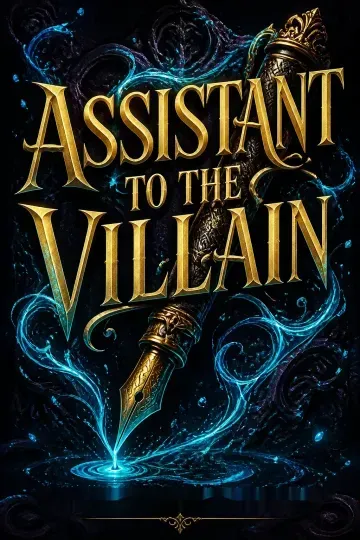
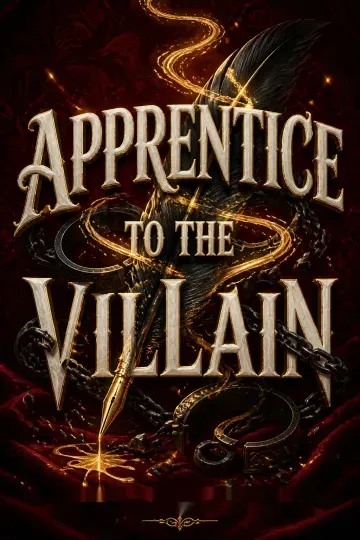
Assistant to the Villain Series
About the Author


Download PDF
Download EPUB
.epub digital book format is ideal for reading ebooks on phones, tablets, and e-readers.








































