
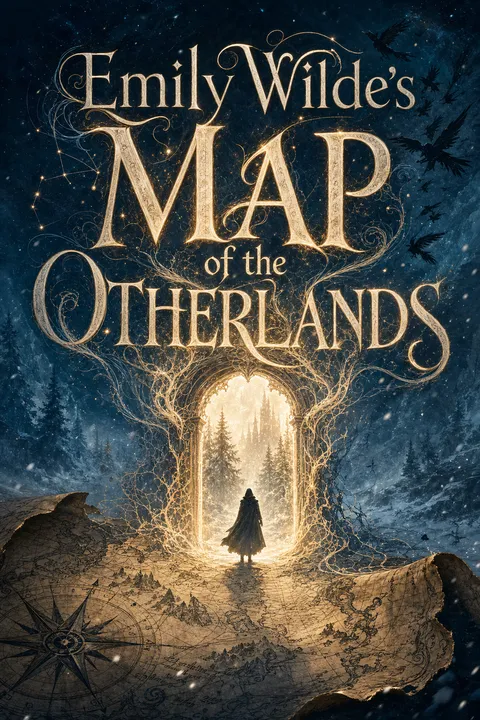


Plot Summary
The Man Made of Ribbons
Emily Wilde,1 a Cambridge scholar of faeries freshly granted tenure, hauls a mummified faun foot around campus because faerie remains tend to wander. On her way to breakfast a stranger draped in ribbons5 collides with her, muttering directions about eternal paths and losing everything one never knew one had, then vanishes.
Over poached eggs her friend Wendell Bambleby,2 nursing a birthday hangover, accidentally blooms lily pads across her teacup, proof his magic is faltering.
A star-struck student's glance reveals that rumors of Wendell's2 true nature have reached the university. Emily1 teases him with her research breakthrough: the discredited scholar Danielle de Grey,6 vanished decades ago, and a theory of a nexus, a single door linking many faerie realms.
The opening establishes Fawcett's signature register: cosmic strangeness domesticated into academic routine. Emily treats a sentient foot as a filing problem, and the ribbons stranger as an intriguing citation rather than a threat. The tea that blooms into a foreign landscape signals the book's core anxiety, that the man Emily loves is not slipping toward humanity but away from it. The journal voice, precise and self-deprecating, frames enchantment as data to be catalogued. Already the twin engines are set: a scholarly mystery (the nexus, de Grey) and an intimate one (Wendell's proposal, his concealed decline). Knowledge and desire, the novel's dueling appetites, are introduced in the same breath.
Assassins in the Lecture Hall
Department Head Farris Rose4 bursts in accusing Emily1 and Wendell2 of falsifying papers and vows to have them dismissed. His threat evaporates when the grey sheerie, faerie assassins, swarm Wendell's2 darkened lecture hall.
Emily1 grasps the truth at once: Wendell2 was poisoned at his own birthday party by his exiled stepmother,9 weakening this hidden faerie king. Wendell2 transforms Emily's1 pencils into swords and fights, then splits the museum floor to summon a river and an enchanted boat that drown the regenerating creatures.
Rose,4 swept along, witnesses everything and is left mute with shock. Emily1 quietly collects a jar of spilled magic and pockets a borrowed hobgoblin collar. The attack confirms the stepmother9 will keep hunting until Wendell2 or Emily1 lies dead.
The set piece fuses farce and menace, parrots and hot-air balloons erupting from smashed faerie stones mid-battle, capturing the book's insistence that the Folk are simultaneously terrifying and absurd. Crucially, the political and personal collide: Rose's petty bureaucratic vendetta is dwarfed the instant real faerie violence arrives, exposing academia's smallness. Emily's diagnostic calm, reading the poisoning from symptoms while chaos reigns, defines her heroism as perception rather than force. Wendell wielding a blade returns him to something older and more natural than the fussy professor, an early crack in the mask. The jar and collar, gathered almost absently, plant Chekhovian seeds that the plot will patiently harvest.
An Unwanted Expedition Partner
Emily1 lays out her plan: travel to St. Liesl in the Austrian Alps, where de Grey6 vanished chasing tree fauns, and where the reassembling faun foot may lead them to the nexus, and thus a back door into Wendell's2 kingdom, the Silva Lupi. She tells her niece Ariadne,3 a brilliant nineteen-year-old assistant, that Wendell2 is Folk, an overthrown monarch.
Having eavesdropped, Rose4 blackmails his way onto the expedition, trading silence about the fraud accusations for a share in the discovery. Wendell2 tolerates him largely because the man brews excellent coffee. He gifts Ariadne3 a protective silk scarf. On the eve of departure, Emily1 surprises Wendell,2 and herself, with a kiss, then flees, unwilling to answer his standing marriage proposal.
This is the assembling-the-party beat, but Fawcett laces it with class and ego politics. Rose's blackmail reframes the scholar as no more honorable than the amoral Folk he studies, a mirroring the book returns to. Ariadne's inclusion raises the moral cost of the quest: Emily must weigh curiosity against a young life. The scarf, like the cloak before it, shows Wendell loving through crafted objects, protection offered whether wanted or not. Emily's stolen kiss and immediate retreat dramatize her defining conflict, an intellect that craves resolution paired with a heart that flinches from commitment. Desire keeps outrunning her reason, and she resents being outrun.
The Village That Fears Nightfall
The travelers settle into Julia Haas's13 guesthouse, where locals leave nightly food offerings and never venture out after dark. On the train the ribbons stranger5 reappeared, younger with each visit, and Emily1 deduced his identity: Bran Eichorn,5 a scholar lost in 1862 while hunting for de Grey.6
Villagers navigate the peaks with salt-soaked ribbons to avoid the many faerie doors hidden in the mist. Surveying the valleys, the group catalogs fourteen doors.
Resting among the summits, Wendell2 presses his proposal, and Emily1 concedes she wants to see his kingdom before deciding, an answer that unsettles her more than a refusal would. Meanwhile something claws their guesthouse door each night, and their careful offerings only seem to deepen the unseen visitor's displeasure.
St. Liesl embodies coexistence with the numinous: a community that has domesticated terror into ritual, feeding monsters and reading ribbons like scripture. The reverse-aging Eichorn introduces Faerie's warping of time, a threat more insidious than teeth, since it dissolves selfhood. Emily's negotiated answer, wanting to inspect the kingdom before marrying its king, is characteristically empirical, love pursued as fieldwork, yet it also marks genuine movement toward yes. The nightly clawing functions as a slow-burn dread, a mystery whose solution the reader is invited to race Emily toward. The village's ease with the Folk foreshadows the book's thesis that respect and attention, not conquest, govern survival among faeries.
The Silver-Stitched Ear
Following de Grey's6 final ribbon, Emily1 and Rose4 reach the Grunesauge valley, where the faun foot twitches wildly and human bones litter a lakeshore. Vulpine fox faeries, the fuchszwerge, ambush them, savaging Rose4 and nearly dragging him off.
Emily's1 cloak, secretly enchanted by Wendell,2 billows into an enormous shadow that terrifies the creatures and saves her. She loads the bleeding Rose4 onto Shadow,10 her grim, and races home, begging Wendell2 to heal him.
Wendell,2 admitting he has never healed anyone, closes the wounds with uncanny silver stitchery and reattaches Rose's4 ear backwards. Afterward he shakes two stowaway fox faeries from Emily's1 cloak, sparing them so they owe a debt. Emily1 glimpses how far beyond her comprehension the magic truly runs.
Rose's mauling punctures his condescension and delivers a grim vindication of his warnings, even as his rescue depends on the very creature he distrusts. Wendell's improvised healing, botched, backwards, silver and strange, is the book's clearest emblem that faerie kindness is not human kindness: he mends the body while defacing it, indifferent to side effects. Emily's terror here is epistemic, the vertigo of a rationalist confronting power she cannot model. The cloak's expansion rewards earlier setup, quietly revealing Wendell's care as omnipresent and uncanny. The spared faeries and their debt encode the transactional grammar of Faerie, where mercy is currency and nothing is given freely, not even life.
The Ghost Who Seeks Danielle
By the fire the ribbons stranger5 materializes again, and naming him aloud, Bran Eichorn,5 restores his sanity. He confesses he has wandered Faerie's borderlands for half a century, chasing his beloved de Grey,6 who found the nexus before vanishing.
He begs Emily1 to free her. Village folklore confirms the tragedy: both scholars have been sighted for decades, aged strangely, lost in time as well as space, de Grey6 always clutching a mysterious horn.
The locals warn against the tree fauns, child-stealing horned beasts they call krampushunde, and speak of them only in whispers. Emily1 begins to grasp that the faun's scattered remains, the very foot she carries among them, may be knitting these two doomed lovers and their story together across the mountains.
Eichorn is a cautionary double for Emily: a scholar so consumed by devotion to one of the Folk (or to a woman claimed by them) that he becomes a myth, hollowed to a single repeating loop. Naming restores him, dramatizing the book's faith that knowledge, precise identification, is itself a kind of power over the Folk. The tragedy of two lovers desynchronized in time deepens the romance plot's stakes, offering Emily a preview of what pursuing Wendell into Faerie might cost. Fawcett braids folklore and fieldwork so that villagers' reticence becomes evidence, and Emily's dawning insight about the reunifying remains models detective reasoning as the engine of wonder.
Riders in the Cloud
Caught in the peaks, the group is hunted by the elder huntsmen, ancient Irish faeries who ride monstrous horses formed from cloud. Wendell2 fights ferociously, cleaving the mountainside to summon a river, but the stepmother's9 poison curdles his magic so each spell wounds him.
Desperate, he steps bodily through the landscape, dragging Emily,1 Ariadne,3 and Rose4 through frigid Faerie passages, overshooting their destination again and again until he conjures an impossible castle on a frozen summit.
There he slaughters the huntsmen and collapses. Beneath his shirt Emily1 watches the shadow birds multiply, and later finds the folktale that decodes them: an iron sliver creeping toward the heart, six ravens gathering, and the sixth bearing off the victim's heart, death.
The chapter escalates from skirmish to existential race. Wendell's landscape-stepping renders the poison viscerally: power that should be effortless now costs him blood, and his misfires strand them on knife-edge ridges, geography as symptom. The conjured castle, mismatched and voided, externalizes a mind fraying under strain. The shadow birds transform an adventure into a countdown, and Emily's literary detective work, matching omen to source tale, is quintessential: she saves through reading. Fawcett's genius here is fusing dread with scholarship, so that a folk motif becomes a medical prognosis. Emily's terror is no longer abstract fascination with strangeness; it is the specific fear of losing one particular person.
The Key That Is a Door
Refusing to surrender Wendell2 to the omen, Emily1 uses a keepsake from a prior adventure: a coil of bone that Poe,7 a shy Ljosland tree brownie, once gave her. Walking the winterlands behind a fox faerie, she discovers the bone itself is a door, carrying her to Poe's7 aspen home. He bakes her healing cakes and, thrilled to be counted family, agrees to gather gossip about Wendell's2 realm from wandering Folk.
The cakes ease Wendell's2 symptoms but cannot cure him. Emily1 grasps a larger truth: the common fae, dismissed as beneath notice, know the hidden paths between worlds far better than the proud courtly fae, a lattice of humble back doors built by creatures nobody bothers to watch.
This interlude crystallizes the book's political ecology of magic. The overlooked brownie holds a technology the mighty lack, because power breeds incuriosity while smallness breeds resourcefulness. Poe's ecstatic pride at being family, and his mother's remembered counsel that the small must make friends to survive, gives the theme emotional ballast. Emily's willingness to plead with a tiny faerie, to honor the negligible, is precisely what distinguishes her from Wendell's aristocratic disdain. The cakes buying time rather than curing keep narrative tension taut. Structurally, the chapter also arms Emily's later triumph: the doors, the allies, and the humility that will let her walk into a kingdom of monsters.
A Tent Made From Her Cloak
Chasing de Grey's6 flickering apparition into the night, Emily1 becomes hopelessly lost among overlapping faerie realms and twists her ankle. Wendell,2 roused and half-recovered, tracks her by a bobbing light and finds her. Rather than trudge home, they shelter in a tent he shapes from her cloak, and there Emily,1 weary of the tension between them, initiates intimacy and privately resolves that her answer is yes.
At dawn, using Eichorn's5 dropped ribbons as a tether, Wendell2 tracks the lost scholar through Faerie and pulls him bodily into the mortal world. But the effort quickens the poison and Wendell2 collapses again, leaving Emily1 to press Eichorn5 to guide them to the precise spot where de Grey6 slipped away.
The romantic consummation is handled in Emily's idiom, blankets folded into rectangles, footnotes in her diary, flirtation defeated by tidiness, so intimacy arrives as comedy and tenderness rather than swoon. Her decision to marry, made silently in the dark, is an act of will against a lifetime of stories warning her off. Fawcett refuses easy triumph: the same magic that reunites Eichorn with hope drains Wendell, keeping the poison ticking. The chapter balances two rescues, of Emily by Wendell and of Eichorn by Wendell, underscoring the transactional cost of every faerie miracle. Love and peril share one continuous motion, never permitting the reader to relax into the happiness.
The Beast Unleashed
At the hill behind the village church, Eichorn5 identifies where fauns dragged de Grey6 into Faerie, and Emily1 finds the hidden door by pouring rain-dry dust between two marker stones. Then the tree fauns attack in the dark. Emily1 foolishly buckles Shadow10 into the borrowed hobgoblin collar, and the aging dog swells into a monstrous Black Hound, savaging the fauns.
When kindly villagers rush to help, the maddened beast seizes Eberhard Fromm and mauls him nearly to death. Wracked with guilt, Emily1 faces likely expulsion from St. Liesl. Rose,4 gruff but tender, comforts her with a ridiculous story about a shape-shifting boggart and offers to mentor her and write her next book's foreword.
This is the novel's moral wound. Emily's besetting sin, overconfidence in faerie artefacts she does not fully understand, produces catastrophe, and the victim is one of the village's kindest men. Fawcett resists absolution: Rose flatly tells her there is no fixing it, that she will carry it forever, refusing the genre's usual quick redemption. The scene also completes Rose's arc from antagonist to reluctant mentor; his awful boggart anecdote is affection expressed by a man with no vocabulary for comfort. The reconciliation between the two rationalists, sealed by a foreword offer, reframes their rivalry as kinship. Guilt here is not a detour but the price of Emily's method.
The Vandal at the Door
That night the relentless clawing resumes, and Emily1 flings the door open to reveal the culprit: Danielle de Grey6 herself, green-haired and flickering between ages, battering the wood with the faun horn.
Emily1 finally understands, the foot, the horn, and a tooth Eichorn5 wears have been straining to reunite, dragging the lost woman here again and again across fifty years. Wendell2 reaches through the layered worlds and pulls de Grey6 free. But the reunited lovers prove ungrateful, eager to flee.
Emily1 threatens them until de Grey6 agrees to reveal the nexus's location and, grudgingly, surrenders her poisoned faun horn. Then Wendell2 collapses fully, and Emily1 deciphers his time-stitched hint: only his faerie cat, Orga,11 can hunt the poison from his body.
The mystery of the clawed door pays off with elegant inevitability, the reunifying remains explaining months of dread through a single primal logic rather than prophecy. De Grey subverts the grateful-rescued-victim trope: sharp, dismissive, and self-interested, she refuses to be a reward, forcing Emily into blackmail and puncturing the fantasy of heroic gratitude. The scene reasserts that even admired figures are unsentimental survivors. Wendell's collapse and his uncanny time-stitching message, folding two moments together to convey what enchantment forbids him to say directly, deepen his alienness while proving his trust in Emily. The revelation that a cat holds the cure pivots the entire plot toward its audacious, absurd, deadly final act.
Into the Kingdom of Wolves
Determined to save Wendell,2 Emily1 enters the nexus, a winter faerie's cottage whose door bears knobs opening onto Greece, Russia, and the Silva Lupi. Ariadne3 blackmails her way along; Snowbell,8 a bloodthirsty fox faerie, insists on guiding them through barrow shortcuts.
In Wendell's2 beautiful, terrifying kingdom, Where the Trees Have Eyes, Emily1 walks openly into the stepmother's9 castle disguised simply as a dazed scholar. A mortal harp-maker15 and the queen's enigmatic brother14 help her reach Wendell's2 ruined chambers, where she cages the shadow-formed cat Orga.11
Then the half-mortal queen9 appears, offering Emily1 a place at court if she helps kill Wendell.2 Emily1 instead poisons the queen's9 wine with powdered faun horn, hurls the glass, and escapes out the window as the queen9 begins to scream.
Emily's infiltration strategy, be yourself, a mousy scholar too dull to notice, weaponizes her habitual underestimation, turning invisibility into armor. The half-mortal queen is Fawcett's finest antagonist: neither Folk nor human, wielding manipulation and forethought the fae lack, and correctly identifying Emily, not Wendell, as the true threat, the miller's daughter of the old tales. Their confrontation is a duel of mortal cleverness, and Emily wins by doing to the queen exactly what was done to Wendell, poison drawn from his own realm. The symmetry is pointed: forethought, the human advantage, undoes the powerful. Ariadne's blackmail and Snowbell's guidance again vindicate the overlooked and the young.
The Cat and the Blackbirds
Fleeing the poisoned queen,9 Emily1 and her companions race for the nexus while Orga11 slaughters the owl-spider guardians pursuing them. Back at the cottage the cat pounces not on Wendell2 but on the poison itself, driving the shadow blackbirds from his body in a storm of feathers, curing him at last.
When Razkarden,12 the ancient guardian leader, attacks with twenty more, Wendell2 summons the Veil, an ancient horror-realm of immortal creeping things, traps the creature, then mercifully offers his arm, and the guardians, loyal only to whoever holds the throne, become his.
Restored and now served by an army of common fae, Wendell2 prepares to reclaim his kingdom, with Emily1 beside him, no longer pretending she does not love both the man and his perilous world.
The climax braids every planted thread, the cat's hidden talent, the blackbird omen, the poison, into one cathartic image of feathers scattering as death is hunted out. Fawcett grants Emily the rescue she vowed, inverting the previous book's dynamic. Wendell's summoning of the Veil, then his choice to spare rather than abandon Razkarden, distinguishes his mercy from his father's cruelty while conceding that the guardians follow power, not virtue, a clear-eyed view of politics. Emily's final admission is the book's emotional resolution: she loves Faerie knowingly, choosing danger with open eyes rather than illusion. The assembled army of humble fae is the thematic payoff, the overlooked inheriting agency.
Epilogue
The closing entries, finished partly in Wendell's2 own neat hand while Emily1 sleeps over her journal, gather the aftermath. Learning Wendell's2 nature, the villagers of St. Liesl throw a farewell feast and forgive the harm done; Eberhard recovers with Wendell's2 conjured gifts. Emily1 reconciles warmly with Ariadne3 and accepts Rose4 as mentor and co-author.
Having gathered allies among the common fae, fauns, trolls, fuchszwerge, and the turncoat guardians, Emily1 and Wendell2 travel to a Greek coast where another nexus door waits. At year's end they step through together to reclaim his stolen throne, leaving the rented door standing open behind them.
That the climactic record is completed in Wendell's hand while Emily sleeps is the book's tenderest gesture: two people finishing each other's account, reason and enchantment sharing a single page before sharing a throne. The epilogue converts private romance into political alliance, and the assembled army of common fae fulfills the novel's argument that the negligible are the true source of power. Reconciliations with Ariadne and Rose close the human relationships with earned warmth rather than sentiment. Leaving the door open is a fitting emblem for a series in progress, and for Emily herself, a woman who has stopped guarding the threshold between her ordered world and the wild one, choosing to walk through.
Analysis
The novel reframes the fairy-tale quest as scholarship. Emily Wilde1 does not slay monsters so much as classify them, and her weapons are footnotes, patterns, and the cold nerve to treat the impossible as data. Fawcett's central argument, voiced through the disgraced de Grey,6 is that the faerie realms are interconnected, and the book extends this into an epistemology: knowledge is a web, and the proud (courtly Folk and senior academics alike) fail precisely because they refuse to look at what they deem beneath them. The common fae, Poe7 and Snowbell8 and the trolls, hold the hidden doors; the overlooked assistant Ariadne3 proves indispensable; the humble mortal, not the mighty rival, topples the queen.9 Snobbery is the recurring sin, and attention its antidote. Emotionally, the book stages a collision between Emily's1 rationalism and her love. She knows every story in which mortals who trust the Folk end dangling from a tree, and Rose4 keeps reciting the warning. Her arc is not learning that Wendell2 is safe (he is not) but accepting desire with open eyes: she chooses Faerie knowing it may unmake her. That clarity, rather than illusion, is the book's mature vision of love. Wendell's2 poison plot literalizes the theme of the alien beloved. His shadow birds, his murderous battle-calm, his casual bending of time all remind Emily1 and us that affection does not domesticate the strange. The cure comes not from taming him but from Emily1 entering his world and mastering its logic. Finally, the journal form matters. Emily1 writes to stay sane, to impose order on the disorienting. That the climactic entry is finished in Wendell's2 hand, while she sleeps, is the book's tenderest gesture: two people completing each other's records, reason and enchantment sharing one page, as they prepare to share one throne.
Review Summary
Emily Wilde's Map of the Otherlands is a highly anticipated sequel that mostly lives up to expectations. Readers praise the continued charm of Emily and Wendell's relationship, the expanded magical world, and Fawcett's whimsical writing style. Many find it even better than the first book, with more romance and higher stakes. However, some criticize the pacing as slow in parts and feel the character development is limited. Overall, it's considered a delightful continuation of the series that leaves fans eager for the next installment.
People Also Read
Characters
Emily Wilde
Obsessive faerie scholarA newly tenured Cambridge dryadologist who narrates through meticulous journal entries. Brilliant, blunt, and socially awkward, she prefers libraries to people and treats mortal danger chiefly as material for a future paper. Her genius lies in pattern recognition and in taking the Folk seriously as rigorous subjects. Emotionally guarded, she snaps at those she loves yet guards them fiercely, her aging grim10, her niece3, and Wendell2 above all. Her central war is between reason and desire: she knows marrying one of the Folk is madness, having read a mountain of cautionary tales, yet she is drawn irresistibly toward both the man and his perilous kingdom. A finger lost to a prior faerie court reminds her, deliberately, of the stakes.
Wendell Bambleby
Exiled faerie kingOutwardly a charming, indolent Cambridge professor with golden hair and impeccable tailoring, Wendell is secretly the deposed monarch of an Irish faerie realm. Vain, fussy about cleanliness and food, and prone to theatrical complaint, he hides lethal power and an ancient strangeness beneath foppish wit. He has courted Emily1 persistently, proposing a marriage she keeps deferring. Part-descended from household faeries, he prides himself on being one of the peaceable Folk, though his murderous calm in battle betrays how alien he truly is. Homesickness drives his decade-long search for his lost door. Beneath the languid humor runs genuine tenderness toward Emily1 and a capacity for both kindness and violence that even he does not seem fully to understand.
Ariadne
Eager niece and assistantEmily's1 nineteen-year-old niece, a dazzlingly capable student who appointed herself assistant. Relentlessly enthusiastic, she treats faerie horrors as thrilling adventures and documents them eagerly. Once apprenticed to a dressmaker, she defied her father to study dryadology. Her sunny persistence armors her against Emily's1 sharpness, and she craves usefulness above all, sometimes to a reckless degree that both aids and endangers the expedition.
Farris Rose
Stern department headCambridge's eccentric Department Head, who wears his clothes inside out and jingles with sewn-in coins. Pompous, conservative, and scornful of Emily's1 faith in the Folk, he begins as antagonist and blackmailer. Beneath the condescension lie decades of field experience, a friend lost long ago to faerie love, and an unexpected paternal warmth. His caution provides a persistent counterargument to Emily's1 boldness.
Bran Eichorn
Scholar lost in FaerieA German-born Cambridge dryadologist who vanished in 1862 chasing the missing de Grey6. Trapped in Faerie's borderlands and aged out of time, he haunts Emily1 as the ribbons-draped stranger, speaking in riddles. Single-minded to the edge of madness, he cares for nothing but reaching his beloved6, reduced almost to a walking myth that endlessly retreads its own story.
Danielle de Grey
Legendary vanished rebelA discredited but brilliant nineteenth-century scholar famous for irreverence, vivid green hair, and the Trade Routes Theory that faerie realms interconnect. She discovered the nexus before vanishing. Charismatic, ruthless, and unapologetically sharp-tongued, she inspires devotion and exasperation in equal measure, caring only for science and for Eichorn5, and refusing point-blank to play the grateful rescued damsel.
Poe
Shy Ljosland tree brownieA small, timid faerie who tends an aspen home in Ljosland, befriended by Emily1 on an earlier journey. Anxious and desperate to please, he treasures being counted as family, bakes magical bread, and gathers gossip among wandering Folk. He proves that the overlooked common fae hold knowledge and generosity the proud courtly Folk cannot fathom.
Snowbell
Bloodthirsty fox faerie guideOne of the vulpine fuchszwerge, murderous yet oddly childlike, who develops an appetite for being useful. He guides Emily1 through barrow shortcuts, boasting endlessly and delighting in the peril of what he proudly calls a proper quest.
The Queen
Half-mortal usurperWendell's2 stepmother, a rare half-blood who seized his throne and now conquers neighboring realms. Aging, imperfect-voiced, and coldly commanding, she wields the human weapons of manipulation and forethought that the Folk lack. She raised Wendell2 from childhood and claims to love him even as she hunts him, and she fears Emily1 most of all, correctly sensing where the true danger lies.
Shadow
Emily's aging grimEmily's1 beloved Black Hound, a faerie death-dog who chose her years ago. Old, half-blind, and stiffening in the cold, he remains fiercely devoted and immune to fear. His bond with Emily1 is her tenderest attachment, and an enchanted collar's effect on him tests that trust to its limits.
Orga
Wendell's shadow catWendell's2 faerie cat, a rippling collection of golden-eyed shadow with hidden talents he is forbidden to name. Imperious, murderous, and impossible to command, she is the creature Wendell2 trusts with his life, and the improbable object of Emily's1 most dangerous rescue mission.
Razkarden
Ancient guardian leaderThe oldest of the castle's owl-spider guardians, a shrieking gargoyle-like beast loyal only to whoever holds the throne. Fearsome yet ultimately biddable, he embodies the question of shifting loyalty that hovers over Wendell's2 contested kingdom.
Julia Haas
Warm Alpine hostessThe cheerful guesthouse keeper of St. Liesl, unflappable before faerie malice. She and her many daughters embody the village's faerie-touched hospitality, feeding the travelers, warning them of the dark, and forgiving a great deal.
Lord Taran
Queen's enigmatic brotherA courtly faerie, brother to the usurping queen9, who lounges with wine and books. His motives are opaque, and his quiet intervention in Emily's1 fate remains a puzzle even to Wendell2.
Callum Thomas
Mortal harp-maker at courtAn Irish harp-maker wed to one of the queen's9 brothers, living sanely at court under faerie protection. Perceptive and kind, he sees through Emily's1 feeble acting at once and chooses to help her.
Plot Devices
The wandering faun foot
Faerie compass and lureA mummified foot severed from a tree faun, which Emily1 smuggles out of an Edinburgh archive. Faerie remains wander of their own accord, so she pins it under salt circles. It twitches toward the Grunesauge valley, guiding the expedition, but its deeper purpose surfaces gradually: it is one piece of a single dismembered faun. The horn de Grey6 carries and the tooth Eichorn5 wears are the others, and the three remains strain across the mountains to reunite. This primal pull, not prophecy, explains the nightly clawing at the guesthouse door and the tangled, decades-long orbits of the two lost scholars. The foot embodies the book's recurring motif that objects in faerie tales carry their own gravity.
Emily's enchanted cloak
Secret layered protectionThe black cloak Wendell2 tailored for Emily1 against her wishes, woven with more enchantments than she can count. It shrugs off faerie glamour, billows into a vast terrifying shadow to repel attackers, unfolds into a weatherproof tent, and carries a residue of Wendell's2 magic that the common fae recognize and dread. Emily1 can even converse with it and request help. The cloak dramatizes the theme of care given without permission, and of Wendell2 loving through crafted objects rather than words. It also marks Emily1 as a friend of the lost king2, buying her hesitation and safe passage among his realm's monstrous guardians when it matters most.
The nexus
Door to many worldsDe Grey's6 great discovery and Emily's1 obsession: a faerie door that, unlike ordinary doors joining two places, opens onto many realms at once, like a ship's hatch. Housed in a winter faerie's alpine cottage, its inner side bears several doorknobs, each opening onto a different country or kingdom, among them Greece, Russia, and Wendell's2 Silva Lupi. The nexus drives the whole expedition, promising both a scholarly triumph for Emily's1 mapbook and a back door into Wendell's2 guarded realm. It reflects the novel's central argument, borrowed from de Grey6, that the faerie realms are far more interconnected than proud scholars and prouder Folk are willing to admit.
The shadow blackbirds
Omen ticking toward deathDark, flickering bird-shapes Emily1 glimpses beneath Wendell's2 skin, beating like wings against a cage. Researching an old Irish tale, she learns their meaning: when an iron spear leaves a sliver working toward the heart, six ravens gather, and the sixth carries off the victim's heart. The birds are both a death omen and a countdown, the visible progress of his stepmother's9 poison. They escalate the story from adventure into a mortal race and force Emily's1 most desperate gamble. Their eventual violent expulsion becomes the hinge of the climax, tying folklore, poison, and cure together into a single unforgettable image of scattering feathers.
The faun horn poison
Weapon turned back on its makerA poison drawn from the tip of a tree faun's horn, colorless and odorless, easily concealed in wine. Emily1 realizes it matches the draught that curdled Wendell's2 magic at his birthday, a poison brewed from a creature of his own realm. De Grey6 gifts her the horn as a deterrent, and Emily1 grinds a sliver into powder. She later uses it against the half-mortal queen9, mirroring precisely the crime committed against Wendell2. The device crystallizes the book's thesis that mortal forethought is the Folk's undoing: as in the old tales, it is the humble, clever human, not a rival of equal stature, who brings the powerful low.
FAQ
Synopsis & Basic Details
What is Emily Wilde's Map of the Otherlands about?
- Scholarly quest for nexus: Dryadologist Emily Wilde continues her research into faerie lore, specifically seeking a nexus, a door connecting multiple faerie realms, while navigating her complex relationship with the faerie king Wendell Bambleby.
- Unraveling a disappearance: The story involves unraveling the mystery of Danielle de Grey, a scholar who disappeared decades ago while researching faerie doors in the Alps, and whose maps become crucial to Emily's quest.
- Navigating faerie politics: Emily and Wendell face dangers from Wendell's stepmother, who sends assassins after him, and must navigate the treacherous politics of the faerie world, forming alliances and confronting enemies.
Why should I read Emily Wilde's Map of the Otherlands?
- Enchanting blend of genres: The book offers a unique combination of historical fantasy, academic mystery, and romance, appealing to readers who enjoy intricate world-building and compelling character dynamics.
- Exploration of complex themes: It delves into themes of love, loyalty, ambition, and the pursuit of knowledge, prompting reflection on the nature of good and evil, and the balance between the mortal and faerie worlds.
- Intriguing faerie lore: The story presents a richly detailed and imaginative faerie world, filled with fascinating creatures, customs, and magic, offering a captivating escape for fantasy enthusiasts.
What is the background of Emily Wilde's Map of the Otherlands?
- Early 20th-century academia: The story is set in the early 1900s, providing a glimpse into the world of academia and the challenges faced by female scholars in a male-dominated field.
- Faerie folklore and mythology: The book draws heavily on faerie folklore and mythology, incorporating elements from various cultures and traditions to create a unique and believable faerie world.
- Geographical inspiration: The story is inspired by real-world locations, such as the Alps and Ireland, lending authenticity to the setting and enhancing the reader's immersion in the story.
What are the most memorable quotes in Emily Wilde's Map of the Otherlands?
- "The path is eternal...you will lose everything you never knew you had.": This quote, delivered by the ribbons man, foreshadows the dangers and potential sacrifices Emily will face on her quest, highlighting the theme of loss and self-discovery.
- "I have absolute faith that you, of all people, will find it.": Wendell's declaration to Emily underscores his trust in her abilities and their deep connection, emphasizing the theme of loyalty and the power of belief.
- "You are behaving like an utter fool.": Rose's harsh words to Emily reveal his concern for her safety and his skepticism towards her trust in Wendell, highlighting the conflict between reason and emotion in their relationship.
What writing style, narrative choices, and literary techniques does Heather Fawcett use?
- Journal entry format: The story is told through Emily Wilde's journal entries, providing an intimate and personal perspective on the events, while also creating a sense of immediacy and suspense.
- First-person narration: The first-person narration allows readers to connect deeply with Emily's thoughts, feelings, and experiences, creating a strong sense of empathy and investment in her journey.
- Descriptive language and imagery: Fawcett employs vivid and descriptive language to bring the faerie world to life, creating a rich and immersive reading experience.
Hidden Details & Subtle Connections
What are some minor details that add significant meaning?
- The significance of salt: The recurring use of salt as a ward against the Folk highlights the vulnerability of mortals and the power of simple, traditional protections against faerie magic.
- The inside-out cloak: Dr. Rose's habit of wearing his clothing inside out, initially presented as an eccentricity, later reveals a practical method for evading faerie enchantments, showcasing his hidden knowledge and preparedness.
- The spilled magic: The concept of "spilled magic" after the battle in the museum introduces the idea that magic can linger and have unintended consequences, adding a layer of complexity to the faerie world.
What are some subtle foreshadowing and callbacks?
- The ribbons man's directions: The seemingly nonsensical directions given by the ribbons man foreshadow Emily's journey through the faerie realms, hinting at the importance of following a path even when it seems illogical.
- The cluricaun's ear story: Emily's reference to the story of the cluricaun's ear foreshadows the dangers of greed and the importance of respecting the Folk, highlighting the consequences of disrespecting faerie customs.
- The mention of Poe's help: The callback to Poe, the brownie from the first book, foreshadows the importance of the common fae in Emily's quest and the potential for unlikely alliances.
What are some unexpected character connections?
- Rose's lost friend: The revelation of Rose's lost friend, who was lured into Faerie and died, explains his skepticism towards the Folk and his desire to protect Emily from harm, adding depth to his character.
- Eichorn and de Grey's shared history: The connection between Eichorn and de Grey, two scholars who disappeared while researching the Folk, creates a sense of mystery and intrigue, highlighting the dangers of the faerie world and the potential for obsession.
- The Haas family's faerie blood: The revelation that the Haas family has faerie blood explains their knowledge of the Folk and their customs, adding a layer of complexity to their interactions with Emily and Wendell.
Who are the most significant supporting characters?
- Lilja and Margret: These characters, from the first book, provide emotional support and guidance to Emily, offering a sense of community and connection to the mortal world.
- Poe: This brownie, first introduced in the previous book, becomes a valuable ally to Emily, offering his knowledge of the faerie realms and his unique perspective on the Folk.
- The Haas family: As residents of St. Liesl, the Haas family provides local knowledge and insights into the faerie customs of the Alps, helping Emily and Wendell navigate the treacherous terrain.
Psychological, Emotional, & Relational Analysis
What are some unspoken motivations of the characters?
- Emily's fear of commitment: Emily's reluctance to accept Wendell's marriage proposal stems from her fear of commitment and her desire to maintain her independence, highlighting her internal conflict between love and freedom.
- Wendell's desire for acceptance: Wendell's constant attempts to impress Emily and the villagers reveal his desire for acceptance and belonging, stemming from his exile from his own kingdom.
- Rose's need for validation: Rose's desire to write the foreword to Emily's book reveals his need for validation and recognition from his peers, highlighting his insecurities and his desire to maintain his position in the academic community.
What psychological complexities do the characters exhibit?
- Emily's emotional detachment: Emily's emotional detachment, stemming from her focus on scholarship, makes it difficult for her to connect with others on a personal level, leading to misunderstandings and strained relationships.
- Wendell's internal conflict: Wendell's internal conflict between his faerie nature and his desire for a mortal life creates a sense of tension and uncertainty, highlighting the challenges of bridging two different worlds.
- Rose's repressed emotions: Rose's repressed emotions, stemming from the loss of his friend, manifest as skepticism and a need for control, highlighting the lasting impact of trauma and the difficulty of processing grief.
What are the major emotional turning points?
- Emily's decision to save Wendell: Emily's decision to venture into Faerie to save Wendell marks a turning point in their relationship, demonstrating her unwavering loyalty and her willingness to risk everything for love.
- Emily's acceptance of Wendell's proposal: Emily's eventual acceptance of Wendell's marriage proposal signifies a shift in her priorities, as she embraces love and commitment over her fear of the unknown.
- Rose's apology to Emily: Rose's apology to Emily signifies a shift in their relationship, as he acknowledges her abilities and offers his support, highlighting the potential for growth and understanding.
How do relationship dynamics evolve?
- Emily and Wendell's relationship deepens: Emily and Wendell's relationship evolves from an academic partnership to a deep and loving connection, as they face challenges together and learn to trust and rely on each other.
- Emily and Rose's relationship shifts: Emily and Rose's relationship shifts from one of antagonism to one of mutual respect and understanding, as they learn to appreciate each other's strengths and overcome their differences.
- Emily and Ariadne's relationship strengthens: Emily and Ariadne's relationship strengthens as they face dangers together, forging a bond of loyalty and affection that transcends their familial connection.
Interpretation & Debate
Which parts of the story remain ambiguous or open-ended?
- The nature of the faerie realms: The true nature of the faerie realms and their connection to the mortal world remains ambiguous, leaving room for interpretation and speculation about the boundaries between reality and fantasy.
- The extent of Wendell's power: The full extent of Wendell's power and his ability to manipulate time and space remains unclear, raising questions about the limits of his abilities and the potential consequences of using them.
- The future of the Silva Lupi: The future of the Silva Lupi under Wendell's rule remains uncertain, leaving room for speculation about the challenges he will face and the changes he will bring to the realm.
What are some debatable, controversial scenes or moments in Emily Wilde's Map of the Otherlands?
- Emily's decision to poison the queen: Emily's decision to poison Wendell's stepmother raises ethical questions about the use of violence and the justification of harming others for the greater good.
- Shadow's attack on Eberhard: Shadow's attack on Eberhard raises questions about the nature of loyalty and the responsibility of pet owners for the actions of their animals, particularly when those animals possess supernatural abilities.
- Wendell's use of magic: Wendell's use of magic to manipulate time and space raises questions about the ethics of interfering with the natural order and the potential consequences of altering reality.
Emily Wilde's Map of the Otherlands Ending Explained: How It Ends & What It Means
- A return to Cambridge: The story concludes with Emily and Wendell returning to Cambridge, signifying a return to the familiar and a sense of closure after their perilous journey.
- A promise of future adventures: The ending hints at future adventures and discoveries, leaving readers with a sense of anticipation and excitement for what lies ahead.
- A celebration of love and knowledge: The ending celebrates the power of love, loyalty, and the pursuit of knowledge, highlighting the transformative nature of their journey and the enduring bond between Emily and Wendell.
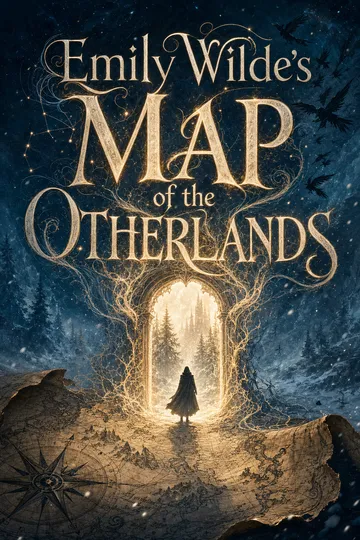
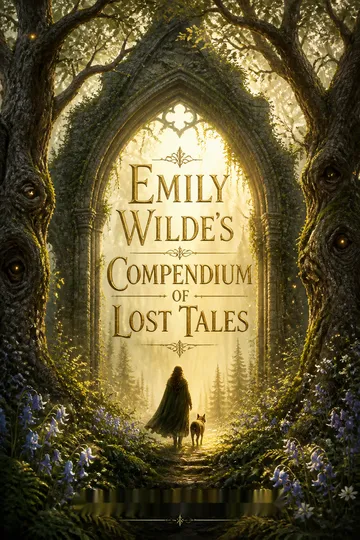
Emily Wilde Series
About the Author

Download PDF
Download EPUB
.epub digital book format is ideal for reading ebooks on phones, tablets, and e-readers.








































