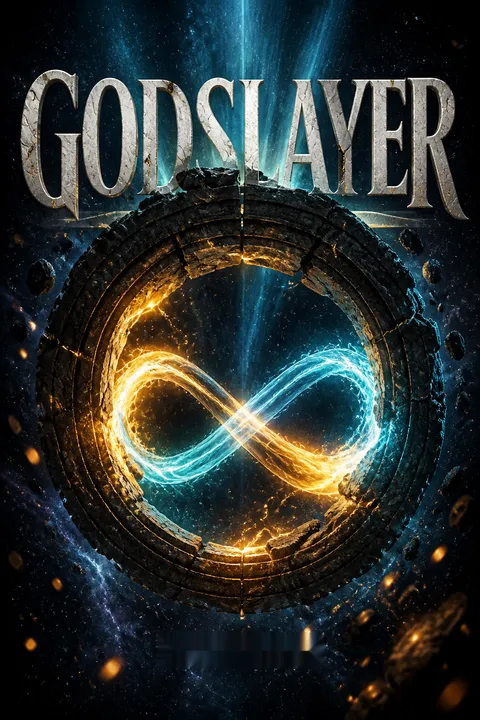

Plot Summary
Black Sand Farewell
Tyse and Clara share a bittersweet last evening on the black-sand beaches of Delta City, knowing their lives are about to change forever. The scent of oranges, the glow of spark in the air, and the comfort of each other's arms are all tinged with the knowledge that tomorrow brings a mission neither fully understands. Tyse is haunted by Delta's cryptic warning—"All gods need food"—and the unspoken truth that Clara is both his partner and his power source. Their intimacy is laced with anxiety, as both sense the looming threat of the gods' manipulations and the sacrifices survival will demand. As they climb the cliffside stairs, Tyse and Clara cling to the hope that their partnership will be enough to face the unknown, even as the city's beauty fades into memory.
Partners in the Veil
Tyse and Clara embark on their mission, navigating the labyrinthine train tunnels that connect worlds. Tyse's augment abilities allow him to see and manipulate the veils between dimensions, but it is Clara's spark that enables them to cross. Their bond is tested as they learn to synchronize their powers, each jump draining Clara and forcing Tyse to confront the cost of his survival. The world-hopping is disorienting and dangerous, with Clara's life hanging in the balance. Yet, their trust deepens—Clara's willingness to sacrifice, Tyse's desperate need to protect. Together, they become more than human, more than weapon and battery; they are partners, bound by loyalty and the shared burden of the spark.
Through Worlds, Through War
The journey through the train line is fraught with peril. Ambushed by a gang of augments in Epsilon's territory, Tyse and Clara are forced to flee through unstable dimensions. Each jump leaves Clara weaker, Tyse more desperate. In a world of spark-filled caves, Tyse discovers the source of his power—and the limits of Clara's endurance. The realization that their survival depends on stealing spark from others, even at the cost of innocent lives, weighs heavily. The world-hopping becomes a metaphor for their internal struggle: how much of themselves are they willing to lose to save each other? The answer, for now, is everything.
The Spark That Binds
Tyse and Clara's relationship is both their strength and their curse. The spark that connects them is addictive, a negative feedback loop that threatens to consume them both. Tyse's augmentations make him dependent on Clara's spark, while Clara's survival depends on Tyse's ability to steal and replenish it. Their love is fierce, but it is also fraught with fear—of losing each other, of becoming monsters, of being used by the gods. The intimacy they share is shadowed by the knowledge that every act of love, every spark exchanged, brings them closer to a breaking point. Yet, they cling to each other, determined to find a way out of the gods' game.
Factory of Shadows
As Tyse and Clara explore the train-line cities, they uncover the grim reality of the factories: women and girls harvested for their spark, cities run by worker bots, and gods who see humans as nothing more than resources. The Delta Factory is a dystopian nightmare, with daily "harvests" draining the life from its citizens. The revelation that Clara and the other Spark Maidens are products of a system designed for exploitation shatters any remaining illusions. The world is not a place of heroes and chosen ones, but of victims and survivors. The only hope lies in rebellion, in breaking the cycle of sacrifice.
The God's Game Revealed
Tyse, Clara, Finn, and Jasina are all pawns in a larger game orchestrated by the gods. Xi, the Median god, reveals the true nature of the Game of Gods: a contest for power, with humans as pieces on the board. Augments are created to fight for their gods, Spark Maidens to fuel them. The train line is a battlefield, the cities mere hives. The gods' manipulations are endless, their empathy nonexistent. The realization that even rebellion is part of the game is devastating. Yet, within the rules, there is room for defiance—and for love.
Monsters in the Maze
In Epsilon's factory, Tyse is captured and subjected to brutal experiments. The process of re-threading—augmenting an already augmented body—pushes him to the brink of madness. The arena becomes a stage for monstrous battles, with Tyse forced to fight Epsilon's failed creations. The line between man and machine blurs, as Tyse's humanity is stripped away, replaced by code and protocol. Clara, drained and harvested, becomes both witness and victim to the horror. The only thing that keeps Tyse anchored is his promise to Clara: if I have your back, you must have mine.
The Augment's Creed
The Augment's Creed is both a battle cry and a lament. Tyse recites it as he fights, each line a reminder of what he has become: executioner, death, machine made flesh. The creed is not a boast, but a confession—a recognition of the price paid for survival. The prayer that follows is a rejection of gods, a refusal to bow, and an embrace of loyalty to those who stand beside him. In the quiet moments between battles, Tyse mourns the loss of his team, the loss of his humanity, and the inevitability of further sacrifice.
The Price of Power
Finn and Jasina's journey mirrors Tyse and Clara's, but with a different flavor of tragedy. Finn's augmentation, orchestrated by Xi, is presented as a path to power and safety. But the process is dehumanizing, stripping away emotion, memory, and agency. Jasina, caught in the web of Xi's manipulations, realizes too late that the comforts of the upper dimension are a gilded cage. The rebellion is co-opted, the players changed, but the game remains the same. Power, it turns out, is just another form of bondage.
The Rebellion's Cost
The cost of rebellion is steep. Friends disappear, trust is shattered, and the line between victim and perpetrator blurs. Jasina's new life in RhoXi is revealed to be a lie, her friendships hollow, her agency stolen. Finn, transformed by augmentation, becomes a weapon in Xi's arsenal. The realization that every spark has its purpose is not a comfort, but a threat. The rebellion, once a dream of freedom, becomes a nightmare of exploitation and loss.
Harvest and Sacrifice
The climax is a convergence of all the story's threads: Tyse and Finn, both augmented beyond recognition, face off in battles orchestrated by their respective gods. Clara and Jasina, drained of spark, become the fuel for their partners' survival. The arena is a crucible, the gods' laughter a backdrop to the suffering below. In the end, victory is pyrrhic—every gain is paid for in blood, every act of defiance met with greater loss. The only thing that endures is the bond between lovers, the promise of loyalty kept even in the face of annihilation.
The Unspooling
The process of unspooling—of draining spark, of losing memory, of becoming less human—is both literal and metaphorical. Clara and Jasina are unspooled, their identities fraying with each harvest. Tyse and Finn, too, are unspooled by augmentation, their thoughts and feelings overwritten by code. The only way to survive is to hold on to the memory of who they were, to the promises made, to the names of those lost. The unspooling is not just an end, but a transformation—a painful rebirth into something new.
The Last Good World
After the final battles, Tyse and Clara, Finn and Jasina, find themselves on the train, battered and broken but alive. The world they left behind is in ruins, the gods' game unfinished. There is no victory, only survival. Yet, in the quiet of the train, there is a sense of possibility—a hope that, together, they might find a good world, a place where loyalty and love matter more than power and spark. The journey is not over, but for the first time, it is their own.
Loyalty and Loss
The aftermath is a reckoning. Tyse and Finn, both haunted by the choices they made and the people they lost, find solace in each other's company. The memory of Myra, of the team, of all the Spark Maidens, lingers. The lesson is clear: love is not about victory, but about loyalty. If you will die for me, I will die for you. In a world built on lies and sacrifice, this is the only truth that endures.
The Prayer and the End
The story ends with the Augment's Prayer—a rejection of gods, a refusal to bow, and an embrace of loyalty to those who stand beside you. Tyse and Clara, Finn and Jasina, are no longer pawns in the gods' game. They are survivors, bound by memory, by loss, and by love. The future is uncertain, the cost of survival high, but for the first time, they are free to choose their own path. The prayer is not a promise of victory, but of endurance—a vow to remember, to stand, and to survive.
Analysis
Godslayer is a searing exploration of power, love, and survival in a world where every relationship is transactional and every act of rebellion is co-opted by those in control. At its core, the novel interrogates the cost of agency: what are we willing to sacrifice for freedom, for love, for the hope of a better world? The negative feedback loop that binds Tyse and Clara is both a metaphor for addiction and a commentary on the cycles of exploitation that underpin all systems of power. The gods' game is a chilling allegory for the ways in which institutions manipulate, harvest, and discard individuals, turning even rebellion into another move on the board. Yet, the story refuses nihilism. Through memory, loyalty, and the refusal to bow, the characters carve out moments of meaning and connection. The Augment's Prayer, with its rejection of gods and embrace of those who stand beside us, is a radical act of hope. In the end, Godslayer is a warning and a promise: that survival demands sacrifice, that love is both a weapon and a wound, and that the only way to break the cycle is to remember, to refuse, and to endure.
Review Summary
Godslayer receives mostly positive reviews, with an average rating of 4.29 out of 5. Readers praise the intricate world-building, complex characters, and intense storytelling. The audiobook version is highly recommended for its full cast narration. Some criticize the confusing plot elements and pacing. Many express excitement for the next installment in the series. Themes of fantasy, technology, and romance are prevalent. A few readers found the story overwhelming or struggled to connect with characters, but most appreciate the unique blend of sci-fi and fantasy elements.
People Also Read

Characters
Tyse Saarinen
Tyse is an augment—once human, now a weapon forged by the gods. His life is defined by survival, loyalty, and the trauma of war. Raised in Delta City, Tyse's augmentations make him both powerful and dependent, his humanity eroded by the demands of the gods' game. His relationship with Clara is both his salvation and his curse; she is his partner, his power source, and the only thing anchoring him to his fading sense of self. Tyse's journey is one of sacrifice—he kills, steals spark, and endures endless pain to protect those he loves. Yet, he is haunted by guilt, by the memory of his lost team, and by the knowledge that every act of survival comes at a cost. His arc is a struggle to reclaim agency, to reject the gods' control, and to find meaning in loyalty and love.
Clara Birch
Clara is a Spark Maiden—raised to be both cherished and consumed. Her spark is both a gift and a curse, making her the target of gods and the linchpin of Tyse's survival. Clara's journey is one of awakening: from pampered innocence to the harsh reality of exploitation, from victim to partner, from memory keeper to unspooled survivor. Her relationship with Tyse is defined by trust, sacrifice, and the negative feedback loop of their powers. Clara's greatest strength is her loyalty—her willingness to give everything, even her life, to save those she loves. Yet, she is also the story's conscience, mourning the cost of survival and the loss of innocence. In the end, Clara becomes the keeper of memory, the one who names and remembers the lost, and the spark that binds the survivors together.
Finn Scott
Finn is the son of Tau City's Extraction Master, raised to send Spark Maidens to their deaths. His life is a web of privilege, guilt, and longing—for love, for meaning, for redemption. Finn's relationship with Clara is defined by regret; she is his greatest failure, the one he could not save. With Jasina, he finds a second chance—a partner in rebellion, a reason to fight. Finn's augmentation, orchestrated by Xi, is both a gift and a curse, granting him power but stripping away his agency and emotion. His arc is a struggle to reclaim his humanity, to protect Jasina, and to find a way to win the gods' game without losing himself.
Jasina Bell
Jasina is a survivor—born in the slums, raised in rebellion, and determined to carve out a life of her own. Her relationship with Finn is both a partnership and a lifeline; together, they dream of a future beyond sacrifice and exploitation. Jasina's spark is unique—creative, resilient, and fiercely protective. She is the story's heart, the one who refuses to be a victim, who fights for agency even when the odds are stacked against her. Jasina's journey is one of loss—of friends, of innocence, of dreams—but also of hope. In the end, she is both savior and sacrifice, willing to give everything for love.
Epsilon
Epsilon is the god of the Median city, a being of madness, ambition, and cruelty. His obsession with augmentation and control drives the story's central conflict, as he captures Tyse and Clara to fuel his experiments. Epsilon is both puppet master and failed creator, his arena a stage for suffering and transformation. He is the embodiment of the gods' indifference, their willingness to sacrifice anything for power. Yet, Epsilon is also a cautionary tale—a god undone by his own hubris, his creations turning against him in the end.
Xi
Xi is the god of RhoXi, a master of manipulation and the architect of the Game of Gods. He presents himself as benevolent, offering comfort and power to Finn and Jasina, but his true motives are control and domination. Xi's city is a gilded cage, his promises of safety and agency revealed to be lies. He is both charming and cruel, a god who sees humans as pieces on a board. Xi's arc is a lesson in the dangers of power without empathy, of games played with lives as stakes.
Luther
Luther is Epsilon's failed creation—a mutant augment, twisted by endless experiments and madness. His obsession with "needles and thread" makes him both comic and tragic, a symbol of the cost of the gods' ambition. Luther's interactions with Tyse and Clara are marked by cruelty and confusion, his loyalty to Epsilon a product of manipulation and fear. In the end, Luther is a victim—of the gods, of the system, of his own broken mind.
Myra
Myra is Tyse's former teammate, a casualty of the Sweep Army and the gods' endless wars. Her memory haunts Tyse, her warnings about the Corrupted God and the dangers of augmentation echoing throughout the story. Myra represents the cost of survival—the friends lost, the humanity sacrificed, the debts that can never be repaid. Her presence in Tyse's memories is both comfort and curse, a reminder of what was lost and what must be remembered.
Delta
Delta is the god of Delta City, a being of power, tradition, and indifference. His interest in Tyse and Clara is purely transactional—what can they do for him? Delta's city is beautiful but suffocating, a place where loyalty is demanded but never returned. Delta's arc is a lesson in the dangers of power without accountability, of gods who see humans as sheep to be shorn.
The Spark Maidens
The Spark Maidens are the story's silent chorus—the women and girls harvested for their spark, remembered only in death. Their presence haunts Clara, their names etched into her body as both burden and blessing. The Spark Maidens are the true cost of the gods' game, the reason for rebellion, and the hope for something better. In the end, they are not forgotten—they are the spark that endures.
Plot Devices
Negative Feedback Loop
The negative feedback loop is the story's central metaphor and plot device. Tyse and Clara's relationship is defined by a cycle of giving and taking—her spark powers him, his survival depends on stealing and replenishing it. This loop is both literal (in the mechanics of augmentation and spark) and emotional (in the sacrifices made for love). The loop is unsustainable, leading to exhaustion, loss of memory, and the erosion of self. It is a commentary on addiction, codependence, and the cost of survival in a world built on exploitation.
The Game of Gods
The Game of Gods is the narrative's overarching structure—a contest between gods, with humans as pieces on the board. The train line, the factories, the augmentations, and the harvests are all moves in this game. The gods' manipulations are endless, their empathy nonexistent. Even rebellion is revealed to be part of the game, co-opted and controlled. The only way to win is to refuse to play—to reclaim agency, to choose loyalty over power, to remember the lost.
Augmentation and Unspooling
Augmentation is both a gift and a curse, granting power at the cost of emotion, memory, and agency. The process of unspooling—of draining spark, of losing self—is both literal and metaphorical. The story uses these devices to explore the cost of survival, the dangers of dehumanization, and the possibility of transformation. The only way to endure is to hold on to memory, to promises made, to the names of those lost.
Memory and Naming
Memory is a weapon in the story—a way to resist the gods' erasure, to honor the lost, to reclaim agency. Clara's role as memory keeper, her naming of the Spark Maidens, and Tyse's remembrance of his team are acts of defiance. In a world built on forgetting, to remember is to survive.
Narrative Structure and Perspective
The story is told through multiple perspectives—Tyse, Clara, Finn, Jasina—each with their own voice, trauma, and arc. The narrative is fragmented, with jumps in time, memory, and dimension, mirroring the disorientation of the characters. The use of prayers, creeds, and meta-commentary (the author's notes) adds layers of meaning, inviting the reader to question the nature of story, agency, and survival.
About the Author
Other books by J.A. Huss

Download PDF
Download EPUB
.epub digital book format is ideal for reading ebooks on phones, tablets, and e-readers.








































