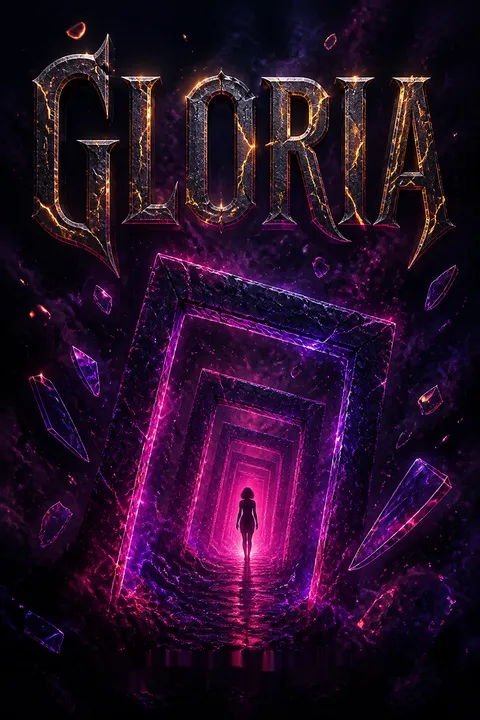

Plot Summary
The Gaudy Visitor Returns
After her mother's funeral, Gloria is stunned when her mother appears at the door, looking as she did in the 1980s—vivid, brash, and out of place among the mourners. No one else recognizes her, not even her closest friends or family. Gloria alone sees the truth, but when she tries to speak it, her mother subtly warns her to keep silent. The surreal encounter is laced with fear and confusion, as Gloria questions her own sanity and the nature of her mother's return. The house, unchanged since her childhood, becomes a stage for this impossible reunion, and Gloria is left to wonder if grief has warped her perception or if something truly supernatural is at play.
Seamless Integration, Lingering Doubt
Gloria's mother, now calling herself Nora, integrates effortlessly into the family's daily life, providing childcare and comfort, even as her presence raises unsettling questions. Gloria's husband and children accept Nora as a helpful stranger, oblivious to her true identity. The return of her mother brings practical relief and even rekindles intimacy in Gloria's marriage, but a persistent sense of wrongness gnaws at her. Old friendships dissolve, and the boys become unusually attached to Nora. Gloria's attempts to probe her mother's memory and motives yield only partial answers, deepening the mystery and her own sense of isolation.
Loss, Grief, and Unanswered Questions
When Benjamin, Gloria's husband, dies suddenly, she is left reeling, haunted by the hope that he, too, might return as her mother did. But Benjamin does not come back, and the family is plunged into a mechanical, numbed routine. Gloria's mother steps in to help, but her presence is now tinged with suspicion and dread. Gloria's grief is compounded by the children's rapid adjustment and her own inability to move on. She is tormented by questions: Why did her mother return, but not Benjamin? What rules govern these impossible resurrections? The answers remain elusive, and the sense of unreality deepens.
Uncanny Meetings and Hidden Truths
Gloria's world grows stranger as she encounters Bobby Perez, a high school crush who, she discovers, died years ago. Their lunch meetings are tinged with nostalgia and unease, and when Gloria confronts him about his death, he denies everything. Her mother, too, is evasive, and Gloria's attempts to extract the truth only lead to more confusion. The boundaries between life and death, past and present, blur. Gloria's sense of reality is further shaken when she learns that others, like Bobby, may also be walking among the living, their true natures hidden from all but her.
Confrontations and Unraveling Realities
Determined to find answers, Gloria orchestrates a meeting between her mother and Aunt Ruth, hoping for recognition that never comes. Her mother's ability to hide in plain sight, even from her own sister, is both terrifying and isolating. Gloria's children begin to have nightmares about Nora, and the family's fragile sense of normalcy collapses. Gloria's investigation into her mother's finances and connections only deepens the mystery. The world around her seems increasingly unstable, as if reality itself is being rewritten, and Gloria is left to question her own role in these shifting lives.
The Shrine of the Self
Gloria's journey leads her to Hicksville, a remote town where she discovers a shrine dedicated to herself, tended by a group of men who revere her as a goddess. They reveal that she has the power to bring back the dead, traveling between worlds to retrieve lost loved ones. But each return is harder, her memory more fragmented. Gloria learns that something—or someone—is working against her, determined to prevent her from saving Benjamin. The boundaries between self and other, life and death, are porous, and Gloria's sense of identity is increasingly fragile.
Shifting Lives, Shifting Losses
Gloria's reality fractures, and she finds herself living through a series of alternate lives: as a mother who loses her son to drowning, as a woman whose resurrected child becomes a killer, as a wife whose family is erased and rewritten. Each life is marked by loss, confusion, and the persistent presence of the uncanny. Gloria's attempts to hold onto her loved ones are thwarted by forces she cannot control, and each resurrection comes at a cost. The world shifts around her, and she is left to navigate an endless loop of love and loss.
The War Against Forgetting
As Gloria's memories fade with each transition, she fights to remember Benjamin and the life they shared. The world becomes increasingly surreal: time stretches and contracts, people appear and disappear, and the rules of reality are in flux. Gloria's mother emerges as a malevolent force, determined to keep Benjamin dead and Gloria powerless. The struggle becomes not just for Benjamin's life, but for the preservation of memory and self. Gloria's love is the only constant, but even that is threatened by the relentless erosion of her identity.
The Mother's Opposition
Gloria confronts her mother, now revealed as the true antagonist, a being like herself with the power to shape reality and control the fates of others. Her mother insists that resurrection is forbidden, that their purpose is survival, not salvation. The two women are locked in a generational struggle, each wielding their abilities to shift worlds and rewrite lives. Gloria's determination to save Benjamin is met with her mother's equally fierce resolve to stop her. The conflict escalates, and the cost of defiance becomes clear.
The Final Confrontation
The battle between Gloria and her mother reaches its climax in Hicksville, as the world around them dissolves and reforms in response to their struggle. Gloria is forced to kill her mother, an act that is both liberation and loss. The townspeople—manifestations of her own connections—aid her, but the victory is bittersweet. Benjamin is dead, and the world is unraveling. Gloria's memories begin to fade, and she is left with only the echo of love and the ache of absence.
The Cost of Resurrection
Emerging from the shattered world, Gloria finds herself alone in the shrine, her identity fragmented and her memories of Benjamin slipping away. The power to bring back the dead has come at the ultimate price: the loss of self and the erasure of the very love she sought to preserve. Yet, in the final moments, a stranger appears—a man with familiar eyes and a gentle voice. Recognition flickers, and the possibility of reunion, of love enduring beyond the boundaries of life and death, is rekindled.
The Loop of Love
Gloria's journey is revealed as an endless loop, a cycle of love, loss, and resurrection. Each attempt to save Benjamin leads to new worlds, new lives, and new griefs. The struggle against forgetting, against the forces that would keep them apart, is unending. Yet, in every iteration, love persists, finding its way back through the fog of memory and the chaos of reality. The story closes on a note of hope: that even in the face of oblivion, love can be found again, and the cycle can begin anew.
Analysis
Bentley Little's Gloria is a haunting meditation on grief, memory, and the desperate human longing to undo loss. Through the lens of supernatural horror and speculative fiction, the novel explores the psychological cost of resurrection and the instability of identity in the face of trauma. Gloria's journey through shifting realities is both literal and metaphorical, reflecting the ways in which grief can fracture the self and rewrite the world. The antagonistic mother embodies the generational transmission of trauma and the fear of becoming what we most dread. The novel's multiverse structure allows for a nuanced exploration of love's persistence and the dangers of refusing to let go. Ultimately, Gloria suggests that the desire to reclaim the dead is both deeply human and inherently tragic, and that the true miracle lies not in resurrection, but in the endurance of love and memory, even as the world changes around us. The story's looping structure, with its endless variations and recurrences, serves as both a warning and a comfort: that while loss is inevitable, the possibility of reunion—however fleeting—remains.
Review Summary
Gloria receives mixed reactions with an overall 3.6/5 rating. Readers praise Little's experimental departure from his typical "THE" formula books, exploring alternate realities, grief, and cosmic horror themes. Many compare it to "His Father's Son" and note similarities to Twilight Zone and David Lynch's work. The story follows Gloria encountering her deceased mother and experiencing reality-shifting loops. While some call it a masterpiece and brilliant mind-bender, others find it repetitive, messy, and lacking clear resolution. Common criticisms include weak explanations, character development issues due to constant changes, and excessive repetition that diminishes impact.
People Also Read






Characters
Gloria Jaymes
Gloria is the emotional and psychological core of the novel, a woman haunted by loss and driven by an unyielding need to reclaim what has been taken from her. Her relationships—with her mother, husband, children, and the world itself—are marked by longing, confusion, and a persistent sense of unreality. Gloria's unique ability to traverse worlds and resurrect the dead is both a gift and a curse, eroding her sense of self with each use. She is introspective, fiercely loving, and increasingly desperate as the boundaries between memory and identity blur. Her journey is one of self-discovery, resistance, and the search for meaning in a world that refuses to stay still.
Benjamin Jaymes
Benjamin is Gloria's husband, the object of her devotion and the catalyst for her journey through shifting realities. He is steady, kind, and practical, often serving as Gloria's emotional anchor. Yet, he is also the target of forces beyond his understanding, repeatedly dying and being resurrected in new forms and lives. Benjamin's presence is both comfort and torment for Gloria, as each loss deepens her resolve and her grief. His own awareness of the strangeness grows over time, and his willingness to trust Gloria becomes a testament to their bond. Ultimately, Benjamin represents the enduring power of love, even in the face of oblivion.
Gloria's Mother (Nora/Maxine)
Gloria's mother is a complex and shifting figure, at times nurturing, at others coldly antagonistic. She is revealed to be a being like Gloria, capable of traversing and manipulating realities, but committed to a philosophy of survival over salvation. Her opposition to Gloria's attempts to resurrect Benjamin is rooted in a deep, almost cosmic conviction that such acts are forbidden. Psychoanalytically, she embodies the shadow of the maternal, the legacy of trauma, and the fear of becoming one's parent. Her ultimate defeat is both a liberation and a loss for Gloria, marking the end of one cycle and the beginning of another.
Bradley and Lucas
Gloria's sons, Bradley and Lucas, are both real and unreal, appearing and disappearing as the world shifts. They represent the fragility of family and the ways in which love and loss are intertwined. At times, they are sources of comfort; at others, they become uncanny, even dangerous, reflecting Gloria's anxieties about motherhood and the unpredictability of reality. Their shifting presence underscores the instability of Gloria's world and the cost of her powers.
Bobby Perez
Bobby is a figure from Gloria's past who reappears as a living ghost, embodying the novel's themes of memory, nostalgia, and the porous boundary between life and death. His denial of his own death and his ambiguous interactions with Gloria serve to destabilize her sense of reality and foreshadow the larger mysteries at play. Bobby's presence is both a comfort and a warning, a reminder that the past is never truly gone.
Aunt Ruth and Cousin Kate
Aunt Ruth and Cousin Kate are emblematic of the novel's exploration of identity and memory. Their inability to recognize Gloria's mother, and later their roles as hostile figures in alternate realities, highlight the ways in which relationships can be rewritten and the self can become unmoored. They serve as both support and opposition, reflecting the ambivalence of family ties.
Dan
Dan is Gloria's son who returns from the dead, but his resurrection is marked by violence and alienation. He becomes a symbol of the dangers of tampering with the natural order, embodying the fear that what is lost cannot be reclaimed without consequence. Dan's presence is a constant threat, a reminder that love, when twisted by grief and power, can become destructive.
The Tenders of the Shrine (Russell, Jimmy, et al.)
These men serve as both guides and supplicants, tending the shrine to Gloria and seeking her help in resurrecting their own lost loved ones. They represent the human desire for miracles, the longing for reunion, and the dangers of deification. Their reverence for Gloria is both flattering and unsettling, and their explanations provide crucial insight into the mechanics of the novel's reality.
Maxine
Maxine appears in various forms—as neighbor, confidante, and even as a version of Gloria's mother. She is a figure of both comfort and menace, her shifting roles reflecting the instability of Gloria's world. Maxine's presence underscores the novel's themes of recognition, memory, and the ways in which the familiar can become strange.
The Townspeople of Hicksville
The residents of Hicksville are both real and symbolic, embodying the collective weight of Gloria's relationships and the forces that shape her journey. They serve as both helpers and obstacles, their actions reflecting the larger struggle between survival and salvation, memory and forgetting.
Plot Devices
Shifting Realities and Multiverse Structure
The novel's primary plot device is the constant shifting of realities, with Gloria moving through alternate lives, each marked by different relationships, losses, and configurations of self. This multiverse structure allows for the exploration of grief, love, and identity from multiple angles, and serves as a metaphor for the ways in which trauma and longing can reshape one's world. The transitions are often triggered by moments of crisis or confrontation, and each new reality brings both hope and new dangers.
Resurrection and the Cost of Power
Gloria's ability to resurrect the dead is both miraculous and tragic. Each act of resurrection comes at a cost: the erosion of memory, the instability of reality, and the threat of losing oneself. The novel interrogates the ethics and consequences of such power, suggesting that the desire to undo loss is both deeply human and potentially catastrophic. The repeated motif of forgetting—of not remembering who Benjamin is—underscores the ultimate price of defying fate.
The Antagonistic Mother
Gloria's mother serves as both antagonist and mirror, embodying the generational struggle over the use and meaning of power. Her opposition to Gloria's efforts is rooted in a philosophy of survival, and her ability to shape reality rivals Gloria's own. The mother-daughter conflict is both personal and cosmic, reflecting the ways in which trauma, legacy, and the fear of becoming one's parent can shape and distort the self.
The Shrine and the Worshippers
The shrine in Hicksville, tended by worshippers who revere Gloria as a goddess, serves as a physical and symbolic locus for the novel's exploration of power, identity, and the longing for miracles. The worshippers' explanations provide crucial exposition, while their reverence highlights the dangers of deification and the isolation that comes with being set apart.
Foreshadowing and Recurrence
The novel is structured around recurring motifs, events, and relationships, creating a sense of inevitability and entrapment. Foreshadowing is used to build tension and reinforce the cyclical nature of Gloria's journey. The repeated loss and resurrection of loved ones, the shifting roles of family and friends, and the persistent threat of forgetting all serve to underscore the novel's central themes.
Download PDF
Download EPUB
.epub digital book format is ideal for reading ebooks on phones, tablets, and e-readers.








































