
Plot Summary
Ashes and Beginnings
In the cold, hungry highlands, young Antigone ("Annie") watches her mother die in childbirth, her family's grief compounded by the lords' cruel taxes. Her father teaches her to keep her feelings inside, to survive under the dragonlords' rule. When the dragonlord Leon Stormscourge punishes her family for hiding food, Annie is forced to witness her home's destruction by dragonfire. This trauma forges her resolve: she will not be broken, even as she is made a symbol of peasant suffering. The memory of her mother's hair and her father's lessons become Annie's secret strength, a talisman she carries into a future shaped by loss, injustice, and the hope that one day, things might be different.
The Drop and Uprising
Years later, Annie is Firstrider of the Callipolan fleet, entangled in a web of love and revolution. In Norcia, Griff Gareson faces execution for treason, dropped from a dragon as a warning to the peasants. Annie and the Norcian resistance turn the spectacle into a revolution: dragons are freed, the Norcian squires rise, and the dragonborn are overthrown. Griff's family pays a terrible price, and Annie's actions—though heroic—leave her haunted by the cost. The uprising's success is bittersweet, marked by grief, guilt, and the knowledge that every victory in revolution is paid for in blood and loss.
Coup in Callipolis
While Annie fights abroad, Callipolis falls to a cunning coup. Ixion Stormscourge, with the help of the Order of the Black Clover and the foreign princess Freyda Bassileon, manipulates hunger and hope to restore the dragonborn Triarchy. The People's Assembly, desperate for bread, welcomes the return of their old rulers and the occupying Bassilean forces. Lee, the Revolution's Son, is outmaneuvered and forced to watch as his reforms are undone and his friends are imprisoned. The city's ideals are trampled beneath the boots of the returning lords, and the shadow of empire looms over all.
Exile and Loss
Annie, Griff, and their allies are scattered by the tides of war. Griff's family is killed in the chaos of revolution, and Annie's closest friend Duck is found alive but broken. Lee is forced to betray his own, stripped of his dragon and power. The Guardians are imprisoned, tortured, or forced into servitude. The bonds of love and loyalty are tested as each character faces exile—physical, emotional, or both. The pain of loss and the burden of survival weigh heavily, and the dream of a better world seems further away than ever.
Norcian Revolution
In Norcia, Griff is crowned High King after a hard-fought kingsmoot, but the scars of revolution run deep. Delo, once a dragonborn lord, becomes a political hostage and then a reluctant advisor. The Norcian clans struggle to unite, haunted by old grievances and new wounds. Refugees from Callipolis arrive, bringing hope and tension. The threat of retaliation from Ixion and Freyda hangs over the island, and the fragile peace is maintained only by the promise of further conflict. The revolution's gains are real, but so are its costs.
The Price of Mercy
Griff, consumed by grief and rage, nearly unleashes a massacre on the defeated dragonborn. Delo intervenes, kneeling and reciting the Pleas of mercy, reminding Griff—and himself—of the humanity on both sides. The cycle of vengeance is broken, but not without pain. Hostages are exchanged, and the survivors must learn to live with the consequences of their actions. Mercy is shown to those who may not deserve it, and the line between justice and revenge blurs. The revolution's leaders are forced to confront the limits of their power and the weight of their choices.
Homecoming and Betrayal
Annie returns to Callipolis in disguise, seeking to rescue her friends and reclaim her city. She navigates a world transformed by occupation, betrayal, and fear. Old friends are now enemies, and former rivals become allies. Lee, under house arrest, is courted by Freyda for a political marriage that could save—or doom—the city. Power, once a rival, becomes a secret accomplice. The lines between love, duty, and survival blur as Annie and Lee are forced to choose between personal happiness and the greater good.
The Restoration's Shadow
The Restoration tightens its grip: schools are closed to the poor, the Guardians are publicly humiliated, and executions become spectacles. Annie and her friends endure degradation and violence, their every move watched by enemies and would-be allies alike. The city's soul is crushed beneath the weight of tradition and fear. Yet, even in the darkest moments, small acts of resistance and kindness flicker—reminders that the fight is not yet lost, and that hope can survive even in the shadow of tyranny.
The Winnowing and Sabotage
The new regime stages the Winnowing Tournaments, pitting Guardians against dragonborn in rigged matches designed to humiliate and eliminate the lowborn. Cor is burned and broken, the Guardians are paraded as tributes, and Annie is hunted as a fugitive. Sabotage and betrayal are everywhere, and even victory feels hollow. Yet, through cunning and courage, Annie and her allies orchestrate a daring escape, freeing the Guardians and their dragons. The cost is high, but the seeds of resistance are sown anew.
Love, Duty, and Sacrifice
In exile, Annie and Lee find a brief haven at Farhall, Lee's ancestral home. Their love deepens, but so do the burdens of leadership and the scars of loss. Aela lays eggs, symbolizing hope and the possibility of new beginnings. Yet, the world's demands intrude: Annie must choose between personal happiness and her duty as Firstrider. Lee, widowed from his dragon, must find a new purpose. Together, they face the reality that love and sacrifice are inseparable, and that true freedom comes at a cost.
The Trial and Retribution
Annie is captured and put on trial for treason, subjected to humiliation, branding, and public scorn. Power, her unlikely ally, sacrifices himself to protect her. The trial becomes a battleground for the city's soul, as old wounds and new hopes collide. Through courage, eloquence, and the support of unexpected friends, Annie turns the spectacle against her enemies. The verdict is a turning point—not just for her, but for all who dream of a better Callipolis.
Fury in the Arena
Cleared of charges, Annie challenges Ixion to a final, undoused duel in the arena. The battle is brutal, raw, and symbolic: lowborn against dragonborn, mercy against vengeance. Annie and Aela, battered but unbroken, use gravity and cunning to defeat Ixion and expose his weakness. The city witnesses the end of the old order, not through slaughter, but through justice and restraint. Yet, as the dust settles, a new threat emerges: the Bassilean goliathans, and the struggle for true freedom is not yet over.
The Leveling and Aftermath
The arrival of the Bassilean prince and his goliathan brings chaos and devastation. The city is leveled, the old power structures destroyed. In the aftermath, Annie, Lee, and their allies broker a fragile peace with Freyda, offering her support in exchange for Callipolis's independence. The dragons are freed, the Guardians are restored, and the survivors must reckon with the ruins of their world. The revolution's promise is fulfilled, but at a staggering price.
A New Charter
In the wake of destruction, Phemi Skyfish and Annie draft a new charter for Callipolis: feudal lands are voided, schools are reopened, and the dragonborn must choose between power and privilege. The Guardians become a council, serving the people rather than ruling them. The possibility of true democracy and justice emerges, fragile but real. Annie faces a final choice: to remain a Guardian, forswearing family, or to claim a different kind of happiness.
Choosing Home
Annie and Lee, scarred by war and loss, return to Farhall. Together, they honor the dead, nurture the living, and imagine a new future. The dragons' eggs are laid in the Travertine, symbolizing hope and renewal. The Guardians' home is rebuilt, not as a fortress, but as a sanctuary for foundlings and orphans. Annie chooses her path—not as a queen or a commander, but as herself, embracing both love and duty. The story ends not with triumph or tragedy, but with the quiet, hard-won promise of home.
Analysis
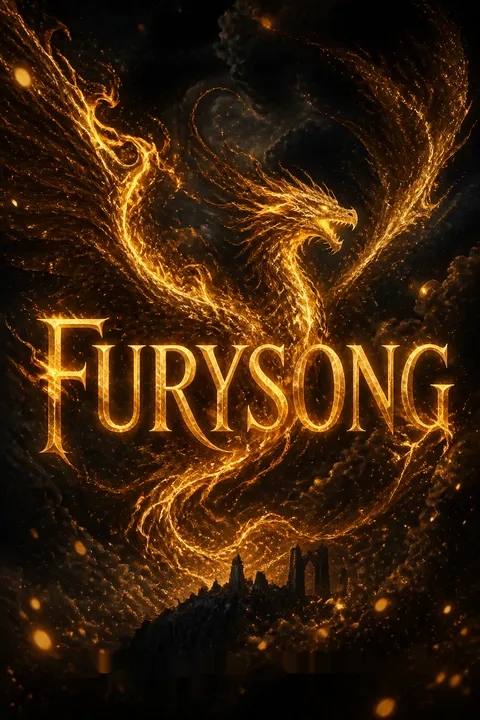
Furysong is a sweeping, emotionally charged conclusion to a trilogy that interrogates the nature of power, justice, and the cost of revolution. At its core, the novel is about the struggle to break cycles of violence and oppression—not through brute force, but through mercy, self-knowledge, and the courage to imagine a different future. The characters are deeply flawed, shaped by trauma and loss, yet their arcs are defined by growth, forgiveness, and the refusal to become what they hate. The story's structure—shifting perspectives, interwoven destinies, and the constant presence of legend and song—invites readers to see history as both tragedy and possibility. The lessons are clear: true change requires sacrifice, empathy, and the willingness to let go of old wounds. The final image—Annie and Lee, scarred but hopeful, choosing both love and duty—offers a hard-won, realistic hope. In a world where the past is never truly past, Furysong insists that the future is still ours to choose, and that even in the ashes, new life can take flight.
Review Summary
Furysong concludes The Aurelian Cycle trilogy with intense emotions and high stakes. Readers praise the character development, political intrigue, and dragon-rider relationships. Many found it a satisfying, if heartbreaking, finale that explores themes of leadership, loyalty, and overcoming trauma. While some felt the pacing dragged in parts, most lauded the nuanced handling of complex issues and relationships. The bittersweet ending sparked mixed reactions, but overall, fans consider it a powerful and fitting conclusion to a beloved series.
People Also Read
Characters
Antigone "Annie" sur Aela
Annie is the emotional and moral heart of the story, shaped by childhood trauma, loss, and the relentless oppression of the dragonlords. Her intelligence, empathy, and stubbornness set her apart, but also isolate her. As Firstrider, she is both a symbol of hope for the lowborn and a target for the powerful. Her relationships—with Lee, Griff, and her dragon Aela—are marked by love, guilt, and sacrifice. Annie's journey is one of self-forgiveness: learning to accept her own worth, to wield power without becoming what she hates, and to choose mercy over vengeance. Her greatest strength is her refusal to be broken, even when the world demands her submission.
Leo "Lee" Stormscourge
Lee is the last scion of the dragonborn, raised to rule but choosing to serve the Revolution. His intelligence, charisma, and sense of justice make him a natural leader, but his lineage is both a blessing and a curse. Lee's love for Annie is deep and complicated, shadowed by guilt over his family's crimes and his own failures. The loss of his dragon, Pallor, is a profound wound, forcing him to redefine himself. Lee's arc is one of reconciliation: with his past, his power, and his capacity for love. He learns that true leadership is not about blood or birth, but about the courage to do what is right, even at great personal cost.
Griff Gareson
Griff is the embodiment of Norcia's struggle: humble, loyal, and marked by tragedy. His journey from squire to High King is fraught with grief, rage, and the temptation of vengeance. Griff's love for his family—and his inability to save them—haunts him, but also drives him to seek a better world. His relationship with Delo is a source of both comfort and conflict, challenging the boundaries of class, love, and forgiveness. Griff's greatest test is learning to temper justice with mercy, to lead without becoming a tyrant, and to accept that some wounds never fully heal.
Delo Skyfish
Delo is a study in contradictions: privileged yet powerless, loyal yet rebellious, proud yet self-loathing. His love for Griff forces him to confront the limits of tradition and the cost of change. As a political hostage and later a traitor to his class, Delo's arc is one of self-discovery and sacrifice. He must choose between duty to his family and the demands of his heart, ultimately embracing a new identity as both lover and leader. Delo's journey is a testament to the possibility of redemption and the power of choosing one's own path.
Power sur Eater (Parcival Graylily)
Power is the story's most complex foil: arrogant, abrasive, and deeply wounded by his origins. His resentment of both the elite and the lowborn masks a desperate need for belonging. Power's unrequited love for Annie and his eventual sacrifice reveal a capacity for loyalty and courage that transcends his bitterness. His actions—often self-serving, sometimes cruel—are ultimately redeemed by his willingness to risk everything for a cause greater than himself. Power's death is a turning point, a reminder that even the most flawed can be heroes.
Freyda Bassileon
Freyda is both antagonist and ally, her motives shaped by the brutal politics of Bassilea. She is pragmatic, intelligent, and fiercely determined to escape the fate her family has planned for her. Her alliance with Ixion is one of convenience, but her respect for Annie and Lee grows as she witnesses their courage. Freyda's arc is one of self-assertion: claiming her own destiny, forging unexpected alliances, and ultimately choosing to support Callipolis's independence. Her presence forces the characters to confront the realities of power, empire, and the cost of freedom.
Ixion Stormscourge
Ixion is the story's primary antagonist, driven by resentment, ambition, and a deep-seated need to reclaim what was lost. His cruelty is both personal and systemic, targeting Annie, Lee, and all who threaten his vision of order. Ixion's inability to spark dragonfire is a metaphor for his impotence and rage. His downfall is both inevitable and tragic, a warning of what happens when power is wielded without mercy or imagination.
Crissa sur Phaedra
Crissa is Annie's closest confidante among the Guardians, a skilled rider and natural commander. Her pragmatism and courage are essential to the resistance's survival. Crissa's arc is one of quiet heroism: she supports Annie, challenges Lee, and helps orchestrate the Guardians' escape. Her presence is a reminder that revolutions are won not just by heroes, but by those who stand beside them.
Miranda Hane
Once Minister of Propaganda, Miranda becomes Annie's legal counsel and moral support during her trial. Her intelligence, empathy, and determination to fight for a fair hearing are crucial in turning the tide of public opinion. Hane's arc is one of redemption: from complicit bureaucrat to champion of the oppressed, she embodies the possibility of change within even the most compromised systems.
Aela (Annie's dragon)
Aela is more than a dragon—she is Annie's other half, her strength, and her vulnerability. Their bond is tested by separation, pain, and the demands of war. Aela's laying of eggs represents renewal and the possibility of a future beyond violence. Her loyalty and courage mirror Annie's own, and their reunion is a moment of healing and triumph.
Plot Devices
Dual Narratives and Shifting Perspectives
The novel employs a rotating cast of first-person narrators—Annie, Lee, Griff, Delo, and others—each offering a unique lens on the unfolding events. This structure allows for deep psychological insight, contrasting experiences of power, trauma, and love. The shifting perspectives create dramatic irony, foreshadowing, and a sense of interconnected fate. The reader is drawn into the emotional core of each character, experiencing the revolution's triumphs and tragedies from all sides.
Revolution and Restoration as Cycles
The story is structured around cycles of revolution and restoration: the overthrow of the dragonlords, the rise of the Revolution, the return of the Triarchy, and the final leveling of the old order. Each cycle brings both hope and disillusionment, forcing characters to confront the limits of violence, the dangers of power, and the necessity of mercy. The narrative uses foreshadowing—through dreams, legends, and poetry—to suggest that true change is possible, but only at great cost.
Symbolism of Dragons and Fire
Dragons are both literal and symbolic: they represent the power to destroy and to protect, the legacy of oppression and the hope of liberation. Fire is a recurring motif—destruction, purification, and rebirth. The act of flying, of rising above the world's constraints, is both a physical and spiritual metaphor for the characters' journeys. The loss and recovery of dragons mirror the characters' own struggles with identity, loss, and renewal.
Mercy, Justice, and the Pleas
The Pleas—ritualized prayers for mercy—are a recurring device, framing moments of violence, judgment, and reconciliation. Characters are repeatedly forced to choose between vengeance and mercy, justice and survival. The story interrogates the meaning of justice: is it retribution, or the possibility of a better world? The answer is found not in grand gestures, but in small acts of kindness, forgiveness, and restraint.
The Power of Story and Song
The narrative is haunted by the stories characters tell themselves and each other: the legend of the Skysung Queen, the epic poems of the Aurelian Cycle, the propaganda of the Revolution and the Restoration. The act of storytelling becomes a weapon, a shield, and a means of healing. The final victory is not just military or political, but narrative: the right to define one's own story, to sing a new song of hope and fury.
The Aurelian Cycle Series

Download PDF
Download EPUB
.epub digital book format is ideal for reading ebooks on phones, tablets, and e-readers.








































