
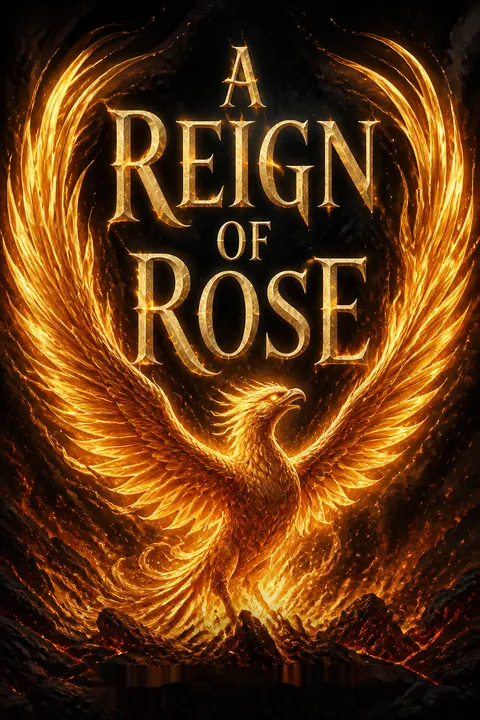


Plot Summary
Prologue
Thirteen years before the war, young Arwen1 follows her brother Ryder14 and his friend Halden into their stepfather's locked work shed on a dark night. Halden slashes his hand on a saw. Ryder14 bolts. Arwen1 stays. She presses trembling fingers to the wound and watches a pale dawn-colored glow stitch the flesh closed — the first eruption of healing power she cannot explain.
She wraps the evidence in cloth, tells Halden it will be better by morning, and spends the next hour returning every scattered screw to its proper place. When he thanks her for not running like Ryder14 did, she answers simply: he was hurt, and she couldn't leave. The moment crystallizes who Arwen1 is — someone who sprints toward suffering rather than away from it.
The God Who Wore Rags
Kane2 has spent months hurling himself at an icy mountain in the Pearl Kingdom, trying to reach the sorcerer called the White Crow. Each ascent ends in shattered bones; his lighte won't work within the sorcerer's wards. He grieves Arwen,1 whom he believes dead.
A tavern dishwasher named Len befriends him over meat pies, asking what Kane2 would sacrifice to bring someone back. Then Len kills a rat and resurrects it with a bare hand — not a sorcerer but a banished Fae God. He forces Kane2 to drink lilium, stripping every Fae power and leaving him mortal.
The blade cannot be destroyed, the God explains. It waits with Lazarus5 in Solaris. One touch will make Kane2 full-blooded — capable of fulfilling the death prophecy in Arwen's1 place. But he must survive the journey first, fragile as any human.
Harvested in a Tower
Two guards bookend Arwen's1 captivity atop Solaris's highest tower: Maddox,17 who relishes cruelty, and Wyn,10 who offers quiet compassion despite his role. The court witch Octavia12 drains Arwen's1 lighte through tubes every few days — a violation more psychological than physical.
Lazarus5 intends to use Arwen1 as breeding stock for a new race of pure Fae, though he cannot yet conceive because harvesting prevents conception. She learns Octavia12 coveted the queen's role, that the realm beyond Solaris's walls is a wasteland of stolen lighte, and that Lazarus's5 greed has poisoned the very land.
Each time her power regenerates, hope flickers — and each time Octavia12 comes, that hope is efficiently extinguished. She survives by conjuring Kane's2 voice inside her own mind.
Coals and Compliance
Summoned to Lazarus's5 private baths and stripped before his soldiers, Arwen1 learns the Fae king's full plan: breed her, then force their children to interbreed until a pure Fae race dominates both realms.
When she refuses to attend the Lumerian Solstice as his betrothed, Octavia12 summons a bed of glowing coals. But Lazarus5 doesn't burn Arwen1 — he has Octavia12 press Wyn's10 face toward the sizzling embers, knowing Arwen's1 compassion won't let her watch another suffer for her defiance. She capitulates.
Afterward, walking through the labyrinthine palace, Arwen1 kneels and presses her meager lighte into Wyn's10 lame knee, healing the joint that has hobbled him since childhood. He asks why. She cannot articulate the answer: healing is the only agency left to her.
A Mortal King's Return
Kane2 survives the mortal journey home — fighting a snow wraith in a treetop all night, stealing a winged ox from a dock in Pearl, landing in the Shadow Woods without weapons or boot soles. When the sentry horn sounds, Shadowhold's entire population drops to their knees.
The gesture breaks something inside him: these people need a king who fights regardless of what he's lost. Griffin,3 his commander and oldest friend, kneels last. In Griffin's3 austere cottage, Kane2 confesses that Arwen1 is dead, his lighte gone, and if he fails he wants Griffin3 on the throne.
He visits the sorceress Briar,8 asking her to open a portal to the Fae Realm. She cannot do it alone. Mari,4 Arwen's1 grieving best friend, must help despite magical paralysis born from guilt. Through tears and chanted spells, they wrench a passage between worlds.
The Masquerade's Twin Shocks
At the Solstice masquerade, Arwen1 swaps masks in the ladies' salon and slips past her guards to find Queen Amelia of Peridot,9 hoping she has come as Kane's2 secret ally. Instead, Amelia9 confesses she was the one who surrendered Arwen1 to Lazarus,5 trading one Fae life for her kingdom's neutrality.
Nobody knows Arwen1 survived. Meanwhile Kane,2 disguised in a dead guard's armor, enters the ball searching for the Blade of the Sun. When Lazarus5 announces his new queen and presents a gold-draped woman, Kane2 lifts his gaze — and behind the gilded mask, he sees olive eyes he spent months mourning.
Arwen1 is alive. His knees nearly buckle. But Lazarus's5 next words freeze that joy: the harvesting ceremony begins tonight. He intends to conceive an heir before his entire court.
Falling Together Again
In the ceremonial chamber, surrounded by noble spectators awaiting a midnight ritual, Arwen1 locks herself in the washroom and smashes the spelled window with a gilded urn and her last scraps of lighte. She climbs onto the sill and leaps, hoping to shift into something that flies.
Kane,2 who crawled across the palace roof to find her, grabs her wrist a fraction too late. They plummet together. Arwen's1 protective bubble of lighte cushions them both in the shrubbery below.
Reunited at last, they hold each other amid brittle leaves while guards search the cobblestones. Kane2 explains he is mortal and must find the blade inside the palace. He sends Arwen1 toward Hart Renwick's6 rebel camp. She agrees — but something in his farewell tells her he is hiding the full cost of his plan.
The Palace Detonated
Arwen1 does not flee. She returns to the palace and fights through Lazarus's5 kingsguards using sunfire — white-hot lighte channeled from pure emotion. Meanwhile Kane2 finds Lazarus5 in his bedchamber, the blade sheathed at the king's waist. Father and son brawl with fists, furniture, and spears of solid ice until Kane's2 fingers close around the hilt of the Blade of the Sun.
Every atom in him is ripped apart and reassembled: full-blooded Fae at last. Outside, Arwen1 cannot breach the spelled door. She enters the lighte repository and detonates every barrel of stolen power, engulfing half the palace in an inferno of firelighte. When the dust settles, Lazarus5 has escaped with the blade, and Arwen1 cannot feel her legs.
Freedom Through Feather and Blood
Wyn10 beats Maddox17 to death and carries Arwen1 into a secret escape tunnel beneath the palace. They stumble into a lair housing a blind strix — a massive goblin-owl chained in darkness for years. Rather than killing the creature, Arwen1 climbs its wing and presses her remaining lighte into its scarred eyes, restoring its sight.
The strix's grateful claw tears her stomach open in the process. Kane,2 now in dragon form, scoops them up and flies through the night, dodging mercenaries, until he collapses before Hart Renwick's6 hidden camp in the Dreaded Vale.
Hart6 — a charismatic half-Fae rebel who built an insurgent army from peasants — heals Arwen1 through his Antler coven. An alliance forms: Kane2 promises Hart6 the Lumerian throne in exchange for military support against Lazarus.5
Homecoming in Snow
The Antler coven portals Kane2 and Arwen1 back to the Shadow Woods. Shadowhold stands in the first snowfall Arwen1 has ever seen. Inside the great hall she finds Leigh,13 Ryder,14 Beth,15 and Dagan11 at dinner, and the embrace that follows is as close to prayer as she has ever come. But joy threads with dread: Kane2 is now full-blooded Fae, meaning he could take her place in the prophecy.
One of them will die to end Lazarus.5 Neither speaks it aloud. In the days that follow they train together — Arwen's1 sunfire and Kane's2 obsidian shadows clashing in the snowy annex — discovering powers they hadn't possessed before. Mari4 arrives, russet hair and bruised pride, and Arwen1 catches her in an embrace that mends something small in both their hearts.
Ethera's Poisoned Tea
Needing another army, they travel to the Quartz of Rose to bargain with Queen Ethera16 — an eighty-year-old immortal preserved by a blood oath, visibly decomposing despite her beauty. They bring a forged ledger of rebel names as bait.
Over pastries and sugar-thick rooibos, Ethera16 appears delighted by their gift. Then she orders her guards to seize Arwen.1 The tea was laced with lilium, draining all Fae power from the room. Mari4 summons spectral shadow-soldiers called Delusions, but the phantoms turn on everyone — Griffin3 takes a phantom sword through the ribs.
Arwen1 hurls herself at the Rose guards so Kane,2 Griffin,3 and Mari4 can escape through a shattered bow window. She is caged in a greenhouse birdcage, powerless, while her allies bleed into the snow outside the palace gates.
The Blood Fae's Price
Mari4 cracks an anagram hidden in Ethera's16 own ledger: the theater owner Hearken Sadella is Aleksander Hale,7 the Hemolich leader who betrayed Kane's2 rebellion fifty years ago. They find him beneath his burlesque stage in a seedy port town.
Aleksander7 purges their lilium with blood magic, then retrieves Arwen1 from Ethera's16 greenhouse by leveraging his decades-old blood oath with the queen. He reveals Ethera16 wanted Arwen1 dead to prevent Kane2 from siring a child — something tied to the escape clause of their ancient pact.
Then Aleksander7 names his price for an army of Blood Fae: Kane2 and Arwen's1 firstborn daughter, sent to live with him when she comes of age. Kane2 shatters the Hemolich's jaw and refuses. They leave without the army — but Arwen's1 parting words about compassion take root in soil she cannot yet measure.
Wedding and War Collide
Kane2 proposes in a garden strung with firelight and winter lilies. They marry the next morning at Shadowhold's temple, Dagan11 presiding in his best tunic and worst boots. Mid-vow, a wyvern tail splinters the ceiling. Lazarus's5 mercenaries — harpies, hydras, wolfbeasts — swarm the temple while his full army surrounds the keep. In the chaos, Octavia12 stalks toward Beth15 and Leigh.13
Ryder14 throws his unarmed body over both children. Dagan,11 the old swordmaster, hurls his blade through Octavia's12 heart, killing her — but absorbs the witch's dying strike. He collapses despite Arwen's1 desperate healing. Briar8 casts a ward to seal the keep, buying them hours. But the walls are crumbling under salamander fire, and they are outnumbered fifty to one.
Three Allies, One Sword
The ward holds but time is bleeding away. Then a portal tears through Kane's2 study: Hart Renwick6 steps through with Queen Amelia9 and Wyn10 — carrying the Blade of the Sun. While Lazarus5 marched on Shadowhold, Hart6 used his coven to portal into Solaris and retrieve the weapon from a monster lair beneath the palace. Wyn's10 kingsguard clearance got them inside; Amelia's9 cunning kept them alive.
Kane2 takes the blade, places an ancient battle crown on Hart's6 head, and sends the newly coronated king of Lumera back through the portal to seize Solaris while Lazarus5 is away. Now Kane2 has the weapon, a plan, and something worse: the knowledge that Briar8 must spell the blade invisible to get close enough, and Lazarus5 can read every mind in any room.
The Delusion in the Tent
In Lazarus's5 war tent, Arwen1 offers herself as breeding stock in exchange for a ceasefire — selling the surrender with enough genuine anguish to satisfy a mind-reader. Briar8 sends the invisible blade into Kane's2 hands behind his back.
But Lazarus5 catches the spell through Briar's8 unguarded thoughts and impales her with spears of ice. Mari,4 who followed them cloaked in invisibility, blasts the tent apart. Kane2 drives the blade into Lazarus's5 chest — and watches the body dissolve. A Delusion: a phantom left by Octavia's12 last spell.
The real Lazarus5 has fled. Briar,8 whose ancient body was held together only by enchantment, cannot be healed by Arwen's1 lighte. As she dies, her power transfers to Mari,4 whose body erupts with inherited magic. Both sides' witches are gone. Full war erupts.
Red Eyes in the Treeline
Lazarus's5 full force assaults Shadowhold with thousands of Fae soldiers, Amber and Garnet legions, and fire-breathing salamanders that melt the gates. Kane2 fights in dragon form, takes a blast of salamander fire to one wing, and plummets into the melee.
The walls are about to fall. Then the ground trembles. From the tree line emerge rows of glowing red eyes: Aleksander's7 Hemolichs, thousands of Blood Fae in mismatched armor, some bare-chested, needing no weapons beyond their blood-fueled power. They never received Arwen's1 raven.
Aleksander7 came because her words about compassion had finally found their mark. The Blood Fae tear through Lazarus's5 ranks with a ferocity that intensifies with every wound they receive, each drop of spilled blood amplifying their strength. The tide turns in minutes.
The Phoenix Rises
Kane2 and Arwen1 both sprint for the fleeing Lazarus,5 and the blade becomes a weapon they turn on each other — each determined to be the one who dies. Kane2 subdues her with shadow power, but a buried reservoir of lighte erupts outward and shatters his hold.
Arwen1 chases Lazarus5 to a moonlit clearing. They duel with ice and sacred steel until he drinks her stolen lighte, shifts into his wyvern, and soars into the night. Arwen1 shifts for the first time — a golden phoenix with falcon wings of living fire.
She overtakes him and drives the blade through his throat. Sunfire consumes them both. Kane2 watches ash rain from the sky, devastated beyond language. Then he finds her in a clearing: naked in fresh snow, breathing. A phoenix rises from its own ashes.
Epilogue
Ten months later, Arwen1 and Kane2 live in a lakeside cottage in Crag's Hollow, surrounded by autumn leaves and the people they love. Arwen1 is pregnant. Ryder14 teaches carpentry. Leigh13 draws dragons.
Mari,4 who inherited Briar's8 ancient power, still searches for a way to portal back to Lumera and free the trapped Fae. Griffin3 hovers near Mari4 without quite closing the distance between them. Aleksander's7 Hemolichs have returned to Rose.
Over dinner — terrible carrot soup and warm company — Arwen1 unfolds a letter Dagan11 wrote before the wedding, telling her that fear is not weakness but the price of loving deeply, and that he is proud of her. She tucks it close and considers tomorrow. For the first time in her life, the unknown does not frighten her.
Analysis
A Reign of Rose interrogates the psychology of sacrifice through a structurally elegant question: what happens when the person willing to die discovers that living might require more courage? Kate Golden constructs a narrative where every character's defining wound — Kane's2 guilt-driven death wish, Arwen's1 compulsive self-erasure through healing, Griffin's3 emotional fortification, Mari's4 perfectionism — functions as both their greatest vulnerability and the hidden wellspring of their power.
The novel's most sophisticated argument concerns fear itself. Where fantasy traditionally equates bravery with fearlessness, Golden presents fear as metabolized strength. Arwen's1 panic attacks fuel her lighte. Her claustrophobia drives her to smash windows and leap from towers. Her terror for others' safety makes her a more devastating fighter than rage ever could. The text explicitly rejects the stoic warrior archetype in favor of a protagonist whose sensitivity IS her weapon — a subversion carrying genuine psychological weight, crystallized in Dagan's11 posthumous letter: fear grows as we love more deeply, and that is not weakness.
The political architecture mirrors this personal thesis. Lazarus's5 extractive harvesting — draining citizens to fuel his own power — creates a brittle empire that devours itself, while Kane2 and Arwen's1 willingness to distribute power, crown rivals, and trust former betrayers builds the coalition that defeats him. Empires of hoarding collapse; networks of generosity endure.
Golden also complicates the romantasy genre's possessive-love tropes. Kane2 begins treating Arwen's1 safety as something he can control; by the climax, his final act of love is failing to stop her from walking into fire. The phoenix imagery crystallizes this: destruction and rebirth are the same flame, and trusting someone you love to pass through it — rather than shielding them from it — is the bravest thing a person can do. Aleksander's7 arc reinforces this: compassion offered without expectation of return proves more powerful than any transactional alliance.
Review Summary
A Reign of Rose received mixed reviews, with ratings ranging from 1 to 5 stars. Many readers found it a satisfying conclusion to the trilogy, praising the character development, action scenes, and romance between Arwen and Kane. Some felt the pacing was rushed, especially towards the end, and that certain plot elements were underdeveloped. Readers appreciated the world-building, magic system, and found family themes. While some considered it the strongest book in the series, others felt it didn't reach its full potential. Overall, fans of romantasy generally enjoyed the book and series.
People Also Read
Characters
Arwen Valondale
Healer turned Fae queenA full-blooded Fae raised as a mortal in a farming village, Arwen's defining trait is her compulsion to run toward suffering rather than away from it — a pattern established when she healed a friend's hand as a terrified child. She carries deep anxiety from an abusive stepfather and chronic claustrophobia, yet consistently weaponizes her fear into action. Her relationship with Kane2 is built on mutual recognition: two people who understand damage but choose tenderness. Her healing power functions as both literal and metaphorical expression — she gives herself away to mend others, and her arc demands learning that strength includes receiving. Compassion is her strategy, not her weakness, and her sunfire lighte embodies it: beautiful, dangerous, and impossible to contain.
Kane Ravenwood
Dragon king of OnyxSon of the tyrant Lazarus5, Kane is a dragon-shifting Fae who spent two centuries transforming grief into governance. His defining wound is the execution of his mother and brother during a failed rebellion — an event that calcified his belief that vulnerability is a liability. He rules with competence and coldness, sardonic wit as armor. His love for Arwen1 unmakes his careful defenses: he discovers he would sacrifice entire realms for one person, and his arc demands reckoning with whether that selfishness can coexist with duty. Kane's greatest fear is not death but outliving those he protects. His relationship with Griffin3 — two centuries of wordless loyalty — is the friendship that keeps him tethered when grief threatens dissolution.
Griffin
Kane's steadfast commanderKane's2 commander, oldest friend, and moral anchor. Griffin is a fortress of suppressed emotion — a man who debates buying boots for weeks yet will shatter a stranger's jaw to protect a woman he won't admit he loves. His relationship with Mari4 unfolds as an excruciating slow burn, each too frightened by vulnerability to close the gap between devotion and confession. Beneath his permanent tactical composure lives a profound, largely unspoken capacity for tenderness.
Mari
Arwen's brilliant, anxious witchArwen's1 best friend and an emerging witch whose powers are unstable and frightening. Mari carries the impossible burden of her mother's death in childbirth, believing she must justify her survival through perfection. Her magic reflects her psychology: powerful but uncontrolled, occasionally turning on allies. Under Briar's8 mentorship she discovers that imperfection is not unworthiness. Her compulsive intellectualism and warmth make her the group's emotional barometer — when Mari shuts down, everyone notices.
Lazarus Ravenwood
Tyrant Fae king of LumeraKane's2 father and a millennium-old Fae king of devastating beauty and calculating intelligence. Lazarus views sentient beings as resources — harvesting lighte from citizens, breeding offspring for power, fortifying his capital while his realm rots. His weakness is dependency on stolen lighte, a need that mirrors the moral decay of his reign: the greed that made him powerful slowly consumes him. He wields mind-reading as weapon and spectacle, stripping others of even their private thoughts.
Hart Renwick
Charismatic rebel kingA half-Fae rebel who grew up in Lumera's worst slums and built an insurgent army from peasants and mill workers. Hart's aggressive playfulness masks genuine grief for his lost parents and sister. He combines military cunning with rakish irreverence, charming queens and cracking jokes during war councils. His alliance with Kane2 is built on mutual respect between two men who understand the cost of revolution and the weight of a crown neither originally wanted.
Aleksander Hale
Feared Hemolich leaderLeader of the Hemolichs, a race of Blood Fae who draw power from wounds and carnage. Aleksander betrayed Kane's2 rebellion fifty years ago to free his enslaved people, earning Kane's2 undying hatred. Cold, predatory, and layered with self-loathing, he hides in Rose under an assumed identity. His arc poses the novel's central moral question: whether one monstrous act condemns a person forever, or whether compassion can penetrate even the most calcified heart.
Briar Creighton
Ancient immortal sorceressAn ancient witch of extraordinary power and dry wit, Briar serves as Mari's4 mentor, pushing her protégée toward confidence with calibrated tough love. She is the only witch capable of opening portals between realms, making her strategically irreplaceable. Her centuries-long friendship with Kane2 carries the warmth of two survivors who stopped counting their losses long ago. She is both maternal and formidable, her loyalty fierce and her judgment rarely wrong.
Amelia
Pragmatic queen of PeridotQueen of Peridot and former friend of Kane's2. Raised by a father who treated her as a political commodity, Amelia learned to weaponize coldness. She operates on transactional logic — every relationship weighed against her kingdom's survival. Her moral complexity places her at the intersection of pragmatism and conscience, making her simultaneously the most frustrating and most understandable figure in the political landscape.
Wyn
Arwen's reluctant kingsguardA young kingsguard assigned to watch Arwen1 in Solaris. Born in Lumera's slums with a lame leg, Wyn joined Lazarus's5 guard to bring his family inside the capital's protected walls. His quiet decency amid institutional cruelty makes him Arwen's1 only potential ally in captivity. Lazarus5 weaponizes his kindness — but beneath Wyn's obedience stirs a conscience that may prove stronger than his fear.
Dagan
Gruff, devoted swordmasterAn elderly mortal swordmaster who serves as mentor and surrogate father to both Arwen1 and Mari4. Gruff, economical with praise, and relentlessly honest, Dagan masks deep tenderness behind a permanent scowl. He lost his wife and infant daughter to Lazarus5 decades ago. His relationship with his protégées is defined by the fierce, corrective love of a man who knows exactly how much can be taken from you — and who is determined not to let it happen again.
Octavia
Lazarus's serpentine court witchLazarus's5 court witch and Kane's2 maternal aunt. A serpentine woman who harvests Arwen's1 lighte with barely concealed pleasure, she coveted the queen's throne and serves the man who murdered her own sister — ambition having consumed her where grief should have lived.
Leigh
Arwen's brave young sisterArwen's1 ten-year-old sister. Brave beyond her years, she takes up swordfighting during Arwen's1 captivity and faces Fae mercenaries with a child's blade and a warrior's resolve.
Ryder
Arwen's evolving older brotherArwen's1 older brother. Self-centered but slowly maturing, Ryder's romantic naivety inadvertently contributed to past betrayals. His arc bends toward accepting responsibility for others rather than fleeing from it.
Beth
Young seer with grim visionsA quiet young seer whose visions are invariably accurate. Her prophecies about devastating deals and collapsing realms drive critical strategic decisions throughout the war.
Ethera
Rose's decomposing mad queenThe Scarlet Queen of Rose — breathtakingly beautiful but visibly decomposing due to an unnatural blood oath. Her eccentricity masks genuine danger, and her madness makes her both weaponizable and unpredictable.
Maddox
Arwen's sadistic captorA cruel kingsguard who takes pleasure in Arwen's1 captivity. His sadism and ambition contrast sharply with Wyn's10 reluctant decency, and his incessant atonal humming becomes a motif of oppression.
Plot Devices
The Blade of the Sun
Prophecy weapon and power catalystThe only weapon capable of killing Lazarus5, forged by the nine Elder Gods and encrusted with the Holy Stones. Its power is twofold: touching it transforms Kane2 from mortal to full-blooded Fae, and only a full-blooded Fae wielding it can fulfill the seer's prophecy. The blade cannot be destroyed and always returns to a master. Throughout the story it changes hands repeatedly — from Lazarus5 to Kane2 to Lazarus5 again, then retrieved by Hart's6 team from a monster lair — functioning as the ultimate MacGuffin. Each possession reshapes the balance of power, and its final use triggers both the killing blow and a fiery transformation that resolves the prophecy's apparent demand for sacrifice.
Lighte
Fae life force and currencyThe innate magical life force born into every Fae from Lumera's earth. Lighte functions as power source, currency, weapon, and ecological resource. Lazarus's5 systematic harvesting from citizens has poisoned the land and made him dependent on external reserves, creating a feedback loop of extraction and decay. Arwen's1 lighte is uniquely potent as a full-blooded Fae's, making it both her greatest vulnerability — Lazarus5 harvests it to fuel himself — and her greatest weapon. The detonation of Lazarus's5 entire lighte repository represents the destruction of his accumulated power, weakening his war machine. Lighte addiction among soldiers and citizens illustrates how systems of oppression create dependency even among the oppressed.
Lilium
Fae-neutralizing poisonA substance that strips Fae of their lighte and powers, used as both weapon and control mechanism. The Fae God administers it to Kane2 to render him mortal as prerequisite for rebirth. Ethera16 laces tea with it to neutralize the group in Rose. Lazarus's5 guards use it to chain prisoners. Each deployment creates a moment of profound vulnerability, forcing characters who rely on supernatural abilities to survive by wit alone. Lilium literalizes the experience of having one's agency stolen — a recurring trauma for Arwen1, who has been stripped of power by men throughout her life.
The Seer's Prophecy
Driving fate and romantic tensionAn ancient prediction stating that a full-blooded Fae will kill Lazarus5 with the Blade of the Sun, sacrificing their own life in the process. Initially this burden falls on Arwen1 alone. When Kane2 becomes full-blooded, the prophecy transforms into the story's central romantic tension: both protagonists try to claim the sacrifice, each wanting to be the one who dies so the other can live. Their climactic duel against each other is not about defeating an enemy but about who loves the other enough to let themselves be destroyed. The prophecy's resolution reframes sacrifice not as annihilation but as transformation.
Arwen's Phoenix Form
Dormant power enabling survivalArwen's1 latent ability to shift into a golden firebird, dormant throughout most of the story. Foreshadowed by tingling in her shoulder blades during moments of danger and Amelia's9 assertion that all full-blooded Fae can shift. She attempts to trigger the transformation multiple times — leaping from windows, training on rooftops — but it only manifests in the ultimate extremity. The phoenix form is the story's crowning twist: the fire that consumes Lazarus5 also consumes Arwen1, but a phoenix rises from its own ashes. The form embodies the novel's thesis that what destroys you can also remake you stronger.
FAQ
```markdown
Synopsis & Basic Details
What is A Reign of Rose about?
- A Prophecy's Shadow: A Reign of Rose follows Arwen Valondale, a young woman with rare healing powers, and Kane Ravenwood, the exiled prince of Onyx, as they navigate a world ravaged by the tyrannical Fae King Lazarus. A prophecy foretells that only a full-blooded Fae can kill Lazarus, but at the cost of their own life, setting a tragic destiny for one of them.
- Love, Loss, and Rebellion: The narrative weaves through Arwen's harrowing captivity in Solaris, where she's drained of her potent lighte (magical essence) by Lazarus's witch, and Kane's desperate quest to become full-blooded Fae to avenge Arwen's supposed death. Their reunion ignites a rebellion, forcing them to forge alliances with rebel factions and confront deep-seated betrayals.
- War for the Realms: The story culminates in a brutal war against Lazarus's forces, where sacrifices are made, and the true meaning of heroism and love is tested. Ultimately, the prophecy is fulfilled in an unexpected way, leading to a new era for Evendell and Lumera, and a profound transformation for Arwen and Kane.
Why should I read A Reign of Rose?
- Deep Emotional Resonance: Readers seeking a fantasy romance that delves into the psychological impact of trauma, grief, and the complexities of love will find A Reign of Rose profoundly moving. The story doesn't shy away from the dark, but always anchors itself in the resilience of the human (and Fae) spirit.
- Rich World-Building & Magic: The novel offers an intricate magical system centered around lighte—its power, its addictive qualities, and its connection to the land itself. The diverse kingdoms, from the industrial Quartz of Rose to the floating Pearl Mountains, provide a vibrant backdrop for the epic conflict.
- Unforgettable Character Arcs: Witness Arwen's transformation from a fearful healer to a powerful phoenix, and Kane's journey from vengeful prince to a king driven by hope. Their individual growth and their intertwined destinies make for a compelling and satisfying conclusion to The Sacred Stones series.
What is the background of A Reign of Rose?
- A World Divided by Power: The story is set in a world where the Fae Realm of Lumera, ruled by the tyrannical King Lazarus, exploits the mortal realm of Evendell. Lazarus's obsession with pure Fae blood and lighte has led to widespread poverty, environmental decay (e.g., "it rained fire this morning" in Solaris), and a constant state of war.
- The Sacred Stones & Prophecy: The narrative is deeply rooted in the lore of the Sacred Stones, ancient magical artifacts tied to the creation of the realms and the Fae Gods. A central prophecy dictates the downfall of Lazarus at the hands of a full-blooded Fae, but with a tragic cost, shaping the destinies of Arwen and Kane.
- Political Intrigue & Rebellion: The political landscape is fraught with tension, featuring exiled princes, rebel kings like Hart Renwick, and shifting alliances among the various kingdoms of Evendell (Onyx, Peridot, Amber, Garnet, Citrine, Rose, Pearl, Jade, Opal). This intricate web of loyalties and betrayals forms the backdrop for the unfolding war.
What are the most memorable quotes in A Reign of Rose?
- "In life, in death, my soul is yours. Arwen, will you be my wife?" (Kane, Chapter 35): This quote encapsulates Kane's unwavering devotion and the depth of his love for Arwen, transcending the looming prophecy and the certainty of his own potential demise. It's a powerful declaration of commitment amidst overwhelming despair, highlighting their bond as the emotional core of the story.
- "You are no champion. You are no brave heroine. You are no prophesied savior of realms. You, Arwen, are just a womb. That is all you will ever be, until one day, you are dead." (Lazarus, Chapter 6): This chilling quote from Lazarus reveals the depths of his cruelty and his dehumanizing view of Arwen, reducing her to a mere vessel for his ambition. It underscores the patriarchal oppression Arwen fights against and fuels her resolve to defy his control, making her eventual triumph even more impactful.
- "Do not equate bravery with fearlessness. If someone like you has nothing left to fear, it will be your heart I worry for. Fear is human, and only grows as we come to care deeply for others. Stones know I've become more fearful in knowing you. That's what love does to us." (Dagan, Epilogue letter): This profound insight from Dagan, Arwen's mentor, redefines bravery not as the absence of fear, but as the willingness to act despite it, especially when motivated by love. It serves as a poignant reflection on Arwen's journey and the emotional cost of deep connection, offering a powerful thematic statement on the nature of courage and vulnerability.
What writing style, narrative choices, and literary techniques does Kate Golden use?
- Dual Narratives and Shifting POV: Kate Golden employs a dual narrative, alternating between Arwen's and Kane's first-person perspectives. This choice allows for deep dives into their individual psychological states, showcasing their internal struggles, grief, and evolving motivations, which is crucial for understanding their complex relationship and the emotional weight of their choices.
- Sensory-Rich Prose & Vivid Imagery: The author uses evocative, sensory language to bring the world to life, from the "scent of pine and blood" on the mountain to the "honey in my lungs" of a temperate room. Descriptions of magic, like "ribbons of hot, white fire" or "cords of my ultraviolent ebony," are particularly striking, immersing the reader in the fantastical elements.
- Foreshadowing and Symbolism: Golden masterfully integrates foreshadowing, often through prophecies and recurring symbols like fire, ash, and the phoenix/dragon imagery. These elements create a sense of destiny and inevitability, while also allowing for thematic exploration of rebirth, sacrifice, and the cyclical nature of power and destruction.
Hidden Details & Subtle Connections
What are some minor details that add significant meaning?
- Ryder's Cherrywood Termite Trick: Ryder's casual mention of using "carefully carved cherrywood to convince him we had termites" to swap roommates (Chapter 24) subtly highlights his innate cunning and resourcefulness, traits often overshadowed by his self-absorption. This small detail foreshadows his later growth into a capable teacher and caretaker, showing his intelligence extends beyond battle.
- Ethera's Decaying Body: Queen Ethera's seemingly minor physical decay—a missing fingernail, fluttering eyelashes falling into her tea, a crack appearing on her lip (Chapter 28)—is a crucial, subtle detail. It hints at the unnatural nature of her prolonged youth, later revealed to be due to a blood oath with Aleksander, and underscores the hidden costs of her power and alliances.
- Acorn's Mother's Appearance: The sudden appearance of Acorn's mother, the strix Arwen freed in Lumera, during the battle at Shadowhold (Chapter 44) is more than just a plot convenience. It's a powerful callback to Arwen's empathy and healing nature, demonstrating how her acts of kindness, even towards a "monster," can have far-reaching and unexpected positive consequences in the most dire situations.
What are some subtle foreshadowing and callbacks?
- Arwen's Childhood Shed Trauma: The prologue's detailed description of Arwen's fear of Powell's work shed, where "bad things happened" and her "back hurt in phantom memory," subtly foreshadows her later experiences of captivity and violation. This early trauma establishes her deep-seated aversion to confinement and control, making her fight for freedom even more poignant.
- Kane's "Death by Bird" Joke: Kane's casual joke about "death by bird" (Chapter 8) is a dark, ironic callback to his earlier playful teasing of Arwen. It subtly foreshadows Arwen's eventual transformation into a phoenix, a powerful bird, and her ultimate role in fulfilling the prophecy, turning a lighthearted moment into a poignant premonition of her destiny.
- Dagan's Jealousy & Wife's Death: Dagan's confession that he asked Briar to dance to make his future wife jealous (Chapter 34) is a subtle callback to his deep, unspoken grief. It hints at the profound love he lost and the enduring pain of his wife's death at Lazarus's hands, giving greater weight to his sacrifice in protecting Arwen and her siblings.
What are some unexpected character connections?
- Mari and Griffin's Unspoken Affection: The evolving dynamic between Mari and Griffin, initially marked by mutual irritation, subtly blossoms into a deep, unspoken affection. Griffin's discomfort around Mari's magic, his protective instincts, and Mari's playful jabs masking genuine care (e.g., "I could write you an essay on how too much free time...can turn little boys into monsters," Chapter 34) reveal a connection that transcends their outward personas.
- Ryder's Love for Amelia: Ryder's confession of falling for Princess Amelia (Chapter 24) is an unexpected revelation. It adds a layer of complexity to Amelia's betrayal, showing that her actions had personal consequences beyond the political, and highlights Ryder's vulnerability and capacity for deep emotional attachment, despite his often-selfish demeanor.
- Dagan's Past with Briar: The revelation that Dagan once asked Briar to dance to make his future wife jealous (Chapter 34) creates an unexpected historical connection between two seemingly disparate characters. It hints at a shared past and a deeper understanding between them, adding emotional resonance to Dagan's role as a mentor and Briar's eventual sacrifice.
Who are the most significant supporting characters?
- Mari Branton, the Evolving Witch: Mari is pivotal as Arwen's loyal friend and the inheritor of Briar's immense magical power. Her journey from self-doubt and fear of her unstable magic to embracing her strength (e.g., "Invisibility...More useful than I thought," Chapter 41) is crucial for the rebellion's success and the future of magic in Evendell. Her emotional arc, intertwined with Griffin's, provides a vital human element amidst the epic conflict.
- Griffin, the Steadfast Commander: Kane's oldest friend and commander, Griffin, embodies unwavering loyalty and duty. His stoic exterior hides deep emotional wounds, particularly his grief for Arwen and his burgeoning, complicated affection for Mari. His strategic mind and combat prowess are indispensable, but his personal growth in learning to accept vulnerability and hope makes him a compelling figure.
- Dagan, the Wise Mentor: Dagan serves as Arwen's primary mentor in swordsmanship and life, offering gruff wisdom and unwavering support. His past loss at Lazarus's hands fuels his quiet resolve, and his ultimate sacrifice to protect Arwen's siblings (Chapter 38) is a profound emotional turning point, solidifying his legacy as a true hero and a father figure.
Psychological, Emotional, & Relational Analysis
What are some unspoken motivations of the characters?
- Kane's Self-Punishment: Beneath Kane's drive for revenge against Lazarus lies an unspoken motivation of self-punishment. His willingness to become mortal and face certain death (Chapter 3) is not just about fulfilling the prophecy or saving the realms, but also a desperate attempt to atone for his perceived failure to protect Arwen at Hemlock Isle. He believes his death is the only way to truly make amends.
- Mari's Fear of Her Own Power: Mari's reluctance to fully embrace her magic and her self-deprecating humor (e.g., "Invisibility: the most useless of magic for the most useless of witches," Chapter 9) stem from an unspoken fear of her own destructive potential. This is rooted in her lineage and the "horrible dreams" she experiences (Chapter 33), suggesting a deeper, darker origin to her magic that she fears will corrupt her, mirroring the destructive power of Lazarus.
- Amelia's Pragmatic Love: Amelia's betrayal of Arwen (Chapter 10) is driven by an unspoken, pragmatic love for her people. Her motivation isn't malice, but a cold calculation that sacrificing one life (Arwen's) is a necessary evil to secure the survival and neutrality of Peridot. This reveals a leader willing to make morally ambiguous choices for the greater good of her kingdom, even at immense personal cost.
What psychological complexities do the characters exhibit?
- Arwen's Resilience Through Trauma: Arwen exhibits profound psychological complexity in her ability to maintain empathy and hope despite enduring repeated trauma, captivity, and violation. Her internal monologue often reveals a struggle between despair and a fierce will to survive, using mental distractions (e.g., conjuring Kane's voice, Chapter 31) to cope. Her transformation into a phoenix symbolizes her psychological rebirth, rising from the ashes of her past.
- Kane's Grief-Induced Self-Loathing: Kane's character is deeply complex, marked by intense grief and self-loathing after Arwen's supposed death. His journey is a psychological battle against his own destructive impulses and a desperate search for meaning in sacrifice. His initial desire for revenge slowly evolves into a fight for hope, but the scars of his past, particularly his fear of abandonment and failure, remain a constant internal struggle.
- Griffin's Emotional Repression: Griffin's stoicism and emotional repression are central to his psychological makeup. He rarely shows vulnerability, even to Kane, and his internal world is one of duty and control. His slow-burning affection for Mari challenges this repression, forcing him to confront emotions he's long suppressed, leading to moments of uncharacteristic impulsiveness (e.g., punching the doorman, Chapter 30) and revealing a deeply wounded but capable heart.
What are the major emotional turning points?
- Kane's Reunion with Arwen in Solaris: The moment Kane discovers Arwen is alive at Lazarus's Solstice ball (Chapter 11) is a massive emotional turning point. His grief-stricken world shatters, replaced by overwhelming relief and a renewed, desperate hope. This shift fundamentally alters his motivations, transforming his quest from one of vengeance for a lost love to one of protection for a found love, even if it means sacrificing himself.
- Arwen's Decision to Heal the Strix: Arwen's choice to heal the blind strix in the monster lair (Chapter 17), despite her own grave injuries and the immediate danger, is a pivotal emotional moment. It reaffirms her core identity as a healer and her unwavering empathy, even towards creatures deemed monstrous. This act of compassion, rather than violence, foreshadows her unique path to fulfilling the prophecy and highlights her distinct moral compass.
- Mari's Acceptance of Her Magic: Mari's breakdown and subsequent realization of her magic's true nature during the battle at Ethera's palace (Chapter 29) is a critical emotional turning point. Witnessing Griffin's injury due to her uncontrolled "Delusions" forces her to confront her fears and accept the responsibility of her power. This moment of vulnerability and acceptance paves the way for her to inherit Briar's legacy and become a powerful, albeit still learning, witch.
How do relationship dynamics evolve?
- Kane and Arwen: From Allies to Soulmates: Their relationship evolves from a pragmatic alliance to a deep, passionate love, culminating in marriage. Initially, Kane's protective instincts often overshadow Arwen's agency, but their shared traumas and mutual sacrifices forge a bond of profound respect and equality. Their journey is a testament to love's ability to heal and empower, even in the face of destiny.
- Mari and Griffin: A Slow-Burn of Opposites: The dynamic between Mari and Griffin shifts from initial antagonism and mutual annoyance to a slow-burning, deeply affectionate connection. Griffin's stoicism is gradually softened by Mari's vibrant personality and vulnerability, while Mari learns to appreciate Griffin's unwavering loyalty and quiet strength. Their relationship highlights the theme of finding connection in unexpected places and the healing power of acceptance.
- Arwen and Ryder: From Burden to Mutual Respect: Arwen's relationship with her brother Ryder evolves from one where she often felt burdened by his selfishness to one of mutual understanding and respect. Ryder's guilt over his past actions and his growing responsibility towards Leigh and Beth (Chapter 24) allows him to mature, fostering a more genuine and supportive bond with Arwen, who, in turn, offers him forgiveness and guidance.
Interpretation & Debate
Which parts of the story remain ambiguous or open-ended?
- The Full Extent of Mari's Magic and Lineage: While Mari inherits Briar's power and learns to control her "Delusions," the full extent of her magic and the "tremendously bad" lineage she fears (Chapter 33) remain somewhat ambiguous. The story hints at a darker origin for her powers, leaving readers to wonder about the future challenges she might face in mastering her unique abilities and confronting her heritage.
- The Future of Lumera and Evendell's Alliance: The epilogue establishes a fragile peace, but the long-term stability of the newly formed alliance between Lumera (under Hart) and Evendell (under Kane and Arwen) is left open-ended. The challenges of rebuilding, managing diverse populations, and dealing with lingering enemies like Garnet suggest that the "peace" is a continuous effort, not a definitive end.
- Aleksander's True Motivations and Future Role: Aleksander's decision to aid Kane and Arwen, despite his deep-seated hatred for Lazarus and his past betrayal, is attributed to Arwen's empathy and his desire to protect Rose. However, his "blood oath" with Ethera and the mysterious connection to Arwen's future child (Chapter 32) remain largely unexplained, leaving his true long-term motivations and potential future involvement in the realms open to interpretation.
What are some debatable, controversial scenes or moments in A Reign of Rose?
- Amelia's Betrayal of Arwen: Amelia's decision to betray Arwen to Lazarus (Chapter 10) is highly debatable. While she claims it was to protect her kingdom of Peridot from war, sacrificing a friend to a tyrant raises significant ethical questions about the cost of leadership and whether the "greater good" justifies such a personal betrayal. Readers may debate if her actions were truly pragmatic or simply self-serving.
- Kane's Attempt to Subdue Arwen: Kane's decision to subdue Arwen with his shadows to prevent her from fulfilling the prophecy (Chapter 44) is a controversial moment. While motivated by love and a desire to save her life, it involves him physically overpowering her and taking away her agency in a pivotal moment. This raises questions about consent, control within a relationship, and the fine line between protection and paternalism, even when facing a fated death.
- Aleksander's Demand for Arwen's Daughter: Aleksander's shocking demand for Arwen and Kane's firstborn daughter as payment for his army's aid (Chapter 32) is deeply controversial. This proposition, rooted in a mysterious blood oath and his Hemolich nature, is morally repugnant and sparks intense debate about the lengths to which one should go for victory, and the ethical implications of sacrificing a child's future for political gain.
A Reign of Rose Ending Explained: How It Ends & What It Means
The Sacred Stones Trilogy Series
About the Author


Download PDF
Download EPUB
.epub digital book format is ideal for reading ebooks on phones, tablets, and e-readers.








































