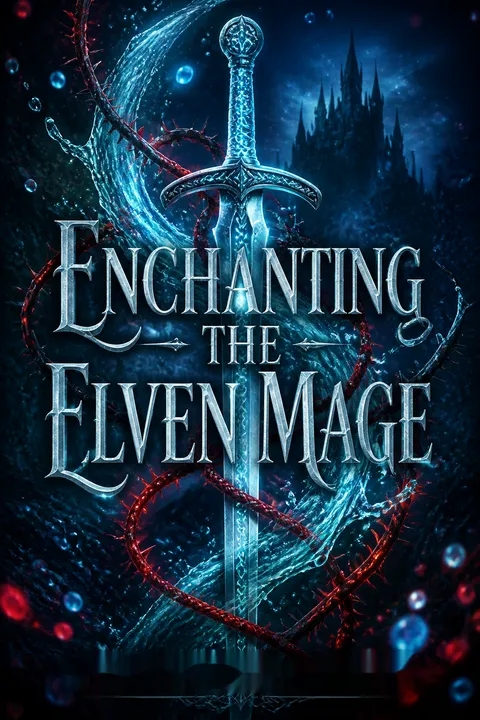

Plot Summary
Cursed Beginnings and Hidden Truths
Once upon a time, a witch with hair as bright as summer ivy cursed an infant princess, Aurora "Aury" Rose, at her birth. To protect her, the king and queen of Lore hid her in the fae court, where she grew up believing herself half-fae, enduring cruelty and isolation. The fae queen, her supposed aunt, is cold and manipulative, and Aury's only solace is her cousin Werian and the horses in the stables. The curse—set by the Matchweaver for being slighted in the matter of Aury's betrothal—promises death by spinning wheel. Aury's life is shaped by secrets, loneliness, and a longing for freedom, her true identity and fate concealed even from herself.
Revelations in the Fae Court
On the eve of her forced departure from the fae court, Aury's world is upended. She learns from the human king and queen that she is not half-fae, but their fully human daughter, hidden for her safety. She is also a potential water mage, heir to the throne, and betrothed since infancy to Prince Filip of the mountain elves. The Matchweaver's curse, meant to punish her parents' arrogance, still looms. Aury's sense of betrayal deepens as she realizes her entire life has been a lie, orchestrated by those who claimed to protect her. Her only hope is to delay the marriage by demanding the right to train as a mage and prove herself in the Mage Trials.
Betrothal, Betrayal, and Bargains
Aury's parents insist on the marriage to secure an alliance with Balaur, the elven kingdom, to defend against the Wylfen threat. Aury, desperate to avoid being traded like a pawn, bargains for time: she will marry Filip only after the Mage Trials. Meanwhile, Filip, unaware of the true nature of his bride, is summoned to Loreton Palace. Both are caught in webs of expectation, duty, and prejudice. Their first encounters are fraught with misunderstanding, Aury using fae glamour to appear hideous, hoping to dissuade Filip, while he is both amused and intrigued by her defiance. The stage is set for a battle of wills as much as kingdoms.
The Elven Prince's Dilemma
Prince Filip, known as "Hatchet," is a skilled warrior, second son of Balaur's king. He is drawn into the political marriage for the sake of his starving people, but resents being used as a bargaining chip. His rivalry with his cousin Ivan and the pressure from his parents add to his burdens. Filip's first meetings with Aury are a mix of challenge and fascination—her wit, courage, and refusal to submit spark something in him. Despite the political necessity, he finds himself wanting to win her on his own terms, not just for the alliance, but for the thrill of matching wits and hearts.
Water Magic Awakens
As Aury travels to Loreton and then to Darkfleot, the fortress where water mages train, she begins to sense her latent magic. Visions in water, accidental bursts of power, and the guidance of her fae protectors hint at her potential. At Darkfleot, she faces skepticism, grueling training, and the scorn of some instructors, but also finds camaraderie with fellow mage Sunniva. Her magic is wild, tied to her emotional wounds and the trauma of her upbringing. The Mage Trials loom, and Aury's success or failure will determine not only her fate, but the fate of the alliance and the kingdom.
Schemes, Glamours, and Feasts
At Loreton Palace, Aury and Filip are forced into public displays of unity, feasts, and rituals. Aury's attempts to sabotage the betrothal with fae glamour and outrageous behavior only intrigue Filip further. Their banter and mutual challenges become a dance of attraction and resistance. Meanwhile, political tensions simmer: the Wylfen threat grows, the Matchweaver's curse hangs over Aury, and both kingdoms' leaders maneuver for advantage. Amidst the festivities, Aury's magic surges unpredictably, and Filip's respect for her deepens, even as both struggle with the roles forced upon them.
Unwanted Alliances
As the Mage Trials approach, Aury and Filip are drawn together by necessity. Training side by side, they begin to see past prejudice and fear. Aury's power grows, but so does the danger—her magic is tied to her emotional scars, and the Matchweaver's curse is never far. Filip, for his part, must win over Lore's warriors and prove the value of elven tactics. Together, they face sabotage, the threat of the Wylfen, and the machinations of those who would see them fail. Their alliance, once unwanted, becomes a source of strength, even as they resist the pull of their hearts.
Trials of Power and Heart
The Mage Trials are brutal, testing not only magical skill but leadership, courage, and the ability to inspire others. Aury's wild power threatens to overwhelm her, but with Filip's support and her own determination, she rises to the challenge. The trials force both to confront their deepest fears: Aury's fear of being controlled or abandoned, Filip's fear of failing his people and losing Aury. When Aury's magic saves the day in spectacular fashion, she earns the rank of captain and the right to choose her own fate. But the cost is high—her victory sets the stage for the final confrontation with the Matchweaver.
The Mage's Journey
With her new rank, Aury is finally free to choose, but the threat of war and the curse remain. She and Filip, now equals in battle and heart, begin to trust and confide in each other. Their love, once denied, blossoms in stolen moments and shared danger. Yet, the Matchweaver's shadow grows, and the Wylfen army, aided by a dragon, marches on Lore. Aury's journey becomes one of self-acceptance—embracing her power, her heritage, and her right to love and be loved. The stage is set for a battle that will test not only armies, but the strength of true love.
Clash of Kingdoms
The Wylfen attack, bringing with them trained scar wolves and a dragon. The armies of Lore and Balaur unite, but the battle is desperate. Aury's magic, Filip's leadership, and the courage of their allies are pushed to the limit. In the chaos, Aury's power surges, freezing the enemy dragon and turning the tide. Filip, risking everything, rides a youngling dragon to distract the enemy. The cost is great—lives lost, wounds suffered, and the ever-present threat of the Matchweaver's curse. In the aftermath, Aury is hailed as a hero, but the curse is not yet broken.
The Matchweaver's Wrath
In the wake of victory, the Matchweaver strikes. Aury, now a Magelord, is ensnared by the witch's magic—Loreton Palace and all within are cast into enchanted sleep, bound by scarlet yarn and ivy. Filip, heartbroken and believing Aury does not want him, wanders in grief. But when he learns of the curse, he braves the witch's deadly magic to reach Aury. The palace is a nightmare of thorns and sleeping bodies, and only true love's kiss can break the spell. Filip's sacrifice—giving up his claim to Aury's hand for her freedom—proves the depth of his love.
Sacrifice and True Love's Test
Filip's kiss awakens Aury, but the Matchweaver's wrath is not so easily ended. The witch conjures a monstrous dragon of scarlet yarn, threatening to destroy all. Aury, drawing on her full power and the support of her friends, faces the witch in a final, epic battle. With Filip at her side, she defeats the dragon and shatters the curse, freeing Lore from the Matchweaver's grip. The victory is not just over magic, but over the wounds of the past—Aury and Filip, at last, are free to choose each other, not out of duty, but out of love.
Breaking the Curse
With the curse broken, Lore awakens to a new era. Aury and Filip, now united by choice and not compulsion, work to heal the wounds of their kingdoms. The Matchweaver is banished, her power checked but not destroyed. Aury's parents, chastened by the consequences of their pride, begin to make amends. The alliance between Lore and Balaur is stronger than ever, built not on forced marriage, but on mutual respect and love. Aury, now a Magelord and a true leader, embraces her power and her place in the world, with Filip as her partner in all things.
A New Dawn in Lore
In the aftermath, Aury and Filip find joy in the simple pleasures of life—training, feasting, and loving each other without fear. The kingdoms prosper, the scars of war begin to heal, and the people celebrate their heroes. Aury's journey from cursed, hidden princess to powerful Magelord and beloved wife is complete. Filip, once a reluctant pawn, is now a true partner and champion. Together, they face whatever the future brings, secure in the knowledge that love—hard-won and freely chosen—is the greatest magic of all.
Epilogue: Love's Lasting Magic
Aury and Filip, now rulers and lovers, enjoy a well-earned peace. Their love, tested by curses, war, and sacrifice, endures and flourishes. The Matchweaver's shadow lingers at the edge of legend, a reminder of the cost of pride and the power of forgiveness. Dragons soar over Lore, a symbol of the magic and wonder that still fills the world. And in the hearts of Aury and Filip, the lesson is clear: true love, chosen freely and fought for bravely, is the most enchanting magic of all.
Analysis
Enchanting the Elven Mage is a masterful reimagining of the classic "Sleeping Beauty" tale, blending high fantasy, romance, and psychological depth. At its core, the novel is about the struggle for agency in a world governed by fate, tradition, and the wounds of the past. Aury's journey from cursed, hidden princess to powerful Magelord is a testament to resilience, self-acceptance, and the healing power of love. The story interrogates the costs of pride, secrecy, and the denial of choice—both in personal relationships and in the governance of kingdoms. The alternating perspectives of Aury and Filip allow for a nuanced exploration of gender, power, and vulnerability, while the magical elements serve as metaphors for trauma and transformation. The ultimate lesson is that true love is not a matter of destiny, but of courage, sacrifice, and the willingness to choose—and be chosen—freely. In a modern context, the novel resonates as a call to break cycles of harm, to claim one's voice, and to believe in the possibility of redemption and joy, even in a world shadowed by curses.
Review Summary
Enchanting the Elven Mage receives mixed reviews, with an overall rating of 3.7/5. Readers praise the unique Sleeping Beauty retelling, engaging fantasy world, and charming characters, especially Filip. However, some criticize Aury as immature and bratty. The romance and world-building are appreciated, but pacing issues and underdeveloped characters are noted. Many enjoy the magic, elves, and dragons, finding it a fun, light fantasy romance. Some readers wished for more depth and character development, while others found it a perfect escape.
People Also Read

Characters
Aurora "Aury" Rose
Aury is the heart of the story—a princess cursed at birth, hidden in the fae court, and raised in isolation and secrecy. Her journey is one of self-discovery, resilience, and the struggle for agency in a world that seeks to control her. Psychologically, Aury is marked by trauma, distrust, and a fierce longing for freedom. Her magic is wild, tied to her emotional wounds, and her growth is a process of healing and embracing her power. Her relationships—with Werian, her fae protectors, and especially Filip—are fraught with betrayal, longing, and ultimately, love. Aury's arc is from pawn to Magelord, from victim to hero, and from lonely girl to beloved partner.
Prince Filip of Balaur
Filip is a study in contrasts: a fierce fighter known as "Hatchet," yet sensitive, witty, and deeply loyal. Torn between duty to his people and his own desires, he is initially a pawn in the political games of his parents and Lore's rulers. His rivalry with his cousin Ivan and his struggle to win respect in Lore mirror his internal battle for self-worth. Filip's attraction to Aury is immediate and complicated—she challenges him, frustrates him, and ultimately inspires him to become more than a tool of politics. His psychological journey is one of vulnerability, sacrifice, and the courage to love freely.
Werian
Werian is Aury's only true friend in the fae court, a source of comfort and mischief. He is bound by oaths and secrets, unable to reveal the truth of Aury's heritage, which creates a deep sense of guilt and longing to protect her. Werian's role is that of the trickster and the helper, guiding Aury when he can and ultimately supporting her quest for freedom. His own arc is one of redemption and self-acceptance, as he moves from complicit bystander to active ally.
The Fae Queen
Aury's supposed aunt, the Fae Queen, is a figure of beauty, cruelty, and political cunning. She represents the dangers of power without empathy, and her treatment of Aury is both a source of trauma and a catalyst for Aury's growth. The queen's motivations are complex—partly protective, partly self-serving—and her relationship with Aury is a study in the psychological damage wrought by neglect and manipulation.
King Athellore and Queen Gwinnith
Aury's true parents, the human king and queen of Lore, are driven by duty, fear, and pride. Their decision to hide Aury and arrange her marriage without consulting the Matchweaver sets the entire plot in motion. Psychologically, they are torn between love for their daughter and the demands of rulership, but their inability to trust or communicate with Aury causes deep wounds. Their arc is one of reckoning and, eventually, remorse.
The Matchweaver
The Matchweaver is both antagonist and force of nature—a witch whose power over love and destiny is absolute, but whose pride and need for respect drive her to cruelty. Her curse on Aury is both a punishment and a lesson, and her psychological complexity lies in her dual role as creator and destroyer. She is a symbol of the dangers of unchecked power and the necessity of humility and forgiveness.
Sunniva
Sunniva is Aury's closest friend at Darkfleot, a fellow mage whose calm, analytical mind and supportive nature provide balance to Aury's wildness. She represents the power of friendship, the importance of teamwork, and the value of self-acceptance. Her own journey is one of quiet strength and loyalty.
Costel, Drago, and Stefan
These three serve as Filip's support system, each bringing their own strengths and quirks. Costel is the inventive strategist, Drago the brawny fighter, and Stefan the comic relief. Together, they provide camaraderie, counsel, and comic moments, helping Filip navigate the challenges of war, love, and leadership.
Hilda, Gytha, and Eawynn
Assigned to watch over Aury since birth, these three fae women are both powerful and eccentric. They represent the possibility of chosen family, the importance of loyalty, and the complexities of duty versus affection. Their magic and wisdom are crucial in Aury's journey, and their own arcs are tied to redemption and the breaking of old patterns.
Ivan and Captain Godwin
Ivan, Filip's brutish cousin, and Godwin, the Lore captain, embody the dangers of unchecked aggression, prejudice, and the desire for power. Their actions create obstacles for both Aury and Filip, forcing the protagonists to confront not only external threats but the darkness within their own societies.
Plot Devices
The Curse and the Loom
The Matchweaver's curse is the central plot device, driving every major event. It is both literal—a threat of death or eternal sleep—and symbolic, representing the consequences of pride, secrecy, and the denial of agency. The magical loom, which determines fated matches, is a metaphor for destiny, but the story's arc is about breaking free from its threads. The curse's evolution—from death to sleep, from threat to test—mirrors Aury's journey from victim to agent of her own fate.
Dual Narrative and Alternating Perspectives
The story alternates between Aury and Filip's perspectives, allowing readers to experience both sides of the arranged marriage, the prejudices and misunderstandings, and the gradual growth of respect and love. This structure heightens the romantic tension, deepens the emotional stakes, and allows for rich psychological exploration. The dual narrative also serves to highlight the theme of partnership—true love as a meeting of equals.
Magic as Metaphor
Aury's water magic is not just a tool for battle, but a reflection of her inner state. Its wildness, unpredictability, and eventual mastery parallel her psychological journey. Magic in the story is always tied to emotion, trauma, and the need for healing. The process of learning to control her power is also the process of learning to trust, forgive, and love.
Foreshadowing and Symbolism
Visions in water, dreams of dragons, and recurring symbols (spinning wheels, scarlet yarn, dragons, rivers) are used throughout to foreshadow key events and to reinforce the story's themes. The spinning wheel is both a literal threat and a symbol of the cycles of fate and the need to break free. Dragons represent both danger and the possibility of transformation.
Sacrifice and the Magelord Title
The concept of the Magelord—a title that grants freedom from all bonds, including marriage—serves as both a plot device and a thematic anchor. It is the prize Aury seeks, but the story's lesson is that true freedom comes not from power or titles, but from the courage to choose love and to let oneself be chosen in return. The final sacrifice—Filip giving up his claim to Aury for her happiness—proves the depth of his love and breaks the curse.
Kingdoms of Lore Series
About the Author
Other books by Alisha Klapheke
Download PDF
Download EPUB
.epub digital book format is ideal for reading ebooks on phones, tablets, and e-readers.








































