
Plot Summary
Southern Shadows Stirring
Ruby relives cyclical dreams of childhood neglect, with cicadas screaming and sunflowers swarming—a surreal terror from her early years in Stackville, South Carolina. The reality of a grim, impoverished upbringing is painted in brutal relief. Neglect, abuse, and the emotional maiming of family trauma are revealed from Ivy's perspective, while Ruby's memory keeps spitting up her own suffering child-self, locked away, unseen. Flowers—paper, real, imagined—begin to symbolically choke her, blending memory with present-day anxiety. Within these relentless flashbacks, the seeds of generational wounds and family curses are sown, setting the mood for a story where the past inevitably returns.
Escape and Arrival
Ivy, suffocating in Stackville's gossip, neglect, and stagnation, impulsively decides to chase an internet-cast vision of the Powell family—Jack, Ruby, their children, successful and happy in a glittering Texas enclave. She steals away, leaving behind a life of little value, betting all on a future stitched together from thin hope and borrowed images. The promise of reinvention is laced with bitterness, as even her arrival in Dallas fails to erase the ache of hunger or the squalor of origins. Yet, her resolve hardens: she'll make herself part of the world she's been locked out of, whatever the cost.
Picture-Perfect Lies
Ruby's life appears ideal: beautiful house, loving family, supportive friends, cushy roles in the community. Yet, her days are spent teetering on the knife-edge of anxiety, medicated and haunted by old wounds. Her daughter Millie's teenage surliness foreshadows deeper divides, while Jack's emotional absence and secrets gnaw at her. Social media is its own battlefield, and Ruby is both actor and audience for a staged, unhappy life. Nearby, Ivy is watching, studying this domestic tableau, planning to invade it. Paper sunflowers—both toy and weapon, bright and suffocating—swirl through them all.
Hungers—Old and New
Ivy's hunger is not just physical but primal—a desperate lack of love, belonging, and power driving her manipulations. Through flashbacks to her grueling upbringing and present-day maneuvers, Ivy's psychological scars and ambitions deepen. She stalks Jack, firing up his ego and need to feel admired, and soon runs up debts on his attention, his money, and his life. Parallels are drawn between her mother's wounds and the scars she creates as mistress and thief, suggesting no clear redemption, only endless cycles of predation.
Roots of Violence
Mason's post-kidnapping nightmares mirror Ruby's, echoing the legacy of abuse and the eerie motif of sunflowers. Jack's affair with Ivy emerges, and the cracks in the Powell marriage gape wide. Both parents grapple with guilt, anger, and an inability to truly communicate. Ivy's manipulative presence grows, and the children—Millie with her poem, Mason with his speech issues and increasingly erratic behavior—manifest the sins and wounds of their elders, inheriting pain that pushes them toward their own forms of violence.
The Girl in the Water
Ruby's encounters with the red-haired "ghost" of her husband's mistress, culminating in a vision of her dead at the pond, amplify her unraveling. Is this a true haunting, or the blossoming of long-subdued psychosis? Simultaneously, new faces—sultry, unsettling Skye, substitute and accuser—unsettle the already unsteady school and social circuits. Letters and gifts (sunflowers, Polaroids) are left as accusations, fueling paranoia and hinting at imminent disaster. At the center is the image of a drowned girl, real or imagined, a warning from the future.
The Family Fractures
Ruby's isolation intensifies. Jack and Millie turn away, each hurt by and hurtful to her. Millie's social circle implodes when Lena, her best friend, deserts her for the popular girls, while vicious rumors and sexual humiliation explode across the school. Ruby's only confidante, Flynn, is herself embattled with parenting Jet, a child also marked by cruelty and exclusion. Jack's friendship with his business partner Steve is complicated by betrayals both personal and professional. Even the bulwark of childhood—the family pet, Bones—cannot comfort or protect. The ties that once bound are tested, and some snap.
Ghosts in Every Room
The ghostly presence of Ivy intensifies—the mystery of her fate haunting all, as does the screaming of Ruby's internal panic. Physical violence erupts; Millie is benched and fights break out at school; Ethan, the soccer coach and Ruby's one-time almost-lover, is blackmailed and his own marriage collapses. Letters and blackmail escalate. Moms and daughters clash, accusations fly, and the memory of Mason's earlier kidnapping—marked by sunflowers—returns as evidence that the system meant to keep them safe has always been fatally flawed. With each escalation, someone edges closer to breaking.
Schoolyard Wounds
Millie's school life unravels: betrayal by close friends, coaching bias, and exposure as the daughter of an "unfaithful" mother leave her reeling. She fights, is punished, isolated, shunned and humiliated by the relentless churn of adolescent gossip amplified by social media. Mason, too, is revealed to be both victim and perpetrator in school bullying, mimicking patterns inherited from home and history. The failures and violence of the adult world are replayed—almost comically, almost tragically—among the children, as their parents rush to justify or hide their own sins.
Poisons and Protections
Ruby is forced to confront deep truths: Jack's affair is not a fluke but a symptom; her own trauma has warped into anxious hallucination; and her mother Bobbi harbors dark secrets about Ruby's origins. Meanwhile, blackmail letters and paper sunflowers accumulate as warnings, generational curses in physical form. Poison is both literal and figurative—adultery, resentment, misdiagnosis, betrayal by friends—and the only protection remains a thin shell of denial, self-medication, and keeping up appearances. But the poison is seeping through; something must shatter.
Shifting Allegiances
Bobbi finally confesses the unbelievable truth: Ruby was not her biological daughter but kidnapped/rescued from an abusive, neglectful home as a small child. Ivy, Jack's mistress, is not only her rival but her half-sister, lost to cruelty and the same cycle of generational violence. Forgiveness and rage wrestle, as family bonds are rewritten—Millie and Mason may lose a father, but gain new, more complicated identities. The confessional scenes are fraught; love and betrayal, guilt and loyalty, all impossible to untangle, mark the last vestiges of the "old" family.
Breaking Through the Surface
Ivy's murder—first by her own family, then by Jack, then covered up by Ruby and Mason—mirrors the chain of inherited violence. Mason's trauma (his role in Ivy's death and subsequent memory repression) is protected by Ruby's calculated cover-up: evidence is staged, sunflowers and knives and clothing linked to Jack. The trial is swift, damning, and final; Jack, finally accused and convicted, has no more secrets left to keep, nor does Ruby. What once was hidden, now comes up like a drowned body.
Shadows Return to Haunt
As Jack is hauled to prison, the full brutality of generational pain is clear: haunted children become haunted adults, scarring those they try (and fail) to love. Ruby is both victim and perpetrator, mother and daughter in a story that resists clear lines. Guilt is universal, forgiveness uncertain. Even as healing begins for some—Mason's nightmares ease, Millie and Lena survive and support each other—the cost has been tremendous. The shadows of loss and revenge, of love twisted into something darker, linger in every room.
All the Father's Sins
Whether through Jack's betrayal, Ivy's search for belonging, Mason's desperate confusion, or the absence of any true paternal rescue in Ruby and Ivy's childhoods, the story returns again and again to the roles of fathers—those present but impotent, those vanished entirely, those replaced by new "protectors" who often do more harm than good. Jack's downfall is as much about his weakness as his wrongdoings. The children, and their mothers, must re-parent themselves, build new identities from the ashes.
Confessions and Confrontations
Ruby and Bobbi lay bare the entire story—of kidnapping as both harm and rescue, of sisters fated to find each other in violence, of mothers trying and failing to save their daughters from repeating the past. Old wounds, once festering in secrecy and shame, finally bleed through into daylight. Some wounds never heal, but being able to speak their names offers a last, meager hope of freedom. The cost of this freedom is everything that was denied, lost, or destroyed in its pursuit.
The Cost of Secrets
The price of all the secrets is measured: Jack's life, Ruby's sense of identity, Mason's innocence, Ivy's ultimate fate, Bobbi's soul, and Millie's capacity for trust. Those left must grapple with inheritance—not of money or security, but of story: each generation battling the poison left by the one before. Even love—the redemptive kind, the "unconditional" promise of mothers—can be brutal in its failure and tragic in its unkeepable vow.
The Day the Flowers Fell
The narrative loops back to its beginning: sunflowers raining down, nightmare roots finally exposed and understood. In the aftermath—prison, therapy, new beginnings—Ruby, Mason, and Millie each find a fragile, uncertain peace. Ruby and Bobbi are reconciled, Jack is gone, Ivy is dead but finally mourned (and confessed for). The children are allowed a truer childhood, houses and names are changed, and the story—now fully told—frees Ruby from the weight of ghosts, though scars remain. Forgiveness, if not for others, is extended toward the self.
Aftermaths and Forgiveness
In the end, healing is incremental, imperfect. Mason sleeps soundly again; Millie and Lena survive and continue on, battered but unbeaten; Ruby reclaims her sense of self and her children, and even seeks out the impossible—a kind of gratitude to the mother who did, at least, save her once. The paper sunflowers, their threat transformed, are allowed to become symbols not only of danger and memory but of the possibility of starting over, choosing differently, loving better. Lives remade from the wreckage, if not immune from future storms, are finally lived in the open air.
Analysis
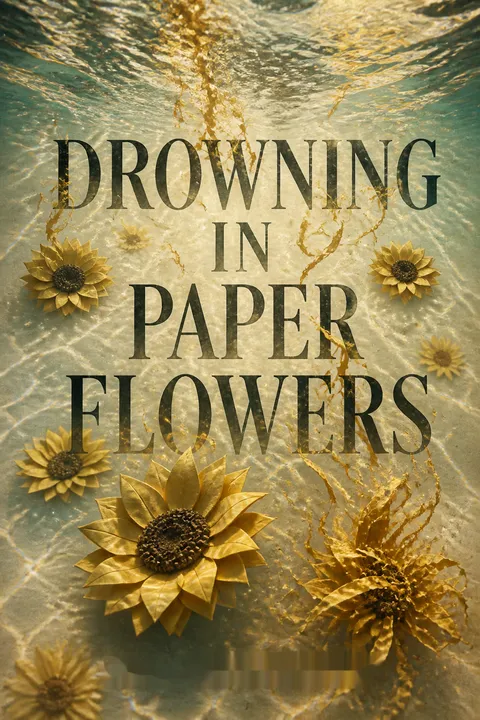
"Drowning in Paper Flowers" is a Southern gothic for the social media age—a recursive, multi-generation family drama where trauma is both inheritance and curse, clawing for release through every act of adult love or betrayal, every child's wound, every paper flower raining down in dreams and daylight. The novel refuses to settle for simple villains: all are wounded, even as their choices cascade in tidal waves of harm. Westbury's narrative highlights how easy it is for violence to dress in the manners of family, for neglect to pass as protection, and for love to be indistinguishable from self-destruction. Key takeaways include: the impossibility of escaping cycles of trauma without true confession; the seductive, destructive power of secrets (the urge to keep them and the violence it takes to maintain them); and the hope that even the deepest wounds can, barely, begin to heal when brought into the open air. Ultimately, the story is both cautionary and tender—a demonstration that while we inherit much, we can also, with pain and effort, choose not to pass it on. Living well—and living honestly, with the courage to name what has hurt us—is the only true revenge, the only real peace available to survivors, even if the flowers never stop falling completely
Review Summary
Drowning in Paper Flowers receives mixed reviews, averaging 4.15 stars. Many readers praise its multiple POVs, psychological tension, and shocking twists, with several finishing it in a single sitting. The mother-daughter relationship and emotional depth are frequently highlighted as strengths. However, critics cite overuse of similes and metaphors, excessive pop culture references, slow pacing in the middle, and an abrupt, rushed ending. Characters are described as unlikable, though some readers found that quality compelling. The disturbing subplot involving a young child committing murder proved divisive.
People Also Read



Characters
Ruby
Ruby (née Lily/Winona) is the emotional and narrative anchor: plagued by intergenerational trauma she can neither name nor smother, alternately victim and culprit in her own story. Her relationship with her children, especially Millie, is laced with guilt, miscommunication, and desperate hope. Marriage to Jack was once security; now it's prison. Her struggle with anxiety, addiction (pills and perfection), and guilt for both her childhood (unknown to herself as a child survivor of neglect, as later revealed) and her complicity in family tragedies make her unreliable, deeply empathetic, and flawed. She is both protector and destroyer—covering for her son's crime out of maternal love, even as she is ultimately forced to face, and confess, the ugliness at her story's core. Characterized by a fierce will to survive and to break the cycles handed down to her, Ruby's arc transforms her from passive victim into fierce, pragmatic defender, at whatever cost.
Jack
Jack, outwardly the embodiment of American success (business, family, community), is hollow inside. His affair with Ivy is less about genuine passion and more about feeding an ego starved by years of emotional neglect. He is an avoider—of Ruby's pain, of real connection, of his own failings as a husband and father. When pressed, he proves pitifully incapable of making difficult decisions, and when finally cornered by the consequences of his actions (murder, arrest), he is pathetic rather than villainous. As both father and husband, his greatest offense is absence—physically present, emotionally missing. His ultimate fate in prison is a final, fitting isolation for a man who has always been alone in a crowd.
Ivy
Ivy's role as dangerous mistress is complicated by gradually revealed survival from a neglected, degraded childhood and, ultimately, as Ruby's lost half-sister. Shaped by hunger—for love, money, status—and marked by her own abuse, Ivy's psychological drive is survival at any cost, even as her campaign to supplant Ruby as "the winner" in life is really a desperate bid to matter. Her psycho-emotional profile (cluster B traits, not unlike her mother) and history of manipulation are balanced by moments of real vulnerability and a longing to be seen, loved, and chosen. Her tragic end—murdered, covered up, and then used as the scapegoat for others' crimes—cements her as the story's most obvious scapegoat, yet perhaps also its most wretched victim.
Millie
Millie embodies the pain and rage of a teenager caught in the crossfire of adult mistakes, her loyalty bought by whichever parent gives her what she craves: validation, security, clear boundaries. Her fallouts (with friends, with Ruby) and her acts of violence are both rebellion and a plaintive cry for protection and love. Millie's journey is one of shattering—of trust, self-esteem, and identity (down to changing her name and family residence). Ultimately, she becomes a generational bridge, able to offer and receive forgiveness and more equipped to break, rather than recycle, her family's curses.
Mason
Mason, the youngest, is the story's most poignant vessel for generational pain: kidnapped, returned with a broken sense of self, manifesting cruelty learned at home and at school. His suffering is universally overlooked, mistaken for "sweetness" or "fragility," until his own act of violence (killing Ivy) is revealed. Mason's struggles with speech, relationships, and belonging make him both frightening (in his capacity for violence) and endlessly sympathetic—underlining the cost of adult sins on their most defenseless heirs. His healing, contingent on others' willingness to do the hard work, is left open, but hopeful.
Bobbi
Bobbi functions both as the archetypal "good mother"—the person who finally "saves" Ruby/Lily—and as the ultimate source of one of the book's central secrets, having kidnapped Ruby to rescue her from abuse and constructing an elaborate false identity to protect her. Her presence is soothing, practical, and forgiving, but is also shadowed by the willingness to commit and conceal a crime, perpetuate lies, and accidentally instigate violence (killing Ivy in self-defense). Bobbi's journey is one of complicated love, hemming sacrifice with secrecy, and ultimately pleading for understanding in the face of moral ambiguity.
Flynn
Flynn is Ruby's neighbor, co-conspirator, and only adult friend. Loud, direct, and often abrasive, she masks her own loneliness and sense of powerlessness (as the wife of a frequently absent, later revealed to be abusive, pilot). Her rivalry with Jack, defense of Ruby, and prickliness in the face of trauma position her as both necessary confidante and eventual casualty in the storm of secrets that destroy their friendship. Her son Jet, and her own marriage, mirror other family's struggles, showing the pervasiveness of dysfunction.
Lena
Lena's arc, as Millie's best friend, is a microcosm of the larger patterns: initial loyalty, betrayal, social scapegoating, trauma (sexual abuse at the hands of an authority figure), and ultimately, survivorhood. Her pregnancy, miscarriage, and social isolation reveal the multi-layered price the children pay for the duplicity and violence of the adult world. Her capacity to reconcile with Millie displays resilience and the potential for a new cycle of healing.
Jet
Jet, small and bullied, is the son of Flynn and provides a shadow version of Mason—bullied, accused, blamed, even as the system is later revealed to have misread the true cause of violence among the children. His suffering is a direct, warped echo of the adult world's harshness, reminding readers how easily the system can get it wrong.
Skye
Skye is the inciting "other woman" who upends Ruby's world early in the story, an exotic and polarizing substitute teacher who is, shockingly, revealed to be Ethan's wife—directly connecting her fate to Ruby's near-affair and the spiral that follows. She serves to remind the characters (and readers) that no family's destruction happens in a vacuum; every secret finds its way to light, often via the person least expected.
Plot Devices
Generational Trauma, Cyclical Patterns, and Foreshadowing
The novel's core engine is generational trauma—abuse, neglect, abandonment, violence—that is never truly vanquished but simply passes down in altered forms. The legacy of neglect (Ruby and Ivy's mother), the "rescue" that is itself a crime (Bobbi's kidnapping of Ruby), and the succession of betrayals, affairs, and cover-ups in the "present" all reflect this. Foreshadowing is everywhere: in the imagery of paper (and real) sunflowers, the repeated dreams of little-girl Ruby/Lily trapped and suffocating, the emergence of Mason's nightmares, and even the "innocent" schoolyard dramas. The refrain—flowers, ghosts, doors opened and shut—enacts trauma as both memory and curse. Each act of violence or betrayal echoes the ones before, culminating in the direct inheritance of guilt, shame, and the impossible longing for protection.
Shifting POV and Unreliable Narration
The narrative shifts across Ruby, Jack, Ivy, and occasionally Millie, providing fractured views of the same events. This structure withholds and reorders key revelations, reflecting the confusion and denial in the characters themselves, and manipulating the reader's sympathies: sometimes we believe it's Jack's fault, sometimes Ivy or Ruby's, until the truth—messy, shared, unresolvable—comes to the fore. Unreliable narrators, especially Ruby and Ivy, deploy memory and confession as both weapon and plea for forgiveness.
Physical Symbols: Sunflowers, Houses, Paper
Paper sunflowers are used throughout: as innocence turned threat, souvenirs of trauma, and finally as evidence of guilt and cover-up—at once comforting and horrifying. The house itself—first Stackville's trailer, later the palatial Powell home—stands as a physical repository for secrets, violence, and illusion; a "home" never quite real, always one catastrophe away from collapse. Letters, notes, and photos—whether as blackmail or confession—are the physical leavings of secrets that refuse to die.
Blackmail and False Accusation
Letters, secret photos, rumors, and public humiliation function as accelerants, driving characters to lie, betray, and self-destruct. Whether it's Ivy's attempt to usurp Ruby as Jack's lover, blackmail regarding sexual impropriety at the school, or Ruby protecting Mason by shifting suspicions fully onto Jack, all are fuelled by the fear of exposure and shame.
Cathartic Confession and Rule of Revenge
Ultimately, the narrative is a sequence of confessions—some forced, some chosen, most with a cost. Justice, where achieved, is delivered by the wronged party—not by the state or the police but as an act of personal retribution, usually with ambiguous morality. "Revenge is a dish best served cold" functions as both threat and solace for Ruby, as she outlives everyone else and claims happiness only after exacting her own "justice."
Download PDF
Download EPUB
.epub digital book format is ideal for reading ebooks on phones, tablets, and e-readers.








































