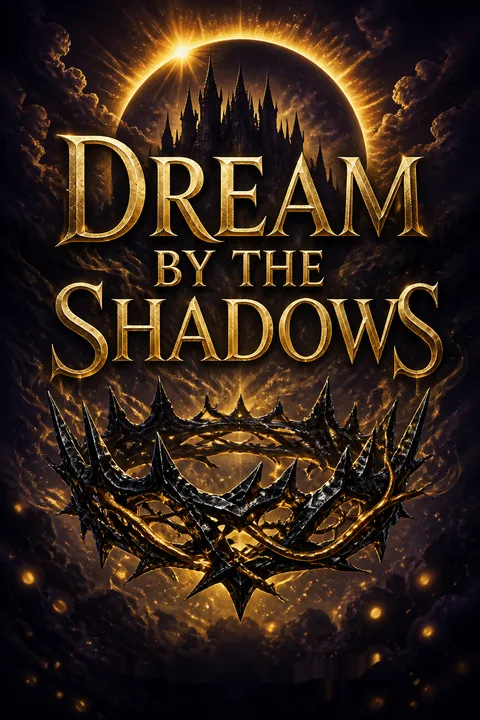

Plot Summary
Shadows and Sorrow
The story opens with a prologue of the Shadow Bringer, a monster cursed to darkness, and Esmer, a young woman whose life is shattered by the death of her sister, Eden. In a world where dreams are dangerous and Corruption claims souls, Esmer's family is marked by grief and suspicion. The village of Norhavellis is plagued by fear, and the shadow of the Dream Realm looms over every home. Esmer's pain is raw, her anger at the monster who took her sister palpable, and her family's love is the only fragile light in the encroaching dark.
The Price of Dreams
Esmer recalls how she and Eden once defied the rules, skipping the protective elixir to experience true dreams. What began as innocent escapism soon turned to horror, as Eden fell victim to Corruption. The elixir, meant to shield dreamers from demons, is a privilege few can afford. Esmer's guilt is overwhelming—her longing for adventure led to her sister's doom. The world's rules are clear: dreams are dangerous, and the cost of defiance is paid in blood and shadow.
Corruption's First Bite
Seven years after Eden's death, Esmer's family is still reeling. Corruption is spreading, and the village's trust in the family—Absolvers responsible for distributing elixir—is eroding. When a neighbor's son, Thomas, succumbs to Corruption and attacks Esmer and her brother Elliot, the violence is swift and brutal. Esmer is forced to defend her family, and Thomas is killed before he can be purified. The event fractures the village, and the line between victim and monster blurs.
A Village in Ruin
The aftermath of Thomas's death is chaos. The Radler family blames Esmer's father, Galen, for murder, and the Light Legion—enforcers of the kingdom's laws—arrive to investigate. The village is unraveling, suspicion and fear turning neighbor against neighbor. Esmer's family is accused of hoarding and diluting elixir, and the community's desperation is palpable. The world is one where survival means sacrifice, and even the innocent are not spared from suspicion.
The Light Bringer's Burden
Mithras, the Light Bringer, is introduced as a figure both revered and tormented. He senses the Corrupt as wounds in the world, and his power is as much a curse as a gift. The immortal Weaver Theia warns him of a coming change—a girl who will be both lock and key to the Shadow Bringer's fate. Mithras is haunted by the weight of his role, the kingdom's suffering, and the knowledge that the true enemy may not be as clear as legend claims.
Nightmares and Visions
Despite the elixir, Esmer is plagued by visions—of demons, of the Shadow Bringer's castle, of a world unraveling. The boundaries between dream and reality blur, and she is drawn ever closer to the darkness she fears. The village's supply of elixir is dwindling, and Esmer's family is forced to make impossible choices. The sense of impending doom is inescapable, and Esmer's resolve to confront the monster grows.
The Castle of Demons
Esmer's dreams lead her to the Shadow Bringer's castle—a place of beauty and horror, filled with imprisoned demons and haunted memories. She meets the Shadow Bringer himself, a figure both monstrous and tragic, and is caught in a web of power she does not understand. Their encounter is charged with suspicion, anger, and a strange, reluctant connection. The castle is a prison, and both its lord and his visitor are trapped by fate.
Betrayal in Norhavellis
The Light Legion arrests Esmer's parents, exposing their Corruption and the family's role in the village's suffering. The villagers, driven by fear and betrayal, turn violent. Esmer and Elliot are left alone, denied the protection of elixir, and forced to confront the reality that their family's sacrifices have damned them in the eyes of their community. The world is unforgiving, and the cost of survival is innocence lost.
Dreamer's Descent
Esmer's dreams become more vivid and dangerous, drawing her deeper into the Dream Realm. She faces demons, both literal and metaphorical, and is forced to confront her own fears and guilt. The Shadow Bringer's castle becomes both a sanctuary and a prison, and the line between enemy and ally begins to blur. Esmer's power grows, but so does the danger, and the fate of her soul—and her family's—hangs in the balance.
The Mob's Fury
The village, whipped into a frenzy by fear and loss, attacks Esmer's home. The Light Legion is overwhelmed, and the Corrupt—once neighbors and friends—become monsters. Esmer and Elliot are forced to flee, aided by two young legionnaires, Silas and Mila. The world outside is no safer, and the journey to the capital, Istralla, is fraught with peril. The dream of escape becomes a nightmare of survival.
The Shadow Bringer's Domain
In the Dream Realm, Esmer and the Shadow Bringer are bound together by a mysterious power. Their connection deepens as they confront demons, both within and without. The Shadow Bringer's past is one of betrayal, loss, and a curse that is not of his own making. Esmer's empathy and strength challenge his self-loathing, and together they begin to unravel the truth behind Corruption and the nature of monsters.
The Truth of Monsters
Esmer learns that the Shadow Bringer—once Erebus, a gifted dreamer—was not the origin of evil, but its victim. The true source of Corruption is a demon that has haunted both their families for generations, manipulating fate and feeding on despair. The legends are lies, and the real enemy is hidden in plain sight. The bond between Esmer and Erebus becomes a source of hope, and the possibility of redemption emerges from the shadows.
The Family's Confession
Esmer's parents confess to diluting the village's elixir to save their own children, dooming others in the process. The revelation is devastating, and Esmer is forced to confront the complexity of love, duty, and survival. The Light Legion's justice is swift and merciless, and Esmer's fate is sealed—she will be sent to the Tomb of the Devourer, the prison of the Shadow Bringer, to serve as a new guardian against the darkness.
The Legion's Judgment
The journey to the tomb is marked by suspicion, fear, and the growing realization that the Light Bringer's justice is not as pure as it seems. Esmer is judged not for her actions, but for her association with the Shadow Bringer and the power she wields. The Light Legion is divided, and the lines between good and evil, justice and vengeance, are blurred. Esmer's only hope lies in the truth she has uncovered—and the bond she shares with Erebus.
Bound for the Tomb
Esmer is sealed in the Tomb of the Devourer, physically and spiritually tethered to the Dream Realm. The Shadow Bringer's prison becomes her own, and the cycle of suffering threatens to repeat. But within the darkness, Esmer discovers her own strength—and the possibility of breaking the curse. The power of dreams, once a source of terror, becomes a weapon against the true enemy.
The Realm's Lure
The Dream Realm is seductive, offering beauty, power, and escape from pain. Esmer and Erebus are tested by visions of the past, the lure of oblivion, and the promise of freedom. Their connection deepens, and together they confront the memories and lies that have shaped their fates. The truth of the Weavers, the nature of the Dream Realm, and the origins of Corruption are revealed in fragments, each more unsettling than the last.
The Shadow Bringer's Past
Through a series of dreams and memories, Esmer witnesses Erebus's childhood—his gift for dreaming, his family's betrayal, and the demon that first claimed him. The Weavers, once protectors, become jailers, and Erebus's transformation into the Shadow Bringer is a tragedy of misunderstanding and fear. The true nature of the curse is revealed: it is not evil, but the loss of hope and the power of lies.
The Demon's Bargain
The demon that has haunted both Esmer and Erebus is confronted in a series of dream-visions. The battle is not just physical, but spiritual—a test of will, memory, and the power of light within darkness. Esmer's compassion and Erebus's strength combine to break the demon's hold, freeing the souls trapped within and revealing the true cost of Corruption. The cycle of suffering can be broken, but only through sacrifice and trust.
The Revel of Rebirth
In a grand ball at Citadel Evernight, Esmer and Erebus experience the heights of beauty, power, and possibility. The Weavers, the Light Bringer, and the dreamers of the Realm gather in celebration, but beneath the surface, betrayal and danger simmer. The origins of Corruption are revealed—a failed plan to lure and destroy the demons, twisted by Mithras's treachery. The dream becomes a nightmare, and the world is changed forever.
The Nocturne's Curse
The Nocturne, the heart of the Dream Realm, is corrupted by darkness. Erebus's attempt to purify it unleashes a horde of demons, and the Weavers turn on him, sealing him in the castle with the souls he tried to save. Esmer and Erebus, now united in purpose and power, confront the truth: the real enemy is not the monster in the dark, but the lies that keep hope from taking root. Together, they vow to fight for a new dawn.
The Breaking of Chains
With the curse broken and the truth revealed, the souls trapped as demons are freed. Erebus is no longer the Shadow Bringer, but a man redeemed by love and sacrifice. Esmer, too, is transformed—her power is no longer a curse, but a gift. The world is changed, but the battle is not over. The true enemy remains hidden, and the fight for hope and justice continues.
The Demon Within
In the epilogue, Mithras is revealed to be possessed by the very demon that has haunted Esmer and Erebus. The cycle of Corruption is not yet ended, and the struggle for the soul of the kingdom—and the Dream Realm—will continue. The story closes with a promise: the darkness can be overcome, but only if the dreamers refuse to surrender to despair.
Analysis
Dream by the Shadows is a dark, emotionally charged fantasy that interrogates the nature of evil, the cost of survival, and the possibility of redemption. At its core, the novel is a meditation on trauma—how it is inherited, misunderstood, and ultimately overcome. The world of Noctis is a mirror for our own: a place where fear breeds violence, where the powerful are both protectors and oppressors, and where the line between victim and monster is never clear. The story's use of dreams as both setting and metaphor allows for a nuanced exploration of memory, identity, and the struggle to reclaim agency in the face of overwhelming darkness. The novel's greatest lesson is that hope is not the absence of shadow, but the courage to find light within it. By refusing to surrender to despair, by forging connections across boundaries of fear and pain, the characters—and by extension, the reader—are invited to believe in the possibility of a new dawn.
Review Summary
Dream by the Shadows receives mixed reviews, averaging 3.49/5 stars. Readers praise its gothic atmosphere, unique dream-world concept, and Beauty and the Beast meets Inception vibes. Many appreciate the Shadow Bringer character and dark fantasy elements. However, common criticisms include overly complicated world-building, confusing execution, weak character development, and inconsistent pacing. The romance disappointed some as underdeveloped or rushed. Several reviewers struggled with the abstract dream sequences and found themselves confused despite an intriguing premise. The audiobook narration received positive mentions. Opinion splits between those captivated by the atmospheric storytelling and those frustrated by unclear plot mechanics.
People Also Read

Characters
Esmer Havenfall
Esmer is the protagonist, a young woman marked by loss, guilt, and a fierce determination to protect her family. Her relationship with her sister Eden's death is the catalyst for her journey, and her bond with her brother Elliot is a source of both vulnerability and strength. Esmer's psychological arc is one of self-forgiveness and transformation—she moves from anger and self-loathing to empathy and courage. Her connection to the Shadow Bringer is both literal and symbolic, as she learns to wield the power of darkness without being consumed by it. Esmer's journey is a meditation on the cost of survival, the complexity of love, and the possibility of redemption.
Erebus / The Shadow Bringer
Once a gifted dreamer named Erebus, the Shadow Bringer is a figure of myth and terror, blamed for unleashing Corruption on the world. In truth, he is a victim of betrayal—by the Weavers, by his family, and by fate. His psychological torment is profound: he is both jailer and prisoner, monster and man. His relationship with Esmer is transformative, awakening his capacity for hope and love. Erebus's arc is one of self-acceptance and the reclaiming of agency; he learns that his power is not inherently evil, and that the true enemy is the lie that monsters cannot be redeemed.
Mithras / The Light Bringer
Mithras is the kingdom's revered leader, tasked with purifying the Corrupt and maintaining order. Outwardly a figure of light and justice, he is inwardly tormented by the burden of his power and the secrets he keeps. His relationship with the Weavers and Erebus is fraught with betrayal and regret. As the story unfolds, it is revealed that Mithras is possessed by the very demon he claims to fight, making him both victim and villain. His psychological complexity lies in his struggle between duty and desire, and his ultimate role as both judge and judged.
Elliot Havenfall
Elliot is Esmer's younger brother, a child marked by vulnerability and resilience. His innocence is a counterpoint to the darkness of the world, and his suffering is a constant reminder of what is at stake. Elliot's dreams are both a source of danger and a key to understanding the true nature of Corruption. His relationship with Esmer is tender and fraught with the fear of loss. Elliot represents the possibility of a future untainted by despair.
Galen and Elena Havenfall
Esmer's parents are Absolvers, responsible for distributing elixir and protecting the village. Their love for their children leads them to make impossible choices, sacrificing the well-being of others to save their own. Their psychological arc is one of guilt, shame, and the desperate hope for forgiveness. Their confession is a turning point in the story, forcing Esmer to confront the complexity of love and the cost of survival.
Silas and Mila
Silas and Mila are young members of the Light Legion, tasked with enforcing the kingdom's laws and protecting the innocent. Their relationship with Esmer is one of uneasy alliance, marked by suspicion, empathy, and the shared trauma of violence. They represent the possibility of justice tempered by compassion, and their development mirrors Esmer's own journey from fear to understanding.
Somnus, Weaver of the Past
Somnus is one of the Seven Weavers, a figure of wisdom and ambiguity. He guides Esmer and Erebus through the Dream Realm, forcing them to confront their pasts and the truth behind Corruption. His motivations are complex—he is both mentor and manipulator, serving the Maker's will while pursuing his own agenda. Somnus's role is to challenge the characters' assumptions and to reveal the hidden connections between memory, identity, and fate.
Ceveon and Sorren
Ceveon and Sorren are Erebus's closest companions, transformed into demons and imprisoned in the castle for centuries. Their loyalty and sacrifice are a testament to the power of friendship and the tragedy of misunderstanding. Their eventual redemption is a symbol of hope—the possibility that even the most lost can be found.
The Demon (Red-Eyed)
The true antagonist of the story, the red-eyed demon is a force of chaos and despair, haunting both Esmer and Erebus across generations. Its power lies in its ability to twist dreams, feed on suffering, and possess the innocent. Psychologically, the demon represents the internalization of trauma and the danger of surrendering to despair. Its defeat is not just a physical battle, but a spiritual reckoning.
The Weavers (Fenrir, Nephthys, Ceres, Lelantos, Theia, Xander)
The Seven Weavers are the architects of the Dream Realm, each embodying an element or aspect of time. Their relationship to humanity is complex—they are both protectors and jailers, capable of great compassion and terrible judgment. Their failure to understand Erebus and their role in the origins of Corruption are central to the story's critique of power and tradition. The Weavers' development is a meditation on the limits of authority and the necessity of change.
Plot Devices
Duality of Light and Shadow
The narrative structure is built on the interplay between light and shadow, both literal and metaphorical. The Shadow Bringer and the Light Bringer are foils, each embodying aspects of power, guilt, and redemption. The use of dreams as both battleground and sanctuary allows for a fluid exploration of memory, trauma, and hope. Foreshadowing is woven throughout, with visions and prophecies hinting at the true nature of Corruption and the roles each character will play. The story's structure is cyclical—past and present mirror each other, and the breaking of the curse is both an ending and a beginning.
The Dream Realm as Mirror
The Dream Realm is not just a setting, but a living metaphor for the characters' internal struggles. Dreams are both dangerous and transformative, offering the possibility of escape, revelation, and healing. The boundaries between dream and reality are porous, and the characters' journeys through the Realm are as much about self-discovery as they are about defeating external threats. The use of dreams as a plot device allows for nonlinear storytelling, the revisiting of key memories, and the reimagining of fate.
The Corruption Cycle
Corruption is both a literal affliction and a symbol of the consequences of fear, lies, and the failure to understand. The cycle of Corruption is perpetuated by the refusal to confront the truth, and its breaking requires sacrifice, empathy, and the willingness to see monsters as victims. The revelation that demons are the trapped souls of the Corrupt is a powerful inversion of the story's central myth, forcing characters and readers alike to question the nature of evil.
Redemption Through Connection
The central relationship between Esmer and Erebus is the heart of the story. Their bond is forged in suffering, tested by betrayal, and ultimately becomes the means by which the curse is broken. The story's emotional arc is one of forgiveness—of self, of others, and of the world. The power of connection, both romantic and familial, is the antidote to despair and the key to transformation.
Download PDF
Download EPUB
.epub digital book format is ideal for reading ebooks on phones, tablets, and e-readers.








































