
Plot Summary
Midsummer's Night: Into the Driada
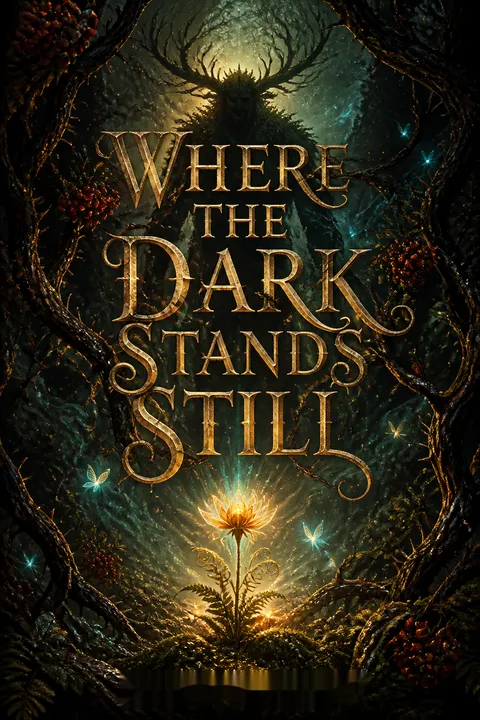
On the night of Kupała, Liska Radost flees her village, haunted by guilt and the threat of exile. She seeks the legendary fern flower in the forbidden Driada forest, hoping its magic will rid her of the dangerous powers that have made her an outcast. The Driada is a place of Slavic myth, alive with spirits and deadly illusions. Liska's journey is fraught with terror—she faces a predatory rusałka, trees with human eyes, and the ever-present sense of being watched. Yet, her determination to atone for her past and find belonging drives her deeper into the darkness, where she encounters a white stag who is not what he seems.
Bargain with the Antlered Demon
At the heart of the Driada, Liska finds the fern flower, but her triumph is short-lived. The white stag reveals himself as the Leszy, the ancient, antlered demon warden of the forest. He offers Liska a bargain: serve him for a year, and he will grant her wish. With no way home and her magic still a curse, Liska accepts, binding herself to the Leszy with a wooden fetter. The manor she enters is a decaying, enchanted place, full of secrets and haunted by the Leszy's rules—never leave the grounds, never enter the tower after dark. Liska's servitude begins, but so does her unraveling.
The House Under the Rowan Tree
Liska's new life is one of endless chores and eerie encounters. The manor is alive, its dust and shadows sentient, its rooms shifting. She is stalked by a red-eyed hound and plagued by nightmares. The Leszy is a capricious master, both cruel and oddly vulnerable, hiding behind his stag-skull mask. Liska's magic is broken, unreliable, and the Leszy's true intentions remain hidden. Yet, as she cleans and cooks, she begins to sense the loneliness at the heart of the house—and the demon who rules it.
Magic's Burden and Brokenness
The Leszy demands Liska use her magic, but she cannot control it. Her powers are a source of shame, tied to childhood trauma and the accidental deaths she caused. Through painful lessons and memories, Liska confronts the truth: her magic is not a gift, but a wound. The Leszy, too, is burdened—his duty as warden is endless, his body marked by scars and sap-blood. Their uneasy alliance deepens as Liska tends his wounds, and she glimpses the humanity beneath his monstrous exterior.
The Red-Eyed Hound's Warning
The red-eyed hound, Mrok, appears again and again, warning Liska to flee before "he wakes." The manor's house-spirit, Jaga, becomes her ally, helping her uncover a hidden library and the truth about the manor's past. Liska learns of Florian, the Leszy's lost apprentice and lover, and the string of vanished companions before her. The hound's grave in the garden reveals a legacy of sacrifice and betrayal, and Liska realizes she is not the first to bargain with the Leszy—nor, perhaps, the last.
Ghosts, Sacrifice, and Secrets
Liska's investigation leads her to the midnight library, where she discovers a letter from Florian and the memory of a love destroyed by the Driada's curse. With Jaga's help, she pieces together the pattern: every century, the Leszy must offer a magical soul to the old god Weles, or forfeit his own. The manor is a mausoleum of past sacrifices, and Liska's year of servitude is a countdown to her own death. The truth shatters her trust in the Leszy, even as their bond deepens.
The Apprentice and the Rusalka Boy
A mute orphan boy, Maksio, joins the household, soon revealed to be a young rusałka demon. Liska's compassion wins him over, and together with Jaga, they form an unlikely family. As Liska's magic returns, she becomes the Leszy's apprentice in truth, learning to wield her power and navigate the Driada's dangers. Yet, the threat of Weles grows, and the Leszy's secrets threaten to destroy them all. The manor, once a prison, becomes a place of belonging, but the cost of love and loyalty is ever-present.
The Old God's Awakening
Weles, the old god, begins to awaken, his influence corrupting the Driada and the Leszy's body. The demon's heart is revealed to be wood, a vessel for Weles's power. Liska's attempts to heal and save the Leszy only delay the inevitable. The village of Wałkowo is attacked by demons, and Liska's magic is the only thing that saves it—at great personal cost. The Leszy's time is running out, and the cycle of sacrifice looms.
Betrayal at the Heart's Root
Liska uncovers the final secret: the Leszy's bargain with Weles requires a magical sacrifice every hundred years, and she is the next intended victim. Betrayed and devastated, she flees, seeking solace with Kazimiera, the Leszy's former apprentice. The weight of history and the impossibility of forgiveness threaten to crush her, but the Driada's fate—and the fate of all its spirits—depends on her choice.
The Temple of Sacrifice
Guided by Florian's spirit, Liska witnesses the memories of the six previous sacrifices, each lured by the promise of the fern flower and betrayed by the Leszy. The ruined temple, Weles's shrine, is the site of every death. Liska learns the only way to break the curse is to destroy the temple and Weles's anchor, but doing so may cost her own life—or the Leszy's.
The Burning of Weles
Liska lures Weles into the Driada, using her magic and cunning to trap him at the temple. She sets the shrine ablaze, severing Weles's hold on the world. In the inferno, the Leszy is freed, but mortally wounded. He gives Liska his magic, making her the new warden, and dies in her arms—finally at peace, finally human.
The Warden's Last Gift
Liska buries the Leszy in a field of enchanted flowers, mourning the love and life they could have shared. The Driada, freed from Weles, transforms—its demons vanish, its spirits are at peace. Liska awakens in her childhood home, changed and hollowed by loss. The world is safe, but her heart is broken.
Grief, Endurance, and New Beginnings
Liska returns to the Driada, now its warden, joined by Maksio and Jaga. She opens the manor to other lost children, teaching them magic and offering the belonging she once sought. The memory of the Leszy lingers, a ghost in the woods, but Liska endures—her love, her pain, and her hope woven into the fabric of the spirit-wood. The cycle of sacrifice is broken, and a new story begins.
Analysis
Where the Dark Stands Still is a lush, emotionally charged reimagining of Slavic folklore, blending gothic romance, dark fantasy, and coming-of-age. At its heart, the novel interrogates the cost of survival—what we are willing to sacrifice for power, belonging, and love. Through Liska's journey, the story explores the trauma of being "othered," the generational wounds passed from mother to daughter, and the redemptive potential of chosen family. The Leszy's curse is both literal and metaphorical, a cycle of violence and secrecy that can only be broken by radical honesty, compassion, and self-acceptance. The narrative's use of memory, ghosts, and sentient settings externalizes the characters' psychological struggles, making the supernatural both a source of terror and a path to healing. Ultimately, the novel argues that endurance is not mere survival, but the courage to love, to grieve, and to begin again. Liska's final choice—to become the warden, to open her home to other lost children, to carry her grief and hope forward—offers a vision of resilience that is both deeply personal and universally resonant.
Review Summary
People Also Read

Characters
Liska Radost
Liska is a seventeen-year-old village girl marked by dangerous, uncontrollable magic. Traumatized by accidental deaths and her mother's coldness, she is desperate for redemption and a place to belong. Her journey into the Driada is both a flight from guilt and a quest for self-acceptance. Liska is fiercely compassionate, stubborn, and clever, but deeply wounded—her magic is both a curse and a key to her identity. Over the course of the story, she transforms from a self-loathing exile into a powerful, self-assured warden, learning to embrace her gifts and her capacity for love, even as she endures profound loss.
The Leszy (Eliasz Kowal)
The Leszy is the ancient, antlered demon who rules the Driada. Once human, he bargained his heart to the old god Weles for the power to protect Orlica from demons, binding himself to a cycle of sacrifice. Outwardly cruel, arrogant, and capricious, he is inwardly lonely, guilt-ridden, and desperate for connection. His relationship with Liska is fraught with manipulation and genuine affection—he intends to sacrifice her, but falls in love instead. The Leszy's development is a journey from monstrous self-preservation to selfless love, culminating in his ultimate sacrifice to free the Driada and Liska from Weles's curse.
Weles
Weles is the primordial demon who grants the Leszy his power in exchange for a magical sacrifice every century. He is cunning, manipulative, and insatiable, feeding on souls and sowing chaos. Weles is both a literal and symbolic parasite, representing the destructive bargains made for power and the generational cycles of violence. His awakening threatens not only the Driada but the entire human world, forcing Liska and the Leszy to confront the true cost of their choices.
Jaga
Jaga is the manor's skrzat, a shape-shifting house-spirit with a sharp tongue and a hidden past. Once a human girl betrayed by love, she lingers as a spirit, both comic relief and a source of wisdom. Jaga aids Liska in uncovering the manor's secrets and confronting the Leszy's history. Her presence is a reminder of the cost of forgotten women and the power of memory and closure.
Maksio
Maksio is a mute orphan boy who is revealed to be a young rusałka demon. Traumatized and lost, he finds acceptance and purpose with Liska, the Leszy, and Jaga. Maksio's journey mirrors Liska's—he is both monster and child, seeking belonging and redemption. His unique magic and loyalty are crucial in the final battle against Weles, and his presence cements the manor as a place of chosen family.
Florian
Florian is the Leszy's former apprentice and lover, sacrificed to Weles a century before Liska's arrival. His spirit, anchored to the red-eyed hound Mrok, guides Liska to the truth about the Leszy's bargain and the cycle of sacrifice. Florian embodies the tragedy of love destroyed by duty and the hope that the cycle can be broken.
Dobrawa Radost (Liska's mother)
Dobrawa is a village healer hardened by loss and fear. She loves Liska but cannot accept her magic, enforcing conformity and emotional distance. Her relationship with Liska is fraught with unspoken grief and the generational trauma of women forced to hide their power. Dobrawa's arc is one of reluctant acceptance and the painful limits of maternal protection.
Kazimiera
Kazimiera is the Leszy's former apprentice, now an aged, powerful witch. She offers Liska guidance, history, and a model of female strength. Kazimiera's own regrets and limitations highlight the loneliness of magical women and the importance of passing on knowledge and hope.
Father Paweł
Father Paweł is the village priest, torn between faith and compassion. He knows Liska's secret and struggles to reconcile doctrine with the reality of magic. Ultimately, he aids in the exorcism of Weles, representing the possibility of reconciliation between old and new beliefs.
Marysieńka
Marysieńka is Liska's childhood friend and cousin, whose marriage and subsequent tragedy catalyze Liska's exile. Her journey from victim to survivor mirrors Liska's, and their reconciliation is a testament to the endurance of love and the possibility of healing.
Plot Devices
The Bargain and the Cycle of Sacrifice
The central plot device is the Leszy's bargain with Weles: every hundred years, he must sacrifice a magical soul or forfeit his own. This cycle drives the narrative, creating tension, foreshadowing, and a ticking clock. The pattern of vanished companions, the haunted manor, and the recurring motif of the fern flower all serve as clues to the true nature of the curse. The device explores themes of generational trauma, the cost of power, and the ethics of survival.
The Living Manor and Sentient Forest
The House Under the Rowan Tree and the Driada itself are alive, shifting, and responsive to Liska's emotions and choices. The manor's hidden doors, sentient dust, and magical library are both plot mechanisms and symbols of memory, trauma, and the possibility of change. The forest's spirits, both monstrous and benign, externalize Liska's internal struggles and the legacy of Slavic folklore.
Memory, Ghosts, and the In-Between
The narrative is structured around memories—Liska's traumatic past, the ghosts of the manor, and the literal memories embedded in objects and places. Ghosts like Florian and Jaga are both plot catalysts and embodiments of unresolved grief. The in-between, the realm of spirits and magic, is both a source of danger and a space for transformation, allowing Liska to confront the past and rewrite her future.
Twin Souls and Found Family
The concept of twin souls—two people whose magic and fate are intertwined—serves as both a romantic and metaphysical plot device. Liska and the Leszy's bond is the key to breaking the curse, but it is also a meditation on chosen family, belonging, and the healing power of love. The found family of Liska, Maksio, and Jaga is a counterpoint to the cycles of sacrifice and loss, offering hope and continuity.
Foreshadowing and Narrative Structure
The story is structured as a series of mysteries—each chapter reveals a new layer of the manor's history, the Leszy's secrets, and Liska's own trauma. Foreshadowing is woven through folklore, dreams, and the warnings of spirits. The emotional arc is one of descent into darkness, confrontation with the self, and emergence into a new, hard-won light.
Download PDF
Download EPUB
.epub digital book format is ideal for reading ebooks on phones, tablets, and e-readers.








































