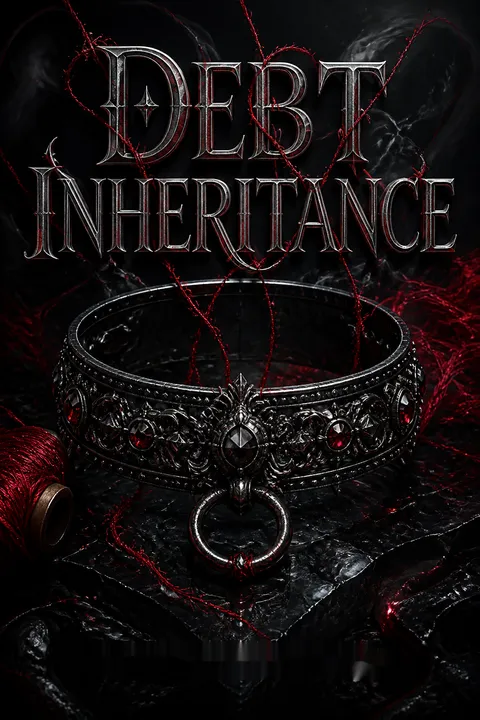

Summary Temporarily Unavailable
This summary is temporarily unavailable and is currently being updated. You can still explore the FAQs and other metadata below.
Plot Summary
Threads and Shadows
Nila Weaver, a talented but sheltered fashion designer, stands on the brink of her greatest professional triumph. Raised by a loving but overprotective father and a charismatic twin brother, Nila's life is defined by family, tradition, and the legacy of the Weaver name. Yet beneath the glamour of her fashion show, she is haunted by a sense of unease and a secret flirtation with a mysterious stranger, Kite007, whose messages both thrill and unsettle her. The night of her show, her father introduces her to Jethro Hawk—a man whose presence is as chilling as it is magnetic. In a moment that feels both fated and surreal, Nila is handed over to Jethro, her life abruptly shifting from celebration to captivity, as the shadows of a centuries-old debt begin to close in.
The Debt Revealed
Jethro Hawk, cold and enigmatic, reveals the truth: the Weaver family is bound by a six-hundred-year-old debt to the Hawks, a debt that demands the firstborn Weaver daughter as payment. Nila is not just a woman—she is property, a living IOU inherited by Jethro on his twenty-ninth birthday. The debt is not financial, but one of blood, pain, and submission, rooted in a dark pact made generations ago. Nila's father, powerless and broken by the weight of history, surrenders her to Jethro, who claims her with chilling authority. The rules are simple: Nila must obey, or her family will suffer. The world she knew collapses, replaced by a nightmare of ancient obligations and predatory power.
A Stranger's Claim
Nila is swept away from her family and the familiar world of fashion into Jethro's cold, controlled orbit. He is both captor and judge, enforcing the rules of the debt with a terrifying blend of civility and threat. Nila's attempts at resistance are met with calculated dominance; her pleas for understanding are dismissed. The Hawks' power is absolute, their reach extending into every corner of her life. Even her secret connection to Kite007 offers no escape—her messages become a lifeline, a desperate attempt to hold onto her identity as she is stripped of autonomy and dignity. Jethro's intentions are clear: he will break her, body and soul, to satisfy the debt.
The Night of Surrender
In a harrowing sequence, Nila is forced to comply with Jethro's commands, her will eroded by threats against her family and the relentless pressure of captivity. She is paraded, humiliated, and ultimately drugged, her resistance rendered futile. The journey from Milan to the Hawk estate is a blur of fear and helplessness, punctuated by moments of calculated cruelty and psychological manipulation. Jethro's family—his sadistic father Cut, his volatile brother Daniel, and the enigmatic Kestrel—loom as both tormentors and witnesses. Nila's world narrows to survival, her sense of self battered by the realization that her life is no longer her own.
The Predator's Game
At Hawksridge Hall, Nila is subjected to a regime of discipline and degradation. The estate is a gilded prison, its beauty masking the brutality of its purpose. Jethro alternates between icy detachment and predatory intimacy, using silence, touch, and calculated violence to erode Nila's defenses. The rules are strict: no questions, no defiance, no privacy. Every act of rebellion is met with punishment, every plea for mercy with cold logic. Nila's only solace comes from fleeting moments of connection—with the estate's animals, with memories of her family, and with the distant, anonymous Kite007. Yet even these are tainted by the knowledge that escape is impossible.
The Price of Freedom
Jethro offers Nila a single chance at freedom: a hunt. If she can escape the estate's vast grounds before he catches her, the debt will be forgiven, and her family spared. The offer is both hope and torment, a game designed to break her spirit. Nila, desperate and determined, seizes the opportunity, running for her life through the tangled woods and manicured traps of Hawksridge. The hunt is a test of endurance, cunning, and will—a final, brutal assertion of Jethro's dominance. As the minutes tick away, Nila's hope flickers, fueled by the memory of her mother's fate and the love she still holds for her brother and father.
The Collar and the Cage
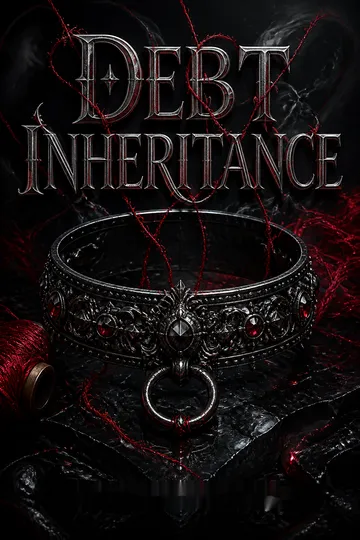
The hunt ends in failure; Jethro captures Nila, sealing her fate with a diamond-studded collar—the Weaver Wailer, a symbol of her family's bondage and her own impending doom. The collar is both ornament and shackle, a constant reminder of the debt's inescapable grip. Nila is paraded before the Hawk family and their inner circle, forced to serve and be shamed in elaborate rituals that blend aristocratic ceremony with sadistic spectacle. Each act of submission is a payment, each humiliation a step closer to the debt's final reckoning. Nila's sense of self fractures, her resistance battered by the relentless machinery of Hawk tradition.
The Taste of Power
Amidst the cruelty, a dangerous chemistry ignites between Nila and Jethro. Their encounters oscillate between violence and intimacy, pain and pleasure. Jethro's control is absolute, yet Nila discovers a perverse power in her own submission—a way to survive, to manipulate, even to seduce. The boundaries between captor and captive blur, their interactions charged with forbidden attraction and mutual loathing. Nila's body betrays her, responding to Jethro's touch even as her mind recoils. The taste of power is intoxicating, addictive, and ultimately destructive, binding them together in a dance of dominance and surrender.
The Family's Bargain
The Hawks convene a formal gathering, a grotesque banquet where Nila is both servant and offering. She is forced to endure the touch and gaze of the Hawk men, each act a symbolic payment for her ancestor's crime. The ritual is steeped in history and cruelty, its rules enforced with merciless precision. Nila's humiliation is total, her body and dignity auctioned as tokens of Hawk supremacy. Yet even in the depths of shame, she clings to fragments of defiance, seeking meaning in the fragments of the original debt contract and the whispered stories of her mother's fate.
The Ritual of Shame
Nila's ordeal reaches its nadir as she is paraded, fondled, and tasted by the Hawk men in a ritualized display of dominance. Each touch is a reminder of her powerlessness, each command a test of her obedience. The ritual is both spectacle and warning—a demonstration of what happens to those who defy the Hawks. Nila's mind retreats, seeking refuge in numbness and dissociation. Yet even as her body is violated, her spirit refuses to break completely. The shame is overwhelming, but it is also a crucible, forging a new, harder self from the ashes of her old life.
The Breaking Point
In the aftermath of the ritual, Nila is left raw and exposed, her sense of self shattered by pain and humiliation. Yet in the depths of despair, she discovers a new kind of strength—a cold, defiant resolve to survive, to endure, and, if possible, to fight back. The Hawks' cruelty has stripped her of innocence, but it has also awakened a latent ferocity. Nila vows to become the predator, not the prey, to use whatever tools remain—her body, her mind, her will—to outlast her captors. The breaking point is not the end, but the beginning of a new, more dangerous game.
The Hunter's Offer
Jethro, sensing both victory and the stirrings of rebellion, offers Nila one last chance: another hunt, another opportunity for freedom. The terms are simple and brutal—if she can escape, she wins her life and her family's safety; if she fails, she will submit utterly, body and soul, to the Hawks' will. The offer is both mercy and mockery, a test of Nila's resolve and Jethro's control. The estate becomes a battleground, the woods a labyrinth of hope and despair. Nila runs, not just for herself, but for every Weaver woman who came before her, every victim of the debt.
The Run for Life
The hunt is a crucible, stripping away the last vestiges of Nila's old self. She runs through the estate's forests, pursued by Jethro and the ever-present threat of Hawk retribution. Every step is a battle against exhaustion, fear, and the weight of history. Memories of her mother's warnings and her own shattered innocence drive her forward, even as the odds grow longer. The estate is a maze, its boundaries patrolled and its secrets guarded. Nila's hope flickers, sustained by the thought of freedom and the possibility of breaking the cycle of violence and submission.
The Trap Closes
The hunt ends as it must: Nila is captured, her last hope extinguished. Jethro's triumph is both personal and symbolic—a reaffirmation of Hawk dominance and Weaver subjugation. The consequences are immediate and brutal: Nila is stripped of even the illusion of autonomy, her fate now entirely in Jethro's hands. The collar tightens, the rituals resume, and the debt's final payment looms. Yet even in defeat, Nila refuses to surrender completely. The fire kindled by her ordeal burns on, a silent promise of resistance and revenge.
The Cost of Survival
Nila learns to navigate the treacherous currents of Hawk power, using submission as both shield and weapon. She endures, adapts, and even manipulates, seeking moments of agency within the strict confines of her captivity. The relationship with Jethro becomes more complex, fraught with danger and dark intimacy. Each act of obedience is a calculated risk, each moment of pleasure a potential betrayal. Survival demands compromise, cunning, and the willingness to become something new—something harder, colder, and more dangerous than she ever imagined.
The Last Gasp of Hope
In the final reckoning, Nila stands transformed—no longer the sheltered daughter, but a survivor forged in the crucible of pain and power. The debt remains unpaid, the future uncertain, but the terms of the game have changed. Nila is no longer merely a victim; she is a player, a force to be reckoned with. The Hawks have not broken her—they have made her dangerous. As the story closes, the cycle of violence and submission continues, but with a new, unpredictable element: the indomitable will of a woman who has learned to fight, to endure, and, perhaps, to win.
Analysis
Debt Inheritance is a dark, unflinching exploration of power, trauma, and the legacy of violence. At its core, the novel interrogates the ways in which history, tradition, and family can become instruments of oppression, binding individuals to roles and fates not of their choosing. The debt is both literal and metaphorical—a symbol of the burdens we inherit, the cycles of abuse and submission that perpetuate themselves across generations. Nila's journey is one of transformation through suffering: stripped of agency, dignity, and hope, she is forced to confront the darkest parts of herself and her captors. Yet the novel resists simple victimhood, instead charting a path toward survival, adaptation, and even resistance. The relationship between Nila and Jethro is fraught with ambiguity, desire, and mutual destruction—a microcosm of the larger dynamics at play. In a modern context, Debt Inheritance serves as a meditation on consent, autonomy, and the corrosive effects of unchecked power. It challenges readers to consider the costs of survival, the meaning of freedom, and the possibility of breaking cycles of violence. The story's lessons are both cautionary and empowering: even in the face of overwhelming darkness, the will to endure, to fight, and to reclaim one's self can become a form of rebellion—a spark of hope in a world built on shadows.
Last updated:
Report IssueReview Summary
Debt Inheritance receives mixed reviews, with ratings ranging from 1 to 5 stars. Many readers find the dark, twisted story captivating, praising Pepper Winters' writing and character development. The book follows Nila Weaver, who must pay a centuries-old debt to Jethro Hawk. Readers are intrigued by the complex plot and intense characters, though some find the premise implausible. Critics cite excessive cruelty and lack of romance. The cliffhanger ending leaves readers eagerly anticipating the next installment, despite some frustration with unanswered questions.
People Also Read
Characters
Nila Weaver
Nila is a gifted fashion designer, defined by her creativity, sensitivity, and the weight of her family's legacy. Raised in a cocoon of love and protection by her father and twin brother, she is both naive and fiercely loyal. The trauma of her mother's abandonment and her own isolation have left her vulnerable, yet also resilient. As she is thrust into the Hawks' world, Nila's psyche fractures and reforms—her innocence stripped away, replaced by a cold, calculating will to survive. Her journey is one of transformation: from prey to predator, from victim to survivor. Her relationship with Jethro is a crucible of pain, desire, and defiance, forcing her to confront the darkest parts of herself and the world.
Jethro Hawk
Jethro is the embodiment of Hawk power: cold, controlled, and ruthlessly intelligent. Raised to enforce the family's ancient code, he is both victim and perpetrator, bound by duty and haunted by the violence of his lineage. His interactions with Nila are a study in dominance and vulnerability—he seeks to break her, yet is drawn to her strength and spirit. Jethro's psyche is a battleground of conflicting impulses: the need for control, the thrill of the hunt, and the stirrings of forbidden desire. His development is marked by moments of doubt, flashes of humanity, and the ever-present threat of succumbing to the darkness within.
Cut (Bryan Hawk)
Cut is the head of the Hawk family, a man whose charm masks a core of sadism and absolute authority. He is the enforcer of tradition, the keeper of the debt, and the orchestrator of Nila's torment. Cut's relationship with his sons is defined by manipulation and competition; his treatment of Nila is a blend of calculated cruelty and ritualized dominance. He is both judge and executioner, his actions driven by a belief in the righteousness of Hawk supremacy. Cut's psyche is devoid of empathy, his only loyalty to the family's legacy and the perpetuation of its power.
Daniel Hawk
Daniel, Jethro's younger brother, is impulsive, violent, and eager to prove himself within the Hawk hierarchy. His interactions with Nila are marked by aggression and a desire to assert dominance, both over her and his brother. Daniel's rivalry with Jethro is a source of tension and danger, his unpredictability adding a layer of threat to Nila's captivity. He is less controlled than Jethro, more prone to outbursts and cruelty, yet also driven by a need for approval and recognition within the family.
Kestrel Hawk
Kestrel, another Hawk brother, is quieter and more introspective than Daniel, his presence marked by a subtle intelligence and a hint of empathy. He watches the unfolding drama with a detachment that borders on complicity, occasionally offering Nila small mercies or cryptic advice. Kestrel's role is that of the observer, the one who sees but rarely intervenes, his motivations and loyalties ambiguous. He represents the possibility of another path—a reminder that not all Hawks are entirely lost to cruelty.
Vaughn Weaver
Vaughn is Nila's twin brother, her closest confidant and fiercest protector. His love for Nila is both a source of strength and vulnerability, driving him to challenge the Hawks and risk his own safety. Vaughn's psyche is marked by guilt, anger, and a desperate need to save his sister. He is the embodiment of the life Nila has lost, a reminder of family, love, and the possibility of redemption. His development is shaped by the limits of his power and the pain of helplessness.
Archibald (Tex) Weaver
Tex is Nila's father, a man crushed by the weight of the Weaver legacy and his own failures. His love for Nila is genuine, but his inability to protect her is a source of profound guilt and self-loathing. Tex's psyche is haunted by the memory of his wife's fate and the knowledge that he has condemned his daughter to the same. He is both victim and accomplice, his actions driven by fear, resignation, and a desperate hope for forgiveness.
Cut's Inner Circle (The Diamond Brotherhood)
The men of the Diamond Brotherhood are the instruments of Hawk power, each playing a role in the enforcement of the debt and the ritualized humiliation of Nila. They are a collective force, their individual personalities subsumed by the demands of tradition and loyalty. Their actions are marked by a blend of civility and brutality, their presence a constant reminder of the inescapability of Nila's fate.
Kite007
Kite007 is Nila's secret correspondent, a stranger whose messages offer both comfort and danger. Their relationship is built on anonymity, flirtation, and the illusion of safety—a lifeline that becomes increasingly fraught as Nila's captivity deepens. Kite007 represents the possibility of escape, the hope of connection, and the ever-present risk of betrayal. The true nature of his identity and intentions remains a source of tension and uncertainty.
Emma Weaver
Emma's absence haunts Nila, her fate a cautionary tale and a source of unresolved grief. Her warnings about the debt, her attempts to shield her daughter, and her ultimate disappearance shape Nila's understanding of her own predicament. Emma is both victim and martyr, her legacy a mixture of love, sacrifice, and tragedy.
Plot Devices
Generational Debt and Ritualized Power
The central plot device is the ancient debt binding the Weavers to the Hawks—a literal contract, signed in blood and sanctioned by royal authority, that demands the firstborn Weaver daughter as payment. This device serves as both backstory and engine, driving every action, relationship, and ritual in the novel. The debt is not just a legal or financial obligation, but a system of ritualized violence, humiliation, and submission, enforced through elaborate ceremonies and the ever-present threat of retribution. The narrative structure alternates between Nila's perspective and Jethro's, using dual narration to explore the psychological impact of captivity and dominance. Foreshadowing is employed through references to Nila's mother, the symbolism of the collar, and the recurring motif of the hunt. The estate itself functions as a character—a labyrinthine prison designed to break the will of its inhabitants. The use of anonymous communication (Kite007) adds a layer of suspense and ambiguity, blurring the lines between hope and danger. The story's progression is marked by escalating tests, bargains, and reversals, each tightening the noose of the debt and deepening the psychological complexity of the characters.
Indebted Series
About the Author
Pepper Winters is a prolific and successful author known for her dark romance novels. She has published thirty books in nine languages, consistently hitting bestseller lists such as New York Times, Wall Street Journal, and USA Today. Winters has earned recognition for her work in various genres, including Dark Romance, BDSM, and Coming of Age. She transitioned to full-time writing and has achieved numerous accolades, including awards for best Dark Romance, best BDSM Series, and best Hero. Winters is a hybrid author, publishing both traditionally and independently. Her books have been translated into several languages and have garnered international interest. She actively engages with her readers through social media and her website.
Other books by Pepper Winters


Download PDF
Download EPUB
.epub digital book format is ideal for reading ebooks on phones, tablets, and e-readers.








































