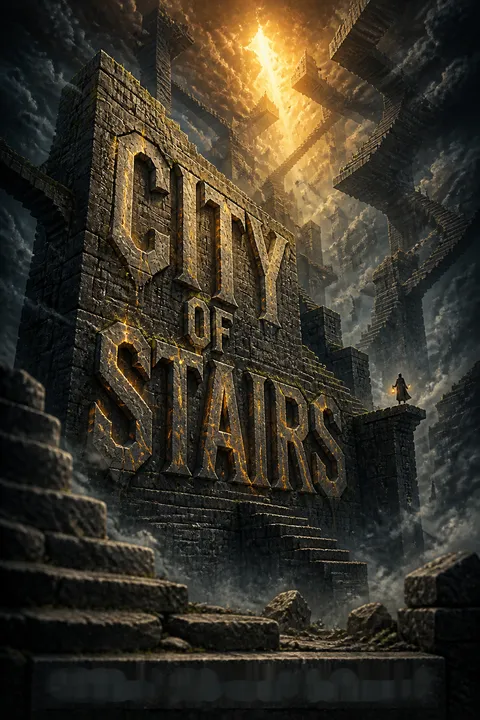

Plot Summary
A City of Ashes
Once the seat of the world, Bulikov is now a city of ruins, its glory shattered by the defeat of its gods. The city's people, once powerful, now live under the rule of Saypur, the former colony that overthrew them. The streets are lined with reminders of the past—empty shrines, broken statues, and the ever-present, miraculous city walls that still defy the laws of nature. The city's wounds are not just physical but spiritual, as its history and faith have been outlawed, leaving its citizens adrift and resentful. Into this tense, divided city, the story begins, with the air thick with the memory of miracles and the bitterness of defeat.
The Murdered Historian
The fragile order of Bulikov is broken when Dr. Efrem Pangyui, a Saypuri historian, is found brutally murdered. His death is more than a crime—it is a political earthquake, threatening to unravel the delicate balance between conqueror and conquered. The murder exposes the deep resentments simmering beneath the surface, as the people of Bulikov see the historian's research as an affront to their forbidden past. The authorities scramble to respond, fearing both Saypuri retribution and local unrest. The murder is a catalyst, drawing the attention of powerful forces and setting the stage for a confrontation with the city's buried secrets.
Arrival of the Spy
Shara Komayd, a brilliant Saypuri operative, arrives in Bulikov under the guise of a cultural ambassador. Accompanied by her enigmatic Dreyling "secretary," Sigrud, she is tasked with investigating Pangyui's murder. Shara is both scholar and spy, her mind as sharp as her sense of duty. She quickly senses the city's hostility and the layers of deception that cloak its politics. Her presence unsettles both the Saypuri authorities and the local elite, who see in her a threat to their fragile autonomy. As Shara begins her investigation, she realizes that Pangyui's death is only the first clue in a much larger, more dangerous puzzle.
The Divine Remnants
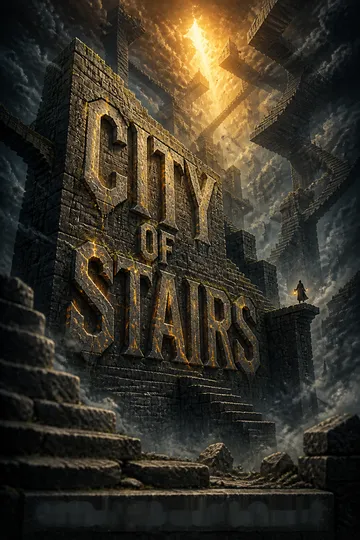
Despite the gods' deaths, their miracles persist in Bulikov—walls that show the sky, stairs that lead nowhere, and the city's very bones shaped by Divine will. The Worldly Regulations forbid any mention of the Divine, but the city remembers. Shara's investigation reveals that the past is not as dead as Saypur would like to believe. She encounters forbidden artifacts, secret worship, and the lingering effects of miracles that defy explanation. The city's reality is unstable, haunted by the memory of gods, and Shara begins to suspect that the Divine may not be entirely gone.
The Unmentionable Warehouse
Shara uncovers the existence of the Unmentionable Warehouse, a secret Saypuri facility where thousands of miraculous items are stored. The Warehouse is a Pandora's box, filled with relics too dangerous to destroy or use. Pangyui had been granted access to its archives, seeking to understand the true nature of the Divine and the history of the Continent. But someone else has been there too—someone who has stolen something powerful. The Warehouse becomes the focal point of Shara's investigation, a place where the past and present collide, and where the seeds of disaster are sown.
The Past Awakens
As Shara delves deeper, she discovers that the Restorationists—a radical group seeking to revive Bulikov's glory—have infiltrated the city's institutions. They have learned to exploit the city's reality-warping scars, using forbidden miracles and the lingering effects of the Blink to move unseen and plot rebellion. Shara's pursuit leads her through hidden doors and alternate realities, revealing a city within a city: Old Bulikov, preserved in a pocket of time. The Restorationists' leader, Volka Votrov, is revealed to be a fanatic with a direct connection to the Divine, and his plans threaten to unleash chaos on both Bulikov and Saypur.
The Restorationist Plot
The Restorationists' true aim is revealed: they seek to free Kolkan, the god of judgment, from his ancient prison beneath the city. Using stolen miracles, Kolkashtani relics, and the knowledge gleaned from Pangyui's research, they have built an armada of steel warships, powered by a flying carpet of legend. Their plan is to launch a devastating attack on Saypur, using Divine power and modern weaponry to reclaim their lost supremacy. Shara races against time to stop them, but the Restorationists are always one step ahead, their fanaticism fueled by centuries of humiliation and loss.
The Secret of Old Bulikov
Shara and Sigrud discover Old Bulikov, a fragment of the city preserved in a reality bubble, accessible only through the scars left by the Blink. Here, the miracles of the Divine still function, and the city's lost splendor is revealed. The Restorationists use this hidden city as their base, assembling their fleet and preparing for war. Shara realizes that the boundaries between realities are thin, and that the past can return with terrifying force. The discovery of Old Bulikov is both a revelation and a warning: history cannot be buried, and the consequences of forgetting are dire.
The Hidden Warships
The Restorationists' fleet of steel warships, powered by the Carpet of Kolkan, takes to the air. Their plan is audacious: to strike at Saypur from above, bypassing all defenses and raining destruction on the heart of their enemy. Sigrud, ever the warrior, infiltrates the fleet and turns their own weapons against them, destroying the armada in a spectacular battle. But the threat is not over—the true danger lies beneath the city, where the Restorationists prepare to unleash Kolkan himself.
The God Returns
Volka Votrov succeeds in breaking the prison of Kolkan, unleashing the god of judgment upon Bulikov. But Kolkan is not alone—he is fused with Jukov, the trickster god, in a monstrous, tormented form. The Divinity's return warps reality, resurrecting Old Bulikov and unleashing an army of invincible soldiers upon the city. The people are judged and punished according to ancient, arbitrary edicts, and chaos reigns. Shara and Vohannes are caught in the heart of the storm, forced to confront the living god and the legacy of their own histories.
The Battle for Bulikov
As Kolkan's army marches through the streets, Shara and Mulaghesh rally the defenders of Bulikov. Using a combination of modern weaponry and forbidden miracles, they fight a desperate battle against the Divine soldiers. Shara, risking her sanity and life, uses philosopher's stones to channel the power of miracles, holding back the tide long enough for Sigrud to return with the captured warship. In a final, cataclysmic confrontation, the city's past and present collide, and the fate of Bulikov hangs in the balance.
The Truth of the Kaj
In the aftermath, Shara uncovers the final secret: the Kaj, Saypur's legendary liberator, was himself the child of a Divine—one of the Blessed, born of Jukov's daughter. The weapon that killed the gods was forged through torture and betrayal, a miracle born of suffering. The truth shatters the myths of both Saypur and the Continent, revealing that their histories are intertwined, their hatreds rooted in shared pain. Shara is forced to confront her own identity, her family's legacy, and the cost of victory.
The Last Divinity
In the quiet after the storm, Shara is visited by Olvos, the last surviving Divinity. Olvos reveals the true nature of the gods: they were shaped by the beliefs and desires of their people, as much prisoners as rulers. The cycle of power, pain, and forgetting is endless, unless someone chooses to break it. Olvos urges Shara to remember, to speak the truth, and to build a new world on honesty rather than myth. The meeting is both a benediction and a challenge, a passing of the torch from the Divine to the mortal.
The Price of Survival
The city mourns its dead and begins the long work of rebuilding. Shara, haunted by the cost of victory, must decide what kind of future she will help create. Mulaghesh, wounded but unbowed, becomes her ally in the new order. Sigrud, battered but alive, is offered a chance at redemption and homecoming. The survivors are left to grapple with the consequences of their choices, the weight of history, and the hope of something better.
A New World Dawns
Shara returns to Saypur, armed with the knowledge of the past and the determination to change the future. She confronts the old order, demanding honesty, reconciliation, and the end of the policies that kept the Continent in chains. The truth of the Kaj, the gods, and the intertwined fates of Saypur and Bulikov is revealed. The world stands on the brink of a new age—one where memory is not a weapon, but a guide, and where the mistakes of the past are not forgotten, but learned from. The story ends with the promise of a new beginning, and the hope that, this time, the world will choose better.
Analysis
City of Stairs is a profound meditation on the power of history, the dangers of forgetting, and the cycles of pain that shape nations and individuals. At its heart, the novel asks what it means to inherit a legacy built on both glory and atrocity, and whether it is possible to break free from the patterns of the past. The gods, once all-powerful, are revealed to be as much prisoners of belief as their followers, their miracles lingering as wounds that refuse to heal. The story's central mystery—the murder of a historian—becomes a metaphor for the erasure and manipulation of memory, and the violence that results when truth is suppressed. Through Shara's journey, the novel explores the costs of victory, the necessity of honesty, and the hope of reconciliation. The ultimate lesson is that history cannot be buried or controlled; it must be faced, understood, and spoken, if a better world is to be built. In a time when the politics of memory and identity are as fraught as ever, City of Stairs offers a powerful reminder that the future depends on how we choose to remember—and what we choose to do with that knowledge.
Review Summary
City of Stairs receives widespread acclaim for its exceptional world-building, blending fantasy, mystery, and political intrigue in a Russian and Indian-inspired setting. Reviewers praise the complex characters, particularly Shara, Sigrud, and Mulaghesh, and appreciate the sophisticated exploration of religion, colonialism, and oppression. The magic system and mythology receive particular praise. While some readers found the pacing slow initially and struggled with character connection, most consider it refreshingly original, thought-provoking, and genre-defying. The prose is described as elegant and quotable, with meaningful philosophical depth throughout.
People Also Read



Characters
Shara Komayd
Shara is a Saypuri operative of rare intellect and deep empathy, torn between her love of history and her duty to her nation. As the great-granddaughter of the Kaj, she carries the weight of her family's legacy, but her true strength lies in her curiosity and compassion. Shara's journey is one of self-discovery, as she confronts the lies at the heart of her world and chooses to build something better. Her relationships—with Sigrud, Mulaghesh, and Vohannes—reveal her vulnerability and her capacity for love, even as she is forced to make impossible choices. Shara's arc is one of transformation, from agent of the state to architect of a new future.
Sigrud je Harkvaldsson
Sigrud is a Dreyling giant, haunted by loss and hardened by suffering. Once a prince, now a fugitive, he is Shara's protector and confidant, his violence tempered by a deep, unspoken loyalty. Sigrud's past is marked by tragedy—imprisonment, the loss of his family, and the destruction of his homeland—but he finds purpose in service and friendship. His battles are both physical and psychological, as he struggles with guilt and the search for redemption. Sigrud's journey is one of survival, resilience, and the hope of returning home.
Turyin Mulaghesh
Mulaghesh is the polis governor of Bulikov, a Saypuri veteran scarred by war and disillusioned by politics. She is blunt, practical, and fiercely protective of her people, but beneath her gruff exterior lies a deep well of pain and integrity. Mulaghesh's relationship with Shara evolves from suspicion to trust, as they become allies in the fight for Bulikov's survival. Her arc is one of sacrifice and renewal, as she confronts her own limitations and chooses to serve a higher purpose.
Vohannes Votrov
Vohannes is a City Father of Bulikov, a reformer who dreams of a better future for his city. Charismatic and conflicted, he is torn between his Kolkashtani heritage and his desire for change. His love for Shara is genuine but doomed, as he is manipulated by forces beyond his control—most notably his brother, Volka. Vohannes's arc is one of hope and heartbreak, as he becomes both a symbol of the city's potential and a victim of its past.
Volka Votrov
Volka is Vohannes's estranged brother and the leader of the Restorationists. Consumed by faith and resentment, he seeks to restore Bulikov's lost glory by any means necessary. Volka's devotion to Kolkan drives him to madness, and his actions unleash catastrophe on the city. He is both a product and a perpetrator of the cycle of pain that haunts Bulikov, his fanaticism a warning of the dangers of unchecked belief.
Efrem Pangyui
Pangyui is a Saypuri scholar whose murder sets the story in motion. His research into the true nature of the Divine and the history of the Continent threatens the foundations of both Saypur and Bulikov. Pangyui's commitment to honesty and understanding makes him a target, but his legacy endures in the questions he asks and the secrets he uncovers. He is a symbol of the power and peril of knowledge.
Olvos
Olvos is the only surviving god, a being of compassion and wisdom who chooses to withdraw from the world rather than rule it. She is both a guide and a challenge to Shara, urging her to remember, to speak the truth, and to build a better future. Olvos's presence is a reminder that power is shaped by those who believe in it, and that the cycle of pain can be broken by choice.
Kolkan / Jukov
Kolkan and Jukov, once separate Divinities, are revealed to be trapped together in a prison of glass, their natures twisted and merged. Their return brings both order and madness, as they struggle to reconcile the conflicting desires of their people. Their arc is one of suffering and release, a cautionary tale of the dangers of unchecked power and the need for forgiveness.
Pitry Suturashni
Pitry is a minor Saypuri official caught up in events beyond his understanding. His perspective grounds the story, offering a glimpse of the ordinary lives affected by the machinations of gods and empires. Pitry's loyalty and decency make him a quiet hero, a reminder that history is shaped by the choices of many, not just the powerful.
The Restorationists
The Restorationists are a movement born of loss and humiliation, seeking to reclaim Bulikov's past through violence and faith. Their actions are both understandable and monstrous, a reflection of the city's unresolved trauma. They are both perpetrators and casualties of the cycle of pain, their fanaticism a warning of the dangers of nostalgia and resentment.
Plot Devices
Miracles and Reality Static
The world of City of Stairs is shaped by the miracles of the Divine—physical laws rewritten, reality itself warped by belief. Even after the gods' deaths, their miracles persist, creating a city where the past is never truly gone. The concept of "reality static"—places where the rules of the world are unstable—serves as both a plot device and a metaphor for the persistence of trauma and memory. These scars allow for hidden doors, alternate realities, and the return of lost power, driving the story's central mysteries and conflicts.
Alternate Realities and Hidden Cities
The existence of Old Bulikov, preserved in a pocket of reality, is both a literal and symbolic device. It represents the city's buried past, the dangers of forgetting, and the possibility of return. The hidden city allows the Restorationists to plot in secret, and its discovery forces the characters to confront the truth that history cannot be erased.
The Unmentionable Warehouse
The Warehouse is a classic MacGuffin, a place where the past is stored but never resolved. Its contents—miraculous items, dangerous secrets—are both a source of temptation and a threat. The theft from the Warehouse sets the plot in motion, and its destruction symbolizes the impossibility of containing history.
The Philosopher's Stones
The use of philosopher's stones to channel miracles is a device that allows Shara to confront the Divine on their own terms. It is both a tool and a danger, offering power at the cost of sanity. The stones represent the double-edged nature of knowledge and the risks of wielding forces one does not fully understand.
Foreshadowing and Narrative Structure
The novel is structured as a mystery, with layers of secrets revealed through investigation, flashbacks, and recovered documents. Foreshadowing is used extensively—Pangyui's research, the scars of the city, the persistence of miracles—all hint at the return of the Divine and the dangers of unresolved history. The narrative's structure mirrors its themes: the past is never truly past, and the future is shaped by what is remembered and what is forgotten.
The Divine Cities Series
About the Author
Other books by Robert Jackson Bennett



Download PDF
Download EPUB
.epub digital book format is ideal for reading ebooks on phones, tablets, and e-readers.








































