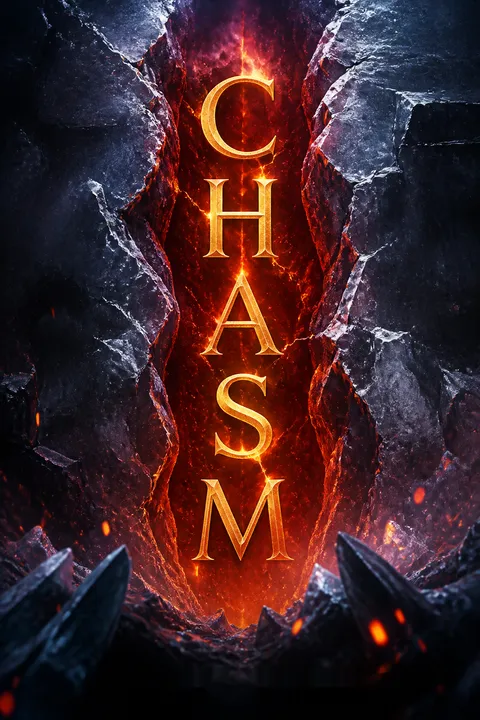

Plot Summary
Blood and Betrayal
Dawsyn Sabar, bloodstained and broken, is dragged from the corpse of Ryon, her Glacian companion, by the Queen's guards. Imprisoned in Terrsaw's dungeons, she is haunted by loss and betrayal, her magic refusing to answer her desperate pleas. The cold, both literal and emotional, is relentless. Dawsyn's memories of her grandmother's stories and the Ledge's brutal survival echo in her mind, fueling her resolve to escape. Yet, the cell's darkness is suffocating, and the only company is a dead rat and the unyielding iron gate. Dawsyn's grief is raw, her anger a fragile shield against despair, and her vow for vengeance is the only thing keeping her from drowning in sorrow.
The Chasm's Lullaby
In the bleakest moments, Dawsyn recalls her grandmother's tales of Garjum, the sea monster trapped by the ocean, always fighting to return home. These stories, told during the Ledge's harshest winters, are more than comfort—they are lessons in endurance and the unbreakable pull of belonging. Dawsyn's childhood is marked by loss and longing, her family fractured by the Chasm's demands. The myth of Garjum becomes a metaphor for her own struggle: no matter how many times she is pulled away, she will find a way back. The Chasm, both a prison and a promise, sings to her, reminding her that all things seek to return to where they belong.
Prisoners and Promises
Ruby, captain of the Terrsaw guard, risks her position to bring Dawsyn food and a sliver of compassion. Their conversations are sharp, each woman testing the other's motives and loyalties. Ruby urges Dawsyn to accept the Queens' offer of survival in exchange for allegiance, but Dawsyn refuses to be a pawn. The Queens fear her not for her violence, but for her potential to inspire rebellion. Dawsyn's refusal to kneel is a quiet act of defiance, and Ruby's conflicted conscience is a mirror to the kingdom's unrest. In the darkness, Dawsyn clings to her dignity, even as execution looms.
Queens and Chains
Queen Alvira visits Dawsyn, wielding words as weapons. She offers life in exchange for submission, but Dawsyn sees through the manipulation. The Queen's fear is not of Dawsyn's strength, but of her claim to the throne and the people's loyalty. The city outside grows restless, chanting for Dawsyn's freedom. Alvira's threats are laced with desperation, her rule threatened by the return of a true Sabar. Dawsyn's resolve hardens—she will not be a tool for a tyrant. The Queen's mercy is a mask for self-preservation, and Dawsyn chooses death over complicity.
Gallows at Dawn
Dawn brings Dawsyn's execution. Led through the city, she is met with silence and stares, the gallows looming. The Queens spin lies to the crowd, painting Dawsyn as a traitor and murderer. The people's unrest simmers, their faith in the monarchy shaken. As the noose tightens, Dawsyn's thoughts are of those she failed to save, of Ryon, and of vengeance. The crowd erupts, demanding her release, but the lever is pulled. In the moment before darkness, Dawsyn's hatred for the Queen is a promise—if she survives, she will bring retribution.
Death's False Embrace
Dawsyn's execution is interrupted by chaos. The crowd overruns the guards, and a mysterious woman—Baltisse, the mage—snaps the rope and spirits Dawsyn away. They flee through the city and into the wild, Dawsyn barely alive, her body and spirit battered. Baltisse heals her wounds, but the scars of betrayal and loss remain. The mage's magic is both alien and familiar, her motives unclear. Dawsyn is thrust into a new world of alliances and dangers, her survival owed to the loyalty of unlikely friends. The escape is a rebirth, but the past clings to her like a shadow.
Uprising in the Courtyard
As Dawsyn escapes, the city erupts in rebellion. The Queen's authority is challenged, her guards overwhelmed by the people's rage. Alvira's desperation grows—she orders the hunt for Dawsyn and the mage, her grip on power slipping. The palace becomes a fortress, fear and suspicion infecting every corner. The uprising is both a victory and a warning: the people's faith is fragile, and the return of a Sabar threatens to ignite revolution. The Queen's enemies multiply, and her paranoia deepens. The city is no longer hers alone.
Mage in the Forest
In the safety of Baltisse's cabin, Dawsyn confronts her pain and the volatile magic within her. The mage is both mentor and enigma, her past entwined with the Sabars and the history of Terrsaw. Dawsyn's grief for Ryon and her anger at betrayal fuel her magic, but control eludes her. Baltisse teaches her that magic is a living thing, not to be commanded but coaxed. The lessons are hard, the progress slow. Dawsyn's identity fractures—warrior, heir, weapon, and woman. The forest is a place of healing and reckoning, where old wounds are lanced and new strengths forged.
Lessons in Magic
Dawsyn's training with Baltisse is a crucible. She learns that magic responds to emotion—anger, love, fear. The mage's own history is a cautionary tale: power without restraint leads to ruin. Dawsyn's struggle is not just with the magic, but with herself—her inability to trust, her fear of connection, her longing for vengeance. The lessons are as much about letting go as about control. The bond between Dawsyn and Baltisse deepens, forged in shared pain and mutual respect. The path to mastery is perilous, and the cost of failure is death.
Sanctuary and Secrets
Dawsyn, Baltisse, and their allies—Salem, Esra, Hector—find sanctuary in the woods. The group is a patchwork of survivors, each carrying their own scars. Secrets are revealed: the mage's role in the creation of the Pool of Iskra, the true history of the Sabars, the betrayals that shaped the kingdom. Dawsyn's relationship with Ryon is fraught with longing and mistrust, their connection both a source of strength and vulnerability. The group's safety is tenuous, threatened by the Queen's relentless pursuit and the dangers lurking in the wild. Trust is hard-won, and every alliance is tested.
Ryon's Resurrection
Ryon, thought dead, awakens in the Queen's dungeons, his wounds healed by the lingering iskra magic. His escape is orchestrated by Ruby, whose loyalty is revealed in small acts of rebellion. Ryon's journey back to Dawsyn is fraught with peril and doubt. Their reunion is explosive—anger, grief, and love colliding. The wounds of betrayal are raw, but the bond between them endures. Together, they face the reality of their situation: the Queens, the Pool, and the fate of the Ledge. Ryon's return is both a miracle and a complication, his presence reigniting old hopes and fears.
The Price of Power
In Glacia, the mixed-blooded Council debates the fate of the Ledge. Adrik, once a mentor, is revealed as a new tyrant, drunk on the power of the Pool of Iskra. The Council's refusal to help is a bitter blow—freedom for some means abandonment for others. The Pool's origin is laid bare: a creation of mages, a bargain with darkness, a curse on the land. Dawsyn's dual magic—mage and iskra—becomes both a weapon and a threat. The cost of power is steep, and the lines between savior and destroyer blur. The fight for liberation is as much against old friends as against old enemies.
Reunion and Ruin
The group returns to Salem's inn, only to find it burned to the ground by the Queen's guards. Esra is gravely wounded, and the mage's healing is pushed to its limits. The cost of rebellion is made clear—no sanctuary is safe, and every act of defiance invites retribution. The group is fractured by grief and guilt, but the bonds of loyalty hold. Dawsyn's resolve is tested, her sense of responsibility deepening. The ashes of home are a reminder that the past cannot be reclaimed, only mourned. The only way forward is through the fire.
The Ledge's Last Hope
With the Council's help denied, Dawsyn hatches a new plan: to lead the people of the Ledge through the Chasm to freedom. The path is dangerous, the outcome uncertain. Allies are rallied—Rivdan, Tasheem, Yennes, the mage who once escaped the Ledge herself. The group prepares for the journey, gathering supplies and steeling themselves for the unknown. The Chasm, long a symbol of death and despair, becomes a beacon of hope. The plan is simple but fraught with risk: fly or fold the Ledge's survivors to the bottom, then walk through the Chasm to its end. The stakes are nothing less than survival.
Allies and Adversaries
As the group prepares, old wounds are reopened. Ruby's loyalty is questioned, her disappearance casting suspicion and fear. The Queen's guards close in, and the group is forced to flee. Gerrot, the quiet survivor, is killed in an ambush, his death a stark reminder of the cost of rebellion. Baltisse's magic is stretched to the breaking point, her own life sacrificed to save Dawsyn and Ryon. The group is battered, their numbers dwindling, but the goal remains: save as many as possible, no matter the cost. Every step forward is paid for in blood and loss.
The Council's Refusal
In Glacia, the Council's refusal to help is rooted in fear and self-preservation. Adrik's transformation into a new Glacian tyrant is complete, his hunger for iskra insatiable. The history of the Pool is revealed: a creation of mages, a curse on the land, a cycle of exploitation and suffering. Dawsyn's dual magic is both a blessing and a curse, her body a battleground for forces beyond her control. The group's unity is tested by old grievances and new betrayals. The fight for the Ledge becomes a fight for the soul of the kingdom.
The Pool's Origin
Baltisse confesses her role in the creation of the Pool of Iskra, her guilt a weight she cannot shed. The Pool's magic is revealed as a living curse, feeding on souls and corrupting all who use it. Dawsyn's mage blood is a legacy of both power and pain, her struggle to control the dual magics within her a metaphor for the kingdom's own divided soul. The group's understanding of their enemy deepens, but so does the sense of doom. The only way to break the cycle is to confront the darkness at its source, no matter the cost.
The Chasm's End
The group leads the Ledge's survivors into the Chasm, flying and folding them to the bottom. The journey is perilous, the Chasm filled with both physical and psychological dangers. Yennes, the only other survivor of the Chasm, warns of the monsters that lurk within. The group's courage is tested, their unity strained by fear and exhaustion. The Chasm, once a symbol of death, becomes a crucible of transformation. The end is uncertain, but the only way out is through. The journey is both a literal and metaphorical passage from bondage to freedom.
The Final Selection
As the last survivors are ferried into the Chasm, Adrik and his Glacian followers descend, seeking to reclaim their human prey. A brutal battle erupts—fire, blood, and magic colliding on the ice. Dawsyn's dual magic is unleashed in a desperate act of self-preservation and love, saving Ryon and turning the tide. Baltisse sacrifices herself to save Dawsyn and Ryon, her death a final act of redemption. The group is battered but victorious, the Ledge's survivors finally free to begin their journey through the Chasm. The cost is high, but hope endures.
Fire and Flight
At the bottom of the Chasm, the survivors gather—battered, grieving, but alive. The path ahead is uncertain, filled with both danger and possibility. Dawsyn and Ryon, united by love and loss, lead the way. The Chasm, once a symbol of death, is now a passage to a new life. The journey is not over—the monsters of the Chasm, the threat of Adrik and the Queens, and the burden of history remain. But for the first time, the people of the Ledge have a chance at freedom. The story ends with hope, the promise that even in the darkest places, light can be found.
Analysis
Chasm is a sweeping fantasy about survival, trauma, and the cost of freedom, set in a world where power is both a weapon and a curse. At its heart is Dawsyn Sabar, a reluctant heroine whose journey from captive to liberator is marked by loss, betrayal, and the struggle to reconcile the warring magics within her. The novel interrogates the nature of power—how it corrupts, how it is wielded, and how it can be reclaimed. The Chasm itself is a potent metaphor for the divides that shape both individuals and societies: between past and future, self and other, oppressor and oppressed. The story's emotional core is the found family that forms in the crucible of adversity, each member scarred but striving for redemption. The narrative is unflinching in its portrayal of violence and suffering, but it is also suffused with hope—the belief that even in the darkest places, light can be found, and that the bonds of love and loyalty can overcome even the most insurmountable obstacles. Chasm ultimately asks what it means to be free, and whether the price of liberation is ever too high. Its lessons are both timely and timeless: that survival is not enough, that healing requires both courage and connection, and that the fight for justice is never truly over.
Review Summary
People Also Read
Characters
Dawsyn Sabar
Dawsyn is the last living Sabar, a survivor of the Ledge's brutal existence and the Chasm's many trials. Scarred by loss, betrayal, and the burden of leadership, she is both weapon and shield for her people. Her psyche is a battleground—haunted by grief, driven by vengeance, and tormented by the dual magics within her: the cold, consuming iskra and the warm, life-giving mage blood. Dawsyn's journey is one of self-discovery and reluctant acceptance of her role as savior. Her relationships—with Ryon, Baltisse, Ruby, and her found family—are fraught with mistrust and longing. She is fiercely loyal, slow to trust, and quick to anger, but her capacity for love and sacrifice is profound. Dawsyn's arc is a testament to resilience, the cost of power, and the hope that even the most broken can lead others to freedom.
Ryon Mesrich
Ryon is a half-Glacian, marked by both human vulnerability and Glacian strength. Once a victim of the Pool's curse and Adrik's manipulations, he becomes a leader of the mixed-blooded resistance. His love for Dawsyn is both his greatest strength and deepest wound, driving him to acts of heroism and self-sacrifice. Ryon's psyche is shaped by trauma—abuse, betrayal, and the constant threat of death. He is fiercely protective, yet struggles with guilt and the fear of losing those he loves. His journey is one of redemption, learning to trust and be trusted, and finding purpose beyond survival. Ryon's relationship with Dawsyn is the emotional core of the story, a bond forged in pain and tested by fate.
Baltisse
Baltisse is a centuries-old mage, both mentor and cautionary tale. Her power is immense, but her past is stained by her role in creating the Pool of Iskra—a curse that haunts the land. Baltisse's relationship with Dawsyn is complex: part teacher, part surrogate mother, part fellow outcast. She is sharp-tongued, secretive, and fiercely protective, but her self-loathing runs deep. Baltisse's arc is one of atonement, seeking redemption through sacrifice. Her death is both a loss and a liberation, a final act of love for those she failed and those she saved.
Ruby
Ruby is the captain of the Terrsaw guard, torn between duty and conscience. Her initial loyalty to the Queens is eroded by the kingdom's injustices, and she risks everything to help Dawsyn and Ryon. Ruby's psyche is marked by guilt, the weight of complicity, and the longing for atonement. Her journey is one of self-discovery, learning to defy authority in pursuit of justice. Ruby's relationships—with Dawsyn, the Queens, and her fellow guards—are fraught with suspicion and betrayal. Her arc is a meditation on the cost of loyalty and the courage to change.
Adrik
Adrik is a mixed-blooded Glacian, once a mentor to Ryon and a leader of the resistance. His hunger for power leads him to the Pool of Iskra, transforming him into a new tyrant. Adrik's psyche is shaped by resentment, ambition, and the belief that the ends justify the means. His betrayal is both personal and political, a mirror to the cycle of oppression that plagues the kingdom. Adrik's arc is a warning: power, unchecked by conscience, corrupts absolutely.
Esra
Esra is a flamboyant, resilient companion, providing levity and loyalty in equal measure. His wit masks deep wounds—physical and emotional. Esra's relationship with Salem and the others is a source of strength, his survival a testament to the power of found family. Despite his suffering, Esra's spirit endures, reminding the group of the importance of joy and connection.
Salem
Salem is a father figure to many, his gruff exterior hiding a deep well of compassion. Scarred by loss and hardship, he is fiercely loyal to those he loves. Salem's relationship with Esra, Dawsyn, and the others is a stabilizing force, his wisdom and humor a balm in dark times. His arc is one of quiet heroism, the strength to endure and the courage to hope.
Hector
Hector is Dawsyn's childhood companion, a survivor of the Ledge's brutality. His loyalty is unwavering, his pragmatism a counterbalance to Dawsyn's impulsiveness. Hector's journey is one of adaptation—learning to survive in a world beyond the Ledge, grappling with the trauma of the past, and supporting Dawsyn's quest for freedom. His presence is a reminder of what is at stake: the lives and dignity of ordinary people.
Yennes
Yennes is the only other known escapee of the Ledge, her life marked by trauma and isolation. Her knowledge of the Chasm is both a gift and a curse, her psyche fractured by what she endured. Yennes's relationship with Dawsyn is one of kinship and caution, her willingness to help a sign of hard-won courage. Her arc is a meditation on survival, the cost of freedom, and the hope of healing.
Queen Alvira
Queen Alvira is the architect of Terrsaw's suffering, her reign marked by fear, manipulation, and the suppression of dissent. Her psyche is shaped by paranoia and the terror of losing control. Alvira's relationship with Dawsyn is adversarial, a battle of wills between old power and new hope. Her arc is a cautionary tale: the higher the throne, the greater the fall.
Plot Devices
Dual Magic: Iskra and Mage Blood
The central plot device is Dawsyn's possession of two incompatible magics: the cold, consuming iskra (Glacian magic) and the warm, life-giving mage blood (her Sabar heritage). This duality is both a source of power and a ticking time bomb, threatening to destroy her from within. The struggle to control, balance, and ultimately merge these magics mirrors the larger themes of the story: the reconciliation of past and present, the cost of power, and the hope of transformation. The magic responds to emotion—anger, love, fear—making Dawsyn's psychological journey inseparable from her magical one. The device is used to heighten tension, drive character development, and provide both obstacles and solutions to the group's quest.
The Chasm as Metaphor and Setting
The Chasm is both a literal obstacle and a metaphor for separation, trauma, and the longing for home. It divides the Ledge from the valley, the past from the future, and the self from the other. The journey through the Chasm is a rite of passage, a crucible that tests and transforms those who undertake it. The Chasm's end is both a promise and a threat, filled with monsters both real and imagined. Its presence shapes the narrative structure, providing both a goal and a gauntlet for the characters to overcome.
Found Family and Shifting Alliances
The story is driven by the formation and testing of a found family—Dawsyn, Ryon, Baltisse, Ruby, Salem, Esra, Hector, and others. Each character brings their own wounds and strengths, and the group's survival depends on their ability to trust, forgive, and fight for one another. Betrayals and shifting loyalties are central plot devices, used to explore themes of redemption, the cost of power, and the possibility of change. The alliances are never static, and every act of trust is a risk.
The Pool of Iskra: Origin and Corruption
The Pool of Iskra is both a source of power and a curse, its origins rooted in the hubris of mages and the greed of kings. Its magic grants immortality at the cost of human souls, perpetuating cycles of exploitation and suffering. The Pool's history is revealed through confession and investigation, its presence a constant threat. The device is used to explore themes of guilt, atonement, and the dangers of unchecked ambition.
Foreshadowing and Myth
The narrative is rich with foreshadowing—myths, childhood stories, and dreams that prefigure the characters' journeys. The tale of Garjum, the Chasm's song, and the legends of Dyavnon all serve to deepen the world and provide clues to the characters' fates. These stories are both comfort and warning, shaping the characters' understanding of themselves and their world.
The Glacian Trilogy Series
About the Author
Other books by Stacey McEwan

Download PDF
Download EPUB
.epub digital book format is ideal for reading ebooks on phones, tablets, and e-readers.








































