
Plot Summary
The World Ends Twice
Our narrator, John (called Jonah), begins with his project: to chronicle what "important Americans" did the day the atomic bomb fell. He is swept, like all Vonnegut heroes, by events beyond his choosing—a passive participant in a fateful dance. The world as he knew it ended with Hiroshima, but his journey soon tangles with the lives of Dr. Felix Hoenikker's children and their father's secret, leading him to the Caribbean island of San Lorenzo. In that fragmented postwar reality, apocalypse becomes less a singular event, more a pattern repeating with chilling inevitability—science's endless ability to unmake the earth matched only by human obliviousness. The end of the world looms not from evil intent, but from indifference and games played with dangerous innocence.
The Unknowable Karass
Bokononist philosophy weaves through the novel: humanity is divided into "karasses"—teams completing God's will blindly, their interconnections irreducible and inscrutable. John, pursuing his ill-fated history, traces his own karass. Members are brought together by unlikely events; their interactions, random and fateful, serve a purpose they seldom comprehend. The concept reassures and terrifies: we are not alone; neither are we truly wise. The book's refrain—"Busy, busy, busy"—reminds us of the chaotic, accidental intricacy linking all lives. Searching for meaning, Vonnegut's characters chase after wampeters, or spiritual pivots, hoping to grasp a pattern in the universe and belong to something larger, even as Bokonon himself warns that "all the true things I am about to tell you are shameless lies."
The Seeds of Ice-Nine
Through letters from Newt Hoenikker, the youngest child of Felix—the atomic bomb's "father"—we glimpse a family fractured by the scientist's emotional absence. Felix's curious mind yields ice-nine, a substance capable of freezing water instantly, yet he treats such world-shaking invention with the same playfulness as string or bugs in jars. His death on Christmas Eve brings his children—awkward Angela, fugitive Frank, and diminutive Newt—to inherit not just ice-nine, but also their father's moral blindness and the world's latent doom. The siblings divide the legacy as casually as cake. This casualness foreshadows the unraveling of humanity itself, as dread seeds are passed from one uncomprehending hand to the next.
Illustrious Fools and Children
Despite being labeled "illustrious," the Hoenikker family is a collection of misfits lost in their own tangents: Angela cares for her father like a child, Newt struggles as a midget with heartache, Frank disappears into criminal obscurity. All feel the weight of genius, yet drift in confusion. Their stories are of small, personal wounds that echo the greater wound Felix inflicted on the world—his inability to love or even recognize others, the void at the center of logic. Their mother's monstrous grave stands as both memorial and irony—a towering symbol of misplaced veneration. Through their perspectives, the tragedy of misunderstood genius and emotional neglect takes on a bitter, comic sharpness.
The Cat's Cradle Game
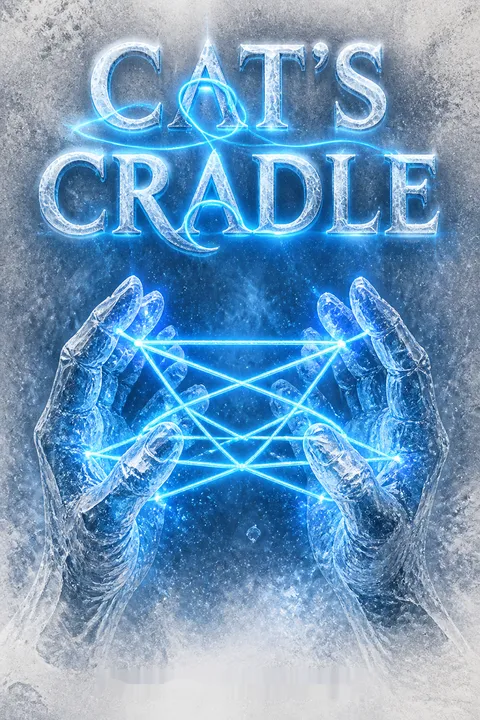
Newt recounts the day Felix made a cat's cradle—twisted string held between fingers, pretending a cat and a cradle where none exist. This becomes a central metaphor: people, children and adults alike, are shown meaningless patterns and told they are meaningful. The cat's cradle stands for religion, science, and every system humans invent to comfort themselves. "See the cat? See the cradle?"—the question is both literal and cosmic: no cat exists, no cradle exists, but we keep pretending, because facing chaos head-on would break us. It's this kernel of emptiness masked by ritual and tradition that propels the novel's satire, and frames its apocalyptic warning.
Wampeters and Orbits
Bokononist terms clarify the novel's underlying machinery. "Wampeter" is the pivot or object around which a karass revolves—here, it is clearly ice-nine, a seed of doom. As John seeks to understand Felix and his invention, he also catalogues the spiritual orbits of others: from Dr. Asa Breed, the scientist's caretaker, to various bystanders shaped by proximity to power or genius. Each is drawn, however unwittingly, into the spiral where personal trivia meets planetary destiny. The revelation that life is a pattern of orbits, most revolving without knowledge or intent, simultaneously comforts and undermines—hinting that meaning is always provisional, larger than reason or will.
Science, Sin, and Indifference
John's investigation at the Research Laboratory spotlights both the ambition and blindness of "pure research." Felix Hoenikker is described as a force of nature—curious, amoral, detached from consequence—incapable of understanding "sin" or the social meaning of his work. Science, we are told, is truth-without-pity, pursued for its own sake; suggestions and warnings from the world usually go unheeded by the true genius. Through chilling stories (such as Felix's offhand suggestion for a mud-banishing ice-nine to a Marine general), Vonnegut exposes humanity's capacity to grant dangerous power to the well-intentioned but myopic. The Hoenikkers are both literal heirs and metaphors for humanity's reckless inheritance.
The Great Hoenikker Legacy
Angela, Frank, and Newt each inherit not just ice-nine, but also the inability to comprehend or control its consequences. Angela purchases a hollow marriage with her share; Frank barters his for power in San Lorenzo; Newt's is lost amid heartbreak. Their emotional wounds and personal failures are amplified in the fate of the wider world: what is divided and handed down in secret ends up on the market, in the hands of tyrants and spies. Their seeming power is illusory—they remain "children," unable to recognize what they hold or what to do with it. In their interactions, Vonnegut reveals familial and world history as a tragic farce, both governed by ignorance and luck.
Mud, Progress, and Pure Research
Vonnegut satirizes "progress" through absurd military requests—a general asks Felix to end mud. Felix responds with the invention of ice-nine, a solution with world-ending consequences. This is a microcosm of the central paradox: the inventors of progress serve unexamined desires and remove "inconveniences," heedless of wider implications. The narrative structure—letters, interviews, reminiscences—reinforces the point: no one completes the story, no one entirely understands their own role. Progress is exposed as a double-edged myth, easily recast as farce or horror, its rewards indistinguishable from its punishments. This is the essence of Vonnegut's tragicomic worldview.
Ice-Nine: Invention and Inheritance
Ice-nine, imagined as a new form of water that freezes at room temperature, is the ultimate superweapon—not through intent, but via needling curiosity and bureaucratic suggestion. Felix's childishness becomes lethal; his "play" with forms of water leaves behind a substance capable of ending all life. Its passage from inventor to children, and then into the world's black market, embodies the way science's miracles can be misused or misunderstood. The imagery of seeds, of borrowed apparatus and mundane containers, makes clear how calamity is domesticated—moved from laboratory to kitchen, from scientist's desk to criminal's pocket, until the stage is set for universal disaster.
San Lorenzo: Paradise of Lies
John's journey takes him to San Lorenzo, a poverty-stricken dictatorship propped up by the outlawed cult of Bokononism. Here, suffering is universal, and meaning is provided by elaborate, admitted lies—Bokonon's calypsos, rituals, and invented fables. To maintain hope, Bokonon and the tyrant "Papa" Monzano share a tacit pact: the holy man plays the outlaw; the dictator, the enforcer. Everyone pretends to fear the hook, but all survive by believing in forbidden sweetness: the hope, the love, the lies that make misery bearable. The satire thickens, suggesting that all societies live by such arrangements—whether the lies are called "religion," "science," or "progress."
The Saint and the Tyrant
Vonnegut presents the entwined fates of Bokonon (the holy liar) and San Lorenzo's rulers, most recently "Papa" Monzano. Each needs the other for meaning—a play of dynamic tension, of tyrant and saint, where neither can exist alone. Their history mirrors the larger arc: every attempt at reform or salvation founders on the island's inability to change. The suffering people are given spiritual rituals, while the rich keep faith with violence and spectacle; all participate, all are complicit. Dynamic tension—good and evil, hope and terror—keeps the population "busy, busy, busy." Genuine change is impossible; only shifts of costume and script are allowed.
Granfalloons and American Moms
Travel to San Lorenzo introduces a host of American types: Hazels, the self-declared "Mom," and the crotchety bicycle-maker Crosby, both seeking order, discipline, and familiarity. "Granfalloons," false karasses like nationhood, citizenship, or club membership, comfort the lost with useless but binding rites. Touching feet ("boko-maru") is outlawed, but it is everywhere practiced in secret. John's new "karass"—Angela, Newt, Frank, Mona, the Crosbys, the Mintons—each orbits not just ice-nine, but the collective yearning for real connection in a world revealed as meaningless and atomized.
Mona and the False Millennium
Mona Aamons Monzano appears as the island's "national treasure"—youthful, serene, entirely commodified. She is the promised bride to whomever rules, and to John, her beauty and openness embody paradise. But the logic of the island—and of the novel—looms: the millennium prophesied is revealed as a performance, not a transformation. The only kind of happiness available is that purchased with lies or passing pleasures, like boko-maru. Mona's love is universal, her loyalty promiscuous; when John demands monogamy, she calls him a "sin-wat"—one who wants all of someone's love. Paradise, like meaning, is always one step away, sabotaged by both reality and the need for delusion.
The Festival of Martyrs
The feast of the Hundred Martyrs, a staged patriotic spectacle, is interrupted by real disaster: a plane crashes, triggering a chain of collapses and explosions, as the island's castle falls into the sea. The deaths of the Mintons, of Mona, and the devastation of San Lorenzo follow. The apocalypse arrives without malevolent intent—it is the accidental result of small mistakes, faulty machines, overlooked warnings—the combined weight of all the book's causes finds its inevitable effect. The world ends, not with a bang, but with ah-whoom—a sigh as ice-nine's deadly power is unleashed, freezing the sea and ending all biological life.
Catastrophe: The World Freezes
The effect of ice-nine is comprehensive and instant: earth's waters freeze, tornadoes carry contaminated frost, and nearly all life is extinguished. The handful of survivors—John, Mona, Newt, Frank, and the Crosbys—are left isolated on a dead planet. Their attempts to create a new community ("Swiss Family Robinson") are undercut by the impossibility of renewal; sex carries no future, no one wants to reproduce, and the world remains locked in eternal winter. Even hope must be manufactured from recycled lies, as Bokonon prophesied: consciousness survives in oubliettes, in caves, not in palaces or progress.
The Last Karass Survives
John and the others try to find solace in tasks: writing, sewing a new flag, making food, transmitting futile SOS signals. They discuss ants, who alone have adapted by embracing cannibalism and cooperation. Memory's only function now is irony—each survivor's personal injuries are magnified to cosmic scale. Hazel fondly ties the world's fate to Indiana; Newt paints meaninglessness; John writes, in hope of laughter. Apocalypse is not one event but a daily state, the ratcheting-down of expectations and ambitions until the only symbol left is being alive at all.
Bokonon's Final Gesture
John finds Bokonon at last, naked and shoeless, writing the final sentence of his book. Bokonon's last instructions are mischievously sacrilegious: he will climb Mount McCabe with a history of human stupidity, poison himself with ice-nine, and thumb his nose at God. The conclusion converts the long arc of catastrophe into a cosmic joke—both horrifying and liberating in its honesty. Bokonon, Saint of Lies, accepts the emptiness, the futility, and the necessity of being, with a gesture that acknowledges both the absurdity and the grandeur of human striving. The world ends, but the song goes on—honest, irreverent, and, in its way, kind.
Analysis
Kurt Vonnegut's Cat's Cradle is a meditation on humanity's tragicomic search for meaning amid the ruins of science, religion, and history. The novel's structure—episodic, interwoven with invented language—mimics both the chaos it satirizes and the false solidity we crave. At its core is the assertion that meaning is always provisional, always reliant on fictions ("foma") that comfort, distract, and occasionally destroy. By tracing the journey of ice-nine from intellectual curiosity to world-ending weapon, Vonnegut skewers humanity's faith in progress, the blindness of genius, and the tendency to hand down catastrophes the way families pass down heirlooms. The proliferation of karasses, granfalloons, and rituals exposes how people cling to identity and community, while the actual work of love, empathy, and wisdom is often neglected. Yet, beneath the irony, Vonnegut's novel insists on kindness and humility, urging readers to acknowledge the limits of knowledge and the risks of absolute solutions. Cat's Cradle stands as a warning against awe for authority and invention, and as a sly invitation to resist despair with laughter and skepticism. In the end, as Bokonon's final gesture shows, life is a joke the universe plays on itself—a tragedy best survived, if possible, with grace.
Review Summary
Reviews of Cat's Cradle are largely positive, averaging 4.15/5. Admirers praise Vonnegut's dark satirical wit, highlighting two central themes: humanity's reckless weaponization of science and a sharp, absurdist take on religion through the invented faith of Bokononism. Many readers find the novel thought-provoking yet accessible, with short, punchy chapters and memorable concepts like Ice-Nine. Critics note the fragmented structure and tonal bleakness as drawbacks. The book is frequently cited as transformative, particularly for younger readers, and remains relevant as a cautionary tale about technology and human nature.
People Also Read

Characters
John (Jonah)
As narrator and protagonist, John/Jonah personifies the bewildered, ironic antihero—he seeks order, meaning, and connection but is swept through the story by accident and the behavior of others. He begins as a would-be chronicler of apocalypse and becomes (through no true agency of his own) its witness and inheritor, president and survivor. Jonah's psychoanalysis reveals a man afraid to act, but eager to know; compelled by curiosity more than certainty, he oscillates between faith and doubt, surrendering to the notion that he belongs to a larger "karass." As an outsider, he often stands in for the reader, questioning the morality of science, the emptiness of ritual, and the futility of searching for meaning in systems that offer only "foma"—harmless untruths. His development is marked by an incremental surrender of agency—he becomes "president" by accident, then prophet and chronicler by default, as catastrophe makes him both the last observer and judge.
Felix Hoenikker
Felix—the "father" of the atomic bomb and creator of ice-nine—embodies the myth of pure scientific genius divorced from morality. Emotionally stunted, childlike in curiosity, he is capable of astonishing technical invention but is unaware and uninterested in its consequences or the needs of those around him, including his own children. He is a case study in dissociation: when asked about sin, he doesn't know what it is. Unwitting, he creates the conditions for apocalypse, both global and familial. Psychoanalytically, Felix is both tragic and monstrous—a man entirely comprised of intellect and compulsion, blind to love or evil, whose "cat's cradle" demonstrates the hollowness of supposed meaning.
Angela Hoenikker Conners
Angela, Felix's eldest, substitutes herself for her deceased mother, caring for both her father and brothers. Her desire for connection and recognition is continually frustrated—she marries an opportunistic man for status, neglects her own happiness, and compensates through music (the clarinet) and bitter nostalgia. Her psychological pattern is one of self-sacrifice, emotional repression, and anger—a slow-building, ultimately destructive force. Inheriting a third of ice-nine, she uses her "gift" to negotiate personal happiness, unwittingly abetting disaster. Her arc is one of thwarted (and thwarting) love, culminating in her tragic, possibly suicidal end.
Newt Hoenikker
Newt, a midget, is emotionally sensitive and physically stunted. His search for love (notably with Zinka, the Russian midget) and for meaning is channeled into art—a succession of black, scratchy paintings representing "cat's cradles." He sees through the illusions of systems and rituals, cynically recognizing the emptiness at their core ("No damn cat, and no damn cradle"). His alienation is both social and existential, matched by a mordant wit and an ability to see beyond the games that amuse and damage others. In surviving the world's end, Newt is both cursed and privileged to recognize the futility and beauty of life's final jokes.
Frank Hoenikker
Frank is the mysterious middle sibling, marked by maladaptive genius and social awkwardness. His life is a sequence of disappearances—absconding after Felix's death, fleeing responsibility, and surviving through accident and manipulation. Frank trades his share of ice-nine for status in San Lorenzo, becoming the dictator's right-hand man. He is technically adept (model-making, architecture), but emotionally immature and incapable of morality. He wants safety and distance, "selling" power and consequence to whoever asks, and is always "going down the oubliette." Ultimately, Frank exemplifies the dangers of intelligence unmoored from empathy—a theme central to the book's warnings.
Mona Aamons Monzano
Mona, adopted daughter of "Papa" Monzano, is the island's eroticized icon. She is universally adored, serenely unattached, and views love as something to be given equally to all—a philosophy more Bokononist than Christian or Western. Her approachability is an illusion; she will not choose exclusive love, and when marriage to John requires her to be monogamous, she refuses. Mona's psychoanalytic core is impenetrable serenity—she exists to be cherished, not understood or possessed. Her demise, by suicide after touching ice-nine, marks the end of both hope and illusion; her meaning is left deliberately ambiguous.
"Papa" Monzano
"Papa" is the dictator of San Lorenzo, maintaining power through violence, spectacle, and the hollow legality of outlawed Bokononism. Terminally ill, he is obsessed with order, succession, and the eventual survival of his "line" through Frank and Mona. "Papa" represents the dark side of the human longing for control—a version of authority that is showy, fragile, and always about to be replaced. In death, he becomes the first to perish from ice-nine, inadvertently unleashing the end of the world. His role is an object lesson in the futility of power without wisdom or self-knowledge.
Bokonon (Lionel Boyd Johnson)
Formerly Lionel Johnson, Bokonon is at once the founder of San Lorenzo's outlawed religion and its most honest character. He creates rituals and harmless untruths to comfort the suffering, openly confessing that the system is made of lies ("foma"). His "Books" provide both spiritual solace and biting satire, blending adages, calypsos, and aphorisms that mock the search for meaning. Bokonon's psychoanalysis yields both cynicism and compassion—an understanding that humans need lies to survive, and that even the knowledge of those lies can be embraced for its own solace. His final gesture is an act of profound, joking rebellion against the universe.
Julian Castle
Castle founds the House of Hope and Mercy in the Jungle, seeking to help the wretched of San Lorenzo. Once a millionaire libertine, he converts to good works but views his own sanctity and the world's misery with biting skepticism. His charity is practical; his beliefs, ever shifting, align closely with Bokonon's. He doubts mankind's value but continues to act out of habit and a vestigial sense of duty. For Castle, salvation is individual, fleeting, and laced with irony.
Hazel ("Mom") Crosby
Hazel, wife of H. Lowe Crosby, embodies the comfort of false belonging and ritual. Her "Mom" persona is invented—she adopts fellow Hoosiers as kin, proclaims the virtue of the Midwest, and seeks order even amidst chaos. She is not cruel, merely limited; her function in the narrative is to mirror humanity's collective granfalloons, the teams and causes that tie people together for no real purpose. She survives the cataclysm by innocence and routine, her good intentions ultimately unreliable but harmless.
Plot Devices
Bokononism and invented language
Vonnegut's narrative is structurally shaped by Bokononism—its words, rituals, and definitions. Karass, wampeter, granfalloon, foma, and other terms frame the actions, providing an inner guidebook that mirrors and mocks actual religions and organizations. This apparatus allows the text to switch between earnestness and irony at every turn, constantly reminding readers of the constructed nature of all stories, faiths, and even scientific quests.
Fragmented, episodic narrative
Cat's Cradle is built from brief, sharply defined episodes—letters, fragments, interviews, recollections. This mimics the randomness and incompleteness of knowledge itself, particularly in the nuclear age, and foregrounds the point that no one ever gets a complete picture. The occasional chronological leaps and rapid changes of location also reinforce the sense of chaos and inevitability.
Dramatic irony and recurring metaphors
Vonnegut layers dramatic irony through his use of the cat's cradle game, the recurring questions about "what is sin?" and "what is God?," and the repeated references to harmless lies, or "foma." The narrative structure is built around moments where the reader knows or senses doom more palpably than the characters, especially as ice-nine passes from laboratory to the hands of fools and tyrants.
Satire and dark comedy
Vonnegut mobilizes satirical and comic devices to undercut horror—wordplay, lunatic bureaucracies, grotesque rituals, and absurd characters whose names themselves become jokes. This not only maintains engagement, but also intensifies the tragedy, echoing Bokonon's own instruction to laugh in the face of disaster.
About the Author
Other books by Kurt Vonnegut Jr.
Download PDF
Download EPUB
.epub digital book format is ideal for reading ebooks on phones, tablets, and e-readers.








































