
Plot Summary
Scraps and Tombstones
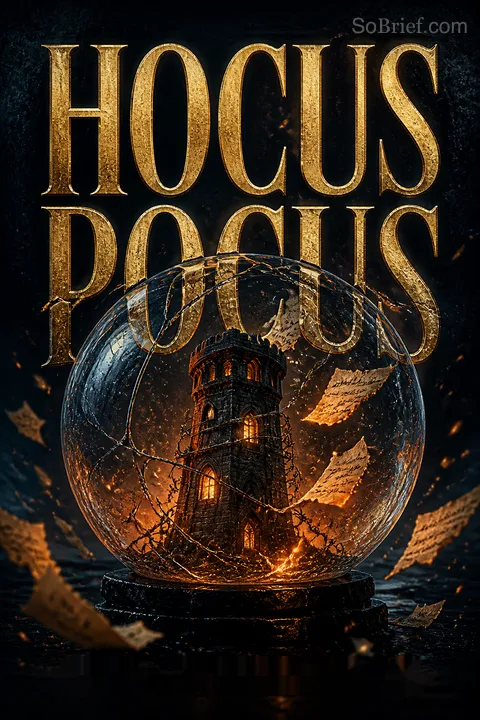
Eugene Debs Hartke, named after the socialist labor leader, narrates his story from the confines of a former college library turned prison. He writes on whatever paper he can find, awaiting trial for allegedly masterminding a mass prison break. His life is a patchwork of memories, regrets, and the detritus of American history. The narrative is fragmented, reflecting both the literal scraps he writes on and the fractured state of his mind and society. Hartke's story is haunted by tombstones—literal and metaphorical—marking the deaths of ideals, relationships, and the American dream. The tone is wry, self-deprecating, and laced with dark humor, as Hartke contemplates the meaning of his life and the world's decline.
The Futility of Genius
Hartke recounts the history of Tarkington College, founded on the utopian dream of free education for all, especially the learning-disabled. The college's legacy is a series of beautiful but useless perpetual-motion machines, symbolizing the complicated futility of ignorance. Despite the craftsmanship and hope invested in these inventions, they never work—mirroring the failed ambitions of the college, the town, and Hartke himself. The narrative weaves together personal and institutional histories, showing how accidents, luck, and genetic quirks shape destinies. The bells of the college, cast from the remnants of war, become a symbol of both hope and the inescapable cycles of violence and failure.
War's Unforgiving Lessons
Hartke's life is indelibly marked by his service in Vietnam. He becomes a professional soldier not out of passion but circumstance, following a path set by his father's ambitions and America's wars. The war teaches him to lie, to kill, and to suppress his own humanity. He witnesses and participates in atrocities, emerging with medals but also with a profound sense of disillusionment and guilt. The war's end is chaotic and humiliating, leaving Hartke and his country adrift. The lessons of war—violence, futility, and the arbitrary nature of fate—echo throughout his later life, shaping his relationships, career, and worldview.
The College and the Prison
Tarkington College, once a haven for the learning-disabled and misfits, becomes a reformatory and then a prison. The town's fortunes rise and fall with the college and the prison across the lake, their histories intertwined by accidents of genetics, economics, and geography. The prison grows into a brutal fortress, housing thousands of society's outcasts, while the college shrinks and eventually closes. Hartke's role shifts from teacher to warden to prisoner, blurring the lines between educator and incarcerator, freedom and captivity. The transformation of the college into a prison is both literal and symbolic, reflecting the broader collapse of American ideals.
The Science Fair Lie
As a teenager, Hartke wins a science fair with an exhibit built by his father, a chemical engineer desperate for something to brag about. The victory is hollow, built on deception and the community's willingness to overlook the truth for the sake of appearances. This formative experience teaches Hartke the value of lies and the futility of honesty in a world that rewards image over substance. The science fair debacle sets him on a path away from his dreams of music and journalism, steering him toward West Point and a life shaped by other people's expectations and the machinery of war.
The West Point Detour
Hartke's unexpected appointment to West Point, orchestrated by his father and a chance encounter with a recruiting officer, derails his plans and locks him into a military career. At the academy, he forms friendships and rivalries, marries into a family with hidden madness, and learns the codes of honor and complicity. The discipline and structure of West Point shape his body and mind, but also suppress his individuality and creativity. The detour is both a blessing and a curse, providing stability but also leading to the traumas of war and the unraveling of his personal life.
Marriage, Madness, and Music
Hartke's marriage to Margaret Patton is shadowed by inherited insanity and the burdens of family. His wife and mother-in-law both descend into madness, leaving him to care for them and their children, who resent their genetic inheritance. Music, once a source of joy and identity, becomes a distant memory, replaced by the daily grind of survival and caretaking. Hartke's relationships with women are complex and often transactional, marked by longing, disappointment, and the search for connection in a world that seems increasingly indifferent and hostile.
Teaching the Unteachable
After the war, Hartke finds purpose as a teacher at Tarkington, instructing students deemed unteachable by other institutions. He excels at making difficult subjects accessible, finding joy in playing the carillon and connecting with misfits. Yet the college's decline mirrors his own, as economic pressures, changing demographics, and societal neglect erode its mission. Hartke's teaching is both a genuine attempt to uplift and a performance, shaped by the absurdities of institutional life and the ever-present threat of failure. The line between teacher and prisoner blurs as the college becomes a reformatory and then a prison.
Prison Break Across the Ice
The narrative's climax is the mass prison break from Athena, the maximum-security prison across the frozen lake. Thousands of prisoners, armed and desperate, cross the ice to Scipio, overwhelming the town and college. The escape is both meticulously planned and chaotically executed, exposing the fragility of order and the thin veneer of civilization. Hartke, now a prisoner himself, witnesses the violence, confusion, and moral ambiguity of the siege. The event is a microcosm of societal breakdown, where old hierarchies collapse and new, often brutal, forms of power emerge.
The Siege of Scipio
As the escaped convicts take control of Scipio, the town becomes a battleground and a stage for competing visions of justice, revenge, and survival. Hostages are taken, alliances shift, and the boundaries between victim and perpetrator blur. Hartke navigates the chaos as both insider and outsider, trying to mediate, survive, and make sense of the unfolding disaster. The siege exposes the deep divisions and resentments within the community, as well as the arbitrary nature of authority and the limits of compassion.
Hostages and Hocus Pocus
The convicts, styling themselves as "Freedom Fighters," hold the college trustees and other notables hostage, believing their social status will protect them from annihilation. Hartke is both a prisoner and a confidant, tasked with drafting utopian plans for a new society even as violence and despair mount. The hocus pocus of leadership, propaganda, and self-delusion is laid bare, as everyone clings to illusions of control and meaning. The hostages' fate becomes a media spectacle, their lives valued not for their humanity but for their symbolic importance.
The Preacher's Reckoning
Awaiting trial, Hartke reflects on his life, compiling lists of those he has killed and those he has loved. The act of listing becomes a form of reckoning, a way to impose order on chaos and prepare for judgment—whether legal, moral, or cosmic. He grapples with guilt, responsibility, and the meaning of his actions, recognizing the arbitrary and often absurd nature of fate. The lists are both a confession and a defense, a way to assert agency in a world that seems determined to reduce individuals to numbers and statistics.
The Lists We Carry
Hartke's lists of lovers and kills become a metaphor for the burdens we all carry—regrets, secrets, and the weight of history. He reflects on the randomness of life, the accidents that shape destinies, and the impossibility of true justice or redemption. The act of writing, of bearing witness, is both a solace and a curse, offering the illusion of control even as the world spins out of it. The lists are a final attempt to make sense of a life marked by failure, compromise, and the relentless march of time.
The End of Illusions
As the siege ends and order is restored by military force, Hartke is arrested for insurrection, scapegoated by a society eager for simple answers and televised justice. The illusions of progress, leadership, and moral clarity are exposed as hollow, replaced by cynicism, resignation, and the enduring power of violence. Yet amid the ruins, moments of connection, compassion, and dark humor persist, suggesting that even in a world stripped of meaning, the human spirit endures—if only as a stubborn, absurd refusal to give up.
The Last Gasp of Hope
In the aftermath, Hartke contemplates the meaning of his life and the fate of those around him. The deaths, betrayals, and failures accumulate, but so do moments of grace, understanding, and unexpected connection. The narrative ends not with resolution but with a question—about the possibility of redemption, the value of memory, and the stubborn persistence of hope in the face of overwhelming evidence to the contrary. The story closes as it began, with Hartke writing on scraps, searching for meaning amid the ruins.
Analysis
Kurt Vonnegut's Hocus Pocus is a scathing, darkly comic meditation on the collapse of American ideals and the inescapable cycles of violence, failure, and self-delusion. Through the fragmented, self-aware narrative of Eugene Debs Hartke, the novel interrogates the myths of progress, meritocracy, and redemption that underpin American culture. The transformation of Tarkington College from a utopian haven for misfits to a maximum-security prison serves as a powerful metaphor for the nation's shift from education and opportunity to punishment and exclusion. Vonnegut's use of satire, metafiction, and cyclical structure exposes the absurdities and cruelties of war, class, and institutional life, while also highlighting the resilience and vulnerability of individuals caught in the machinery of history. The novel's central questions—about the possibility of meaning, the burden of memory, and the limits of agency—remain urgently relevant in a world marked by inequality, disillusionment, and the relentless march of time. Ultimately, Hocus Pocus offers no easy answers or redemptions, but it insists on the importance of bearing witness, telling the truth, and finding moments of connection and humor amid the ruins.
Review Summary
Hocus Pocus by Kurt Vonnegut Jr. follows Eugene Debs Hartke, a Vietnam War veteran, college professor, and eventual prisoner who narrates his story from confinement. The novel is a biting satire examining war, capitalism, racism, class inequality, and American hypocrisy through Vonnegut's characteristic dark humor and non-linear storytelling. Reviews praise his wit and social commentary, though some find this 1990 work more cynical and less refined than his earlier classics, with its bleak tone and scattered narrative style. Most agree it showcases Vonnegut's satirical genius, even if not his finest achievement.
People Also Read
Characters
Eugene Debs Hartke
Hartke is the novel's narrator and antihero, a man shaped by war, institutional failure, and personal regret. Named after a socialist icon, he is haunted by the gap between ideals and reality. His relationships—with family, lovers, students, and authority—are marked by ambivalence, irony, and a deep sense of futility. Psychologically, Hartke is introspective, self-deprecating, and prone to dark humor, using wit as a shield against despair. His development is a slow unraveling, as he moves from soldier to teacher to prisoner, each role exposing new layers of vulnerability and insight. Hartke's journey is a search for meaning in a world that seems determined to deny it, culminating in a reckoning with his own actions and the arbitrary nature of fate.
Margaret Patton Hartke
Margaret is Hartke's first and only wife, whose descent into insanity mirrors the unraveling of their family and the broader collapse of societal norms. Her relationship with Hartke is complex—marked by love, resentment, and mutual disappointment. The shadow of hereditary mental illness looms over her and their children, fueling guilt and fear. Margaret's transformation from vibrant partner to institutionalized patient is both a personal tragedy and a symbol of the novel's themes of genetic determinism, the limits of compassion, and the randomness of suffering.
Jack Patton
Jack is Hartke's West Point roommate and Margaret's brother, known for his dark humor and fatalistic outlook. His favorite phrase, "I had to laugh like hell," encapsulates the novel's blend of absurdity and despair. Jack's death in Vietnam is both a personal loss for Hartke and a symbol of the senselessness of war. Psychologically, Jack is compulsive, irreverent, and deeply skeptical of human nature, serving as a foil to Hartke's more earnest attempts at meaning-making.
Sam Wakefield
Wakefield is the officer who recruits Hartke to West Point and later becomes president of Tarkington College. His trajectory—from war hero to antiwar activist to suicide—mirrors the disillusionment of a generation. Wakefield's relationship with Hartke is paternal but also fraught, embodying the contradictions of authority, loyalty, and the search for purpose. His suicide, accompanied by a plagiarized note, underscores the novel's themes of exhaustion, failure, and the limits of individual agency.
Alton Darwin
Darwin emerges as a leader during the prison break, transforming from a modest inmate to a self-styled emperor. His charisma, sociopathy, and indifference to consequences make him both a compelling and terrifying figure. Darwin's fantasies of utopia and his ultimate demise on the ice rink encapsulate the novel's exploration of power, delusion, and the thin line between leadership and madness. Psychologically, he is driven by action for its own sake, craving attention and indifferent to the suffering he causes.
Jason Wilder
Wilder is a celebrated columnist and talk-show host, whose investigation leads to Hartke's firing. He embodies the ruling class's anxieties, prejudices, and self-justifications. Wilder's relationship with his daughter Kimberley and his role as a hostage during the siege expose the vulnerabilities and contradictions of privilege. Psychologically, he is calculating, performative, and deeply invested in maintaining social hierarchies, even as he is forced to confront their fragility.
Hiroshi Matsumoto
Matsumoto is the Japanese warden of Athena prison, a survivor of Hiroshima whose life is marked by trauma, isolation, and a relentless sense of duty. His management of the prison is efficient but haunted by the ghosts of war and the moral ambiguities of authority. Matsumoto's eventual suicide, by ritual disembowelment, is a powerful symbol of the novel's themes of guilt, alienation, and the inescapable legacy of violence. Psychologically, he is introspective, conscientious, and ultimately overwhelmed by the weight of history.
Muriel Peck
Muriel is a barmaid at the Black Cat Café who becomes Hartke's lover and later a professor at Tarkington. Her trajectory from small-town survivor to victim of the siege reflects the novel's focus on the overlooked and expendable. Muriel's resilience, humor, and vulnerability make her a poignant figure, embodying the struggles of ordinary people caught in extraordinary circumstances. Her death during the siege is both a personal loss for Hartke and a symbol of the collateral damage of societal collapse.
Margaret's Mother (Mildred)
Mildred is Margaret's mother, whose inherited insanity foreshadows the fate of her daughter and grandchildren. Her presence in the Hartke household is a source of embarrassment, frustration, and, ultimately, compassion. Mildred's love of dancing and her moments of lucidity provide glimpses of joy amid the darkness, while her institutionalization underscores the novel's themes of genetic determinism and the limits of familial responsibility.
Rob Roy Fenstermaker
Rob Roy is Hartke's illegitimate son, conceived during a brief affair in Manila. His journey to find his father is marked by trauma, false accusations, and a search for identity. Rob Roy's story intersects with Hartke's at a moment of mutual vulnerability, offering a chance for connection and understanding. Psychologically, he is resilient, introspective, and determined to make sense of his origins and his place in a world that seems indifferent to individual suffering.
Plot Devices
Fragmented Narrative and Metafiction
The novel's structure mirrors Hartke's writing process—composed on scraps of paper, with abrupt transitions and non-linear chronology. This fragmented narrative reflects the disintegration of both the protagonist's mind and the society around him. The metafictional elements—Hartke's awareness of writing a book, the editor's notes, and the self-referential humor—invite readers to question the nature of storytelling, memory, and truth. The use of lists, chapter headings, and direct addresses to the reader further blur the boundaries between fiction and reality.
Satire and Dark Humor
Vonnegut employs biting satire and dark humor to expose the absurdities of war, bureaucracy, education, and social hierarchies. The novel lampoons the ruling class, the military-industrial complex, and the self-delusions of both the powerful and the powerless. Humor becomes both a coping mechanism and a weapon, allowing characters to confront unbearable truths with irony and wit.
Cycles of Violence and Inheritance
The novel explores the cyclical nature of violence, madness, and failure—passed down through families, institutions, and nations. The perpetual-motion machines, the recurring wars, and the inherited insanity in Hartke's family all serve as symbols of humanity's inability to break free from destructive patterns. The narrative structure itself, looping back on key events and themes, reinforces this sense of inescapable repetition.
Social Satire and Class Critique
The novel dissects the American class system, exposing the arbitrary and often cruel mechanisms that determine who succeeds and who is cast aside. The transformation of Tarkington College from a utopian experiment to a prison mirrors the broader collapse of social mobility and the rise of punitive institutions. The characters' struggles with race, privilege, and exclusion highlight the persistent inequalities and hypocrisies of American society.
Foreshadowing and Irony
The narrative is laced with foreshadowing—of personal failures, institutional collapse, and societal breakdown. Hartke's reflections on his own life, the fate of the college, and the trajectory of the nation are marked by a sense of inevitability and bitter irony. The use of historical parallels, literary allusions, and self-deprecating humor underscores the futility of resistance and the absurdity of hope in a world determined to repeat its mistakes.
About the Author
Other books by Kurt Vonnegut Jr.


Download PDF
Download EPUB
.epub digital book format is ideal for reading ebooks on phones, tablets, and e-readers.








































