Plot Summary
Chains and Small Rebellions
The story opens in the suffocating world of American chattel slavery, where Henri, a young African torn from his homeland, is forced to breed for his master's profit. His refusal to comply leads to his sale and separation from Suzie, the woman he's paired with. Henri's memories of his mother's murder and his village's destruction haunt him, fueling a simmering rage. On Magnolia Row, a vast Virginia plantation, Henri meets Ruby, a sharp-tongued house worker, and Josephine, a silent, watchful girl. The daily grind is relentless, but small acts of resistance—refusing to break, sharing stories, and holding onto memories—keep hope alive. Henri's arrival disrupts the fragile order, and his presence hints at the possibility of something more than mere survival.
Magnolia Row's Newcomers
Henri's introduction to Magnolia Row is marked by suspicion and hardship. He meets Luke, a house servant with a gentle dignity, and learns of the plantation's cruel hierarchy. Luke, chained to the master's son Junior, bears scars of sexual abuse and emotional torment. Ruby, fiercely protective of Josephine, navigates the dangers of the big house. The enslaved form a tenuous community, bound by shared suffering and fleeting moments of kindness. Henri and Luke's friendship deepens as they share stories of Africa and dreams of freedom. The plantation's violence is ever-present, but the seeds of rebellion are quietly sown in whispered conversations and stolen glances.
Love in the Shadows
Amidst the brutality, Henri and Luke's relationship blossoms into a rare and tender love. Their connection offers solace from the dehumanization around them, providing a space where they can be vulnerable and whole. Their secret meetings by the river become acts of defiance, reclaiming their bodies and desires from a system designed to strip them of agency. Ruby, witnessing their bond, recognizes its power and the hope it represents. Yet, the threat of discovery looms, especially with Junior's return and his possessive cruelty. Love, in this world, is both a risk and a lifeline.
The Price of Defiance
When two enslaved men, David and Solomon, attempt escape, only Solomon is captured and returned. His brutal punishment—mutilation and blinding—serves as a warning to all. The violence is a spectacle, meant to crush spirits and enforce obedience. Yet, the community's response is not just fear but a deepening resolve. Henri and Luke, shaken but undeterred, begin to plot their own escape. Ruby suffers a miscarriage, the result of repeated abuse by the master, and her pain becomes a rallying point. The enslaved realize that survival alone is not enough; something must change, even if the price is blood.
Josephine's Quiet Fire
Josephine, once a silent observer, is sold to a smaller plantation after the burning of Magnolia Row. There, she endures sexual violence and daily humiliation from the Baynard family. Old Mama Bess, a wise elder, recognizes Josephine's inner strength and teaches her the art of subtle resistance. When Josephine is whipped for defiance, she finds resolve in the memory of those who fought before her. Mama Bess entrusts her with poison, urging her to use it when the time is right. Josephine's transformation from victim to avenger is quiet but unstoppable—a fire waiting to ignite.
Poison and Liberation
Josephine seizes her moment, poisoning the Baynard family's meal with arsenic hidden in the kitchen clock. As the family succumbs, the enslaved gather, witnessing the end of their tormentors. Josephine's act is not just personal vengeance but a communal liberation. The enslaved reclaim the house, singing hymns over the bodies of their oppressors. With the help of Mama Bess, Josephine leads the survivors north, forging a new family and future. The legacy of resistance is passed on, and the story of Magnolia Row's fire becomes legend, inspiring others to believe in the possibility of freedom.
The Law's Betrayal
Charity, an enslaved woman rented between Maryland and Pennsylvania, falls in love with Larkin, a free Black blacksmith. Through careful calculation, she accumulates enough time in Pennsylvania to claim her freedom under the law. Their happiness is shattered when her former master, Norman Bruce, hires Thaddeus Stevens—a future abolitionist—to argue that her time in Pennsylvania does not count. The court rules against Charity, returning her and her daughters to slavery. The law, wielded by those who claim to be allies, becomes another tool of oppression. Charity's faith is tested, but her resolve to reclaim her family never wavers.
Clara's Calculated Mercy
Miss Clara, the White woman who once rented Charity, is torn between self-interest and conscience. When Charity claims her freedom, Clara faces a choice: betray her or let her go. Ultimately, Clara allows Charity to escape, providing her with a book and an address in Vermont. Their uneasy alliance highlights the complexities of complicity and the limits of White allyship. Clara's gesture is not pure redemption, but it opens a path for Charity's family to seek safety. The lesson is clear: true freedom often requires breaking with those who benefit from the system, even if they are not its architects.
Family Torn, Family Forged
Charity, Larkin, and their daughters build a life in Gettysburg, only to be torn apart by the court's ruling. Charity and the girls are dragged back to Norman Bruce's plantation, where despair threatens to consume them. Larkin, left behind, is haunted by loss but refuses to give up hope. The daughters, Harriet and Sophia, inherit their parents' resilience, caring for their mother and plotting escape. The family's love endures, even as they are forced to navigate new horrors. Their story becomes one of survival against impossible odds, and the promise of reunion fuels their every step.
The Return to Chains
Back in bondage, Charity succumbs to depression, unable to protect her daughters from the predatory Norman Bruce. Harriet and Sophia, forced to work in the blacksmith's shed, become targets of his violence. The threat of sexual assault becomes imminent, and the sisters realize that waiting for rescue is no longer an option. The trauma of their mother's silence and their own vulnerability pushes them to the brink. The legacy of resistance—passed down from Henri, Luke, Josephine, and Charity—awakens in them, setting the stage for a desperate act of self-defense.
Daughters' Vengeance
When Norman Bruce attacks Harriet, the sisters fight back with the tools of the forge. They kill him in a frenzy of righteous fury, burning and dismembering his body. Charity, witnessing her daughters' courage, emerges from her despair, reclaiming her role as protector and leader. The family flees into the storm, guided by a letter from Clara and the hope of sanctuary in Vermont. Their journey is perilous, but the bond between mother and daughters is unbreakable. The act of vengeance is not just survival—it is a declaration that they will never be owned again.
The Road to Freedom
Charity, Harriet, and Sophia endure a grueling escape, evading pursuers and battling the elements. Guided by memory and determination, they reach the safe house marked by a white chimney and black top. There, abolitionists welcome them, and the family is finally reunited with Larkin in Vermont. The scars of their ordeal remain, but they begin to heal, building a new life rooted in love and learning. Charity teaches others to read, passing on the tools of liberation. Their story becomes a beacon for those still in bondage, proving that freedom is possible, even when the law and the world conspire against it.
Black Master, Black Betrayal
In Charleston, South Carolina, Nathaniel William, a formerly enslaved man, becomes a slave owner himself. Driven by a hunger for power and acceptance from White society, he exploits and betrays his own people, selling runaways back to their masters for profit. His plantation is a place of fear and treachery, where trust is weaponized and hope is crushed. Nathaniel's self-hatred and ambition make him more dangerous than any White master. The souls he owns, including the broken Solomon, plot his downfall, recognizing that true freedom cannot exist while any master—Black or White—holds the whip.
The Devil's Own House
As the Civil War turns against the Confederacy, Nathaniel's world collapses. Shunned by White planters and abandoned by his supposed allies, he becomes increasingly paranoid, cooking his own meals and sleeping with a shotgun. The enslaved, led by Emma Jane and Solomon, prepare for revolt, gathering graveyard dirt and nails for a ritual of vengeance. Nathaniel's isolation grows, and his cruelty intensifies. The arrival of Union soldiers—Black men in blue—signals the end of his reign. The stage is set for a reckoning that will be both personal and symbolic, a final judgment on those who betray their own.
The Reckoning of Nathaniel
The Union soldiers, including Luke and Larkin—survivors and descendants of Magnolia Row—confront Nathaniel. The enslaved nail him to the door of his own house, forcing him to taste the grave dirt of those he betrayed. Minister Woodward, the corrupt preacher who enabled Nathaniel's crimes, is buried alive in the plantation graveyard. The cycle of violence is broken not by mercy, but by the collective will of the oppressed. Nathaniel's death is a warning: those who seek power by mimicking their oppressors will find no refuge, not even among those they serve.
Fire as Judgment
The plantation is set ablaze, the flames consuming the house, the fields, and the memory of Nathaniel's tyranny. The fire is both an act of vengeance and a ritual of purification, erasing the physical and psychological chains that bound the souls to the land. The survivors watch as the house collapses, knowing that true freedom requires more than escape—it demands the destruction of the master's house in every form. The story of the fire spreads, inspiring others to resist, to remember, and to hope. The ashes become the soil for new dreams.
The Legacy of Resistance
The novel closes with reflections on the power of remembering and retelling stories of rebellion. The characters' acts of resistance—large and small—become part of a collective legacy that cannot be erased. The phrase "don't let them take what they can't touch" echoes through generations, a mantra of survival and defiance. The lessons of Magnolia Row, Josephine, Charity, and the others are passed on, shaping the future. The struggle is not over, but the fire of opposition burns brighter with each retelling. The call to action is clear: confront the past, resist erasure, and build something new from the ashes.
We Will Answer With Fire
The final chapter is both a warning and a promise. The systems of oppression—old and new—will not fall by themselves. The comfort of gradual change and legal reform is exposed as insufficient. True justice requires confrontation, destruction, and the willingness to burn down the master's house, in all its forms. The novel ends with a rallying cry: "We will answer with fire." The legacy of resistance is not just history—it is a living force, demanding that each generation choose whether to be complicit or to ignite the flames of liberation.
Analysis
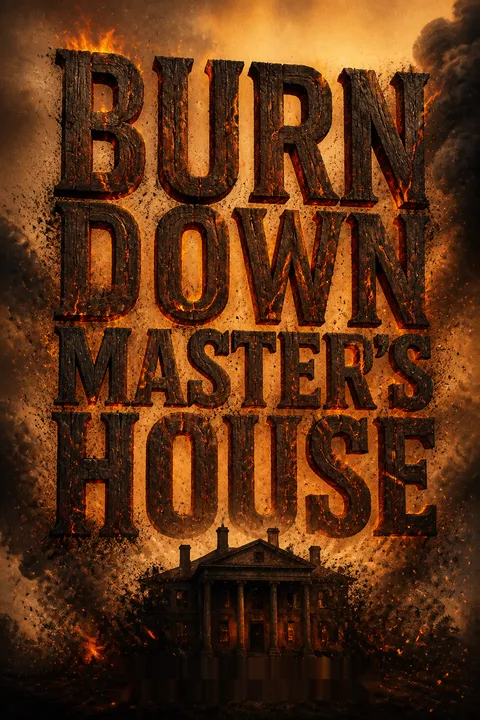
Burn Down Master's House is a searing, multi-layered exploration of American chattel slavery that refuses to sanitize or simplify its horrors. Through its interwoven narratives, the novel insists that resistance is not a singular event but a spectrum of actions—quiet and loud, individual and collective, legal and extralegal. The book challenges the myth of passive victimhood, centering the agency, intelligence, and creativity of the enslaved. It exposes the complicity of those who benefit from oppression, whether through law, silence, or self-interest, and refuses to grant easy redemption. The recurring motif of fire—both as destruction and rebirth—serves as a call to confront the systems that perpetuate injustice, not merely to reform them but to burn them down and build anew. The novel's modern resonance is unmistakable: it warns against the dangers of erasure, the seduction of gradualism, and the comfort of myths that absolve the powerful. Ultimately, Burn Down Master's House is not just a reckoning with history but a demand for action, urging readers to remember, resist, and answer with fire.
People Also Read




Characters
Henri
Henri is a young African man, ripped from his homeland and family, whose memories of violence and loss fuel a deep, simmering rage. His refusal to breed for his master's profit marks him as a troublemaker, but also as someone unwilling to surrender his humanity. Henri's journey is one of mourning and resistance, finding solace and love in Luke, and ultimately becoming a catalyst for rebellion. His psychological scars run deep, but his capacity for tenderness and hope makes him a symbol of the indomitable spirit that slavery could not extinguish.
Luke
Luke is a house servant on Magnolia Row, raised alongside the master's son Junior and subjected to years of sexual abuse and emotional manipulation. Despite his suffering, Luke maintains a quiet dignity and becomes a source of strength for others. His love for Henri is both a refuge and an act of defiance, challenging the system's attempt to dehumanize him. Luke's journey from victim to rebel, and later as a Union soldier, reflects the transformative power of love, memory, and collective action. He embodies the possibility of healing and leadership born from pain.
Ruby
Ruby is a sharp-tongued, resilient woman who navigates the dangers of the big house while caring for Josephine as her own. She endures repeated sexual violence from the master, yet refuses to be broken, channeling her pain into acts of resistance and nurturing. Ruby's wisdom and courage make her a pillar of the enslaved community, and her ability to recognize and support the love between Henri and Luke shows her openness to hope. Her journey is one of survival, sacrifice, and the quiet heroism of those who hold families together in the darkest times.
Josephine
Josephine begins as a traumatized, nearly mute girl, shaped by loss and violence. Under the guidance of Ruby and Old Mama Bess, she learns the power of knowledge, memory, and subtle resistance. Her transformation into the avenger who poisons the Baynard family is both a personal and communal act of liberation. Josephine's psychological complexity lies in her ability to absorb pain and channel it into action, becoming a symbol of the quiet, often unseen fires that burn beneath the surface of oppression. Her legacy is one of hope, teaching, and the refusal to be erased.
Charity
Charity is a woman who refuses to accept the limits imposed on her by slavery and the law. Her love for Larkin and her daughters drives her to claim her freedom through careful calculation and courage. Betrayed by the legal system and those who claim to be allies, Charity endures separation, despair, and the threat of violence. Yet, her resilience and faith in reunion never falter. Charity's psychological strength is rooted in her ability to adapt, to teach, and to inspire others. Her story is a testament to the power of maternal love and the necessity of fighting for one's own liberation.
Larkin
Larkin is a free Black blacksmith whose optimism and skill offer a vision of what life beyond slavery can be. His love for Charity and their daughters is unwavering, and his willingness to teach, nurture, and fight for his family makes him a model of Black masculinity rooted in care rather than domination. Larkin's journey is marked by loss, rage, and the struggle to reconcile hope with reality. His eventual role as a Union soldier and liberator connects the personal and political, showing how individual acts of love and resistance can ripple outward to change the world.
Harriet
Harriet, Charity and Larkin's eldest daughter, inherits her parents' strength and determination. Forced into adulthood by trauma, she becomes the protector of her mother and sister, ultimately leading the act of vengeance against Norman Bruce. Harriet's psychological development is shaped by the tension between vulnerability and ferocity, and her actions reflect the legacy of resistance passed down through generations. She is both a victim and a warrior, embodying the hope that the cycle of violence can be broken by those who refuse to be broken themselves.
Sophia
Sophia, the younger daughter, is shaped by the love and protection of her family. Her journey is one of forced maturity, as she witnesses and participates in acts of violence necessary for survival. Sophia's loyalty to Harriet and Charity is unwavering, and her ability to adapt to new realities speaks to the resilience of children in the face of trauma. She represents the possibility of healing and the importance of family bonds in the struggle for freedom.
Solomon
Solomon is a man marked by failed escape, mutilation, and years of suffering. His limp and missing eye are physical reminders of the price of resistance, but his spirit endures. Solomon's journey is one of survival, guilt, and eventual participation in the downfall of Nathaniel William. His psychological complexity lies in his ability to hold onto hope, even when all seems lost, and to recognize the importance of collective action. Solomon's story is a reminder that survival itself can be an act of resistance.
Nathaniel William
Nathaniel is a formerly enslaved man who becomes a slave owner, driven by a desperate need for power, wealth, and acceptance from White society. His betrayal of his own people is rooted in self-hatred and the internalization of the values of his oppressors. Nathaniel's psychological profile is one of paranoia, cruelty, and ultimately, self-destruction. His downfall is both personal and symbolic, illustrating the dangers of seeking liberation through the imitation of one's enemies. Nathaniel is a cautionary figure, a warning that true freedom cannot be built on the backs of others.
Plot Devices
Interwoven Narratives and Generational Echoes
The novel employs a braided narrative structure, following several interconnected characters across different plantations, states, and decades. Each storyline—Henri and Luke's love, Josephine's revenge, Charity's legal battle, Nathaniel's betrayal—mirrors and amplifies the others, creating a tapestry of resistance that spans generations. The repetition of motifs ("don't let them take what they can't touch," fire as liberation, poison as justice) binds the stories together, showing how acts of defiance echo across time and space. This structure allows the reader to see the cumulative impact of individual and collective resistance, and how the legacy of rebellion is passed down, adapted, and renewed.
Foreshadowing and Symbolism
The recurring imagery of fire—both literal and metaphorical—serves as a symbol of destruction, purification, and rebirth. The burning of Magnolia Row, the Baynard house, and Nathaniel's plantation are not just acts of vengeance but rituals of transformation, signaling the end of one order and the possibility of another. Poison, hidden in the kitchen clock or the stew, represents the subversive power of knowledge and agency, especially for women denied open rebellion. The master's house, in all its forms, is both a physical structure and a symbol of the systems that must be dismantled for true freedom to emerge.
Legal and Social Irony
The novel highlights the bitter irony of legal systems that promise freedom but deliver betrayal. Charity's case, argued by a future abolitionist, exposes the limits of reform and the dangers of relying on the goodwill of those who benefit from oppression. The law is shown to be malleable, serving the interests of power rather than justice. This device underscores the necessity of direct action and collective resistance, rather than waiting for change from above.
Psychological Realism and Internal Monologue
The narrative delves deeply into the psychological states of its characters, using internal monologue and close third-person perspective to reveal the complexities of trauma, hope, and resistance. The reader is invited to inhabit the minds of the enslaved, understanding not just their actions but the fears, desires, and memories that drive them. This device humanizes the characters, challenging stereotypes and inviting empathy, while also showing how survival is as much a mental battle as a physical one.
Ritual and Spirituality
The novel weaves in elements of African spirituality, ritual, and folklore, positioning them as sources of strength and resistance. The use of graveyard dirt, cowrie shells, and chants connects the characters to ancestral wisdom and power, offering alternatives to the Christianity wielded by their oppressors. These rituals are acts of reclamation, asserting the humanity and agency of the enslaved in the face of dehumanization.
Download PDF
Download EPUB
.epub digital book format is ideal for reading ebooks on phones, tablets, and e-readers.








































