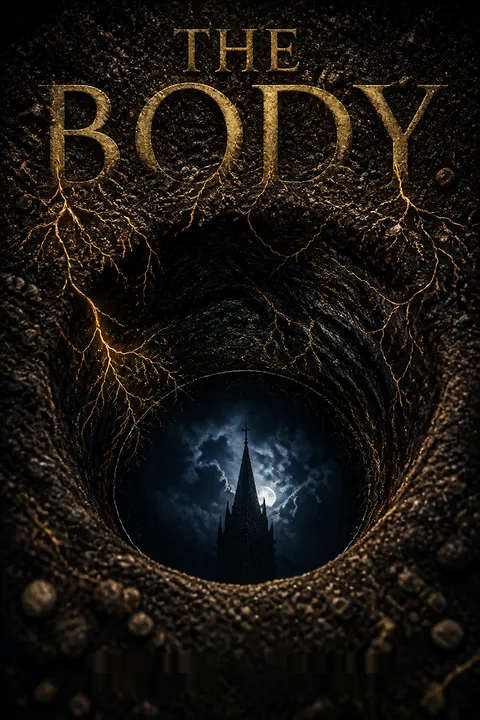

Plot Summary
Talons of Anxiety
Mavis, a woman plagued by relentless, catastrophic thoughts, struggles to keep her anxiety at bay. Her mind is not a gentle place—her worries are talons, gripping and goring, refusing to let go. She tries to control her life through careful routines and "insurance" against disaster, but nothing soothes her. Her marriage to Jerrod is both a comfort and a source of fear; she is terrified of losing him, convinced that her inadequacies will drive him away. The story opens with Mavis caught in a spiral of panic, her body and mind battered by the weight of her own thoughts, setting the stage for a narrative where internal and external dangers blur, and the line between fear and reality is razor-thin.
Collision and Consequence
Mavis's world is violently upended when she is struck in a car accident. The crash is both literal and symbolic—a shattering of her fragile sense of control. Trapped in her car, surrounded by pink airbag dust and her own blood, she is forced to confront her mortality and her deepest fears. The accident brings her husband Jerrod rushing to her side, their reunion in the ambulance a moment of raw relief and vulnerability. Yet, the trauma lingers. Mavis survives, but the event marks the beginning of a series of uncanny, escalating disturbances that will test her marriage, her faith, and her grip on reality.
Congregational Promises
The narrative flashes back to Mavis and Jerrod's wedding, where not only the couple but the entire congregation is asked to vow to uphold and protect their marriage. This ritual, meant to symbolize community support, instead plants the seeds of something ominous. Mavis is uneasy with the performative nature of the vow, sensing its weight and the expectations it carries. The congregation's promise is not just a blessing—it is a binding, collective responsibility that will later manifest in unexpected, even supernatural ways. The wedding, far from being a day of joy, becomes a moment of foreboding, foreshadowing the curse that will haunt Mavis and Jerrod.
Wedding Vows and Doubts
Mavis's wedding is a performance, orchestrated by her parents and shaped by the expectations of her faith community. She is haunted by her past relationship with Cyrus, a manipulative ex whose betrayal left deep scars. The vows she and Jerrod exchange are beautiful but feel hollow to her, and the congregation's participation only heightens her sense of alienation. Mavis's doubts about her worthiness as a wife, and her fear that Jerrod is "too good to be true," create a foundation of insecurity. The wedding is less a beginning than a continuation of Mavis's struggle to reconcile her desires, her upbringing, and her sense of self.
Ghosts of Old Loves
Mavis is haunted by dreams of Cyrus, her ex, whose emotional abuse and infidelity have left her with a legacy of self-doubt and fear. These dreams are not just memories—they are invasions, reminders that her past is never truly gone. Mavis's mother's harsh counsel only deepens her shame, reinforcing the idea that her thoughts and desires are dangerous. The specter of Cyrus looms over her marriage, fueling her anxiety about Jerrod's fidelity and her own worth. The psychological wounds of her past become entangled with the supernatural events that begin to unfold, blurring the line between internal torment and external threat.
The Curse Unleashed
After the accident, Mavis's life becomes increasingly surreal. She is visited by sleepwalkers, witnesses inexplicable violence, and feels watched and hunted in her own home. The congregation's vow, once a benign ritual, now seems to have teeth—members of her community begin to act out in bizarre, dangerous ways, as if possessed by a collective force. Mavis's sense of reality frays as she tries to make sense of the curse that has been unleashed upon her and Jerrod. The boundaries between personal guilt, communal responsibility, and supernatural retribution dissolve, leaving her isolated and desperate for answers.
Digging in the Dark
Mavis discovers holes being dug in her backyard, first by a sleepwalking acquaintance and then by others. The digging is both literal and symbolic—a search for something buried, a manifestation of the congregation's restless, unconscious drive to enforce the vow. The holes become sites of fear and fascination, places where the past and present, the living and the dead, intersect. Mavis's attempts to confront the diggers only deepen the mystery, as those involved have no memory of their actions. The sense of being haunted, not just by ghosts but by the living, intensifies.
Sleepwalkers and Strangers
The curse spreads through the community, affecting people in unpredictable ways. Sleepwalkers invade Mavis's property, strangers attack in public places, and those who commit violence have no memory of their actions. The congregation's vow has become a kind of collective possession, compelling ordinary people to act out the community's repressed fears and judgments. Mavis realizes that she is both the target and the catalyst of this haunting, her personal guilt and the congregation's expectations merging into a force that cannot be reasoned with or escaped.
Violence at the Hardware Store
A brutal attack at a hardware store marks the point where the curse becomes undeniably real and public. Mavis and Jerrod are caught in the chaos as a man, seemingly possessed, murders employees in a frenzy. The violence is senseless, yet it is connected to the web of vows and betrayals that ensnare Mavis. The attack leaves her physically and emotionally scarred, deepening her sense of isolation and her fear that the curse will claim more victims. The community's inability to explain or contain the violence only heightens the sense of dread.
Marital Fault Lines
The strain of the curse exposes cracks in Mavis and Jerrod's marriage. Both harbor secrets—Mavis's infidelity with Cyrus, Jerrod's emotional affair with a coworker—and both are consumed by guilt and suspicion. Their attempts to communicate are fraught with misunderstanding and pain, as each tries to protect the other while also protecting themselves. The congregation's vow, meant to safeguard their union, now threatens to destroy it, turning their home into a battleground where love and resentment, trust and betrayal, are in constant conflict.
The Congregation Awakens
The congregation, once a source of support, becomes a collective antagonist. Members are drawn to Mavis and Jerrod's home, compelled to enforce the vow through violence. The haunting is no longer metaphorical—neighbors, friends, and even family are possessed by the need to punish perceived transgressions. Mavis realizes that the only way to end the curse is to confront the true nature of the vow and the community's complicity in her suffering. The line between victim and perpetrator blurs, as everyone becomes both.
The Price of Betrayal
Mavis and Jerrod are forced to confront their betrayals, both to each other and to themselves. The curse demands a sacrifice, and the couple must decide whether to confess, to fight, or to submit. The violence escalates, culminating in a deadly confrontation in their home. Mavis's realization that the only way to end the curse is through her own death—or Jerrod's—forces her to make an impossible choice. The vow, once a promise of protection, is revealed as a mechanism of control and destruction.
Stoning the Past
The congregation enacts a ritual stoning, echoing ancient punishments for betrayal and sin. Mavis is buried and prepared for execution, her fate sealed by the very community that once promised to uphold her marriage. The ritual is both literal and symbolic—a reckoning with the past, a confrontation with the collective guilt and violence that underpins the community's sense of righteousness. Mavis's struggle to survive becomes a struggle to reclaim her agency, to assert her humanity in the face of dehumanizing judgment.
The Vow's True Power
The supernatural force of the vow is revealed to be inescapable, its power rooted in the collective will and unconscious desires of the congregation. Attempts to renew or break the vow only deepen its hold, as the community's need for order and punishment overrides individual will. Mavis's efforts to outwit or appease the curse are futile; the only way out is through sacrifice. The story interrogates the nature of communal responsibility, the dangers of collective morality, and the impossibility of true forgiveness in a system built on surveillance and control.
Family and Forgiveness
Mavis's relationship with her parents, especially her mother, is a source of both pain and insight. Their expectations, judgments, and failures are mirrored in the congregation's actions, revealing the ways in which family and community are intertwined. Mavis seeks forgiveness, both for herself and from others, but finds that true absolution is elusive. The legacy of shame and control passed down through generations is both a curse and a source of strength, as Mavis learns to navigate the complexities of love, loyalty, and self-preservation.
The Trap is Set
Realizing that the curse will not end until a final sacrifice is made, Mavis sets a trap in her own backyard, both to protect herself and to test the limits of the congregation's compulsion. The act is both desperate and defiant—a refusal to submit entirely, even as she prepares for her own death. The tension between agency and fate, between resistance and surrender, reaches its peak as Mavis confronts the inevitability of her fate and the impossibility of escaping the community's judgment.
Sacrifice and Survival
The climax of the story is a harrowing confrontation between Mavis, Jerrod, and the congregation. As the community moves to enact the ultimate punishment, Mavis must choose between self-sacrifice and self-defense. The violence is both physical and existential, a reckoning with the costs of love, loyalty, and survival. In the end, Mavis's actions are both a submission to and a subversion of the curse—she claims agency even in the face of annihilation, refusing to be merely a victim or a scapegoat.
The End of the Vow
In the aftermath of the violence, Mavis is left to reckon with the consequences of her choices. The congregation is released from its compulsion, but the scars—physical, emotional, and communal—remain. Mavis's survival is both a victory and a burden, as she must navigate a world forever changed by the events she has endured. The story ends with a meditation on the possibility of forgiveness, the limits of community, and the enduring power of individual will in the face of collective judgment.
Analysis
Bethany C. Morrow's The Body is a searing exploration of the intersection between personal trauma and collective morality, using the supernatural as a lens to examine the dangers of communal surveillance, shame, and the impossibility of true forgiveness in systems built on control. The novel interrogates the ways in which rituals meant to bind and protect—wedding vows, congregation promises—can become mechanisms of violence and exclusion when enforced without compassion or self-awareness. Mavis's journey is both intensely psychological and chillingly physical, as her internalized anxieties are mirrored and magnified by the community's external actions. The curse that haunts her is not just a supernatural force but a manifestation of generational trauma, religious dogma, and the human need for order at any cost. In the end, The Body asks whether survival is possible in a world where love is conditional, support is surveillance, and redemption is always just out of reach. The novel's lesson is both cautionary and empowering: true freedom requires not just the breaking of external bonds, but the reclamation of one's own story, even in the face of overwhelming judgment.
Review Summary
The Body receives mixed reviews with an average 3.01/5 rating. Readers appreciate the religious horror themes, supernatural elements, and exploration of trauma, gaslighting, and female rage. Many praise the strong opening and visceral atmosphere reminiscent of Jordan Peele films. However, common criticisms include pacing issues, an unlikeable/unreliable narrator named Mavis, repetitive internal monologues, underdeveloped characters, and confusing time jumps. Some found it disturbing and entertaining despite flaws, while others DNF'd due to poor execution. The ending proved divisive—some loved it, others felt disappointed. Gore and cult horror elements are prominent throughout.
People Also Read



Characters
Mavis Carson-Dwyer
Mavis is the protagonist, a woman whose life is shaped by anxiety, self-doubt, and the lingering trauma of past relationships. Her marriage to Jerrod is both a refuge and a source of fear, as she struggles to believe in her own worthiness and to trust in the possibility of happiness. Mavis is deeply introspective, her mind a battleground of taloned thoughts and catastrophic imaginings. Her journey is one of survival—navigating the expectations of her family, her faith community, and her own internalized shame. As the supernatural curse unfolds, Mavis is forced to confront the limits of her agency, the dangers of collective morality, and the possibility of reclaiming her life on her own terms.
Jerrod Dwyer
Jerrod is Mavis's husband, a man whose calm demeanor and devotion are both a comfort and a source of insecurity for Mavis. He is not perfect—his emotional affair with a coworker reveals his own vulnerabilities and capacity for betrayal—but he is fundamentally decent, striving to protect and support Mavis even as their world unravels. Jerrod's struggle is to reconcile his ideals with the messy realities of marriage, to accept his own failings, and to find a way to love Mavis without being consumed by guilt or resentment. His relationship with Mavis is the emotional core of the story, a testament to the complexities of intimacy and forgiveness.
Marie Carson
Mavis's mother is a formidable presence, a woman whose faith and authority shape every aspect of her daughter's life. Marie is both a source of wisdom and a source of pain, her expectations and criticisms leaving lasting scars. She embodies the dangers of collective morality—the way love can become surveillance, and support can become control. Marie's relationship with Mavis is fraught with unspoken resentments and unmet needs, a dynamic that mirrors the larger themes of the novel. Her eventual participation in the congregation's violence is both shocking and inevitable, a culmination of years of emotional manipulation.
Daniel Carson
Mavis's father is less overtly controlling than Marie but no less influential. His emotional distance and reliance on Marie's judgment leave Mavis feeling unsupported and unseen. Daniel represents the passive complicity that enables the community's violence—the willingness to defer to authority, to avoid conflict, and to prioritize reputation over relationship. His role in the congregation's actions is a reminder that harm is often done not just by those who act, but by those who fail to intervene.
Cyrus Marshall
Mavis's ex-boyfriend is a ghostly presence throughout the novel, his betrayal and emotional abuse leaving deep wounds. Cyrus is both a literal and symbolic antagonist—a reminder of the dangers of unchecked desire, the power of shame, and the ways in which the past can haunt the present. His eventual fate—stoned by the congregation—is a chilling echo of the community's capacity for violence and the impossibility of escaping judgment.
Djidji Patton
Jerrod's coworker and emotional affair partner, Djidji is both a rival and a mirror for Mavis. Her flirtation with Jerrod exposes the vulnerabilities in Mavis and Jerrod's marriage, while her own fate—murdered by a possessed congregant—underscores the indiscriminate nature of the curse. Djidji's character complicates the narrative of blame and innocence, revealing the ways in which desire, envy, and competition are woven into the fabric of community life.
Rose Spencer
A family friend and member of the congregation, Rose is both a victim and a participant in the unfolding curse. Her involvement in the car accident that sets the story in motion, and her later possession by the vow, highlight the ways in which ordinary people can become instruments of collective violence. Rose's suffering is a reminder of the collateral damage wrought by systems of control and judgment.
Havilah Greene
A former friend of Mavis's from a Christian women's retreat, Havilah becomes a literal sleepwalker, digging holes in Mavis's yard under the influence of the curse. Her actions are both involuntary and deeply symbolic—a manifestation of the community's unconscious drive to enforce the vow. Havilah's confusion and distress mirror Mavis's own, underscoring the theme of possession and the loss of agency.
Whitley Owens
A former coworker of Mavis's, Whitley is drawn into the curse through her daughter Lily, who becomes a possessed instrument of violence. Whitley's role highlights the far-reaching consequences of the congregation's vow, the way it ensnares even those on the margins of Mavis's life. Her grief and confusion are emblematic of the broader community's inability to comprehend or contain the forces they have unleashed.
The Congregation
The congregation is both a character and a force—a manifestation of communal will, judgment, and violence. Its members are alternately supportive and destructive, their vow binding them to Mavis and Jerrod in ways they cannot control or understand. The congregation's actions are a chilling exploration of the dangers of collective morality, the ease with which support becomes surveillance, and the impossibility of true forgiveness in a system built on punishment.
Plot Devices
The Congregational Vow
The central plot device is the congregation's vow—a ritual in which the community promises to uphold and protect the marriage of Mavis and Jerrod. What begins as a symbolic gesture becomes a supernatural binding, compelling members of the congregation to enforce the vow through violence when they perceive betrayal. The vow operates as both a metaphor for communal surveillance and a literal curse, blurring the line between psychological and supernatural horror. Its power is rooted in collective will, unconscious desire, and the dangers of unchecked morality.
Possession and Sleepwalking
The curse manifests through episodes of possession and sleepwalking, in which ordinary people are compelled to act out the congregation's will without memory or understanding. This device heightens the sense of paranoia and helplessness, as Mavis realizes that anyone—friend, neighbor, or stranger—can become an instrument of the curse. The loss of agency is both terrifying and tragic, underscoring the novel's themes of control, complicity, and the limits of individual will.
Foreshadowing and Flashbacks
The narrative is structured around flashbacks to Mavis's wedding, her relationship with Cyrus, and her upbringing in a controlling faith community. These flashbacks provide context for the present-day haunting, revealing the psychological and social forces that shape Mavis's experience. Foreshadowing is used to build suspense and to suggest the inevitability of the curse, as rituals and warnings from the past resurface in the present.
Symbolic Violence
The violence in the novel—car accidents, stonings, home invasions—is both literal and symbolic. It represents the internalized harm of shame, judgment, and betrayal, as well as the external dangers of collective morality. The use of ritualized violence (stoning, burial) connects the story to ancient forms of punishment, highlighting the persistence of communal retribution in modern life.
Unreliable Perception
Mavis's anxiety and trauma blur the boundaries between reality and hallucination, making her an unreliable narrator. The supernatural events are experienced through her subjective lens, raising questions about the nature of the curse and the possibility of escape. This device creates a sense of disorientation and suspense, as readers are forced to navigate the shifting terrain of Mavis's mind.
Download PDF
Download EPUB
.epub digital book format is ideal for reading ebooks on phones, tablets, and e-readers.








































