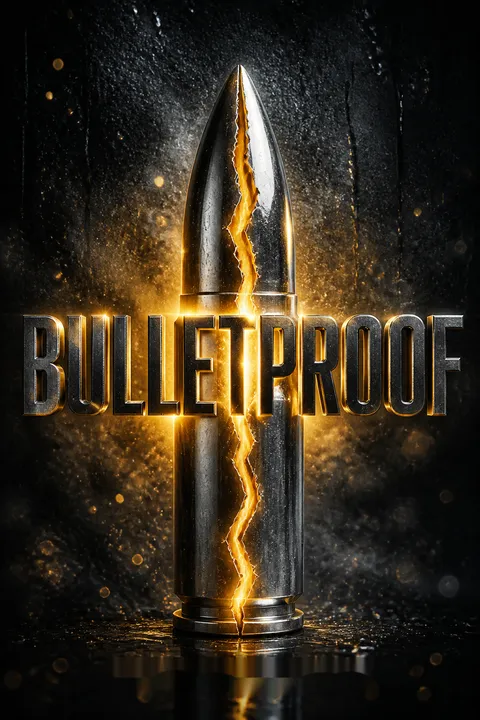

Plot Summary
1. Promises and Poison
Roman Syxx, a battle-hardened lieutenant in the shadowy Dark Forces, bargains for his freedom with his ruthless handler, General Nolan. Promised a new life if he leads his squad Icarus to infiltrate a mysterious criminal town called Bane Falls, Roman is faced with merciless choices: anyone who gets too close or suspects them must be eliminated. As he prepares for the mission, haunted by years of violence and betrayal, Roman senses Nolan's desperation—making the cost of freedom ambiguous and poisoned. The squad's entry into Bane Falls is no ordinary military operation; it's a descent into a place where the lines between protector and monster vanish, every promise is sharpened by a blade of suspicion, and one wrong step can mean damnation for all.
2. A Stranger in Bane Falls
Briar, fleeing a violent ex and the ruins of her past, speeds into rural Montana, where an inherited, decrepit farm is her only hope of disappearing. Lost, anxious, and alone at night, she discovers her new home is being watched by a sinister black SUV. The local police are useless, and every shadow in Bane Falls seems to lean in, inspecting her. With nowhere else to go, and her urban instincts of trust long extinguished, Briar's first hours in town are spent grappling with exhaustion, hostility, and the seething dread that she is both prey and trespasser in a place that devours secrets.
3. Encounters at the Diner
At a lonely all-night diner, Briar finds herself thrust into the orbit of four enigmatic, alluring men who alternately tease, charm, and unsettle her. Their banter masks something predatory, and when their absent ringleader, Roman, storms in, the mood curdles to danger. Roman targets Briar instantly, his hostility barely concealed. When she tries to leave, he escalates from taunts to threats, dragging her outside. In a rain-slicked graveyard, he binds and terrorizes her, asserting a brutal control she both fears and refuses to submit to. The episode leaves her shaken, mud-smeared, and furious, desperate to prove she can't be run out of town by anyone—not even Roman.
4. The Scarred Lieutenant
Inside his world, Roman Syxx lives on the edge between command and collapse. Haunted by past betrayals, he trusts no one—least of all himself. To him, emotions are liabilities; ruthlessness is survival. He relishes control, carving his struggles into flesh with self-inflicted scars, transforming pain into ritual and memory into armor. Under orders from General Nolan, Roman suppresses empathy and leads his squad with uncompromising brutality. Yet Briar, with her own haunted resilience, both enrages and fascinates him, threatening to expose a heart he believed long anesthetized by violence.
5. Underworld Shadows Emerge
As Icarus burrows deeper into Bane Falls, ties to the secretive Sub-Rosa syndicate and a shadowy black market surface. Roman balances squad politics, loyalty, and the omnipresent threat that comes with their dual lives. Simultaneously, Briar learns her uncle's inheritance may contain something far more valuable—and dangerous—than farmland: a black flash drive wanted by both law and criminals. The farm becomes a bullet magnet for surveillance, sabotage, and old scores, as the invisible war begins to take shape, implicating anyone who dares to ask the wrong question.
6. Unwelcome Attachments
As Briar is tugged between the abrasive fascination of Roman and the wary affection from others, she finds herself repeatedly entangled with Icarus's members. A party in the woods turns from flirtatious fun to a treacherous maze of rivalries and warnings. Briar is propositioned, menaced, and ultimately chased, each encounter sharpening the difference between attraction and peril. Trust is a currency in short supply, and every overture, whether rough or gentle, is laced with risk. Underneath it all, Roman's obsession with control intensifies, while Briar's refusal to be owned or banished cements her as both a prize and a problem.
7. Mountain Bonfire Revelations
At a wild bonfire party, Briar tries to claim a moment of reckless peace—dancing, flirting, passing through the town's rituals—but her reprieve is short-lived. Her supposed allies prove as dangerous as her enemies: she is drugged, pulled into a rigged car race, and left battered and concussed. Roman's divided loyalties become more apparent, as his squad's mission clashes with his personal feelings, and both Icarus and Sub-Rosa maneuver Briar into ever more precarious positions. In Bane Falls, every celebration covers a crime, and every night leaves more scars.
8. After the Race
The aftermath of the race leaves Briar physically and emotionally cracked. Roman's caretaking is laced with cold aggression; his squad's camaraderie is fraught with suspicion, especially as connections between the farm, her uncle's death, and Sub-Rosa's operations deepen. Hostilities escalate: the boundaries between captor and protector, victim and weapon, are clouded by violence, fear, and a disturbing intimacy that neither Briar nor Roman can fully admit to or escape. The darkness inside Bane Falls seeps into both their souls, eroding the distinction between survival and complicity.
9. Farmhouse Intrigues
As Briar and Roman hunt for the elusive flash drive, secrets are uncovered in the hoarder's maze of the farm. Every day and night brings new invasions—surveillance, sabotage, and shifting allegiances. Clashes with Sub-Rosa and entanglements with local conspirators elevate the threat. Meanwhile, Roman's and Briar's mutual fascination takes a dangerous turn, wrestling them between lust and self-loathing, as well as their roles as predator and prey. The farm becomes less a sanctuary than a battleground—one where the past and future are both weaponized.
10. Traps, Truths, and Ties
Just as Briar attempts to put down roots or reclaim her agency, her past comes howling back: a violent, relentless ex, Callum, whose reach was long presumed dead, is revealed to be deeply linked with Sub-Rosa. Roman and his squad face a direct, bloody confrontation. Briar, desperate to be trusted, finds herself a pawn in games much larger than her. Old wounds are torn open, alliances are tested, and the farm—her last tenuous lifeline—goes up in flames. For both Briar and Roman, the line between hunter and hunted grows vanishingly thin.
11. Nightmares in the Dark
With the farm destroyed and Captain Nolan's orders hanging overhead, Briar is forced into a deadly game: she must act as bait, luring Callum into the open, while Icarus weighs her fate with brutal objectivity. Roman, torn by guilt and betrayal, follows orders to discard her despite his feelings. Tortured by nightmarish memories and confronted with the truth of her own victimization, Briar must summon a steely survival instinct, even as those she's come to trust call her traitor, and everyone she loves threatens to become her executioner.
12. The Lake's Cold Secrets
The climactic confrontation happens on the icy edge of the lake. Haunted by loss and forced into violence, Briar and Roman are pushed to their physical and psychological limits. Allies are lost, enemies multiply, and the blood price for freedom and vengeance escalates. The past—literal and metaphorical corpses—emerges from the depths, as Briar kills to survive and Roman is forced to choose between orders and his soul. Both realize: to become truly "bulletproof," one must embrace what is broken as well as what is unbreakable.
13. Crosshairs and Crossroads
In the aftermath, missing time and false memories begin to unravel. Briar slowly realizes she is not who she thought, and Roman, after a final violent reckoning with Callum, is left questioning every loyalty, including his loyalty to his own heart. The flash drive's secrets surface: not only the underworld's blueprints, but evidence that Briar herself is an engineered weapon—Project Lethe, created then unleashed by the very forces Roman serves. In this new world, trust is a luxury neither can afford, but both desperately crave.
14. Fugitives and Forgiveness
Fraught reunions offer a glimpse of hope as Roman and his friends break ranks to save Briar from Sub-Rosa's clutches. Yet the rescue is incomplete: the toll of lost friends and impossible choices stalks every embrace. Roman's capacity for violence is matched only by his guilt over abandoning Briar. Together, they face the shattering revelation that everything in Bane Falls—even their affection for one another—has been constructed, manipulated, and weaponized by others. Still, they grasp for connection, knowing mercy and betrayal are now synonymous.
15. Ghosts of the Under Trials
Roman's history of violence, loss, and self-inflicted pain—"the Under Trials"—returns in haunting, symbolic fashion. Stories of old comrades, the cost of loyalty, and the scars on his flesh become touchstones of identity and a warning: no one escapes the shaping hands of power unscarred. The love he shares with Briar is tinged with the spectral presence of all those lost before—lovers, friends, and enemies. Every victory carries a price, and the cruelties of the past echo in even the sweetest moments.
16. Shattered Identities
Briar's sense of self collapses after learning her memories were engineered, her past a fabrication designed to serve as bait, control, or weapon. Roman, too, is confronted with the endless cycle of creation and destruction his world fosters. Even as they fight for each other, their love is threatened by the knowledge that neither really knows who they are. In a final confrontation with General Nolan, truths are laid bare—about sleeper agents, engineered soldiers, and the fate of Bane Falls as a "dark city." For both, the freedom they sought comes at the expense of certainty, a price paid in violence and truth.
17. Betrayal and Bloodshed
As the last enemies fall, friendships are shattered, lives lost, and the countryside soaked in blood. Roman ascends to power at Nolan's side, inheriting not a release from darkness, but mastery over it. The chain of betrayals—personal, institutional, and systemic—becomes the grim foundation upon which new regimes are built. Briar is left to decide: embrace her bruised and obscure identity or continue running forever. Love and survival become inseparable from pain; together, Briar and Roman learn that to heal is not to forget, but to carry each scar with intention.
18. New Kings in the Dark
In the final reckoning, Bane Falls becomes both a graveyard and a new empire. Briar and Roman, scarred by violence, find their future is to shape the very darkness that shaped them. "Freedom" is redefined—not escape, but agency even in ugliness. Forgiveness and trust are not erasures of the past, but the conscious choice to continue forward, altered but alive. The monsters who survive are given the keys to the kingdom; what they do with power is uncertain. But for a fleeting moment, amidst all the wreckage, love is not a weakness—it is bulletproof.
Analysis
Bulletproof is a harrowing modern gothic that unflinchingly explores the intersection of violence, intimacy, and constructed identity. In a world where every institution is corrupt and every promise is poisoned, the novel interrogates not just the cost of survival, but the meaning of self when that cost is extraction, erasure, and betrayal. Through the dual lens of Briar and Roman—each as unreliable as they are compelling—the story blurs the boundaries between victim and aggressor, love and manipulation, home and trap. Its most powerful insight is that healing does not mean returning to "before," nor does truth guarantee closure: it is the acceptance of pain, the willful and conscious revision of memory, and the ability to choose trust even in the teeth of repeated betrayal. Bulletproof's core lesson, ultimately, is that human connection—however scarred or artificial—is the only thing strong enough to resist the machine; and that survival, in a world designed to devour its children, sometimes means embracing your monsters but refusing to let them have the last word.
Review Summary
Reviews for Bulletproof are mixed, averaging 3.79/5. Fans praise K.M. Moronova's signature plot twists, found-family dynamics, and emotionally damaged characters. Many enjoyed the dark military setting and the Icarus squad. However, common criticisms include underdeveloped characters, rushed romance with insta-love, an inconsistent FMC (Briar) who behaves naively given her trauma, a controversial nickname ("Squirt"), and a feeling that the book lacks the depth of earlier Dark Forces installments. The ending divided readers, with some finding it abrupt and others intrigued by its implications.
People Also Read


Characters
Roman Syxx
Roman is the Icarus Squad's lieutenant, loyal only to survival and haunted by the betrayals and deaths that have defined his rise through the Dark Forces. His psyche is armored by self-inflicted scars—each a memory, each a warning—and a suffocating need for dominance that often manifests as violence or callous indifference. To Roman, compassion is as dangerous as a loaded gun; he fears both being needed and needing others. Yet when Briar cracks his defenses, Roman is thrust into an emotional war against himself, torn between the mission's brutality and the possibility of something gentler within him. Over the course of the story, his facade crumbles, his vulnerabilities exposed, climaxing in his willingness to betray orders for the sake of love. His development is an unmasking, leaving him neither redeemed nor damned, but deeply, painfully human.
Briar (Chloe/Lethe)
Plagued by trauma—from parental loss to near-murder by Callum—Briar arrives in Bane Falls desperate for escape but unable to shed her past. Her coping armor is caution, sarcasm, and a compulsion to keep moving, but beneath this lies an unyielding will to live and a hint of hope. Throughout the narrative, Briar's sense of self is continually undermined: she is a pawn, a prize, a weapon, and, ultimately, Project Lethe—her memories and identity engineered as a tool in the underworld's war. Psychologically, she is a study in resilience through fragmentation, her capacity for connection only deepening after each shattering. Her eventual acceptance of her own constructed nature—choosing to build meaning despite the manipulation—is the heart of her arc: freedom, for Briar, becomes the ability to define her story, not erase or rewrite it.
Callum
Callum is at once the story's ghost and knife—his betrayal and pursuit set the plot in motion and define Briar's trauma. Outwardly handsome and charismatic, beneath the surface, Callum is instrumental, cold, and ultimately expendable even to his criminal masters. His relationship with Briar is one of toxic intimacy: what begins as passion curdles to horror, and he becomes both executioner and obsessed captor. Callum's fate—killed by Roman after subjecting both protagonists to unspeakable violence and loss—cements him as the avatar of the dangers lurking in Bane Falls and within the self. He is what must be overcome, not just outmaneuvered.
General Nolan
Nolan is the architect of the entire narrative's misery: he builds squads not as units, but as experiments, viewing people as tools to be forged, broken, and discarded. To him, promises are bargaining chips; loyalty is a means to an end. His psychological hold on Roman, and indirectly on Briar, is absolute—the embodiment of structural violence, unyielding and always a step removed from the ruin he orchestrates. In the end, he constructs the "new dark city," extending the cycle of violence as he retires, making Roman his inheritor and, in some ways, his mirror.
Squad Icarus (John, Taylor, Bensen, Gale)
John is the most empathetic, a mediator whose care for Briar costs him his life. Taylor and Bensen are alternately playful and ruthless—engineers of both violence and moments of levity, deeply loyal but always aware of their role as both protectors and executioners. Gale is the shrewdest, handling strategy and surveillance—but not immune to the psychological toll of murky, endless violence. The squad's dynamics reveal the corrosion of trust and the necessity of comradeship in survival; their relationships to Briar and Roman shift based on suspicion, affection, and the ceaseless churn of command.
Grahm (Sutherland)
Grahm represents the moral gray-between: outwardly a small-town helper, actually a key player in manipulating Briar's fate and facilitating the underworld's agenda. Not sadistic like Callum or as cold as Nolan, he is opportunistic, sometimes sympathetic, but ultimately self-protective. His relationship to Briar is almost fraternal—a functionary whose betrayals are pragmatic, not personal.
Lana, Hailey
Waitress Lana and cashier Hailey are glimpses into the broader cost of Bane Falls' darkness: both are drawn into the underworld's sphere, unwilling participants or survivors scarred by proximity to power. They serve as reminders that collateral damage is ever-present and that not all pain can be accounted for by main characters.
Sub-Rosa Boss ("King of the Underworld")
The ultimate authority behind Bane Falls' criminal empire, he plays the long game, never getting his hands dirty except by proxy. Patient, cold, amused by chaos, his appearance at the climax reframes every earlier danger as part of a vaster, older machinery. He doles out fates with clinical detachment, humbling both Nolan and the squad with ease.
Arnold (The Uncle)
Arnold's death is the plot's first domino, but his true legacy is more sinister: a sleeper agent who orchestrated Briar's involvement and the farm's secret as bait for the flash drive. More shadow than man, his decisions ripple through every betrayal that follows.
Project Lethe (Briar's True Identity)
The revelation that "Briar" is neither found nor self-made, but planted—her past as empty and constructed as any underworld operation—renders her both victim and warning. She is the point at which the narrative interrogates what it means to survive, when survival is itself a product of design.
Plot Devices
Dual Unreliable Narration
The book employs shifting first-person perspectives—Briar's and Roman's—each withholding, distorting, or misunderstanding both events and their own feelings. This device mirrors the novel's larger theme: even the most intimate truths are unreliable, as memory and motive are continually sabotaged by trauma, manipulation, and institutional deceit.
The Corrupted Home/Farm
The inherited farm is a manufactured place of origin, meant to offer safety and instead serving as a staging ground for violence, trauma, and betrayal. It is both hiding place and trap, luring Briar (and the reader) into believing safety or belonging can ever be unmediated.
The Scar as Living Revision
Throughout, scars—physical and psychological—function as a means of rewriting the past. Roman's and Briar's mutual scarring becomes a form of authorship, an assertion of agency over histories they cannot choose. The book continually asks: can remaking a wound ever truly heal it, or does it only make the past more inescapable?
The Flash Drive MacGuffin
The black flash drive is the plot's engine and symbol: it is at once ransom, evidence, secret, and curse. Nearly everyone is after it, but its true value is both ambiguous and transformative: it contains the locations and passwords of the "dark cities," but also the evidence of Briar's own creation. Its discovery and use ultimately drive the book's greatest betrayals and choices.
Foreshadowing and Cyclical Violence
The narrative structure is circular: every act of mercy or hope plants the seeds for a future betrayal or bloodletting. Promises are repeatedly broken; orders, when followed, only ensure further destruction. The structure itself—trauma, climax, aftermath, revelation, repeat—mimics the cycles of abuse and power the book wishes to interrogate.
The Psychological Test/Squad Drama
Icarus is a test: its members, and especially Roman, are watched to see whether they will break or adapt. This set-up enables ongoing suspicion, shifting alliances, and the haunting question: is violence inevitable, or can monsters choose to be more than what made them?
Download PDF
Download EPUB
.epub digital book format is ideal for reading ebooks on phones, tablets, and e-readers.








































