
Plot Summary
Ghosts in the Water
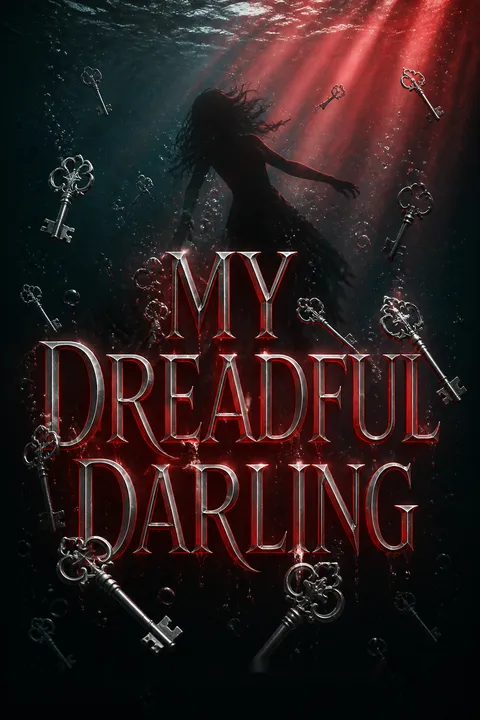
Reverie "Rev" Adams arrives at Hollow Canyon University determined to fight her lifelong fear of water, a trauma from a near-drowning by her own mother during a psychotic break. Now estranged and alone, her greatest hope is to escape her past—including a notorious family legacy bound to a convicted serial killer—her father Lionel D'Amour. On campus, she confronts old nightmares as well as a physical ghost: Kellan "Dread" Sharpe, the boy she once watched testify against her dad for killing his mother. Their childhood connection is poisoned by grief, rage, and mutual betrayals. But now he's all grown up—an Olympic swimmer, embodying everything she can't have. When Rev dips her legs into the pool and Kellan returns, promising retribution, the stage is set for a war of scars.
Breaking the Surface
Haunted by her father's infamous parole, Rev's fragile peace collapses. She is stalked not just by gossip but by violence—pranks too closely echoing her father's Victorian brutality. Notes signed "Angel," staged bodies, destroyed dorms. The campus becomes a hunting ground of psychological games, with Dread as both tormentor and shield. At every turn, Rev relives the cycle: helplessness, accusation, survival strategies. Dread's hatred for her is exquisite—cold, calculated, captivating—yet also intimately aware, as if breaking her is a gift only he may give. As the reminders of her family's crimes multiply, the boundary between prank and genuine threat grows fatally ambiguous.
A Promise Unkept
Against a backdrop of murders by a copycat "Locksmith," the terror sharpens: Lionel, supposedly contained, may be orchestrating from inside, or he has acolytes on the outside. Dread's team—Rogue and Severen—join in, blurring aid and aggression. Rev, desperate, reaches out to Barry, the FBI agent who once saved her, but finds that even her pleas are twisted against her. As the parole for her father is approved and the threat becomes physical, every support structure fractures. Her character is assassinated on campus and in the media. No betrayal, however, stings more than her own—testifying against her father and living in terror of his return.
Dread Returns
Kellan/Dread returns with force, unraveling Reverie one humiliating, public step at a time. The violence escalates from rumors to elaborate staged scenes: dummies of butchered bodies, blood, and threatening symbolism. Dread keeps his promise to make her suffer. He is both jailer and key, his obsession for vengeance taking the form of sexual and emotional power play. Their interactions grow tangled—rage, attraction, and the shared wound of lost parents. A vicious chemistry becomes impossible to ignore; torment turns possessive, then territorial. Rev is pulled between the urge to flee and the terrible comfort of Kellan's arms.
The Rule of Vengeance
The games between Dread and Rev intensify, meeting at the intersection of cruelty and need. As Lionel's spectral hand closes around them both, Dread manipulates events on and off campus. He issues ultimatums and orchestrates sexual humiliations, weaponizing her trauma and history, all with the aim of shattering her, but increasingly to feed his need for connection. Rev's survival instincts force her to negotiate, bargain, and retaliate—drugging him, fighting back, refusing to give him the satisfaction of victory. Still, she is drawn inescapably to him, even as police and media circles close in.
Mocking the Dead
Rev is stalked by copycats and by Dread's manufactured army of sycophantic women, all reenacting violence for her benefit. She is forced to confront not just her fear of water but the performance of her life as a walking crime scene, as her own trauma is made spectacle. The campus seethes with rumors about her—violence begets more violence, and public cruelty is institutionalized. Dread, always watching, controls the narrative, forcing her to wear the mask his own pain demands. When the media shines its light on her, her every move is used as proof for some new horror.
Chained by History
The elaborate games peak: Rev is arrested, chained to flagpoles, left in the snow and saved only for further torment. Dread's vengeance, sharpened by grief and guilt, oscillates between sexual dominance and brutal protection. The line between hurt and rescue blurs, and her lack of protection becomes public humiliation, first as spectacle, then as evidence—her body becomes the trophy, marked by dates of murder, violence, the accusations and losses she cannot shake. Even as Dread's cruelty becomes obsessive, he steps up as her sole defender against campus, press and family alike.
Graves Between Us
Against the physical grave of his mother and the metaphorical grave in which Dread wants to bury Reverie, they forge a pact of trauma. Shared secrets spill, slow and catastrophic. The more they try to destroy each other, the more they reveal the wounds that make them twin creatures. Dread's bitterness for her family's silence is confronted by her horror at her own complicity; her guilt for not speaking and for loving a man who hungers to break her heart. Together, in the aftermath of violence and mutual confessions, graves become the place where love is both birthed and entombed.
Cat and Corpse Games
As copycat killings spread, and campus erupts in fear, Rev is framed for murder by someone using her history against her. "Angel" notes, staged body parts, and gifts escalate to genuine danger—murdered classmates, evidence planted, the horror all too real. Dread's intoxicating seduction is shadowed by suspicion. The game of betrayal and trust reaches a breaking point: did he set her up? Is she anything more than the villain in his narrative? The outside world (police, FBI, Lionel's acolytes) press in, but nothing is as dangerous as the uncertainty between them.
Undertows and Confessions
When forced intimacy gives way to vulnerability, Dread and Rev finally lay their truths bare. Confessions break the surface: about their parents, their shared culpability, and their private battles with survivor's guilt. In the dark, they admit what really keeps them tethered—the sick, magnetic love that befits only two ruined creatures. For the first time, they each choose to stay, not out of rage, but longing. Their sex becomes a communion and an exorcism, filmed, recorded, a proof of two monsters clawing toward something like peace, even as their enemies close in.
Survival Isn't Living
Rev is stalked and nearly undone by memories of her mother's attempts on her life and her father's long shadow of violence. The world is relentless: classmates are murdered, her name is maligned. She spirals, self-blame mounting, unable to imagine a future not marked by chilling legacies. Kellan battles his own despair and identity, watching as the very thing that once kept him alive—the hate for Reverie—is transformed, twitch by twitch, into a flame that only she can stoke or extinguish. They circle survival, inching toward the possibility that living requires more than revenge.
Dead Girl in the Room
The threats become undeniable—Mindy Sackler's murder scene is staged in Dread's room, her remains horrifyingly displayed, an accusation, a warning, or an invitation. Rev is forced into the role of criminal, arrested publicly, her innocence beside the point as the spectacle swallows her whole. She and Dread, at last, stand shoulder to shoulder, a united front against an unstoppable violence that may be wearing Lionel's face or that of his invisible acolytes. The story snaps shut on the precipice: she is accused, monstrous, and yet still alive.
Love's Sharp Teeth
All along, love for both is a dangerous tool. Dread's obsession with Reverie is born of the same roots as his hatred: loss, guilt, an impossible need to find meaning in trauma. As they cling to one another—first in violence, then in desire—love becomes not a savior but a curse, a compulsion that makes monsters of them both. In the end, it is only through baring every scar, laying every secret at the altar of their destruction, that they find a way to keep breathing. Dread, once dedicated to breaking her, chooses instead to fall.
Outrunning the Monsters
Faced with threats from without (Lionel, the copycat, the press, accomplices unknown), every plan to outmaneuver the violence only leads Rev back to the beginning: alone, disbelieved, marked. Dread and his friends try to mount physical defenses, but no amount of muscle or brutality can undo a legacy inherited at birth. Attempts to change names, transfer schools, flee the country, all fail—fate pulls her back to her family's violence, whether she wants it or not. Victory, if there is any, lies not in flight, but radical, mutual, horrifying acceptance.
The Girl Who Lies
Much of the story hinges on secrets untold: Rev's silence after witnessing her father's murder of Georgia, her retreat from both Lionel and Kellan, the web of lies that keep her both alive and suffering. Dread's rage is rooted in that silence; his path to healing requires acknowledging that both their childhoods were torn asunder by trauma and by the pressure to survive at any cost. Her confession—finally voiced—is as much a release as it is a new beginning, one that asks if forgiveness is possible, or even desirable.
The Locksmith's Gift
The discovery of the lockbox—Lionel's gruesome trophy, and the "gift" left at Dread's window—shifts the arc: proof of guilt, the evidence the world might need, but also the final psychological blow to Reverie. Here, all threads of duplicity, manipulation, and self-blame culminate in horror: her childhood terror was not imagined, her complicity in not voicing the truth not redeemable. The lockbox, and the remains it contains, become both a hope for justice and the instrument of further torment.
The Heart's Confession
At last, Dread takes Reverie to his mother's grave, confesses his love, and lays down the last of his weapons. Oaths of destruction become oaths of protection and tenderness. There is no full healing—too much has been lost, too much damage done—but the cycle of hate is broken by honesty, and the possibility of love found in understanding the unspeakable. They share the ruins of themselves, the only inheritance unwilled but all that remains—and for a moment, in confession, find peace in one another's arms.
Analysis
"My Dreadful Darling" is a heady descent into trauma, obsession, and the impossible tangle of love and violence inherited from family. In morphing the dark romance genre with gothic horror, Carlton explores the cyclical nature of trauma: how survival, especially when predicated on silence or bargains with abusers, can warp every relationship that follows. Through Rev and Dread—two exquisitely broken mirrors—the narrative undermines every easy promise that love can save or vengeance heal; instead, it suggests that only the radical acceptance of the worst truths, and the mutual confession of scars and sins, offers even a hope of peace. The core lesson is that hate and love are shadows of each other when marked by grief—true healing requires moving beyond "breaking" as the only tool. The novel is also a meditation on public spectacle, victim-blaming, and the loneliness of surviving the worst. Its ending—arrest, accusation, the ever-present threat—underscores the point: you can run, you can confide, you can confess or accuse, but the inheritance of pain is never fully escaped. Yet, in the face of this, choosing—to trust, to forgive, to love even what is most dreadful—becomes its own act of rebellion, its own kind of survival.
People Also Read









Characters
Reverie "Rev" Adams
Reverie, born Charlotte D'Amour, embodies both victim and accused—haunted since age four by the attempted murder by her mother, and further tormented by the reality that her father is an infamous serial killer. Her psychological profile is a study in trauma: she flinches from water, distrusts affection, and expects retribution from the world around her. She self-blames for her silence after witnessing a murder as a child, shouldering responsibility for her own suffering and that of others. Her relationship with Dread complicates her identity: he is at once her persecutor and her only haven. As she oscillates between defiance and vulnerability, survival and surrender, she comes to accept the impossibility of ever being "innocent." Her growth is hard-won—she learns to speak truth, and finally, to choose someone (and herself) amid all legacies of violence.
Kellan "Dread" Sharpe
Kellan (nicknamed Dread), Olympic swimming legend and son of a murdered mother, is a study in the transmogrification of grief into violence. Scarred by childhood loss, he shapes his life around vengeance: he will make Reverie suffer for her family's role in his pain. Dread is cold, brilliant, and physically intimidating, yet his obsession with Reverie is the one authentic feeling left to him. He orchestrates elaborate, humiliating punishments for her, driven as much by his need for connection as by hate. His journey is a slow recognition that his only relief is in her presence, that love and hate are two sides of the same wound. He is protective, possessive, and at his core desperate to be worthy of the forgiveness he has never known how to offer.
Lionel D'Amour
Rev's father, the "Locksmith," looms over every page, even off-stage. Lionel's sick charisma shapes his daughter's entire existence—she models herself as a survivor of his violence but can never quite escape his pull. He manipulates her through letters, threats, and a network of unseen (and possibly deranged) accomplices. His greatest crime is not just the lives he took, but the ways he robbed his family and victims of peace. Post-release, he resumes his campaign of psychological warfare, pushing Rev toward the fate she fled, convinced that her annihilation is his due.
Regina D'Amour
Regina is simultaneously pitied and blamed—her attempt to drown her daughter leaves Reverie scared of affection and water alike. Her postpartum psychosis and subsequent suicide are explored as neither just villainy nor just tragedy, but as a beacon for how misunderstood mental illness cuts multiple ways. For Dread, she is complicit in erasing his mother's memory; for Rev, she is a reminder of the impossibility of being fully absolved.
Barry Jones
Barry is the FBI agent who arrested Lionel, and the only adult who ever offered Rev safety. He is her "North Star"—suggesting the only direction home is away from family. He is plagued by his own guilt for not convicting Lionel more clearly, for not saving more girls, and increasingly for not being able to protect Rev as danger closes in. His faith in logic and the system is both his strength and his limit.
Rogue Cameron
Rogue embodies calculated cruelty and reckless humor, helping Dread plot his psychological warfare. Yet, in his moments of candor, he expresses remorse and even affection for Rev, suggesting that even loyal monsters have boundaries they won't cross. His punk aesthetic masks a complicated relationship with suffering and authority; trauma binds him to Dread more than malice does.
Severen Fox
Severen, quieter but just as complicit as Rogue, undertakes the role of watcher and, eventually, protector for Rev. A lover of romance novels, he is the confusing synthesis of gentleness and bullying, suggesting the limits of complicity and the difficulty of full redemption. His loyalty to Dread is tested by Octavia and by his own guilt for the games that went too far.
Octavia
Octavia, captain of a campus team and Severen's ex, represents the difficulty and cost of forgiveness. Her twin brother's suicide by bullying means she cannot easily absolve those who hurt others, even if they change. Her guarded friendship with Rev and her wary detente with Severen illustrate how complicated legacies of harm can be—sometimes sympathy is as close as we dare come to reconciliation.
Roxi
Roxi, Lionel's much younger girlfriend, is a study in the power of denial. She appears innocent, a romantic desperate to believe in the best of her lover. Her ignorance is weaponized—by Lionel, by the plot, by the reader's suspicions—to keep the true threat hidden. Her fate remains ambiguous, a caution about falling for the stories predators tell.
Mindy Sackler
Mindy is an echo of so many girls before her: another student, easy prey for Lionel or his proxy, her fate instrumentalized as both clue and wound. Her staged death in Dread's room is the ultimate accusation—a literal embodiment of how violence shapes not just reputation but reality on campus.
Plot Devices
Dual Trauma as Narrative Engine
"My Dreadful Darling" is structured so that every twist directly traces back to formative traumas: attempted murders, suicides, public shaming, the compulsion to relive and/or rewrite past wounds. The narrative leverages these recursive wounds to drive external action—every prank and murder is both escalation and exorcism. The campus is a crucible in which trauma is public, social, and unsolvable except through contact with one's supposed opposite. Survival requires both keeping secrets and telling the truth at terrible cost.
Power Plays and Cat-and-Mouse Games
The story continuously weaponizes sex, trust, and public humiliation: the sexual relationship is both reprieve and battlefield, each confession or act of submission a bid to control or redeem the other. Dread's elaborate pranks, staged corpses, and ultimatums ("fuck me or drown; fuck me or burn") are meticulously chosen to test the limits of control, revealing how love and hate are indistinguishable when bound by shared suffering.
Unreliable Narration and Deflection
The book is built on reveals withheld and truths disguised by trauma: whose threat is real? Who is the true copycat? Can Dread actually protect Rev, or is he the one orchestrating her doom? These uncertainties are engineered to create maximum anxiety, both for the characters and the reader. The plot is constantly punctuated by twists where every apparent friend (or enemy) might actually be complicit in harm.
Multiple Scapegoats and Journeys of Blame
Public perception (media, school friends, the legal system) is always part of the threat—Rev is tried and condemned for her family's crimes and for those Dread orchestrates. The media's appetite for spectacle mirrors Dread's own, and both evoke the impossibility of ever escaping the prison of other people's opinions. Justice, if it comes, is always contingent, and always partial.
Self-Reflection, Meta-Narrative, and Gothic Foreshadowing
The recurrence of water as both danger and deliverance foreshadows Rev's progress: immersion signals crisis, sex and confession signal hope. Every act pays off prior hints—public humiliation leads to the ultimate crime scene; sex tapes become evidence (or exoneration); staged violence becomes genuine death. The final arrest is carefully foreshadowed throughout—even as every escape plan is undermined by fate.
Download PDF
Download EPUB
.epub digital book format is ideal for reading ebooks on phones, tablets, and e-readers.








































