
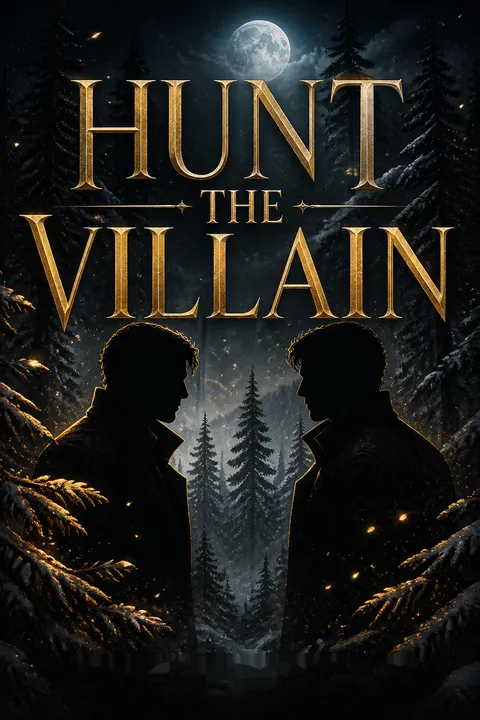


Plot Summary
Blood on the Balcony
Fifteen-year-old Vaughn Morozov,1 heir to the New York Bratva, arrives at a mountain camp designed to bridge decades of rivalry with the Chicago branch. He's meticulous, composed, and already cataloguing security details when an explosion rips through the grounds.
Yulian Dimitriev,2 the Chicago leader's son, emerges grinning — dirt-covered, busted-lipped, clutching a homemade detonator. He scales the balcony to introduce himself, offers a filthy hand. Vaughn1 drops a monogrammed handkerchief in it; Yulian2 blows his nose in it.
When Vaughn1 refuses to fight, Yulian2 smears blood across his face. In that instant, Vaughn's1 disgust crystallizes into something absolute. He vows to make this chaotic, loud, infuriatingly uncontrollable boy's summer a living hell. The feeling, he believes, is mutual.
The Bruises Beneath
Vaughn1 spies from an adjacent balcony when Yulian's father, Yaroslav,4 arrives unannounced. Through the cracked door, he watches the Chicago Bratva leader backhand his son hard enough to send him sprawling, then kick him repeatedly while calling him useless and talentless.
Yulian2 grins through it, mocking his father even as blood pools on the hardwood. Vaughn's1 fists clench — his own father has never struck him, and the concept sickens him. He realizes the black eye, the bruised ribs, the constant injuries aren't from Yulian's2 recklessness alone.
They're gifts from his father.4 Yaroslav4 threatens to separate Yulian2 from his cancer-stricken mother and sister, Alina,5 if he doesn't improve. After Yaroslav4 leaves, Yulian2 stands motionless, staring at the floor. Vaughn1 watches from the shadows, unable to move.
Yulian Takes the Bullet
Punished together after a sparring match that went too far, they're sent up the mountain to gather wood. Vaughn1 carries a meticulously packed emergency backpack; Yulian2 brings only water and a grin. Their bickering cuts short when sniper fire erupts from the trees.
Before Vaughn1 can react, Yulian2 shoves him aside and takes a bullet to the side — deep, just below his ribs. They flee together, Yulian2 bleeding heavily, navigating through the forest and killing assailants with terrifying precision.
Vaughn1 realizes Yulian's2 combat instincts far exceed his classroom performance — this boy who sleeps through lectures can pinpoint snipers in trees and shoot them dead mid-stride. They reach a hidden cave Yulian2 discovered during his many punishments, and Vaughn1 knows he must save a life he never expected to care about.
Surgery and a Stolen Kiss
Vaughn's1 emergency backpack proves essential — antiseptic, bandages, protein bars, antibiotics. With shaking hands, he sterilizes scissors with Yulian's2 lighter, probes the wound, extracts the bullet, and stitches the gash with crude, haphazard lines.
Yulian2 fights unconsciousness while they trade questions about siblings, dreams, and family. When night falls and cold seeps through stone, they huddle together — Vaughn1 pressed against Yulian's2 back, arms curled carefully above the wound. He promises in Russian: I'm with you.
After Vaughn1 drifts to sleep, Yulian2 tilts his head and brushes his lips against Vaughn's1 — barely a kiss, more a trembling question. The fireworks detonating in his chest terrify him. He closes his eyes against the reality that he's just had his bi-awakening with the one boy he's supposed to hate.
A Dying Wish Divides Them
The full truth surfaces years later: Vaughn1 never abandoned Yulian.2 He carried him down the mountain, surrendered him to Chicago's guards, then defied his parents and flew to Chicago alone. Disguised as a doctor, he slipped into Yulian's2 hospital room, held his unconscious hand, and — unable to resist — kissed him.
The explosion in his chest confirmed everything he feared about his feelings. But Yulian's mother2 caught him. Skeletal from cancer, trembling with terror, she begged Vaughn1 to leave and never contact her son again.
Being with a man would get Yulian2 killed in their world. Vaughn,1 fifteen and devastated, obeyed. He kept only the bullet he'd extracted, strung on a keychain he'd carry for four years. Meanwhile, Yulian's mother2 extracted her own promise: he would marry a woman, or she'd never rest in peace.
The Parking Lot Heartbreak
A week later, Yulian2 made his own forbidden trip — sneaking to New York despite his gunshot wound, desperate for one more glimpse. Standing behind a car in a school parking lot, he watched Vaughn1 smile at a brunette named Danika10 and then kiss her.
The image seared through every fragile hope he'd nursed since the cave. Before the devastation could settle, his phone buzzed with a text from Cyrus,3 his foster brother and only real friend: his mother had died, and Alina5 had been in a car accident trying to reach him.
She would never walk again. Yulian's2 grief compounded into guilt — he'd been chasing a boy across state lines while his mother took her last breath and his sister5 lost her legs. Love curdled into obsession and blame. Four years of silence began.
The Sex Tape Gambit
Four years of suppressed fury detonate when Yulian,2 now nineteen, appears uninvited at a Manhattan restaurant where Vaughn1 is dining with Danika.10 He demands Vaughn1 leave her and transfer schools. When Vaughn1 refuses, Yulian2 executes his plan: he lures Danika10 to a hotel room, sleeps with her, and films everything.
The next morning, Vaughn1 receives the footage. Watching it, he feels detachment rather than devastation — a clinical revelation that he never truly loved Danika.10 He publicly humiliates her at a charity event, systematically dismantles her family's social standing, and retaliates by rigging Yulian's2 beloved motorcycle to explode.
Their war of provocations ignites — Yulian2 flooding Vaughn's1 phone with flirtatious video messages, Vaughn1 watching every single one but refusing to respond, each circling the other like magnets denied contact.
Chains at the Initiation
Vaughn1 tells himself he's protecting his friend Nikolai6 when he keeps flying to Brighton Island to monitor Yulian.2 First, he infiltrates a Serpents' party and finds Yulian2 asleep. His hand wraps around Yulian's2 throat; Yulian2 wakes, thinks he's dreaming, and kisses him.
Vaughn1 runs. Weeks later, he sends Yulian2 an invitation to the Heathens' initiation — claiming he wants to teach him a lesson. Instead, after dragging Yulian2 across the forest floor by a chain around his neck, they end up tangled on the ground.
Yulian2 realizes the earlier kiss was real, not a dream. He pins Vaughn1 beneath him and kisses him deliberately, roughly, with years of hunger behind it. His hand finds Vaughn's1 cock. Vaughn1 comes harder than he ever has — then punches Yulian2 and flees to the airport.
Off the Cliff Together
Vaughn1 keeps returning to watch Yulian2 fight in underground rings — always in disguise, always running when spotted. During a confrontation on a coastal road, Yulian2 makes a reckless gamble: if he survives jumping off the cliff, Vaughn1 has to give him a chance.
When Vaughn1 scoffs, Yulian2 throws himself backward over the railing without hesitation. Vaughn1 dives after him. In a hotel room afterward, Yulian2 naked and freshly saved, they have their first fully mutual sexual encounter — mouths on each other simultaneously, both coming for the first time in each other's mouths.
But when Vaughn1 goes quiet afterward, staring at the ceiling and processing the enormity of what just happened, Yulian2 reads the silence as rejection. He bolts — deciding for once to leave before being left.
Gunfire at the Gala
At a charity event in Washington DC, every major Bratva faction gathers under one roof. Vaughn1 and Yulian2 reconnect in a conference room — kissing furiously, arguing, touching the fresh bruises Vaughn1 discovers on Yulian's2 torso from another paternal beating.
Then gunshots shatter the event. Moving through the chaos shoulder-to-shoulder, they fall into the same instinctive partnership from the mountain four years earlier. Yulian's2 only thought is his sister Alina,5 whom their father4 brought as a marriage-alliance prop.
They find her wheelchair empty, panic mounting, until a stranger named Levian Markov14 appears cradling her unconscious but unharmed. Vaughn1 later learns Yaroslav4 is actively shopping Alina5 to the highest bidder. The stakes around Yulian2 sharpen into something that refuses to be filed away as temporary.
Weekends in Secret
Vaughn1 purchases a secluded beach house on Brighton Island — displacing the owners, installing security — to create one space where they exist without the world watching. Every Friday he flies six hours from New York. They collide the moment the door opens, tearing at each other's clothes before reaching the bedroom.
But it's not only sex that fills the house. They cook together — Yulian2 disastrously, Vaughn1 methodically. They ride Yulian's2 motorcycle through empty roads at night, stopping at a gas station where they once held hands for the first time.
Vaughn1 tutors Yulian2 between his legs. Yulian2 makes Vaughn1 laugh harder than anyone ever has. For three months, the beach house is their sealed universe — and its walls are the only thing keeping Vaughn1 from having to name what lives inside them.
The Word That Broke Them
After Vaughn1 cancels a weekend for a family event, Yulian2 demands an answer: what am I to you? Tell me you love me, he says. Vaughn,1 cornered, defaults to logic — their circumstances won't allow a long-term relationship. He calls what they have temporary. The word lands like shrapnel. Yulian2 gives his ultimatum — all of you or nothing — and rides away.
When he crashes a gallery opening Vaughn1 attends with his parents, Vaughn1 introduces him as not important. Yulian2 kisses him furiously in the parking lot, then disappears into the night. Within hours, Yaroslav's4 men intercept him at his hotel. Someone photographed that parking-lot kiss, and Yulian's father4 now has the evidence he needs to do what he's always threatened.
Broken in the Basement
Yulian2 wakes bound to a chair in the dungeon beneath his family's Chicago mansion. Yaroslav4 shows him the photograph — two mouths locked together, unmistakable. The beating is methodical: fists, boots, ribs cracking, skin splitting.
Yaroslav4 calls him less than a man, promises castration and to marry Alina5 to the highest bidder. Yulian,2 bloodied and barely conscious, still refuses to call his sexuality disgusting.
Meanwhile, Cyrus3 contacts Vaughn1 and reveals the full horror: years earlier, Yaroslav4 caught a sixteen-year-old Yulian2 kissing a boy, killed the boy in front of him, then broke both of Yulian's2 legs. The message is explicit — Vaughn1 is the only one who can save him now, and every hour of hesitation brings Yulian2 closer to a body bag.
Vaughn's Raid on Chicago
For the first time in his life, Vaughn1 tells his parents everything — four years of suppressed love, the cave, the stolen kisses, Danika10 as a replacement, the weekends in another man's arms. His father7 promises to kill anyone who questions his son's choices.
His mother8 reminds him that powerful men can love whomever they want. Then Vaughn1 assembles a strike team: his parents — both ex-special-forces snipers — his uncle, and Cyrus,3 who freezes the mansion's security from the inside.
Vaughn1 shoots through guards, blasts the cell door, and finds Yulian2 crumpled on the stone floor — face swollen shut, ribs visibly broken, shirt soaked through with blood. The gun slips from Vaughn's1 hand as he drops to his knees and gathers the barely recognizable body against his chest.
The Tattoos Don't Lie
Vaughn1 flies Yulian2 to his uncle Anton's15 hidden estate deep in the Altai Mountains, where Anton15 and his husband Maks16 — a former soldier and a businessman — model the kind of partnership both young men have been too afraid to imagine.
As Yulian2 heals, they finally unspool the tangled thread of four years ago. Vaughn1 confesses the hospital kiss and the bullet keychain. Yulian2 reveals he saw Danika.10 Each learned the other's worst chapter. Then come the tattoos.
Yulian's2 chest bears Cyrillic script over his heart — I'm with you — Vaughn's1 exact promise from the cave. Vaughn1 guides Yulian's2 hand to numbers inked on his inner thigh: GPS coordinates marking the cave's location. Both branded themselves with the same night, neither knowing the other had done the same.
Gone Before Dawn
While Yulian2 sleeps against Vaughn's1 chest in the mountain estate, a phone call shatters everything. Yaroslav4 has seized Alina5 and plans to force her into a marriage alliance with the Boston Bratva. The only bargaining chip: if Yulian2 returns and marries the Boston leader's daughter himself, Alina5 goes free.
He writes Vaughn1 a handwritten letter — apologizing, declaring him the best thing that ever happened, admitting that maybe Vaughn1 was right about them being temporary. He flies to Chicago alone on a borrowed jet.
Vaughn1 wakes to cold sheets and devastation inked across a page. His father7 calls to say the Chicago-Boston wedding already happened. Vaughn's1 composure — maintained through four years of denial — finally fractures. He books a flight and swears to burn Chicago to cinders.
The Bullet for Yaroslav
In Chicago, Alina5 reveals she's been secretly dating Levian Markov14 — the stranger who saved her in DC — and volunteers to marry him instead, on her own terms. She also discloses that the Boston branch orchestrated the camp attack years ago.
Meanwhile, Lukas,11 Yulian's2 ambitious half-brother, has staged a coup, capturing Yaroslav4 and offering Yulian2 co-leadership. In the same basement where he was beaten, Yulian2 now faces his father4 bound to a chair. He tells Yaroslav4 that being with a man doesn't make him weak — but abusing his children does.
Then he pulls the trigger. Relief, not grief, fills the silence. When Vaughn1 arrives at the mansion gates ready for war, Yulian2 runs toward him: unmarried, unshackled, free. They declare their love on ground where empires have risen and crumbled.
Epilogue
One month later, Vaughn1 transfers to Brighton Island and introduces Yulian2 to his friend group, holding his hand openly for the first time. Nikolai6 crows about being the blueprint for their queerness; Gareth,9 who shared his own secret bi-awakening with Vaughn1 through anonymous Reddit chats, watches with smug satisfaction.
Two years after that, at Nikolai's6 wedding in a Tuscan vineyard, Vaughn1 drops to one knee at the empty altar and presents two rings engraved with the nicknames they gave each other — Volchonok and Mishka, little wolf and teddy bear.
Yulian2 says yes before Vaughn1 finishes the question. The boy who once smeared blood on a stranger's face and the boy who handed him a monogrammed handkerchief will spend the rest of their lives choosing each other.
Analysis
Hunt the Villain interrogates the architecture of masculinity within institutions built to enforce it. The Russian Bratva, with its codes of dominance, lineage, and heteronormative tradition, functions as both the literal world these characters inhabit and the psychological cage they must dismantle to love each other. The novel's central tension is not whether Vaughn1 and Yulian2 will be together — their magnetic pull is established within pages — but whether they can survive the systems designed to prevent it.
The dual-POV structure reveals a devastating asymmetry: Yulian2 experiences love as perpetual pursuit, always chasing, always left behind, while Vaughn1 experiences it as perpetual retreat, always fleeing the vulnerability that connection demands. This mirrors their respective traumas. Yulian,2 beaten for existing, learned that love requires fighting for. Vaughn,1 groomed for perfection by caring parents, learned that love requires performing. Neither instinct is wrong, but together they create a cycle of collision and abandonment that spans four years.
The novel makes a provocative structural argument about parenting as destiny. The Morozov household — where love is expressed, sexuality is accepted, and children are empowered — produces a man capable of eventually choosing authenticity. The Dimitriev household — where love is weaponized, identity is policed, and children are commodities — produces a man who conflates affection with danger. Kent's choice to withhold the hospital-visit flashback until late in the narrative transforms a straightforward romance into a puzzle of competing truths, where both protagonists spent four years justifiably certain they were the one who was betrayed.
Ultimately, the novel argues that authenticity — sexual, emotional, relational — cannot be indefinitely deferred without catastrophic cost. Every year of suppression compounds into violence, whether internalized or externalized, until the only path forward is through the very exposure both characters spent their lives engineering ways to avoid.
Review Summary
Reviews for Hunt the Villain are deeply divided. Enthusiastic fans celebrate the MM romance between Vaughn and Yulian, praising the enemies-to-lovers dynamic and Yulian's layered characterization. Critics argue the book is a "cash grab" capitalizing on God of Fury's success, with some expressing disappointment over Vaughn's established heterosexual characterization being changed. A recurring criticism is Rina Kent's portrayal of female characters as villains or mentally unstable. The 3-star review notes plot similarities to previous works, while 5-star reviewers dismiss homophobic backlash and embrace the pairing enthusiastically.
People Also Read
Characters
Vaughn Morozov
New York Bratva heirHeir to the New York Bratva, raised to be a perfect leader by loving parents who model partnership and devotion. His defining psychology is control—over his emotions, environment, and future. Beneath this precision lives a man terrified of his own desire, someone who builds elaborate structures of logic to avoid confronting feelings he considers dangerous. His attraction to Yulian2 represents the first force in his life that intellect cannot contain or categorize. He processes affection through acts of service—emergency surgery, stocking medicine, buying protective leather—rather than words. His growth arc moves from emotional suppression to radical vulnerability, learning that strength isn't control but the courage to be fully seen. His secure parental attachment provides the foundation from which he eventually builds the bravery to choose authenticity.
Yulian Dimitriev
Chicago Bratva heirHeir to the Chicago Bratva, forged under the fist of a father4 who views tenderness as weakness. His chaotic exterior—the jokes, the recklessness, the nonstop talking—is armor forged in a childhood where standing still meant being hit. He learned to smile through beatings, convert terror into laughter, and make himself so loud that no one could hear him breaking. His bisexuality, discovered through Vaughn1, becomes another battlefield where he must survive his father's4 brutality. Beneath the bravado lives someone who craves stability, tenderness, and the simple act of being chosen. His loyalty is absolute—he took a bullet at fifteen without hesitation—but his deepest wound is the belief that he'll always be abandoned. His arc is learning that love doesn't always leave.
Cyrus
Yulian's foster brotherYulian's2 foster brother and closest confidant, placed in the Dimitriev household as a teenager under mysterious circumstances. Platinum-blond with unsettling gray eyes and a scar at the corner of his mouth, he radiates calculated calm. Where Yulian2 is chaos, Cyrus is strategy—manipulating guards, managing Yulian's father4, and fiercely protecting his friend's secrets, including his sexuality. His loyalty is absolute but pragmatic, and he views Vaughn1 with deep suspicion, convinced the polished heir will inevitably hurt the one person who accepted Cyrus when no one else would.
Yaroslav Dimitriev
Yulian's abusive fatherLeader of the Chicago Bratva and Yulian's2 father. A towering, brutal traditionalist who views his legitimate son as a failed investment. He expresses control through violence—beating Yulian2 routinely since childhood and wielding his mother2 and sister5 as leverage. His homophobia is absolute and lethal. A self-made man who married into aristocratic wealth, he represents the crushing institutional force both protagonists must overcome—a father who would rather destroy his heir than accept him.
Alina
Yulian's paralyzed sisterYulian's2 younger sister, paralyzed from a car accident. A pianist and former ballerina, she possesses her brother's stubbornness without his recklessness. She serves as Yulian's2 emotional anchor—the person he would sacrifice anything for—and her vulnerability is the primary weapon their father4 uses to maintain control. Despite her disability, she navigates her world with quiet determination and sharp wit, refusing to be reduced to a bargaining chip.
Nikolai
Vaughn's chaotic best friendSon of two New York Bratva leaders and Vaughn's1 childhood friend. Openly bisexual, physically massive, and aggressively chaotic, he serves as a foil to Vaughn's1 restraint. He fights Yulian2 regularly—at camp and in underground rings—sharing Yulian's2 love of violence. His unapologetic queerness normalizes the space Vaughn1 is terrified to occupy and provides much-needed comic relief throughout the story.
Kirill Morozov
Vaughn's father, NY PakhanVaughn's1 father and leader of the New York Bratva. A strategic, fair-minded leader who models healthy masculinity and devoted partnership with his wife8. He represents the supportive parental figure that Yulian2 was denied—willing to protect his son's choices with lethal force while respecting his autonomy. His relationship with Vaughn1 runs on mutual respect and shared ambition.
Alexandra
Vaughn's mother, ex-sniperVaughn's1 mother, Russian-born ex-special-forces sniper. Warm, perceptive, and lethally capable, she notices her son smiling at his phone long before he understands why. She represents unconditional maternal love backed by the capacity to act on it—a stark contrast to the helplessness of Yulian's2 mother, who loved her son equally but lacked the power to protect him.
Gareth
Vaughn's secret confidantMember of Vaughn's1 friend group, secretly navigating his own attraction to a male professor. He becomes Vaughn's1 anonymous Reddit confidant—both processing their bi-awakenings through pseudonymous conversations before their real identities are revealed. His narcissistic online persona contrasts sharply with his polished public image, and his willingness to be brutally honest makes him Vaughn's1 most useful sounding board.
Danika
Vaughn's ex-girlfriendVaughn's1 girlfriend of four years, chosen as a shield against feelings he refuses to examine. Beautiful and socially ambitious, she serves the image of the structured life Vaughn1 constructed for himself rather than any genuine emotional connection.
Lukas
Yulian's half-brotherYulian's2 older illegitimate half-brother, raised harshly in Russia's military. Ambitious, calculating, and resentful of the legitimacy Yulian2 was born into, he carries the hunger of someone who has never been given what he believes he deserves.
Jeremy
Heathens' leaderLeader of the Heathens club and Vaughn's1 close friend. Steady and levelheaded, he serves as the grounding presence in their friend group and helps facilitate Vaughn's1 covert operations on the island.
Killian
Gareth's sardonic brotherGareth's9 dark-haired brother and Heathens member. Provocative and sardonic, he provides counterbalance to the group's emotional chaos with cutting one-liners.
Levian Markov
Boston Bratva's youngest sonYoungest brother of the Boston Bratva leader, an illegitimate son operating in the shadows of his family's power structure. He rescues Alina5 during the DC attack, establishing a connection whose significance emerges much later.
Anton
Vaughn's uncle in RussiaVaughn's1 maternal uncle, a powerful Russian businessman married to Maks16. His openly gay partnership in a conservative world offers proof that love between men and power can coexist.
Maks
Anton's husband, ex-soldierAnton's15 husband, a massive former special forces soldier. Warm and reckless where Anton15 is precise, he mirrors Yulian's2 energy and takes the wounded young man under his wing.
Lidya
Vaughn's boxer cousinVaughn's1 cousin and childhood confidant, a boxer and tomboy who offers to smuggle Vaughn1 out of the house when tension peaks with his parents.
Plot Devices
The Bullet Keychain
Relic of devotion and proofThe bullet Vaughn1 extracted from Yulian's2 side in the cave, which he strings on a keychain and carries for four years. It functions as a physical anchor to the night he couldn't forget—tangible proof that saving Yulian2 was the most important thing he ever did. The keychain appears repeatedly, touched or gripped during moments of stress, serving as Vaughn's1 secret talisman. When finally revealed to Yulian2, it dissolves the central misunderstanding between them: Yulian2 believed Vaughn1 abandoned him, but the bullet proves he never let go. The device transforms from evidence of violence into a symbol of devotion—a wound made precious by the hand that healed it.
The Cave
Sacred origin of everythingA hidden cave on the Adirondack mountain where Vaughn1 saves Yulian's2 life, they share their first intimate night, and Vaughn1 makes his promise in Russian. It functions as the relationship's ground zero—every future encounter echoes back to this cold, dark shelter where both dropped their armor simultaneously. The cave's emotional weight drives both characters to mark it permanently on their bodies: Yulian2 tattoos Vaughn's1 words over his heart, Vaughn1 tattoos the cave's GPS coordinates on his inner thigh. Neither knows the other has done this until years later, making the cave a silent bridge between two people who believed they were suffering alone.
The Beach House
Sanctuary and gilded cageA secluded coastal property Vaughn1 purchases on Brighton Island, accessible only through a private gate. It functions as both sanctuary and limitation—the one place they can be fully themselves, but also the container that restricts their relationship to Friday-through-Sunday windows. The house represents Vaughn's1 instinct to control his environment while also revealing his capacity for care: he stocks it with medical supplies, protective riding gear, and healthy food for Yulian2. Its eventual insufficiency—Yulian's2 frustration that Vaughn1 won't commit beyond weekends—symbolizes how love cannot be compartmentalized, no matter how perfect the walls.
The Sex Tape
Revenge catalyst that backfiresYulian2 films himself sleeping with Vaughn's girlfriend Danika10 and sends the footage as an act of revenge for being abandoned. The tape is designed to shatter Vaughn's1 perfect life, but it accomplishes the opposite of its intent. Watching his girlfriend with another man, Vaughn1 feels detachment rather than devastation—a clinical revelation that he never truly loved her. The tape forces him to confront what he does feel intensely about: Yulian2. Simultaneously, it reveals Yulian's2 obsession runs far deeper than anger. During the encounter, he admits to himself that he was trying to feel Vaughn1 through Danika10. The weapon aimed outward wounds both of them inward.
Ya s toboy (I'm with you)
Promise made permanent in inkThe Russian phrase Vaughn1 whispers to Yulian2 in the cave—I'm with you—becomes the emotional thesis of their entire relationship. Yulian2 tattoos the Cyrillic script over his heart, making it the only ink on his chest amid a back covered in elaborate designs. It is the permanent record of the first time someone outside his family promised to stay. The phrase travels through the story as a touchstone: first spoken in desperation, then echoed in longing, and finally validated when Vaughn1 sees the tattoo and recognizes his own words written on another man's skin. It transforms a whispered promise into an indelible vow.
About the Author

Download PDF
Download EPUB
.epub digital book format is ideal for reading ebooks on phones, tablets, and e-readers.








































