
Plot Summary
Death's Unwanted Obsession
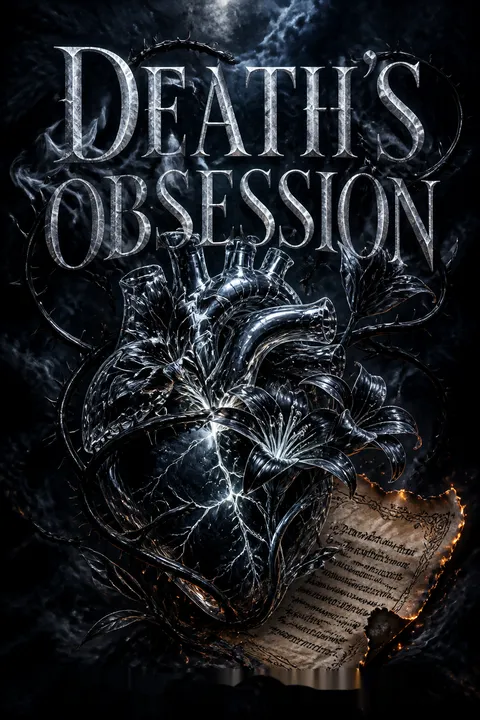
In the prologue, Death—personified as a sentient, yearning force—confesses his fixation on Lilith, a woman who survived a fatal car accident. He is not the impartial reaper of souls but a being capable of longing, desire, and even mercy. Lilith, broken by trauma and loss, becomes the only soul Death has ever wanted to keep, not take. This obsession manifests in haunting, intimate ways: letters, gifts, and marks left on her body. For Lilith, Death is both tormentor and savior, the only constant in a world that has otherwise abandoned her. The story's emotional core is set: a woman chased by death, who in turn chases it, and a supernatural being who cannot let her go.
Letters in the Night
Lilith's life is a cycle of insomnia, anxiety, and dissociation, punctuated by the arrival of cryptic love notes and gifts from the Faceless Man—Death in disguise. No one believes her; her therapist and boyfriend Evan dismiss her experiences as hallucinations or sleepwalking. The letters, always vanishing from evidence, become her only proof of sanity and existence. The marks on her body, the flowers that never wilt, and the sense of being watched blur the line between reality and delusion. Lilith clings to these tokens, both terrified and comforted, as they become the only things that make her feel alive.
Haunted by the Faceless Man
The Faceless Man's haunting escalates: he invades her dreams, leaves gifts in impossible places, and even texts her cryptic messages. Lilith's relationship with Evan deteriorates under the strain of her trauma and his emotional neglect. She is isolated, gaslit, and increasingly dependent on the attention of her supernatural stalker. The Faceless Man's obsession is both menacing and seductive, offering Lilith a twisted form of validation and intimacy. Her reality fractures further as she questions her sanity, haunted by visions of her dead sister and the ever-present shadow of Death.
Evan's Shadow and Lilith's Guilt
Lilith's attempts to maintain normalcy with Evan are futile. He is dismissive, controlling, and ultimately a source of pain rather than comfort. The Faceless Man's gifts and marks become more frequent, even as Lilith tries to break free from Evan's grasp. The tension between her longing for death and her fear of it grows. The guilt over surviving the accident that killed her sister and the emotional abuse from Evan compound her sense of worthlessness. The Faceless Man's obsession becomes a lifeline, even as it threatens to consume her.
Dreams of Death's Touch
In a vivid, sensual dream, Lilith encounters the Faceless Man in a surreal landscape. Their interaction is charged with desire and danger, blurring the boundaries between dream and reality. The dream leaves physical marks on her body, deepening her confusion and obsession. The Faceless Man—Death—reveals his name: Letum. He claims Lilith as his own, both body and soul, and she finds herself craving his touch despite the fear he inspires. The dream becomes a turning point, awakening Lilith's suppressed desires and hinting at a deeper connection between them.
The Scarred and the Stalker
Lilith's daily life is a struggle against her own mind, haunted by memories of the accident and the constant presence of Letum. She is marked by both physical scars and the psychological wounds of loss and abuse. Letum's gifts and letters become increasingly intimate, reflecting his deepening obsession. Lilith's sense of self is eroded by her dependence on his attention, even as she resists his control. The line between victim and willing participant blurs, as Lilith begins to find comfort in the darkness that surrounds her.
The Night Monster's Awakening
As Letum's influence grows, Lilith begins to accept her identity as his "night monster." She is no longer merely a victim but an active participant in their twisted relationship. The marks he leaves on her body become symbols of possession and desire. Lilith's longing for death transforms into a longing for Letum himself. She starts to see herself through his eyes: powerful, beautiful, and worthy of obsession. This awakening is both liberating and terrifying, as she realizes that her fate is inextricably linked to Death.
Death's Name Revealed
In a climactic dream, Letum reveals his true identity as Death. He is not a monster, but a being capable of love, longing, and vulnerability. Lilith learns that she is the only soul he has ever refused to take, choosing instead to keep her alive. Their connection is cosmic, fated, and deeply intimate. Letum's obsession is not just with Lilith's body, but with her soul. He offers her a choice: to live, to die, or to belong to him for eternity. Lilith's acceptance of Letum marks a turning point in her journey toward self-acceptance and healing.
The Breaking and the Bloom
The death of Evan—engineered by Letum—forces Lilith to confront her own guilt, grief, and desire for freedom. She is both devastated and relieved, recognizing that Evan's presence was a chain holding her back. Letum's withdrawal leaves her alone to face her pain, pushing her to the brink of despair. Yet, in her isolation, Lilith begins to bloom. She visits her family's graves, mourns her losses, and starts to rebuild her sense of self. The process is painful, but necessary for her transformation.
Letum's Withdrawal
Letum, tormented by his own longing, withdraws from Lilith's life to allow her to heal. He watches over her from the shadows, leaving gifts and letters but refusing to intervene. Lilith's suffering is acute, but it is through this pain that she begins to reclaim her agency. She confronts her past, faces her trauma, and starts to live for herself rather than for death. Letum's absence is both a punishment and a gift, forcing Lilith to find strength within herself.
Facing the Graves
In a pivotal moment, Lilith visits the graves of her family and Evan. She speaks her truth, mourns her losses, and forgives those who hurt her. This act of closure allows her to release the guilt and pain that have haunted her since the accident. She acknowledges her survival, not as a curse, but as an opportunity for growth. The visit to the graves marks the end of one chapter and the beginning of another, as Lilith prepares to embrace her future with Letum.
Letters of the Living Dead
As Lilith rebuilds her life, she discovers a trove of new letters from Letum, hidden among her belongings. These letters are filled with love, encouragement, and reminders of her strength. Letum's presence is felt in every aspect of her life, from the repaired floorboards to the flowers on her pillow. The letters become a source of comfort and motivation, guiding Lilith through her recovery. She realizes that Letum's love is not a curse, but a blessing that has helped her survive.
The Final Invitation
After months of healing and self-discovery, Lilith receives a final, cryptic invitation from Letum: to find him at the place where it all began. The message is both a challenge and a promise, signaling the end of her journey through darkness and the beginning of a new life. Lilith understands that to be with Letum, she must confront her deepest fears and embrace her true self. The invitation is a test of her readiness to surrender to love, death, and eternity.
Reunion at the Beginning
Lilith returns to the site of the accident that changed her life, where Letum waits for her. The reunion is charged with emotion, as Lilith finally sees Letum's true face and remembers all the moments they shared in dreams. She realizes that their connection transcends life and death, rooted in a love that is both destructive and redemptive. The crash site, once a symbol of trauma, becomes the place of her rebirth. Lilith surrenders herself to Letum, choosing to belong to him for eternity.
Surrender to the Storm
In a final act of surrender, Lilith offers her soul to Letum. The storm that rages around them mirrors the tumult of her emotions, but within it, she finds peace. Letum accepts her gift, and together they cross the threshold between life and death. The act is not one of annihilation, but of union and transcendence. Lilith's death is not an end, but a beginning—a transformation into something eternal and beautiful. The storm becomes a symbol of their love: wild, destructive, and ultimately life-giving.
Eternity's Embrace
In the aftermath, Lilith and Letum walk together into eternity, their souls entwined. The pain, loss, and longing that once defined them are replaced by a profound sense of belonging. Lilith is no longer haunted by death; she has become its companion, its equal, its love. Together, they guide souls to the afterlife, finding purpose and fulfillment in each other. The story ends not with despair, but with hope—a testament to the power of love to heal, transform, and transcend even death itself.
Analysis
Death's Obsession is a dark, erotic, and psychologically rich exploration of trauma, obsession, and the transformative power of love. At its core, the novel interrogates the boundaries between life and death, sanity and madness, victimhood and agency. Lilith's journey is one of profound suffering and healing, as she moves from being haunted by death to embracing it as her lover and equal. The story challenges traditional notions of romance, presenting a relationship that is both destructive and redemptive, rooted in mutual longing and acceptance of darkness. Letum's obsession is not merely predatory but a catalyst for Lilith's growth, forcing her to confront her pain and reclaim her agency. The novel's use of supernatural elements, epistolary motifs, and dreamlike sequences creates a surreal, immersive atmosphere that mirrors the protagonist's fractured psyche. Ultimately, Death's Obsession offers a powerful meditation on grief, survival, and the possibility of finding meaning—and even love—in the shadows. It suggests that true healing comes not from denying one's darkness, but from embracing it, and that even in death, there can be beauty, connection, and hope.
Review Summary
Death's Obsession receives mixed reviews, with ratings ranging from 1 to 5 stars. Some readers praise the dark romance, spicy scenes, and emotional depth, while others criticize the repetitive plot and underdeveloped characters. The story follows Lilith, who is stalked by Death himself. Readers appreciate the exploration of grief and mental health but find the ending confusing. The writing style and shadow-based intimate scenes are highlights for many, though some compare it unfavorably to fanfiction. Overall, it's a polarizing quick read that appeals to fans of dark romance.
People Also Read



Characters
Lilith
Lilith is a young woman marked by trauma, survivor's guilt, and profound loneliness after a car accident claims her twin sister and leaves her emotionally adrift. She is gaslit by those around her, especially her boyfriend Evan, and struggles with mental illness, dissociation, and the numbing effects of medication. Lilith's psychological journey is one of moving from victimhood to agency: she is first stalked and tormented by Death (Letum), but gradually comes to embrace her own darkness and desires. Her relationship with Letum is both destructive and redemptive, offering her validation, intimacy, and ultimately, a sense of belonging. Through her suffering and healing, Lilith transforms from a passive recipient of fate into an active participant in her own story, choosing love and eternity over oblivion.
Letum (The Faceless Man / Death)
Letum is the embodiment of Death, ancient and inevitable, yet capable of longing, mercy, and vulnerability. His obsession with Lilith is unprecedented—she is the only soul he has ever refused to take, choosing instead to keep her alive and close. Letum's love is possessive, intense, and at times terrifying, but it is also deeply tender and transformative. He marks Lilith as his own, both physically and spiritually, and orchestrates events to force her growth and healing. Letum's psychological complexity lies in his duality: he is both the end of all things and the source of Lilith's new beginning. Through his relationship with Lilith, Letum finds purpose, connection, and a sense of humanity he never knew he lacked.
Evan
Evan is Lilith's boyfriend, initially supportive after her accident but increasingly distant, controlling, and emotionally abusive. He represents the mundane world's inability to understand or support Lilith's trauma. Evan's presence becomes suffocating, a symbol of the life Lilith is desperate to escape. His eventual death at Letum's hands is both a tragedy and a liberation for Lilith, forcing her to confront her guilt and ultimately freeing her to pursue her own healing and desires. Evan's character serves as a foil to Letum, highlighting the difference between possessive love that stifles and possessive love that transforms.
Dahlia
Dahlia, Lilith's twin sister, dies in the car accident that sets the story in motion. Her absence haunts Lilith, manifesting in hallucinations and dreams. Dahlia represents the life Lilith lost and the guilt she carries for surviving. Her memory is both a source of pain and a catalyst for healing, guiding Lilith toward closure and acceptance. Dahlia's presence in Lilith's psyche underscores the deep psychological wounds of loss and the difficulty of moving on.
Dr. Mallory
Dr. Mallory is Lilith's therapist, who tries to help her navigate her trauma and mental illness. She represents the rational, clinical approach to healing, often dismissing Lilith's experiences as hallucinations or symptoms of dissociation. While well-intentioned, Dr. Mallory's inability to believe Lilith's reality contributes to her isolation and sense of madness. Her character highlights the limitations of traditional therapy in the face of supernatural or deeply personal trauma.
Brit
Brit is Lilith's manager and coworker at the café. She offers moments of concern and support, representing the possibility of connection and normalcy in Lilith's otherwise chaotic life. Brit's presence is a reminder of the world Lilith is drifting away from, and her interactions with Lilith provide glimpses of what healing and friendship might look like outside the shadow of death.
Nate
Nate is a peripheral but significant character, present during the discovery of Evan's death. He is a silent observer of Lilith's suffering, offering pity and support without fully understanding her experience. Nate's reactions underscore the isolation Lilith feels and the inability of others to truly comprehend her reality.
Olivia
Olivia is the woman who becomes close to Evan after Lilith's emotional withdrawal. Her presence at Evan's funeral, standing with his family, highlights Lilith's displacement and the shifting nature of relationships. Olivia's character serves as a mirror for Lilith's own feelings of inadequacy and loss.
Lilith's Parents
Lilith's parents, both deceased, are central to her sense of abandonment and longing. Their deaths, particularly her mother's from cancer, compound Lilith's trauma and shape her psychological landscape. Their graves become sites of mourning, reflection, and eventual closure as Lilith learns to forgive and move forward.
Rafe (Symbolic)
Rafe, Lilith's childhood dog, is recreated as a stuffed animal by Letum. He represents lost innocence, comfort, and the possibility of healing. The return of Rafe in the form of a gift from Letum is a poignant moment of connection and reassurance, bridging the gap between past and present.
Plot Devices
Supernatural Stalking and Obsession
The central plot device is Letum's supernatural obsession with Lilith, manifesting through letters, gifts, and physical marks. This haunting blurs the line between love and predation, sanity and madness. The stalking is both a source of terror and a lifeline for Lilith, forcing her to confront her trauma and ultimately embrace her own darkness. The device serves to externalize Lilith's internal struggles, making her psychological wounds visible and tangible.
Epistolary Motif
The recurring use of letters and notes functions as a narrative bridge between Lilith and Letum, the living and the dead. The letters are both evidence of Letum's presence and symbols of Lilith's isolation. They provide insight into Letum's psyche, reveal hidden truths, and guide Lilith's journey toward healing. The epistolary motif also allows for intimate, direct communication between characters, heightening the emotional intensity of the story.
Dream-Reality Blurring
The boundary between dream and reality is constantly blurred, with dreams serving as sites of revelation, intimacy, and transformation. Letum's true nature is revealed in dreams, and Lilith's acceptance of herself and her fate occurs in these liminal spaces. The device underscores the psychological complexity of trauma, where reality is often fragmented and uncertain. It also allows for the exploration of taboo desires and the fulfillment of wishes that are impossible in the waking world.
Symbolism of Flowers and Marks
Flowers, particularly lilies, and the marks Letum leaves on Lilith's body are recurring symbols of possession, beauty, and transformation. The flowers represent both death and rebirth, while the marks signify Letum's claim on Lilith. These physical tokens serve as reminders of the supernatural connection between them and the possibility of healing through acceptance of one's scars.
Narrative Structure and Foreshadowing
The narrative alternates between Lilith's and Letum's perspectives, providing insight into both characters' motivations and desires. This duality creates dramatic irony and deepens the emotional resonance of the story. Foreshadowing is used extensively, with early hints of Letum's true identity, the significance of the accident, and the eventual union of the protagonists. The structure builds tension and anticipation, culminating in a cathartic resolution.
About the Author
Other books by Avina St. Graves

Download PDF
Download EPUB
.epub digital book format is ideal for reading ebooks on phones, tablets, and e-readers.








































