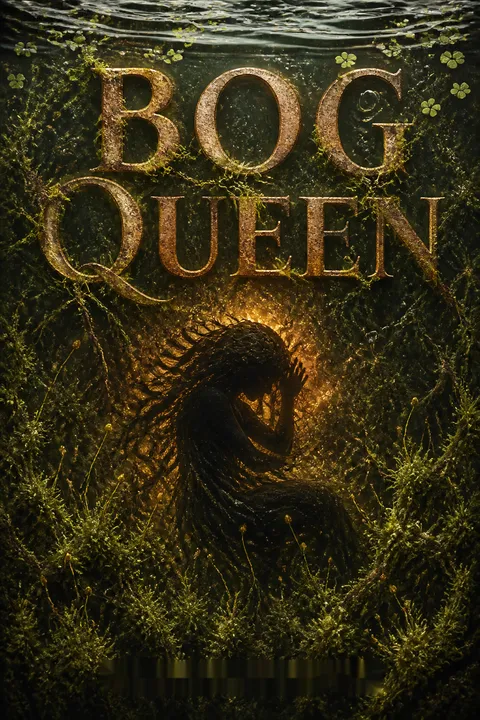

Plot Summary
Moss Remembers the Dead
The story opens with the moss itself, an ancient, collective consciousness that has witnessed the rise and fall of humans and their rituals. The moss describes how it once flourished, was wounded by human industry, and then became the keeper of a body—one it preserved for centuries. When humans finally unearth the body, the moss reflects on its role as both protector and passive observer, hinting at a deeper, cyclical relationship between nature and humanity. The moss's perspective frames the narrative, suggesting that the land itself is a character, holding memory and meaning beyond human comprehension. This opening sets a tone of mystery and reverence, inviting readers to consider the interplay between the living and the dead, and the stories that landscapes keep.
Agnes Arrives in Rain
Agnes, a young American forensic anthropologist, arrives in Ludlow, England, soaked by rain and out of place. She is called to identify a body found in the bog, believed to be Isabela Navarro, missing since 1961. Agnes's outsider status is palpable—her awkwardness, her longing for home, and her sense of purpose in her work. She meets Kieran, the coroner, and Melinda, the secretary, both of whom are rooted in the local community. Agnes's expertise is respected but also questioned, and she feels the weight of expectation. Her connection to the dead is intimate and professional; she finds meaning in giving voice to those lost to history. This chapter establishes Agnes's emotional landscape—her isolation, her drive, and her complicated relationship with her own past and family.
The Wrong Body Unearthed
Agnes examines the bog body and quickly realizes it cannot be Isabela Navarro. The teeth and bones tell a different story—this is a woman from centuries earlier, her body preserved in an uncanny, almost metallic state. The revelation unsettles everyone: Dorotea, Isabela's niece, is devastated, and the police investigation is thrown into confusion. Agnes's expertise is both a gift and a burden; she must communicate hard truths to grieving families and skeptical officials. The chapter explores the tension between scientific certainty and emotional need, as well as the limits of knowledge. Agnes's sense of responsibility to the dead is foregrounded, and the narrative pivots from a modern crime to an ancient mystery, setting the stage for a dual investigation—one forensic, one historical.
Druid's Journey South
Interwoven with the present-day narrative is the voice of a young druid from the Iron Age, tasked with traveling south to the king's court at Camulodunon. The druid, accompanied by her brother Aesu and friend Crab, is both confident and uncertain, carrying the weight of her community's hopes. She performs rituals, navigates treacherous bogs, and faces political intrigue. Her journey is marked by tests of faith, leadership, and diplomacy. The druid's inability to hear the gods' voices is a source of anxiety, yet she persists, relying on learned rituals and her own judgment. This ancient storyline mirrors Agnes's quest for understanding, highlighting themes of duty, tradition, and the search for meaning in a world shaped by both human and divine forces.
Family Grief and Loss
Agnes's interactions with Dorotea reveal the enduring impact of loss on families. Dorotea's determination to find her aunt's body is rooted in a family history marked by trauma and longing. Agnes, too, is shaped by the early death of her mother and her close, sometimes suffocating relationship with her father. The chapter delves into the psychology of grief—how it is inherited, how it shapes self-perception, and how it drives people to seek closure. Agnes's empathy is both a strength and a vulnerability; she is drawn to the pain of others, even as she struggles with her own. The narrative explores the ways in which the dead continue to influence the living, and how the search for answers can become a form of healing or, sometimes, a source of further pain.
Protest on the Moss
The discovery of the ancient body draws environmental activists to the moss, who protest the ongoing peat extraction and demand the land's restoration. Nicholas, a charismatic leader, articulates the moral and ecological stakes, framing the moss as a vital carbon sink and a symbol of resistance against corporate exploitation. Agnes finds herself caught between scientific inquiry and environmental activism, her work both aided and hindered by the protest. The chapter explores the intersection of personal, scientific, and political agendas, highlighting the complexities of stewardship—of land, history, and memory. The moss becomes a battleground for competing visions of the future, and Agnes must navigate alliances and enmities as she pursues the truth about the body and the land that held it.
Ancient Teeth, Modern Clues
Agnes's analysis of the body's teeth and bones reveals a life lived centuries ago, marked by a diet of stone-ground grain and the absence of modern dental decay. The forensic details—wear patterns, healed injuries, and the state of preservation—become clues in reconstructing the woman's story. Agnes's expertise is both technical and intuitive; she reads the body as a text, deciphering its secrets. The chapter underscores the power and limits of science in accessing the past, and the ways in which bodies carry history within them. Agnes's identification of the body as ancient shifts the investigation from a search for a murderer to a quest for understanding—a transformation that echoes the druid's own journey toward knowledge and self-realization.
The King's Court Bargain
The druid's arrival at Camulodunon is fraught with danger and opportunity. She is drawn into the king's court, where political alliances are forged and tested. The king, his Roman queen, and their advisors represent a world in transition, where old traditions meet new powers. The druid must navigate courtly intrigue, balancing loyalty to her home with the promise of knowledge and advancement. The chapter explores themes of ambition, compromise, and the costs of leadership. The druid's experiences at court mirror Agnes's negotiations with local authorities and activists, highlighting the perennial challenges of wielding influence and staying true to one's values in a world of shifting allegiances.
Divisions and Diplomacy
Back in the present, Agnes faces mounting resistance from both the protesters and the peat company. She seeks allies—Sunita, a bioarchaeologist; Fiona, a pragmatic company manager; and Nicholas, whose loyalties are divided. The excavation becomes a microcosm of broader social tensions, with each character representing different interests and values. The druid, too, faces divisions within her community, as old friends become rivals and the threat of violence looms. Both narratives explore the difficulties of diplomacy—how to persuade, when to compromise, and when to stand firm. The emotional stakes are high, as personal relationships are tested by public responsibilities, and the line between friend and foe blurs.
The Healing and the Betrayal
Both Agnes and the druid confront the limits of healing—physical, emotional, and communal. The druid is wounded in an ambush, her recovery overseen by her mother, who imparts wisdom about leadership and foresight. Agnes, meanwhile, struggles with setbacks in the excavation and her own sense of failure. The theme of betrayal emerges: the druid suspects her brother Aesu of complicity in the attack, while Agnes faces the possibility that her work may be undermined by those she trusts. Healing is shown as a process marked by pain, uncertainty, and the need for support. The chapter delves into the psychology of trust and the consequences of broken bonds, both in families and in communities.
Excavation and Resistance
The excavation proceeds under difficult conditions—protesters threaten to flood the site, the peat company maneuvers for control, and time is running out. Agnes and her team, including the insightful Ruby, work tirelessly to uncover artifacts and clues. The process is slow and often frustrating, but moments of discovery—parchment, a pen, a sword—offer glimpses into the life and death of the bog woman. The chapter highlights the physical and emotional labor of archaeology, the interplay of patience and intuition, and the ever-present tension between preservation and progress. Resistance, both human and environmental, shapes the narrative, forcing Agnes to adapt and reconsider her methods and goals.
The Map and the Pen
The discovery of a lambskin map and an ancient pen, both linked to the druid, transforms the investigation. Scientific analysis reveals unexpected connections—trade with the Roman south, the presence of writing technology, and the possibility that the bog woman was a creator of knowledge, not just a victim. The artifacts become symbols of agency and legacy, challenging assumptions about the past. Agnes and her colleagues piece together a story of travel, innovation, and ambition, while the druid's narrative reveals her own aspirations and the risks she took. The chapter explores the power of objects to carry meaning across time, and the ways in which women's histories are often hidden, only to be rediscovered by future generations.
Ruby's Anxiety and Insight
Ruby, Sunita's daughter, emerges as a key figure—her anxiety and curiosity mirror Agnes's own struggles. Ruby's questions about disease, death, and history drive the investigation forward, leading to the crucial insight that the bog woman may have been poisoned. The relationship between Agnes and Ruby is tender and complex, marked by mutual recognition and support. The chapter explores the challenges of growing up sensitive and intelligent in a world that often misunderstands or pathologizes difference. Ruby's journey toward understanding is both personal and universal, reflecting the novel's broader themes of fear, resilience, and the search for meaning in the face of uncertainty.
The Queen's Cause of Death
Toxicology reports reveal that the bog woman died of opiate poisoning, likely acquired during her journey to the Roman south. The cause of death is both a scientific breakthrough and a narrative climax, resolving the central mystery while raising new questions about agency, ritual, and violence. The revelation reframes the woman's story—not as a passive victim, but as a figure caught in the currents of history, innovation, and power. Agnes's role as witness and interpreter is affirmed, even as she confronts the limits of what can be known. The chapter is suffused with a sense of awe and melancholy, as the dead are finally given voice and the living are changed by what they learn.
The Festival Vision
The druid's final festival is marked by anxiety and hope. She drinks the sacred draught, seeking a vision from the gods, and is granted a revelation: the future is uncertain, but the seeds of change have been planted. Her death, whether by betrayal or fate, becomes a turning point for her community, which will go on to thrive and adapt. The festival is both an ending and a beginning, a moment of collective memory and individual transcendence. The chapter weaves together themes of ritual, leadership, and the enduring power of story, suggesting that meaning is made not only in life but in the way lives are remembered and retold.
Endings, Beginnings, and Memory
The novel closes with reflections from the moss, the druid's mother, and Agnes. The moss, restored by rain and the cessation of industry, endures as a witness to human striving and forgetting. The druid's mother mourns her daughter but sees her influence in the flourishing of the village and the spread of knowledge. Agnes, having completed her work, faces an uncertain future but is changed by her experiences—her sense of self expanded, her circle of care widened. The final scenes are suffused with gratitude, humility, and acceptance: the dead are honored, the living move forward, and the land continues its slow, patient work of transformation. The story ends as it began, with the moss—silent, enduring, and full of secrets yet to be revealed.
Analysis
Anna North's Bog Queen is a profound meditation on memory, legacy, and the intertwined fates of people and the land they inhabit. By weaving together the stories of a modern forensic anthropologist, an ancient druid, and the moss itself, North explores how history is preserved, forgotten, and rediscovered. The novel interrogates the limits of knowledge—scientific, historical, and personal—while celebrating the acts of care, curiosity, and witness that give meaning to both life and death. Through its dual timelines, the book highlights the persistence of conflict—between tradition and innovation, preservation and progress, individual and community—and the ways in which women's stories are often hidden, only to be reclaimed by future generations. The moss, as both setting and narrator, offers a humbling perspective on human striving, reminding readers of the brevity and significance of our actions. Ultimately, Bog Queen is a story about the power of attention—how the act of looking closely, of listening deeply, can transform both the observer and the observed. It is a call to honor the dead, to care for the living, and to recognize the enduring connections that bind us across time, space, and memory.
Review Summary
Reviews for Bog Queen are generally positive, averaging 3.61/5. Readers praise the innovative dual-timeline structure, following forensic anthropologist Agnes in 2018 and an Iron Age druid in 50 BCE, alongside a unique moss colony perspective. Many found the historical druid narrative more compelling than Agnes's modern storyline. Common criticisms include underdeveloped characters, insufficient world-building, and an overly ambitious premise crammed into a brief novel. The eco-fiction elements and environmental themes resonated strongly, while some questioned historical accuracy. Most readers appreciated North's fluid, lyrical prose despite structural shortcomings.
People Also Read



Characters
Agnes Linstrom
Agnes is a young American forensic anthropologist whose expertise in bones and teeth brings her to Ludlow, England, to identify a body found in the bog. She is marked by social awkwardness, a deep sense of responsibility, and a longing for belonging. Her mother's early death and her close relationship with her father have shaped her into someone both fiercely independent and emotionally cautious. Agnes's journey is one of self-discovery—she moves from isolation to connection, from certainty to humility. Her work is both a calling and a refuge, allowing her to serve the dead and, through them, the living. Agnes's relationships—with Dorotea, Sunita, Ruby, Nicholas, and the ancient druid—mirror her internal struggles with grief, ambition, and the search for meaning. By the novel's end, she has grown into a more open, compassionate, and self-aware person, able to bear witness to both suffering and joy.
The Druid (Bog Queen)
The druid is a young woman living in Iron Age Britain, chosen for her intelligence and foresight to lead her community. She is ambitious, curious, and determined to bring her people into a new era, forging alliances with the Roman south and introducing innovations like mapping and writing. Her inability to hear the gods' voices is a source of anxiety, but she compensates with reason and courage. The druid's journey is marked by tests of faith, political intrigue, and personal sacrifice. Her relationships—with her brother Aesu, her mother, and her community—are complex, shaped by love, rivalry, and the burdens of leadership. Her death, possibly by betrayal, is both a personal tragedy and a catalyst for change. Through her, the novel explores themes of agency, legacy, and the ways in which women's contributions are often hidden, only to be rediscovered centuries later.
Nicholas Bailey
Nicholas is the leader of the environmental protest on the moss, a skilled communicator and advocate for restoration. He is confident, persuasive, and driven by both personal conviction and a desire to belong. Nicholas's relationship with Agnes is marked by mutual respect, attraction, and occasional conflict; he challenges her to see the broader implications of her work, while she grounds him in the specifics of care and evidence. Nicholas's background as a biracial man with a "hippie" mother informs his sense of identity and his ability to navigate different communities. He is both an idealist and a pragmatist, willing to compromise but also to fight for what he believes in. His arc is one of learning to balance personal ambition with collective responsibility, and to accept loss as part of the ongoing struggle for justice.
Sunita Patel
Sunita is a respected academic and mother of Ruby, balancing professional ambition with the demands of family and community. She is practical, knowledgeable, and sometimes brusque, but deeply caring. Sunita's expertise is crucial to the excavation, and her mentorship helps Agnes navigate both scientific and interpersonal challenges. Her relationship with Ruby is loving but fraught, as she struggles to understand and support her daughter's anxiety. Sunita's partnership with Tianna and her role as a leader in the academic community position her as a model of resilience and adaptability. She embodies the challenges faced by women in science—juggling multiple roles, advocating for her work, and supporting the next generation.
Ruby Patel
Ruby is Sunita's teenage daughter, marked by intelligence, curiosity, and anxiety. She is precocious, studying Latin and history far beyond her years, but struggles with panic attacks and a sense of not fitting in. Ruby's questions and insights drive key moments in the investigation, particularly the realization that the bog woman may have been poisoned. Her relationship with Agnes is central to both characters' development—they recognize themselves in each other, offering support and understanding across generational lines. Ruby's journey is one of learning to live with fear, to seek help, and to find meaning in both suffering and discovery. She represents the challenges and possibilities of growing up sensitive and brilliant in a world that often misunderstands difference.
Dorotea Navarro
Dorotea is the niece of Isabela Navarro, the woman originally believed to be the bog body. She is strong-willed, articulate, and driven by a need for closure and justice. Dorotea's grief is complicated by family history—stories of violence, loss, and resilience. Her interactions with Agnes are marked by skepticism, confrontation, and eventual respect. Dorotea's insistence on answers pushes the investigation forward, and her willingness to use the media as leverage demonstrates her resourcefulness. She embodies the enduring impact of trauma and the ways in which the search for truth can be both healing and painful.
Fiona
Fiona is the manager of the peat company, positioned as an antagonist but revealed to be more complex. She is practical, direct, and focused on the survival of her town and its people. Fiona's willingness to help Agnes, even as she pursues her own interests, complicates the moral landscape of the novel. She represents the challenges of balancing economic necessity with environmental and historical preservation. Fiona's motivations are rooted in loyalty to her community, and her interactions with Agnes are marked by mutual respect and a recognition of shared goals, even amid conflict.
Aesu
Aesu is the druid's younger brother, fiercely protective but also conflicted. His relationship with his sister is marked by love, rivalry, and the burdens of expectation. Aesu's actions—defending the druid, questioning her decisions, and possibly betraying her—reflect the complexities of family loyalty and the pressures of leadership. He is both a source of strength and a potential threat, embodying the dangers that come from within as well as without. Aesu's arc is one of struggle between tradition and change, and his fate is left ambiguous, inviting readers to consider the costs of progress and the limits of forgiveness.
The Druid's Mother
The druid's mother is a figure of wisdom, authority, and sorrow. She trains her daughter, imparts the traditions of their people, and mourns her loss. Her reflections after the druid's death provide a coda to the novel, exploring themes of legacy, forgetting, and the ways in which individual lives shape and are shaped by history. She is both a participant in and a witness to change, her perspective bridging the ancient and the modern. Her acceptance of loss and her hope for the future offer a model of resilience and grace.
The Moss
The moss is both a setting and a character, its collective voice opening and closing the novel. It is ancient, patient, and indifferent to human concerns, yet it holds and preserves the stories of those who pass through it. The moss's perspective invites readers to consider time on a geological scale, to see human drama as both significant and fleeting. Its endurance and adaptability mirror the themes of survival, transformation, and the persistence of life. The moss's voice is at once humorous, wise, and enigmatic, grounding the novel in a sense of wonder and humility.
Plot Devices
Dual Timelines and Interwoven Narratives
The novel employs a dual narrative structure, alternating between Agnes's present-day investigation and the first-person account of the ancient druid. This device allows for thematic resonance—questions of leadership, legacy, and the search for meaning echo across centuries. The interweaving of timelines creates suspense, as discoveries in the present illuminate mysteries in the past, and vice versa. The moss's collective voice serves as a chorus, providing commentary and continuity. This structure foregrounds the cyclical nature of history and the ways in which the past is always present, shaping and being shaped by those who seek to understand it.
Forensic Science as Revelation
Forensic analysis—of teeth, bones, wounds, and artifacts—is central to the plot. Science becomes a means of accessing hidden histories, giving voice to the dead and challenging assumptions about the past. The meticulous work of excavation, analysis, and interpretation is both a literal and metaphorical digging for truth. The limitations of science are acknowledged—some mysteries remain unsolved, some evidence is ambiguous—but the process itself is shown as meaningful, a form of care and respect. The use of scientific detail grounds the narrative in realism, while also serving as a bridge between characters and eras.
Artifacts as Narrative Catalysts
The discovery of the lambskin map, the pen, and the sword are pivotal plot devices. These artifacts are not merely clues but symbols of agency, innovation, and legacy. Their analysis reveals unexpected connections—trade, technology, and the possibility of female authorship in the ancient world. The artifacts drive the investigation forward, reframing the bog woman's story and challenging the boundaries between victim and creator. They also serve as focal points for conflict—between preservation and progress, science and activism, memory and forgetting.
Environmental and Social Conflict
The struggle over the moss—between environmentalists, the peat company, scientists, and the local community—provides a backdrop for the personal and historical dramas. The land is both a resource and a sacred space, its fate intertwined with the stories of those who inhabit it. The protest, legal battles, and negotiations mirror the ancient conflicts faced by the druid, highlighting the persistence of power struggles and the difficulty of balancing competing interests. The moss's endurance and adaptability serve as a counterpoint to human transience, inviting reflection on stewardship and responsibility.
Foreshadowing and Revelation
The novel is rich in foreshadowing—early references to wounds, betrayal, and the limits of knowledge prepare readers for later revelations. The druid's anxiety about hearing the gods, Agnes's fear of failure, and Ruby's questions about death all anticipate key plot turns. The gradual unveiling of the cause of death, the significance of the artifacts, and the nature of the druid's legacy are handled with care, allowing for both surprise and inevitability. The use of multiple perspectives and timelines creates a sense of layering, as each narrative strand informs and deepens the others.
Download PDF
Download EPUB
.epub digital book format is ideal for reading ebooks on phones, tablets, and e-readers.








































