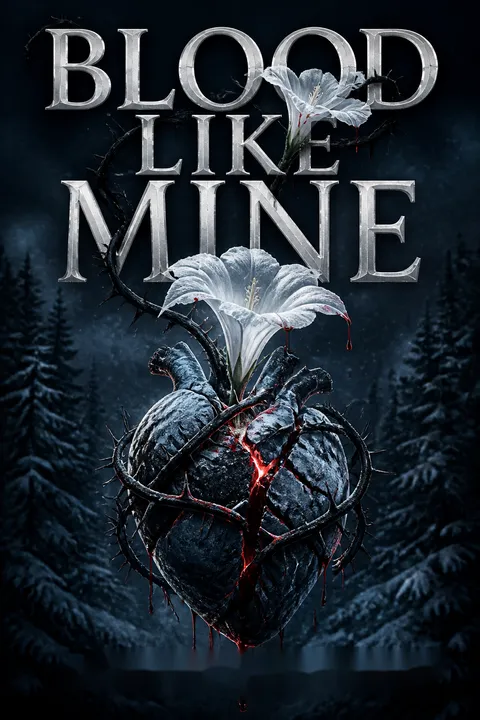

Plot Summary
Snowbound Escape
Rebecca Carter and her daughter, Moonflower, drive through a snowstorm, desperate to stay ahead of unnamed pursuers. Their van nearly crashes after a close encounter with an elk, and a helpful stranger offers assistance, but Rebecca's paranoia and need for secrecy force her to refuse. The tension between survival and exposure is palpable, as Rebecca's every decision is shaped by the need to protect her daughter and their secret. The cold, the darkness, and the ever-present threat of being found create a claustrophobic sense of dread. Their bond is tested by exhaustion and fear, but love persists, even as Rebecca's choices grow more desperate.
Predator and Prey
Special Agent Marc Donner arrives in Colorado to investigate a murder that fits a disturbing pattern: sex offenders found with their throats cut, bodies hidden in remote places. Donner's expertise in cybercrime and his personal obsession with justice drive him to pursue the case, even as local law enforcement is eager to hand it off. The dead man, Bryan Shields, is another in a string of victims, and Donner suspects a vigilante is at work. The investigation is haunted by moral ambiguity—are these murders justice or vengeance? Donner's own demons and the isolation of the landscape mirror the darkness of the crimes.
Letters to Moonflower
Interspersed throughout the narrative are Rebecca's letters to her daughter, written over years. These intimate, raw confessions reveal Rebecca's struggles as a young, single mother, her fraught relationship with Moonflower's absent father, and the sacrifices she's made. The letters chronicle moments of hope, despair, and fierce love, painting a portrait of a woman determined to protect her child at any cost. They also foreshadow the supernatural transformation that will define Moonflower's existence, and the moral lines Rebecca will cross to keep her alive.
The Body in the Woods
Donner interviews the man who found the body, uncovering details that point to a calculated killer. The witness mentions a woman in a van, nervous and eager to avoid attention. Donner's instincts sharpen—he senses the killer is not only methodical but also possibly female, a rarity in serial cases. The investigation is complicated by jurisdictional squabbles and the community's ambivalence toward the victims. Donner's pursuit becomes personal, driven by a need to impose order on chaos and to prevent further bloodshed, even as he questions the value of the lives lost.
The Hunter Arrives
Donner's investigation brings him into conflict with his superiors, who doubt his theory of a female serial killer. He is haunted by past failures and the memory of an innocent man destroyed by suspicion. Donner's partner, McGrath, challenges his motives, suggesting his pursuit is as much about filling the void in his own life as it is about justice. The case becomes a crucible for Donner's guilt, ambition, and need for redemption. As he closes in on Rebecca and Moonflower, the lines between hunter and hunted blur.
Hunger and Hiding
Rebecca and Moonflower's flight is marked by constant hunger—literal and metaphorical. Moonflower's condition is revealed: she is not entirely human, sustained by blood, her hunger growing more urgent and dangerous. Rebecca's love is both nurturing and suffocating, as she controls every aspect of Moonflower's life to keep her safe and hidden. Encounters with strangers, moments of near-exposure, and the ever-present threat of Moonflower losing control create a tense, precarious existence. The mother-daughter relationship is strained by secrecy, fear, and the monstrous reality they share.
Stranger at the RV Park
In a rare moment of connection, Moonflower befriends a girl named Livvy at an RV park. The brief friendship offers a glimpse of the life Moonflower might have had, but Rebecca's fear and need for secrecy quickly destroy the possibility. A confrontation with Livvy's mother over Moonflower's hunger exposes the family's desperation and isolation. The incident forces Rebecca and Moonflower to flee once again, deepening their sense of alienation and the impossibility of belonging.
The Vigilante's Pattern
Donner presents his case to the FBI: a string of murders, all sex offenders, all killed with the same brutal efficiency. His superiors are skeptical, unwilling to devote resources to avenging the deaths of men no one mourns. Donner's insistence on the humanity of even the worst offenders sets him apart, but also isolates him. The investigation becomes a battle not just against a killer, but against institutional indifference and the seductive logic of vigilante justice.
Mother and Daughter on the Run
Rebecca and Moonflower's journey takes them through desolate landscapes and forgotten towns. Their resources dwindle, and Moonflower's hunger grows more acute. Rebecca resorts to theft and deception to survive, but each act brings them closer to exposure. The letters to Moonflower become more desperate, chronicling Rebecca's exhaustion, regret, and the toll of years spent running. The van becomes both sanctuary and prison, a symbol of their rootless, haunted existence.
The Animal Within
As Moonflower's hunger intensifies, the animal within her begins to surface. She is drawn to the wild, to the company of stray dogs and coyotes, sensing a kinship with creatures that live on the margins. The transformation is both physical and psychological—Moonflower becomes stronger, faster, more dangerous, but also more alienated from her own humanity. Rebecca's fear shifts from the world outside to the daughter she can no longer fully control. The question of what Moonflower is—and what she might become—looms over them both.
The Nurse's Sanctuary
Desperate, Rebecca seeks help from Guthrie Chambers, known as the Nurse, who provides sanctuary and black-market blood to those like Moonflower. The Nurse's own history is one of loss and compromise, and his relationship with Rebecca is fraught with mistrust and resentment. The sanctuary is temporary, and the cost is high—Rebecca is forced to confront the reality that she cannot protect Moonflower forever, and that the world will never accept what her daughter has become.
The FBI Closes In
Donner, now suspended and increasingly unstable, continues his pursuit alone. He sets a trap for Rebecca and Moonflower, using the same online tactics they have used to lure predators. The confrontation is inevitable, and both sides are driven by obsession, guilt, and the need for closure. Donner's own life unravels as he sacrifices everything—career, family, sanity—in his quest to stop the killings and prove he is not mad.
The Trap at Flagstaff
Donner's trap is sprung at a deserted playground in El Paso. Rebecca is blinded by mace, Moonflower is captured and bound, and Donner prepares to reveal the truth to the world. The scene is charged with violence, desperation, and the collapse of all illusions. Rebecca's pleas for her daughter's life, Moonflower's terror, and Donner's determination create a crucible in which all their fates are decided.
Blood and Betrayal
In the chaos of the confrontation, Moonflower's animal nature is unleashed. She breaks free, and violence erupts. Donner is wounded, Rebecca is shot, and the police arrive, unable to comprehend the horror before them. The boundaries between victim and monster, justice and vengeance, are obliterated. Rebecca's final act is one of love and sacrifice, as she urges Moonflower to survive, even as she herself is dying.
The Monster Unleashed
With Rebecca dead and Donner incapacitated, Moonflower is left alone, her grief and hunger overwhelming. The police, unable to contain or understand her, are overpowered as Moonflower's transformation completes. She flees into the night, joined by the wild dogs that have always shadowed her. The world is left with only questions, rumors, and the aftermath of violence it cannot explain.
The Last Letter
In the aftermath, Rebecca's letters and journals are discovered, offering a testament to her love, her guilt, and her desperate hope for her daughter. The documents reveal the rules she lived by, the choices she made, and the humanity she clung to in the face of monstrosity. The letters are both confession and plea: for understanding, for forgiveness, for the world to see Moonflower as more than a monster.
The End of the Road
Moonflower, now truly alone, awakens in a cold, sterile place—a morgue, perhaps, or some other liminal space. The hunger remains, but so does the memory of love. The story ends as it began: with a girl, a mother, and the unending struggle to survive in a world that cannot accept what they are. The cycle of flight, hunger, and hope continues, unresolved and eternal.
Analysis
A meditation on love, monstrosity, and survivalBlood Like Mine is a haunting exploration of what it means to be human—and what it means to be monstrous. At its core, the novel is about the lengths a mother will go to protect her child, and the cost of that protection. Rebecca's love is both salvation and damnation, nurturing and destructive. Moonflower's condition is a metaphor for inherited trauma, addiction, and the ways in which children bear the burdens of their parents' choices. The novel interrogates the nature of justice: is it ever right to kill, even in the name of protecting the innocent? Donner's pursuit of order and meaning is ultimately futile, as the world resists explanation and control. The supernatural elements are grounded in emotional truth, making the horror both intimate and universal. In the end, Blood Like Mine is a story of survival—of doing whatever it takes to keep going, even when hope is gone. It asks whether love can redeem monstrosity, or whether, in the end, we are all defined by the blood we spill and the secrets we keep.
Review Summary
People Also Read
Characters
Rebecca Carter
Rebecca is the heart of the novel—a woman driven by love, guilt, and desperation. Her life is defined by sacrifice: a teenage pregnancy, abandonment by Moonflower's father, and the loss of her own dreams. When her daughter is murdered and returns as something not quite human, Rebecca's world narrows to a single purpose: keeping Moonflower alive and hidden. She is resourceful, ruthless when necessary, and willing to cross any moral line for her child. Her letters reveal a complex psyche—tender, self-loathing, and fiercely loving. Over time, the burden of secrecy and violence erodes her sense of self, and she becomes both protector and enabler, complicit in the very monstrosity she fears. Her final acts are those of a mother who will do anything, even die, to give her daughter a chance at survival.
Moonflower (Monica Carter)
Moonflower is both victim and threat—a girl frozen at twelve, forever denied the chance to grow up. Her transformation after death leaves her with a monstrous hunger for blood, but she retains her essential humanity: empathy, longing for connection, and a deep love for her mother. She is acutely aware of her difference, and her isolation is profound. The animal within her grows stronger as the years pass, threatening to consume her identity. Moonflower's relationships—with her mother, with fleeting friends, with the wild dogs she feels kinship with—are marked by longing and loss. Her greatest fear is not death, but losing herself to the hunger. In the end, she is both the story's greatest tragedy and its most enduring survivor.
Marc Donner
Donner is the FBI agent whose pursuit of Rebecca and Moonflower becomes a personal crusade. Haunted by past failures and the collapse of his own family, he is driven by a need to impose order and justice on a world that resists both. His expertise in cybercrime and his doggedness make him a formidable adversary, but his inability to let go destroys his career, his relationships, and ultimately his sanity. Donner's moral absolutism is both his strength and his undoing—he cannot accept ambiguity, and his pursuit of the "monster" blinds him to the humanity of his quarry. In the end, he is left broken, his victory hollow, his own life in ruins.
Guthrie Chambers (The Nurse)
Guthrie is a nurse who provides sanctuary and black-market blood to those like Moonflower. His own mother suffered the same fate, and his life is marked by loss and compromise. He is both compassionate and hard-edged, helping out of a sense of duty but resenting the burden. His relationship with Rebecca is fraught—he sees her as hardened, perhaps even enjoying the violence she commits. Guthrie's presence underscores the theme that survival for the monstrous is possible, but only at great cost and with no hope of acceptance.
Sarah McGrath
McGrath is Donner's FBI partner and closest friend. She is pragmatic, empathetic, and deeply loyal, but she is also unwilling to sacrifice her own life and family for Donner's obsession. Her role is to challenge Donner's motives, to remind him of the cost of his pursuit, and to serve as a voice of reason. Ultimately, she is forced to choose between loyalty and self-preservation, and her decision to walk away marks a turning point in Donner's downfall.
Livvy
Livvy is a girl Moonflower meets at an RV park—a brief, bright moment of connection in an otherwise lonely existence. Their friendship is short-lived, destroyed by Rebecca's fear and the family's need for secrecy. Livvy represents the life Moonflower might have had, and her presence deepens the sense of loss and alienation that defines Moonflower's character.
Craig Watters
Watters is one of the men lured by Rebecca and Moonflower—a predator who is himself preyed upon. His murder is both justice and horror, and his hidden crimes are only revealed after his death. Watters embodies the novel's central ambiguity: the line between victim and monster, justice and vengeance, is never clear.
Edward Chin
Chin is an FBI agent injured by Moonflower during her escape. His subsequent transformation—hunger, aversion to light, dreams of violence—mirrors Moonflower's own fate. Chin's suicide is a direct result of the events set in motion by Rebecca and Moonflower, and his story serves as a warning of the contagion and tragedy at the heart of the novel.
The Dogs
The stray dogs and coyotes that follow Moonflower are both literal and symbolic. They represent her connection to the wild, her alienation from humanity, and the possibility of a different kind of belonging. In the end, they are her only companions, answering her howl as she flees into the night.
The FBI and Police
The various law enforcement figures—Holstein, local police, state troopers—represent the world's attempt to impose order on the inexplicable. Their skepticism, bureaucracy, and occasional brutality are obstacles to both justice and understanding. They are ultimately powerless to contain or comprehend the true nature of the threat.
Plot Devices
Dual Narrative Structure
The novel alternates between Rebecca and Moonflower's flight and Donner's relentless investigation. This dual structure creates tension and empathy, allowing readers to see both sides of the chase. The interspersed letters and journal entries provide emotional depth and backstory, revealing motivations and inner conflicts that drive the characters' actions.
Epistolary Elements
Rebecca's letters to Moonflower, and her journal entries, serve as a confessional thread throughout the novel. They provide insight into her psyche, her history, and her evolving moral code. These documents also function as a legacy, a plea for understanding, and a record of the choices that led to tragedy.
Supernatural Realism
The novel's supernatural elements—Moonflower's hunger, her transformation, the rules of her existence—are presented with a matter-of-fact realism. The horror is not in the fantastical, but in the everyday struggle to survive, the moral compromises, and the erosion of identity. The supernatural is a metaphor for trauma, addiction, and the inheritance of violence.
Moral Ambiguity
The central plot device is the ambiguity of justice: Rebecca and Moonflower kill only those who "deserve" it, but the cost is their own humanity. Donner's pursuit is righteous, but also destructive. The novel refuses easy answers, forcing readers to confront the complexity of guilt, innocence, and the possibility of redemption.
Foreshadowing and Circularity
The narrative is rich with foreshadowing—Rebecca's early letters hint at the darkness to come, and the final scenes echo the beginning. The story is circular: it begins and ends with a mother and daughter, with hunger, with the struggle to survive in a world that cannot accept them.
Download PDF
Download EPUB
.epub digital book format is ideal for reading ebooks on phones, tablets, and e-readers.








































