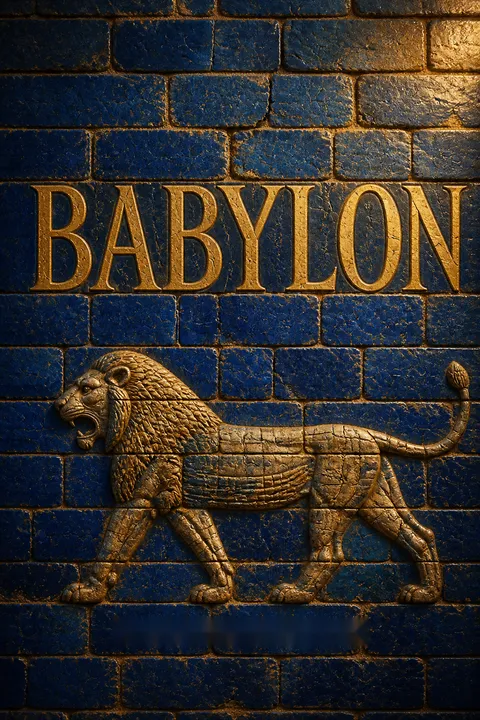

Key Takeaways
1. Mesopotamia: The Cradle of Civilization's Enduring Legacy
If history, as by most definitions, begins with writing, then the birth, rise and fall of ancient Mesopotamia occupies a full half of all history.
A continuous tradition. Ancient Mesopotamia, the land between the Tigris and Euphrates, sustained a single, continuously evolving civilization for 2,500 years, from before 3000 BCE until 539 BCE. This remarkable longevity, equivalent to the span from classical Greece to the present day, saw the development of a unique cuneiform writing system and a rich tradition encompassing literature, art, science, and religion. It was a melting pot of diverse peoples—Semitic and non-Semitic—who assimilated into this culture, contributing to its advancement rather than replacing it.
An experimental laboratory. This civilization acted as an experimental laboratory, testing various forms of governance, economic systems, and religious beliefs, from early nature personifications to the stirrings of monotheism. It pioneered concepts fundamental to modern life, such as numbers and weight independent of actual items. The region's challenging environment, particularly the unpredictable rivers, forced collaboration and innovation, acting as the "grit in the oyster" that spurred humanity's great leap forward.
History's rhythm. The rise and fall of Mesopotamian civilization, like a living organism, followed a predictable bell-shaped curve of birth, growth, maturity, decline, and disappearance. This long saga, though distant, offers profound insights into the patterns of human behavior and societal development, suggesting that while history may not repeat itself, it certainly "rhymes."
2. The Urban Revolution: From Sacred Sites to Complex Societies
After kingship was lowered down from heaven, the kingship was in Eridu.
Eridu's sacred origins. Civilization began at Eridu, a seemingly unlikely site on the shores of the ancient Persian Gulf, where a freshwater upwelling (the Apsu) attracted diverse groups. This sacred spot fostered a new collective identity and an ideology of progress, leading to the construction of increasingly elaborate temples. This constant drive for improvement, symbolized by the repeated rebuilding of the Eridu temple, marked a revolutionary shift from adapting to nature to transforming it.
Uruk's urban explosion. From Eridu, the concept of civilization spread, notably to Uruk, which became the world's first true city, a magnet for people seeking a better life. This era, known as the Urban Revolution, saw the emergence of:
- Centralized states and social hierarchies
- Division of labor and organized religion
- Monumental architecture and civil engineering
- Early forms of writing, literature, and art
- New inventions like wheeled vehicles, sailing boats, and the potter's kiln
Inanna and the "Me". Uruk's patron goddess, Inanna (the "adrenaline goddess" of love and war), was crucial to the city's survival, emphasizing libido in a high-mortality urban environment. Myth recounts her cunning theft of the "Me"—the fundamental principles of civilized life—from Enki, the god of progress at Eridu, thereby liberating these concepts for humanity and enabling Uruk's ascendancy. This narrative suggests that a degree of "libertinism" and a playful approach to life were seen as essential for urban creativity and progress.
3. Kingship and Power: The Evolution of Governance
To stand on duty, to sit in attendance, to escort the king’s son – to hold a donkey by the hindquarters as they say – who is there that has breath for such? Let us not submit to the house of Kish, let us wage war!
From priests to warlords. After the Uruk era's collapse, Mesopotamia fragmented into fiercely competitive city-states. The previous temple-centric command economy gave way to private property and market forces, leading to social stratification. The need for defense against raiders, particularly in the north, saw the rise of "Big Men" (Lugalene) who commanded private armies, eventually replacing temple priests as the dominant power. Kish is credited as the first city where kingship, as a military leadership, descended from heaven.
The Hundred Years' War. The incessant rivalry between city-states, exemplified by the century-long conflict between Lagash and Umma over grazing land, drove military innovation. Early armies featured disciplined phalanxes of spearmen, supported by clumsy ass-drawn chariots. Archaeological evidence from Hamoukar reveals the deadly effectiveness of slingshots, capable of armor-piercing projectiles, suggesting a more sophisticated missile warfare than previously thought.
Divine right and social reform. The transition from mortal warlord to semi-divine king was often marked by spectacular public rituals, such as the mass human sacrifices at Ur, intended to legitimize the ruler's godlike status. While some kings, like Urukagina of Lagash, attempted social reforms—protecting the poor, cutting taxes, and establishing "freedom"—these were often short-lived, highlighting the inherent instability of early monarchies and the constant struggle between justice and power.
4. The First Empires: Ambition, Innovation, and Fragility
Now any king who wants to call himself my equal, wherever I went, let him go too!
Sargon's imperial ambition. Sargon of Akkad, a Semitic-speaking "Legitimate King" who rose from humble origins, founded the first true Mesopotamian empire around 2300 BCE. His ambition extended beyond mere conquest, aiming to unify diverse lands and peoples under a single authority, stretching from the Persian Gulf to the Mediterranean. He established a new capital, Akkad, unburdened by existing Sumerian or Semitic traditions, and placed himself under the protection of Ishtar, the "adrenaline goddess."
Heroic age and cultural shift. Sargon's era marked the Bronze Heroic Age, characterized by a new emphasis on individual heroism, masculine beauty, and the glorification of warfare. Bronze technology, particularly the sword, elevated man-to-man combat to an art form, fostering an elite warrior class. The famous copper head from Nineveh, likely a portrait of Sargon, embodies this new human-centric focus, with the king himself eventually deified, shifting the narrative from divine actions to human agency.
Akkad's collapse. Despite its innovations in governance, administration, and language (Akkadian became the lingua franca), Sargon's empire proved fragile. Its sudden collapse around 2200 BCE is attributed to a combination of factors:
- Climate change: Severe drought led to widespread famine and desertification.
- Barbarian incursions: Gutians from the mountains, driven by desperation, overwhelmed the weakened state.
- Overstretched resources: The empire's vast ambitions exceeded its logistical capacity, leading to internal strains and a loss of faith in its ideology.
5. The Dirigiste State: Central Planning and Bureaucracy
The land was bellowing like a bull, The god was disturbed by their uproar. Enlil heard their noise. And addressed the great gods: ‘The noise of mankind has become too intense for me, With their uproar I am deprived of sleep.’
Sumerian resurgence. After the Gutian interregnum, Utu-hegal of Uruk expelled the "barbarians" and "brought back the kingship to Sumer," laying the groundwork for the Ur III dynasty. This neo-Sumerian Empire, centered on Ur, established a highly centralized, dirigiste state, reminiscent of 20th-century communist systems. It rigorously applied and further developed Akkadian administrative advances, creating an elaborate bureaucracy to manage its vast territories.
Totalitarian economics. The Ur III state controlled all land and productive resources, implementing a "Bala" system of taxation and redistribution, where provinces contributed grain and livestock to a central pool. Every citizen was obligated to serve the state, with their labor meticulously accounted for through a "running balanced-account system." This system, while ensuring state control, often left supervisors in perpetual debt, potentially leading to debt slavery.
Uniformity and cult of personality. To maintain cohesion across its diverse provinces, Ur III enforced uniformity in law (Code of Ur-Nammu, with fines for mutilation rather than "an eye for an eye"), scribal training, and weights and measures. King Shulgi, the greatest Ur III monarch, was deified and promoted through praise-hymns, creating a cult of personality to legitimize his radical policies. His famous "run" from Nippur to Ur and back was a calculated political act, a spectacular demonstration of superhuman authority to push through his ambitious reforms.
6. Old Babylon: The Zenith of Mercantile Capitalism and Intellectual Life
If a man put out the eye of another man, his eye shall be put out.
Babylon's enduring fame. Babylon, the most famous city of antiquity, rose to prominence under Amorite rulers after the fall of Ur III. Despite its biblical reputation for sin, it became the center of a flourishing civilization. Its early history remains largely inaccessible due to a rising water table, forcing reliance on later accounts and indirect evidence. European interest in Babylon, sparked by travelers like Pietro della Valle, eventually led to extensive archaeological efforts, though these mostly uncovered the city's later, Neo-Babylonian layers.
Hammurabi's Code and social change. King Hammurabi's law code, inscribed on a black diorite stele, codified a new social order. Unlike earlier Sumerian laws, it famously enshrined the principle of lex talionis ("an eye for an eye"), reflecting the challenges of governing a multi-ethnic, multi-tribal society where social solidarity had diminished. The code also delineated three social classes: awilum (freeman), mushkenum (lower orders), and wardum (slave), indicating a loss of ethnic uniformity and the rise of social divisions.
Proto-capitalism and intellectual pursuits. Old Babylon saw the rise of a sophisticated financial system, including banking, loans, and negotiable instruments, marking history's first experiment in mercantilist capitalism. This era also fostered a vibrant intellectual life:
- Education: Private schools taught reading, writing, and advanced mathematics (sexagesimal system, quadratic equations).
- Science: Omen tables, though seemingly superstitious, demonstrated a belief in underlying universal laws and systematic observation, laying foundations for astronomy and medicine.
- Medicine: Babylonian doctors (ashipu and asu) made empirical diagnoses and prescribed effective herbal treatments, even recognizing contagious diseases.
- Philosophy: Literary dialogues, like "Slave, listen to me!", explored profound questions about human existence and the futility of action, albeit in a concrete, metaphorical style.
7. Assyria: The Iron Fist of Imperialism and Monotheistic Seeds
The Assyrian came down like the wolf on the fold, And his cohorts were gleaming in purple and gold.
A militarized trading nation. Assyria, located in northern Mesopotamia, developed a fearsome reputation for military savagery, yet also preserved and advanced Mesopotamian culture. Its vulnerable location, astride trade routes and exposed to barbarian incursions, forged a militaristic society. Initially a trading nation, Assyria learned the hard lesson that controlling trade routes required military might, leading to a policy of relentless expansion and "calculated frightfulness."
The modern war machine. Under emperors like Tiglath-Pileser III, Assyria built the first truly modern army, a model for future military forces:
- Iron weaponry: Swords, spear blades, and helmets, offering a decisive advantage over bronze.
- Advanced logistics: Army boots for all-terrain, all-season warfare.
- Combined arms: Disciplined infantry phalanxes, composite bow archers, fast horse-drawn chariots, and the first cavalry units.
- Feudal structure: Military officers held provincial governorships, linking land tenure to service.
Ideology of empire and monotheism. Assyrian imperial ideology was based on "One Realm, One People, One Leader," aiming for total assimilation through population deportations and the imposition of a unified identity. This era also saw a profound religious shift from immanent nature gods to a transcendent, omnipresent deity, Ashur, who became the rationale for empire. This desacralization of nature and the emphasis on a single, universal God laid the groundwork for the monotheistic traditions of Judaism, Christianity, and Islam, though it also led to extreme misogyny and the rigid seclusion of women.
8. The Alphabet's Triumph: Aramaic's Rise and Cuneiform's Demise
The weapon with that colossal achievement to its credit was an entirely novel way of freezing evanescent speech in time: the alphabet.
The secret weapon. The influx of Aramaic-speaking nomads into Mesopotamia brought a "secret weapon" that would ultimately end the long cuneiform tradition: the alphabet. Invented by Semitic workers in Egypt as a simplified shorthand, the alphabet's ease of learning (weeks vs. years for cuneiform) and adaptability to various writing surfaces (papyrus, leather) allowed literacy to spread far more widely than ever before.
Linguistic shift and cultural loss. Aramaic quickly became the lingua franca of the Near East, relegating Akkadian to scholarly and religious use, much like Latin in medieval Europe. This linguistic shift had profound consequences for historical preservation:
- Perishable records: Aramaic was written on organic materials like papyrus and leather, which decay, leading to a significant loss of historical records compared to indestructible clay tablets.
- Historical amnesia: Like Atatürk's language reforms in Turkey, the widespread adoption of Aramaic meant later generations lost the ability to read earlier cuneiform texts, threatening the memory of Mesopotamia's past.
Ashurbanipal's legacy. The last great Assyrian emperor, Ashurbanipal, foresaw this threat. He established a vast royal library in Nineveh, collecting and preserving the literary and scholarly heritage of Sumerian-Akkadian culture "For the Sake of Distant Days." This monumental effort, rediscovered by archaeologists like Layard and Rassam, ensured that the intellectual riches of Mesopotamia would survive, even as its original language and script faded from daily use.
9. Babylon's Last Hurrah and the End of an Era
The city and its houses, from its foundation to its walls, I destroyed, I devastated, I burned with fire.
Babylon's resurgence and fall. After Assyria's destruction in 612 BCE, Babylon, under its Neo-Babylonian (Chaldean) dynasty, rose to become the center of a new empire. Nebuchadnezzar II, its most famous ruler, rebuilt Babylon into a magnificent city, symbolically uniting its history with Eridu's origins. His conquest of Judaea and the deportation of its elite to Babylon profoundly shaped Judaism, and subsequently Christianity and Islam.
Archaeological passion. Neo-Babylonian rulers, particularly Nabonidus, displayed a remarkable passion for archaeology, meticulously excavating ancient foundations and restoring artifacts, reflecting a growing concern for preserving the past in an uncertain future. This era saw the construction of iconic structures like the Etemenanki ziggurat (Tower of Babel) and the Ishtar Gate, which aimed to make Babylon "the wonder of the people of the world."
The Persian conquest and a new world. In 539 BCE, Cyrus the Great of Persia conquered Babylon, marking the end of independent Mesopotamian rule. While the conquest was presented as a peaceful liberation by some, archaeological evidence suggests destruction. The Persians, though adopting much from Mesopotamian culture, chose to rule from their own homeland, signaling that Babylon was no longer the undisputed center of the world. This period saw the rise of new civilizations, particularly Greece, which would challenge Mesopotamia's cultural dominance, leading to a new era in history.
10. History's Rhyme: Lessons for Our Own Civilization
Who has ever seen a reign of kingship that would take precedence for ever? The reign of kingship has been long indeed but had to exhaust itself.
The cyclical nature of civilization. The long saga of Mesopotamia, from its birth in Eridu to its eventual decline, illustrates a cyclical pattern of growth, maturity, and collapse. This process, as suggested by systems analysts like Cesare Marchetti, may follow predictable mathematical laws, implying that civilizations, like living organisms, have a finite lifespan. The Mesopotamians themselves, through figures like the prophet Kabiti-Ilani-Marduk, recognized this pattern, viewing destruction not as an end, but as a creative force for renewal and progress.
Echoes in the modern age. Many features of our contemporary world—an obsession with the past, a zeal for conservation, a burgeoning museum culture, and a sense of an uncertain future—mirror the sentiments of late Assyrian and Neo-Babylonian times. Our civilization, too, faces existential challenges: unsustainable resource exploitation, population growth, and the rise of new technological paradigms like the Digital Civilization.
Progress through destruction. The ultimate lesson from Mesopotamia is that decline and destruction often precede rebirth. The sweeping away of old ways, though painful, is necessary for the new to emerge. Despite the eventual disappearance of its cities and the forgetting of its creators, Mesopotamia's achievements were never truly lost, but rather passed on, influencing subsequent civilizations and laying the foundations for the world we inhabit today.
Review Summary
Babylon receives mixed reviews (3.89/5) for its comprehensive history of Mesopotamia spanning 5,000 years. Readers praise Kriwaczek's engaging narrative style and extensive research covering Sumerian, Akkadian, Assyrian, and Babylonian civilizations. Many appreciate his accessible approach to complex ancient history and fascinating details about daily life. However, critics note frequent tangents to modern comparisons, speculative assertions without proper sourcing, and western-centric viewpoints. Some find his dramatic interpretations problematic and his claims about "firsts" exaggerated. Despite focusing more broadly on Mesopotamia than specifically Babylon, most readers recommend it as an excellent introduction for general audiences.
People Also Read

Download PDF
Download EPUB
.epub digital book format is ideal for reading ebooks on phones, tablets, and e-readers.








































