
Key Takeaways
1. Archaeology Unveiled the "Cradle of Civilization"
Until archaeological excavations began and the ancient cuneiform script was deciphered in the nineteenth century, almost no one guessed how significant the ancient Near East was to the history of the world.
Lost history. For centuries, the rich history of the Ancient Near East lay buried and forgotten, its immense contributions to civilization known only through fragmented biblical references or obscure Greek and Roman accounts. The region, often called the "cradle of civilization," pioneered innovations like writing, cities, and laws, yet its memory faded until modern archaeology began to unearth its secrets. This rediscovery fundamentally reshaped our understanding of human history, revealing a sophisticated past that predates many commonly known ancient cultures.
Fortuitous preservation. The unique environmental conditions and building practices of southern Mesopotamia played a crucial role in preserving this lost world. Lacking stone and wood, ancient peoples built extensively with mud and clay, materials that, unlike wood, do not decompose. As generations built new structures atop the leveled remains of older ones, entire cities gradually rose, creating massive mounds (tells) that entombed artifacts, walls, and countless clay tablets.
- Clay tablets, especially if baked by accidental fires, survived remarkably well.
- These tells acted as time capsules, preserving daily life's detritus.
- Modern archaeological methods allow meticulous extraction of information, though much has been lost to early, less careful excavations and ongoing looting.
Irrecoverable loss. The tragedy of early, destructive excavations and persistent looting is that once a site is disturbed without proper recording, the invaluable context is lost forever. Every object, every wall, every document holds a piece of the past, and its relationship to other finds is critical for historical reconstruction. What remains is a fraction of what once existed, a testament to both the resilience of ancient materials and the fragility of historical knowledge.
2. Uruk: The Genesis of Urban Life and Writing
Uruk in 3100 BCE was vastly bigger than any community that had existed before, not just in Mesopotamia but, as far as we know, anywhere.
Urban revolution. Around 3600 BCE, southern Mesopotamia witnessed an unprecedented "urban revolution," with Uruk emerging as its epicenter. This city, enclosed by a 10-kilometer wall, housed an estimated 25,000 people, a scale unimaginable for previous settlements. Its monumental architecture, particularly the Eanna temple complex dedicated to the goddess Inanna, showcased sophisticated engineering and artistic skill, with massive brick and limestone buildings adorned with dazzling mosaic cones.
Proto-cuneiform's birth. The complexity of managing such a large population and its resources spurred the invention of writing, initially as a memory aid for administrators. Proto-cuneiform, developed around 3100 BCE, used signs for nouns and numbers to track commodities like sheep and rations.
- Early tablets were primarily economic records (85%) or lexical lists (15%).
- The script did not initially represent spoken language or verbs.
- Thirteen different numerical systems were used, depending on what was being counted.
This utilitarian origin highlights writing's role in facilitating large-scale organization rather than creative expression.
Uruk's influence. The "Uruk phenomenon" extended beyond its city walls, as colonists established settlements across Syria, Anatolia, and Iran. These colonies, often strategically located on trade routes, spread Uruk's urban model, pottery styles, and administrative practices. This era also saw significant technological advancements:
- Mass production of pottery using the newly invented wheel.
- Increased metalworking (copper, arsenic bronze).
- Large-scale textile production, often temple-sponsored.
This period laid the foundational technologies and institutions that would define Mesopotamian civilization for millennia.
3. Kingship: A Divine Institution for Earthly Order
Kingship seemed so obvious and right to the Mesopotamians that they believed that it had been invented by the gods, that it had come “down from heaven.”
Divine mandate. Around 2900 BCE, hereditary kingship emerged in Mesopotamia, quickly becoming the cornerstone of statehood. Mesopotamians believed kingship was a divine gift, a cosmic order established by the gods to ensure human service and universal stability. The Sumerian King List, though historically inaccurate, underscored this belief, portraying a continuous, divinely sanctioned lineage of rulers.
Gods and humans. According to Mesopotamian myth, humans were created by the gods to perform the arduous labor the lesser deities had grown tired of. Kings, therefore, were not just rulers but chief servants to the gods, responsible for their care and worship. This symbiotic relationship meant that a king's piety and devotion, often demonstrated through temple construction and offerings, were believed to secure divine favor for the entire populace.
- Gods, like humans, had a king (Enlil), families, emotions, and needs for food, drink, and shelter.
- Humans were powerless and mortal, created to serve the immortal, powerful gods.
- The king's role was to intercede with the gods for the well-being of his people.
Early statecraft. The Early Dynastic period saw city-states like Lagash and Umma engage in generations of conflict over land, often invoking divine backing for their claims. Royal inscriptions, like those of King Enannatum of Lagash, evolved from simple records to complex narratives, commemorating royal deeds, dedicating temples, and communicating with gods and future kings. These texts, often placed in temple foundations, served as enduring propaganda, asserting the king's legitimacy and piety.
- Cuneiform script became more sophisticated, representing language phonetically and semantically.
- Palaces and temples managed vast estates, employing large workforces in agriculture, brewing, and textile production.
- The opulent royal tombs of Ur, with their human sacrifices, highlight the immense wealth and power wielded by these early rulers, who imported luxury goods from distant lands.
4. Early Empires: Sargon's Conquests and Ur's Bureaucracy
Sargon, king of Akkad, overseer of Ishtar, king of Kish, anointed priest of (the god) Anu, king of the country, great ensi of Enlil.
Sargon's innovation. In the mid-24th century BCE, Sargon of Akkad shattered the city-state model by forging the world's first empire, conquering vast territories from Sumer to Syria. His reign marked a shift from local rule to centralized imperial control, with Akkadian-speaking officials replacing local rulers. Sargon's legacy, though built on brutal conquest, was later mythologized, portraying him as a heroic figure whose life story inspired future kings.
- Sargon established a new capital, Akkad (Agade), renowned for its wealth.
- He fostered long-distance trade, with ships from Dilmun, Magan, and Meluhha reaching Akkad.
- He used religion to legitimize his rule, appointing his daughter Enheduanna as high priestess in Ur.
Enheduanna's voice. Sargon's daughter, Enheduanna, became the high priestess of the moon god Nanna in Ur, a position of immense religious and economic power. She is celebrated as the world's first known author, composing eloquent hymns to the goddess Inanna/Ishtar. Her writings reveal a complex interplay of personal devotion, political maneuvering, and emotional appeals to the gods, even when facing personal crises or exile. Her work demonstrates the sophisticated literary and religious culture of the Akkadian period.
Ur-Namma's order. Following the Akkadian Empire's collapse, Ur-Namma established the Third Dynasty of Ur, unifying much of Mesopotamia. He presented himself as a benevolent king, a "mighty warrior" who "liberated" lands and protected the weak. His reign was characterized by extensive building projects, notably massive ziggurats, and the creation of the first known written laws.
- Ur-Namma's laws aimed to establish justice, standardize weights and measures, and protect vulnerable members of society (orphans, widows, the poor).
- Punishments often involved fines rather than physical harm, though the death penalty existed for severe crimes.
- The administration of the Ur III empire was remarkably complex, with vast archives (like those from Puzrish-Dagan) detailing taxation, resource redistribution, and labor management, showcasing an almost obsessive drive for order.
5. Trade and Diplomacy: Weaving an Interconnected Ancient World
There is no king who is strong just by himself. Ten (to) fifteen kings are following Hammurabi the man of Babylon; so, too, Rim-Sin the man of Larsa; so, too, Ibal-pi-El the man of Eshnunna; so, too, Amut-pi-El the man of Qatna; (and) twenty kings are following Yarim-Lim the man of Yamhad.
Old Assyrian trade. In the early second millennium BCE, while Mesopotamia was fragmented into competing kingdoms, Assyrian merchants from Assur established a remarkable long-distance trade network with Anatolia. Operating largely as private, family-run businesses, they transported valuable goods like tin (from Iran/Afghanistan) and fine textiles (from southern Mesopotamia) to Kanesh, exchanging them for silver.
- The journey to Kanesh took six weeks by donkey caravan.
- Merchants paid taxes to local Anatolian kings in exchange for protection.
- Thousands of cuneiform tablets found in Kanesh houses detail these transactions, including letters revealing business strategies and personal family dramas.
International brotherhood. The Late Bronze Age (1595–1155 BCE) saw the emergence of an unprecedented international community of "Great Kings" across the Near East and Mediterranean. Rulers of Egypt, Mittani, Babylonia, and Hatti forged alliances, referring to each other as "brothers" and maintaining peace through extensive diplomacy. This system relied heavily on:
- Royal marriages, exchanging princesses to cement ties.
- Regular exchange of ambassadors, who were highly honored.
- Lavish gifts of luxury goods, often crafted from imported materials like Egyptian gold and Afghan lapis lazuli, fostering an "international style" in art.
Amarna's revelation. The discovery of the Amarna letters in Egypt dramatically revealed the extent of this diplomatic network. These letters, written in Akkadian cuneiform—a foreign script and language for the Egyptians—demonstrated the widespread adoption of Mesopotamian diplomatic conventions. This era, despite occasional conflicts, brought two centuries of relative peace and prosperity, driven by mutual economic benefit and a shared understanding of international relations.
6. Hammurabi's Laws and the Old Babylonian Society
I did not deliver the orphan to the rich. I did not deliver the widow to the mighty. I did not deliver the man with but one shekel to the man with one mina (60 shekels).… I eliminated enmity, violence, and cries for justice. I established justice in the land.
Hammurabi's ascendancy. Initially one among many powerful Amorite kings, Hammurabi of Babylon (1792–1750 BCE) systematically conquered his rivals, including Larsa, Eshnunna, Mari, and even the formidable Elam. His empire eventually encompassed most of modern Iraq and parts of Syria. Hammurabi meticulously documented his conquests and achievements through year-names, ensuring his legacy was remembered with every dated document.
A code for justice. Hammurabi's most famous legacy is his comprehensive law code, inscribed on a large stone stela. Like Ur-Namma before him, Hammurabi presented himself as a just king, divinely appointed to protect the weak and ensure fairness. The laws, expressed conditionally ("If a man... then he shall..."), covered a wide range of issues:
- Property ownership and inheritance.
- Agriculture and military service.
- Marriage, divorce, and family matters.
- Punishments varied, sometimes following "eye-for-an-eye" principles, but often involving fines.
While court records rarely cite the code directly, it served as a powerful statement of royal authority and a guide for judicial principles.
Vibrant daily life. The Old Babylonian period saw an explosion in private documents, reflecting a more widespread literacy and the importance of written records in daily life. Archives found in modest homes reveal the concerns of ordinary citizens.
- Contracts for land sales, loans, and marriages were common.
- Individuals were identified by their father's name, as surnames were not yet common.
- Silver was the standard currency, weighed for each transaction.
- Social classes (free citizens, dependents, slaves) were fluid, allowing for upward or downward mobility.
Women, though often invisible in contracts, could own property, represent themselves in court, and hold significant religious or economic roles, though they faced legal inequalities compared to men.
7. The Late Bronze Age: An Era of Royal Brotherhood and Plague
A thousand of the male gods and of the female gods of them of the land of Hatti, together with a thousand of the male gods and of the female gods of them of the land of Egypt” could be counted on to enforce the treaty.
Peace through treaties. The "Great Kings" of the Late Bronze Age solidified their alliances through formal peace treaties, often negotiated after periods of conflict. These treaties, like the one between Ramesses II of Egypt and Hattusili III of Hatti, aimed for "good brotherhood and good peace" to last "for eternity." Crucially, these agreements were witnessed and enforced by thousands of gods from both lands, making treaty-breaking a grave offense with divine repercussions.
- Treaties included clauses on non-aggression, mutual defense, succession support, and the treatment of fugitives.
- The gods were believed to "destroy his house, his land, and his servants" if a king broke the treaty.
- Conversely, adherence brought divine blessings of well-being and prosperity.
Divine retribution. The Hittite king Mursili II's "Plague Prayers" vividly illustrate the profound belief in divine punishment for broken treaties. Mursili openly acknowledged that his father, Suppiluliuma, had violated a treaty with Egypt by invading Egyptian territory. The subsequent plague that devastated Hatti, killing even Suppiluliuma himself, was interpreted as direct retribution from the Storm-god of Hatti, brought by Egyptian prisoners of war.
- Oracles confirmed the divine anger, reinforcing the belief in the gods' impartiality and power.
- Mursili's prayers pleaded for the plague's removal, arguing that the gods themselves would suffer if their human servants, who provided offerings, died off.
This narrative served as a powerful deterrent against future treaty violations, emphasizing the sacred nature of diplomatic agreements.
Hittite power. The Hittite capital, Hattusa, reflected the might of a "Great King" with its formidable fortifications, including double stone walls and monumental gates adorned with lions and sphinxes. Excavations revealed a sprawling city with numerous temples and a multilingual population, with texts in Hittite (the earliest written Indo-European language), Akkadian, Hurrian, Hattian, Luwian, and Palaic. This cultural diversity underscored the Hittite Empire's extensive reach and interactions.
8. Assyria's Unprecedented Empire of Terror and Scholarship
The kings made little attempt to be loved or even liked by their subjects. They rejected the relatively friendly approach to empire espoused by their predecessors from the third and second millenniums BCE, such as Ur-Namma and Hammurabi. They preferred to be feared.
Rise of terror. After a period of smaller kingdoms, the Neo-Assyrian Empire (972–612 BCE) rose to unprecedented power, creating the largest empire the Near East had ever seen. Its kings, like Assurnasirpal II, deliberately cultivated an image of overwhelming military might and brutality, using terror tactics to subdue conquered peoples. Their palaces were adorned with relief sculptures depicting the king's triumphs in war and hunting, a stark contrast to the benevolent imagery of earlier rulers.
- Assyrian kings boasted of horrific tortures and mass deportations of populations.
- The army was a formidable machine, utilizing advanced siege warfare, chariots, and expert archers.
- Diviners played a crucial role, consulting omens and oracles to guide military and political decisions, reflecting a deep belief in divine will.
Assurbanipal, scholar king. Despite the empire's violent reputation, King Assurbanipal (668–c. 630 BCE) was a unique figure—a warrior and a proud scholar. He claimed divine inspiration for his intellectual prowess, mastering various fields of knowledge:
- Omen reading and divination.
- Advanced mathematics.
- Ancient Sumerian and Akkadian languages and literature.
He actively collected and studied ancient texts, demonstrating a profound respect for Mesopotamian intellectual heritage.
Nineveh's library. Assurbanipal's most enduring legacy is his vast library at Nineveh, which housed an estimated 26,000 clay tablets and fragments. This collection, meticulously assembled from across Mesopotamia, formed the core of Assyrian scholarship and administration.
- It contained hundreds of omen texts, crucial for guiding royal decisions.
- It preserved literary masterpieces, including multiple copies of the Epic of Gilgamesh.
- The discovery of the Gilgamesh Epic, with its striking parallels to the biblical flood story, caused a sensation in the 19th century, highlighting the deep cultural connections across ancient civilizations.
The library's contents reveal a sophisticated intellectual tradition that coexisted with the empire's brutal military might.
9. Babylon's Final Flourish and the Persian Dawn
In magnificence there is no other city that approaches to it.
Babylon's rebirth. After conquering the Assyrian Empire, the Neo-Babylonian kings (612–539 BCE) embarked on an ambitious building program, transforming Babylon into one of the ancient world's most magnificent cities. Nebuchadnezzar II, its most famous ruler, rebuilt city walls, temples, and palaces, creating structures that astonished later Greek historians. The city's Processional Way, flanked by gleaming glazed bricks with lion and dragon reliefs, and its towering ziggurat, symbolized Babylon's grandeur and its central place in the universe as home to the god Marduk.
Nabonidus's devotion. The last Babylonian king, Nabonidus, continued this building legacy, meticulously restoring temples across his kingdom. His inscriptions reveal a deep respect for the past, as he commissioned archaeological digs to find original foundation deposits, like that of Naram-Sin from 1,700 years prior. Nabonidus's devotion, however, was primarily to the moon god Sin, rather than Babylon's patron god Marduk, a deviation that would have significant political consequences.
The Akitu festival. The annual Akitu (New Year) festival in Babylon was a crucial ritual for renewing the king's legitimacy and ensuring cosmic order. It involved a complex, largely private ceremony where the king was ritually humiliated—stripped of regalia, slapped, and dragged by the ears—before proclaiming his piety to Marduk. If tears flowed, Marduk was pleased; if not, divine wrath was foretold. The festival culminated in a grand public procession where the king "took the hand of Marduk," visibly affirming their partnership and reassuring the populace of divine protection and prosperity.
- The king's physical presence in Babylon was essential for the festival.
- Nabonidus's decade-long absence from Babylon and his neglect of the Akitu festival undermined his legitimacy.
Persian conquest. The Neo-Babylonian Empire was short-lived, falling to Cyrus the Great of Persia in 539 BCE. Cyrus skillfully exploited Nabonidus's unpopularity, portraying himself as Marduk's chosen restorer of order and the Akitu festival. With the Persian conquest, Mesopotamia lost its independence, becoming a province in a vast new empire. This marked the end of an era, as cuneiform writing and the Akkadian language gradually faded, and the ancient Mesopotamian gods were eventually abandoned, their magnificent temples left to crumble into dust.
Review Summary
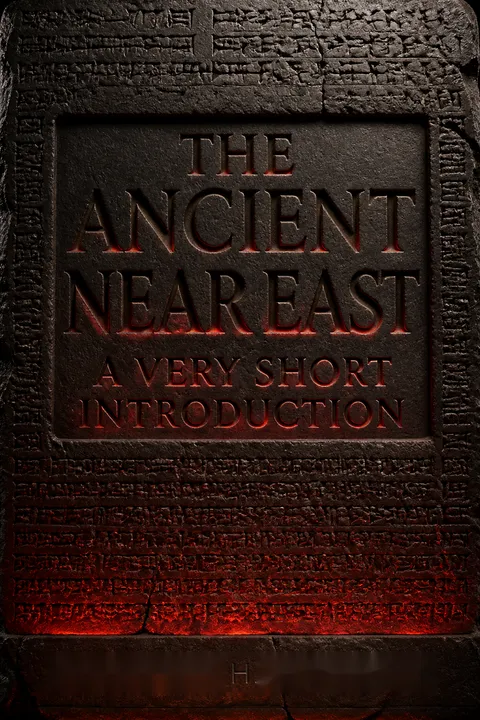
The Ancient Near East: A Very Short Introduction receives generally positive reviews (3.89/5), praised for its clear, accessible writing and effective use of primary sources like cuneiform tablets. Readers appreciate how it chronicles Mesopotamian civilization from early cities (3600 BCE) to Persian conquest (539 BCE), covering topics like writing's invention, law codes, diplomacy, and religion. Some critics find it dry or too focused on stable periods while underemphasizing nomadic cultures. Most agree it succeeds as an introductory text, sparking interest in deeper study, though a few note its brevity and the challenge of numerous unfamiliar names.
People Also Read


About the Author
Other books by Amanda H. Podany
Download PDF
Download EPUB
.epub digital book format is ideal for reading ebooks on phones, tablets, and e-readers.








































