
Key Takeaways
1. Madeleine L'Engle: A Bridge-Builder of Paradox
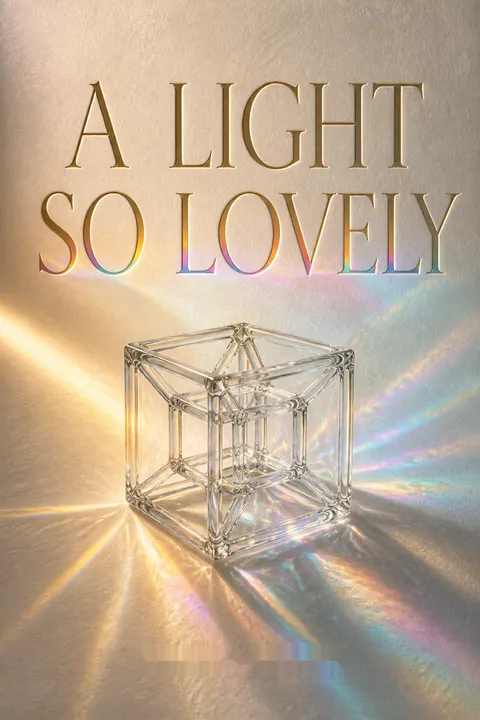
The gift of both/and is the Madeleine L’Engle legacy I, and many a Christian creative, has benefitted from most, and Sarah Arthur’s A Light So Lovely takes a deep dive into the fullest meaning of L’Engle’s beautifully complex perspective, displayed in all of her work, but most famously in A Wrinkle in Time.
A unique voice. Madeleine L'Engle emerged as a literary icon who defied easy categorization, bridging worlds often seen as irreconcilable. Her work, particularly A Wrinkle in Time, resonated with millions by embracing complexity rather than simplifying profound truths. She was celebrated for her ability to connect diverse fields, from science to religion, and for her unwavering faith in a deeply divided world.
Reconciling opposites. L'Engle's core philosophy centered on "both/and" thinking, challenging the rigid "either/or" binaries prevalent in both secular and religious discourse. This approach allowed her to explore the full spectrum of human experience and divine mystery without feeling constrained by conventional boundaries. Her influence extended to countless readers and artists who found in her work a permission to question, wonder, and believe more expansively.
A lasting legacy. Her ability to hold seemingly contradictory ideas in tension—such as faith and doubt, science and spirituality, or the sacred and the secular—became her signature contribution. She taught that paradox was not a trap for the lazy but a profound space where God often reveals Himself. This perspective offered a refreshing alternative to those seeking a more generous and inclusive understanding of Christianity.
2. Embracing the Power of "Both/And" Thinking
Why can’t it be both/and? What is this nonsense about “secular”? Why can’t God use those things if God wants to? Why can’t God speak through this or that person (if God can speak through a donkey, for instance)? Who says?
Challenging limitations. L'Engle consistently pushed against the human tendency to codify and limit God, especially within conservative Christian circles. She questioned the artificial boundaries people placed on divine action, arguing that God's presence and work could manifest in unexpected places and through unexpected people. This stance often put her at odds with those who preferred a more predictable and contained view of faith.
God without limits. For L'Engle, a God without limits was one who could be trusted implicitly at any age and shared openly without apology. She believed that restricting God's capabilities diminished the very essence of the divine. Her "joyful uncertainty" allowed her to explore profound theological questions without demanding definitive, "laboratory-proof" answers, fostering a sense of wonder rather than rigid dogma.
A liberating perspective. This "both/and" mindset was a gift to many who felt stifled by narrow interpretations of Christianity. It encouraged readers to embrace paradox and contradiction as integral to faith, rather than threats to it. L'Engle's work became a beacon for those seeking a faith that made room for intellectual curiosity, artistic expression, and a boundless understanding of God's love.
3. Art as a Window, Not an Idol
Not an idol whom one worships—as Madeleine herself would correct us—but a window, a person whose life and faith points beyond itself to Christ.
Defining icons. L'Engle understood the difference between an icon and an idol, a distinction crucial to her spiritual and artistic philosophy. An icon, in the Eastern Orthodox tradition, is a window to a bigger reality, a means through which divine light shines. An idol, however, is an object of worship that replaces the divine, becoming an end in itself.
Resisting adoration. Despite her widespread fame and adoration, L'Engle actively resisted being idolized. She saw herself as a flawed human being, an iconoclast who, like her husband Hugh, challenged cherished convictions and smashed "precious little idols." Her humility in the face of public acclaim allowed her to remain grounded, focusing on her role as a conduit for a greater truth rather than the source of it.
Humanity and grace. L'Engle's willingness to acknowledge her own imperfections and those of others underscored her belief that God uses imperfect people to accomplish His purposes. This perspective offered grace to her readers, allowing them to see her not as an infallible figure, but as a relatable human whose life, despite its complexities, pointed consistently to Christ's light. Her legacy encourages us to view others, and ourselves, with similar humility and compassion.
4. The Formative Power of Story and Myth
Stories, no matter how simple, can be vehicles of truth; can be, in fact, icons.
Truth beyond facts. L'Engle firmly believed that stories are primary vehicles for God's truth, capable of shaping our understanding of the universe and our place within it. She argued that truth often "sneaks in through the back door of the imagination," bypassing intellectual defenses to transform us from the inside out. This conviction stemmed from her own lonely childhood, where books provided nourishment and a private world of wonder.
Shaped by narratives. Her early reading, including works by E. Nesbit, Frances Hodgson Burnett, and especially George MacDonald, cultivated a hunger for truth "beyond fact." MacDonald's depiction of God as a loving, trustworthy Father, and his "wise women" mentors, profoundly influenced L'Engle's understanding of the divine. She learned to read the Bible "as story," appreciating its mythic quality as a revelation of truth, rather than a collection of rigid facts.
The True Myth. L'Engle aligned with C.S. Lewis and J.R.R. Tolkien's concept of "True Myth," where the Christian gospel is the ultimate story—the myth-become-fact. For her, Jesus Christ was not just any hero but the unique Savior whose story is the "ultimate particular" that illuminates all other narratives. This perspective allowed her to see storytelling as a moral enterprise, giving readers hope that their lives "matter cosmically."
5. Science as a Pathway to Worship
It was the scientists, with their questions, their awed rapture at the glory of the created universe, who helped to convert me.
Cosmic questions. L'Engle's spiritual journey took a pivotal turn when she engaged with theoretical physicists like Albert Einstein and Max Planck. Dissatisfied with German theologians who offered "rigid answers" to cosmic questions, she found in science a language that expanded her vision of God. Their "awed rapture at the glory of the created universe" resonated with her own intuitive sense of wonder.
Expanding God's vision. For L'Engle, scientific discovery did not diminish faith but rather enlarged her understanding of God's limitless creativity and intricate care for every atom. She saw no conflict between science and religion, believing that each new discovery only deepened her awe for the Creator. This perspective was a "rebuttal to the German theologians" and an affirmation of a loving God amidst the universe's vastness and complexity.
Incarnation and particularity. Her fascination with science reinforced her belief in the "scandal of particularity"—that God chose a specific time, people, and person (Jesus) to redeem all creation. This ultimate particularity, she realized, allowed her to understand cosmic questions through concrete, tangible realities. Her ability to weave complex scientific concepts like tesseracts and mitochondria into her fiction made her work compelling to scientists and a bridge for many to a more expansive faith.
6. Navigating the Sacred and Secular Divide
There is nothing so secular that it cannot be sacred, and that is one of the deepest messages of the Incarnation.
No artificial boundaries. L'Engle vehemently rejected the artificial divide between the sacred and the secular, a concept she found both limiting and unbiblical. She believed that if God created everything and called it good, then all of life is inherently sacred. This holistic view meant that God's presence could be found in the most ordinary activities, from cooking meals to scientific inquiry.
Controversy and censorship. Her refusal to compartmentalize faith led to significant controversy and censorship from both religious and non-religious camps. Publishers initially rejected A Wrinkle in Time for being "too religious," while conservative Christians banned it for perceived "witches" and "universalism." L'Engle found these attempts at censorship deeply disturbing, viewing them as a "fear of the imagination" and a limiting of God's work.
A bridge for many. Despite the backlash, L'Engle's integrated approach became a powerful bridge for a new generation of Christians, particularly those raised in conservative environments. She helped them rethink theological assumptions, read Scripture with nuance, and embrace a faith that was "bigger" and more inclusive. Her legacy demonstrates that an uncompromising faith can coexist with a full engagement in the world, fostering genuine fellowship even amidst disagreement.
7. The Artist's Vocation as Spiritual Discipline
If it’s bad art, it’s bad religion, no matter how pious the subject.
Art as worship. L'Engle articulated a transformative understanding of art as a spiritual discipline, asserting that artistic practices are religious practices. For her, writing was not merely a hobby but a God-given vocation, deserving the same attentiveness as prayer. She believed that the act of creation brought artists into communion with the Maker, making art itself a form of worship.
Excellence in craft. She insisted on artistic excellence, arguing that "if it's bad art, it's bad religion." This meant that genuine faith would be evident in the quality of the work, regardless of the subject matter. She challenged Christian writers to pursue their craft with the utmost ability, using active verbs, complex characters, and compelling plots as acts of devotion, rather than relying on pious themes to compensate for poor execution.
Mentoring a generation. L'Engle's book Walking on Water: Reflections on Faith and Art became a foundational text for countless artists struggling to reconcile their faith with their creative callings. She mentored hundreds, particularly women, giving them permission to pursue their art without diminishing their other roles, like motherhood. Her influence helped artists reclaim their freedom and the value of imagination within Christian communities, fostering a prophetic voice that spoke truth to the church with love.
8. The Complexities of Fact and Fiction
My husband says, and I’m afraid with justification, that by the time I’ve finished a book I have no idea what in it is fabrication and what is actuality; and he adds that this holds true not only for novels but for most of my life.
Truth over facts. L'Engle famously asserted that "truth" takes primacy over "facts," believing that stories could convey deeper realities even if they embellished or altered factual details. She argued that facts alone do not capture the full essence of human experience or divine mystery. This approach, while artistically compelling, led to significant tension, particularly within her own family.
Family's perspective. Her children and grandchildren often found her memoirs to be idealized versions of their shared life, feeling that their experiences were sometimes "erased" or fictionalized. Instances like the "Brechstein fire" story, which L'Engle presented as nonfiction but later admitted was largely fabricated, illustrate this blurring of lines. Her family's candid reflections reveal the pain of having one's personal narrative shaped by a powerful storyteller.
Accountability and impact. In today's "post-truth" culture, L'Engle's approach raises questions about accountability and the potential harm of presenting fiction as fact. While she sought to convey universal truths, her tendency to insist on her version of events, even against family testimony, highlights the ethical complexities of memoir. Her legacy serves as a cautionary tale for writers to balance artistic license with respect for the lived experiences of others, acknowledging that facts, too, carry truth and matter deeply.
9. Clinging to Light in the Darkness
But all shall be well; and all shall be well, and all manner of thing shall be well.
Facing profound loss. L'Engle's life was marked by significant personal losses and periods of intense darkness, including the early deaths of her father and a close friend, a devastating car accident, and the tragic death of her son, Bion, from alcoholism. Despite her public insistence that "all shall be well," these experiences often left her grappling with profound grief and a terrifying sense of God's absence.
The reality of evil. Far from denying evil, L'Engle explicitly named it as a demonic force actively at war with God, a theme central to her Time Quintet. She believed that the battle between light and darkness was real and cosmic, and that Christians were called to fight it. Her nuanced understanding distinguished between natural darkness (for rest and healing) and the spiritual darkness of evil that seeks to annihilate.
Spiritual disciplines as anchors. In her deepest struggles, L'Engle clung to spiritual practices as anchors. Daily prayer, reading the Bible (especially the Psalms), communal worship, and receiving Communion were not magic fixes but disciplines she practiced "whether I like it or not." These habits, along with the loving presence of friends like Luci Shaw, helped her navigate seasons of doubt and fear, reminding her that God's love would ultimately prevail. Her life demonstrates that believing "takes practice," and that even in vocational silence, God's grace sustains.
Review Summary
Reviewers widely praise A Light So Lovely as a thoughtful, honest exploration of Madeleine L'Engle's spiritual legacy, balancing admiration with candid acknowledgment of her flaws. Most appreciate Arthur's interview-based approach, weaving together perspectives from writers, friends, and family. The book's thematic structure around paradoxes—faith/science, sacred/secular, religion/art—resonates strongly. Some critics note occasional redundancy or heavy theological tangents. Nearly all readers, whether lifelong L'Engle fans or newcomers, report feeling inspired to revisit her work.
People Also Read
Download PDF
Download EPUB
.epub digital book format is ideal for reading ebooks on phones, tablets, and e-readers.








































