
Key Takeaways
1. Embrace Life's Paradox: Suffering and Joy Coexist
This is life, the beauty and the pain together.
Decide to live. Life inevitably brings both profound suffering and immense beauty. The author recounts a premonition that a year would be hard, filled with suffering for herself and loved ones. This wasn't anxiety, but a calm voice of wisdom, preparing her for the reality that life is a constant negotiation between hardship and moments of grace.
Beyond mere existence. It's possible to choose not to die, yet still not truly live. True living means embracing the full spectrum of human experience, acknowledging that glorious sunrises can coexist with deep emotional pain. This realization offers a choice: to say "yes" to life as it is, with all its brokenness and beauty, and to actively seek goodness.
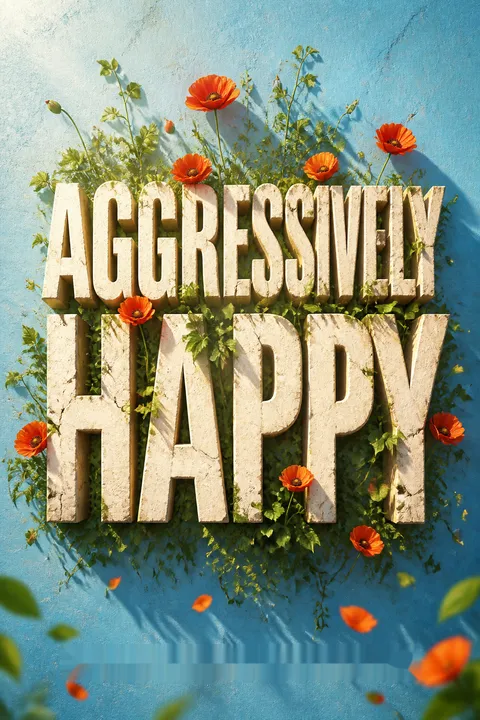
Aggressively Happy. This isn't about saccharine positivity or denying sorrow; it's a deliberate fight for joy. Cultivating happiness requires grit and determination, making life more pleasant for oneself and others. Ultimately, it's about believing that, despite everything, life is fundamentally good and worth living fully.
2. Befriend Sadness: It Deepens Your Capacity for Joy
Sadness sings the same song that Joy sings.
Joy in bitterness. The author's name, Joy Marie ("Joy in the sea of bitterness"), encapsulates the idea that joy and sorrow are inextricably linked. Suppressing negative emotions like sadness, anger, or fear doesn't make them disappear; it stifles the very capacity for deep joy and makes us fragile.
Acquainted with grief. Just as Jesus was "acquainted with grief," we are called to befriend our sadness rather than hide from it. Grief, when acknowledged, reveals how precious the world is, how deeply we have loved, and how much we have hoped. It testifies to the world as it should be, not just as it is.
Sisters in the soul. Sadness and happiness are two sides of the same coin, both born from a tender heart that feels deeply. Allowing ourselves to mourn fully, to weep when our hearts are broken, is essential. This process, though painful, ultimately heals and opens us to deeper love and joy, reminding us that not all tears are evil.
3. Learn to "Flounder Well": Accept Your Present, Cultivate a Rich Life
Begin the song exactly where you are.
Life in the "dark wood." Much of life is spent "floundering"—struggling, thrashing about, unsure of direction, feeling lost in an "in-between" state. This isn't a waste; these seasons are often profoundly formative. The key is to stop panicking and learn to "flounder well."
"Yes, and" to life. Drawing from improvisational theater, the principle of "yes, and" applies to life: first, accept the reality of your situation ("yes"), then creatively add to it ("and"). Resisting or denying your current reality is a recipe for ineffectual floundering, wasting energy and preventing genuine progress.
Become interesting. Floundering often creates empty space, an opportunity to develop neglected aspects of your humanity. Instead of filling this void with endless "doing," focus on "becoming" a more interesting person. This involves:
- Emotional/Social growth: Seek counseling, invest in friendships.
- Intellectual development: Read widely, learn a language.
- Spiritual depth: Explore your faith beyond inherited beliefs.
- Physical/Practical skills: Learn to cook, dance, or fix things.
Embrace the quiet life, bring order to your surroundings, and treat yourself with dignity.
4. Honor Your Body: It's a Means of Grace, Not an Impediment
You are not a machine. You are more like a garden.
The spiritual power of a snack. The author recounts how hunger-induced grumpiness or despair can masquerade as existential crises, much like the prophet Elijah's breakdown after a great victory. God's response to Elijah's despair was not a rebuke, but food and sleep, highlighting the profound connection between our physical and spiritual well-being.
Accidental Gnosticism. Many subconsciously view their bodies as inconvenient impediments to "more important" spiritual or purposeful work. This "gnostic" mindset, which historically saw the material world as evil, contradicts the Christian message that "The Word became flesh," honoring our bodies as worthy of redemption and a means of experiencing God's grace.
Creaturely dependence. Our bodily needs—for food, sleep, comfort—are not weaknesses but design features that remind us of our fundamental dependence on God. Just as a garden needs different things on different days, our bodies require gentle care. Self-care is not selfishness; it's an acknowledgment of our limits and a trust that God sustains us, making us more capable of loving and serving others.
5. Enjoy Things Unironically: A Vital Act of Resistance and Source of Strength
To make injustice the only measure of our attention is to praise the Devil.
No "guilty pleasures." We often feel shame or guilt about innocent enjoyments due to fear of judgment, a "Tiny Puritan" voice, or the belief that enjoying anything is insensitive when the world is suffering. This policing of enjoyment stifles authentic connection and robs us of vital energy.
The feast of life. God has set a feast for us in the world, inviting us to taste His love in every pleasure. Like the characters in Babette's Feast, we can choose to embrace this grace or deny it out of misguided piety. Unironic enjoyment is an act of honoring God's good creation and a powerful antidote to cynicism.
Strawberries on Mount Doom. While acknowledging the world's brokenness is crucial, constant focus on its suffering can lead to paralysis or hardening. Simple pleasures, like Sam's memory of strawberries in Mordor, provide the strength and vision needed to fight for a world worth saving. Enjoying beauty is not escapism; it's a declaration that goodness is more fundamental than evil, fueling our efforts to turn darkness into light.
6. Tell Yourself a Good Story: Root Your Narrative in Hope
I can only answer the question “What am I to do?” if I can answer the prior question “Of what story or stories do I find myself a part?”
The power of narrative. We are all storytellers, constantly crafting narratives about our lives that shape our perceptions, actions, and sense of self. These stories, whether conscious or unconscious, determine how we interpret events, relate to others, and envision our future.
Beyond self-deception. While negative stories can offer a false sense of safety by managing expectations, they ultimately make us miserable and blind us to life's goodness. Learning to tell a good story isn't about denying reality, but about choosing a narrative that casts ourselves as brave, resilient characters who meet challenges with perseverance.
God's truest story. Ultimately, we live within a larger narrative—God's story. Before we told our own, God told a story about us: that we are profoundly loved, meticulously created, and eternally redeemed. Rooting our personal narratives in this overarching truth provides an unshakable foundation, allowing us to face life's disjointed moments with hope and purpose.
7. Cultivate Contentment: Through Small Joys, Virtuous Ambition, and Humble Acceptance
You mustn’t wish for another life. You mustn’t want to be somebody else.
The wisdom of Mr. Collins. Often mocked, Mr. Collins from Pride and Prejudice embodies a profound contentment derived from simple pleasures, achievable ambitions, and a humble acceptance of life's outcomes. He finds immense joy in "shelves in a closet" and the patronage of Lady Catherine, demonstrating a cultivated thankfulness.
Ambition for a quiet life. Modern society often values ambition as an activity, regardless of its object, leading to endless striving without satisfaction. Mr. Collins, a "Slytherin" with simple goals, exemplifies Paul's call to "make it your ambition to lead a quiet life." This means pursuing stability, meaningful work, and integrity, rather than insatiable accumulation.
Dignified acceptance. Life inevitably brings rejection and loss. Mr. Collins' ability to move past Elizabeth's refusal with dignity, rather than bitterness or self-pity, is a valuable lesson. Cultivating thankfulness for what you do have, avoiding comparison, and maintaining self-respect allows you to accept setbacks without letting them define your future or diminish your joy.
8. Believe in God: A Choice to See Life Through Unfailing Love
If we are faithless, He remains faithful, for He cannot deny Himself.
The struggle of belief. Faith is often a wrestling match, a constant tension between doubt and a deep desire to believe. The author recounts a period of intense doubt after a friend's death, questioning God's presence and goodness amidst suffering. This struggle is not a sign of weakness, but a deeply human experience.
Seeing through the sunbeam. Drawing on Dostoevsky's The Brothers Karamazov and C.S. Lewis's "The Weight of Glory," belief is presented not as a mere intellectual affirmation, but as a choice to "see through" the light of Christ. Even when logic falters, living within the Christian story makes life more vital, beautiful, and meaningful.
Grace makes faith enough. The author's experience with the hymn "Jesus' Blood Never Failed Me Yet" reveals that faith isn't a performance or a perfect certainty we must achieve to save ourselves. Instead, it's a humble confession, a "mustard seed" of trust that God, in His grace, undergirds and makes sufficient, even when our belief is frail and sputtering.
9. Accept Unconditional Love: It's Your Core Identity and Frees You to Live
Unless I wash you, you have no part with me.
The scandal of foot-washing. Jesus, knowing His divine power and impending suffering, chose to wash His disciples' feet, including those who would betray or deny Him. This act, reenacted on Maundy Thursday, reveals God's radical humility and unconditional love, a love that is always the first move.
The unlovable jerk. We often struggle to accept love, tying our worth to what we do, accomplish, or how "useful" we are. This self-rejection, though seemingly humble, is a form of pride that prevents us from receiving the love freely offered by God and others. It traps us in a self-centered cycle of proving our worth.
Belovedness as identity. The apostle John, who called himself "the disciple Jesus loved," understood that his core identity was rooted in Christ's unconditional love. Accepting this truth—that you are fundamentally and eternally loved by God, down to your "dusty, smelly toes"—frees you from the need to constantly validate your existence. This secure love enables true generosity, bravery, and joy.
10. Expect the End of the World: Respond by Turning Darkness into Light
To make injustice the only measure of our attention is to praise the Devil.
The world has always been ending. Whether through religious prophecy, climate change, or cosmic events, the world will end, and so will our individual lives. This isn't a new phenomenon; humanity has always lived on the "edge of a knife." Accepting this finitude, rather than fearing it, can be a source of wisdom.
Memento Mori. Remembering our mortality, as ancient saints did, encourages us to live with purpose, love, and repentance. C.S. Lewis noted that humans continue to pursue beauty and knowledge even in wartime, because "life has never been normal." Our response to impending doom should not be paralysis, but continued living.
Turning darkness into light. To believe in God is to trust that something precedes and outlasts this death-bound world. Our response to a world falling apart is to embody God's creative power: to make beauty, cultivate gardens, seek healing, and fight injustice. Like the monks who illuminated the Book of Kells amidst Viking raids, we are called to live lives that declare life, beauty, and joy are the truest things, turning darkness into light.
Review Summary
Aggressively Happy receives overwhelmingly positive reviews, averaging 4.36 out of 5. Readers praise Joy Clarkson's warm, witty writing style, often comparing the experience to chatting with a trusted friend. Many found the book deeply encouraging during difficult personal seasons, appreciating its honest balance of joy and sorrow without resorting to toxic positivity. Standout chapters frequently mentioned include those on Mr. Collins, accepting love, and believing in God. Some critics noted limited doctrinal depth or theological differences, but most consider it a meaningful, hope-filled read worth returning to repeatedly.
People Also Read






Download PDF
Download EPUB
.epub digital book format is ideal for reading ebooks on phones, tablets, and e-readers.








































