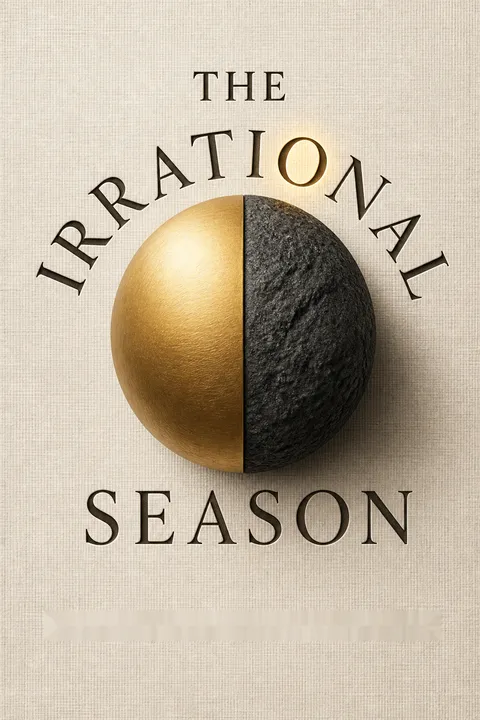

Key Takeaways
1. Faith Beyond Reason: Embracing the Impossible
The only God who seems to me to be worth believing in is impossible for mortal man to understand, and therefore he teaches us through this impossible.
Beyond human comprehension. Madeleine L'Engle grapples with the profound mystery of God, acknowledging that true faith often transcends human intellect and provable fact. She finds that attempts to domesticate God, to make Him comprehensible and acceptable to reason alone, diminish Him into an idol. Instead, she embraces the "impossible" nature of God as the very source of His worth and teaching.
The vastness of creation. Her early childhood experience of seeing the stars for the first time instilled an intuitive awareness of a world far greater than human limits, revealing God as extraordinary, not merely an amplified version of parental powers. This sense of cosmic wonder, from galaxies to sparrows, underpins her belief that God's love is boundless and defies simplistic explanations. She questions why there is anything at all, concluding that "it is the nature of love to create."
A personal new year. L'Engle's reflections often begin with Advent, the Christian New Year, a time for contemplating both beginnings and endings. This personal cycle mirrors the grand cosmic narrative, where the fear of unending darkness gives way to the relief of lengthening days. She finds peace in these moments of nocturnal wakefulness, sipping bouillon and contemplating the "eschaton"—the end of all things—not with terror, but with a growing sense of joy and hope, understanding it as a redemption and new beginning, not annihilation.
2. God's Love in Vulnerability: The Power of Incarnation
The enfleshing of the Word which spoke the galaxies made the death of that Word inevitable.
The ultimate paradox. The Incarnation—God becoming human in Jesus—is presented as an event as shattering and terrible as the end of time itself. L'Engle marvels at a love so profound that the Creator of all life would willingly limit His unlimitedness, assume mortal flesh, and accept the pain, betrayal, and ultimate failure (in human terms) of death on a cross. This paradox of divine power manifesting in human weakness is central to her understanding of Christmas.
Love's irrationality. She finds the secular celebrations of Christmas less problematic than the theological implications of God's love. The idea of the infinite confined within a human infant, the Creator thirsty and abandoned, challenges conventional notions of divine power and success. Yet, it is precisely this "flawed, failed love" that she celebrates as the source of hope and courage, allowing her to rejoice despite her shaky Christology.
A personal Christmas. L'Engle recounts a Christmas marked by the death of her mother-in-law, Dorothy, juxtaposed with family gatherings and the joy of her grandchildren. This experience highlights the simultaneous presence of grief and rejoicing, affirming that Christian love means accepting both. The image of the helpless infant in the crèche, containing the brilliance of galaxies and the shadow of the cross, makes the impossible believable, affirming the ultimate value of all life.
3. Living Memory: Experiencing God's Time (Kairos)
When we are truly remembering, when we know anamnesis, suddenly the mighty acts of God are present.
Beyond chronological time. L'Engle distinguishes between chronos (man's linear, measurable time) and kairos (God's qualitative, untimebound time). Kairos is understood intuitively, not intellectually, and is recognized only in hindsight through anamnesis—a living memory that makes past events present. This concept is crucial for her as a storyteller, enabling her to embody different ages and experiences in her writing.
The storyteller's tool. For L'Engle, anamnesis is essential for writing about young protagonists; it's not merely recalling the past but being that past self in the present moment of creation. This deep, empathetic memory allows her to access universal truths. She notes that many people fear memory because it reveals who they truly are, but for her, it's a source of joy and a necessary tool for her vocation.
Moments of presence. In the Holy Mysteries, particularly the Eucharist, anamnesis makes the mighty acts of God present. Similarly, in moments of true, spontaneous love, time vanishes, and she enters kairos. Whether painting Christmas ornaments with grandchildren or experiencing the birth of her own child, these are moments of "incarnation"—the enfleshing of the divine in the ordinary, bridging the gap between the conscious and intuitive mind.
4. The Creative Power of Failure: God's "No" as "Yes"
Experience is painfully teaching me that what seems a NO to man from man’s point of view, is often the essential prelude to a far greater YES.
God's paradoxical answers. L'Engle explores the profound concept of God's "Noes," particularly in the context of suffering and personal setbacks. She recounts her anger and frustration when her book A Wrinkle in Time faced numerous rejections, only to realize later that the delay led to its publication at "exactly the right moment." This pattern of apparent failure preceding greater success is a recurring theme.
The cross as ultimate "No." The most profound example is Jesus's agony in Gethsemane, where his prayer to be spared the cross was met with God's "No." This ultimate refusal, however, was the "essential prelude to the Yes of the Resurrection," defeating death itself. L'Engle challenges the notion of an angry God demanding appeasement, instead seeing the crucifixion as an inevitable consequence of God becoming fully human, and a demonstration of love that transcends human understanding.
Personal and professional growth. Her own life experiences, from the "No" that led to meeting her husband Hugh, to the struggles of balancing writing with family life, taught her that pain and weakness are often catalysts for growth and prevent pride. She finds that her best work is born from pain, and that accepting failure is crucial for both personal development and the redemption of her "sins of omission and commission."
5. Wholeness: Integrating Light and Shadow (Sunside & Nightside)
The unconscious aspect of the personality is anything but inert, and this is why it is so fearsome.
The divided self. L'Engle frequently uses the metaphor of Mercury, with its perpetually sunlit and dark sides, to illustrate the human condition of fragmentation—the rift between conscious intellect ("sunside") and intuitive subconscious ("nightside"). She argues that true wholeness, or "full consciousness," comes not from suppressing the dark side, but from embracing and integrating it, allowing the "temperate zone" to mediate.
Art as integrator. For L'Engle, art, prayer, and myth are powerful integrators that reconcile these warring opposites. She believes that when the mind is informed by the heart, and intellect collaborates with intuition, one can approach a deeper understanding of truth. This integration is a "wildly athletic act," often requiring considerable "violence" to pull one's fragments together.
Acknowledging the "monster." She suggests that what we relegate to the dark side—our fears, our "bad" qualities, our repressed emotions—can become a destructive force if ignored. However, embracing this "monster" carries the genuine risk of being "devoured," yet it also holds the potential to reveal the "handsome prince or the beautiful princess" within, leading to wholeness and freedom.
6. Love as Self-Giving Participation, Not Possession
If our love for each other really is participatory, then all other human relationships nourish it; it is inclusive, never exclusive.
Beyond possession. L'Engle defines love, particularly in marriage, not as possession but as participation. This concept, influenced by Daniel Day Williams, emphasizes mutual creation and strengthening rather than ownership. She believes that true love is inclusive, nourishing other relationships like friendships, rather than being exclusive or threatened by them.
The risk of commitment. Marriage, for L'Engle, is the biggest risk in human relations, a lifelong commitment made before God. She rejects the modern trend of "trial marriages" as a fear of risk and a rejection of true freedom. Her own 30-year marriage to Hugh, though marked by conflicts and failures, has been a journey of learning to love the real person, not an idealized image, and to be "guardians of each other's solitude."
Letting go. This participatory love extends to parenting, where she emphasizes the "essential letting go" of children as they grow, a process that is painful but leads to joy and lightness. She contrasts this with the "heaviness" of pride and possessiveness. The ultimate act of self-abandonment, she suggests, is death itself, which, when accepted, becomes an affirmation of life and a path to wholeness.
7. Community: The Trinitarian Image in Human Connection
The Trinity is unity in diversity; the Trinity is our model for Community.
A living image. L'Engle sees the Trinitarian God—three in one, one in three—as the ultimate model for human community. She laments the modern denigration of the family and the isolation of individuals, which she links to a loss of understanding of this divine pattern. True community, like a symphony orchestra, thrives on radical differences working together in unity.
The Crosswicks experience. Her years living in a small New England village, running a general store, provided a profound experience of Christian community. Despite personal struggles and human flaws (like a hymnal being thrown in choir practice), the community ministered to each other, sharing burdens and joys. This interdependence, she realized in hindsight, was a glimpse of the "Acts of the Apostles" in modern life.
Interdependence and vulnerability. L'Engle argues that community requires vulnerability and an acceptance of imperfection. She contrasts genuine community with superficial "cocktail-party relationships" that avoid true connection. While she acknowledges the challenges of maintaining community in a changing world, she believes that "unity is already here" when people are willing to break down barriers and nourish each other, even across denominational lines.
8. Choosing Blessing: The Daily Battle Against Cursing
Blessing is an attitude toward all of life, transcending and moving beyond words.
Beyond good and evil. L'Engle explores the constant struggle between blessing and cursing, particularly in a world filled with suffering and hate. She reflects on the story of Balaam and his ass, where a commanded curse is turned into a blessing, illustrating that God's will can transform negative intentions. She acknowledges her own struggle with anger and irritation, recognizing that impotence often leads to cursing.
Conditioning reflexes. She emphasizes that our responses to life's frustrations are conditioned reflexes, built up through daily, seemingly small interactions. Simple acts like smiling at a dour grocery worker or helping a neighbor find a carton are "peacemaking" opportunities that build the capacity for greater acts of grace. These small offerings are crucial for developing the courage to bless rather than curse, even in the face of profound evil.
The icon tree. A powerful personal experience involved finding a beloved icon on a tree at her country home shot and shattered. Her initial reaction was a "wave of hate" and nausea. However, through prayer and a conscious act of letting go, she was able to turn the act of hate over to God. Later, the tree itself became a "living witness that love is stronger than hate," a symbol of resurrection where the wound revealed a "galaxy aswirl with flame."
9. The Spirit's Guidance: Art, Prayer, and Unselfconscious Creation
I am convinced that each work of art, be it a great work of genius or something very small, has its own life, and it will come to the artist, the composer or the writer or the painter, and say, “Here I am: compose me; or write me; or paint me”; and the job of the artist is to serve the work.
Inspiration as servanthood. L'Engle views the Holy Spirit as the easiest person of the Trinity to understand, particularly through the lens of artistic creation. She describes moments when "something more than he takes over," leading to work that transcends ordinary ability. This inspiration is not magic but a humbling act of "servanthood," where the artist serves the work, allowing it to "write me, not as I wrote it."
Unselfconscious wholeness. Both writing and prayer, at their best, become "completely unselfconscious activities," integrating the fragmented self and reconciling sunside and nightside. She notes that conscious efforts to write or pray well often fail, as true gifts of the Spirit are known only afterwards, through anamnesis. This process requires a willingness to be vulnerable and to let go of control.
Whispers and warnings. L'Engle acknowledges the presence of dark spirits and the need for "the whole armour of God," as not all spirits are holy. She warns against "easy ecstasy" and the temptation to take credit for spiritual gifts. She also critiques the separation of sacred and secular, arguing that all creation is sacred and that healing, like art, is a gift as well as a science, requiring a recovery of vocation and reverence for the Spirit.
10. Resurrection: The Ultimate Affirmation Beyond Death
The more I am enabled to abandon myself, the more full of life I am. So: death ought to be the ultimate act of self-abandonment in order that we may become wholly alive.
Death as transformation. L'Engle confronts the universal fear of death and annihilation, asserting that the Christian promise of resurrection is not a "pie-in-the-sky" fantasy but a profound reality. She believes that death is not an end but a door to fuller life, a transformation of the "fragmented self made new" into the body as it was meant to be, where "all Creation will be One."
Harrowing of hell. She highlights the Eastern Orthodox emphasis on Great and Holy Saturday, when Jesus descended into hell to minister to the damned, trampling down its gates. This image, particularly a powerful fresco in Istanbul, depicts Christ's immense virility and power, not as an angry judge, but as a loving redeemer who wrests Adam and Eve from hell's grasp, affirming God's ultimate concern for all creation, even Satan.
Living towards the end. L'Engle connects the promise of resurrection to daily life, arguing that what we do "here and now matters enormously." Acts of love, forgiveness, and compassion are glimpses of the Kingdom of Heaven on earth. She believes that God's love is greater than all human hate and will not rest until all creatures are reconciled to Him, freely returning His look of love. This ultimate reconciliation, she concludes, is the joy of being co-creators with God.
Review Summary
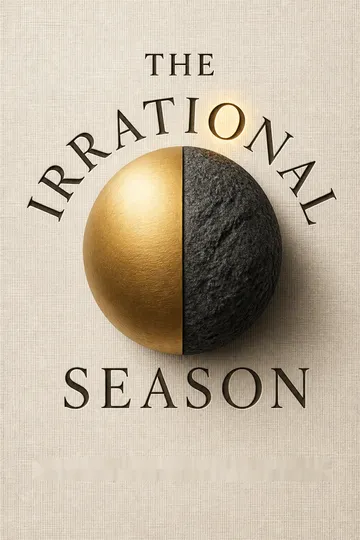
Reviews for The Irrational Season are generally positive, averaging 4.19/5. Readers appreciate L'Engle's honest exploration of faith, doubt, and the Christian liturgical year, often finding her writing deeply personal and thought-provoking. Many admire her poetry and spiritual musings, though some feel the theological density makes it less accessible than her other Crosswicks Journals. While readers don't always agree with her conclusions, most value her vulnerability and intellectual curiosity. It is frequently described as a book best read slowly and revisited multiple times.
People Also Read

Crosswicks Journals Series
About the Author

Download PDF
Download EPUB
.epub digital book format is ideal for reading ebooks on phones, tablets, and e-readers.








































