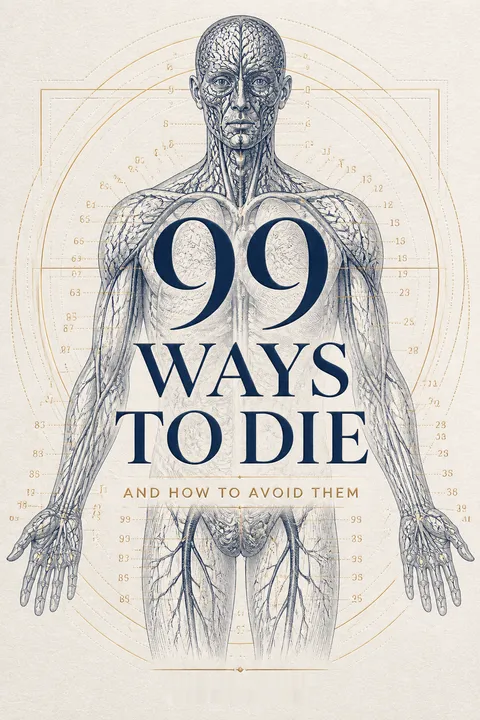

Key Takeaways
1. Prevention is Your Best Defense Against Death.
I am a board-certified death escapologist.
Embrace preventative care. The author, an emergency medicine doctor, wrote this book not to drum up business, but to prevent emergency department visits by educating the public on the myriad ways to die. This proactive approach, focusing on public health and preventative measures, is crucial for avoiding the "ugly head" of evolution that natural selection once enforced. By understanding the risks, individuals can make informed choices to safeguard their lives and health.
Knowledge empowers action. Many terrifying and unfortunate ways to die, from everyday household poisons to regrettable sex, are explored as a "map to avoiding" them. This book serves as a vital medical translator, cutting through incomprehensible jargon to provide clear, actionable insights. It aims to be more enlightening than a Google search that incorrectly diagnoses all symptoms as cancer, offering a practical guide to navigating life's dangers.
Personal motivation for public good. The author's journey into medicine was deeply personal, driven by his mother's lifelong battle with cancer and its side effects. This experience highlighted the critical need for medical translation and advocacy, inspiring a passion for public health. The book, though seemingly macabre, is ultimately a testament to this purpose: to translate the intricacies of science and medicine into stories that might just save a life.
2. Vaccines: Humanity's Greatest Lifesavers.
Vaccines are arguably the single greatest scientific discovery of mankind, which we discovered a few times.
Eradicating historical scourges. Vaccines have dramatically altered human history, eradicating diseases like smallpox and bringing polio to the brink of global elimination. The measles, mumps, and rubella (MMR) vaccine alone has prevented an estimated 94 million measles deaths worldwide in the past fifty years, mostly in children under five. These medical marvels have transformed once-common, deadly childhood diseases into rare occurrences in vaccinated populations.
A shield against diverse threats. From tetanus, diphtheria, and pertussis (Tdap) to meningitis and hepatitis, vaccines protect against a wide array of bacterial and viral threats. The HPV vaccine stands out as the first vaccine to prevent cancer, offering nearly 100% protection against the strains responsible for most cervical cancers. Despite their proven efficacy, vaccine hesitancy, often fueled by misinformation, leads to preventable outbreaks and deaths, underscoring the critical need for informed decisions.
Beyond individual protection. The benefits of vaccination extend beyond the individual, contributing to herd immunity that protects the most vulnerable, including infants and the immunocompromised. The author emphasizes that while some vaccines are reserved for high-risk groups or specific regions, routine childhood immunizations are a societal privilege that prevents immense suffering and death. Ignoring this privilege not only endangers one's own family but also undermines community health.
3. Common Infections Can Turn Deadly.
I bet you had no idea that strep throat was such a problem.
Seemingly benign, potentially lethal. Many common infections, often dismissed as minor ailments, harbor the potential for severe, life-threatening complications if left untreated. Strep throat, for instance, can lead to rheumatic fever, causing permanent heart damage and death, or post-streptococcal glomerulonephritis, which can result in kidney failure. Finishing prescribed antibiotics, even when feeling better, is crucial to prevent these insidious progressions.
Hidden dangers in the everyday. Bacteria like Mycobacterium leprae (leprosy) and Mycobacterium tuberculosis (TB) can lie dormant for years, reactivating when the immune system is compromised, leading to disfigurement, organ damage, or widespread infection. Even flesh-eating disease (necrotizing fasciitis), often starting as a simple skin infection, can rapidly consume tissue and lead to sepsis and organ failure within hours. Early diagnosis and aggressive treatment, often surgical, are paramount for survival.
Vulnerabilities across the lifespan. Children and the immunocompromised face unique risks from infections that healthy adults might easily overcome. Infantile botulism from raw honey, for example, can cause paralysis in babies due to their less acidic stomachs. Superbug infections, driven by antibiotic overuse, pose a growing threat, making once-treatable diseases like gonorrhea increasingly resistant to medication. This highlights the delicate balance of our immune systems and the constant evolutionary battle against pathogens.
4. Your Heart and Brain are Surprisingly Fragile.
As any cardiologist will tell you, the heart is indisputably the most important organ in the body, as it’s in charge of pumping about two thousand gallons of blood a day to deliver oxygenated blood to the entire body.
The heart: A delicate powerhouse. Despite its robust function, the heart is susceptible to numerous life-threatening conditions. Heart attacks, caused by blocked coronary arteries, can lead to rapid tissue death, while aortic dissections, tears in the body's largest blood vessel, can be 100% fatal if not immediately treated. Even emotional stress can literally "break" the heart, as seen in Takotsubo cardiomyopathy, where extreme emotional triggers cause temporary heart weakening.
Brain: The command center under threat. The brain, our most complex organ, faces dangers from both internal and external forces. Strokes, whether ischemic (blockage) or hemorrhagic (bleed), deprive brain tissue of oxygen, leading to permanent damage or death. Brain bleeds, from trauma or ruptured aneurysms, can cause rapid pressure buildup and herniation, a "no-exit situation" for the brain. Prion diseases, like Mad Cow, cause misfolded proteins to destroy brain cells, leading to universally fatal neurodegenerative conditions.
Silent killers and sudden disasters. High blood pressure, often dubbed the "silent killer," insidiously damages blood vessels over time, increasing the risk of heart attacks, strokes, and kidney failure. Arrhythmias, or irregular heartbeats, can be benign or immediately fatal, as in commotio cordis, where a blunt chest impact at the wrong moment stops the heart. Recognizing subtle symptoms and seeking prompt medical attention for chest pain, sudden weakness, or severe headaches is crucial, as early intervention can often prevent irreversible damage.
5. Recreational Drugs: A Deadly Gamble.
Unfortunately ubiquitous, drugs, I have found, ruin lives everywhere.
The insidious grip of addiction. Recreational drugs, from meth to opiates, exploit the brain's reward system, creating intense highs that lead to physiological dependence and addiction. Methamphetamine, by flooding the brain with dopamine, can cause psychosis, seizures, and severe heart failure, while its toxic manufacturing process often leads to explosions. Cocaine overstimulates the brain's reward center, causing heart attacks, strokes, and long-term organ damage, including nasal septum necrosis from snorting.
Opiates: A rapid path to death. Opiates, including heroin and fentanyl, are among the most addictive and dangerous drugs, responsible for 75% of overdoses in 2021. Fentanyl, 50-100 times more potent than heroin, can cause respiratory depression and death within minutes due to its effect on brain receptors that regulate breathing. While opiate withdrawal is agonizing, it is not inherently life-threatening, unlike alcohol or benzodiazepine withdrawal, which can cause seizures and death if stopped abruptly.
Hidden dangers and unexpected consequences. Psychedelics like LSD and magic mushrooms, while not typically causing overdose deaths, can lead to dangerous "bad trips" or accidental fatalities, especially if laced with other substances. Party drugs like MDMA can cause life-threatening hyperthermia, rhabdomyolysis, and deadly sodium imbalances due to excessive sweating and water intake. Date-rape drugs like GHB and Rohypnol cause sedation and amnesia, facilitating sexual assault and carrying risks of respiratory depression and death. The author stresses that addiction is a complex disease, not a moral failing, and emphasizes the importance of seeking help and carrying life-saving interventions like Narcan.
6. The Environment is Full of Hidden Killers.
The dose makes the poison.
Unseen atmospheric threats. Carbon monoxide, a tasteless, odorless, colorless gas, is a silent killer produced by combustion sources like cars and furnaces. It binds to red blood cells, displacing oxygen and leading to cellular asphyxiation, organ failure, and death. Similarly, lightning, a mystical force of nature, can cause immediate cardiac arrest, though 90% of those struck survive. Awareness and simple detectors or precautions are vital for these pervasive dangers.
Nature's venomous arsenal. The animal kingdom harbors numerous deadly creatures, from snakes and spiders to jellyfish and scorpions. The inland taipan snake's venom can kill 100 humans, while the saw-scaled viper is responsible for more human deaths than all other snake species combined. Australian box jellyfish can cause death in under five minutes by collapsing the cardiovascular system. Even seemingly innocuous creatures like the cone snail can deliver a paralyzing harpoon. The key to survival often lies in prevention, respecting wildlife, and seeking immediate medical attention for envenomations.
Natural disasters: Earth's unpredictable fury. Earthquakes, caused by shifting tectonic plates, can devastate communities, rupture gas lines leading to uncontrollable fires, and trigger tsunamis. Tornadoes, with their freight-train roar and destructive winds, can demolish structures and cause widespread fatalities. Volcanoes, though slow-moving with lava, pose threats from fast-moving mudslides (lahars) and pyroclastic flows that melt everything in their path. Preparedness, understanding warning signs, and knowing safe shelters are crucial for mitigating these elemental threats.
7. Medical Misinformation and Systemic Failures Cost Lives.
The problem is not science, but the system.
The peril of pseudoscience. The rapid rise of misinformation, fueled by the Dunning-Kruger effect and confusion between correlation and causation, leads to dangerous health choices. Unqualified "health influencers" often promote unproven remedies, like jade eggs for pelvic health, which can cause infections. The author highlights how false stories spread faster than truth, making it critical to rely on reputable, science-backed sources and trusted medical advisors.
Systemic healthcare inadequacies. The US healthcare system, despite being the world's most expensive, ranks poorly in maternal mortality and life expectancy, with 62% of bankruptcies due to medical costs. The COVID-19 pandemic exposed severe deficits in resources, staffing, and infrastructure, leading to preventable deaths and a crippled system. The author argues that healthcare should be a right, not a privilege, and that societal investment in public health infrastructure is paramount.
Ignoring science has consequences. The NRA's historical lobbying efforts to restrict gun violence research exemplify how political agendas can impede public health. Similarly, the decline in MMR vaccination rates due to a debunked autism link led to measles resurgences and preventable deaths. The author passionately advocates for evidence-based solutions, emphasizing that doctors, as frontline responders to gun violence and disease, have a vital role in advocating for preventative policies.
8. Trauma: The Unpredictable Threat.
The specialty of emergency medicine is built on a foundational knowledge of calamities, and so a chief complaint may be the start of a story with an unexpected ending.
Roads: A daily gamble. Motor vehicle accidents are a leading cause of death, especially among teens, with motorcycles being 35 times more deadly per mile than cars. Blunt force trauma from crashes often leads to lethal brain or internal organ injuries. The author recounts a "clamshell thoracotomy" on a car accident victim, highlighting the extreme measures taken in trauma. Wearing seat belts, helmets, and avoiding impaired driving are critical preventative measures.
ATVs: High-speed, high-risk. All-terrain vehicles, often driven without helmets or proper training, are responsible for hundreds of deaths and over a hundred thousand ED injuries annually, with nearly half affecting children. The author shares a harrowing story of children plummeting off a cliff during an ATV excursion in Mexico, underscoring the unpredictable and severe nature of these accidents, especially in foreign countries with limited emergency infrastructure.
Violence: A societal epidemic. Homicide, predominantly committed with guns in the US, is a tragic and preventable cause of death. The author notes the high incidence of gun violence in the US, with mass shootings occurring daily, and emphasizes the need for evidence-based research and policy interventions. Workplace violence against ED staff is also a grim reality. Beyond physical trauma, the psychological scars of violence, including sexual assault, are profound, highlighting the need for societal change and support systems.
9. Pregnancy: A Woman's Most Dangerous Undertaking.
For most women, pregnancy will be the most dangerous undertaking of their lives, unless they have an insatiable taste for pufferfish (see chapter on tetrodotoxin) or are avid spelunkers of volcanic caves (see chapter on volcanoes).
First trimester: Hidden dangers. While often considered relatively safe, the first trimester carries significant risks, with ectopic pregnancy being the leading cause of maternal mortality. This non-viable implantation outside the uterus requires immediate medical intervention, often methotrexate or emergency surgery, to prevent life-threatening rupture and hemorrhage. Miscarriage, though common, is usually due to chromosomal abnormalities rather than maternal fault.
Second trimester: Immune vulnerabilities. Pregnancy temporarily suppresses the immune system, making women vulnerable to infections that are usually benign. Listeria from unpasteurized foods can cause invasive disease, miscarriage, or stillbirth. Toxoplasmosis from cat feces can lead to severe congenital disabilities. TORCH infections (Toxoplasma, Other, Rubella, Cytomegalovirus, Herpes), many vaccine-preventable, can cross the placenta causing fetal abnormalities or death.
Third and "Fourth" trimesters: Escalating risks. The third trimester and the year following birth (the "fourth trimester") are periods of heightened danger. Preeclampsia can lead to life-threatening seizures, and conditions like amniotic fluid embolism or postpartum cardiomyopathy can cause sudden death or chronic heart failure. The US has a high maternal mortality rate, especially among African American and Hispanic populations, with over 80% of these deaths deemed preventable. This underscores the critical need for comprehensive prenatal and postpartum care, and societal support for women's health.
10. Food and Water: Essential Yet Potentially Lethal.
All things are poisons and there is nothing that is harmless, the dose alone decides that something is not poison.
The paradox of water. Water, essential for life, can be deadly in excess, causing hyponatremia (low blood sodium) if consumed too rapidly or in large quantities. This can lead to brain swelling, seizures, coma, and death, as tragically hypothesized in Bruce Lee's case. Conversely, lack of water leads to dehydration, shock, and organ failure. The global water crisis, exacerbated by climate change and pollution, including microplastics, poses a growing threat to human health.
Food: A minefield of toxins and pathogens. Beyond common bacterial food poisoning from Salmonella or E. coli, fish and shellfish carry unique, deadly toxins. Pufferfish contain tetrodotoxin, a nerve blocker that causes paralysis and respiratory failure with no antidote. Scombroid poisoning, from histamine-rich fish, mimics severe allergic reactions. Ciguatera poisoning from reef fish causes bizarre neurological symptoms and can block the heartbeat. Shellfish can accumulate toxins causing amnesic, neurotoxic, or paralytic shellfish poisoning, the latter leading to swift, lethal paralysis.
Hidden dangers in plain sight. Even seemingly innocuous items like potatoes can become toxic if green or sprouting, producing solanine. Herbal medications and dietary supplements, unregulated by the FDA, can contain dangerous active ingredients or interact lethally with prescription drugs. The author emphasizes that while many plants offer medicinal benefits, others are highly poisonous, like oleander, hemlock, and nightshade, which can cause cardiac arrest, seizures, or organ failure. Vigilance, proper food handling, and critical evaluation of health advice are crucial for navigating these everyday dangers.
Review Summary
99 Ways to Die by Dr. Ashely Alker receives mostly positive reviews (4.17/5 stars), praised for its witty, accessible approach to deadly medical conditions and hazards. Readers appreciate the blend of scientific accuracy, dark humor, and practical advice drawn from the ER physician's experiences. The encyclopedic format covering infections, animals, poisons, and more is informative without fear-mongering. Some criticize inconsistent tone, overly technical sections, or obvious advice. One reviewer strongly objected to vaccine advocacy. Most recommend it for curious readers interested in medical science presented entertainingly.
People Also Read







Download PDF
Download EPUB
.epub digital book format is ideal for reading ebooks on phones, tablets, and e-readers.








































