
Plot Summary
A Murder Seen Afield
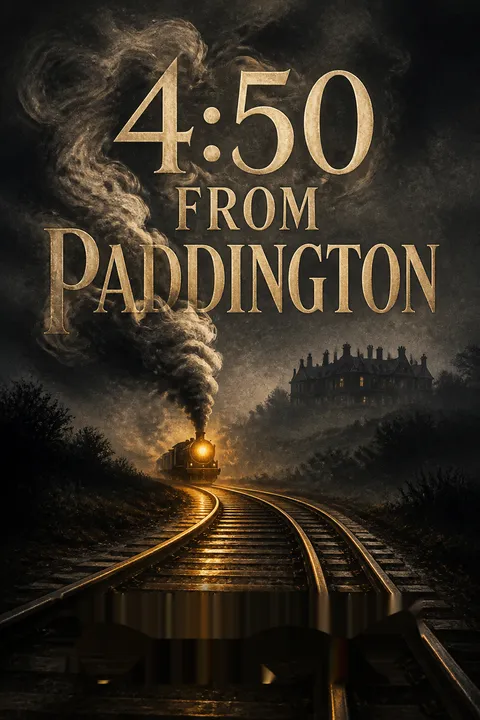
On a dark winter evening, Mrs. McGillicuddy, a sensible woman on a crowded train, witnesses a man in another carriage strangling a woman. Stricken with horror, she tries to report the crime to railway officials and the police, but no body is found and her claims are gently dismissed as misunderstanding. The chilling scene, illuminated by chance as two trains run parallel, haunts both Mrs. McGillicuddy and her friend, Miss Marple. The event seems an impossible phantom—no victim, no clues—yet Mrs. McGillicuddy's insistence fuels Miss Marple's suspicion that a real murder has been overlooked.
The Vanishing Body Dilemma
News of the murder fails to appear in the papers. Miss Marple and Mrs. McGillicuddy puzzle over the absence, seeking assurance from the local police. Inquiries yield nothing: neither body nor missing person aligns with the dramatic story Mrs. McGillicuddy tells. The possibility that the body had been carefully hidden or thrown from the train becomes plausible. The sense of helplessness and frustration deepens—where is the woman Mrs. McGillicuddy saw die? Miss Marple, undeterred, uses her network and deductive instincts, focusing suspicions on a particular curve of railway embankment by Rutherford Hall.
Miss Marple's Unseen Hand
Miss Marple, herself limited by age, consults family, police, railwaymen, and maps, reconstructing the crime's geography. Her conclusion: the murderer must have known Rutherford Hall, whose estate abuts a crucial section of the railway. Determined but physically unable to search the grounds herself, Miss Marple engages Lucy Eyelesbarrow, a highly competent domestic help with a penchant for puzzles, to infiltrate the household and investigate covertly. The search for a body—essential to proving the murder—moves from theory to hidden action.
The Help Arrives
Lucy, adept at managing unruly households, enters Rutherford Hall as a trusted helper. She observes family tensions and secrets, notes household routines, and discretely investigates the railway embankment. Her efforts, cloaked as innocent walks and chores, net tangible clues: a tuft of fur matching Mrs. McGillicuddy's memory of the victim's coat, a cheap compact—her first real evidence. Lucy's calm, practical approach and rapport with everyone from servant to child facilitate a deepening trust, essential for the more daring search ahead.
Rutherford Hall's Shadows
The Crackenthorpes emerge as a fractious family: embittered old Luther, longsuffering daughter Emma, and three sons with varied success and morality. Each has reason to eye the family fortune and the promising building land surrounding their anachronistic estate. The late Edmund's wartime love affair with a Frenchwoman, Martine, surfaces through old letters and a renewal of contact, raising the specter of an unknown heir. Lucy's proximity allows her to hear casual admissions and covert threats, all curdled around distrust and expectation.
Discovery In The Long Barn
Lucy meticulously searches outbuildings and finally, with calculated strength, opens a stone sarcophagus in the Long Barn—inside is the strangled woman Mrs. McGillicuddy saw. The police are called. The household is stunned, suspicions multiply, and the game changes—there is a murder, a body, and questions too dangerous to ignore. Both Lucy and Miss Marple's unorthodox methods draw the police's skepticism but are vindicated by results. The murdered woman's identity remains a mystery, but the net tightens around Rutherford Hall.
Family Under Suspicion
The extended Crackenthorpe family gathers—resentful, defensive, and fearful. Interviews with detectives reveal estrangements, mutual accusations, and personal failings. The old patriarch gleefully stokes rivalry, hinting at secret gold and his own stubborn longevity. Inheritance structures—a classic tontine—heighten paranoia: all stand to gain by outliving one another. The memory of Martine, Edmund's supposed widow, becomes a volatile point of suspicion, her possible claim a threat to everyone's expectancy of wealth.
Questions, Theories, and Alibis
Inspector Craddock from Scotland Yard joins the investigation, skilled and quietly empathetic. He interviews each sibling, their alibis falling apart or proving tenuous. Shadows gather around Harold, Cedric, and especially Alfred, whose shady business connections and presence near Brackhampton raise tempting suspicions. Even Bryan, the gentle pilot widower, is considered. The possibility that the body is the real Martine increases as letters surface and timelines are checked. Meanwhile, the family's moral decay is juxtaposed with the children's innocent clue-hunting, a metaphor for lost innocence amid rot.
The Martine Mystery
The Martine hypothesis becomes central—was the body Edmund's French wife, come to claim her son's inheritance? Letters, a torn envelope, and foreign clues support this. Yet French police trace a ballet dancer, Anna Stravinska, another likely candidate. Both clouds of evidence and red herrings multiply as relatives debate impostures, blackmail, and motives. Each revelation brings more confusion: was Martine real, or was she impersonated? And if Martine, who among the Crackenthorpes benefits most by her silence?
Poison In The Bloodline
As the household reels from investigation, a sudden outbreak of illness follows a meal—arsenic is found in the curry. Emma, Cedric, Harold, and especially the patriarch fall ill; only Lucy, by chance, avoids serious symptoms. The possibility that one of the family is a murderer and poisoner is chillingly real. Subsequent events, under police protection, cannot prevent a fresh tragedy: Alfred dies of a mistaken dose—perhaps a "mistake," perhaps not. The house, once complacently competitive, is now openly dangerous.
A Series Of Deaths
Before the family can recover, Harold too dies—tablets sent from Rutherford Hall are laced with fatal poison. The police grow desperate. Attempts to pin the blame on Lucy or an "outsider" fail as all logical paths keep returning to the family's midst. Inheritance motives, jealousy, and greed saturate the atmosphere. Amidst the deaths and paranoia, Miss Marple and Lucy quietly press on. Miss Marple consults her long memory for patterns, Lucy juggles fear and determination—and suspicion grows around all the remaining relatives.
Tontine Temptations
It becomes evident the Crackenthorpe will encourages murder: the last survivor inherits all—a classic tontine. Cedric and Bryan, the remaining male heirs, seem both attractive and threatening. Lucy realizes both could have committed the murder, and each has strengths and vulnerabilities playing to their favor—or guilt. Miss Marple, immersed in her case studies and village analogies, keeps pressing on the nature of greed, the propensity for evil lurking beneath familial politeness, and the tragic logic of self-perpetuating murder.
False Leads, Real Motives
Investigators confirm—through the shock arrival of Lady Stoddart-West—that the real Martine is alive, married, and far removed from the case. Martine's impersonator, the murdered woman, was set up to claim inheritance but was herself disposable. The effort to frame the Crackenthorpes through an imported mystery collapses. The murderer has manipulated evidence, dropped clues to mislead, and bred chaos, all to conceal their true motive. Desperation mounts; Lucy and Miss Marple work against time to devise a way to draw the killer out.
The Return of Witnesses
Miss Marple jets Mrs. McGillicuddy home, quietly crafting a plan to force the murderer's hand. Reminding everyone of their ordinary routines and fears, she engineers a climactic scene: Mrs. McGillicuddy comes face-to-face with all the men, but most importantly, she sees the murderer bent in the same posture as on the night of the crime—triggering instant recognition. Dr. Quimper, the family physician, is exposed at tea in front of all: the killer is not a blood relative, but someone intimately entwined with the family's future, driven by both greed and personal desire.
The Doctor's Deadly Oath
Dr. Quimper killed his estranged wife to free himself for Emma and the Crackenthorpe fortune, inventing the Martine deception to misdirect suspicion. Using his professional access, he also engineered the poisonings, nearly killing the patriarch and his rivals under the guise of medical care, finally murdering Alfred and Harold when the first plan faltered. His coldness and calculation surpass even the family's selfishness. Miss Marple's village wisdom and insistence on "the simplest answer" lay bare a crime motivated by lust, greed, and the sterile pursuit of inheritance.
Unmasking At Tea
With Dr. Quimper exposed by Mrs. McGillicuddy's unique eyewitness account and Miss Marple's manipulation of events, order is restored, though at a terrible cost. Emma, devastated but free from predation, finds hope for the future. Lucy, fatigued but resilient, faces suitors and choices—love, adventure, and safety. The estate, though stained by murder, returns to a kind of mundane tranquility. Miss Marple's role as the quiet devastator, the orchestrator of justice, closes the circle. Evil, she reminds us, is sometimes hidden in plain sight, and the greatest crimes are committed for the oldest motives.
Analysis
"4:50 from Paddington" is a masterclass in both the mechanics and psychology of the British detective novel, condensing Christie's anxieties about inheritance, class, memory, and the invisibility of evil within the ordinary. The murder appears as an impossible event—witnessed yet denied, real yet vanishing—mirroring the way women's perceptions and truths are often undermined in patriarchal society. The plot's relentless shifts of suspicion among family members, its emphasis on motives generated by the toxic promise of inherited wealth, and its satirical but empathetic character studies interrogate the costs of both greed and neglect. Christie's use of a female professional outsider (Lucy) and an elderly but incisive amateur (Miss Marple) reflects on the importance of overlooked actors in uncovering truths: expertise need not wear a uniform, observation is often a feminine wisdom. Ultimately, the novel exposes evil not as exotic or melodramatic, but as quietly embedded within routine roles—households, trains, clinics. The denouement relies on memory, careful choreographing of the scene, and the willingness to believe the testimony of those the world finds ignorable. Christie's lesson is that murder, like evil, is simplest at root; it needs only greed, proximity, and cunning to strike—and only the most persistent, collaborative, and attentive can see through to justice.
Review Summary
Readers largely enjoy 4:50 from Paddington, praising its gripping premise — a murder witnessed from a passing train — and the memorable character of Lucy Eyelesbarrow, who many felt outshone Miss Marple herself. Common criticisms include a slow middle section, a rushed or unsatisfying ending, and Miss Marple's limited presence throughout. The novel's classic Christie elements — red herrings, a manor full of suspects, and an unexpected reveal — are appreciated, though some found the resolution unconvincing. Overall, it remains a beloved, if imperfect, entry in the Marple series.
Characters
Miss Jane Marple
The underestimated elderly lady of St. Mary Mead, Miss Marple is both physically frail and intellectually fierce. Her connection to this case is personal—trust in a friend ignored by officialdom prompts her to assemble evidence the police overlook. Psychologically, Miss Marple is observant, empathetic, and expert at reading human nature; her powers come from a lifetime of village observation and a mind that matches microcosmic detail with universal patterns. She advances from passive listener to active director, staging the final unmasking of the killer with clinical precision.
Lucy Eyelesbarrow
Lucy is an extraordinary domestic aide, a brilliant Oxford graduate who prefers hands-on work to an academic career. Her adaptability, calm, and competence allow her to penetrate Rutherford Hall's secrets unnoticed, performing household miracles even as she searches for bodies and clues. Lucy's clear-eyed pragmatism is balanced by growing emotional investment: in justice, in the fate of the innocent, and in the future of the family. As a neutral outsider, she becomes both a surrogate daughter and an object of romantic interest for several family members, yet her resolve and independence never waver.
Mrs. Elspeth McGillicuddy
Stout, practical, and unadventurous, Mrs. McGillicuddy is the unwitting observer of the crime, her conviction surmounting skepticism and dismissal. Though initially dismissed as fanciful, her testimony anchors the entire narrative—Miss Marple trusts her implicitly. Her psychological resilience is shown in her persistence after trauma, and her crucial role as eyewitness becomes the linchpin for unraveling the case. Her ordinary sensibility thus provides the extraordinary break the puzzle requires.
Luther Crackenthorpe
The embittered, miserly head of the Crackenthorpe family, Luther delights in stoking rivalry among his children and manipulating expectations about inheritance. He is suspicious, self-pitying, and enjoys his role as the family's necessary evil. Threatened by imagined plots, he falls victim to real ones: recurring poisonings aim to remove him, and only his stubborn constitution spares him. Psychologically, Luther's complex about power and control, along with his antagonist relationships, set the toxic mood for all else that follows.
Emma Crackenthorpe
Emma is the family's pillar—modest, efficient, overlooked but integral. She cares for her father, navigates her brothers' egos, and emerges as a key emotional touchstone for the household. Despite her apparent docility, Emma possesses reserves of quiet intelligence and kindness, as well as a capacity for desires unfulfilled (especially for connection, as with Dr. Quimper). Torn between duty and suspicion, she personifies the family's vulnerability and hope for regeneration after violence.
Cedric Crackenthorpe
The bohemian son, Cedric is abrasive, sardonic, and feckless, living abroad and mocking social pretensions. Though he despises the inheritance game, he is both suspect and survivor; his distance masks a deep ambivalence about family and place. Psychologically, Cedric's persona is part armor, part authenticity—a defense against family dysfunction even as he is drawn back by blood and obligation. He provides acerbic honesty and complicates the family dynamic.
Harold Crackenthorpe
Harold projects the image of the successful city man but conceals financial anxiety, ambition, and cold self-interest. He disdains the rest of his family, yet remains as desperate for the inheritance as any. His tendency to maintain facades—social, moral, financial—renders him both suspect and ultimately a victim of the murderer's machinations rather than a perpetrator.
Alfred Crackenthorpe
The black sheep, Alfred drifts from failed venture to shady deal, always orbiting illegality but never convicted. His motives are selfish, but he is neither cruel nor especially capable—making him an easy dupe and, ultimately, a victim. Psychologically, Alfred's self-loathing and cynicism make him distant from the family and susceptible to being used and eliminated.
Bryan Eastley
The late Edith's husband, pilot Bryan is amiable but unfocused, suffering from wartime dislocation and peacetime purposelessness. His bond with his son Alexander and longing for a settled home contrast with his inability to fit anywhere, making him both vulnerable and, at moments, suspicious. His self-doubt and rootlessness set him apart from the rest of the Crackenthorpes, even as inheritance drama threatens to absorb him.
Dr. Quimper
At first the genial and attentive physician tending the family, Dr. Quimper is ultimately revealed as the murderer. His psychological profile is dual: competent, dedicated, but capable of cold calculation and deep deception. His motives—greed, desire for Emma, and the need to rid himself of a problematic wife—drive every crime. Quimper's position grants him access, trust, and the ability to orchestrate illnesses under a medical façade, making him a classic Christie villain: the person closest, most trusted, and least suspected.
Plot Devices
Parallel Trains and Chance Observation
The narrative hinges on the unlikely but potent device of two trains running parallel, allowing a bystander (Mrs. McGillicuddy) a fleeting view of murder. This device foregrounds the themes of chance, disbelief, and the difficulty of proving what one (especially a woman) claims to have witnessed. It also sets the challenge: the body's disappearance and lack of supporting evidence.
The Country House as Closed System
Rutherford Hall epitomizes the English country house mystery—a legacy-bound space, cut off from the world and incubating animosity. The will-as-tontine plot device ensures every death increases the survivors' share, intensifying mistrust. The setting is a crucible where motives concentrate and the murderer can conceal acts under the guise of familial familiarity.
Disguised Identities and Red Herrings
Layering of identity—who is Martine, who is the murdered woman, where is the French connection—supplies both genuine confusion and deliberate distraction. Letters, forged clues (such as the envelope found by the children), and shifting suspicions force readers and investigators to chase dead-ends, emblematic of Christie's gift for going up the garden path.
Professional Outsider Investigator
The insertion of Lucy, an outsider with unique mobility across social divides, permits investigation invisible to police or family. Her presence as both servant and peer destabilizes the hierarchies of knowledge and authority. She bridges upstairs and downstairs worlds, enabling both the gathering and the transmission of secrets.
Poison and Medical Access
The killer's use of poisoning, especially over time and under the cover of medical care, blurs the line between accident and crime. The doctor's authority corrupts the investigation, while symptoms mirror common illnesses. This device laces the family's food and medicine with danger, making domestic comfort hazardous.
The Ingenious Mislead
The murderer drops false clues—letters, envelopes, the impersonation of Martine—deliberately to mislead. The recurring motif of "witnessing" is also heightened: what is seen versus what is believed, and how easy it is to doubt even genuine testimony.
The Final Coup: The Theatrical Trap
The denouement turns on a staged, almost theatrical scenario: Miss Marple engineering the recreation of the murder's circumstances so the true witness, Mrs. McGillicuddy, can confirm the killer's identity before all. It is a summing up of Christie's fondness for performance, misdirection, and the crucial role of observation and memory.
Miss Marple Series





About the Author
Other books by Agatha Christie







Download PDF
Download EPUB
.epub digital book format is ideal for reading ebooks on phones, tablets, and e-readers.








































