
Plot Summary
Death in the Counting House
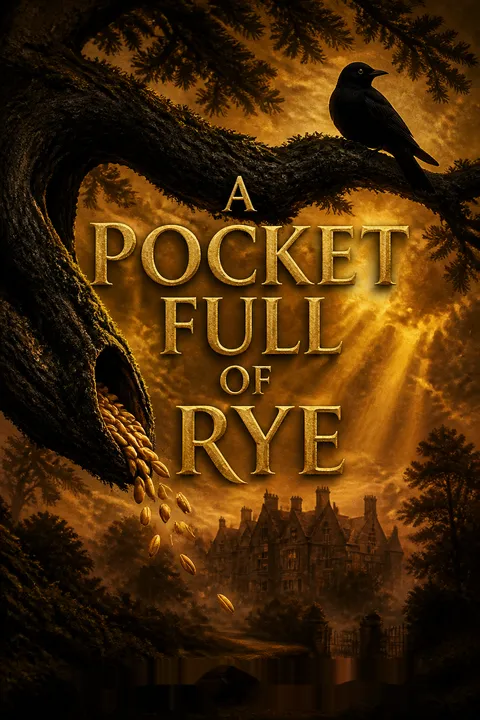
Rex Fortescue, an unscrupulous businessman, is found dying in his London office after consuming his customary tea, soon dead from a violent seizure. The women in the office panic—was it a stroke, food poisoning, or something more sinister? Initial investigation by Inspector Neele quickly establishes that the cause is murder: a rare, slow-acting yew (taxine) poisoning, likely administered hours earlier at home during breakfast. Strangest of all, rye grain is found in Rex's pocket—an enigma that baffles everyone. News travels swiftly to Yewtree Lodge, the Fortescue family mansion, where a tangle of relatives, staff, and secrets are now at immediate risk. The house is already tense, simmering with unspoken resentments and whispers of old enmities.
Seeds of Suspicion
Inspector Neele begins to probe Rex's business and family life, finding no shortage of suspects or motives. The atmosphere at Yewtree Lodge is uneasy; Rex's much younger second wife, Adele, his resentful children from his first marriage, and his poised housekeeper Mary Dove all have reasons for disliking him. Rumors swirl of dubious business deals, a snubbed elder son (Lance) estranged in Africa, and marital discontent. The shadow of a past swindle—particularly a scheme called the Blackbird Mine—lingers over Rex's legacy. As Neele interviews the household, it becomes increasingly clear that nearly everyone stands to benefit from Rex's demise, and that the Fortescue family is far from united.
Welcome to Yewtree Lodge
Police descend upon the estate. The butler, cook, and servants cower under questioning, while the formidable housekeeper Mary Dove provides cool, efficient answers. Rex's wife Adele is evasive about her movements; his daughter Elaine returns home in tears; and the family nurse, Jennifer, seems oddly anxious. Everyone is cagey about relationships and money, but old Miss Ramsbottom (Rex's sister-in-law) bluntly claims "the wages of sin is death." A curious feature emerges: the household is riven by suspicion, old grudges, and hidden romance—especially Adele's suspected affair and Elaine's forbidden relationship with a younger man. Amidst this, the ongoing effect of Rex's financial recklessness is apparent, setting up stakes for both fortune and survival.
Family Fractures Revealed
As Inspector Neele digs deeper, psychological fractures in the Fortescue family surface. Percival, the dutiful son, is rigid and embittered about his father's mismanagement. Elaine, desperate for independence, schemes to escape with her lover. Adele, the outsider, is caught between her own ambitions and those of her lover, Vivian Dubois. Most dramatically, news arrives that Lance—the black sheep son, disowned after a disgrace, long thought lost in Africa—is returning home. His arrival is eagerly anticipated by some, feared by others. The threat of an explosive inheritance contest looms large, while the specter of a long-forgotten business betrayal (the Blackbird Mine affair) casts fresh suspicion on everyone, hinting that revenge may have been brewing for decades.
Motives and Old Enemies
Neele's methodical questioning exposes layers of resentment and motive. Rex's will, favoring his new wife and daughter over his sons, is a potential powder-keg. Adele, eyed with suspicion, stands to inherit a vast sum if she survives her husband by a month. Percival's prudence is strained by fear of financial collapse. Mary Dove reports that strange blackbirds were placed on Rex's desk in the summer, seemingly a cruel prank. News of the Blackbird Mine's unsavory history—Rex's possible betrayal of a partner, Donald MacKenzie—haunts the household as a possible motive, sowing the idea of vengeance from long ago. The tension crackles through the estate, each member fearing for their share, safety, and secrets.
The Return of Lance
Lance Fortescue returns with his spirited new wife, Pat, introducing an unpredictable element to the already volatile mix. His charming, mischievous presence rekindles old sibling rivalries. He claims to be reconciled with his father, but is nonchalant about the inheritance. The others, especially Percival, perceive him as a rival for the family fortune. Pat, frank and out of place among the jaded English gentry, senses undercurrents and a growing fear. Meanwhile, the investigation reveals that during Lance's absence, the family fracturing worsened, and that someone has gone to elaborate lengths to create confusion—not least the mysterious scattering of blackbirds, foreshadowing tragic events to come.
A Second Sudden Death
With suspicion swirling around her, Adele Fortescue suddenly collapses during tea, dying from cyanide poisoning. The murder weapon is her teacup, but no one saw who tampered with it. The household—and Inspector Neele—are shocked; the prime suspect of Rex's murder has become the second victim. Adele's lover, Vivian Dubois, panics and flees. Mary Dove discovers a muddy footprint in Adele's boudoir—evidence of a clandestine visit. Now the atmosphere at Yewtree Lodge grows feverish, the idea of a deranged killer taking inspiration from nursery rhymes begins to emerge, and Inspector Neele faces public pressure to solve an apparently motiveless sequence of killings.
Gladys's Fatal Secret
Gladys, a lowly and timid maid, is found strangled in the garden, a clothes peg mocked onto her nose. The symbolic gesture hints at the rhyme, "Sing a Song of Sixpence," where the maid's nose is 'nipped off' by a bird. Investigators believe Gladys saw or learned something crucial. She had been restless all day, wore her best nylons (as if for a secret meeting), and had received cryptic telephone calls. Her murder is staged to mimic the rhyme, raising the stakes from rational greed to seeming madness or elaborate mockery. Neele grapples with the escalation: three deaths in two days; a rhyme as blueprint; and a killer driven by either derangement or cunning theatricality.
Crime by Rhyme
Inspector Neele and, later, Miss Marple draw connections between the murders and the "Sing a Song of Sixpence" nursery rhyme: the pocketful of rye (Rex), blackbirds on the desk and in a pie, honey at tea (Adele), the maid in the garden. The police begin to entertain the possibility of a criminal with a literary—and possibly mad—motivation. Hoping to break through the cloud of confusion, Neele focuses on blackmail, revenge, and old injustices, while Miss Marple, newly arrived, reviews household dynamics, class prejudice, and the psychology of the overlooked Gladys. Both detectives believe the solution is entwined with both history and present greed.
Miss Marple Arrives
Miss Marple, hearing of Gladys's death, arrives under the pretense of aiding the investigation of her former protégé, the murdered maid. Her disarming manner opens doors the police have struggled to breach. She reviews Gladys's pitiful biography: lonely, easily influenced, desperate for romance, and proud of her small social climbing. Miss Marple quickly recognizes the symbolic cruelty of the clothes peg and considers how Gladys's gullibility might have been exploited. As she quietly interviews family and staff, she identifies hidden alliances and senses profound psychological distress—and uses her insight into English village life to spot connections missed by the official investigation.
Blackbirds and Betrayal
Miss Marple and Neele learn more about the Blackbird Mine. Rex had allegedly betrayed his partner, Donald MacKenzie, whose wife later swore vengeance, bringing her children up to avenge their father's death. Blackbird symbolism (dead birds, a tampered pie) is directly linked to this old scandal. Yet, when Inspector Neele traces the MacKenzie family, he finds the widow in a sanatorium and the son "killed in the war." He suspects the daughter, Ruby, may be involved—and wonders if she is somehow hiding in the household under a new name. The theory of historical revenge intensifies, but proof is elusive.
The Search for Ruby
Believing the Avenger may be Ruby MacKenzie, Neele suspects Mary Dove, the inscrutable housekeeper, but her background proves difficult to verify. His suspicions also point toward Jennifer (Percival's wife), herself a nurse who infiltrated the family years ago, potentially seeking vengeance and financial redress via marriage. Meanwhile, Mary Dove attempts to blackmail Jennifer, knowing her secret lineage. The theme of impersonation and hidden identity feeds the theory that the killer is a legacy victim, adding complexity and opening another layer of suspects—while the presence of missing wartime records and women leading double lives unravels some suspicions, but raises new questions.
Sane Motives, Mad Patterns
Inspector Neele, guided now by Marple, weighs conventional suspects (greedy heirs, angry lovers) against the increasingly convoluted evidence. With the sequence of murders mimicking a rhyme, the possibility of a mad avenger is weighed against the convenience of each death to Percival, the cautious son who benefits most financially. Yet, Percival's apparent alibis complicate things. Marple's intuitive reasoning, coupled with Neele's logical approach, teases apart the schemes of elaborate distraction, implicating both frustration in the failed MacKenzie revenge and calculated murder with rational financial gain. Madness, legacy, and the ordinary desire for money become increasingly tangled.
Truths, Lies, and Legacies
Investigations into wills, legacies, and company finances reveal that Adele's inheritance was contingent on her outliving Rex by a month; in dying first, the fortune reverts to Percival. But the real bombshell is uncovered by Marple and Neele: Rex purposely concealed a valuable find at the Blackbird Mine—possibly uranium—making it a fortune in waiting. Hidden agendas are illuminated: Lance's eagerness to "take the old Blackbird Mine" off his brother's hands, the panicked dismissals of staff, Jennifer's history as Ruby MacKenzie. Greed, hidden motives, and opportunism are now as powerful as any historical vengeance or insanity.
Miss Marple's Revelation
Miss Marple pieces together the puzzle with her trademark blend of intuition and empathy. She discerns that Gladys, desperate for love and admiration from "Albert Evans" (Lance in disguise), was unwittingly manipulated into poisoning Rex with what she believed to be a truth serum. The rye, too, was a detail she was told to add, to complete a ritual she did not understand. Marple also realizes the Blackbird-wrapped revenge is a convenient, calculated cover for a far more prosaic murderer. The nursery rhyme pattern is camouflage: the real motive is greed, and the real criminal is hiding in plain sight.
The Crimes Unravelled
Lance, the affable wanderer, is revealed as the true murderer—cold, unscrupulous, and opportunistic. Manipulating Gladys as his tool, returning at the perfect moment to stage alibis, and using the rhyme as a smokescreen for greed and convenience, Lance orchestrated all three murders to inherit not only the family fortune but specifically the overlooked Blackbird Mine—now a potential uranium bonanza. Adele was killed to secure the inheritance, Gladys to tie off a dangerous loose end. The avenger's mask and nursery rhyme chaos served to both terrorize the family and mislead police. Marple's evidence and Neele's determined pursuit doom Lance.
The Cost of Vengeance
With Lance exposed and the murders clarified, life at Yewtree Lodge winds down. Mary Dove departs in disgrace, a professional exploiter of wealthy families. Jennifer's secret is revealed, but her nonviolent revenge—a marriage for inheritance—replaces dreams of a blood feud. Elaine, freed to marry her beloved, plans her own future. Percival, unmasked as fearful but not murderous, faces the slow dissolution of the family business. Pat, Lance's tragic widow, mourns her marriage's true nature—her "bad luck" is only that of loving a dangerous man. Miss Marple leaves, quietly noting that, in the end, ordinary, unscrupulous greed—not madness or gothic vengeance—had shaped the deadly rhyme.
Analysis
Agatha Christie's A Pocket Full of Rye is a masterful meditation on the collision between appearance and reality, vengeance and greed, and above all, the power of psychological manipulation. By recasting classic nursery rhyme logic as both blueprint and obfuscation, Christie undermines the detective genre's traditional reliance on motive and method: here, the real killer is not driven by vengeance or madness, but by the most prosaic (and thus most terrifying) human failing—greed. The theatricality of the murders, designed to hypnotize and distract, is juxtaposed with the everyday cruelty suffered by characters like Gladys, whose desperation to belong proves fatal. In the end, it is Miss Marple's comprehension of the overlooked—her empathy with the powerless, her understanding of vulnerable psychology—that breaks the case. The lessons are stark: evil does not always wear the face of rage or insanity; often it is charming, practical, and chillingly rational. Justice, in Christie's world, comes with the exposure of uncomfortable truths: about class, about the danger of unquestioned loyalty, and about the emptiness of pursuing safety through calculation. The real message—timeless and far-reaching—is that we are most at risk not from obvious monsters, but from those who hide behind the ordinary, the clever, and the trusted.
Review Summary
Readers largely praise A Pocket Full of Rye as one of Christie's more satisfying Miss Marple mysteries, highlighting its clever integration of the nursery rhyme "Sing a Song of Sixpence" into the plot. Many enjoyed the well-crafted characters, surprising twists, and Inspector Neele's dynamic with Miss Marple. Common criticisms include Miss Marple's relatively late appearance, an abrupt ending, and occasionally unlikeable characters. Most readers admit they couldn't identify the killer before the final reveal, adding to the book's appeal.
Characters
Miss Jane Marple
Miss Marple may appear a benign spinster, but she is the most psychologically astute detective in the narrative. Her method blends an almost maternal empathy with acute understanding of human weaknesses, especially those overlooked—like Gladys, the easily manipulated maid. Marple's presence disarms suspects and exposes confidences; her insight into class, gender, and the small humiliations endured by servants allows her to spot psychological cues missed by police. While officially consulting to aid the investigation of Gladys's murder, she becomes the essential catalyst for unraveling the true pattern: the rhyme is a smokescreen, covering greed and callousness. By the end, Marple's analytic compassion brings justice while exposing the banality of evil.
Inspector Neele
Inspector Neele is a study in diligent, often underappreciated competence. Sober, unflashy, and logical, he doggedly pursues evidence, suspicious of coincidence, always considering both the conventional and the outlandish. Neele is emblematic of rational, professional policing—a foil to Marple's intuitive genius. His greatest psychological weapon is patience; he resists red herrings and is never seduced by the most dramatic suspect. The limits of his approach, however, are clear: emotional motives, and the subtle interplay of class, gender, and trauma, often elude him. His ultimate partnership with Marple—where logic and intuition finally unite—cements the case.
Lance Fortescue
Lance is the most complex and dynamic of the family. Outwardly amiable and mischievous, he belies a darker, calculating core. Disgraced years before, he returns from Africa apparently reformed—but in reality is a cold opportunist, expert at manipulation. His cruel exploitation of Gladys, his artful orchestration of alibis, and his ability to weaponize family narratives reveal a man who will stop at nothing for gain. Lance's psychological profile is devoid of remorse; he both stages and masks the rhyme-murders with chilling practicality. Ultimately, his charm is a tool, and his sense of risk is so pronounced that he gambles everything—literally and morally.
Adele Fortescue
Adele is the glamorous, younger second wife—perceived by others as a gold-digger and seductress. She is the target of suspicion due to her blatant affair with Vivian Dubois and her apparent benefit from Rex's death. Yet, psychologically, Adele is fundamentally a survivor—seeking comfort, not cruelty. Her murder (by a method she herself enjoyed—poison in tea) throws the police into confusion; her death is both a plot convenience for the real killer and a psychological commentary on the dangers facing women who transgress class and age expectations. Adele's tragedy is to be both an object and instrument in other people's plots.
Gladys Martin
Gladys is the most poignantly rendered character—a psychologically fragile, credulous young woman. Her need for love, respect, and acceptance leave her wide open to manipulation. She is proud to have her "Miss Marple connection," is desperate for romance, and has little self-esteem. The murderer weaponizes her gullibility, tricking her into murder and, when she becomes a risk, killing her with a mockery that encapsulates her lifelong vulnerability: the clothes peg is a final humiliation. Gladys's story is a commentary on the overlooked, their dreams, and the danger that comes from being invisible yet desperately longing to matter.
Percival Fortescue
Percival—known as Percy—is upright, repressed, and cautious, with an aversion to risk and a deep-seated need for control. Throughout, he is the "obvious" inheritor and suspect: he benefits from both parents' deaths, rails against financial chaos, and regards Lance with suspicion. Yet, psychologically, Percival is more victim than villain: his obedience to authority and fear of change make him predictable. His repression, both emotional and economic, is his safeguard and his Achilles heel. While honesty and mediocrity become his defense, his inability to respond creatively or lovingly to those around him renders him ultimately powerless.
Jennifer Fortescue (Ruby MacKenzie)
Jennifer is both the passive wife of the uninspiring Percival and the secretly vengeful daughter of Rex's old enemy. Raised amid melodramatic vows of revenge, Jennifer contemplates, but never truly enacts, violence. Her subversion is more passive: marriage as revenge, inheritance as restitution. She is psychologically stifled, trapped between fulfilling her mother's legacy and her own longing for normalcy. Only when her secret comes out does she reveal emotional depth, confessing her symbolic acts (blackbird pranks) and finding closure by disengaging from the cycle of vengeance.
Mary Dove
Mary Dove is the archetype of the invisible but powerful servant-class manipulator. Immaculate, calm, and self-sufficient, she exerts real authority over both staff and family, while always remaining on the margins. Her criminality is ambiguous: suspected (wrongly) as the avenger, she is ultimately only implicated in minor blackmail and (possibly) organizing robberies after employment. Mary's greatest psychological weapon is observation: she is rarely surprised, controls crisis with quiet assertion, and knows everyone's secrets before they know hers. Her departure marks the end of the old order at Yewtree—a world where service equates to power.
Elaine Fortescue
Elaine is a frustrated idealist—passionate, practical, and determined to be free of her family's shadow. Her romance with Gerald Wright is stymied by her father's snobbery and economic control. Elaine's emotional arc is one of mourning, release, and sudden opportunity: her father's death brings both grief and the chance for independence. Her arc is about escape—from family, from class, and from the patterns that have constrained her. She is one of the few to find hope at the novel's end.
Miss Ramsbottom
Elderly Miss Ramsbottom is the household's unflinching moral barometer. Rigidly religious, suspicious of change, and convinced of God's justice, she functions both as conscience to the living and as chorus to the unfolding drama. She is blunt, sometimes harsh, yet quietly compassionate to the deserving. Ramsbottom's stern worldview underlines the story's questions of sin, punishment, and inheritance—not only of money but of values, secrets, and shame.
Plot Devices
Nursery Rhyme Motif
The deliberate staging of the crimes to match "Sing a Song of Sixpence" both misdirects attention and creates an atmosphere of madness. Each murder's details—rye in the pocket, blackbirds in pie and desk, honey at tea, a maid's nose "nipped"—fit the rhyme in chilling fashion. This device invites police and reader to search for a deranged mind or historic grudge. In truth, the rhyme is a calculated smokescreen, used by the cunning real criminal (Lance) to conceal greed behind the appearance of lunacy. The rhyme unites the plot but ultimately undermines the reader's trust in narrative coherence—inviting but then confounding neat solutions.
Revenge and Identity Concealment
The unsolved legacy of the Blackbird Mine, with its alleged betrayal and the presence of "lost" MacKenzie children, is pivotal. The narrative suspense is built through recurring doubts: Is the murderer a wronged survivor, driven mad by a family oath? The device is compounded by characters with unclear backgrounds (Mary Dove, Jennifer). The motif of assumed identity, while ultimately a red herring, keeps reader and detective alike looking backwards for motive, highlighting themes of inheritance not just of wealth, but of hatred and guilt.
Psychological Misdirection
Christie constantly moves the goalposts, ensuring that every rational motive aligns with an alternative mad one. Greed, revenge, jealousy, fear—all are plausible. Yet, the rhyme, the symbolic gestures, and the method of murder (poisoning, ritual) subvert expectations of ordinary crime. Both the police and the reader must navigate between the mundane and the melodramatic, ultimately learning that banal, practical motives can wear the costume of insanity. The narrative's deeper point is that most murderers are not monsters, but ordinary people with alarming selfishness.
Slow Release of Testaments and Inheritance Stakes
The structure of the inheritance is only gradually revealed. Adele's fortune depends on her living a month beyond Rex; her death reverses fortune to Percival. Meanwhile, the true value of the Blackbird Mine—long assumed worthless—emerges only late in the plot, motivating the killer's final gambit. This slow unveiling of financial realities both drives the plot and exposes character, power dynamics, and the lengths to which greed distorts reason.
Miss Marple Series







About the Author
Other books by Agatha Christie








Download PDF
Download EPUB
.epub digital book format is ideal for reading ebooks on phones, tablets, and e-readers.








































