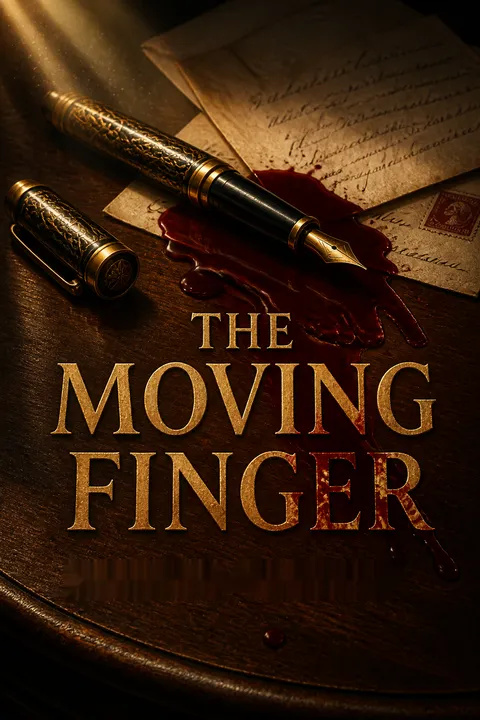

Plot Summary
Letters in the Quiet Town
Jerry Burton arrives in Lymstock to recover from a flying accident, accompanied by his lively sister Joanna. They rent Little Furze, a country house, and quickly become aware of the local personalities — the dry lawyer Symmington, the brooding Dr. Griffith, his energetic sister Aimée, and others. What seems a sleepy, insular community is rattled when an anonymous letter arrives, accusing Jerry and Joanna of not being siblings but illicit lovers. The siblings react with amusement, but the town, used to cards and formality, is soon shown to have an undercurrent of malice. The letter is only the first harbinger of unrest to come, hinting at the repressed passions bubbling beneath Lymstock's tranquil exterior.
The Gossip Grows Dark
The arrival of the first letter is no isolated event: the local doctor reveals similar crude, obscene letters have been distributed to townspeople. These missives, typed and composed of clippings, always fixate on rumors of sexual misconduct and scandal, both plausible and wild. The effect is corrosive, quickening suspicion and fear. Relationships fray under the weight of implied accusations. Under the civil rituals of tea and social calls, villagers eye each other with unease. Though treated superficially as a bad joke at first, the letters slowly eat into the communal trust, setting the stage for much darker consequences.
Death by the Written Word
The first fatality occurs: Mrs. Symmington, a nervous and fragile woman much burdened already, is found dead after receiving her own letter, which claims her youngest son is not her husband's child. The police rule it suicide — goaded by "temporary insanity" — but the town's whispering women murmur "no smoke without fire." The effect is chilling: if these letters can cause death, who might be next? Jerry and Joanna take Megan, Mrs. Symmington's disfavored stepdaughter, into their home for comfort, while the town reels, both mourning and quietly judging the dead.
Investigation and Suspicion
Superintendent Nash and Inspector Graves arrive to investigate. They collect letters, analyze handwriting, and trace their mechanical origin to a shared village typewriter. Their experts conclude the writer is educated, female, middle-aged, and probably unmarried. No true evidence emerges; even with detailed elimination, suspicion falls on only a handful, including the brisk Aimée Griffith, the withdrawn Emily Barton, and a few others. People burn the letters or hide their pain, but the harm is done: trust is poisoned. The letters are both weapon and smokescreen, hiding deeper motivations—perhaps something much worse.
The Search for Motive
As the village's atmosphere thickens with suspicion, Jerry reflects on the seemingly motiveless malice of the poison pen. Supported by his sister and friends, he listens to the troubled confessions of Megan and the odd conspiracy theories about who, besides the obvious outcasts, might truly be guilty: the effeminate Mr. Pye, perhaps, or a repressed spinster? Jerry's own efforts at deduction echo the police: the culprit has cleverly, perhaps even madly, orchestrated a web in which everyone is entangled. Each ugly letter is both clue and camouflage, clouding the identity of the real villain.
The Maid's Secret Knowledge
The next victim is Agnes, servant to the Symmingtons, who disappears on her day out. Jerry's sudden uneasiness prompts an investigation, leading to the grim discovery of her murdered body in a cupboard in her own employers' home. She had seen something — perhaps the anonymous letter's author, perhaps just an oddity — and had been about to confide in another maid. Her death convinces even the skeptics that the letter-writer, or someone linked to her, is capable of murder. The search intensifies, fear mutes the village, and suspicion hardens into paranoia.
The Web Tightens
After Agnes' murder, Nash and Graves focus on the town's women. The mysterious cut pages from an old book are discovered, source of the pasted letters. Partridge, the strict housemaid, becomes a candidate for suspicion, as do Aimée Griffith, Emily Barton, and Mr. Pye. Meanwhile, villagers grow nervous, ordinary activities seem ominous, and a sense of choking tension pervades Lymstock. Social calls are replaced by muted watching. An outside presence is called in: Miss Marple, visiting Mrs. Dane Calthrop, quietly observes all, her shrewd mind absorbing details others dismiss.
A Town on Edge
Normalcy collapses under the threat; even acts of kindness, like Jerry's impulsive excursion with tomboyish Megan, raise gossip and speculation. The anonymous letters, which had ceased briefly after Agnes' murder, resume with new energy — though now Nash is watching. One could not be sure what was safe—neither trusted friends nor servants nor one's own perceptions. Megan undergoes a transformative makeover in London, stunning all on her return, but her emerging adulthood only complicates the emotional web for Jerry and the others. The village, meanwhile, seethes — murder, scandal, and desire bubbling beneath everyday interactions.
The Trap and the Bait
Anonymous letters resume, and the police catch Aimée Griffith typing one for Elsie Holland, Symmington's beautiful governess. Evidence appears: the cut pages in her home, objects taken from Dr. Griffith's cupboard. In a torrent of shame and heartbreak, Aimée confesses and is arrested — but not for murder. While public relief is palpable, Jerry, Nash, and, notably, Miss Marple, remain uneasy. Lymstock, always avid for drama, fixates on the "spinster killer," but various details feel wrong; the facts point both ways, and nagging questions remain about motive, opportunity, and authenticity.
False Confession, Real Danger
Miss Marple's keen analysis highlights that the letters are a smokescreen — their content too generic, lacking the pointed knowledge a true gossip would wield. Furthermore, the pattern of victims and the timing do not add up. Aimée's confession, driven by shame and love for Symmington, gives cover for the real plot. Meanwhile, Megan, agonized by guilt and a sense of wickedness relating to her mother's death, becomes pivotal. Miss Marple suspects the original purpose was not letters at all, but to conceal a murder that seemed like suicide.
Megan's Transformation
Megan, neglected and adrift after her mother's death, is drawn into the heart of the mystery. Jerry recognizes his own affection for her, taking her to London for a new wardrobe, which both changes her appearance and gives her confidence. Megan returns to Lymstock, mature and striking, her presence stirring envy, scandal, and new dynamics — and Jerry's feelings for her deepen. However, the truth she holds about what she saw or suspected becomes increasingly dangerous, making her a pawn in the murderer's remaining plans. Her coming of age runs parallel to the unmasking of the killer.
Marriage Proposals and Schemes
Jerry proposes to Megan, who, unsure of her own feelings, refuses him. Meanwhile, romantic currents ripple throughout: Joanna and Dr. Griffith, Elsie Holland and her young charges. Symmington's interest in Elsie becomes both public rumor and a private irritation, as the town speculation about remarriage for both widowers and widows simmers just under the surface of the murder investigation. Personal passions prove themselves as fateful as the written word, and emotion is shown — again and again — to exist side by side with calculation and violence.
Truth Behind the Smoke
Miss Marple, unhurried and unassuming, quietly pieces together that the letters never align with the real vulnerabilities in town; they are blind attacks, generalities, and distractions. She realizes that the true reason behind the chaos is much simpler: Symmington murdered his wife, staging her suicide using a letter she herself had written as a phone message. The letters are only camouflage; the real crime was personal and motivated by passion — his desire to be with Elsie Holland while retaining respectability, home, and children.
The True Moving Finger
With Nash, Jerry, and Miss Marple's help, Megan sets herself up as bait, feigning a blackmail attempt against Symmington based on what she "saw" during her mother's death. Symmington, backed into a corner, moves to kill Megan in the same way — through staged suicide. The police intervene in time, and the full conspiracy is laid bare. Megan's courage and Miss Marple's intuition ensure not only Megan's safety but justice for all the original victims. The moving finger, driven by calculation, has been outpaced by compassionate cunning.
The Price of Respectability
The aftermath examines how obsession with reputation and gentility can fuel monstrous acts. Symmington's crime stemmed from the desire to keep his world intact while pursuing forbidden love. Conversely, the communal eagerness to shame and banish Aimée Griffith illustrates the perils of suppressed love and unfulfilled loneliness. Lymstock, a microcosm of English respectability, contains all manner of vice, yet also, through bravery and the odd wisdom of outsiders (like Marple and Jerry), the seeds of renewal.
Miss Marple's Method
Miss Marple is revealed as the true "expert" Mrs. Dane Calthrop summoned. By observing everyday human oddities, patterns of kindness, and the absence of malice where it should appear, she deduces the truth. Her knowledge of human wickedness, rooted not in police procedure but in the shared life of English villages, exposes the dangers of both overreaching logic and overlooked feeling. It is her humility and open-minded attention to character, not technical skill, that cracks the case and saves Megan's life.
Cleansing Rain in Lymstock
With truth revealed, the community begins to heal. Megan and Jerry find each other, now with understanding and mutual respect; Joanna and Dr. Griffith are united. Aimée Griffith, exiled for her part in the forgery and false confession more than the acts themselves, leaves for travel and, perhaps, peace. Elsie Holland, ideal untouched beauty, departs for a new job. The town's wounds become history, and the cleansing rain of truth, both literal and figurative, restores the peace, for a time.
New Beginnings, Old Shadows
Megan and Jerry settle in Little Furze, gifted objects both beautiful and odd by the community. The legacies of the crimes remain: a dead woman, a murdered girl, ruptured innocence. Yet Lymstock, like the world, moves on — gossip persists, new scandals surely will arise, but compassion and wisdom have offered some redemption. For Jerry and Megan, love endures, shaped by the crucible of pain and the unexpected heroism of ordinariness.
Analysis
The Moving Finger is both a masterwork of psychological suspense and a biting social satire. At its heart lie two intertwined investigations: the formal search for a criminal and the informal scrutiny of a society desperate to maintain its gentility at any cost. Christie's Lymstock is a microcosm of English respectability, where private malice thrives behind closed doors, and where truth is both feared and denied. The poison pen letters are not only weapons but mirrors, reflecting the community's own repressed desires, envy, and cruelty. By centering his narrative through Jerry, an outsider turned participant, Christie reveals the dangers of complacency and the necessity of compassion. The eventual unmasking of Symmington, not as an aberrant outsider but as a central, respected pillar, is a rebuke to the tendency to scapegoat the vulnerable (spinsters, maids, misfits) while ignoring the shadow among the "respectable." Through Miss Marple, Christie champions not police routine or even amateur deduction, but the keen, humble attention to human frailty and the belief that justice (though late) is possible, if we only pay the right kind of attention. The result is a story both thrilling and deeply human—a cautionary tale about the irrevocable consequences of cruelty and the redemptive power of empathy.
Review Summary
The Moving Finger receives generally positive reviews, averaging 3.85/5. Readers praise Christie's clever mystery premise involving anonymous poison pen letters in a quiet village, engaging characters, and sharp psychological insight. Many highlight the charming narrator Jerry Burton and the memorable character Megan. The most common criticism is Miss Marple's limited presence — she appears only in the final quarter of the book — leaving some readers feeling cheated. Despite this, most agree the mystery is satisfying, with an unexpected resolution that showcases Christie's signature misdirection.
Characters
Jerry Burton
Jerry, arriving in Lymstock to recover from physical and spiritual wounds, becomes both narrator and reluctant detective. His outsider status allows him to observe the village without the blindness born of over-familiarity, while his growing empathy for Megan, and respect for Miss Marple's methods, foster his own transformation from snarky convalescent to hero and lover. Jerry's skepticism about human nature gives way to deeper insight, and he finds himself "healed" not only physically, but emotionally, as he claims a place in a community and a relationship that is far richer — and more complicated — than city life promised.
Joanna Burton
Jerry's sister, Joanna, is at first an emblem of urban sophistication, taking Lymstock's quaintness as a joke and its darkness as impossibility. Her curiosity, courage, and kindness make her both an emotional anchor for Jerry and an independent figure: her capacity for genuine friendship, willingness to comfort Megan, and ultimately, her love for Dr. Griffith, all reveal a depth beyond her sparkling surface. Psychologically, Joanna's journey mirrors Jerry's — from amused detachment to meaningful connection, from consumer of village scandal to an actor within it.
Megan Hunter
Megan, stepdaughter to Mrs. Symmington, is overlooked, awkward, and emotionally raw — her place in her family and her world uncertain. Her psychological turmoil — a sense of being unwanted, hatred for the town, a disdain for herself — renders her both vulnerable to despair and surprisingly brave. Megan's central role is both as potential victim and pivotal actor: her presumed knowledge makes her the target of the killer, and her ultimate courage, especially in baiting Symmington, saves herself and reveals the murderer. Megan's transformation is both literal (through her makeover) and metaphorical: by reclaiming agency and love, she alters her fate.
Richard Symmington
Symmington is, outwardly, the epitome of English respectability: a lawyer, husband, father, and pillar of the community. Beneath this mask, however, lies narcissism, possessiveness, and a capacity for violence. His passion for Elsie Holland collides with the desire to maintain his social standing and family intact. Symmington orchestrates the entire scheme, weaponizing suspicion and misdirection, and is a chilling study in how ordinary self-interest, pride, and lust can escalate to murder when opportunity and obsession converge.
Elsie Holland
Elsie is the perfect, almost overdrawn governess: radiant, kindly, ineffably competent, and utterly oblivious to the emotional melee surrounding her. She is both object of desire and symbol of untouchable beauty, drawing both attention and resentment. While unintentionally at the core of Symmington's crime, she herself is guiltless, and eventually moves on to a conventional happy ending elsewhere. She serves as a mirror for Lymstock's values: the seductiveness of innocence, the danger of idolizing surface perfection.
Aimée Griffith
Aimée, the domineering sister to Dr. Griffith, is smart, energetic, and respected but emotionally starved. Her longing for Symmington — unrequited — and her efforts to be useful render her both pillar and suspect. When, in a fatal moment of envy and anger, she pens an anonymous letter to scare Elsie away from Symmington, she falls into the trap intended by the real killer. Her confession is more an act of emotional collapse than guilt, and her subsequent exile exemplifies the cruelty of Lymstock's social gaze — the penalty for suppressed desire.
Dr. Owen Griffith
Dr. Griffith serves as both town confessor and outsider who broods on the dark side of human psychology. Sensitive and quietly observant, he forms a bond with Joanna, their attraction rooted in mutual recognition of their own defects and aspirations. Griffith's melancholy arises from his empathy and, perhaps, his knowledge of how close personal pain lies behind everyday cruelty. The effect of the crimes, especially his sister's shame, wounds him deeply, but his relationship with Joanna promises hope and recovery.
Emily Barton
Miss Barton, the quintessential Victorian survivor, guards manners, propriety, and the past, while suffering from the slow depredations of time and loneliness. She is both subject and victim of Lymstock's suspicion and illustrates the emotional cost of respectability: self-denial, anxiety, and fear. Emily's inability to face the darkness within her own home — or her own self — symbolizes the hazards of clinging to innocence in a world marred by malice.
Mrs. Dane Calthrop
The vicar's wife is an odd, arresting figure—direct, compassionate, unsettling. She sees past social posturing to emotional truths, and it is she who calls in Miss Marple as the "expert." Her presence punctures pretense and prods others into action, her warmth and plain-speaking masking deep intuition. She is the antithesis of Lymstock's tendency to close ranks and conceal — her few blunt interventions advance the cause of truth and healing.
Miss Marple
Brought in as a visitor, Miss Marple is the living embodiment of Christie's belief in the wisdom of ordinary observation. Elderly, knitting, and unpretentious, she listens, notices, compares village with village, and deciphers the emotional logic of crime. Marple's methods — humility, curiosity, and psychological realism — expose the limitations of police routines and unmask both guilt and innocence. Her intervention is the lever on which the whole solution pivots, showing intelligence at its most humane.
Plot Devices
Smokescreen of Suspicion
The central device is the series of obscene anonymous letters, which flood the community, each a derivative mishmash of sexual innuendo and generic accusation. They serve a triple role: inflaming suspicion, creating a false trail for police and public, and serving as smokescreen for a carefully-planned murder. This diversion of attention — from true motive to community-wide paranoia — is classic Christie: readers (and characters) must distinguish authentic malice from manufactured illusion.
Closed Community, Layered Alibis
Lymstock's geographic and social insularity fosters both suspicion and the illusion that the culprit must be a prominent, trusted local. The small circle of major characters, their interconnections and rivalries, ensure that every alibi is both plausible and suspicious; everyone becomes a mini-archetype of English rural life and its pitfalls.
Foreshadowing and False Confession
Jerry's nightmares and Megan's intuitive sense of guilt predict later events. The false confession and arrest of Aimée Griffith, meanwhile, moves the plot through a classic "false solution," heightening dramatic tension and social commentary: the "obvious" suspect, chosen by type and gossip, is innocent of the actual murder.
The "Moving Finger" Metaphor
The title, drawn from Omar Khayyam, points to actions that, once taken (whether written or performed), cannot be undone or recalled. This motif haunts both the murderer and victims: the letters set off a chain that cannot be reversed; the murder planned cannot be disguised, only delayed.
Miss Marple's Psychological Detection
Unlike the methods of Nash and Graves, or even Jerry's methodical logic, Marple's "method" relies on analogy, intuition, and attention to emotional resonance. Her ability to compare characters and situations across communities leads to the critical breakthrough: the letters are too bland, too indiscriminate, to be the product of genuine gossip. For Marple, the heart of crime is not cunning, but character.
Miss Marple Series








About the Author
Other books by Agatha Christie








Download PDF
Download EPUB
.epub digital book format is ideal for reading ebooks on phones, tablets, and e-readers.








































