

Wichtigste Erkenntnisse
Grenzenlose Freiheit ist heute die effizienteste Form des Zwangs
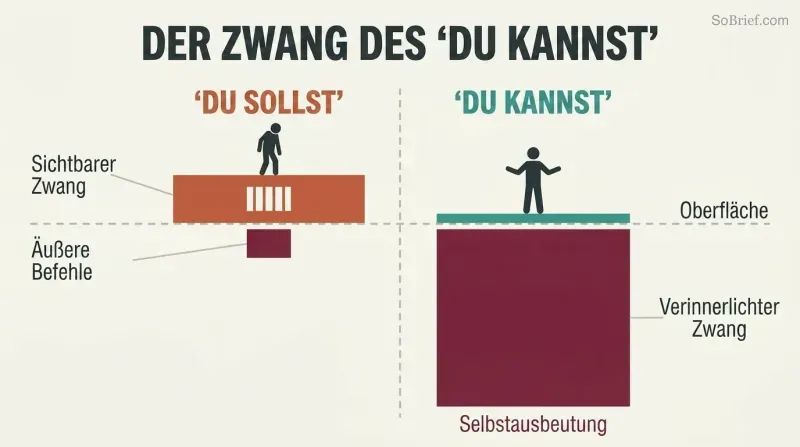
Hans zentrales Paradox ist entwaffnend klar. In Disziplinargesellschaften sagte die Macht »Du sollst« und »Du darfst nicht« — Befehle mit harten Grenzen. Der Neoliberalismus ersetzte diese durch »Du kannst«, das keine Obergrenze kennt. Das Ergebnis: Depression und Burnout sind keine Willensschwächen, sondern pathologische Zeichen dafür, dass grenzenlose Möglichkeit in grenzenlosen Zwang umschlägt. Wir glauben, wir hätten uns vom unterworfenen Subjekt zum freien »Projekt« emanzipiert, das sich endlos neu erfindet.
Doch das Projekt ist ein tieferes Gefängnis. Han nennt das heutige Individuum ein »Leistungssubjekt« — jemanden, der sich bereitwillig selbst ausbeutet, ohne dass ein Herr ihn dazu zwingt. Das macht das neoliberale Subjekt zum »absoluten Sklaven«, der die Kontrolle so vollständig verinnerlicht hat, dass zwanghafte Selbstoptimierung sich nicht mehr von Befreiung unterscheiden lässt.
Du bist zugleich der Sklave und der Herr, der dich ausbeutet
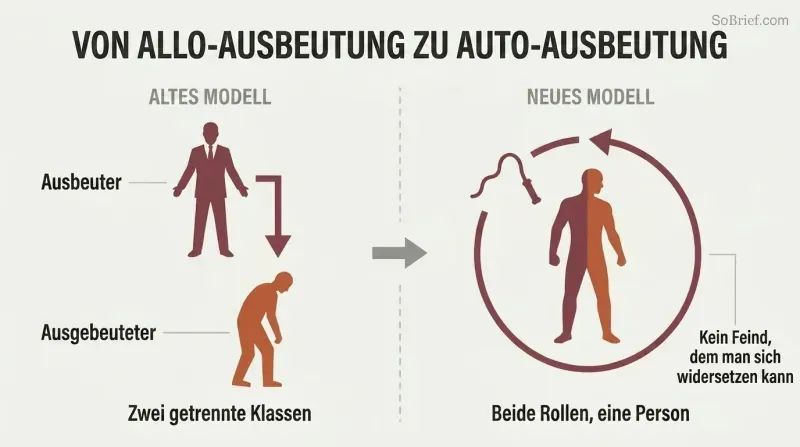
Die strukturelle Genialität des Neoliberalismus besteht darin, Arbeiter in Unternehmer ihrer selbst zu verwandeln. Im älteren Kapitalismus kam die Ausbeutung von außen — ein Chef, ein Fabrikbesitzer. Marx nannte dies Fremdausbeutung: Eine Gruppe zwingt eine andere zur Arbeit. Der Neoliberalismus ersetzte sie durch Selbstausbeutung, bei der man sich die Arbeitsdisziplin selbst auferlegt. Jeder besitzt nun seine Produktionsmittel (einen Laptop, eine persönliche Marke). Der Klassenkampf ist nach innen gewandert.
Das neutralisiert kollektiven Widerstand. Die alte marxistische Formel — eine ausgebeutete Klasse erhebt sich gegen ihre Ausbeuter — erfordert einen sichtbaren Antagonisten. Wenn jeder gleichzeitig Unterdrücker und Unterdrückter ist, kann sich kein politisches »Wir« bilden. Selbst der Begriff des Proletariats löst sich auf: Wenn jeder ein selbstgemachtes Projekt ist, fühlt sich Scheitern persönlich an, niemals strukturell.
Die mächtigste Kontrolle sagt Ja, nicht Nein
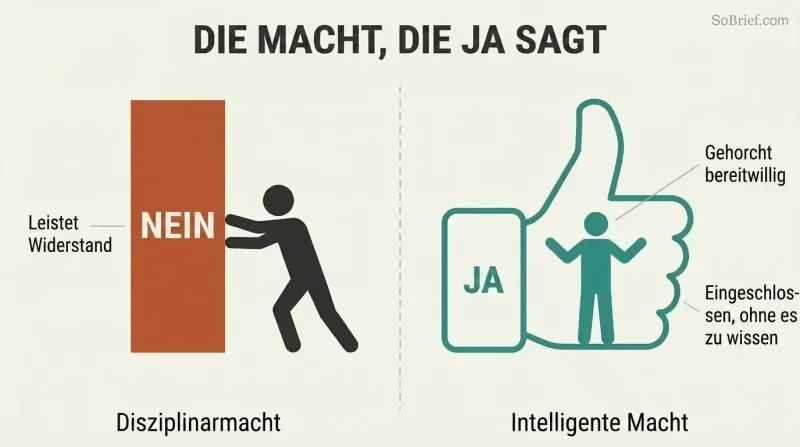
Smarte Macht verbietet nicht — sie gefällt. Disziplinarmacht operierte durch Negation: Regeln, Verbote, Strafen. Sie war ineffizient, weil sie auf Widerstand stieß. Neoliberale »smarte Macht« wirkt durch Verführung — sie aktiviert, motiviert und optimiert, statt zu unterdrücken. Sie sagt weit häufiger »Ja« als »Nein«. Der Like-Button ist ihr Emblem; wir unterwerfen uns der Herrschaftsordnung, während wir auf »Gefällt mir« klicken.
Unsichtbarkeit ist ihre Stärke. Die wirksamste Macht wird gar nicht als Macht empfunden. Smarte Macht erzwingt kein Geständnis — sie lädt uns ständig ein zu teilen, uns anzuvertrauen und mitzumachen. Sie lenkt den Willen, statt ihn zu brechen. Statt Hindernisse zu errichten, kommt sie dem Subjekt entgegen und lässt Abhängigkeit sich wie Ermächtigung anfühlen. Freie Wahl löst sich in freie Auswahl unter vorab genehmigten Optionen auf.
Psychopolitik zielt auf deinen Geist, wo Biopolitik auf deinen Körper zielte
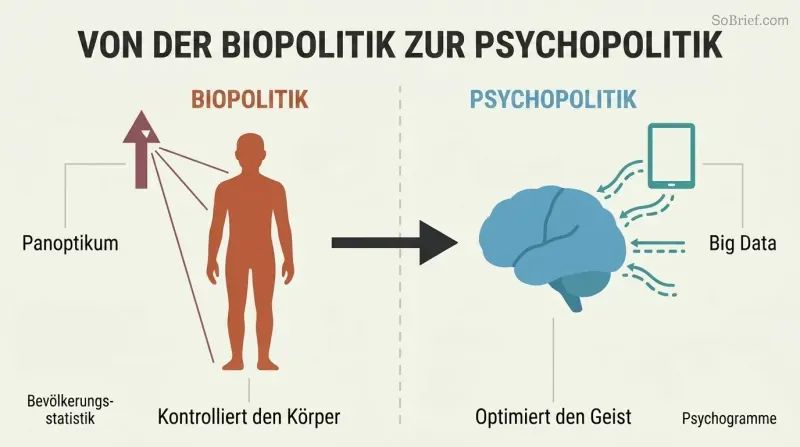
Dies ist das titelgebende Konzept des Buches. Foucaults Biopolitik beschrieb, wie die Disziplinargesellschaft Körper kontrollierte — Geburtenraten, körperliche Arbeit, Gesundheit. Dieses Modell passte zum Industriekapitalismus, in dem der Körper die Produktionseinheit war. Doch der Neoliberalismus basiert auf immaterieller Produktion: Information, Programme, Ideen. Der Körper ist nicht mehr die zentrale Produktivkraft. Worauf es jetzt ankommt, ist die Optimierung psychischer und mentaler Prozesse — Neuro-Enhancement statt körperlicher Disziplin.
Big Data ist das primäre Instrument der Psychopolitik. Wo Bevölkerungsstatistiken der Biopolitik demografische Daten lieferten, liefert Big Data Psychogramme — Karten von Wünschen, Vorlieben und unbewussten Mustern. Es kann in die Seele blicken, wie es Benthams Panoptikum nie konnte. Foucault selbst vollzog diese konzeptuelle Wende nie; Han argumentiert, dieser blinde Fleck habe ihn daran gehindert, neoliberale Macht zutreffend zu theoretisieren.
Wir haben ein Überwachungs-Panoptikum gebaut und sind freiwillig eingezogen
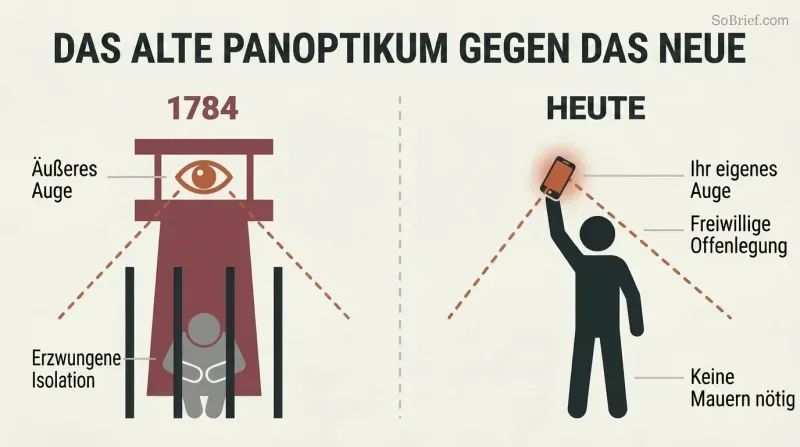
Benthams Panoptikum isolierte Insassen und verhinderte ihre Interaktion. Das digitale Panoptikum kehrt jedes Element um: Seine Bewohner kommunizieren aktiv, entblößen sich bereitwillig und wirken an ihrer eigenen Überwachung mit. Kein Erlass zwingt uns, unsere Standorte zu posten oder unsere Vorlieben preiszugeben — wir tun es aus dem, was Han ein »inneres Bedürfnis« nennt. Das digitale Panoptikum ist zudem »aperspektivisch« — es gibt keine toten Winkel, anders als in Benthams optischem System.
Apples legendärer Super-Bowl-Werbespot von 1984 präsentierte den Macintosh als Befreiung von Orwellscher Überwachung. Doch Han argumentiert, er habe ein weit effizienteres Kontrollsystem eingeläutet. Orwells Big Brother setzte auf Knappheit, Angst und Zensur. Die heutige Version bietet Überfluss, Freiheit und Vernetzung. Das Gefühl der Freiheit ist genau das, was dieses Panoptikum unentrinnbar macht: Jeder ist nun sein eigenes Panoptikum.
Selbstoptimierung ist Herrschaft mit Wellness-Maske
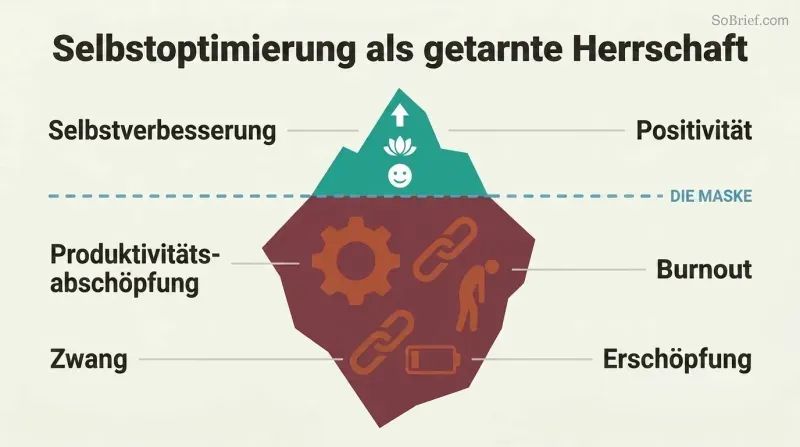
Die neoliberale Selbsthilfeindustrie verwandelt alles — Aufmerksamkeit, Persönlichkeit, psychische Gesundheit — in Ressourcen zur Ausbeutung. Motivationsseminare und mentale Trainingsprogramme versprechen grenzenlose Selbstverbesserung, doch ihre eigentliche Funktion ist die Beseitigung jeder Reibung, die die Produktivität mindert. Han zieht eine direkte Linie von der protestantischen Selbstprüfung (der Jagd nach Sünden) zur heutigen Selbstoptimierung (der Jagd nach negativen Gedanken). Selbst fundamentalistische Prediger klingen heute wie Motivationscoaches.
Positivität wird zur eigenen Gewalt. Tony Robbins predigt »Constant, Never-Ending Improvement« und deutet Unzufriedenheit als produktiven Schmerz um. Doch der Imperativ, immer mehr zu leisten, zerstört, was er zu heilen vorgibt. Ohne Negativität — Leiden, Spannung, Tiefe — verkommt das Leben zu »etwas Totem«. Die menschliche Seele, so Han, ist keine Positivitätsmaschine. Depression und Burnout sind Symptome eines Systems, das von endlichen Wesen unendliche Optimierung verlangt.
Neoliberales Scheitern löst Scham aus, nicht Solidarität — und zwar absichtlich
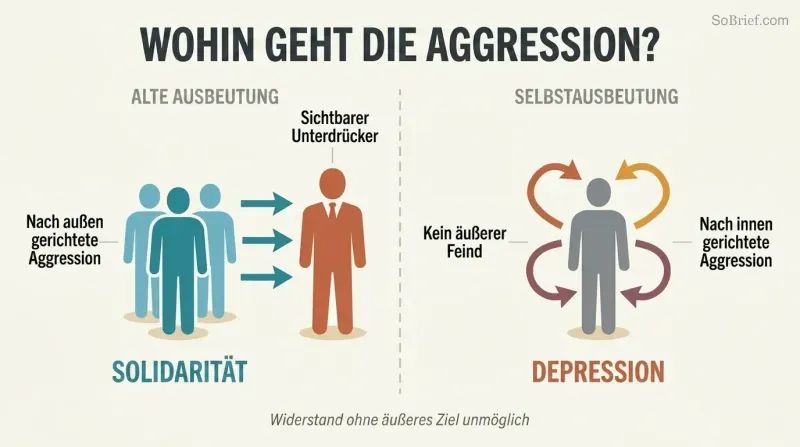
Dies ist die Verteidigungsarchitektur des Regimes. Unter älterer Ausbeutung konnten die Ausgebeuteten ihren Unterdrücker identifizieren und sich zusammenschließen. Ein Fabrikarbeiter wusste, wem die Fabrik gehörte. Doch wenn man sein eigener Chef ist, seine eigene Marke, sein eigenes Unternehmen, fühlt sich Scheitern wie ein persönlicher moralischer Mangel an. Man hinterfragt nicht das System — man hinterfragt sich selbst. Scham ersetzt Solidarität.
Kollektives Handeln wird strukturell unmöglich. Es gibt keine klar definierte herrschende Klasse, gegen die man sich stellen könnte. Die alte Unterscheidung zwischen Proletariat und Bourgeoisie bricht zusammen, wenn die Produktion immateriell ist und jeder nominell seine Produktionsmittel besitzt. Menschen richten ihre Aggression nach innen statt nach außen. Das ist es, was Han die »besondere Intelligenz« des Systems nennt: Widerstand kann nicht entstehen, weil es keinen äußeren Feind gibt, gegen den man sich wehren könnte.
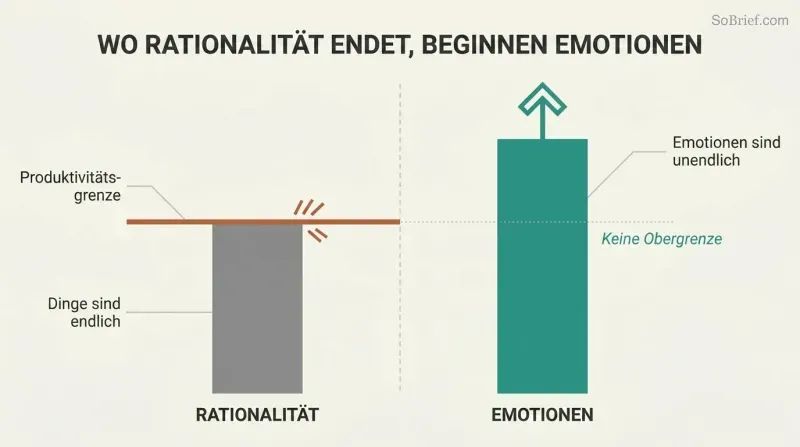
Der Kapitalismus erntet jetzt Emotionen, weil die Rationalität an ihre Grenzen gestoßen ist
Han unterscheidet drei Begriffe, die die meisten Forscher vermischen:
1. Gefühle sind konstativ und dauerhaft — ein »Sprachgefühl«, Trauer
2. Emotionen sind performativ und flüchtig — sie treiben bestimmte Handlungen an
3. Affekte sind eruptiv und momenthaft — wie ein Shitstorm in den sozialen Medien
Der Kapitalismus erntet gezielt Emotionen, weil ihre Performativität Handlung und Konsum erzeugt. Gefühle widersetzen sich der Ausbeutung, weil ihnen die Gerichtetheit fehlt.
Emotionsmanagement hat rationales Management abgelöst. DaimlerChrysler erklärte öffentlich, die »sozialen und emotionalen Kompetenzen« der Mitarbeiter würden die Bewertungen bestimmen. Manager agieren heute als Motivationscoaches. Rationalität, das Medium der Disziplinargesellschaft, stößt irgendwann an eine Produktivitätsgrenze — sie wirkt starr und einengend. Emotionen liefern die Energie, um darüber hinauszugehen, und eröffnen ein unendlich konsumierbares Feld jenseits des bloßen Gebrauchswerts.
Big Data liefert Korrelationen, niemals Verstehen — das ist kein Wissen
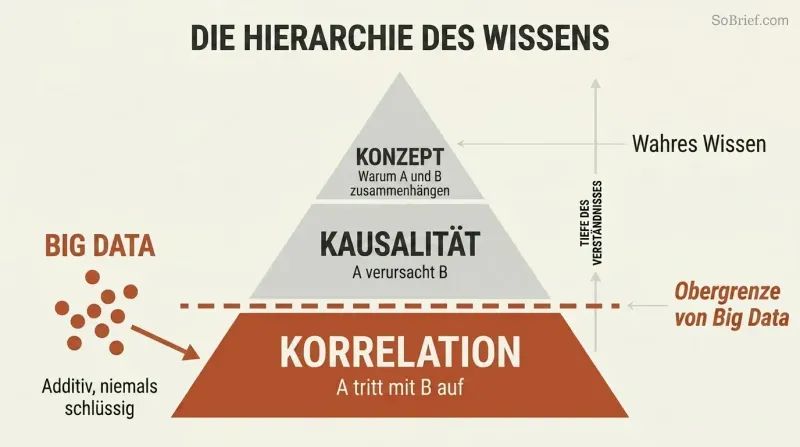
Han nutzt Hegels Hierarchie des Wissens, um die Anmaßungen von Big Data zu demontieren. Korrelation (A tritt zusammen mit B auf) steht auf der untersten Stufe. Kausalität (A verursacht B) ist höher. Doch echtes Wissen erfordert das, was Hegel den Begriff nannte — den übergreifenden Zusammenhang, der erklärt, WARUM A und B in Beziehung stehen. Big Data erreicht diese Ebene nie. Es ist rein additiv; es gelangt nie zu einem Schluss.
Dataismus — die Ideologie, dass alles Messbare gemessen werden sollte — vermarktet sich als zweite Aufklärung, die das Wissen von Subjektivität befreit. Doch Han argumentiert, er erzeuge seine eigene Mythologie: einen Datentotalitarismus. Zahlen ersetzen Erzählung; Zählen ersetzt Erzählen. Das Quantified Self verspricht »Selbsterkenntnis durch Zahlen«, doch kein Sensor beantwortet die Frage »Wer bin ich?«. Und Big Data ist völlig blind für das singuläre Ereignis — den unwahrscheinlichen Bruch, der Geschichte tatsächlich formt.
Widerstand gegen Psychopolitik durch Idiotismus: Schweigen und Entkopplung
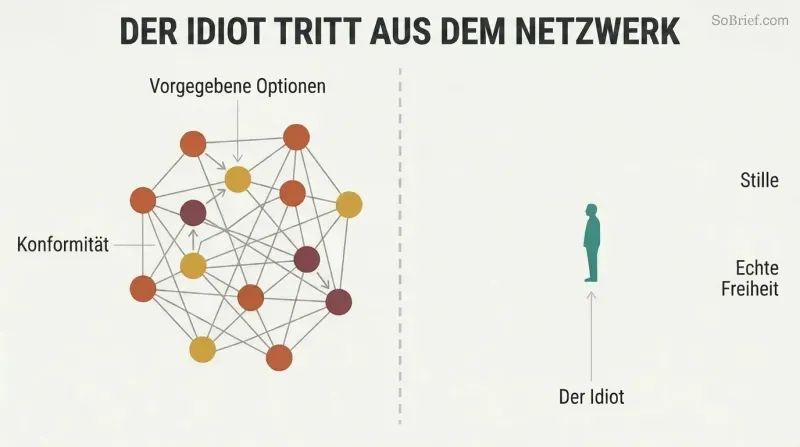
Der Idiot ist der älteste Held der Philosophie. Sokrates war ein Idiot — er wusste nur, dass er nichts wusste. Descartes war ein Idiot — er bezweifelte alles. Jeder Philosoph, der eine wirklich neue Denkweise hervorbrachte, musste zuerst aus dem herrschenden System heraustreten. Heute hat die vollständige digitale Vernetzung den Konformismus so stark verstärkt, dass die Figur des Außenseiters aus der Gesellschaft nahezu verschwunden ist.
Idiotismus ist Hans vorgeschlagener Widerstand. Der Idiot ist unverbündet, unvernetzt, uninformiert — er bewohnt ein »unvordenkliches Außen«, das sich der Kommunikation vollständig entzieht. Etymologisch bedeutet Häresie »Wahl«: Der Idiot-Häretiker übt echte freie Wahl aus, indem er von der Orthodoxie abweicht. Intelligenz, so Han, wählt nur zwischen Optionen, die ein System bereitstellt. Der Idiot hat Zugang zu dem, was jenseits davon liegt. In einer Zeit, in der die Macht zum Ausdruck zwingt, wird das Recht, nichts zu sagen, zur letzten authentischen Freiheit.
Analyse
Hans Psychopolitik erscheint an einem eigentümlichen Wendepunkt der kritischen Theorie: dem Moment, in dem Foucaults Werkzeugkasten — Biopolitik, Disziplinarmacht, Panoptismus — das Terrain neoliberaler Herrschaft nicht mehr adäquat kartieren kann. Hans zentraler Schachzug ist elegant: Die Macht ist vom Körper zur Psyche gewandert, vom Verbot zur Erlaubnis, vom »Sollen« zum »Können«. Diese Neurahmung macht Phänomene wie Burnout-Kultur, Selbsthilfeindustrie und Social-Media-Zwang nicht als individuelle Pathologien lesbar, sondern als systemische Merkmale einer Macht, die gerade dadurch wirkt, dass sie unsichtbar ist.
Der originellste Beitrag des Buches ist die Verschmelzung Frankfurter Schule kritischer Theorie mit einer Diagnose des digitalen Kapitalismus. Han liest Big Data durch Hegels Wissenshierarchie und enthüllt, dass Korrelation ohne den Begriff nicht Wissen ist, sondern dessen Gegenteil — absolute Unwissenheit, die sich als Allwissenheit tarnt. Dieses philosophische Argument verleiht populären Ängsten vor algorithmischer Governance ernsthaftes intellektuelles Gewicht, auf die die meisten Kommentatoren nur vage verweisen können.
Dennoch weist das Werk charakteristische Schwachstellen auf. Hans totalisierender Pessimismus — in dem jeder Akt der Selbstverbesserung dem Kapital dient, jede Emotion geerntet wird, jede Freiheit insgeheim Zwang ist — droht unfalsifizierbar zu werden. Wenn Widerstand strukturell unmöglich ist, wirkt der abschließende Appell an den »Idiotismus« eher wie eine philosophische Inszenierung als eine tragfähige politische Strategie. Der Deleuzianische Idiot, der sich ins Schweigen zurückzieht, benötigt das kulturelle Kapital zum Ausstieg — ein Privileg, das genau die Strukturen verstärkt, die Han kritisiert.
Was Psychopolitik trotz dieser Spannungen unverzichtbar macht, ist seine diagnostische Präzision. Geschrieben 2014, vor dem Cambridge-Analytica-Skandal, bevor die psychische Gesundheitskrise zum Mainstream-Diskurs wurde, bevor »Aufmerksamkeitsökonomie« zum geläufigen Begriff wurde, identifizierte Han mit chirurgischer Klarheit, wie digitale Plattformen die Psyche zum Zweck des Profits ausbeuten. Das Buch liest sich weniger wie eine Prophezeiung als vielmehr wie eine Autopsie, die dem Tod geringfügig vorausgeht. Sein bleibender Wert liegt nicht in seinen Lösungen, sondern in seiner Weigerung, uns unsere Ketten für Schmuck halten zu lassen.
Rezensionsübersicht
Psychopolitik untersucht, wie Neoliberalismus und digitale Technologie eine neue Form der Kontrolle durch freiwillige Selbstoffenbarung und Datensammlung geschaffen haben. Han argumentiert, dass wir uns von der Biopolitik zur Psychopolitik bewegt haben, in der Macht durch die Ausbeutung unseres Verlangens nach Freiheit und Selbstoptimierung operiert. Das Buch kritisiert Big Data, soziale Medien und die Kommodifizierung von Emotionen und legt nahe, dass wahrer Widerstand im „Idiotismus
Andere lasen auch



Glossar
Psychopolitik
Neoliberale Regierungsform, die auf die Psyche abzieltHans zentrales Konzept für die neoliberale Machtform, die durch die Ausbeutung psychischer Prozesse – Wünsche, Emotionen und unbewusste Muster – operiert, anstatt den Körper zu disziplinieren. Anders als Foucaults Biopolitik, die Bevölkerungen durch physische Kontrolle regulierte, steuert die Psychopolitik Verhalten durch positive Stimuli, emotionale Manipulation und Big Data, während sie dabei die Illusion der Freiheit aufrechterhält.
Autoexploitation
Selbstauferlegte Ausbeutung ohne äußeren HerrnDer neoliberale Modus der Ausbeutung, in dem Individuen sich selbst Arbeitsdisziplin, Leistungsanforderungen und Optimierungsimperative auferlegen. Das Subjekt ist gleichzeitig Herr und Knecht. Da es keinen sichtbaren äußeren Ausbeuter gibt, verhindert die Autoexploitation kollektiven Widerstand und richtet die Aggression nach innen, was Depression statt Revolution hervorbringt. Han stellt sie der Fremdausbeutung gegenüber.
Fremdausbeutung
Ausbeutung durch äußere AndereDer traditionelle Modus der Ausbeutung, in dem eine Gruppe (z. B. Fabrikbesitzer) eine andere Gruppe (z. B. Arbeiter) unter Zwangsbedingungen zur Arbeit nötigt. Unter der Fremdausbeutung können die Ausgebeuteten ihren Unterdrücker identifizieren und sich potenziell gegen ihn vereinen. Han argumentiert, dass der neoliberale Übergang zur Autoexploitation diese Solidarität – und damit die marxistische Revolution – strukturell unmöglich gemacht hat.
Leistungssubjekt
Sich selbst optimierendes neoliberales IndividuumHans Begriff für das neoliberale Individuum, das sich selbst als freies ‚Projekt' in ständiger Selbstoptimierung betrachtet, tatsächlich aber in freiwilliger Selbstausbeutung begriffen ist. Das Leistungssubjekt ersetzt das disziplinarische ‚Gehorsamssubjekt'. Da es keinen äußeren Herrn hat, kann es die Quelle seiner Erschöpfung nicht identifizieren, was zu Burnout und Depression statt zu politischem Widerstand führt.
Smarte Macht
Macht durch Verführung statt ZwangHans Begriff für die neoliberale Machttechnologie, die mit ‚Ja' statt mit ‚Nein' operiert – verführend, motivierend und optimierend statt unterdrückend. Smarte Macht lenkt den Willen, anstatt ihn zu brechen, beutet Freiheit aus, anstatt sie einzuschränken, und bleibt unsichtbar, weil die Subjekte ihre Unterwerfung für Ermächtigung halten. Der Like-Button ist ihr emblematisches Symbol.
Digitales Panoptikum
Freiwilliges SelbstüberwachungsnetzwerkHans Aktualisierung von Benthams Panoptikum für das digitale Zeitalter. Anders als im Original, wo die Insassen gegen ihren Willen beobachtet wurden, beruht das digitale Panoptikum auf Bewohnern, die aktiv kommunizieren, persönliche Daten teilen und sich freiwillig exponieren. Es ist ‚aperspektivisch' – es eliminiert alle blinden Flecken – und weitaus effizienter, weil es die Überwachung an seine eigenen Bewohner auslagert.
Ban-optikum
Dispositiv zum Ausschluss wertloser PersonenEin Konzept, das Han von Bauman und Lyon übernimmt und das das Gegenstück zum Panoptikum beschreibt. Während das Panoptikum diejenigen innerhalb des Systems beobachtet, identifiziert und exkludiert das Ban-optikum Personen, denen kein ökonomischer Wert zugeschrieben wird. Das Big-Data-Unternehmen Acxiom beispielsweise kategorisiert rund 300 Millionen Amerikaner in siebzig Gruppen und bezeichnet diejenigen mit geringem Marktwert als ‚Abfall'.
Dataismus
Ideologie der Daten als objektive WahrheitDer quasi-religiöse Glaube, dass alles Messbare gemessen werden sollte und dass Daten eine transparente, verlässliche Linse frei von Emotion und Ideologie bieten. Han fasst den Dataismus als eine ‚zweite Aufklärung', die – wie die erste – in ihre eigene Mythologie und ihren eigenen Totalitarismus umschlägt. Er nennt ihn Nihilismus: Daten sind rein additiv und ersetzen narrativen Sinn durch endlose Anhäufung von Zahlen.
Profanierung
Rückführung sakraler Objekte in den allgemeinen GebrauchEin Konzept von Agamben, das Han auf den Widerstand gegen den Kapitalismus anwendet. Profanierung bedeutet, Dinge, die dem gewöhnlichen Gebrauch entzogen wurden – sei es durch Religion oder durch das Kapital –, der freien, zwecklosen menschlichen Tätigkeit zurückzugeben. Hans emblematisches Beispiel: griechische Kinder, die in Ruinen ein Bündel Geldscheine fanden und einfach damit spielten, das fetischisierte Geld zerrissen.
Idiotismus
Philosophisches Außenseitertum als Widerstand gegen KonformismusHans Begriff für die Praxis, aus den vorherrschenden Systemen der Kommunikation und Konformität herauszutreten. In Anlehnung an Deleuze und eine Linie von Sokrates bis Descartes fasst Han den Idioten als jemanden, der unverbündet, unvernetzt und uninformiert ist und Zugang zu einer Dimension jenseits des Systems hat. In einem Zeitalter des Kommunikationszwangs stellt der Idiotismus – Schweigen, Einsamkeit, häretische Abweichung – die letzte authentische Praxis der Freiheit dar.
Über den Autor
Weitere Bücher von Byung-Chul Han

PDF herunterladen
EPUB herunterladen
.epub digital book format is ideal for reading ebooks on phones, tablets, and e-readers.








































