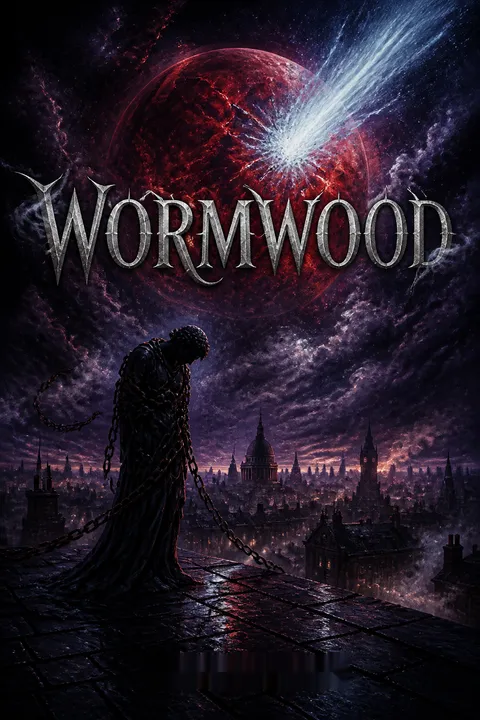

Plot Summary
Signs in the Sky
Dr. Sabian Blake, a learned astronomer and master of the Cabala, anxiously watches the heavens from his Bloomsbury home. He is obsessed with the arrival of a mysterious comet, which he believes will herald a new age or disaster. The city is restless, the moon burns red, and strange lights fill the sky. Blake's calculations, drawn from the arcane Nemorensis, suggest a cosmic event is imminent. The atmosphere is thick with anticipation and dread, as both the learned and the common folk sense that something unnatural is about to unfold. Blake's isolation and obsession set the tone for a tale where science, prophecy, and the supernatural collide, and the fate of London hangs in the balance.
The Book Arrives
Blake receives a mysterious, lavishly wrapped book—the Nemorensis—delivered by a suspiciously well-dressed coachman. The book's origins are shrouded in secrecy, and its arrival fills Blake with both excitement and foreboding. The Nemorensis is said to contain the secrets of the cosmos and prophecies of doom. As Blake pores over its cryptic pages, he discovers a chilling prophecy: "Wormwood, the bright star, shall fall from the sky, and many will die from its bitterness." The book's power is palpable, and Blake feels both chosen and cursed by its possession. The stage is set for the prophecy to unfold, and the book's influence begins to ripple through the lives of all who come near it.
Night of Chaos
The comet's approach triggers a night of terror: earthquakes shake the city, time distorts, and darkness falls. Animals go mad—horses stampede, dogs attack, and chaos reigns in the streets. Blake and his friend Bonham barely survive the onslaught, sheltering in Blake's home as the world outside seems to unravel. The city's fragile order collapses, and the supernatural intrudes upon the everyday. Amidst the violence, a young maid, Agetta Lamian, and her fierce dog Brigand, emerge as unlikely survivors. The night marks a turning point, as the boundaries between science, magic, and prophecy blur, and the comet's influence grows ever more sinister.
Prophecy and Panic
In the aftermath, Blake confides in Bonham about the Nemorensis and the comet's dire prophecy. The two men debate whether to warn the world or keep the secret, fearing mass hysteria. Meanwhile, Agetta navigates her own dangers, encountering a mysterious old woman who threatens her and sets her on a path toward a hidden destiny. The city reels from the night's horrors, and rumors of the comet spread. The Nemorensis becomes a coveted object, its secrets sought by those who would use them for power or salvation. Trust is scarce, and every character is drawn deeper into the web of prophecy, fear, and ambition.
Agetta's Secret World
Agetta, caught between her duties and her father's criminal schemes, is drawn into a world of supernatural intrigue. She is approached by Yerzinia, a masked woman of seductive power, who offers her escape from poverty in exchange for loyalty. Agetta is marked—literally burned with a symbol of fate—and given a taste of Absinthium, a magical elixir that alters her perception. Her encounter with Yerzinia awakens desires and fears, binding her to a destiny entwined with the comet and the Nemorensis. Agetta's choices, shaped by poverty, longing, and manipulation, set her on a collision course with forces beyond her understanding.
The Angel in Chains
In the attic of Agetta's home, a chained angel named Tegatus is revealed—a being of sorrow, stripped of his wings and hope. Tegatus is a victim of human greed, sold and displayed as a freak. Agetta discovers his plight and, moved by compassion and curiosity, forms a fragile bond with him. The angel's presence is both a blessing and a curse, as his supernatural nature attracts the attention of those who would exploit or destroy him. Tegatus's suffering mirrors the city's own, and his fate becomes entwined with Agetta's, the Nemorensis, and the approaching comet.
The Gathering Storm
As the comet draws nearer, London's elite—scientists, occultists, and aristocrats—gather to witness and control the unfolding events. Blake presents his findings to skeptical peers, while Lord Flamberg and his circle plot to use the comet's destruction for their own ends, seeing it as a chance to remake the city. Bonham's loyalty wavers, and hidden agendas come to light. The supernatural and the political intermingle, and the city teeters on the brink of apocalypse. The Nemorensis, now recognized as a source of immense power, becomes the object of a deadly contest, and the lines between friend and foe blur.
The Nemorensis Stolen
Driven by promises and threats, Agetta steals the Nemorensis from Blake's home, pursued by supernatural entities and human adversaries alike. The book's power manifests, growing heavier and hotter, resisting her attempts to control it. Her theft unleashes a chain reaction: Blake is consumed by rage and despair, Bonham's true nature is revealed, and Yerzinia's plans accelerate. The Nemorensis becomes both a prize and a curse, drawing all the story's players toward a final confrontation. Agetta's act of desperation marks her as both a target and a key to the city's fate.
Pursued by Shadows
Agetta and Tegatus, now fugitives, are hunted through the city by monstrous creatures and human conspirators. They seek refuge in the labyrinthine tunnels beneath London, pursued by Rumskin, a demonic beast, and Komos, a masked villain. Thaddeus, the enigmatic bookseller, is revealed as a manipulator with his own designs on the Nemorensis. The boundaries between the living and the dead blur, as ghosts and spirits haunt the tunnels and bookshop. The city above is in chaos, and below, the final pieces of Yerzinia's ritual are assembled. The sense of doom is palpable, and hope seems distant.
The Angel's Sacrifice
As Yerzinia's ritual to steal Agetta's body and achieve immortality reaches its climax, Tegatus intervenes. Despite his own fall and suffering, the angel chooses to sacrifice himself, binding Yerzinia and dragging her into the river's depths. His act disrupts the ritual, saving Agetta and breaking the cycle of transformation. Tegatus's redemption is hard-won, achieved not through power but through love and selflessness. His sacrifice echoes the story's themes of free will, the cost of desire, and the possibility of grace even for the fallen. The city is spared total destruction, but not without loss.
The Comet Descends
The comet Wormwood crashes into the moon, sending fragments raining down on London. The city is battered by fire, ice, and panic. The supernatural and the mundane intermingle: the dead rise, animals go mad, and the boundaries of reality dissolve. The Nemorensis pulses with power, and those who sought to control it are undone by their own hubris. Blake, Agetta, and Abram (the angel Raphael) struggle to survive and protect what remains of the city's soul. The apocalypse is both literal and symbolic, a reckoning for the city's sins and ambitions.
The Final Transformation
On the rooftop of the bookshop, under the blood-red moon, the final confrontation unfolds. Yerzinia, Bonham, and their followers attempt to complete the ritual, using Agetta as the vessel for Yerzinia's rebirth. Blake, Abram, and the surviving allies fight to stop them, battling both physical and spiritual foes. The Nemorensis grows to monstrous proportions, its pages swirling with magic and prophecy. In a climactic struggle, love, sacrifice, and courage triumph over ambition and despair. The ritual is broken, Yerzinia is destroyed, and the city is given a chance to begin anew.
Redemption and Ruin
As dawn breaks, the survivors reckon with the cost of the night's events. The city is scarred but not destroyed; the comet's poison lingers, but hope endures. Blake, changed by his experiences, relinquishes his obsession with forbidden knowledge. Agetta, no longer a pawn, claims her agency and future. The Nemorensis is lost or destroyed, its power spent. The supernatural recedes, and the city begins the slow process of healing. The story's lessons—about the dangers of pride, the limits of knowledge, and the redemptive power of love—echo in the silence after the storm.
The Battle for London
The struggle for London is not just physical but spiritual. The city's fate hinges on the choices of individuals—Blake's humility, Agetta's courage, Tegatus's sacrifice, and Abram's guidance. The supernatural forces unleashed by the comet and the Nemorensis are ultimately reflections of human desires and fears. The battle is fought in the streets, in dreams, and in the hearts of the characters. In the end, it is not power or prophecy that saves London, but the willingness to choose compassion over ambition, and to accept the limits of human understanding.
The End and the Beginning
As the dust settles, the survivors emerge into a changed world. The comet has passed, the city is battered but alive, and the supernatural fades into memory. Blake, Agetta, and the others reflect on what has been lost and gained. The story ends not with triumph, but with humility and hope—a recognition that knowledge is not salvation, and that the greatest power lies in love, sacrifice, and the courage to face the unknown. The Nemorensis, once the source of fear and ambition, is now a cautionary tale, and the city begins again, wiser and more wary of the darkness within and without.
Analysis
Wormwood is a gothic fantasy that explores the collision of science, magic, and human ambition at the edge of apocalypse. Set in a vividly realized, plague-haunted London, the novel uses the arrival of a comet and a forbidden book to examine the dangers of unchecked desire—whether for knowledge, power, or escape. The story's supernatural elements are not mere spectacle; they serve as metaphors for the psychological and moral struggles of the characters. Blake's obsession with the Nemorensis and the comet mirrors humanity's perennial temptation to seek forbidden knowledge, often at the cost of wisdom and compassion. Agetta's journey from pawn to heroine reflects the possibility of agency and redemption, even for the most marginalized. The fallen and guardian angels, Tegatus and Abram, embody the story's spiritual stakes: the battle between pride and humility, despair and hope, destruction and renewal. Ultimately, Wormwood warns against the hubris of believing that knowledge or power alone can save us, and suggests that true salvation lies in love, sacrifice, and the courage to face the unknown. The novel's ending, with its blend of loss and hope, invites readers to reflect on the cyclical nature of history and the enduring need for humility in the face of mystery.
Review Summary
Reviews for Wormwood are largely negative, averaging 3.1/5 stars. Common criticisms include underdeveloped, unlikable characters, a confusing and disjointed plot with too many storylines, and an anticlimactic ending. Many readers struggled to connect emotionally with any character. Positive reviews praised the fast pace, imaginative world-building, vivid descriptions of 18th-century London, and compelling blend of history, science, religion, and magic. Some appreciated its dark, complex tone and surprising depth, calling it a hidden gem, while others found it an enjoyable fantasy with exciting twists.
People Also Read


Characters
Dr. Sabian Blake
Blake is a brilliant but isolated astronomer, scientist, and Cabalist, whose life is consumed by the pursuit of cosmic secrets. His possession of the Nemorensis marks him as both chosen and cursed, and his obsession blinds him to the dangers he unleashes. Blake's relationships are strained by his pride and ambition, yet he is not without conscience. Over the course of the story, he is forced to confront the limits of knowledge, the cost of hubris, and the necessity of humility. His journey is one from arrogance to wisdom, from isolation to connection, and from the pursuit of power to the acceptance of grace.
Agetta Lamian
Agetta is a young maid, hardened by poverty and her father's criminal world. She is clever, brave, and fiercely independent, yet vulnerable to manipulation by those who promise her escape or power. Marked by Yerzinia and drawn into the supernatural struggle, Agetta becomes both a target and a key to the city's fate. Her journey is one of self-discovery, as she moves from victimhood to agency, from temptation to sacrifice. Her bond with Tegatus and her ultimate resistance to Yerzinia's seduction are acts of courage that help save London and herself.
Isaac Bonham
Bonham is Blake's colleague and confidant, a fellow scientist whose loyalty is undermined by envy and ambition. Initially a voice of reason, Bonham is gradually seduced by Yerzinia and the promise of power. His betrayal is both personal and cosmic, as he aids in the ritual that threatens to destroy Agetta and the city. Bonham's arc is a cautionary tale about the dangers of pride, the ease of corruption, and the cost of forsaking friendship for ambition. His fate is left ambiguous, a reminder that redemption is possible but not guaranteed.
Yerzinia / Lady Flamberg
Yerzinia is the story's central villain—a shape-shifting, immortal being who seeks to escape the cycle of transformation by stealing Agetta's body. She is both alluring and terrifying, a master manipulator who preys on desire and weakness. Her power is rooted in the Nemorensis and the comet, and her schemes drive the story's conflict. Yerzinia embodies the dangers of unchecked ambition, the seduction of forbidden knowledge, and the destructive potential of immortality without compassion. Her defeat is achieved not by force, but by sacrifice and love.
Tegatus
Tegatus is a tragic figure—once a being of light, now chained and broken by his own choices. His suffering is both physical and spiritual, and his journey mirrors the story's themes of fall and redemption. Tegatus's bond with Agetta is transformative for both, and his ultimate sacrifice is an act of grace that disrupts Yerzinia's plans. He represents the possibility of forgiveness, the cost of love, and the hope that even the fallen can rise again.
Abram Rickards / Raphael
Abram is Blake's mysterious protector, revealed to be the archangel Raphael. He moves between worlds, intervening at crucial moments, and serves as both guide and judge. Abram's perspective is both compassionate and severe; he understands human weakness but demands accountability. His interventions are decisive, and his wisdom helps the characters see beyond their own desires. Abram's presence grounds the story's supernatural elements in a moral framework, and his final words offer hope for renewal.
Cadmus Lamian
Agetta's father, Cadmus, is a product of London's underbelly—cunning, self-serving, and willing to exploit anyone, including his daughter. His relationship with Agetta is complex, marked by both affection and betrayal. Cadmus's actions contribute to the chaos, and his fate is a warning about the corrosive effects of greed and moral compromise.
Thaddeus Bracegirdle
Thaddeus is an enigmatic figure, at once a friend and a schemer. His bookshop is a nexus of supernatural activity, haunted by the spirits of children and the secrets of the past. Thaddeus's desire for the Nemorensis drives much of the plot, and his ambiguous morality reflects the story's themes of temptation and the cost of knowledge.
Morbus Gallicus
Morbus is a grotesque figure, both jailer and executioner, who serves Yerzinia's plans. His presence in the story is a reminder of the physical and spiritual corruption that threatens the city. He is both comic and terrifying, a symbol of the consequences of unchecked evil.
Rumskin
Rumskin is a monstrous creature, once an angel, now transformed by desire and servitude. He is both a threat and a victim, embodying the story's warnings about the dangers of losing oneself to temptation. His fate is a cautionary tale about the cost of serving darkness.
Plot Devices
The Nemorensis
The Nemorensis is the story's central artifact—a forbidden tome that contains cosmic secrets, prophecies, and the power to shape reality. Its arrival sets the plot in motion, and its influence corrupts and tempts all who seek it. The book is both a literal and symbolic object: it represents the dangers of forbidden knowledge, the seduction of power, and the limits of human understanding. Its prophecies drive the characters' actions, and its theft and recovery structure the narrative. The Nemorensis is also a mirror, reflecting the desires and fears of those who possess it.
The Comet Wormwood
The comet's approach is both a physical and metaphysical event, triggering supernatural chaos and serving as a sign of impending doom. Its arrival is foretold in the Nemorensis, and its effects—earthquakes, madness, the dead rising—blur the boundaries between science and magic. The comet is a plot device that accelerates the story's pace, raises the stakes, and forces the characters to confront their own mortality and choices.
Foreshadowing and Prophecy
The story is structured around prophecies, omens, and dreams, which both guide and mislead the characters. Foreshadowing is used to build tension and to suggest that fate and free will are in constant conflict. The characters' attempts to interpret and control prophecy often lead to their downfall, while true salvation comes from unexpected acts of love and sacrifice.
Dualities and Mirrors
The narrative is built on contrasts: Blake's rationalism versus the supernatural, Agetta's poverty versus Yerzinia's power, the fallen angel versus the guardian. These dualities are explored through character arcs, plot twists, and symbolic imagery (mirrors, reflections, transformations). The story suggests that true understanding comes not from mastery, but from humility and compassion.
Narrative Structure
The novel alternates between multiple points of view—Blake, Agetta, Tegatus, Bonham, Yerzinia—allowing the reader to experience the unfolding crisis from different angles. The structure is episodic, with each chapter building toward the final confrontation. The use of dreams, visions, and supernatural events heightens the sense of unreality and impending doom.
Wormwood Series
About the Author
Download PDF
Download EPUB
.epub digital book format is ideal for reading ebooks on phones, tablets, and e-readers.








































