
Plot Summary
Comet Over London
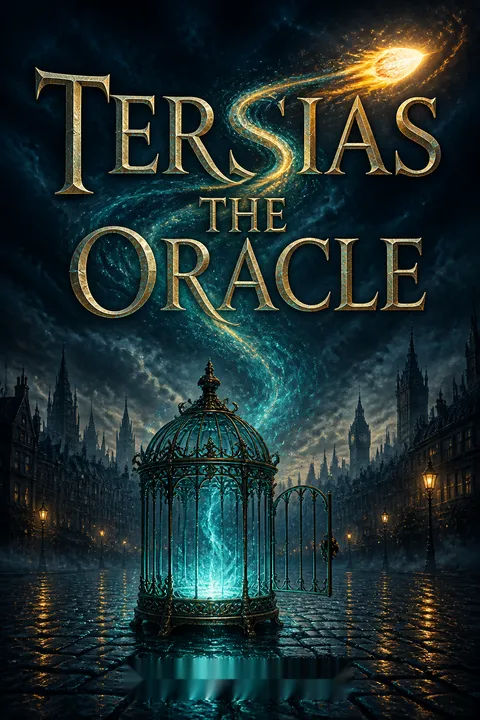
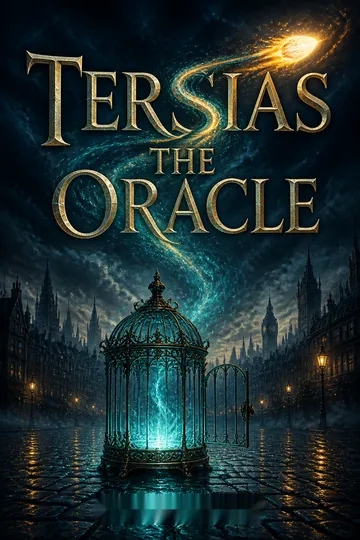
The story opens with a comet streaking across the sky, casting fear and chaos over London. Amidst the panic, Magnus Malachi, a desperate magician, keeps a blind boy named Tersias locked in a cage, exploiting his prophetic abilities. The comet's arrival is both a literal and symbolic harbinger of upheaval, shaking the city's foundations and the lives of its inhabitants. Tersias, haunted by the supernatural Wretchkin, is forced to answer Malachi's questions about the comet's impact, foretelling that the city will survive but not without consequence. The comet's collision with the moon and the resulting devastation set the stage for a city on edge, where the boundaries between the natural and supernatural blur, and every character's fate is thrown into uncertainty.
The Blind Oracle's Cage
Tersias, only twelve, is imprisoned by Malachi, who purchased him for his prophetic gift. Blind since childhood, Tersias is tormented by the Wretchkin, a spirit that whispers the future into his mind, making him both valuable and vulnerable. His memories are filled with abandonment and abuse, and his blindness is both a curse and a shield from the world's cruelty. Malachi's greed and desperation drive him to threaten Tersias with violence, forcing the boy to prophesy for his benefit. Tersias's isolation and suffering are palpable, yet his resilience and the mysterious power within him hint at a destiny far greater than his cage. The chapter establishes Tersias as both a victim and a key to the unfolding chaos.
Thieves and Prophecies
Jonah Ketch, a young thief hardened by the streets, flees the comet's destruction and stumbles upon Lord Malpas's carriage. In a fateful encounter, Jonah robs Malpas, stealing not only money but a mysterious alabaster box and a cursed dagger. The theft is violent and leaves Jonah wounded, but it also binds his fate to Malpas and the supernatural forces at play. Jonah's companions, Tara and Maggot, become entangled in the mystery of the box, which exudes an eerie power. The trio's camaraderie is tested as they realize the box's value and danger. This act of theft becomes the catalyst for the convergence of all major characters, drawing them into a web of prophecy, ambition, and dark magic.
The Alabaster Box Unveiled
At the Bull and Mouth inn, Jonah, Tara, and Maggot examine the stolen alabaster box. Its cold, otherworldly beauty captivates them, but Tara warns of its deadly reputation. When the box is opened, it emits a chilling aura and reveals a mirror-like surface that entrances Tara, hinting at its supernatural origins. The box's presence brings a sense of foreboding, as if it is a living entity with its own will. The group's fascination with the box foreshadows the dangers ahead, as it becomes clear that the box is more than a simple treasure—it is a key to powers and realms beyond their understanding. The box's allure begins to corrupt and divide them, setting the stage for betrayal and tragedy.
Malpas's Obsession
Lord Malpas, a powerful and ruthless politician, is consumed by his desire to recover the alabaster box and the dagger, which he believes hold the secret to overcoming his family's curse and achieving immortality. His obsession drives him to manipulate and threaten all those around him, including Malachi and Tersias. Malpas's home is a fortress of secrets, haunted by portraits of his ancestors and the legacy of violence that defines his lineage. His interactions with Tersias reveal a man tormented by mortality and willing to do anything to escape it. Malpas's pursuit of the box and the oracle sets him on a collision course with Solomon, the false prophet, and the other seekers of power, ensuring that the struggle for the box will be both personal and apocalyptic.
The Prophet's Cult
Solomon, a charismatic and manipulative prophet, gathers a cult of followers in the aftermath of the comet. He promises salvation and transformation, preying on the city's fear and despair. His right-hand man, Campion, enforces his will with brute strength. Solomon's public displays of power and his ability to sway the masses make him a formidable adversary. He becomes obsessed with acquiring Tersias, believing the boy's prophetic abilities will cement his own authority. Solomon's cult is both a refuge and a prison for the lost souls of London, and his experiments with alchemy and breeding monstrous locusts reveal his willingness to sacrifice anything for control. The cult's growing influence threatens to engulf the city in madness and destruction.
Kidnapping and Betrayal
As the various factions close in on Tersias, he is kidnapped by Jonah, Tara, and Maggot, who see him as both a potential ally and a means to wealth. Their initial plan to use Tersias for their own gain is complicated by genuine concern for his well-being and the realization of the dangers they face. Malachi, desperate to reclaim his oracle, is betrayed and left for dead. Meanwhile, Malpas and Solomon plot against each other, each seeking to use Tersias and the box for their own ends. The shifting alliances and betrayals underscore the characters' desperation and the corrupting influence of power. Tersias's fate hangs in the balance as he becomes the prize in a deadly game.
The Knife and the Curse
The stolen dagger, known as the Mastema, is revealed to be an ancient and cursed weapon, forged from the spear that pierced Christ. Its history is one of blood and madness, and all who possess it are drawn into its curse. Griselda, Malpas's estranged wife and a healer, explains the dagger's origins and warns Jonah of its power. The dagger's influence is both physical and psychological, driving its owners to violence and despair. Jonah's struggle with the dagger mirrors the larger battle between fate and free will that defines the story. The dagger, like the box, is a symbol of the destructive allure of forbidden knowledge and the price of seeking power at any cost.
Prisoners and Escapes
Jonah and Malachi are imprisoned in Fleet Prison, framed by Malpas and Skullet. Their captivity is marked by introspection, guilt, and the forging of an unlikely friendship. Dreams and visions haunt them, blurring the line between reality and prophecy. With ingenuity and courage, they engineer a daring escape through the prison's chimney, evading execution and rekindling their resolve to rescue Tersias and Tara. Meanwhile, Tara and Tersias endure their own captivity in Solomon's Citadel, subjected to mind-altering drugs and rituals. The theme of imprisonment—both physical and psychological—runs throughout, highlighting the characters' struggle for freedom and redemption.
The Citadel's Dark Heart
Inside the Citadel, Solomon's true nature is revealed as he conducts grotesque experiments, breeding flesh-eating locusts and subjecting his followers to mind control and transformation. Tara is forcibly inducted into the cult, her identity erased and replaced with blind devotion to Solomon. Tersias is drugged and used as a conduit for spirits, his will nearly broken. The Citadel becomes a microcosm of the city's corruption and the dangers of unchecked ambition. The characters' suffering and loss within its walls underscore the story's central themes of identity, autonomy, and the cost of power. The stage is set for a final confrontation as the boundaries between victim and perpetrator blur.
Transformation and Loss
The climax unfolds with a series of transformations—both literal and metaphorical. Tara, drugged and brainwashed, is "reborn" as Solomon's bride, her former self seemingly lost. Tersias, subjected to the blinding crown and the Wretchkin's possession, teeters on the brink of death. The Alabaster box's power is unleashed, consuming Malpas and threatening to claim Tara as well. In a moment of grace, Jonah and Malachi risk everything to save their friends, confronting the supernatural forces that have haunted them. The cost is high: Tara is mortally wounded, and Tersias's fate is uncertain. The survivors are left to grapple with grief, guilt, and the hope of redemption.
The Locust Plague
As the final confrontation looms, Solomon's locusts are released, bringing chaos and destruction to London. The creatures, bred for flesh and immune to the city's defenses, symbolize the culmination of Solomon's hubris and the dangers of playing god. The plague devastates friend and foe alike, forcing the characters to confront the consequences of their actions. The city, already reeling from the comet and the machinations of its would-be saviors, is plunged into a new nightmare. The locusts' rampage serves as both a literal and metaphorical reckoning, sweeping away the old order and clearing the way for renewal—or annihilation.
The Final Bargain
In a last-ditch effort to save Tersias, Malachi and Jonah strike a bargain with Malpas: the dagger for the boy. The exchange takes place at a circus, under the watchful eye of Ozymandius the elephant, and is marked by treachery and violence. Malpas, possessed by the Wretchkin, seeks to use the box and dagger to escape death, but is ultimately consumed by the very powers he sought to control. Tara, caught between worlds, is fatally wounded in the chaos. The final bargain is not just for lives, but for souls, as each character is forced to confront the true cost of their desires and the limits of their power.
The Alabaster's Price
The Alabaster box, now fully awakened, becomes the focal point of the story's resolution. It consumes Malpas and nearly claims Tara, drawing her toward a realm beyond death. Jonah and Malachi, aided by Danton and the companions, fight to save her, but the price is steep. The box's power is revealed to be both a curse and a gateway, offering escape from suffering but demanding sacrifice. The struggle over the box mirrors the larger battle between hope and despair, life and death. In the end, the box is buried with Tara, sealing away its secrets and the dangers it represents.
Death and Resurrection
The story concludes with the survivors mourning the loss of Tara and Tersias, burying them at Black Mary's Well. Jonah is wracked with guilt and grief, believing he has failed those he loved. Yet, in a moment of grace, the impossible occurs: Tersias and Tara are resurrected, restored to life by the mysterious forces that have shaped their destinies. The cycle of death and rebirth offers a glimmer of hope, suggesting that even in a world scarred by violence and betrayal, redemption is possible. The characters are left changed, their innocence lost but their capacity for love and forgiveness affirmed.
Analysis
Tersias the Oracle is a dark, atmospheric tale that weaves together elements of historical fantasy, supernatural horror, and psychological drama. At its core, the novel is a meditation on the dangers of unchecked ambition, the corrupting influence of power, and the enduring human longing for meaning and redemption. Through its richly drawn characters—each scarred by trauma and driven by desire—the story explores the tension between fate and free will, asking whether it is possible to escape the cycles of suffering that define both individuals and societies. The use of prophecy, cursed artifacts, and cultic manipulation serves as both literal plot devices and metaphors for the ways in which people are shaped by forces beyond their control. Yet, amid the darkness, the novel offers moments of grace: acts of self-sacrifice, the possibility of forgiveness, and the hope of renewal even after profound loss. In a world where innocence is fragile and evil often triumphs, Tersias the Oracle ultimately affirms the resilience of the human spirit and the transformative power of love.
Review Summary
Reviews of Tersias the Oracle are mixed, averaging 3.18/5. Readers appreciate the dark, atmospheric depiction of Georgian London and the intriguing premise of a blind boy prophet. However, common criticisms include disjointed pacing, underdeveloped characters, a rushed ending, and heavy-handed Christian allegory. Many note that the title character receives surprisingly little focus despite being central to the plot. Some found it an enjoyable page-turner, while others struggled to finish it. The consensus suggests a book with strong potential that fell short of expectations.
People Also Read


Characters
Tersias
Tersias is a twelve-year-old boy, blind and frail, whose supernatural ability to channel prophecies makes him both a prize and a pawn. Haunted by the Wretchkin, a spirit that whispers the future into his mind, Tersias is exploited by adults—first by Malachi, then by Malpas and Solomon. His blindness isolates him, but also grants him a unique perspective, seeing truths others cannot. Psychologically, Tersias is a survivor, enduring abuse and captivity with quiet resilience. His journey is one of suffering and sacrifice, as he is repeatedly used by those seeking power. Yet, his innocence and capacity for forgiveness endure, and his resurrection at the story's end symbolizes hope and the possibility of redemption.
Jonah Ketch
Jonah is a fifteen-year-old orphan hardened by life on London's streets. Resourceful, cunning, and fiercely independent, he survives through theft and quick wits. His accidental theft of the Alabaster box and dagger entangles him in the city's supernatural intrigues. Jonah's relationships—with Tara, Maggot, and eventually Malachi—reveal a longing for belonging and love beneath his bravado. Psychologically, he is haunted by guilt and fear, especially after failing to protect those he cares about. The curse of the dagger and his encounters with the supernatural force him to confront his own darkness. Jonah's arc is one of growth, as he moves from self-interest to self-sacrifice, ultimately risking everything for his friends.
Tara
Tara is a strong-willed, red-haired girl who navigates the dangers of London with intelligence and courage. She is both a partner and foil to Jonah, sharing in his schemes but also challenging his selfishness. Tara's compassion is evident in her concern for Tersias and Maggot, but she is not immune to the corrupting influence of power. Her forced transformation by Solomon—shaving her head, drugging her, and erasing her identity—represents the story's darkest exploration of autonomy and loss. Tara's death and resurrection are deeply emotional, underscoring the story's themes of sacrifice, love, and the possibility of renewal even after profound loss.
Magnus Malachi
Malachi is a once-hopeful alchemist reduced to exploiting Tersias for survival. Greedy, manipulative, and often cruel, he is nonetheless capable of remorse and change. His relationship with Tersias is complex—part captor, part surrogate father—and his guilt over the boy's suffering drives his later quest for redemption. Malachi's transformation at Strumbelo, where he is healed and finds peace, marks a turning point. He becomes a true ally to Jonah and the others, risking his life to save them. Psychologically, Malachi embodies the struggle between selfishness and selflessness, and his arc is one of atonement and the search for meaning beyond power.
Lord Malpas
Malpas is a powerful, ruthless politician obsessed with escaping his family's curse and achieving immortality. His pursuit of the Alabaster box and dagger is driven by fear of death and a desire for control. Malpas is manipulative, cruel, and ultimately self-destructive, willing to sacrifice anyone for his goals. His possession by the Wretchkin and eventual consumption by the box are fitting punishments for his hubris. Psychologically, Malpas is a study in the corrosive effects of power and the terror of mortality. His inability to accept his limitations leads to his downfall, serving as a cautionary figure within the narrative.
Solomon
Solomon is a false prophet who exploits the city's chaos to build a cult of personality. Charismatic and intelligent, he is also deeply insecure, relying on spectacle and mind control to maintain his authority. His experiments with alchemy and the breeding of monstrous locusts reveal a willingness to sacrifice anything for power. Solomon's relationship with Tara is particularly disturbing, as he erases her identity and claims her as his bride. Psychologically, Solomon is a narcissist, obsessed with his own greatness and blind to the suffering he causes. His gruesome end at the jaws of his own creations is a poetic justice for his hubris.
Campion
Campion, known as the "Human Bear," is Solomon's giant, animalistic enforcer. Feared for his strength and cruelty, he is nonetheless a victim of circumstance, orphaned and shaped by violence. His loyalty to Solomon is both a survival strategy and a reflection of his need for belonging. Campion's interactions with Tara and the others reveal flashes of vulnerability beneath his brutality. Psychologically, he is a product of abuse, capable of both tenderness and savagery. His ultimate fate—carried off by Ozymandius the elephant—serves as a reminder of the story's blurred lines between victim and perpetrator.
Griselda
Griselda, Malpas's estranged wife, is a healer and protector who offers sanctuary to the wounded. Her knowledge of the supernatural and her compassion make her a counterpoint to the story's many exploiters. Griselda's interventions—healing Jonah, explaining the dagger's curse, and banishing the Wretchkin—are pivotal moments of grace. Psychologically, she is grounded, resilient, and self-sacrificing, carrying the burdens of her own past while striving to help others. Griselda's presence offers hope and guidance, reminding the characters (and readers) of the possibility of redemption and the power of love.
Maggot
Maggot is the youngest member of Jonah's group, a chimney sweep with a tough exterior and a gentle heart. His loyalty and resourcefulness make him invaluable, but he is also a symbol of the vulnerability of children in a brutal world. Maggot's injury and recovery at Strumbelo highlight the story's themes of suffering and healing. Psychologically, he is resilient but deeply affected by trauma, seeking family and safety wherever he can find it. Maggot's survival and reunion with his friends at the end offer a note of hope amid the story's darkness.
The Wretchkin
The Wretchkin is the supernatural force that haunts Tersias, whispering prophecies and feeding on suffering. It is both a tormentor and a guide, shaping the destinies of all who encounter it. The Wretchkin's possession of Malpas and its ultimate desire to escape the cycle of suffering make it a complex antagonist. Psychologically, it represents the inescapable nature of trauma and the destructive allure of forbidden knowledge. Its final departure from Tersias marks the end of an era and the possibility of healing for the survivors.
Plot Devices
Prophecy and Fate
The central plot device is prophecy—Tersias's ability to foresee the future, manipulated by the Wretchkin and sought by all major characters. Prophecy is both a blessing and a curse, offering glimpses of hope but also binding characters to tragic destinies. The tension between fate and free will is explored through the characters' attempts to change or escape their prophesied ends, often with disastrous results. The narrative structure uses foreshadowing and dreams to blur the line between what is inevitable and what can be changed, forcing characters to confront the limits of their agency.
The Alabaster Box and Dagger
The Alabaster box and the Mastema dagger are central plot devices, coveted by all for their supposed power to grant immortality or open gateways to other realms. Their origins are shrouded in myth and curse, and their influence is both seductive and destructive. The artifacts serve as MacGuffins, driving the plot and motivating the characters' actions, but they are also symbols of the dangers of unchecked ambition and the price of forbidden knowledge. Their ultimate burial signifies the rejection of power gained through suffering.
Transformation and Identity
The story repeatedly uses transformation—physical, psychological, and spiritual—as a plot device. Tara's forced transformation by Solomon, Tersias's possession by the Wretchkin, and Malachi's redemption at Strumbelo all explore the costs and possibilities of change. The narrative structure uses these transformations to question the nature of identity and the possibility of rebirth after trauma. The resurrection of Tersias and Tara at the end serves as the ultimate transformation, offering hope that even the most broken can be made whole.
Cults and Social Manipulation
Solomon's cult and the Citadel serve as settings for the exploration of social manipulation, mind control, and the dangers of charismatic leadership. The cult's rituals, drugs, and transformations are plot devices that strip characters of their autonomy and force them to confront the loss of self. The narrative uses the cult as a metaphor for the seductive power of belonging and the ease with which individuals can be subsumed by collective madness.
Foreshadowing and Dreams
Throughout the novel, dreams and visions foreshadow key events, creating a sense of inevitability and suspense. Jonah's prophetic dreams, Tersias's visions, and the recurring motif of the comet all serve to heighten the tension between destiny and choice. The use of dreams as a narrative device allows the story to explore the subconscious fears and desires of its characters, deepening the psychological complexity of the plot.
Wormwood Series
About the Author

Download PDF
Download EPUB
.epub digital book format is ideal for reading ebooks on phones, tablets, and e-readers.








































