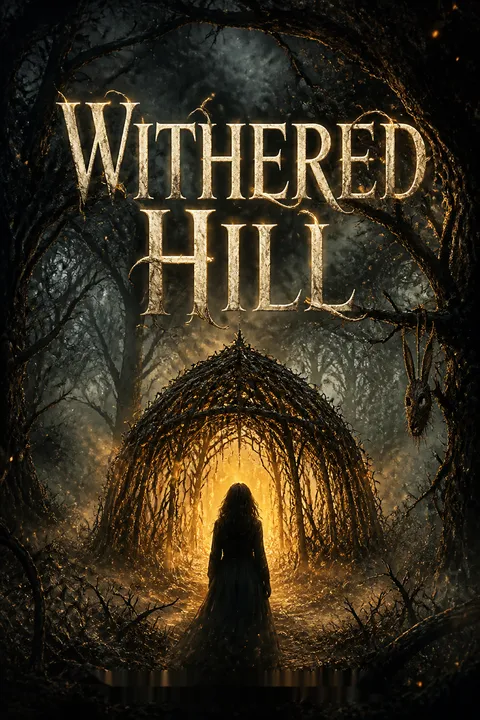

Plot Summary
Drifting in the City
Sophie Wickham, thirty-two, is adrift in London, watching her friends move on—marriage, babies, new lives—while she stagnates in temp jobs and fleeting relationships. Her sense of self is fragile, haunted by debts, loneliness, and a gnawing feeling of being left behind. After a drunken night, she's offered a mysterious job by a stranger named Colin, leading her to Gemini Data Processing. Sophie's days blur into data entry, hangovers, and a growing sense of disconnection. The city's anonymity amplifies her isolation, and her past traumas—family deaths, a lost sister, a toxic ex—linger beneath the surface, shaping her choices and her inability to move forward.
The Village of Masks
Sophie's world is upended when she finds herself naked and memoryless, stumbling into the rural village of Withered Hill. The villagers greet her with unsettling warmth, many wearing animal masks—pigs, hares, dogs—enacting ancient rituals. She's taken in by Carol, the postmistress, and introduced to the insular, timeless community. The village is surrounded by impenetrable woods, and Sophie quickly learns she cannot leave. The villagers speak in riddles, hinting at her special role as the "Child of Promise." Sophie's sense of reality fractures as she's both cared for and imprisoned, her identity dissolving into the folk horror of Withered Hill.
The Bower's Secret
After nearly a year in Withered Hill, Sophie is told she can leave—if she builds a "bower." The meaning is cryptic, and no one will explain. The bower, she learns, is not just a structure but a symbolic act of transformation and sacrifice. Sophie's journey to understand the bower's purpose becomes a quest for self-knowledge, forcing her to confront her past, her guilt, and the possibility of redemption. The villagers' encouragement is laced with menace, and Sophie senses that the bower is both a key to her freedom and a trap.
Cycles of Escape
Sophie repeatedly tries to escape Withered Hill—through the woods, by road, hidden among sheep—but is always turned back by supernatural forces or the village's own rules. Each attempt strips her further of her old self, leaving her raw and vulnerable. The woods are alive, sentient, and will not let her go. Over time, Sophie's resistance wanes, and she becomes enmeshed in the rhythms of village life, both comforted and unsettled by its rituals and the villagers' acceptance of her fate.
Festivals of Blood and Bread
Withered Hill's calendar is marked by pagan festivals—Lammas, Beltane, Faunalia—each blending celebration with sacrifice. At Lammas, Sophie is horrified to find blood and hare's flesh baked into the bread. At Beltane, she's forced to confront her abusive ex, Jamie, who is brought to the village and sacrificed in a ritual killing. The festivals are both communal and violent, binding the villagers together and reinforcing the cycle of life, death, and rebirth. Sophie is both participant and witness, her complicity deepening her entanglement with the village's ancient ways.
The Child of Promise
As the "Child of Promise," Sophie is both honored and objectified. The villagers see her as a vessel for their traditions, a necessary offering to maintain the village's prosperity. Her relationships deepen, especially with Catherine, the schoolteacher, whose affection is both genuine and bound by the village's rules. Sophie's sense of agency is eroded as she's swept up in the village's expectations, her own desires subsumed by the needs of Withered Hill and its enigmatic patron, Owd Hob.
The Haunting Past
Sophie's past intrudes through dreams and encounters—a dead sister, a childhood encounter with a ghostly figure, the trauma of her parents' deaths, and the fallout from a university scandal. These memories are not just personal but are woven into the fabric of Withered Hill, as if the village itself is a crucible for reckoning with guilt and shame. Sophie's sense of self fractures further, as she questions whether she deserves forgiveness or is being punished for her sins.
The Circle Closes
Sophie's life in London and Withered Hill begin to blur. She's stalked by Colin, who carves a protective pentagram in her flat, and is drawn into a web of occult bindings and surveillance. Her job, her relationships, and her very identity are manipulated by unseen forces. The boundaries between victim and perpetrator, inside and outside, become porous. Sophie's attempts to assert control are thwarted at every turn, and she's forced to confront the possibility that her fate was sealed long before she arrived in Withered Hill.
The Doppelgänger's Bargain
The true nature of the bower is revealed: it is a prison for Sophie's "outside" self, the version of her that lived a selfish, disconnected life. Owd Hob, the village's ancient spirit, grows a new Sophie from a lock of her hair, a doppelgänger who will take her place in the world. The exchange is both punishment and renewal—one Sophie is sacrificed, the other sent out to live a better life. The ritual is both horrifying and redemptive, a folk horror inversion of the hero's journey.
The Sacrifice of Jamie
Jamie, Sophie's abusive ex, is brought to Withered Hill and sacrificed during Beltane. The villagers' bloodlust is both literal and symbolic, a means of purging the community of evil and ensuring the harvest. Sophie is forced to confront her own capacity for violence and complicity, as well as the limits of forgiveness. The sacrifice is not just for the village but for Sophie herself, a reckoning with the past that cannot be undone.
The Witching Woods
The woods surrounding Withered Hill are both sanctuary and prison, alive with ancient magic and the presence of Owd Hob. Sophie's relationship with the land becomes intimate and erotic, a merging of self with nature. The woods demand offerings—blood, memory, desire—and in return grant wisdom and transformation. The feminine is both celebrated and exploited, as Sophie's body becomes a site of ritual and renewal.
The Outside Unravels
Sophie's journey to Cornwall with Mandy, her boss, exposes the wider network of occult bindings and surveillance that have shaped her life. The "data entry" job is a front for magical control, and Sophie is both target and tool. The twins at Macha House, Mandy, and even Tom—her lover—are all implicated in the cycle of sacrifice and renewal. The outside world is as haunted and manipulated as Withered Hill, and Sophie's sense of agency is further eroded.
The Binding and the Burn
Sophie's attempt to escape Macha House with Tom leads to violence and revelation. Tom is revealed as an agent of Owd Hob, and Mandy is killed. The house burns, and Sophie flees, only to be recaptured and returned to Withered Hill. The cycle of control and sacrifice is unbroken, and Sophie's hope for freedom is dashed. The fire is both literal and symbolic, a purging of the old self and the world that enabled her.
The Arrival of Owd Hob
Owd Hob, the spirit of the land, emerges to claim Sophie as his bride. The villagers sing the ancient song, and Sophie is taken into the earth, to be consumed and transformed. The ritual is both terrifying and awe-inspiring, a confrontation with the primal forces that underlie the village's prosperity and the world's decay. Owd Hob's rewilding is both vengeance and hope, a return to a lost balance between humanity and nature.
The Bride's Descent
Trapped in the bower, Sophie confronts her double, her guilt, and her fate. The villagers watch as she is claimed by Owd Hob, her screams echoing into the night. The sacrifice is both personal and cosmic, a necessary offering to maintain the village's pact with the land. Sophie's descent is both an ending and a beginning, as her energy is returned to the earth and a new cycle begins.
The Rewilding
Withered Hill's rituals are revealed as part of a larger plan—the rewilding of the world. Each sacrifice, each exchange, is a step towards restoring balance between humanity and nature. The new Sophie, grown from the old, is sent out into the world to live better, to spread the influence of Owd Hob and his kin. The village's insularity is both a curse and a blessing, a last bastion of ancient wisdom and a site of ongoing violence.
Becoming Better
The new Sophie navigates London with a renewed sense of purpose and connection. She forms new relationships, rekindles old ones, and lives more mindfully, aware of her place in the web of life. The presence of others like her—marked by Owd Hob—suggests a growing network of rewilded souls, quietly working to heal the world. The lesson is clear: true change comes not from escape, but from transformation and acceptance of responsibility.
The Cycle Continues
Withered Hill's cycle of sacrifice, transformation, and renewal is unbroken. Each new arrival is both victim and savior, both punished and redeemed. The village endures, its pact with Owd Hob maintained, even as the outside world teeters on the brink of collapse. The story ends with a sense of hope and dread, as the rewilded souls spread through the world, preparing for a reckoning that is both ecological and spiritual.
Analysis
Withered Hill is a masterful exploration of folk horror, psychological fragmentation, and the cyclical nature of guilt, punishment, and redemption. At its core, the novel interrogates what it means to be "better"—not just as an individual, but as a society. Through Sophie's journey from urban alienation to rural entrapment, the story exposes the ways in which trauma, shame, and disconnection perpetuate cycles of violence and self-destruction. The village of Withered Hill, with its ancient rituals and supernatural patron, serves as both a crucible and a mirror, forcing Sophie (and the reader) to confront the consequences of neglecting the land, each other, and ourselves. The creation of the doppelgänger is both a horror and a hope, suggesting that true change requires sacrifice, self-knowledge, and the willingness to let go of the past. The novel's ecological themes are particularly resonant in a world facing environmental collapse—Owd Hob's rewilding is both a warning and a promise, a reminder that nature will have its due, and that redemption is possible only through transformation and connection. Ultimately, Withered Hill is a haunting meditation on the costs of forgetting, the necessity of remembering, and the possibility of becoming better—if we are willing to pay the price.
Review Summary
Withered Hill by David Barnett is a folk horror novel following Sophie Wickham, who awakens naked and amnesiac in the eerie village of Withered Hill. The story alternates between "Inside" and "Outside" timelines, revealing Sophie's chaotic London life and her mysterious captivity in a village steeped in pagan rituals. Reviews praise the atmospheric setting, folkloric research, and comparisons to The Wicker Man and Midsommar. However, critics note issues with pacing, repetitive dialogue, misogynistic undertones, and problematic depictions of women written from a male perspective. Overall ratings average 4.06/5 stars.
People Also Read

Characters
Sophie Wickham
Sophie is the protagonist, a woman adrift in modern London, haunted by loss, guilt, and a sense of unworthiness. Her journey is one of fragmentation and transformation—she is both victim and perpetrator, both the "Child of Promise" and the sacrificial offering. Sophie's relationships—with friends, lovers, and the villagers—are marked by longing and self-sabotage. Her psychological arc is one of reckoning with her past (the death of her sister, her parents, her complicity in others' suffering) and striving for redemption. The creation of her doppelgänger and her ultimate sacrifice are both punishment and release, allowing her to become "better" through annihilation and rebirth.
Catherine Baldwin
Catherine is Sophie's closest friend and eventual lover in Withered Hill. She is both nurturing and enigmatic, embodying the village's duality of warmth and menace. As a teacher, she educates Sophie in the ways of the village and the outside world, but is also bound by the rules of Withered Hill. Catherine's affection is genuine, but she cannot save Sophie from her fate. Her own desires and limitations mirror Sophie's, and their relationship is a site of both comfort and loss. Catherine's role is to prepare Sophie for transformation, even as she mourns the inevitability of their separation.
Owd Hob
Owd Hob is the supernatural force at the heart of Withered Hill—a trickster, guardian, and devourer. He is both the land and of the land, demanding sacrifice in exchange for prosperity. Owd Hob's selection of Sophie is both arbitrary and just, reflecting an older, amoral order. He is the architect of the village's rituals, the creator of Sophie's doppelgänger, and the agent of the rewilding. Owd Hob embodies the tension between nature's beauty and its violence, offering both destruction and renewal.
Jamie
Jamie is Sophie's former boyfriend, whose controlling and violent behavior haunts her. He is brought to Withered Hill and sacrificed during Beltane, his death both a personal reckoning for Sophie and a communal catharsis for the village. Jamie's role is to embody the toxic masculinity and possessiveness that Withered Hill seeks to purge. His fate is both deserved and horrifying, forcing Sophie to confront her own complicity and the limits of forgiveness.
Colin Turpin
Colin is the awkward, socially inept colleague who draws Sophie into Gemini Data Processing. His obsession with Sophie leads him to carve a protective pentagram in her flat and stalk her online and in person. Colin's actions are both sinister and pitiable—he is a pawn in the larger conspiracy, manipulated by forces he barely understands. His death is both a relief and a source of guilt for Sophie, highlighting the blurred lines between victim and perpetrator.
Carol Mountjoy
Carol is the first villager to welcome Sophie to Withered Hill, offering comfort and guidance. She embodies the village's nurturing side, but is also complicit in its rituals and deceptions. Carol's warmth is genuine, but she is bound by the village's rules and the demands of Owd Hob. She represents the seductive power of tradition and the dangers of unquestioning acceptance.
Mandy Scott
Mandy is Sophie's supervisor at Gemini Data Processing and later her companion at Macha House. She is both a facilitator and a jailer, enforcing the rules of the occult conspiracy that binds Sophie. Mandy's motivations are ambiguous—she claims to want to help, but is ultimately complicit in Sophie's manipulation and sacrifice. Her death at the hands of Tom underscores the ruthlessness of the system and the futility of resistance.
Tom Gisburn
Tom is initially presented as a potential savior—a handsome, mysterious man who offers Sophie love and escape. He is later revealed to be an agent of Owd Hob, tasked with bringing chosen victims to Withered Hill. Tom's duplicity is both heartbreaking and inevitable, reflecting the story's themes of betrayal and the inescapability of fate. His role is to seduce, betray, and ultimately deliver Sophie to her doom.
The Twins (Macha House)
The ancient twins at Macha House are both victims and enforcers of the cycle. They attempt to shield Sophie from Owd Hob's influence through magical bindings and surveillance, but ultimately fail. Their longevity and wisdom are counterbalanced by their impotence in the face of the village's ancient power. They represent the limits of resistance and the persistence of the old order.
The Doppelgänger (New Sophie)
The new Sophie, grown from a lock of hair, is both a replacement and an improvement. She inherits Sophie's memories and life, but is tasked with living better, spreading the influence of Owd Hob and the rewilded order. The doppelgänger's existence is both a horror and a hope, embodying the possibility of redemption through transformation and the dangers of erasing the past.
Plot Devices
Duality and Doubling
The central device is the creation of a doppelgänger—Sophie is both herself and her replacement, victim and agent, inside and outside. This doubling is mirrored in the village's rituals, the festivals, and the cycles of sacrifice and renewal. The narrative structure alternates between Sophie's life in London and Withered Hill, blurring the boundaries between reality and nightmare. The use of social media printouts, memories, and dreams reinforces the theme of fragmented identity and the possibility of becoming "better" through annihilation and rebirth.
Folk Horror and Ritual
Withered Hill is steeped in folk horror—animal masks, blood sacrifices, pagan festivals, and the omnipresent woods. The rituals are both seductive and terrifying, binding the community together and enforcing the cycle of sacrifice. The festivals mark the passage of time and the inevitability of Sophie's fate, while the woods serve as both sanctuary and prison. The narrative uses foreshadowing—nursery rhymes, childhood encounters, and recurring dreams—to build a sense of inevitability and dread.
Psychological Unreliability
Sophie's perspective is deeply unreliable—her memories are fragmented, her sense of self is unstable, and her guilt distorts her perception of reality. The narrative uses dreams, hallucinations, and shifting timelines to create a sense of disorientation. The outside world is as haunted and manipulated as Withered Hill, suggesting that the true horror lies within the self and the systems that shape it.
The Rewilding and Ecological Revenge
Owd Hob's plan is the rewilding of the world—a slow, patient replacement of humanity with those who are "better," more connected to the land. The sacrifices are both punishment and renewal, a means of restoring balance between humanity and nature. The narrative structure uses repetition and cyclical motifs to reinforce the sense of eternal return and the futility of resistance.
The Uncanny and the Everyday
The story grounds its horror in the everyday—data entry, charity shops, social media—before revealing the supernatural forces at work. The uncanny is ever-present, lurking beneath the surface of ordinary life. The use of animal masks, folk songs, and nursery rhymes creates a sense of unease, while the intrusion of the supernatural into the mundane world underscores the story's themes of hidden power and the persistence of the past.
Download PDF
Download EPUB
.epub digital book format is ideal for reading ebooks on phones, tablets, and e-readers.








































