
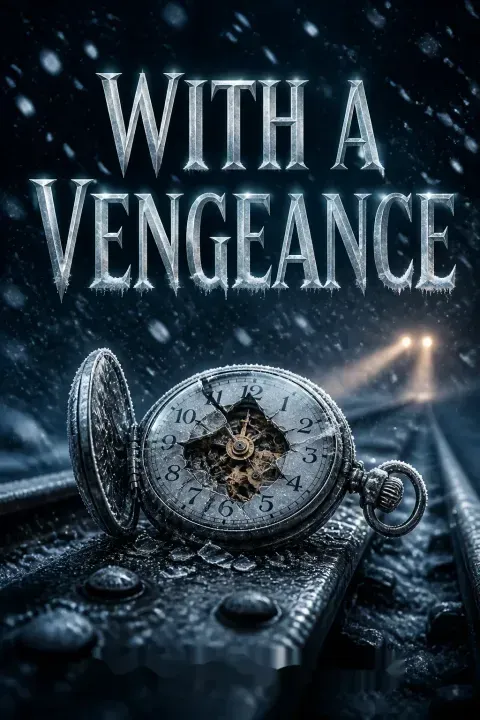


Plot Summary
Prologue
The Philadelphia Phoenix carries only eight people on a December night in 1954. Seven are alive. One lies dead on the floor of the first-class lounge, eyes open, a martini glass overturned beside them, foam still bubbling at their mouth. Anna Matheson1 stares at the corpse with undisguised fear.
She lured six people onto this overnight express from Philadelphia to Chicago, each one complicit in destroying her family twelve years ago. Her plan was to trap them on a train that cannot stop and deliver them to the FBI waiting in Chicago. She wanted to watch them face the justice her father never received. But someone has started killing them before they arrive. And Anna1 knows this death will not be the last.
The prologue establishes the novel's central irony before the narrative begins: Anna's carefully orchestrated plan for justice has already been hijacked by someone else's violence. The image of the body with foam at its mouth and the overturned martini glass introduces the closed-circle mystery while immediately complicating the moral calculus. Is this death a perversion of Anna's mission or its logical extension? The prologue positions readers to question whether Anna is a righteous avenger or an architect of chaos, a tension that will drive the entire narrative. Her undisguised fear signals that whatever is unfolding has escaped even her meticulous control, transforming her from puppet master into potential victim.
Six Invitations, One Trap
Anna1 stands in the first-class lounge in a red dress, her father's silver locomotive pin over her heart, a knife concealed against her thigh. She addresses the six people she lured aboard with handwritten threats tailored to each one's secrets.
Twelve years ago, a troop train exploded, killing thirty-seven soldiers including her brother Tommy. Her father Arthur Matheson was framed for sabotage and murdered in prison before trial; her mother drove off a cliff two months later. Anna1 now holds documents proving all six guests conspired with railroad rival Kenneth Wentworth6 to destroy her family.
The FBI in Chicago has copies and will be waiting with arrest warrants at seven in the morning. But the sixth passenger is not Kenneth Wentworth.6 His son Dante3 sits at the piano instead, a reminder of the boy who broke Anna1's heart twelve years earlier.
Anna's speech represents a theatrical inversion of the conspiracy that destroyed her family. Where they operated in shadows, she performs her accusation in the light of the very train her father built. The red dress functions as armor and declaration: she is both vulnerable woman and righteous fury. Dante's unexpected presence immediately destabilizes her carefully rehearsed plan, introducing the first of many variables she cannot control. The scene establishes the central dramatic tension: her desire for institutional justice—arrests, trials, public disgrace—versus the volatile emotions of six people who have just learned their freedom will end at sunrise.
No Brakes, No Escape
Lapsford10 yanks the emergency brake. Nothing happens. Judd Dodge5 explains the brake only alerts conductors; it does not stop the train. Seamus Callahan,2 Anna1's ally posing as the conductor, refuses to relay any stop order.
The group marches through the train to the locomotive door, discovering every other passenger and crew member has vanished, paid off by Anna1 before departure. The locomotive door remains locked. The engineer has been instructed to ignore anyone who asks him to stop, even Anna1 herself.
Herb Pulaski9 opens the baggage car doors, threatening to jump, but Anna1 warns him the speed will be fatal. Dante3 surprises everyone by telling the engineer through the locked door to keep going. There is no way off the Phoenix until Chicago.
The train becomes a literal prison on wheels, its momentum an irreversible force mirroring the approach of long-deferred consequences. Each failed escape attempt tightens the psychological vise: the brake that does nothing, the locked locomotive door, the deadly speed. Dante's decision to support Anna bewilders the others and hints at allegiances more complex than family loyalty. The discovery that Anna emptied the entire train reveals the astonishing scope of her planning and the totality of her commitment. These people are sealed inside a world she has engineered specifically for their reckoning, stripped of every external support system the conspirators have relied on for twelve years.
A Martini and a Corpse
Back in the lounge, Dante3 mixes martinis behind the bar. Sal7 takes the first glass, Herb9 the second, Lapsford10 the third after changing his mind. Judd5 accepts the last remaining glass but never sips from it. A train roars past in the opposite direction, windows flashing.
Then Lapsford10 clutches his chest, claiming a heart attack. Anna1 kneels beside him and realizes he is faking, another attempt to force a stop. Moments later, Judd Dodge5 lurches sideways, grabs a tablecloth, and crashes to the floor, a slick of bloody foam bubbling past his lips.
Seamus2 checks for a pulse and finds none. Anna1 swipes the inside of Judd5's glass and detects a sharp chemical smell. Someone has poisoned him. But when they search everyone, no one carries any toxin.
Judd's apparent death fractures the group's fragile equilibrium and transforms Anna's revenge plot into a murder mystery. The chaos of the moment—Lapsford's fake heart attack, the passing train, multiple people near the bar—creates a fog of war in which the poisoning could have occurred through several vectors. Judd's untouched martini glass becomes the night's first locked-room puzzle: how was he poisoned when everyone was watching? The chemical smell points to premeditation, suggesting someone boarded the train with murder in mind. Anna's insistence that she wants them alive collides with the emerging reality that someone else wants them dead.
The Stranger's Badge
A stranger stumbles into the lounge claiming to be Reginald Davis,4 an insurance salesman who boarded the wrong train. Anna1 is immediately suspicious but allows him to stay. Later, she finds Edith Gerhardt8 dead in the observation car, a drapery cord from Anna1's own room wrapped around her neck.
The cord is a prop: Edith8 was actually suffocated with a cushion, the smudge of her pink lipstick on the fabric the only forensic trace. When pressed, Reggie4 produces an FBI badge. He is Special Agent Reginald Davis,4 sent to ensure nobody escapes before Chicago.
He was hiding in the coach lavatory during the earlier chaos. Anna1 realizes someone is framing her: the cord from her room, the method that mirrors her earlier loss of control when she choked Edith8 in the lounge. The killer wants the others to believe Anna1 is murdering them one by one.
Edith's murder transforms the train from a vehicle of justice into a hunting ground. The use of Anna's own drapery cord to stage the body reveals a killer constructing a narrative in which Anna is the villain. This meta-framing device—a frame-up within a frame-up—echoes the original conspiracy against Arthur Matheson, suggesting the past is not merely being revisited but replicated. Reggie's emergence as an FBI agent introduces institutional authority into the chaos, but his belated reveal and convenient timing raise questions about his reliability. The killer's forensic awareness—the substitution of suffocation for strangulation to frame Anna for her earlier outburst—demonstrates both calculation and intimate knowledge of everything that has transpired in the lounge.
Knives, Lies, and Lipstick
Anna1 and Reggie4 interrogate the passengers. Herb9 admits he let the faulty engine be built because crushing gambling debts left him desperate. Sal Lawrence7 later confesses privately: Kenneth Wentworth6 blackmailed her with photographs of a lesbian encounter, threatening to destroy her unless she forged documents framing Arthur Matheson.
Dante3 reveals to Anna1 that he was the one who gathered the evidence and sent it to Aunt Retta,11 spending years breaking into his father's safe. He also discloses Kenneth Wentworth6's true motive: before marrying Arthur, Anna1's mother Margaret was engaged to Kenneth.6
When she left him for Arthur, Kenneth6's romantic obsession curdled into lifelong hatred. The conspiracy was revenge for a broken heart. That night, Herb9 ambushes Anna1 in the dining car with a steak knife, desperate to escape. She fights him off, revealing her own concealed blade strapped to her thigh.
The confessions dismantle any illusion that the conspirators were unified by ideology or greed. Herb's gambling addiction, Sal's sexual blackmail, and Kenneth Wentworth's deranged romantic obsession reveal the conspiracy as a patchwork of personal weaknesses exploited by a single obsessive man. Dante's admission that he was the true architect of the evidence gathering reframes the entire revenge plot as a collaboration across enemy lines. His revelation about his father's motive—that the destruction of the Matheson family was not business but heartbreak—transforms the crime from calculated evil into something almost pathologically human. This does not excuse the conspirators but makes their complicity more unsettling: they sold their souls for relief from ordinary human vulnerabilities.
Blood Under the Door
Seamus2 escorts Herb9 to his room and stands guard outside. Hours later, Anna1 sees blood seeping beneath the door. It is locked from the inside, the dead bolt engaged. Seamus2 and Reggie4 smash it open. Herb9 sits in the chair by the window, throat slashed, the murder weapon missing.
The window glass is clean of blood, indicating it was open during the killing. The killer escaped onto the roof, closing the window from outside using a narrow metal ridge near the roof's edge and the orange racing stripe panel for footholds.
On the floor, Seamus2 finds Anna's silver locomotive pin, which had been on her dress all evening. Someone is framing her. Back in her room, Anna1 discovers a window standing open and a drapery cord missing, identical to the one around Edith8's neck. Each murder scene now contains evidence pointing directly at her.
The locked-room murder of Herb Pulaski represents an escalation in both violence and sophistication. The killer has evolved from poison to suffocation to throat-slitting, each method more intimate and brutal than the last. The escape through the window and across the roof demonstrates intimate knowledge of the train's architecture, narrowing the suspect pool to those familiar with the Phoenix's design. The planted pin transforms the murders from simple elimination into a psychological operation: the killer wants Anna to experience exactly what her father experienced—being framed for crimes she did not commit. The open window and missing cord in her room complete the tableau, creating a chain of circumstantial evidence that would be compelling to any investigator.
The Pocket Watch's Secret
Anna1 replays the night and realizes Judd5 never drank from his martini glass. She rushes to his room. The bed is empty. Judd5 faked his poisoning entirely: the bloody foam came from kitchen chemicals — baking soda, vinegar, red food coloring — wrapped in plastic capsules that he bit into at the right moment.
The residue in his glass was rat poison from the galley, poured from a hidden compartment in his pocket watch, purely for show. His body is later found crammed into Edith Gerhardt8's bathroom, strangled to death.
While Judd5 was pretending to be a corpse, someone discovered his deception and killed him for real. Anna1 understands there are at least two killers on this train, and they are not working together. The danger has doubled. Every previous assumption about the night's events must be reevaluated.
Judd's fake death and subsequent real murder introduce a hall-of-mirrors quality to the narrative: a man pretending to be dead is killed by someone who knew he was alive. His magician's skills—the plastic capsules, the watch compartment, the sleight of hand—speak to a lifetime spent mastering deception, making him both the perfect conspirator and the perfect victim. The revelation of multiple killers fractures the investigation. No longer can Anna assume a single adversary with a single motive. The train now contains competing agendas of violence, and the question becomes not just who is killing but who is killing whom and why. The discovery also retroactively casts doubt on every previous assumption about the night's sequence of events.
Seamus's Confession
Anna1 catches Seamus2 in Lapsford10's room pressing a pillow over the older man's face. She pulls him off before Lapsford10 suffocates. In the lounge, Seamus2 confesses: he killed Judd Dodge,5 strangling him after discovering he had faked his death.
He wanted to experience vengeance with his own hands before time ran out. Then he reveals a secret he has hidden from Anna1 for their entire year together: he suffers from a progressive neurological condition that will kill him within a few years.
The tremors Anna1 has noticed, the pills he carries, are all attempts to manage a body that is slowly betraying him. Seamus2 joined Anna1's plan not because he believed in institutional justice but because he had nothing left to lose. He loves her, he admits, but knew she could never reciprocate.
Seamus's confession reframes the entire journey as a tragedy within a tragedy. Like a dying soldier seeking one last meaningful act, he chose to kill Judd not from calculation but from desperation to feel some form of agency before his body failed him entirely. His unrequited love for Anna adds a layer of pathos: he has spent a year beside the woman he loves, planning a vengeance that was always more hers than his. The revelation of his illness explains his occasional detachment and his fatalistic acceptance of outcomes. His final confession that he killed only Judd, not Edith or Herb, narrows the mystery while deepening it. The second killer is still unknown, still active, and Seamus's confession has bought them time.
Into the River
Seamus2 gives Anna1 back her father's pin, kisses her cheek, and walks away. Anna1 follows him through the train cars, understanding too late what he intends. In the baggage car, he pulls open the double doors, letting in a blast of snow and wind.
The train is crossing a high trestle bridge over an ice-choked river. Anna1 begs him not to jump. Seamus2 tells her she can end this, presses his revolver into her hand, and steps off the train. His body flails through the air before hitting the frozen water below.
Anna1 screams until her throat is raw. In the silence that follows, she pieces together a crucial detail: Seamus2 only confessed to killing Judd.5 The real murderer of Edith8 and Herb9 is still on the train, and Anna1 is now entirely alone with them.
Seamus's suicide is both an act of despair and a strange form of protection. By removing himself from the equation, he eliminates the possibility that his illness will drive him to further violence and simultaneously sharpens Anna's focus on the remaining threat. His final words—you can end this—echo with multiple meanings: end the killing, end the cycle, end the person responsible. The revolver pressed into her hand is a transfer of agency. For the first time all night, Anna is truly alone, her only ally gone, surrounded by a killer whose identity she has not yet confirmed. The image of Seamus falling into the frozen river echoes the watery death of Anna's mother, linking two suicides separated by twelve years but driven by the same original crime.
The Real Killer Stands
Anna1 already suspected Reggie.4 She had set a trap with Sal7's cooperation: Sal7 faked her own death by shooting out her window and using lipstick and nail polish to simulate a bullet wound on her forehead. The ruse was meant for Seamus2 but ultimately exposed Reggie.4
When confronted, Reggie4 admits his father was the engineer killed in the 1942 explosion. He boarded the Phoenix intending to execute every conspirator. He forced Judd5 to kill Edith,8 murdered Herb9 himself, and planted the pin to frame Anna.1
He stabbed himself in the side to appear innocent. Sal7 emerges from hiding and smashes a champagne bottle against Reggie4's skull, knocking him unconscious. But when Anna1 returns with rope to bind him, Reggie4 has escaped through the window onto the train's roof.
Reggie's unmasking completes the novel's pattern of mirrors and doubles. He is Anna's dark reflection: both lost fathers to the same explosion, both spent years consumed by the desire for reckoning. Where Anna chose institutional justice, Reggie chose personal annihilation. His recruitment of Judd reveals how easily the desire for vengeance can corrupt those sworn to uphold the law. Sal's participation in the trap—after everything she did—introduces an uncomfortable form of redemption: the conspirator who helps catch the killer. Her fake death represents the novel's most theatrical deception, a performance within a performance that finally forces the true murderer into the open and demonstrates that even the guilty can choose a different path.
Rooftop in a Blizzard
Anna1 climbs through the window and onto the roof of the Phoenix. The train barrels through a blizzard at sixty-five miles per hour. Barefoot on the freezing metal, battered by wind and snow, she spots Reggie4 two cars ahead, clutching his wounded stomach.
He limps toward the front of the train. Anna1 draws his own gun, which she has loaded with bullets from his suitcase. She fires a warning shot and demands he stop. Reggie4 keeps moving, knowing she will not shoot him dead. They reach the observation car, the last on the train, and Anna1 makes a desperate choice.
She aims at the skylight beneath their feet and pulls the trigger. The glass shatters and both of them plummet through, crashing onto the observation car floor in a rain of glass shards. Dazed and bleeding, they scramble for the weapon.
The rooftop chase externalizes the psychological duel that has been building all night. Anna and Reggie, two people forged by the same tragedy, now literally balance on the edge of a speeding train in a blizzard. Her choice to shoot out the skylight rather than shoot Reggie demonstrates tactical thinking under extreme duress; she understands that killing him would cost her the moral high ground she has fought to maintain. The fall through glass into the observation car—the same car where her father once told her the train was 'a dream on wheels'—represents a violent return to reality after a night of illusions. They have shattered the last barrier between the nightmare and its ending.
The Man at the Wheel
The train suddenly decelerates and stops. Anna1 and Reggie4 fight through the cars, Anna1 hurling coffee cups until one shatters his nose. He takes the gun and corners her against the locomotive door. But the door opens from the other side.
Standing there is not Burt Chapman but Kenneth Wentworth,6 dressed in gray overalls over a white shirt and tie. He fired Chapman back in Philadelphia and has been driving the train himself all night, a hobby of his.
Anna1 stares at the man who destroyed her family: the puppeteer who orchestrated the frame-up, ordered her father's prison murder, and turned romantic obsession into mass death. He has been listening through the door, aware of every confession and every murder, waiting to see how the night would conclude.
Kenneth Wentworth's emergence from the locomotive recontextualizes the entire novel. The man who set the tragedy in motion has been literally driving the train toward its destination, a godlike figure controlling the vehicle of reckoning. His hobby of operating the Phoenix—the train his rival built and he later stole—speaks to a pathological need to control the symbols of his victory. His willingness to let his co-conspirators die rather than intervene reveals the depths of his detachment. The revelation that he has been present the entire night, listening through the locomotive door, adds an element of omniscient voyeurism to the proceedings. He wanted to witness the destruction he caused twelve years ago reach its final, bloody conclusion.
Your Brother Was My Son
Kenneth Wentworth6 makes a confession that fractures Anna1's understanding of her family. Margaret Matheson was pregnant with his child when she left him for Arthur. Tommy was not Arthur's son at all; he was Kenneth6's biological child. Arthur knew this and raised Tommy as his own anyway.
Kenneth6 suspected the truth but was never allowed to acknowledge his son, meeting him only once at the Christmas party where Anna1 first saw Dante.3 When Tommy died on the sabotaged train, Kenneth6 was denied even the right to mourn publicly.
The conspiracy was never about business rivalry. It was a father's monstrous grief, twisted into vengeance against the man who got to love the son Kenneth6 could never claim. He destroyed the Matheson family because they possessed everything he believed should have been his.
This revelation transforms the novel's moral architecture. Kenneth Wentworth is not a cartoon villain motivated by greed but a man destroyed by a loss he could never publicly acknowledge, who then destroyed others in turn. His crime becomes almost Greek in its tragic dimensions: a father who unknowingly killed his own son, then systematically annihilated the family that had raised that son without him. The symmetry is devastating. Kenneth's confession also forces Anna to confront that her brother was not biologically her brother, yet she loved him no differently. The revelation tests her understanding of family, betrayal, and whether blood relation matters at all compared to lived love. His tragedy does not excuse his crimes, but it makes his evil comprehensible in a way more disturbing than simple villainy.
The Mercy of a Bullet
Reggie,4 bleeding and desperate, presses the gun into Anna1's hand and urges her to kill Kenneth Wentworth,6 the man responsible for all of it. Anna1 levels the revolver at Kenneth6's chest. He begs her not to shoot. She demands he admit aloud that he destroyed her family, and he does, his voice cracking.
For a long moment, Anna1's finger trembles on the trigger. Every loss she has suffered, every sleepless night, every violent fantasy pushes her toward pulling it. Then she exhales and lowers the gun.
Anna1 turns and shoots Reggie4 in the leg, dropping him to the baggage car floor. Kenneth Wentworth6 will face the FBI, the courts, the public disgrace she always intended. Anna1 has chosen justice over vengeance. The train is swarmed by agents who have been tracking the Phoenix. The long night is over.
Anna's decision not to kill Kenneth Wentworth is the novel's moral climax. After a night of watching others succumb to the seduction of vengeance—Judd, Seamus, Reggie—she breaks the chain. Her choice to shoot Reggie in the leg rather than the heart is a precise act of restraint: she stops him without destroying him, preserving the possibility of his facing legal consequences. Kenneth's survival is not forgiveness; Anna explicitly wants him to endure trial, imprisonment, and the slow death of public hatred that her father suffered. The distinction she makes is between vengeance (personal, emotional, final) and justice (institutional, measured, enduring). Her choice redefines strength not as the ability to destroy one's enemies but as the will to see them punished by the very systems they corrupted.
Epilogue
The FBI swarms the train at Chicago's Union Station. Jack Lapsford10 is dragged away in handcuffs, his bluster dissolving into tears as a photographer documents his disgrace. Sal Lawrence7 walks to her arrest with quiet dignity, pausing to exchange a wordless look with Anna1 that holds neither apology nor forgiveness but something closer to recognition.
Kenneth Wentworth,6 still protesting his innocence, is told by an agent that he will die in prison. Reggie Davis4 is wheeled away in a wheelchair, having confessed to all the murders, including those committed by Seamus,2 whose memory he chose to protect.
Dante3 stands beside Anna1 as his father6 is driven off. The head of the Philadelphia FBI bureau offers Anna1 a job as an agent. She accepts, deciding to fly home rather than ride the rails. Somewhere in her mind, she still hopes Seamus2 survived the fall.
The epilogue delivers institutional justice as a counterweight to the night's vigilante violence. Each conspirator faces their reckoning in a different mode: Lapsford's bluster collapses into tears, Sal's silence communicates more than confession ever could, and Kenneth's protests are rendered impotent by the mountain of evidence. Reggie's decision to take the blame for Seamus's crimes is an unexpected act of grace, granting Seamus a posthumous redemption Anna can carry forward. The FBI job offer represents the integration of Anna's trauma into purpose: her obsessive planning, her physical courage, and her moral clarity now have an institutional framework. Her choice to fly rather than ride the rails signals a symbolic departure from the past. The lingering hope that Seamus survived preserves a sliver of ambiguity, a ghost of possibility that resists complete narrative closure.
Analysis
With a Vengeance operates as a closed-circle mystery that doubles as a meditation on the psychology of retribution. Anna Matheson1's meticulous plan to deliver her family's destroyers to the FBI represents a faith in institutional justice that the narrative continuously tests and ultimately validates through her climactic choice. Each conspirator's confession reveals not grand villainy but human weakness exploited by a single obsessive man: gambling debts, sexual blackmail, professional resentment, coerced complicity. This banality-of-evil framing complicates the reader's desire for their punishment and mirrors Anna1's own conflicted feelings toward people she once loved, particularly Sal7 and Edith.8 The train, a sealed environment hurtling through a blizzard, functions as both prison and pressure cooker, forcing confrontations the outside world avoided for twelve years. The revelation of multiple killers — Judd5 and Reggie4 as a murderous partnership, Seamus2 as an independent avenger — suggests that vengeance is not singular but viral; once violence enters a closed system, it replicates unpredictably. Kenneth Wentworth6's emergence as both engineer and puppet master literalizes his control while his disclosure about Tommy's parentage reframes the conspiracy as a tragedy of romantic obsession: a man who destroyed his rival's family because that rival possessed the woman he loved and the son he could never claim. Anna1's climactic choice not to kill Kenneth6 — despite Reggie4's urging and her own primal rage — represents the novel's thesis in action. She breaks the cycle not through forgiveness but through refusal, understanding that pulling the trigger would make her indistinguishable from those she hunted. By shooting Reggie4 in the leg, she disables without destroying, preserving the possibility of legal reckoning. The final image of Anna1 flying home rather than taking the train symbolizes liberation from the past's gravitational pull. The novel ultimately argues that the difference between justice and vengeance lies not in the outcome but in the hand that delivers it, and that true strength is the will to see one's enemies punished by the systems they corrupted rather than by one's own wounded heart.
Review Summary
With a Vengeance receives mixed reviews, with an average rating of 3.54 out of 5. Some praise its atmospheric train setting and homage to Agatha Christie, enjoying the locked-room mystery and multiple twists. Others find it slow-paced, predictable, and lacking depth in characters. Many note it differs from Sager's usual style, leaning more towards traditional mystery than thriller. While some appreciate the 1950s setting and revenge plot, others feel the execution falls short. Overall, readers are divided on whether this departure from Sager's typical work is successful.
People Also Read





Characters
Anna Matheson
Vengeance-seeking railroad heiressThe only surviving member of the Matheson family, Anna was sixteen when her brother Tommy died in a 1942 troop train explosion. Her father Arthur was framed for sabotage and murdered in prison before trial; her mother Margaret drove off a cliff two months later. Raised by her emotionally distant Aunt Retta11, she learned to suppress grief behind a controlled, steely exterior through harsh lessons in self-discipline. She has spent a year and her entire inheritance planning this overnight train journey to expose the six people who conspired to destroy her family. Beneath her composed surface, she battles violent impulses and a desperate need to witness justice done. She carries her father's silver locomotive lapel pin and conceals a knife beneath her dress as both protection and temptation. Her defining struggle is between the desire for personal vengeance and a commitment to institutional justice.
Seamus Callahan
Anna's grief-stricken allyA physically imposing man in his mid-thirties whose older brother Sean died in the same 1942 explosion that killed Anna1's brother. He contacted Anna1 after her aunt's funeral, having corresponded with Aunt Retta11 about the conspiracy. For the past year, he has been Anna1's sole ally, posing as the train's conductor for the journey. Stoic and watchful, he suffers from a progressive neurological condition that causes uncontrollable tremors and will eventually prove terminal, a secret he carries closely. His bond with Anna1 was forged through shared grief, though his feelings for her have grown into unrequited love that complicates their partnership. He carries a revolver for protection and a tin of muscle relaxants to manage his tremors. His fatalism about his own future makes him the most volatile participant in Anna1's plan.
Dante Wentworth
The rival's charming sonThe handsome thirty-year-old son of railroad magnate Kenneth Wentworth6. As a teenager, he pursued a forbidden romance with Anna1 despite their fathers' bitter rivalry, then abruptly abandoned her at his father's command after taking her virginity. Now working reluctantly for his father's declining company, he has spent years secretly gathering evidence of his father's crimes from a safe in Kenneth6's study. He intercepted the invitation meant for Kenneth6 and came to the train hoping to make amends with Anna1. His easy confidence masks genuine guilt over his past cowardice and a deep need to separate his identity from his father6's corrupt legacy. He is the only person on the train who had no role in the original conspiracy, though his family name makes him suspect by association.
Reggie Davis
FBI agent on a secret missionA young FBI agent from the Philadelphia field office, dispatched at the last minute to board the Phoenix and ensure none of the six conspirators escape before reaching Chicago. He initially presents himself as an insurance salesman who accidentally boarded the wrong train, a cover story that allows him to observe the group without revealing his authority. His father was murdered when Reggie was fifteen, a loss that shaped his decision to join the Bureau and pursue justice. Methodical, observant, and seemingly helpful, he positions himself as a neutral mediator while carefully concealing his own private agenda. He carries a service revolver and a list of the conspirators' names, and his true motives remain opaque until the night's final hours.
Judd Dodge
Resentful train designerThe brilliant but embittered designer of the Philadelphia Phoenix and the faulty locomotive that exploded. He felt Arthur Matheson took all the credit for his engineering genius, a resentment Kenneth Wentworth6 exploited. Tall, bespectacled, and intellectual, he is also an accomplished amateur magician whose sleight-of-hand skills become unexpectedly significant during the night. He was the first to voice suspicion that Anna1 might be planning to kill them all, a projection that hints at his own capacity for deception. He carries a pocket watch everywhere, a tool of both his profession and his illusions.
Kenneth Wentworth
Obsessive railroad magnateA wealthy railroad magnate who was Arthur Matheson's chief business rival. He orchestrated the elaborate conspiracy to frame Arthur for sabotage, driven by motives far more personal than greed. Polished, calculating, and extraordinarily patient, he purchased the failing Union Atlantic Railroad after destroying its owner and now possesses the Philadelphia Phoenix. His relationship with his son Dante3 is cold and dismissive, a reflection of his broader incapacity for genuine connection. Beneath his Cary Grant smile lies a man whose entire adult life has been shaped by a romantic wound he has never acknowledged publicly. He enjoys driving trains as a hobby.
Sally Lawrence
Blackmailed former secretaryArthur Matheson's former secretary, now in her early forties and transformed from a mousy young woman into an elegant blond who drinks to numb old wounds. Anna1 once idolized her as the older sister she never had. Kenneth Wentworth6 coerced her into the conspiracy by threatening to expose a secret that would have destroyed her life. She forged the documents that incriminated her boss and has lived with crushing guilt ever since, her wealth providing no comfort. She carries a flask of whiskey in her handbag and maintains a brittle, sardonic composure that cracks only when forced to confront Anna1 directly about what she did.
Edith Gerhardt
Housekeeper with a hidden pastA German immigrant in her late sixties who served as the Matheson family's housekeeper. Despite her stern demeanor, she genuinely loved Anna1 and Tommy, acting as a surrogate grandmother figure who called Anna1 'Schatzi,' her little treasure. Kenneth Wentworth6 exploited a secret from her life in Germany to force her cooperation in the conspiracy, exploiting her loyalty to her homeland. Stoic, pragmatic, and fatalistic, she believes in the German folklore of the Grauer Geist (Gray Ghost), a spirit whose appearance foretells doom. She wears the same gray wool dress to every occasion, including this fateful train journey.
Herb Pulaski
Desperate factory foremanThe factory foreman who oversaw construction of the doomed locomotive. Squat, heavy-set, and perpetually sweating, he wears an expensive but ill-fitting green Brioni suit. His crushing gambling debts to dangerous loan sharks left him too desperate to question the engine's fatal design flaw, despite recognizing it immediately. He chain-smokes Lucky Strikes and is the most visibly panicked of all the conspirators, his nerves openly betraying his guilt through constant brow-mopping and trembling hands. His desperation makes him unpredictable and dangerous when cornered.
Lt. Col. Jack Lapsford
Corrupt retired military officerA retired military officer in his seventies who used his position to secure the government contract for the troop transport train. Kenneth Wentworth6 blackmailed him by threatening to expose a war profiteering scheme with an aeronautical company. Blustering, entitled, and accustomed to commanding others, he makes repeated attempts to stop the train, including faking a heart attack to force an emergency stop. His physical bulk makes navigating the train's narrow corridors a challenge, a physical manifestation of his inability to escape the consequences closing in around him. He remains convinced his status should exempt him from accountability.
Aunt Retta
Anna's harsh surrogate motherAnna1's late paternal aunt, a wealthy widow who took Anna1 in after her parents died. Emotionally cold and severe, she taught Anna1 to suppress her feelings through random slaps and harsh lessons, a brutal pedagogy of survival that nevertheless prepared Anna1 for the trials ahead. She spent years gathering the evidence that ultimately exposed the conspiracy, writing to victims' families including Seamus Callahan2. Her dying words commanded Anna1 to make the guilty pay.
Plot Devices
The Philadelphia Phoenix
Sealed, inescapable crime sceneA luxury streamliner train that serves as the novel's primary setting. Once the pride of Arthur Matheson's Union Atlantic Railroad, it is now owned by Kenneth Wentworth6. Designed by Judd Dodge5, it features first-class rooms, a lounge, dining car, galley, observation car with a glass skylight, and a distinctive orange racing stripe along its side. It runs a nonstop diesel-electric express route from Philadelphia to Chicago, making it the perfect sealed environment for Anna1's trap. The train's design—including roof ridges, window mechanisms, and the passageway around the engine—becomes crucial to the murders, as the killer uses exterior handholds and the roof to move between rooms undetected.
The Evidence Documents
Proof of the conspiracySix boxes of incriminating documents gathered by Aunt Retta11 over many years and supplemented by Dante Wentworth3, who spent years secretly breaking into his father's safe. They include original blueprints of the faulty locomotive, forged memos with Arthur Matheson's faked signature, correspondence between conspirators, and Swiss bank account records showing payments from Kenneth Wentworth6 to each of the five others. Anna1 sent copies to the FBI's Chicago field office before boarding, ensuring authorities would be waiting at Union Station. Only a single blueprint is brought aboard, used to provoke confessions. The evidence represents the institutional justice Anna1 seeks, counterbalanced against the personal violence that erupts on the train.
Anna's Silver Locomotive Pin
Talisman and planted evidenceA small lapel pin belonging to Anna1's father, shaped like a tiny train engine. Anna1 wears it over her heart throughout the journey as a talisman connecting her to the father she lost. During the chaos of the night, it is stealthily removed from her dress and later discovered on the floor of Herb Pulaski9's locked room, beside his slashed body. The pin's presence at the murder scene is a deliberate attempt to frame Anna1 for the killings, echoing the original frame-up of her father twelve years earlier. Seamus2 eventually returns it to her before his death, restoring both the physical object and its symbolic connection to her family.
Seamus's Muscle Relaxant Pills
Symptom management and lifesaving interventionA tin of chalky white pills prescribed to manage the tremors caused by Seamus2's progressive neurological condition. He began the journey with six pills and uses them sparingly to control his symptoms. When Jack Lapsford10 suffers a genuine cardiac episode late in the journey, Seamus2 uses one pill to slow his heartbeat enough to keep him alive until reaching Chicago. The pills also become a point of suspicion when poison is first discovered on the train, as Seamus2 was never fully searched after his revolver was found. The medication represents the hidden vulnerability beneath Seamus2's imposing exterior and his private struggle with mortality.
The Rat Poison
Instrument of faked and real murdersA white powder kept in a box beneath the galley sink, standard pest control for any train kitchen. It carries a sharp, unmistakable chemical odor. Judd Dodge5 uses a small amount to fake his own poisoning by spiking his own martini in full view of the others, creating the illusion of bloody foam at his mouth using additional kitchen chemicals (baking soda, vinegar, red food coloring) concealed in plastic wrap capsules. The poison's presence in the galley makes it accessible to anyone who passed through the kitchen during the night, complicating the investigation into Judd5's apparent death and later real murder.
FAQ
Synopsis & Basic Details
What is With a Vengeance about?
- A calculated journey of retribution: In 1954, Anna Matheson orchestrates a private, overnight train journey from Philadelphia to Chicago aboard the luxurious Philadelphia Phoenix, inviting six individuals connected to the tragic train explosion that destroyed her family twelve years prior. Her aim is to expose their conspiracy to frame her father for sabotage and murder, bringing them to justice.
- A deadly game unfolds: What begins as a meticulously planned quest for justice quickly devolves into a desperate fight for survival when one of the invited guests is murdered, revealing a killer among them. Anna, initially the orchestrator, finds herself battling shifting alliances, hidden agendas, and a relentless killer who begins to pick off the conspirators one by one, all while framing her for the crimes.
- Unraveling layers of betrayal: As the train hurtles through a blizzard, Anna must uncover the true identities and motives of the killers, confronting shocking family secrets and the devastating legacy of vengeance. The journey becomes a psychological battleground, forcing Anna to question her own definition of justice and the lengths she is willing to go to achieve it.
Why should I read With a Vengeance?
- Masterful blend of classic and modern thriller: Readers seeking a fresh take on the locked-room mystery on a train will find Sager's intricate plotting and psychological depth compelling. The novel subverts genre expectations, offering more than just a whodunit by delving into the corrosive nature of revenge versus justice and generational trauma and secrets.
- Complex, morally ambiguous characters: The story challenges readers to empathize with characters driven by a spectrum of motivations, from greed and fear to misguided loyalty and profound grief. Anna Matheson's motivations are particularly rich, evolving from pure vengeance to a nuanced understanding of justice.
- Atmospheric and suspenseful setting: The isolated, snow-bound train becomes a character in itself, amplifying the claustrophobia and paranoia. The relentless forward motion of the Philadelphia Phoenix mirrors the characters' inescapable pasts and the accelerating pace of the murders, making for a truly immersive reading experience.
What is the background of With a Vengeance?
- Post-WWII American context: Set in 1954, the story reflects a nation grappling with the aftermath of war, where patriotism could be weaponized and public opinion easily swayed by accusations of disloyalty, as seen in Arthur Matheson's framing. The decline of luxurious train travel in favor of air travel also provides a poignant backdrop, symbolizing a fading era.
- Shifting societal norms and gender roles: The narrative subtly explores the constraints and expectations placed on women in the mid-20th century, contrasting Anna's unconventional, driven pursuit of justice with traditional female roles. Sal's story, driven by shame and blackmail related to her sexuality, highlights societal pressures of the era.
- Technological and industrial shifts: The Union Atlantic Railroad and the Philadelphia Phoenix itself are central, representing a powerful industry in transition. Judd Dodge's engineering prowess and Kenneth Wentworth's ruthless business tactics underscore the cutthroat nature of industrial competition, where innovation could be twisted for nefarious ends.
What are the most memorable quotes in With a Vengeance?
- "Revenge is fleeting. Vengeance lasts a lifetime.": This quote, uttered by Anna (Chapter 9), encapsulates the core thematic struggle of the novel, distinguishing between immediate, satisfying retribution and a prolonged, all-consuming pursuit of justice that reshapes one's entire existence. It highlights Anna Matheson's motivations and her initial, deeply personal definition of vengeance.
- "You'll never be lost as long as I'm around.": Sean Callahan's words to a young Seamus (Chapter 40) are a poignant callback to a lost sense of security and brotherhood, underscoring Seamus Callahan's character analysis and his profound grief. This quote reveals the deep emotional void that drives his desperate actions and ultimate self-sacrifice.
- "Trains are the past. The future is in the sky.": Dante Wentworth's observation (Chapter 28) serves as a powerful symbolism for the changing times and the characters' inability to escape their past. It foreshadows Anna's eventual career choice, suggesting a move beyond the generational trauma and secrets tied to the railroad and into a new, forward-looking path.
What writing style, narrative choices, and literary techniques does Riley Sager use?
- First-person limited perspective with strategic shifts: The narrative primarily follows Anna's perspective, immersing the reader in her emotional turmoil and suspicions, but occasionally shifts to reveal other characters' internal thoughts or past events. This narrative choice enhances the unreliable narration and sleight of hand and keeps the reader constantly questioning the truth, a hallmark of Riley Sager's writing style.
- Propulsive pacing and escalating tension: Sager employs a real-time countdown structure (e.g., "7 p.m.: Thirteen Hours to Chicago"), creating a relentless sense of urgency and claustrophobia. Each chapter title marks a new hour, mirroring the train's unstoppable journey and the accelerating pace of the murders, building suspense effectively.
- Symbolic imagery and recurring motifs: The Philadelphia Phoenix itself is a potent symbolism of rebirth from ashes, ironically used by Anna to bring about destruction. Recurring motifs like the snowstorm (mirroring internal chaos), mirrors/reflections (revealing hidden truths and self-perception), and hands (actions, control, betrayal) add layers of meaning to the themes in With a Vengeance.
Hidden Details & Subtle Connections
What are some minor details that add significant meaning?
- Anna's "train legs": Her father's term for the unsteady feeling of being on a moving train (Chapter 1) subtly foreshadows Anna's emotional and psychological instability throughout the journey. It highlights her deep, almost innate connection to the Philadelphia Phoenix and how the train itself is intertwined with her identity and trauma.
- The specific interior design of the Phoenix: Anna's mother designed the interiors with "peacock blue, emerald green, and rich ivory surrounded by walnut and gold leaf and bronze" (Chapter 1). This description of faded opulence symbolizes the Matheson family's lost grandeur and the tarnished legacy of their once-proud railroad, adding depth to the themes in With a Vengeance.
- Judd Dodge's "magic tricks": His past as an amateur magician who could make candy canes appear (Chapter 8) subtly foreshadows his later ability to fake his own death and manipulate perceptions. It's a clever foreshadowing detail that highlights his deceptive nature and skill with sleight of hand, crucial to the Judd Dodge death meaning.
What are some subtle foreshadowing and callbacks?
- Aunt Retta's lessons on "not flinching": Her brutal method of teaching Anna to absorb pain and control her emotions (Chapter 7) foreshadows Anna's remarkable composure amidst chaos and violence. It explains Anna's ability to maintain a facade of strength, even when internally terrified, and is a key aspect of Anna Matheson's character analysis.
- The "dream on wheels" motif: Arthur Matheson's poetic description of the Phoenix as a "dream on wheels" (Chapter 19) is a poignant callback that contrasts sharply with the nightmare unfolding on the train. This symbolism underscores the profound loss of innocence and happiness for Anna, whose childhood dreams were shattered by the very entity her father cherished.
- The flickering lights and train's lurching: These seemingly minor mechanical issues (Chapter 1, 8, 37) foreshadow the deeper instability and unraveling of control on the train. They serve as subtle narrative misdirection, initially suggesting external problems but ultimately mirroring the internal chaos and the characters' loss of agency.
What are some unexpected character connections?
- Kenneth Wentworth as Tommy's biological father: This shocking revelation (Chapter 29) completely recontextualizes Kenneth Wentworth's motive for the original conspiracy, shifting it from pure greed to a deeply personal, heartbreak-driven revenge. It creates a profound generational trauma and secrets link between Anna, Tommy, and Dante, adding immense emotional weight to the themes in With a Vengeance.
- Sal Lawrence's blackmail by a "woman": Sal's confession that she was blackmailed "because of a woman" (Chapter 30), rather than a man, reveals a hidden layer of her character and the societal pressures of the 1950s. It highlights the shame and fear that drove her complicity, offering a fresh perspective on Sally Lawrence's character analysis beyond simple greed.
- Reggie Davis's father as the engineer: The reveal that Reggie Davis's father was the engineer killed in the original explosion (Chapter 48) provides a powerful, personal motivation for his vengeance. This unexpected character connection elevates Reggie from a mere FBI agent to a deeply wounded individual, mirroring Anna's own grief and justifying his extreme actions.
Who are the most significant supporting characters?
- Aunt Retta: Though deceased, Aunt Retta's influence is profound, shaping Anna's resilience and initiating the quest for justice by meticulously gathering evidence (Chapter 7, 8). Her character embodies a fierce, unyielding loyalty and a pragmatic approach to a cruel world, directly impacting Anna Matheson's motivations and survival skills.
- Burt Chapman, the engineer: His initial presence and subsequent absence (Chapter 1, 11) highlight Anna's meticulous planning and the extent of her control over the train. His willingness to be bribed and his loyalty to the Matheson family (Chapter 1) underscore the deep-seated resentment among railroad workers against Kenneth Wentworth, adding a layer of social commentary.
- The unnamed train crew and "pretend passengers": Their brief appearance and swift disappearance (Chapter 8) emphasize the extreme isolation of the Philadelphia Phoenix and the lengths Anna went to ensure no witnesses or escape routes. This detail reinforces the locked-room mystery on a train aspect and the characters' inescapable fate, heightening the suspense.
Psychological, Emotional, & Relational Analysis
What are some unspoken motivations of the characters?
- Anna's need for control: Beyond justice, Anna's meticulous planning and insistence on controlling every aspect of the journey (Chapter 1, 9) stems from the profound loss of control she experienced after her family's destruction. Her desire to orchestrate their downfall is a psychological attempt to reclaim agency over her life and trauma.
- Kenneth Wentworth's twisted love: His confession reveals his motivation was not just greed or hatred, but a deeply wounded heartbreak over Margaret Matheson choosing Arthur (Chapter 53). This unspoken, obsessive love for Anna's mother drove his elaborate revenge, making him a more complex villain than initially perceived and highlighting the generational trauma and secrets.
- Seamus's desire for Anna's approval: While driven by vengeance for his brother, Seamus's actions, particularly his decision to kill Judd and his later suicide (Chapter 44, 45), are subtly influenced by his unrequited love for Anna and his desire to fulfill her perceived need for retribution. His character analysis reveals a man seeking validation and purpose through Anna Matheson's mission.
What psychological complexities do the characters exhibit?
- Anna's love-hate for her betrayers: Despite her burning rage, Anna experiences unexpected pangs of fondness and grief for Edith and Sal (Chapter 8, 22, 30). This psychological complexity reveals the deep emotional ties that existed before the betrayal, making her vengeance a more painful and morally ambiguous journey.
- Sal Lawrence's self-loathing: Her transformation into a "rich spinster" (Chapter 4) and her willingness to confess her shame (Chapter 30) suggest a profound self-loathing that transcends mere guilt. She seeks a form of absolution through punishment, making her complicity in Anna's plan a desperate act of self-flagellation.
- Lapsford's performative bluster: His constant bluster and attempts to assert authority (Chapter 6, 25) are a psychological defense mechanism to mask his deep-seated cowardice and fear of exposure. His faked heart attacks (Chapter 13, 40) are desperate attempts to escape, revealing a man utterly consumed by self-preservation.
What are the major emotional turning points?
- Anna's realization of Dante's innocence and Kenneth's true motive: Learning that Dante sent the evidence and that Kenneth's motivation was heartbreak over her mother (Chapter 28, 29) shatters Anna's black-and-white view of the past. This emotional turning point forces her to re-evaluate her vengeance and the nature of justice, leading to a profound shift in her perspective.
- Seamus's confession of his illness and love: Seamus revealing his terminal illness and his unrequited love for Anna (Chapter 41) is a devastating emotional turning point. It explains his desperate need for immediate vengeance and his ultimate self-sacrifice, adding a tragic layer to his character analysis and relationship dynamics with Anna.
- Anna's choice not to kill Kenneth Wentworth: Despite having the opportunity and the motivation to kill the man who destroyed her family (Chapter 53), Anna chooses not to. This is the ultimate emotional turning point, signifying her breaking the cycle of violence and choosing a path of justice over personal retribution, leading to her new beginning.
How do relationship dynamics evolve?
- Anna and Dante's rekindled connection: Their initial animosity, rooted in past heartbreak, gradually softens as Dante reveals his role in helping Anna and his own disillusionment with his father (Chapter 11, 28). Their relationship dynamics evolve from estranged lovers to tentative allies, hinting at a future friendship based on shared trauma and understanding.
- Anna and Seamus's bond of shared grief: Their relationship is forged in mutual grief and a common goal of vengeance, creating an intense, almost symbiotic partnership (Chapter 16). However, Seamus's independent acts of murder and his unrequited love introduce betrayal and tension, ultimately leading to his tragic self-sacrifice and Anna's complex forgiveness.
- The shifting alliances among the conspirators: Initially united by their shared secret and fear of Anna, the conspirators' relationship dynamics quickly devolve into suspicion and paranoia after Judd's death (Chapter 13). Their desperate attempts to deflect blame and their eventual, reluctant alliance with Anna against Reggie (Chapter 35) highlight the fragility of trust born from guilt.
Interpretation & Debate
Which parts of the story remain ambiguous or open-ended?
- The full extent of Dante's early knowledge: While Dante claims he didn't know about his father's full conspiracy until later (Chapter 28), his immediate recognition of Anna's handwriting and his seemingly effortless ability to navigate the train's secrets (Chapter 11) leave a subtle ambiguity about how much he truly knew from the start. This fuels interpretive debate about his Dante Wentworth character analysis.
- The nature of Anna's emotional healing: Despite choosing justice and accepting the FBI job, the narrative leaves Anna Matheson's long-term emotional healing open-ended (Chapter 53). The "tug-of-war" between pride and cowardice, and her admission of still wanting them dead, suggests her trauma and grief are deep-seated and will require ongoing processing, inviting analysis of her future psychological complexities.
- Seamus's survival after the jump: While Anna believes Seamus is gone (Chapter 45), the lack of a confirmed body and her hopeful internal monologue about his survival (Chapter 53) leaves his ultimate fate ambiguous. This allows for interpretive debate about whether his suicide was truly the end, or if he found a way to escape his illness and guilt, offering a glimmer of hope for his character analysis.
What are some debatable, controversial scenes or moments in With a Vengeance?
- Anna's near-strangulation of Edith: The scene where Anna loses control and chokes Edith (Chapter 17) is highly debatable. It forces readers to confront Anna's capacity for violence and whether her vengeance is truly righteous or if she risks becoming as monstrous as her enemies. This controversial moment highlights the moral ambiguity of her quest.
- Seamus's decision to kill Judd and his suicide: Seamus's confession to murdering Judd (Chapter 44) and his subsequent suicide (Chapter 45) are controversial. His actions, driven by terminal illness and a desire for immediate vengeance, raise questions about the justification of murder in the pursuit of justice and whether his death is a tragic escape or a final act of control.
- Reggie's "heroic" confession: Reggie's decision to confess to all the murders (Chapter 53) to protect Seamus's memory and ensure Anna's path to the FBI is debatable. While seemingly noble, it involves a federal agent lying and taking the fall for crimes he didn't fully commit, blurring the lines of justice and morality and adding complexity to Reggie Davis's twist.
With a Vengeance Ending Explained: How It Ends & What It Means
- Justice served, but not as planned: The With a Vengeance ending explained reveals that while the conspirators are arrested and Kenneth Wentworth confesses, Anna's original plan for a controlled, public reckoning is subverted by the unexpected murders and betrayals on the train. Justice is achieved through chaos and unforeseen alliances, highlighting the unpredictable nature of vengeance.
- Breaking the cycle of violence: Anna's ultimate refusal to kill Kenneth Wentworth (Chapter 53), despite having the means and motivation, signifies her breaking the cycle of revenge that consumed her family and the Wentworths. This choice represents a profound personal transformation for Anna Matheson, moving beyond destructive grief towards a more constructive path.
- A new beginning in the pursuit of true justice: Anna's decision to join the FBI (Chapter 53) symbolizes her commitment to a broader, institutional form of justice, rather than personal retribution. Her future, once defined by trauma and vengeance, now holds the promise of purpose and healing, suggesting that while the past cannot be erased, a new, hopeful trajectory can be forged.
About the Author







Download PDF
Download EPUB
.epub digital book format is ideal for reading ebooks on phones, tablets, and e-readers.








































